This morning, my good friend @Dyl0526 and I visited the Animal Adventures Family Zoo in Bolton, MA. This facility calls themselves a "rescue center" and use the slogan "way cooler than a zoo", when in fact the animals at the zoo probably need to be rescued. Many of the exhibits were amongst the worst I've ever seen, and I felt like @snowleopard or @birdsandbats "visiting zoos so that the rest of you don't have to".
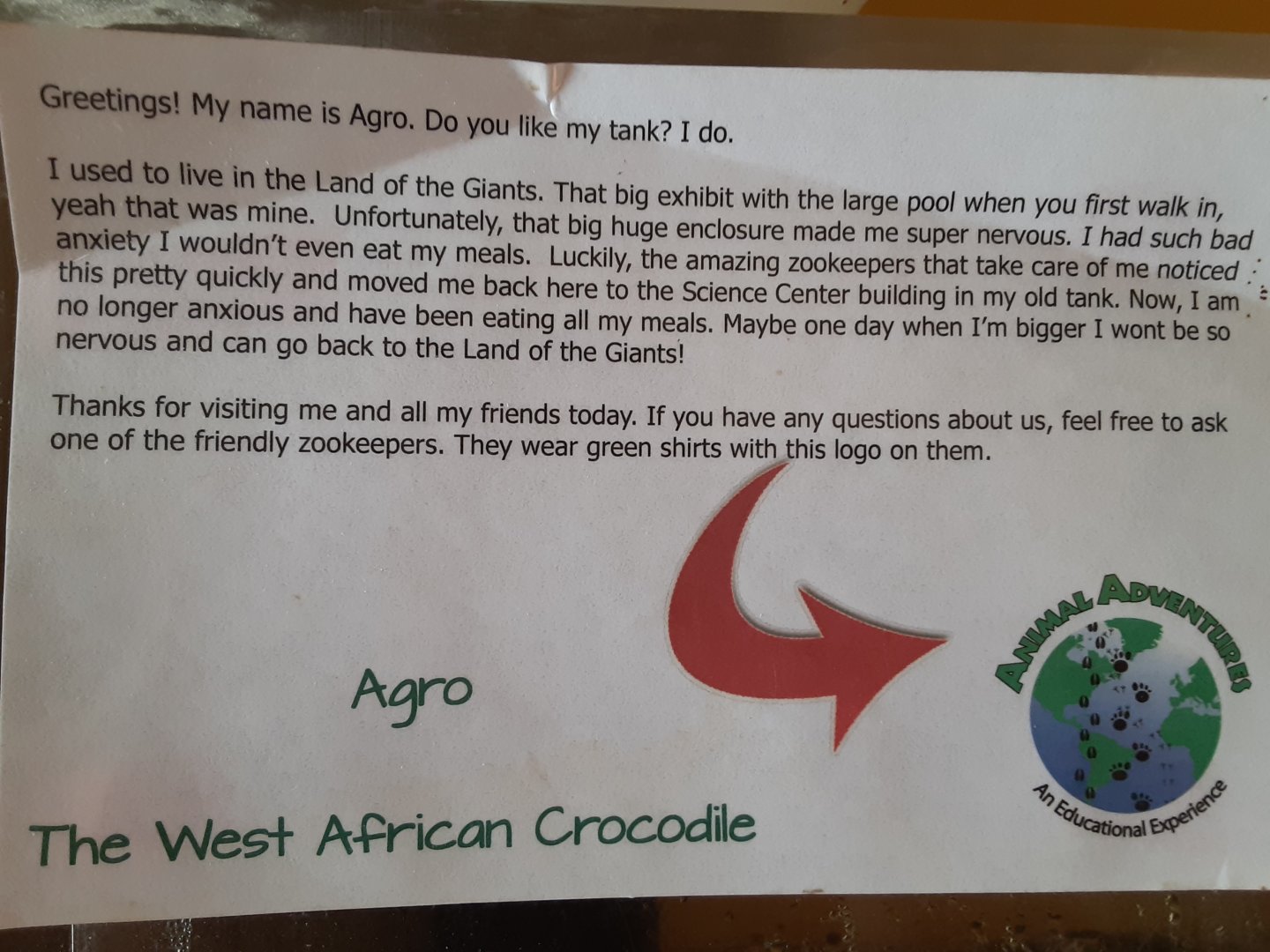
Upon entering the main building, the first exhibits we saw were for some of their smaller crocodilians. A West African Crocodile lived in a small tank, with some signage claiming it got "stressed out" in a bigger enclosure. Personally, I highly doubt this signage is true as the crocodile was living in a tiny tank that I can't imagine is comfortable for the animal. The enclosure didn't even have enough land area for the crocodile to move around!
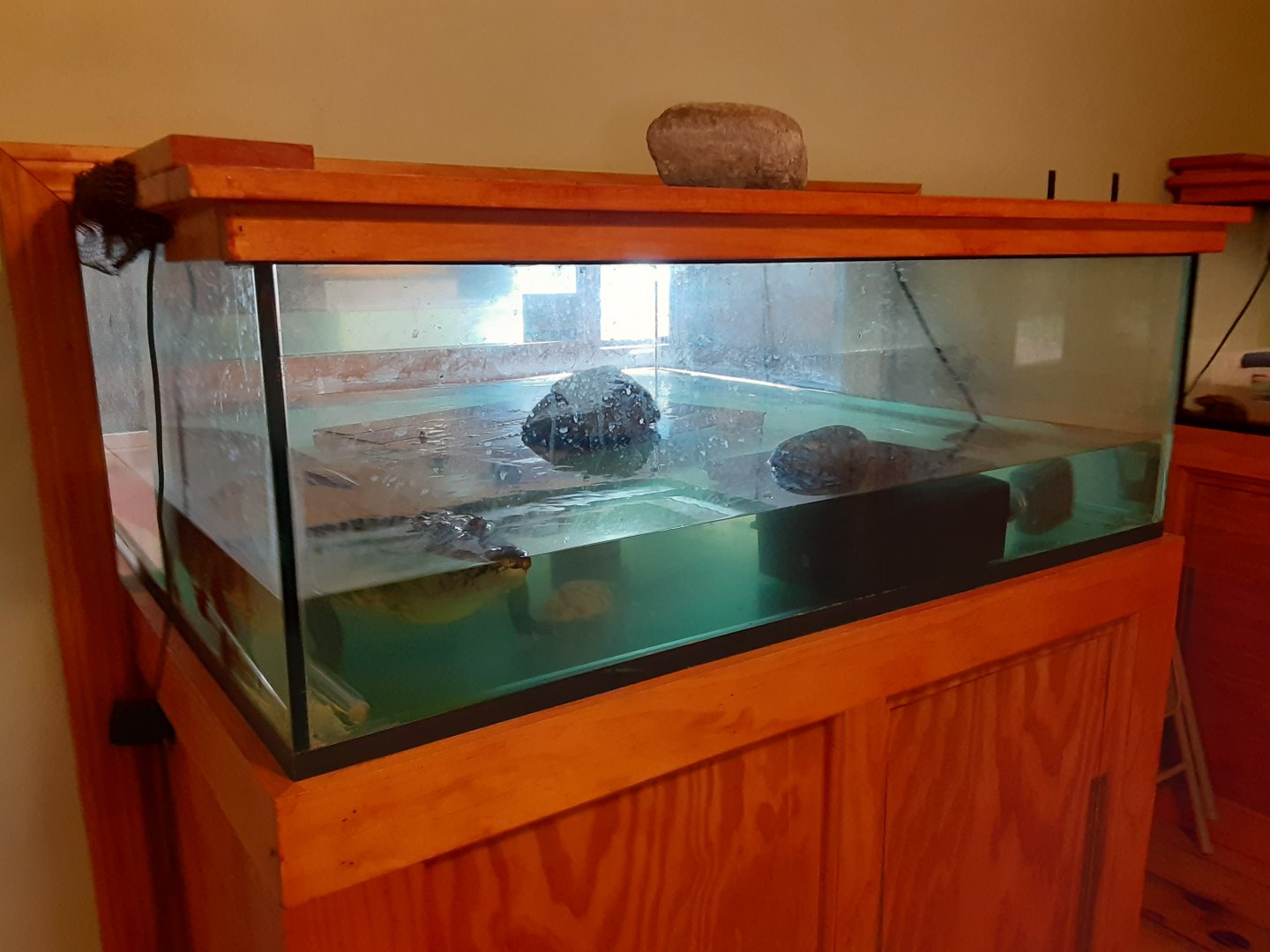
Across from the crocodile was another similar enclosure for a Morelet's Crocodile. Neither the Morelets or West African crocodiles seemed full grown, and while I suspect they may be stunted I do not know their ages so don't know for certain. While the habitat was grossly inadequate, one cool thing about the morelet's Crocodile habitat is that it can be viewed from both sides, which isn't even necessary as the entire tank is easily viewable through just one of the windows.
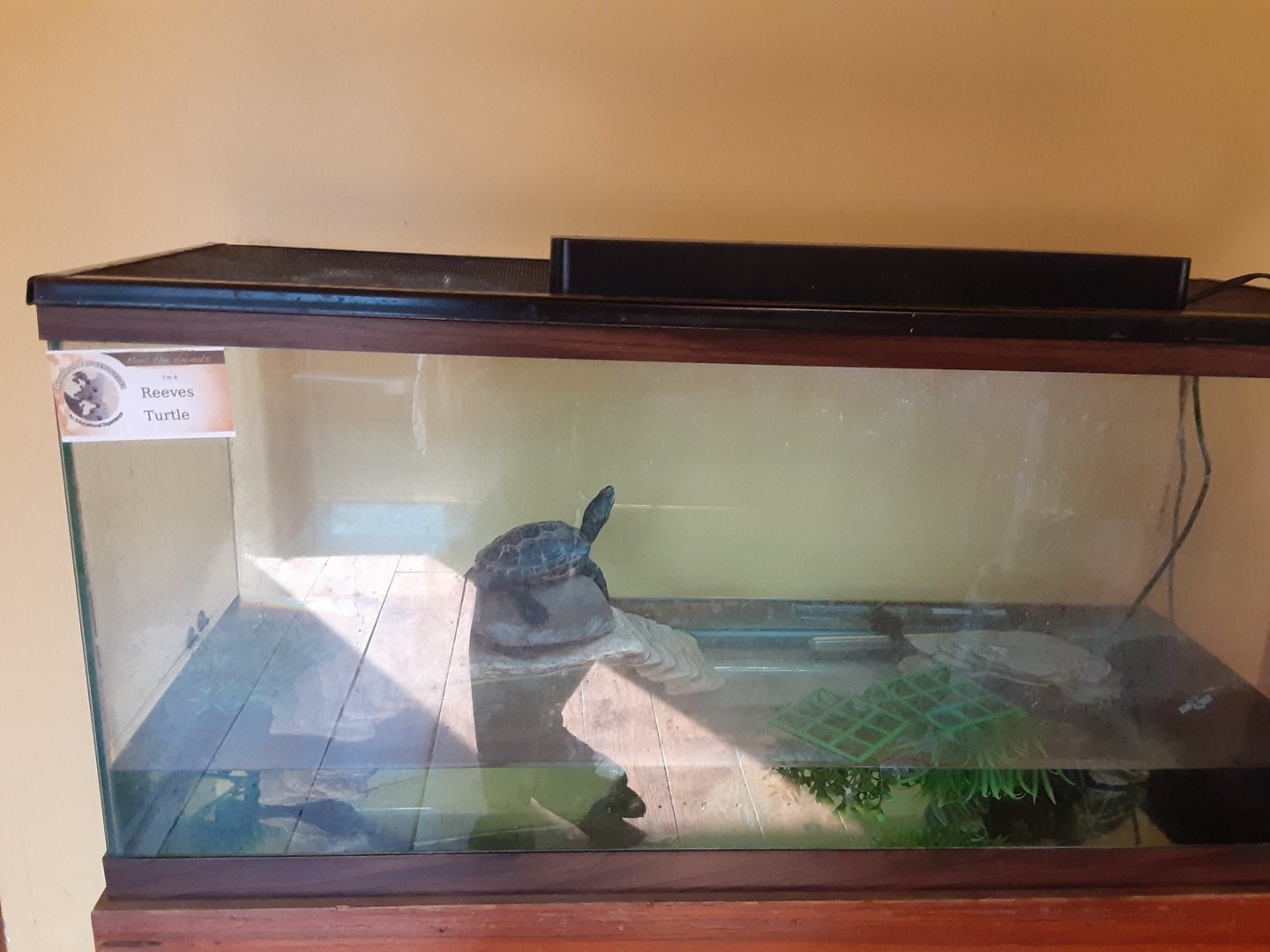
Next to the Morelet's Crocodile is another small tank for a Reeve's Turtle. Not necessarily a good enclosure, but nowhere near as bad as some of the zoo's other enclosures.
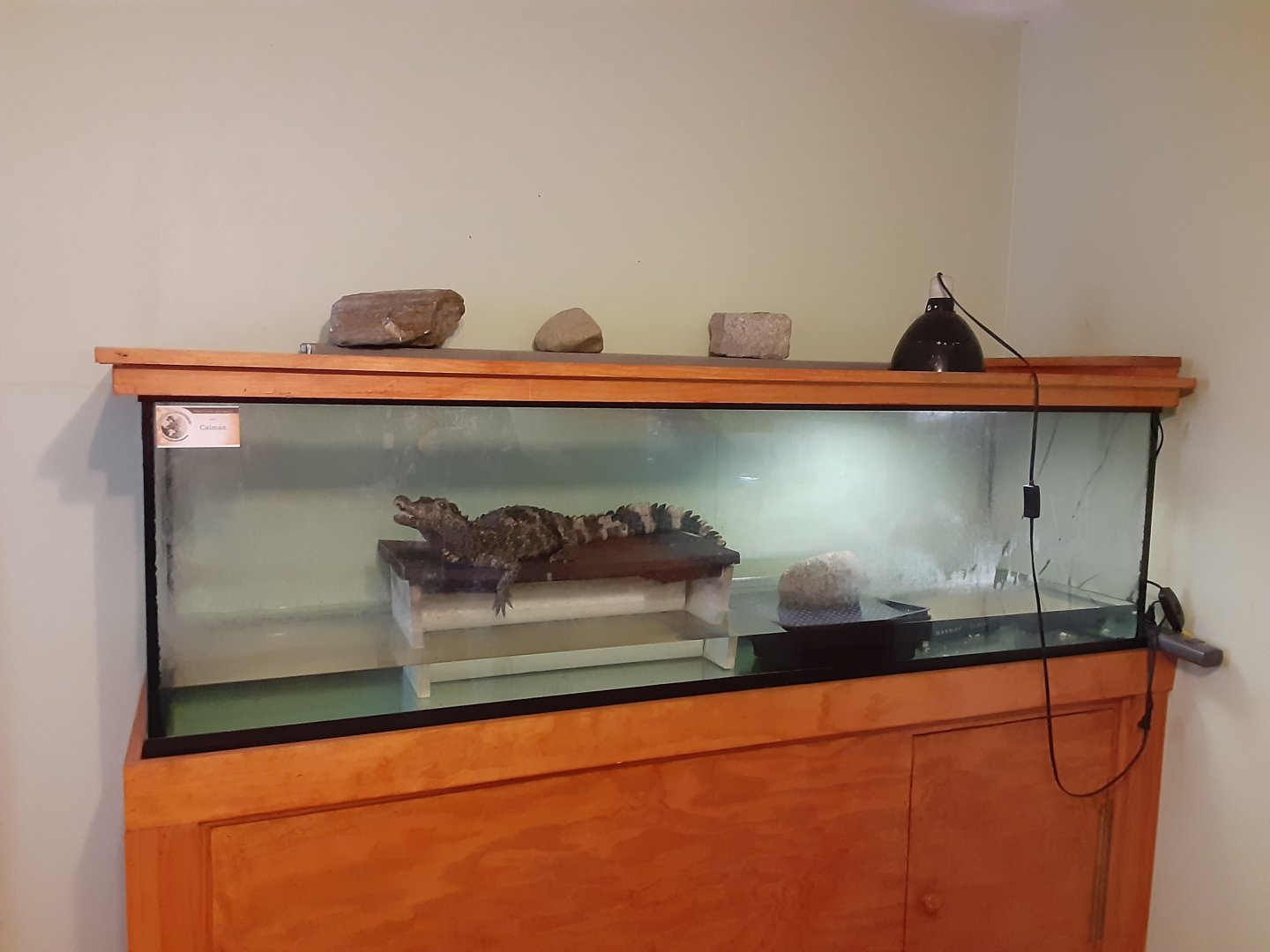
On the back side of the Morelet's Crocodile habitat is the second viewing area, in a separate room with two other tanks. The first was an overcrowded tank for North American Wood Turtles and Spotted Turtles, this tank only had a small water area that was visibly dirty and wasn't filtered like the other Aquatic reptile Habitats. Across from the Turtles was the worst of the zoo's crocodilian Habitats, the Smooth-fronted Caiman tank. It honestly shocks me the zoo can legally get away with keeping the Caiman in such a small tank, and I am not even sure it has enough room to turn around based on how tiny it is.
Upon leaving this room, I came across the zoo's serval habitat, which while not as bad as some of the others was still inadequate. However, while some of the other Habitats i feel need to be demolished this one just needs a redesign, as with the adjacent outdoor yard is definitely an adequate size for a serval. However, much of the space is wasted with furnishings that aren't appropriate for the wild cat, such as a couch.
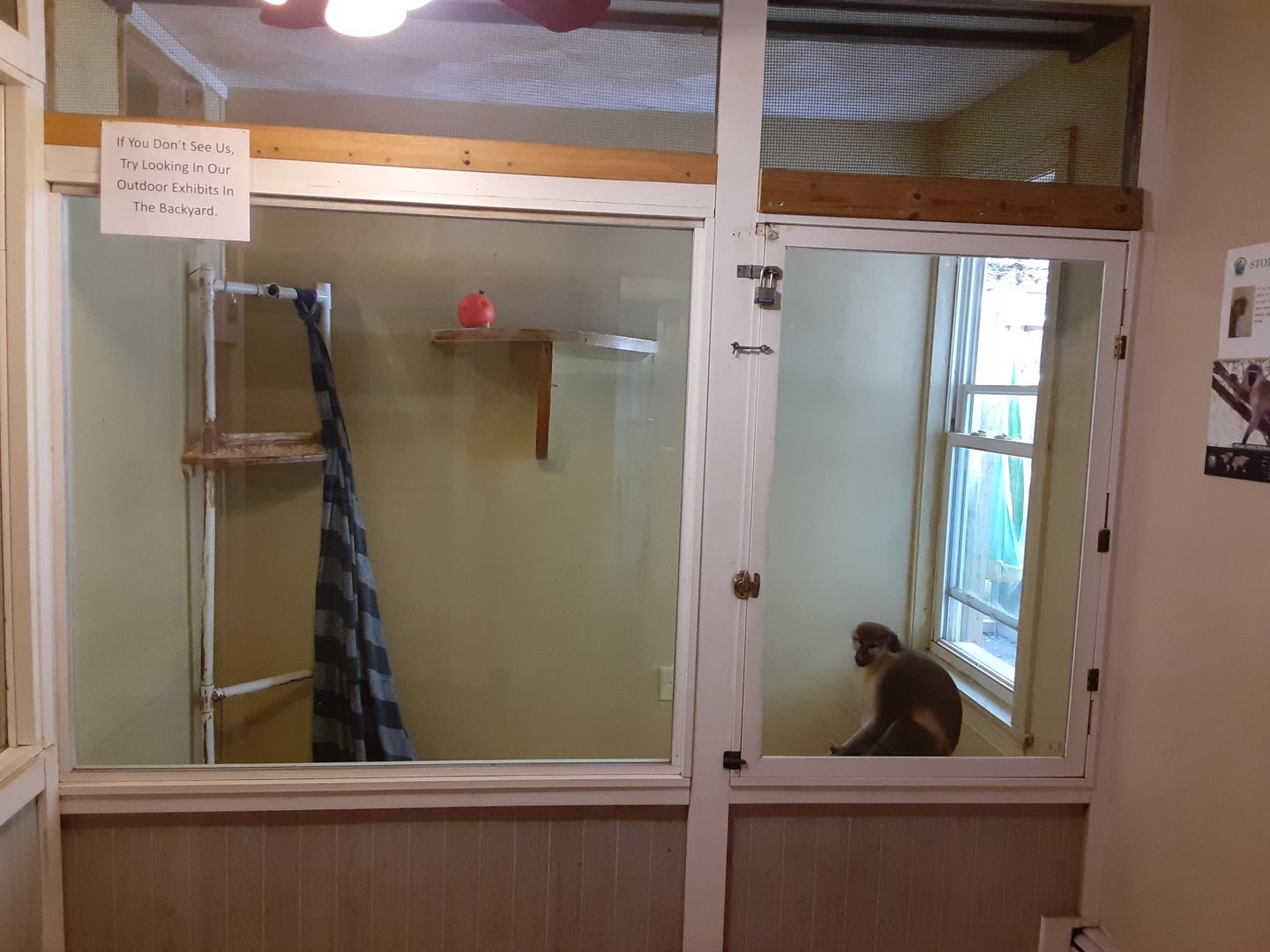
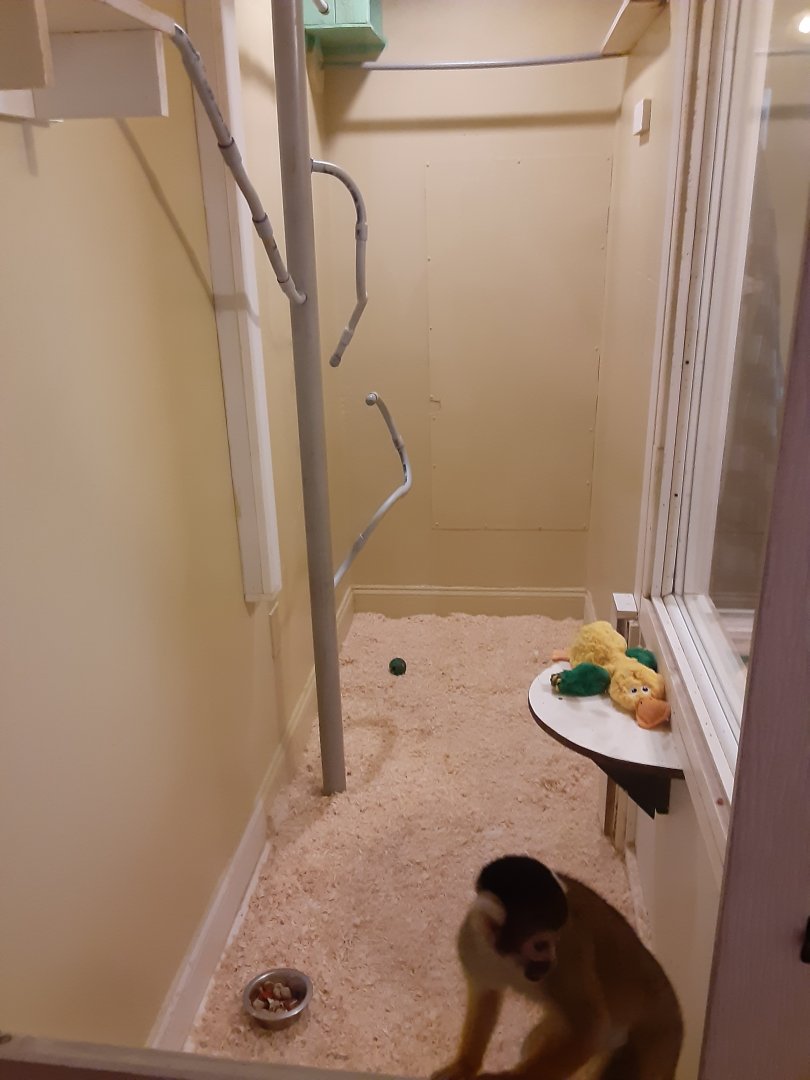
Opposite the serval, another room houses two monkeys, a black-capped Squirrel Monkey, and what is labeled as an "African vervet" (as @PossumRoach pointed out in the news thread, this monkey is actually a grivet/green monkey). Both of these monkeys were showing stereotypical behavior and were clearly stressed from living alone with minimal enrichment.
One thing that is evident at this point is how much of a maze the zoo is. There were Habitats in probably eight or so rooms located across three trailer-esque buildings, and I would not be surprised to find out that we missed a room due to how confusing the layout was.
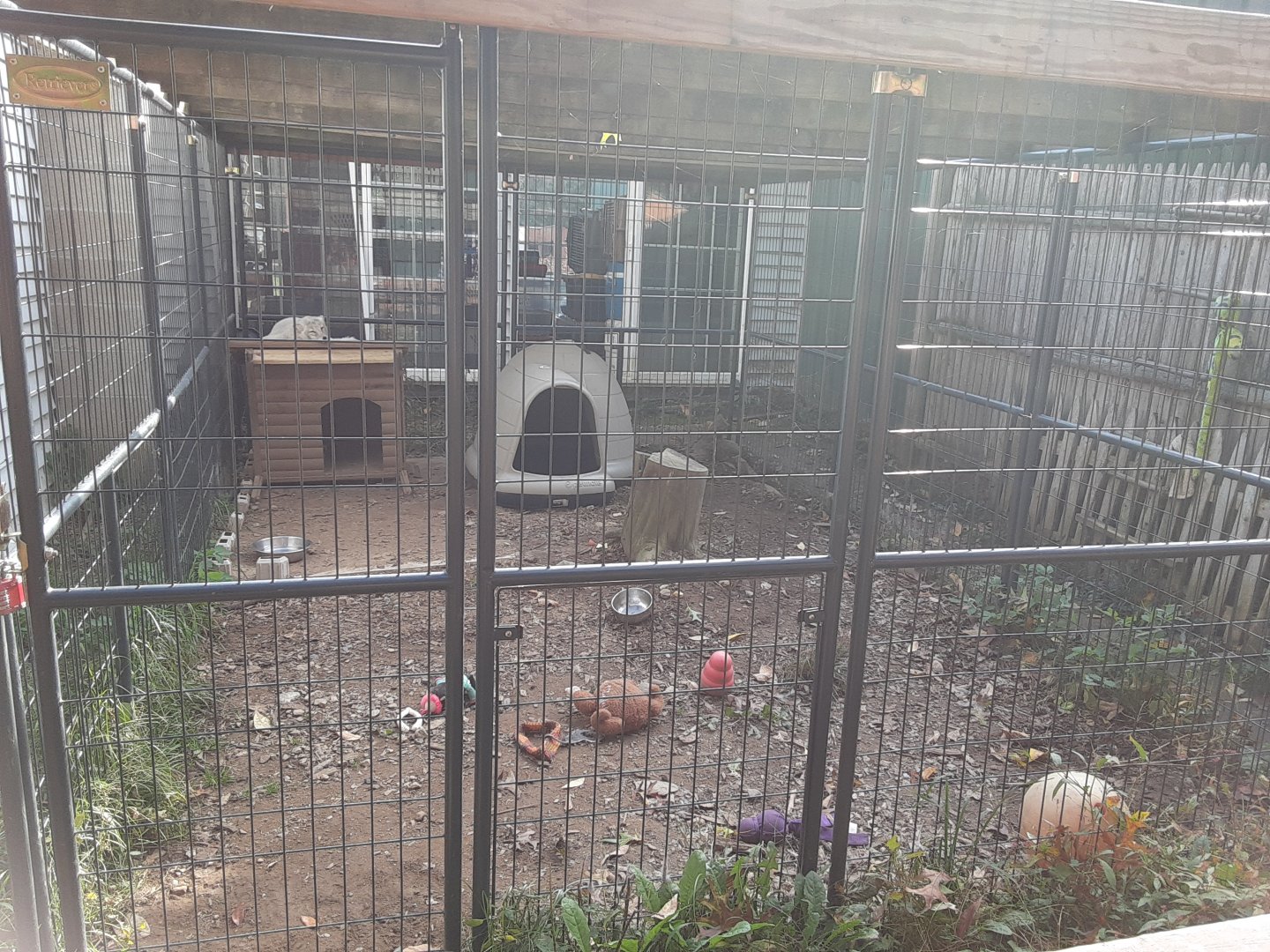
After passing the monkeys, we went outside, to some of the zoo's best exhibits. Two wooden cages exhibited a Bobcat and Carpathian Lynx. While not perfect exhibits, each of these exhibits seemed spacious enough for their feline residents and were much better than anything else the zoo had to offer. Back here, there were also enclosures for an American Red Fox, Arctic Fox, Pearl Fox, and Siberian Lynx. These four enclosures all looked like outdoor dog kennels, and while they could have been much worse definitely still need improvement. However, these predators definitely had it much better than some of what was still to come.
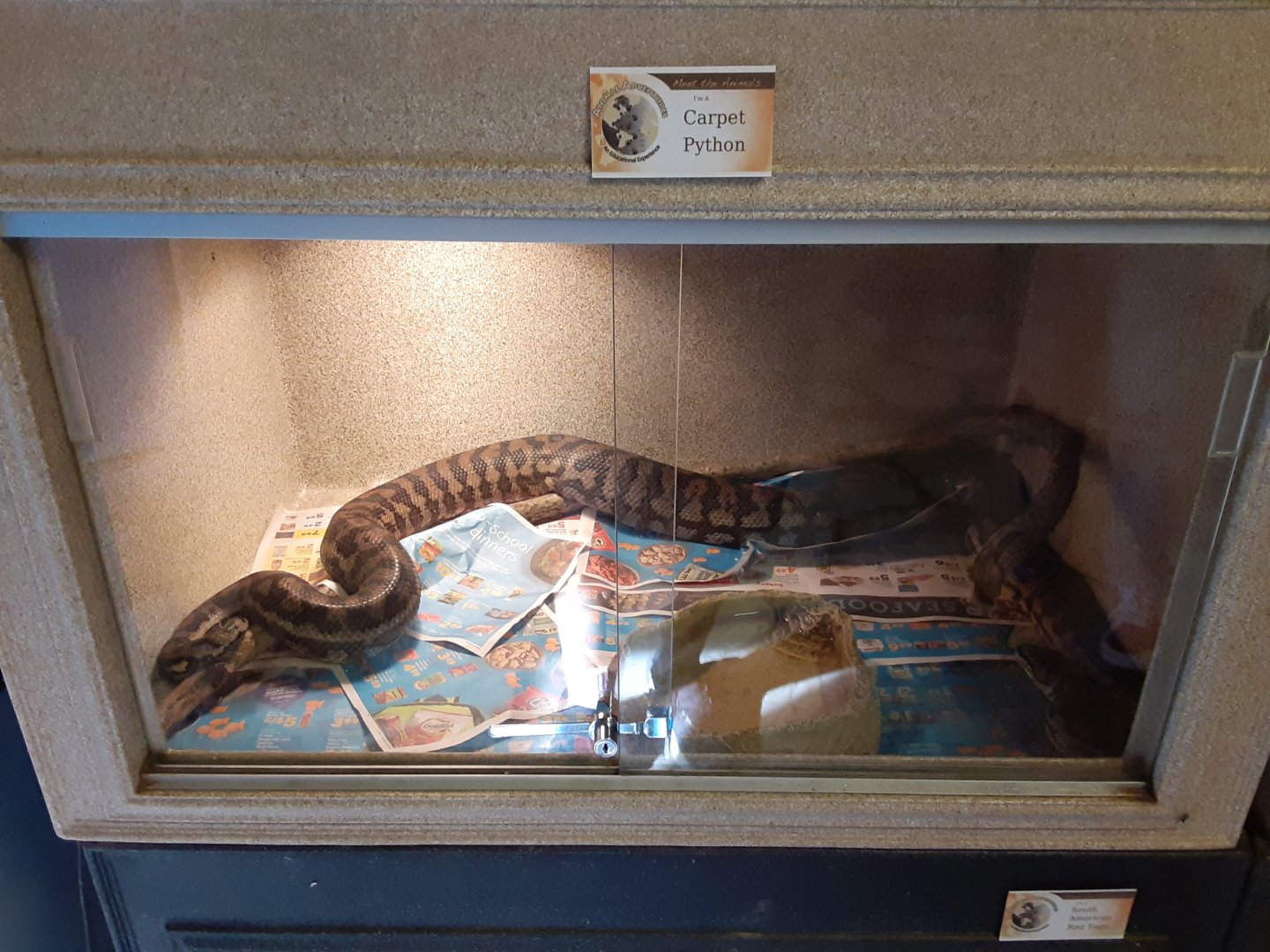
At this point, we entered the zoo's second building, an exhibit called "Land of the Giants". In it was a handful of tanks for a clearly obese snake (not sure of the exact species, but likely some sort of red-tailed boa), a blue-toungued skink, a red tegu, and an Inland Carpet Python. All of these reptile enclosures were inadequate and did not offer any climbing opportunities for their residents, which is definitely a problem for something like the semi-arboreal carpet python, which lived in a tank worse than anything I've seen in a pet store.
This building also had larger Habitats for Asian Water Monitor, Reticulated Python, Green Anaconda, American Alligator, and Nile Crocodile. All of these Habitats seemed too small and the two snake ones did not provide good viewing of the animals. We kind of rushed through this section of the zoo though because it smelled worse than any other zoo exhibit I've ever been in.
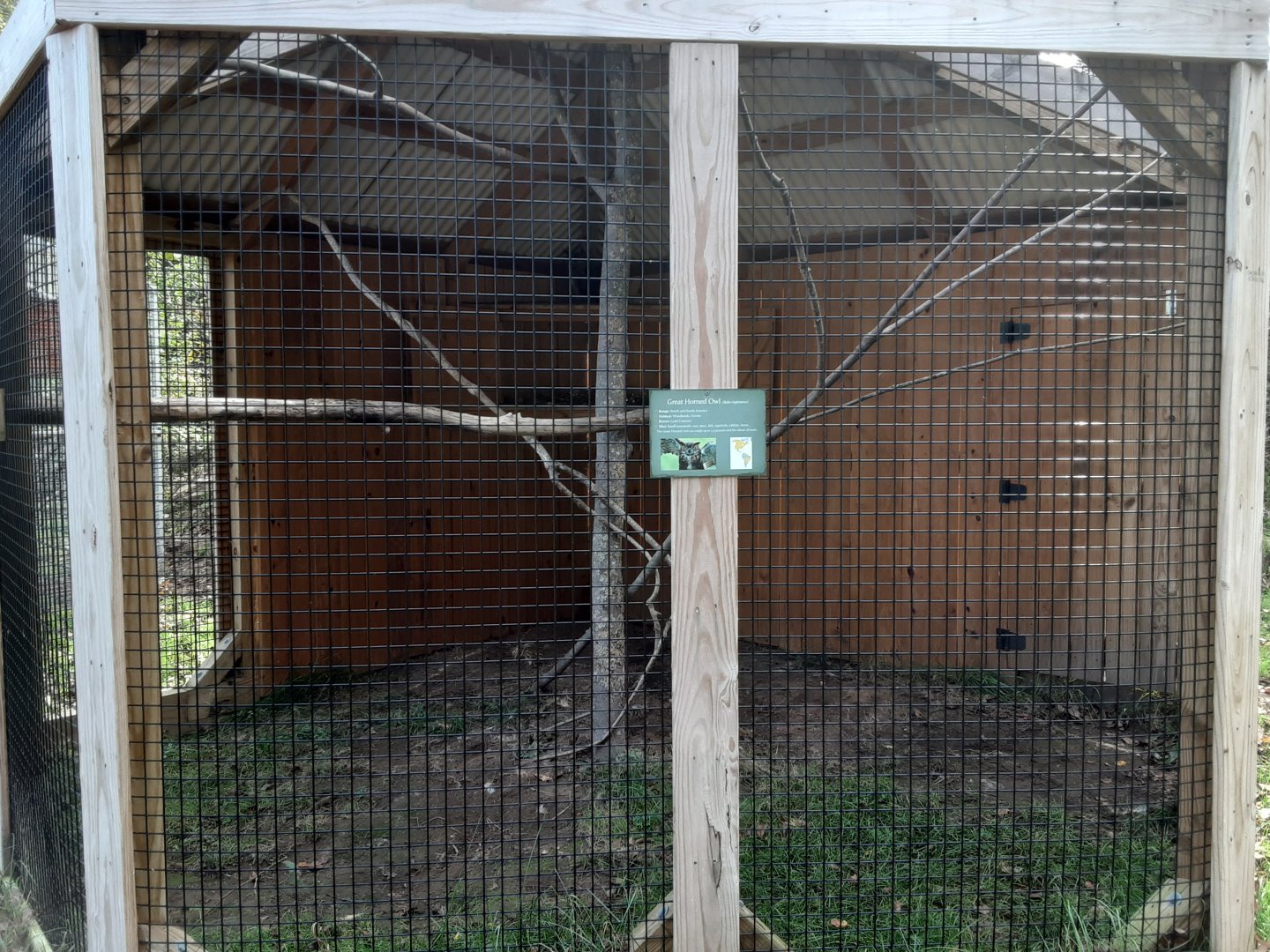
Back outside, we wandered to a series of bird of prey exhibits, for Barred Owl, Great-horned Owl, Eurasian Eagle Owl, and Red-tailed Hawk. Some of these Habitats were amongst the zoo's better ones, but were still inadequate. One of our biggest concerns with these Habitats was the ability for someone to stick their entire hand into the enclosure, which obviously is not safe when dealing with a great-horned Owl. Other than that, these enclosures were no where near as bad as some of the zoo's enclosures.
This part of the zoo also had some domestics, including Alpacas and a Scottish Highland Cattle. These domestics also had exhibits that weren't terrible, but far from good. Outside there was also a Turkey Vulture/Black Vulture exhibit and an Indian Blue Peafowl exhibit. Neither of these exhibits were very good, but sadly better than some of the indoor exhibits. Outside was also home to a Tortoise pen, with at least four different species. One of the tortoises was a large Sulcata which was climbing on top of and harassing the other tortoises. This exhibit would be one of the zoo's better ones if the sulcata was removed, as it was a decent enough size for the smaller Tortoise species.
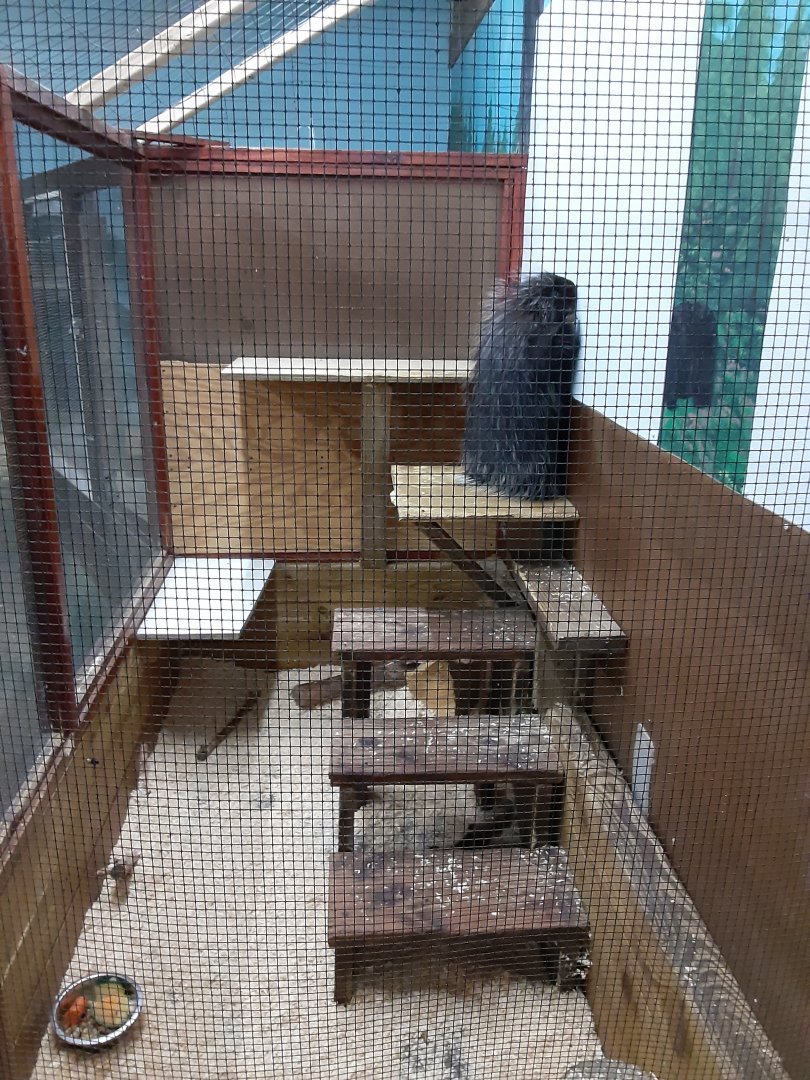
Inside the last building, there were many more Habitats of varying degrees of bad. Two Lemur Habitats held Ring-tailed and Red-ruffed Lemurs. The red ruff lived alone, while there were three ring-tailed lemurs. Neither of these Habitats were properly furnished, but were definitely a more decent size than many of the zoo's other Habitats. I'm glad the ring-tailed lemurs at least shared an exhibit, unlike the zoo's other three primate species. The red-ruffed Lemur was another animal showing very stereotypical behavior and was clearly stressed out. This room also had a cage for a Turquoise-fronted Amazon and two small cages for North American and African Crested Porcupines. The North American Porcupine is another animal to be shoeing stereotypical behavior and was scratching against the back wall for the entirety of my visit. Continuing onwards, this building housed animals in enclosures of varying degrees of bad, including Six-banded Armadillo, Patagonian Cavy, White-nosed Coati, Chinese Alligator, and nine juvenile American Alligators (strangely signed as an Alligator snapping turtle).
This area also housed one of the zoo's rarest residents, two Pale Fox who shared an exhibit with a Fennec Fox. This exhibit wasn't as bad as many of the others, but was still inadequate.
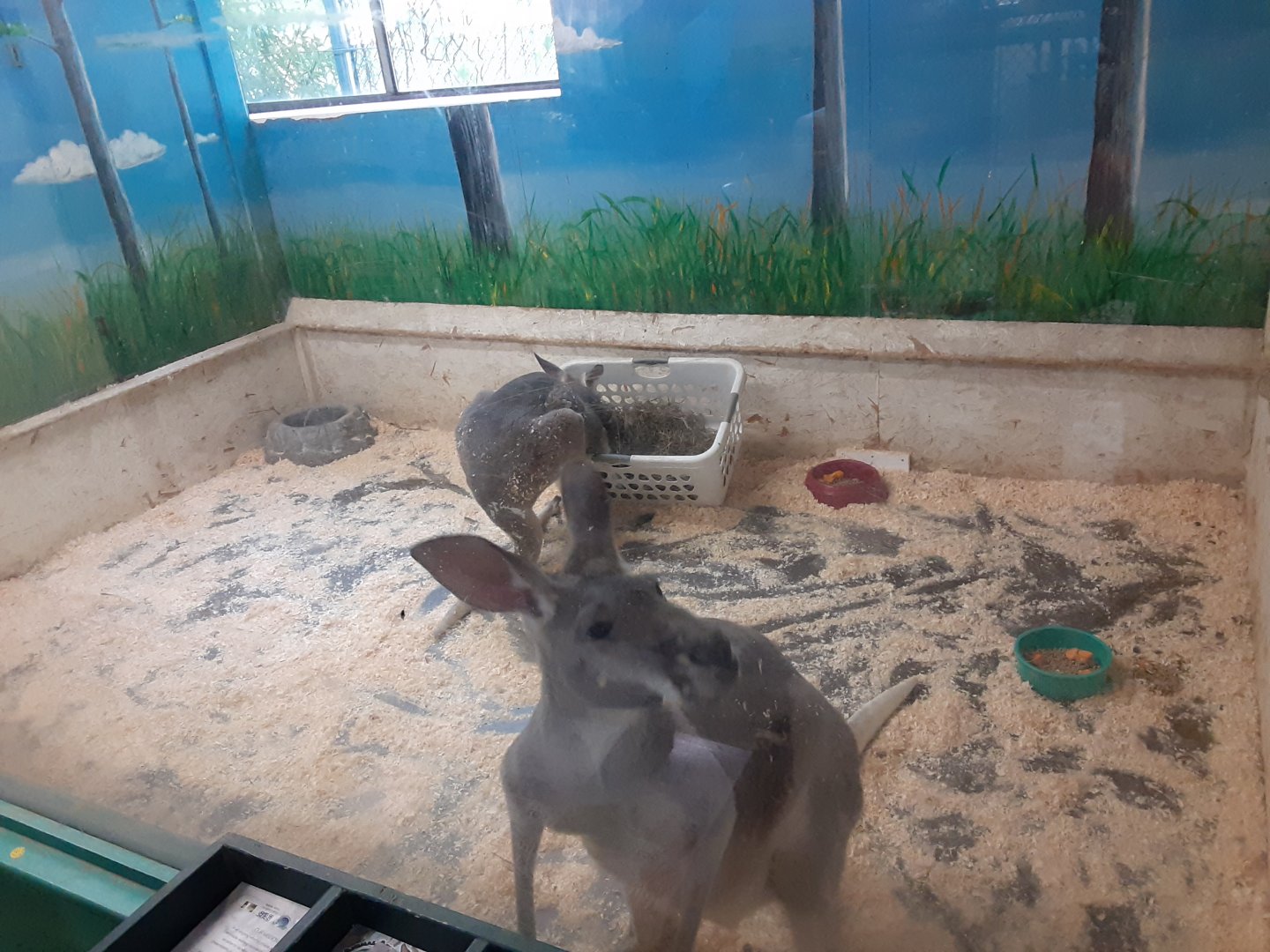
The worst exhibit in the zoo, however, was the Red Kangaroos. The two kangaroos lived together in an entirely indoor habitat that was similar size to my bathroom. Definitely not an adequate habitat and something I am shocked is even legal. Personally I find it disgusting habitats like this are even allowed and sincerely hope the zoo provides a better home for these kangaroos in the future.
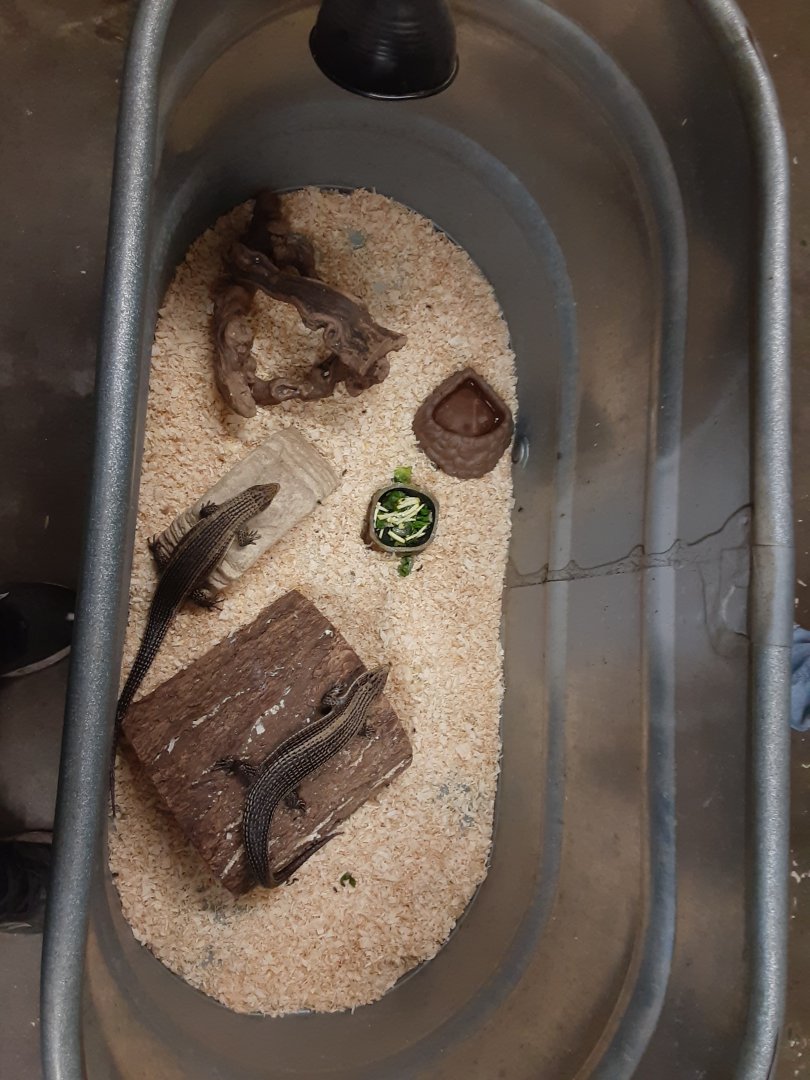
This building also housed a number of smaller reptiles, in enclosures that for the most part were too small and underfurnished. The aldabra tortoise definitely got the short end of the stick, in a habitat that was maybe three square feet bigger than the actual tortoise. The only enclosure that may be considered adequate was the one for the Sudanese Plated lizards.
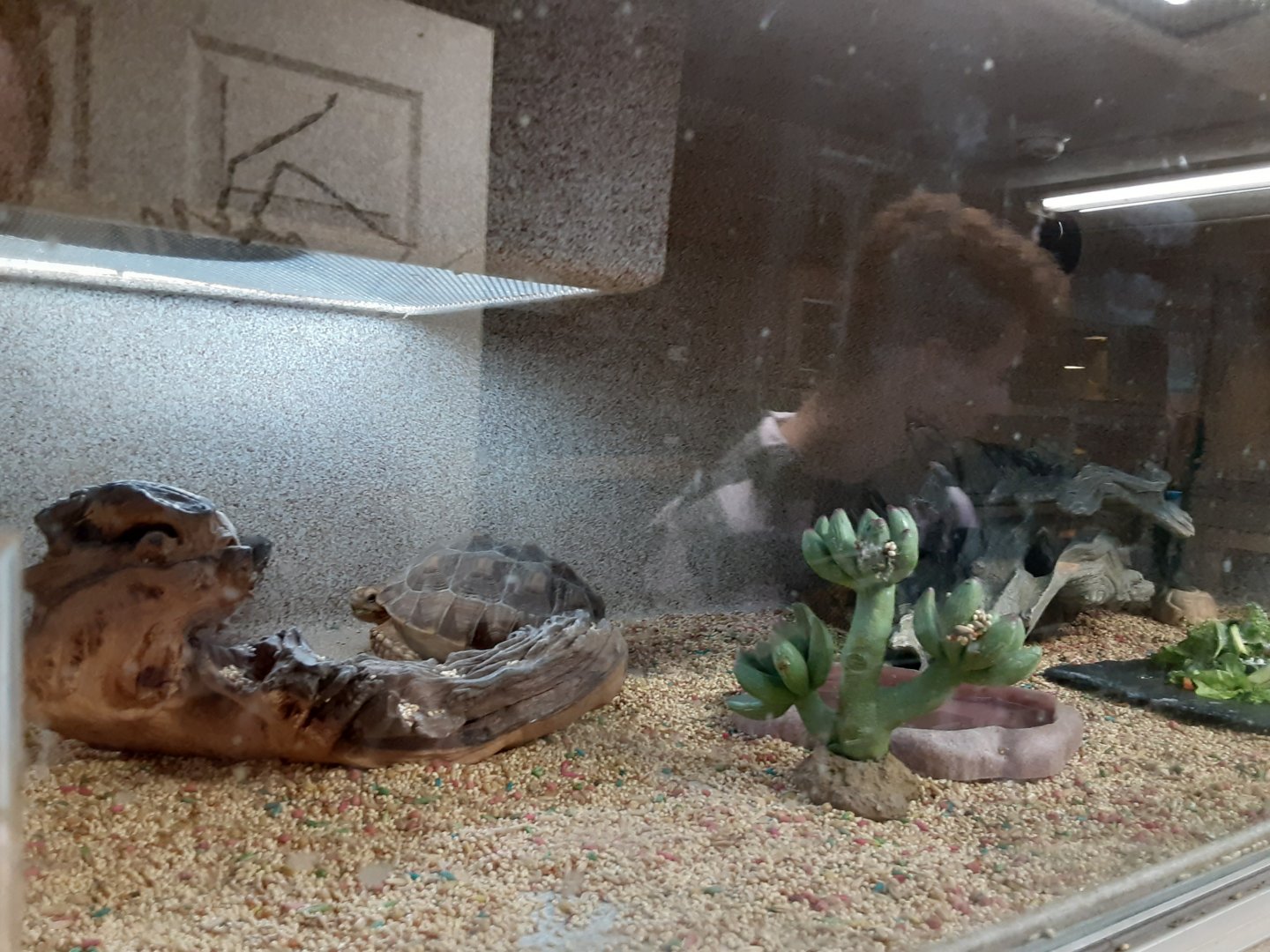
One especially bad habitat was the mixed reptile Habitat, with Sulcata Tortoise, Uromastyx, and Leopard Geckos. One staff member informed us that the Leopard Geckos (which we did not see) like to hide in the log all the time, which does not surprise me as they clearly would get stressed by the much larger animals in their enclosure. I genuinely feel bad for these Geckos, and hope that the zoo decides to move them into their own enclosure where they might be more visible and less stressed.
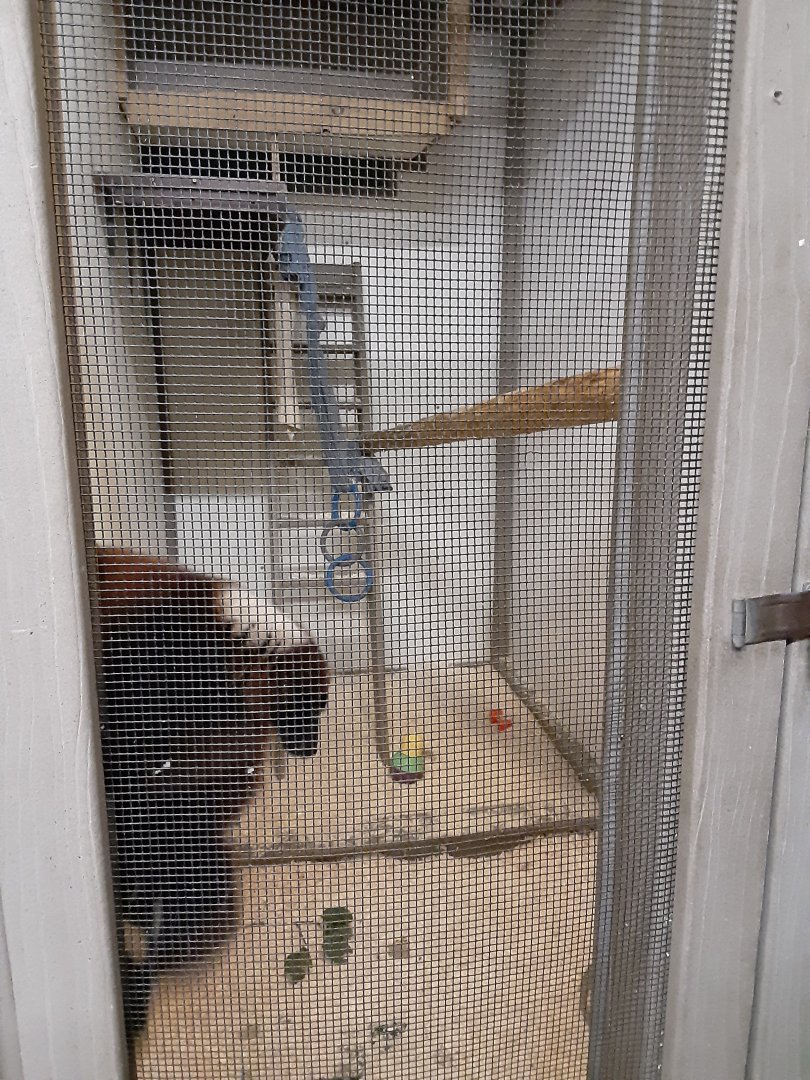
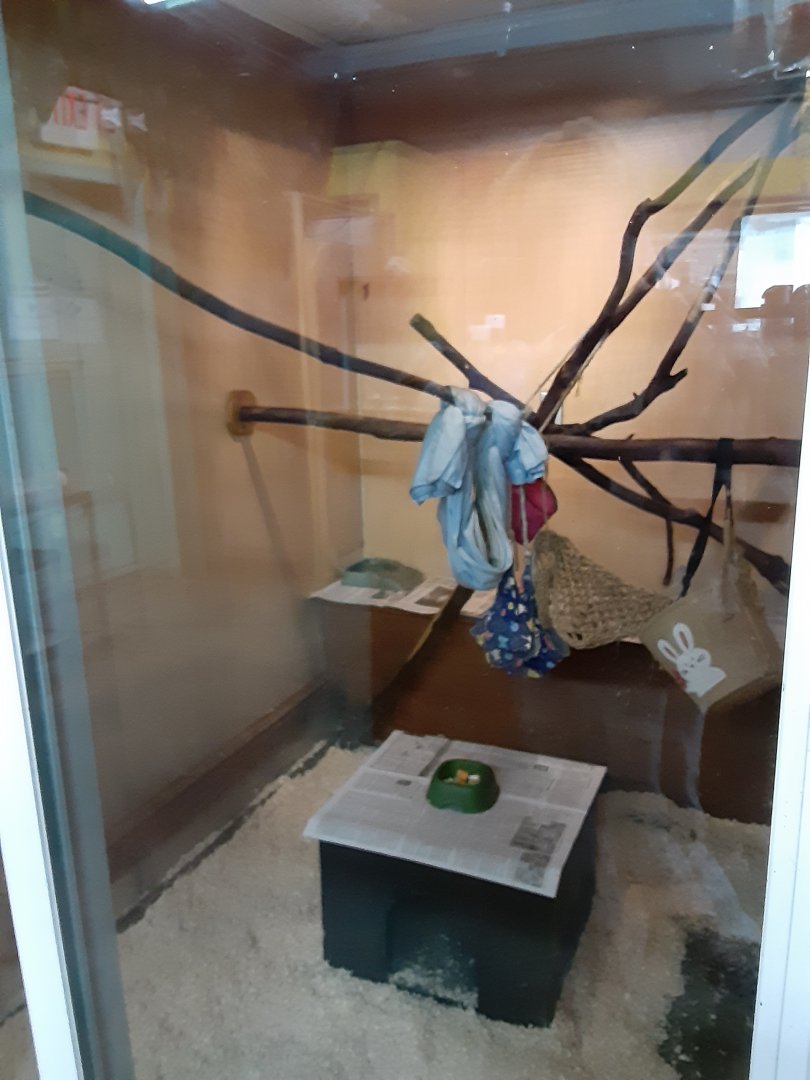
The final room of this building housed a number of other species in similar Habitats. This room housed quite a few small pet-type mammals, like Ferrets, Rats, and Guinea Pigs, but also had a kinkajou and two real rarities mixed in. The first was an "African Bushbaby" that was not signed to the species level, in an enclosure that I'd consider big enough, but was not adequately furnished to allow the bushbaby to climb. For my entire visit, the bushbaby never left its blue hammock, which is not unusual considering its a nocturnal primate.
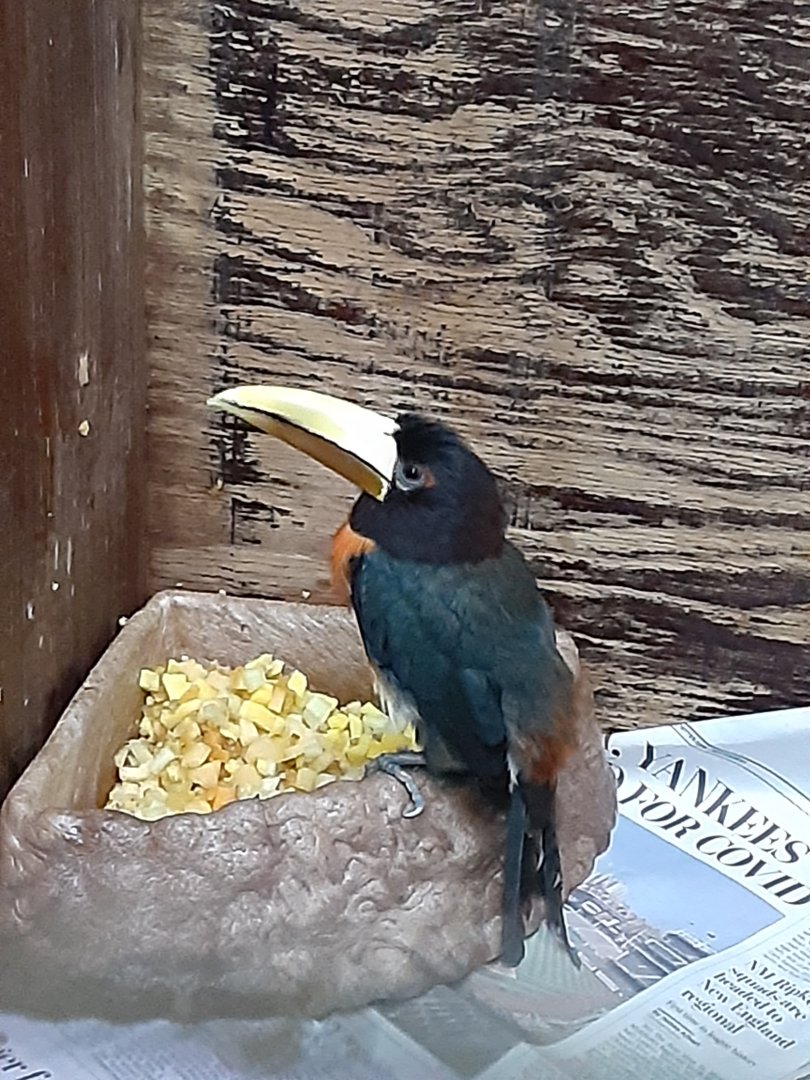
The other rarity is perhaps the rarest animal in the entire zoo, a pair of Ivory-billed Aracaris. Their cage was definitely too small for them, but it was still cool to see such a rare bird, one that I've never seen before. .
Overall, I can definitely say this is the worst zoo I have ever visited. Almost every exhibit was grossly inadequate for their residents and they should either be shut down or greatly improve the living conditions for all the animals. Originally I was not planning to write this review, but decided to throw one together to shine a light on how awful this facility is and dissuade others from visiting it in the future. I was not expecting it to be the best zoo I've ever visited, but was shocked at just how bad the enclosures were. I'd be more than happy to answer any questions anyone had about this truly awful facility, and hope that you all enjoy not visiting it.
Upon entering the main building, the first exhibits we saw were for some of their smaller crocodilians. A West African Crocodile lived in a small tank, with some signage claiming it got "stressed out" in a bigger enclosure. Personally, I highly doubt this signage is true as the crocodile was living in a tiny tank that I can't imagine is comfortable for the animal. The enclosure didn't even have enough land area for the crocodile to move around!
Across from the crocodile was another similar enclosure for a Morelet's Crocodile. Neither the Morelets or West African crocodiles seemed full grown, and while I suspect they may be stunted I do not know their ages so don't know for certain. While the habitat was grossly inadequate, one cool thing about the morelet's Crocodile habitat is that it can be viewed from both sides, which isn't even necessary as the entire tank is easily viewable through just one of the windows.
Next to the Morelet's Crocodile is another small tank for a Reeve's Turtle. Not necessarily a good enclosure, but nowhere near as bad as some of the zoo's other enclosures.
On the back side of the Morelet's Crocodile habitat is the second viewing area, in a separate room with two other tanks. The first was an overcrowded tank for North American Wood Turtles and Spotted Turtles, this tank only had a small water area that was visibly dirty and wasn't filtered like the other Aquatic reptile Habitats. Across from the Turtles was the worst of the zoo's crocodilian Habitats, the Smooth-fronted Caiman tank. It honestly shocks me the zoo can legally get away with keeping the Caiman in such a small tank, and I am not even sure it has enough room to turn around based on how tiny it is.
Upon leaving this room, I came across the zoo's serval habitat, which while not as bad as some of the others was still inadequate. However, while some of the other Habitats i feel need to be demolished this one just needs a redesign, as with the adjacent outdoor yard is definitely an adequate size for a serval. However, much of the space is wasted with furnishings that aren't appropriate for the wild cat, such as a couch.

Opposite the serval, another room houses two monkeys, a black-capped Squirrel Monkey, and what is labeled as an "African vervet" (as @PossumRoach pointed out in the news thread, this monkey is actually a grivet/green monkey). Both of these monkeys were showing stereotypical behavior and were clearly stressed from living alone with minimal enrichment.
One thing that is evident at this point is how much of a maze the zoo is. There were Habitats in probably eight or so rooms located across three trailer-esque buildings, and I would not be surprised to find out that we missed a room due to how confusing the layout was.
After passing the monkeys, we went outside, to some of the zoo's best exhibits. Two wooden cages exhibited a Bobcat and Carpathian Lynx. While not perfect exhibits, each of these exhibits seemed spacious enough for their feline residents and were much better than anything else the zoo had to offer. Back here, there were also enclosures for an American Red Fox, Arctic Fox, Pearl Fox, and Siberian Lynx. These four enclosures all looked like outdoor dog kennels, and while they could have been much worse definitely still need improvement. However, these predators definitely had it much better than some of what was still to come.
At this point, we entered the zoo's second building, an exhibit called "Land of the Giants". In it was a handful of tanks for a clearly obese snake (not sure of the exact species, but likely some sort of red-tailed boa), a blue-toungued skink, a red tegu, and an Inland Carpet Python. All of these reptile enclosures were inadequate and did not offer any climbing opportunities for their residents, which is definitely a problem for something like the semi-arboreal carpet python, which lived in a tank worse than anything I've seen in a pet store.
This building also had larger Habitats for Asian Water Monitor, Reticulated Python, Green Anaconda, American Alligator, and Nile Crocodile. All of these Habitats seemed too small and the two snake ones did not provide good viewing of the animals. We kind of rushed through this section of the zoo though because it smelled worse than any other zoo exhibit I've ever been in.
Back outside, we wandered to a series of bird of prey exhibits, for Barred Owl, Great-horned Owl, Eurasian Eagle Owl, and Red-tailed Hawk. Some of these Habitats were amongst the zoo's better ones, but were still inadequate. One of our biggest concerns with these Habitats was the ability for someone to stick their entire hand into the enclosure, which obviously is not safe when dealing with a great-horned Owl. Other than that, these enclosures were no where near as bad as some of the zoo's enclosures.
This part of the zoo also had some domestics, including Alpacas and a Scottish Highland Cattle. These domestics also had exhibits that weren't terrible, but far from good. Outside there was also a Turkey Vulture/Black Vulture exhibit and an Indian Blue Peafowl exhibit. Neither of these exhibits were very good, but sadly better than some of the indoor exhibits. Outside was also home to a Tortoise pen, with at least four different species. One of the tortoises was a large Sulcata which was climbing on top of and harassing the other tortoises. This exhibit would be one of the zoo's better ones if the sulcata was removed, as it was a decent enough size for the smaller Tortoise species.
Inside the last building, there were many more Habitats of varying degrees of bad. Two Lemur Habitats held Ring-tailed and Red-ruffed Lemurs. The red ruff lived alone, while there were three ring-tailed lemurs. Neither of these Habitats were properly furnished, but were definitely a more decent size than many of the zoo's other Habitats. I'm glad the ring-tailed lemurs at least shared an exhibit, unlike the zoo's other three primate species. The red-ruffed Lemur was another animal showing very stereotypical behavior and was clearly stressed out. This room also had a cage for a Turquoise-fronted Amazon and two small cages for North American and African Crested Porcupines. The North American Porcupine is another animal to be shoeing stereotypical behavior and was scratching against the back wall for the entirety of my visit. Continuing onwards, this building housed animals in enclosures of varying degrees of bad, including Six-banded Armadillo, Patagonian Cavy, White-nosed Coati, Chinese Alligator, and nine juvenile American Alligators (strangely signed as an Alligator snapping turtle).
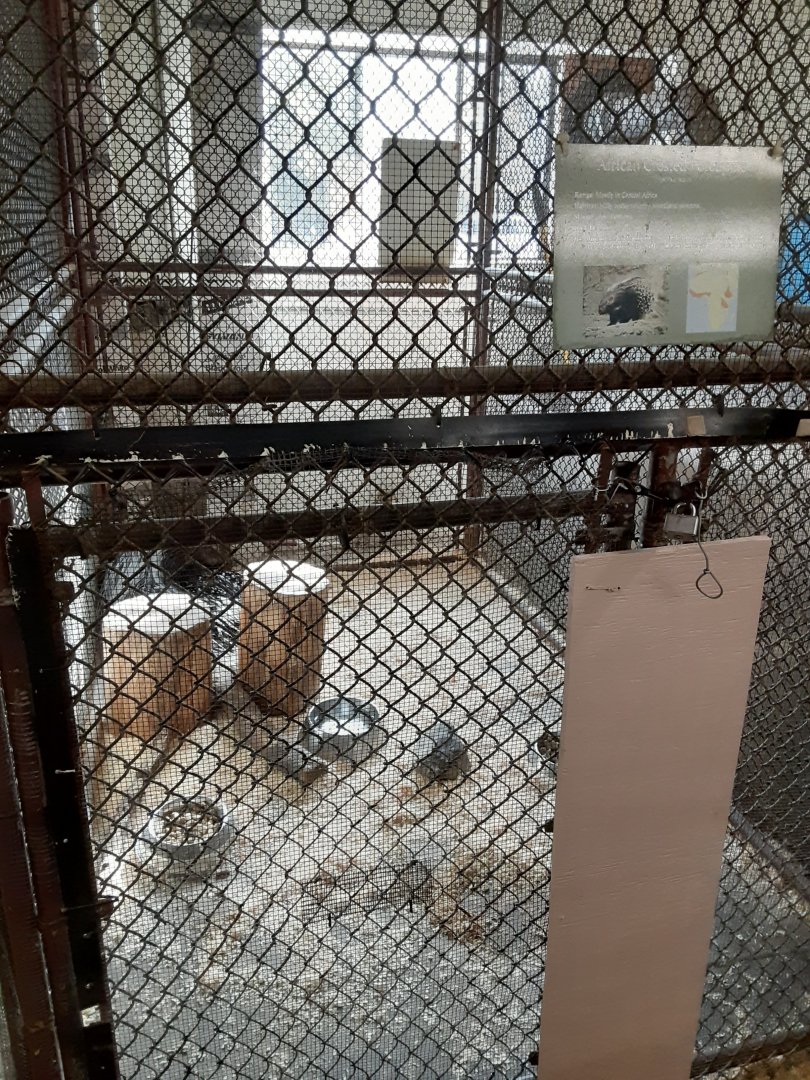
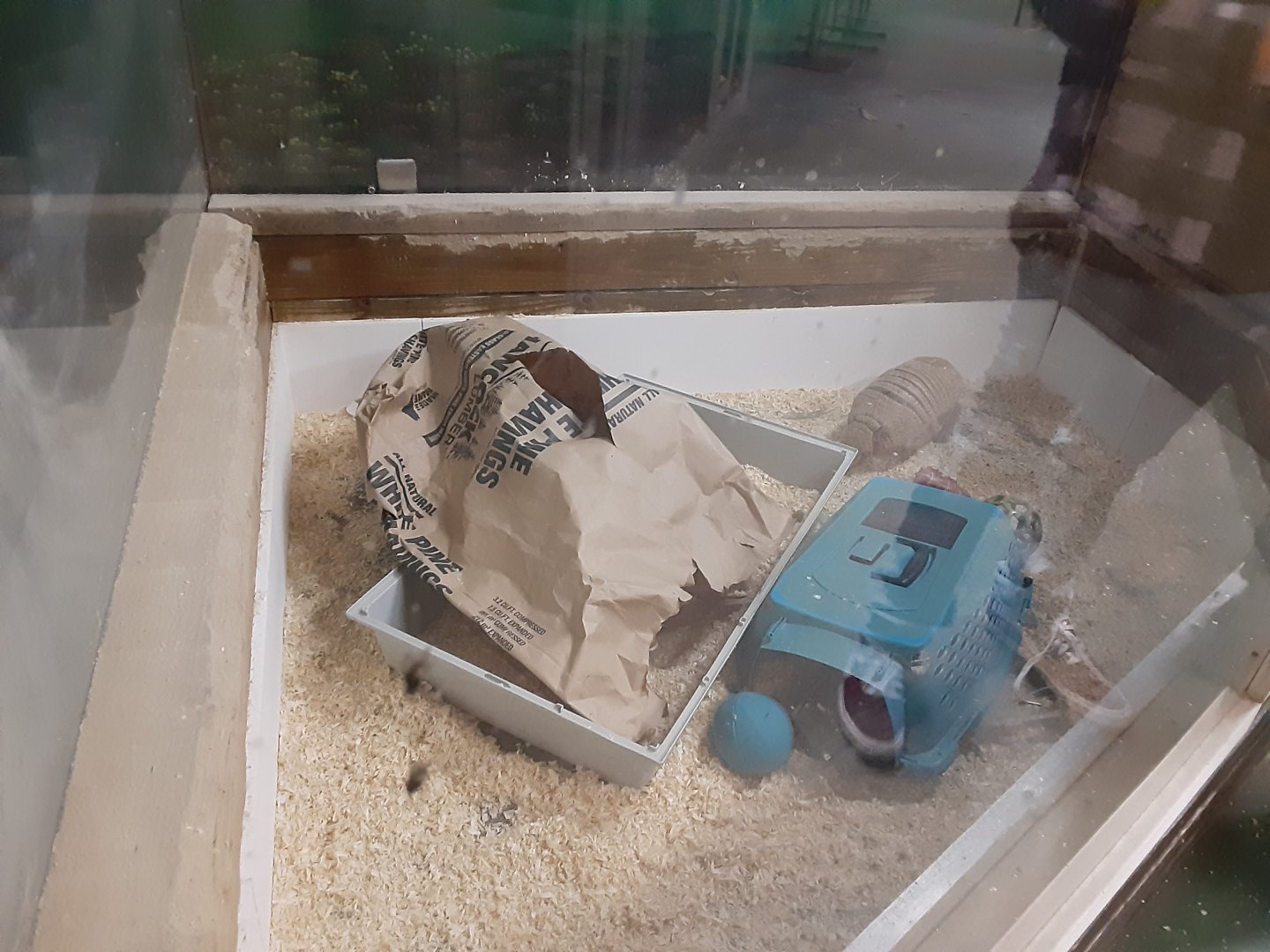
This area also housed one of the zoo's rarest residents, two Pale Fox who shared an exhibit with a Fennec Fox. This exhibit wasn't as bad as many of the others, but was still inadequate.
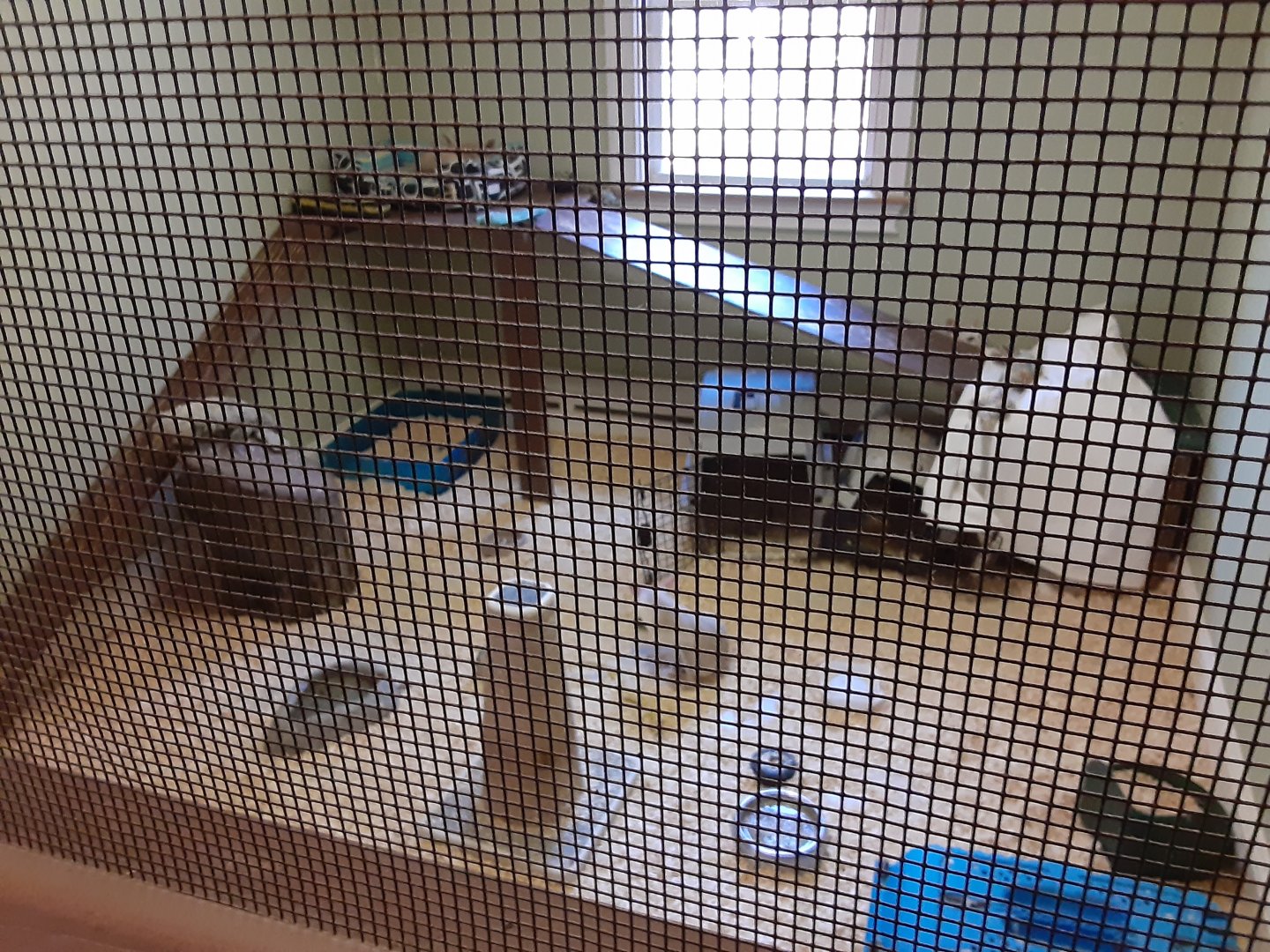
The worst exhibit in the zoo, however, was the Red Kangaroos. The two kangaroos lived together in an entirely indoor habitat that was similar size to my bathroom. Definitely not an adequate habitat and something I am shocked is even legal. Personally I find it disgusting habitats like this are even allowed and sincerely hope the zoo provides a better home for these kangaroos in the future.
This building also housed a number of smaller reptiles, in enclosures that for the most part were too small and underfurnished. The aldabra tortoise definitely got the short end of the stick, in a habitat that was maybe three square feet bigger than the actual tortoise. The only enclosure that may be considered adequate was the one for the Sudanese Plated lizards.
One especially bad habitat was the mixed reptile Habitat, with Sulcata Tortoise, Uromastyx, and Leopard Geckos. One staff member informed us that the Leopard Geckos (which we did not see) like to hide in the log all the time, which does not surprise me as they clearly would get stressed by the much larger animals in their enclosure. I genuinely feel bad for these Geckos, and hope that the zoo decides to move them into their own enclosure where they might be more visible and less stressed.
The final room of this building housed a number of other species in similar Habitats. This room housed quite a few small pet-type mammals, like Ferrets, Rats, and Guinea Pigs, but also had a kinkajou and two real rarities mixed in. The first was an "African Bushbaby" that was not signed to the species level, in an enclosure that I'd consider big enough, but was not adequately furnished to allow the bushbaby to climb. For my entire visit, the bushbaby never left its blue hammock, which is not unusual considering its a nocturnal primate.
The other rarity is perhaps the rarest animal in the entire zoo, a pair of Ivory-billed Aracaris. Their cage was definitely too small for them, but it was still cool to see such a rare bird, one that I've never seen before. .
Overall, I can definitely say this is the worst zoo I have ever visited. Almost every exhibit was grossly inadequate for their residents and they should either be shut down or greatly improve the living conditions for all the animals. Originally I was not planning to write this review, but decided to throw one together to shine a light on how awful this facility is and dissuade others from visiting it in the future. I was not expecting it to be the best zoo I've ever visited, but was shocked at just how bad the enclosures were. I'd be more than happy to answer any questions anyone had about this truly awful facility, and hope that you all enjoy not visiting it.

 The only one that differs from anything I've seen is the indoor kangaroos. The serval, as well, but I'm guessing that was a rescue from a home and they decided to keep it in a home-like environment. It is likely the worst in new england, mostly due to the weather keeping roadside zoos to a minimum. There's dozens like this further south, though. The two I'd classify as the worst I've been to are also "rescue zoos", and a third in my top 5 (bottom 5?) has signs everywhere about their animals being rescues.


