
13. Tagua Trail: - (9 exhibits)
Rounding out the pair of South American entries, this next entry highlights the rarely-represented Gran Chaco, which is notable for being the single wild stronghold for the titular Tagua! (t-ah-g-wah; for those wondering about its pronunciation).
Technically speaking, there are two official ways to enter the trail. However, for the sake of consistency, we will begin by entering through one pathway, and ending off at the other.

Made by yours truly, Austin the Sengi
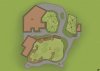
While we will be using the following map as a directory, we are going to go through the labels depicted in reverse (starting at #6, ending at #1). No spoilers as for what we’ll run into along the way; but to finally start things off, we will be turning towards the path facing right and heading straight towards the first of three outdoor enclosures.
Once in view (from the first entrance), an eight-foot tall (2.4 m) meshed aviary beckons for attention, for when one looks into either one of the two designated viewing areas; a Red-Legged Seriema might just come into view! Looking inside to the wider enclosure (#5), the following approximately covers 468 square ft (43.47 sq m) of space, which is slightly above the bare minimum for the species in most zoos. To compensate, the area is decked out in amenities that more than suit the needs of our current pair. This includes (but not exclusive to) artificial termite mounds and leaf litter to stimulate foraging behaviors, scattered elevated perches, and ample open space for the birds to run along.
From the seriemas, we face to our left and head towards a large multi-purpose building with exterior theming that pays a respectful homage to the traditional ranch-houses and ecolodges that dot the Chacoan landscape.
Along the way to this building, another meshed enclosure of similar proportions to that of the seriema aviary is also in view*. However, for the time being, we are going to intentionally avoid this enclosure for just a moment and instead have our focus towards a set of automatic sliding doors that lead inside the Gran Hacienda, the official name for the building in question (#4).
*956 square ft (88.8153 sq m) to be precise
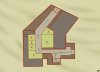
Once we enter through the doors, the public-facing interior of the hacienda continues to harken the rural theming, which is further complimented with simpler, yet-engaging interpretive signage that covers a wide variety of area-relevant topics. If we turn to our right, a bird-safe plexiglass viewing window that looks out into the previously-teased enclosure is a dead-end worth stopping for; especially when our family troop of Black Howler Monkeys happens to show up (#3). If they’re not, no worries, for the signage that accompanies the enclosure covers not just the basic facts; but also, the individuals we currently have, as well as the plight of their conservation status in their natural range.

Made by yours truly, Austin the Sengi
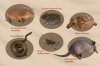
Turning back to where we first entered and heading straight along the left-facing hallway, directly ahead are the first of six vivarium-type enclosures: with each enclosure being home to a single species of smaller animal native to the region. In numerical order with the guide above, the following species are listed as such:
From the vivariums, straight ahead of us is another set of sliding doors that mark the exit of the Gran Hacienda; with the surrounding walls of this hallway being covered in additional signage and conservation-related graphics. Such graphics also cover the partnership for The Chaco Center for Conservation and Research (CCCI), an organization we support that helps to protect the wild relatives of our animals in their native range.
Returning back outside, the main path naturally curves back toward and between the howler and seriema enclosures. If we keep going straight, a covered viewing shelter for the last and largest exhibit in the complex awaits us. Once we’re inside looking out, visitors like us can scan across a 4,474 square ft (415.6482 sq m) enclosure for the mysterious “tagua” (#2).
Luckily for us, it won’t take us long to figure out what a “tagua” is, for the first and largest enclosure in this complex is home to a breeding squadron of Chacoan Peccaries! Being the signature species of the complex, and the animal most associated with the Gran Chaco as a whole; it was important going in to give the peccaries the most of what they need into this one large space. Such elements include dedicated mud-wallows and foraging areas, enrichment items that prioritize natural behaviors (such as scatter-feeding), and even an area that the peccaries use as a latrine; among other amenities.
In addition to serving its main purpose, the viewing shelter also has a table topped with replica peccary bones (which includes a complete skull), with the signage above it highlighting the scientific discovery of this species as an extinct animal (and therefore, an example of a “Lazarus Taxon”).
Leading out of the shelter and walking on the pathway alongside the boundaries of the exhibit, in between the safety barriers and peccary fencing is a “buffer zone” defined by a patch of prickly pears and other species of cacti. Signage relating to the peccary’s dietary relationship with cacti and basic facts about the planted species are also noteworthy, for the Gran Chaco is largely defined by a dry semi-arid scrubland.
Other signage relating to the CCCI’s “Cactaceae Project” is also present, which, in summary, is aimed to produce experimental plots of cacti to supplement the diets of wild peccaries from a regulated source.
As we get closer to the trail’s end (#1), a final opportunity to check out additional viewing opportunities are provided; with a life-sized comparison of the extant members of the peccary family being one of several interpretive elements present in this part of the complex.
Therefore, it allows us to analyze additional details of the main enclosure, which include a variety of deciduous trees manicured to resemble the shrubbier foliage of the Chaco, as well as scattered logs and generally rocky terrain. Regarding the latter, additional signage explains that peccaries have comparatively dainty hooves, which allows their wild counterparts to easily navigate their natural habitat. To better explain this anatomical fact for most audiences, nearby is an 8-ft long balance beam for curious visitors to try and practice their balancing skills.
Turning left from the balance beam, the path then leads us out towards the rest of the zoo, effectively marking the conclusion of this latest entry.


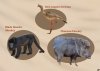
Full Species List for the Tagua Trail:
Provided by yours truly, Austin the Sengi
Rounding out the pair of South American entries, this next entry highlights the rarely-represented Gran Chaco, which is notable for being the single wild stronghold for the titular Tagua! (t-ah-g-wah; for those wondering about its pronunciation).
Technically speaking, there are two official ways to enter the trail. However, for the sake of consistency, we will begin by entering through one pathway, and ending off at the other.
Made by yours truly, Austin the Sengi
While we will be using the following map as a directory, we are going to go through the labels depicted in reverse (starting at #6, ending at #1). No spoilers as for what we’ll run into along the way; but to finally start things off, we will be turning towards the path facing right and heading straight towards the first of three outdoor enclosures.
Once in view (from the first entrance), an eight-foot tall (2.4 m) meshed aviary beckons for attention, for when one looks into either one of the two designated viewing areas; a Red-Legged Seriema might just come into view! Looking inside to the wider enclosure (#5), the following approximately covers 468 square ft (43.47 sq m) of space, which is slightly above the bare minimum for the species in most zoos. To compensate, the area is decked out in amenities that more than suit the needs of our current pair. This includes (but not exclusive to) artificial termite mounds and leaf litter to stimulate foraging behaviors, scattered elevated perches, and ample open space for the birds to run along.
From the seriemas, we face to our left and head towards a large multi-purpose building with exterior theming that pays a respectful homage to the traditional ranch-houses and ecolodges that dot the Chacoan landscape.
Along the way to this building, another meshed enclosure of similar proportions to that of the seriema aviary is also in view*. However, for the time being, we are going to intentionally avoid this enclosure for just a moment and instead have our focus towards a set of automatic sliding doors that lead inside the Gran Hacienda, the official name for the building in question (#4).
*956 square ft (88.8153 sq m) to be precise
Once we enter through the doors, the public-facing interior of the hacienda continues to harken the rural theming, which is further complimented with simpler, yet-engaging interpretive signage that covers a wide variety of area-relevant topics. If we turn to our right, a bird-safe plexiglass viewing window that looks out into the previously-teased enclosure is a dead-end worth stopping for; especially when our family troop of Black Howler Monkeys happens to show up (#3). If they’re not, no worries, for the signage that accompanies the enclosure covers not just the basic facts; but also, the individuals we currently have, as well as the plight of their conservation status in their natural range.
Made by yours truly, Austin the Sengi
Turning back to where we first entered and heading straight along the left-facing hallway, directly ahead are the first of six vivarium-type enclosures: with each enclosure being home to a single species of smaller animal native to the region. In numerical order with the guide above, the following species are listed as such:
- Gran Hacienda (#4)
- Screaming Hairy Armadillo
- Nine-Banded Armadillo
- Argentine Boa
- Chaco Golden-Knee
- Chacoan Horned Frog
- Chaco Tortoise
From the vivariums, straight ahead of us is another set of sliding doors that mark the exit of the Gran Hacienda; with the surrounding walls of this hallway being covered in additional signage and conservation-related graphics. Such graphics also cover the partnership for The Chaco Center for Conservation and Research (CCCI), an organization we support that helps to protect the wild relatives of our animals in their native range.
Returning back outside, the main path naturally curves back toward and between the howler and seriema enclosures. If we keep going straight, a covered viewing shelter for the last and largest exhibit in the complex awaits us. Once we’re inside looking out, visitors like us can scan across a 4,474 square ft (415.6482 sq m) enclosure for the mysterious “tagua” (#2).
Luckily for us, it won’t take us long to figure out what a “tagua” is, for the first and largest enclosure in this complex is home to a breeding squadron of Chacoan Peccaries! Being the signature species of the complex, and the animal most associated with the Gran Chaco as a whole; it was important going in to give the peccaries the most of what they need into this one large space. Such elements include dedicated mud-wallows and foraging areas, enrichment items that prioritize natural behaviors (such as scatter-feeding), and even an area that the peccaries use as a latrine; among other amenities.
In addition to serving its main purpose, the viewing shelter also has a table topped with replica peccary bones (which includes a complete skull), with the signage above it highlighting the scientific discovery of this species as an extinct animal (and therefore, an example of a “Lazarus Taxon”).
Leading out of the shelter and walking on the pathway alongside the boundaries of the exhibit, in between the safety barriers and peccary fencing is a “buffer zone” defined by a patch of prickly pears and other species of cacti. Signage relating to the peccary’s dietary relationship with cacti and basic facts about the planted species are also noteworthy, for the Gran Chaco is largely defined by a dry semi-arid scrubland.
Other signage relating to the CCCI’s “Cactaceae Project” is also present, which, in summary, is aimed to produce experimental plots of cacti to supplement the diets of wild peccaries from a regulated source.
As we get closer to the trail’s end (#1), a final opportunity to check out additional viewing opportunities are provided; with a life-sized comparison of the extant members of the peccary family being one of several interpretive elements present in this part of the complex.
Therefore, it allows us to analyze additional details of the main enclosure, which include a variety of deciduous trees manicured to resemble the shrubbier foliage of the Chaco, as well as scattered logs and generally rocky terrain. Regarding the latter, additional signage explains that peccaries have comparatively dainty hooves, which allows their wild counterparts to easily navigate their natural habitat. To better explain this anatomical fact for most audiences, nearby is an 8-ft long balance beam for curious visitors to try and practice their balancing skills.
Turning left from the balance beam, the path then leads us out towards the rest of the zoo, effectively marking the conclusion of this latest entry.
Full Species List for the Tagua Trail:
Provided by yours truly, Austin the Sengi
Attachments
Last edited: