A couple years ago for my birthday, I got a Campark ACT76 Action Camera with a waterproof case from one of my relatives. I was living in Hawaii at the time, and I would take it with me every time I went snorkeling at the beach. I've noticed that only a handful of other ZooChatters here have ever been to Hawaii, so I decided to make a thread to share some of the animals I have seen and photographed. Please note that some of the pictures are somewhat blurry, since the camera I got doesn't exactly scream high quality, and it can't zoom in that much. Plus, I don't exactly have a lot of experience in photography. This thread isn't reserved exclusively for marine life though, as I managed to take a picture of a few birds, so they will be going on here too.
I took pictures of a lot of species, so to prevent my post from becoming too long and the possibility I might loose all my progress, I'm going to upload one species at a time.
Convict Tang (Acanthurus triostegus)
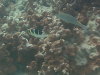
This fish is easily one of the most common and widespread Hawaiian reef fish. They can be found in large schools in shallow coral reefs and often congregate with other species of small reef fish. The fish pictured here were photographed on the island of Oahu all from the same beach.
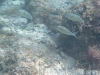
Another common reef fish, Saddle Wrasse live in large mixed-species shoals and will also often hide in rock and coral crevices. They are the most common Hawaiian endemic fish. These two fish were photographed on Oahu.
This fish is the official national fish of Hawaii and probably one of the most well known and iconic Hawaiian fish. This fish is fairly common and found in shallow coral reefs. It's mainly solitary and also very shy and skittish, so its very hard to get clear shots of this fish. The first fish was photographed off Molokini Crater on Maui and the second one was caught on Oahu.
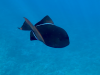
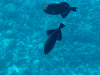
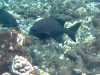
Unlike other triggerfish, Black Triggerfish are not as brightly colored and can be distinguished by their almost black coloration, and blue lines running across their dorsal and anal fins. They can be found in large schools out in open waters that number in the hundreds, where they congregate near the surface, although individuals sometimes venture to more shallow waters. These fish were photographed near Molokini Crater, which is off the coast of Maui.
This fish is unmistakable with its bright neon pink tail. It's mainly found in shallow coral reefs, but can sometimes be found in deeper waters. This fish was photographed off a beach on Maui.
This predatory fish is found in shallow coral reefs and travels in small packs, where it feeds on the small schooling reef fish. This fish however was solitary, when I photographed it on Oahu.
Also called the Square-Spot Goatfish, these fish swim together in very large schools with hundreds of individuals. They can be found in shallow reefs, but larger schools are found in deeper waters such as harbors and the edges of reefs. These three were photographed on Oahu.
This colorful species of goatfish is somewhat uncommon, as I don't come across that many. They can be found in shallow coral reefs, as well as deep coral reefs. This fish was photographed in Maui.
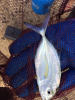
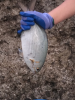
These large, powerful predators are very elusive and probably one of the hardest fish to photograph due to them being cautious of humans and being very fast swimmers. Juveniles live in shallow coral reefs, where they soon venture to deeper waters as they grow older. The juvenile pictured here was caught off a beach in Oahu.
These fish are found in very rocky areas that are exposed to wave action. They are usually very skittish, but they let me get unusually close to them. These fish were photographed at Molokini Crater.
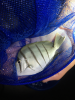
These solitary fish can be found in shallow coral reefs. They are very territorial, and spend a lot of time hidden in rock crevices. This juvenile was caught at nighttime on Oahu.
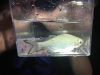
These fish live in large schools in areas with wave action. Juveniles live in more shallow water such as tide pools and shallow reefs. This individual was caught at nighttime on Oahu.
These fish are common on coral reefs and are sexually dimorphic. Males have an orange tail and females have a brown tail. This female was photographed at Molokini Crater.
These fish are fairly common in deep waters, but sometimes can be found in medium-sized schools in coral reefs. These two individuals were photographed on Maui.
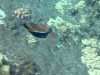
These fairly common fish can be found in shallow coral reefs. Unlike other members of their genus, this species lacks any kind of horn. This individual was taken at Molokini Crater.
These fish are fairly common on shallow reefs. They have the ability to make their body half-toned to completely black, although their iconic orange band stays intact no matter what phase they are in. Juveniles are bright yellow and develop the orange band as they get older. The first individual was photographed at Molokini Crater and the second one on Oahu.
One of the most iconic and recognizable member of its genus, these fish are somewhat common in shallow reefs, where they can be seen in pairs or solitary. This individual was photographed at Molokini Crater.
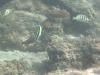
Another common and iconic reef fish, these fish are found alone or in pairs, but sometimes mingle with other species of fish. They are pretty skittish, and are surprisingly very fast, considering their small tail. These individuals were photographed on Oahu.
Also pictured here are Convict and Lavender Tangs.
This is a wonderful thread! Are there any land-based fauna endemic to the Hawaiian islands that you’ve photographed? I don’t know much about the flora/fauna there at all, admittedly.


























 Are there any land-based fauna endemic to the Hawaiian islands that you’ve photographed? I don’t know much about the flora/fauna there at all, admittedly.