British Isles Cup Redux - FINALS - Cotswold vs RZSS

Cotswold vs RZSS - PRIMATES and SOUTH/CENTRAL AMERICA AND CARIBBEAN

  • Cotswold 5/0 RZSS

    Votes: 0 0.0%
  • Cotswold 4/1 RZSS

    Votes: 0 0.0%
  • RZSS 5/0 Cotswold

    Votes: 0 0.0%

  • Total voters
    14
  • Poll closed .

TeaLovingDave

Moderator
Staff member
15+ year member
So, it comes down to this - one final match before the British Isles Cup is over. There's been rather less participation that I had hoped (particularly considering the fact that the abortive version run by @CGSwans at the start of the year had close to three times as many people participating, so it isn't merely an issue of people not having visited the collections in question) but that is all behind us now :P hopefully this last one will spark a decent bit of discussion.....

The categories are comfortably familiar ones - PRIMATES and SOUTH/CENTRAL AMERICA AND CARIBBEAN - and hopefully by now we all know that they are to be judged on a wide spectrum of possible factors, including but not limited to conservation, exhibit quality and collection size.

So, let us see where the discussion takes us shall we?
 
I think that as regards these categories, RZSS wins this one by a long shot (with particular strong points including the quality of the Budongo Trail exhibit, the Living Links exhibit complex for Brown Capuchin and Common Squirrel Monkey, involvement in the Budongo Conservation Field Station in Uganda, their exhibits for Golden-Cheeked Gibbon and Giant Anteater at Edinburgh, and the Vicuna and Japanese Macaque exhibits at HWP) but I will leave it to others to make the case for either collection in full.
 
I think Edinburgh definitely smash this one.

A full house in terms of primates. Great apes are represented by the chimpanzee, lesser apes by the buff cheeked gibbon, old world monkeys by a really nice selection of mainly African species (drill, Diana's monkey, L'Hoest's monkey, gelada) and lemurs too (ring tailed lemur, red bellied lemur, crowned lemur).

New world primates are a far stronger hand for Edinburgh too with both the common capuchin and the critically endangered buffy headed capuchin, common squirrel monkey, white faced saki monkey, owl monkey, vulnerable Goeldi's monkey, pygmy marmoset and critically endangered cotton top tamarin.

General South American mammals is quite good too and particularly in terms of Edentata with giant anteater, hairy armadillo, southern three banded armadillo. Also carnivores like the margay as well as hoofstock like Vicuna and pudu (though they lack the lowland tapir which CWP has).

Birds are a little weaker than CWP with Chilean flamingo, red fronted macaw, king penguin (kind of South American I suppose).

Reptiles, I have no idea what they have but apparently they have a tegu so that is at least one South American species.

Amphibians are represented by two poison dart frogs.
 
Last edited:
RZSS primates:

Goeldi's monkey
Common chimpanzee
Common squirrel monkey
Cottontop tamarin
Crowned lemur
Diana monkey
Drill
Eastern pygmy marmoset
Gelada
Grey-handed night monkey
Guianan brown capuchin
L'Hoest's monkey
Red-bellied lemur
Red-cheeked gibbon
Ring-tailed lemur
White-faced saki
Yellow-bellied capuchin
Japanese macaque

Chimpanzee exhibit:

full


full


Lemur walkthrough (Red-bellied lemur, Ring-tailed lemur, Crowned lemur)

full


Both capuchin species and Squirrel monkey mixed exhibit (with a nice indoor exhibit as well):

full


Gibbon exhibit:

full


Japanese macaque

full


Cotswold WP primates up next to compare :)
 
  • Like
Reactions: TNT
Those are the good exhibits at Edinburgh, any photos of the monkey house available? Not everything is that good!
 
Those are the good exhibits at Edinburgh, any photos of the monkey house available? Not everything is that good!

Unfortunately not, but you are correct in the sense that Edinburgh is not all nice, large and green exhibits for their primates.

Cotswold Wildlife Park primates (unsure in italics)

Bearded emperor tamarin
Common squirrel monkey
Cottontop tamarin
Crowned sifaka
Golden-handed tamarin
Greater bamboo lemur
Lac Aloatra bamboo lemur
Lar gibbon
Lesser mouse lemur?
Pygmy marmoset
Red titi
Red-bellied lemur
Ring-tailed lemur
Senegal bushbaby
Siamang
Western guereza
White and black ruffed lemur

I think actually the Cotswold WP primate lineup might actually be more interesting than that at Edinburgh, with the bushbabies, siamangs, sifakas and bamboo lemurs.

Cottontop tamarin exhibit:

full


Senegal bushbaby exhibit (on the left)

full


Sifaka exhibit:

full


Grey mouse lemur exhibit:

full


Walkthrough lemur exhibit:

full

full


Siamang:

full


full


Lar gibbon:

full


I think Edinburgh wins on exhibit quality, although Cotswold's species lineup is really quite interesting (one of the most interesting in the UK in fact imo).
 
Had a look at the species lists for South America next, and found that Cotswold WP actually had a far better lineup than RZSS, greater in terms of rarity and number:

Cotswold (Subtracting already included primates):
Azara's agouti
Capybara
Giant anteater
Linnaeus' two-toed sloth
Patagonian mara
Seba's short-tailed bat
Six-banded armadillo
South American tapir
Southern tamandua

Black curassow
Black-crowned night heron
Blue and yellow macaw
Blue throated piping guan
Burrowing owl
Chilean flamingo
Chiloe wigeon
Coscoroba swan
Fulvous whistling duck
Green aracari
Humboldt penguin
Muscovy duck
Northern pintail
Red shoveler
Scarlet ibis
Yellow-billed teal
Silver teal
Black bellied whistling duck
Southern lapwing
Southern screamer
Striated caracara
Ringed teal
Turkey vulture
Western cattle egret
White-faced whistling duck

Blue spiny lizard
Eyelash viper
Graham's anole
Hispaniolan rhinoceros iguana
Jamaican boa
Morelet's crocodile
Utila spinytail iguana

Blue poison dart frog
Spiny-headed tree frog
Mexican leaf frog

Meanwhile, RZSS has the following (excluding previously mentioned primates):
Azara's agouti
Giant anteater
Southern pudu
Southern three-banded armadillo
Vicuna
Yucatan margay

Blue and yellow macaw
Chilean flamingo
Red-fronted macaw
Striated caracara
Turkey vulture

Argentine black and white tegu

(and rockhopper and gentoo penguins if one really is a pedant)

But this yields quite a stark contrast -
Cotswold have 9 species of mammal, RZSS have only 6
Cotswold have 25 species of bird, RZSS only have a rather shocking 5 (7 with the penguins)
Cotswold have 7 species of reptile, RZSS only have one
And Cotswold have 3 species of amphibian, RZSS have none.

Which, when added up, yields, in terms of South American species:

Cotswold 44, RZSS 12.
 
Cotswold South American exhibits:

Blue-throated piping-guan:

full


Tapir and Capybara:

full


Southern tamandua and armadillo outdoors:

full


Giant anteater

full


Chilean flamingo breeding group + Chiloe wigeon:

full


Burrowing owl:

full


Humboldt penguin:

full


Turkey vulture:

full


All in all, Cotswold WP's exhibits for South American animals range from average to excellent, with a great range and number of species.
 
RZSS South American exhibits:

Azara's agouti:

full


Giant anteater:

full


Vicuna (no rhea anymore afaik):

full


The margay exhibit is quite lush and adequate for the species overall.

Vicuna at HWP:

full


There is more to the exhibit than this, just the best pic I could really find.

Overally, RZSS's South American exhibits are generally of a consistently good quality, with some outstanding ones, but for me they are too few and far between, with only 12 species from the continent represented in the entirety of both zoos.

Will post a sort of summary next, plus a review of conservation efforts.
 
In Situ Conservation efforts

RZSS:
Budongo Trail Conservation Station: RZSS financed the construction of this conservation station in Uganda. The station conducts research as well as on the ground work to help the 700 chimpanzees living in the nearby forest.
Anteater Highway project: The project is coordinated my multiple zoos and aims to relocate anteaters to safer areas where their habitat is not criss-crossed by highways where roadkills could take place.
Giant armadillo conservation: A large scale, long term research study into the behaviour of Giant armadillos allowing us to know more about the species and hence making its conservation easier.

Cotswold WP:
Sifaka conservation: The project aims to protect sifakas in the fragmented forests in Madagascar in which they still hold on. It attempts to manage very small and fragmented family groups across the island in metapopulations - the zoo has provided the project with equipment as well as funding.
Project Bamboo Lemur: The zoo has been heavily invested in this important project since its inception. The project observes in many cases unique behaviour in these little known species and uses this data to help preserve them in the wild.
World Parrot Trust: Heavily involved with the World Parrot Trust, an association dedicated to saving parrots and conducting research on them across the world, including in South American rainforests.
Falklands conservation: Also involved in the conservation of penguins and seabirds in the Falklands, where their populations are threatened by a number of different factors.
Project Utila Iguana: Also heavily invested into a project to save the Utila iguana on its remote Honduran island. The species is critically endangered and the project aims to bring it back from the brink.

Overall, in terms of conservation, I would not underestimate Cotswold WP's contribution to conservation in these categories, and they might even outweigh RZSS's admirable work in Uganda in particular.

All in all, I think Cotswold actually has the edge. A solid primates section with some nice exhibits, a very strong South American area with a glimmering species list and some key conservation efforts around the globe. Meanwhile, RZSS, while still strong, perhaps slightly outperforms Cotswold in primates, though this category is still close-fought, and is nowhere near their level in terms of South America.

In conclusion, I think I will buck the trend a bit by voting for Cotswold, and would urge those who have voted in favour of RZSS, in particular the 4-1 votes, to rethink based on everything that has been put forward, as based on what I have seen, there is little to no grounds for voting so starkly, especially given Cotswold's dominance in South American fauna.
 
But this yields quite a stark contrast -
Cotswold have 9 species of mammal, RZSS have only 6

Overally, RZSS's South American exhibits are generally of a consistently good quality, with some outstanding ones, but for me they are too few and far between, with only 12 species from the continent represented in the entirety of both zoos.

Except you explicitly say you are choosing not to count primates in your South America total ;) which, given the fact one of the best exhibits in Edinburgh is a South American primate exhibit, and their other exhibits for New World primates are also excellent, is a major omission. It literally more than halves their mammal total!

Posts defending Edinburgh and detailing what you missed anon :p
 
Except you explicitly say you are choosing not to count primates in your South America total ;) which, given the fact one of the best exhibits in Edinburgh is a South American primate exhibit, and their other exhibits for New World primates are also excellent, is a major omission. It literally more than halves their mammal total!

Well yes, but surely we are not counting the South American primates twice! Furthermore, if you include the South American primates for Edinburgh, the same must be done for Cotswold.
But if you really want to do that, then the adjusted totals for South American mammals are:

Cotswold: 15, RZSS 14 - not a big difference and certainly won't be affecting my vote.
It'll be interesting to see your justification for such a stark vote though :)
 
It'll be interesting to see your justification for such a stark vote though :)

As I already intimated, sheer quality of some of the relevant exhibits compared to CWP - although Edinburgh has poor exhibits as noted (the monkey house for instance) it also has a large number of significantly better exhibits than anything Cotswold has to offer in either category.

But I'll go over things properly later, after I finish work :) and possibly reassess the magnitude of the scoring depending on how I feel in weighing the matter.
 
So, first things first; the Living Links mixed exhibit for Brown Capuchin and Common Squirrel Monkey which @amur leopard more or less skated over in his summary of what RZSS has to offer as regards the category "PRIMATES" is concerned - and entirely omitted in his summary of what the organisation has in its favour as far as "SOUTH/CENTRAL AMERICA AND CARIBBEAN" is concerned - is without a doubt the best exhibit for the two species I have seen anywhere (and, as I will discuss anon, the Budongo Trail exhibit complex for chimpanzees is by far the best for *that* species in the UK).

Moreover, it is not merely a mixed enclosure, but an active research centre and field facility for the study of primate behaviour and social dynamics, which has a separate website devoted to the work/research performed there:

Living links

This research is performed by a collaboration between St Andrews University, RZSS and the Scottish Primate Research Group - with research also taking place within the Budongo Trail facility.

The following is the list of research papers published by this team - I shall highlight those most specifically relevant to Living Links and/or Budongo Trail in bold:

2020

Jordan, E. J., Townrow, L. A. J., Wright, C. I., & Seed, A. (2020). Understanding Solidity: Investigating Knowledge of a Functional Object Property in Brown Capuchin Monkeys (Sapajus apella) and Common Squirrel Monkeys (Saimiri sciureus). Animal Behavior and Cognition, 7(3), 365-391. https://doi.org/10.26451/abc.07.03.07.2020

Kersken, V., Zhang, D., Gomez, J-C., Seed, A., & Ball, D. (2020). Capuchin monkeys individuate objects based on spatio-temporal and property/kind information: Evidence from looking and reaching measures. Animal Behavior and Cognition, 7(3), 343-364. Capuchin Monkeys Individuate Objects Based on Spatio-temporal and Property/Kind Information: Evidence from Looking and Reaching Measures — Animal Behavior and Cognition


Pereira, A. S., Kavanagh, E., Hobaiter, C., Slocombe, K. E., & Lameira, A. R. (2020). Chimpanzee lip-smacks confirm primate continuity for speech-rhythm evolution. Biology Letters, 16(5) https://doi/10.1098/rsbl.2020.0232

Wilson, V., Weiss, A., Lefevre, C. E., Ochiai, T., Matsuzawa, T., Inoue-murayama, M., Freeman, H., Herrelko, E. S., & Altschul, D. M. (2020). Facial width-to-height ratio in chimpanzees: Links to age, sex and personality. Evolution and Human Behavior, 41 (3), 226-234, Redirecting


Picard, A. M., Mundry, R., Auersperg, A. M., Boeving, E. R., Boucherie, P. H., Bugnyar, T., Dufour, V., Emery, N. J., Federspiel, I. G., Gajdon, G. K., Guéry, J., Hegedič, M., Horn, L., Kavanagh, E., Lambert, M. L., Massen, J. J. M., Rodrigues, M. A., Schiestl, M., Schwing, R., Szabo, B., Taylor, A. H., van Horik, J. O., von Bayern, A. M. P., Seed, A., & Slocombe, K. E. (2020). Why preen others? Predictors of allopreening in parrots and corvids and comparisons to grooming in great apes. Ethology, 126 (2), 207-228, https://doi.org/10.1111/eth.12999

2019

Primates, M., Altschul, D. M., Beran M. J., Bohn M., Call J., DeTroy S., et al. (2019). Establishing an infrastructure for collaboration in primate cognition research. PLoS ONE 14(10): e0223675. https://doi.org/10.1371/journal.pone.0223675

Wallace, E. K., Herrelko, E. S., Koski, S. E., Vick, S., Buchanan-Smith, H. M., & Slocombe, K. E. (2019). Exploration of potential triggers for self-directed behaviours and regurgitation and reingestion in zoo-housed chimpanzees. Applied Animal Behaviour Science, 221. doi:10.1016/j.applanim.2019.104878

Renner, E., Atkinson, M., & Caldwell, C. A. (2019). Squirrel monkey responses to information from social demonstration and individual exploration using touchscreen and object choice tasks. PeerJ, 7, Squirrel monkey responses to information from social demonstration and individual exploration using touchscreen and object choice tasks


2018

Burdett, E.R.R., McGuigan, N., Harrison, R. & Whiten, A. (2018). The interaction of social and perceivable causal factors in shaping ‘over-imitation’. Cognitive Development, 47, 8-18. Redirecting

Dickerson, K.L., Ainge, J.A., & Seed, A.M. (2018). The role of association in pre-schoolers’ solutions to “spoon tests” of future planning. Current Biology 28 (14), 2309-2313. Redirecting

O’Sullivan, E.P., Bijvoet-van den Berg, S., & Caldwell, C.A. (2018). Automatic imitation effects are influenced by experience of synchronous action in children. Journal of Experimental Child Psychology, 171, 113-130. Redirecting

Gartner, M.C. & Weiss, A. (2018). Studying primate personality in zoos: Implications for the management, welfare and conservation of great apes. International Zoo Yearbook, 52 (1), 79–91. https://doi.org/10.1111/izy.12187

Wilson, V.A.D., Inoue-Murayama, M., & Weiss, A. (2018). A comparison of personality in the common and bolivian squirrel monkey (Saimiri sciureus and Saimiri boliviensis). Journal of Comparative Psychology, 132 (1), 24–39. APA PsycNet

Altschul, D.M., Hopkins, W.D., Herrelko, E.S., Inoue-Murayama, M., Matsuzawa, T., King, J.E., Ross, S.R., & Weiss, A. (2018). Personality links with lifespan in chimpanzees. Elife. 2018;7:e33781. Personality links with lifespan in chimpanzees | eLife


2017

O’Sullivan, E., Claidière, N., & Caldwell, C. A. (2017). Action-matching biases in monkeys (Sapajus sp.) in a stimulus-response compatibility task: Evaluating experience-dependent malleability. Journal of Comparative Psychology, 131 (4), 337-347. APA PsycNet

Wood, L. A. & Whiten, A. (2017). Visible spatial contiguity of social information and reward affects social learning in brown capuchins (Sapajus apella) and children (Homo sapiens). Journal of Comparative Psychology, 131 (4), 304-316. APA PsycNet

Daoudi, S., Badihi, G., & Buchanan-Smith, H. M. (2017). Is mixed-species living cognitively enriching? Enclosure use and welfare in two captive groups of tufted capuchins (Sapajus apella) and squirrel monkeys (Saimiri sciureus). Animal Behavior and Cognition, 4(1), 52-71. Cognitive Enrichment and Welfare: Current Approaches and Future Directions — Animal Behavior and Cognition


Polgár, Z., Wood, L., & Haskell, M. J. (2017). Individual differences in zoo‐housed squirrel monkeys'(Saimiri sciureus) reactions to visitors, research participation, and personality ratings. American Journal of Primatology, 79(5). https://doi.org/10.1002/ajp.22639

Altschul, D.M, Emma K. Wallace, Ruth Sonnweber, Masaki Tomonaga, Alexander Weiss (2017). Chimpanzee intellect: personality, performance and motivation with touchscreen tasks. Proceedings of The Royal Society B, 4 (5). https://doi.org/10.1098/rsos.170169


Lucas, A. J., Burdett, E. R. R., Burgess, V., Wood. L.A., McGuigan, N., Harris, P. L. & Whiten, A. (2017). The development of selective copying: children’s learning from an expert versus their mother. Child Development, 88 (6), 2026-2042. https://doi.org/10.1111/cdev.12711

Wallace, E.K., Altschul, D., Korfer, K., Benti, B., Kaeser, A., Lambeth, S., Waller, B. & Slocombe, K.E. (2017). Is music enriching for group-housed captive chimpanzees (Pan troglodytes)? PLoS ONE 12(3) Is music enriching for group-housed captive chimpanzees (Pan troglodytes)?

Robinson, L.M., Altschul, D., Wallace, E., Úbeda, Y., Llorente, M., Machanda, Z., Slocombe, K.E., Leach, M., Waran, N.K. & Weiss, A. (2017). Chimpanzees with positive welfare are happier, extraverted, and emotionally stable. Applied Animal Behaviour Science, 191, 90-97. Redirecting


2016

Morton, F. B., Brosnan, S. F., Prétôt, L., Buchanan-Smith, H. M., O’Sullivan, E., Stocker, M., & Wilson, V. A. (2016). Using photographs to study animal social cognition and behaviour: Do capuchins’ responses to photos reflect reality? Behavioural processes, 124, 38-46. https://doi.org/10.1016/j.beproc.2015.10.005

Robinson, L. M., Morton, F. B., Gartner, M. C., Widness, J., Paukner, A., Essler, J. L., & Weiss, A. (2016). Divergent personality structures of brown and white-faced capuchins. Journal of Comparative Psychology, 130 (4). https://psycnet.apa.org/doi/10.1037/com0000037

Robinson, L. M., Waran, N. K., Leach, M. C., Morton, F. B., Paukner, A., Lonsdorf, E., & Weiss, A. (2016). Happiness is positive welfare in brown capuchins (Sapajus apella). Applied Animal Behaviour Science, 181, 145–151. https://doi.org/10.1016/j.applanim.2016.05.029


Tecwyn, E. C., Denison, S., Messer, E. J. E., & Buchsbaum, D. (2016). Intuitive probabilistic inference in capuchin monkeys. Animal Cognition, 1-14. https://doi.org/10.1007/s10071-016-1043-9

Burdett, E.R.R., Lucas, A.J., Buchsbaum, D., McGuigan, N., Wood, L.A., & Whiten, A. (2016). Do Children Copy an Expert or a Majority? Examining Selective Learning in Instrumental and Normative Contexts. PLoS ONE 11(10): e0164698. https://doi.org/10.1371/journal.pone.0164698

Wood, L. A., Harrison, R. A., Lucas, A. J., McGuigan, N., Burdett, E. R. R., & Whiten, A. (2016). “Model age-based” and “copy when uncertain” biases in children’s social learning of a novel task. Journal of Experimental Child Psychology, 150, 272-284. https://doi.org/10.1016/j.jecp.2016.06.005

2015

Ruby, S., & Buchanan‐Smith, H. M. (2015). The effects of individual cubicle research on the social interactions and individual behavior of brown capuchin monkeys (Sapajus apella). American Journal of Primatology, 77(10), 1097-1108. https://doi.org/10.1002/ajp.22444

Morton, F.B., Weiss, A. Buchanan-Smith, and Lee, P.C (2015). Capuchin monkeys with similar personalities have higher quality relationships independent of age, sex, kinship and rank. Animal Behaviour, 105, 163 -171. https://psycnet.apa.org/doi/10.1016/j.anbehav.2015.04.013

Claidiere, N., Whiten, A., Mareno, M.C., Messer, E.J.E., Brosnan, S.F., Hopper, L.M., Lambeth, S.P., Schapiro, S.J. & McGuigan, N. (2015). Selective and contagious prosocial resource donation in capuchin monkeys, chimpanzees and humans. Scientific Reports, 5: 7631. https://doi.org/10.1038/srep07631


Watson, S. K., Townsend, S. W., Schel, A. M., Wilke, C., Wallace, E. K., Cheng, L., West, V. & Slocombe, K. E. (2015). Vocal learning in the functionally referential food grunts of chimpanzees. Current Biology 25, 495-499 http://dx.doi.org/10.1016/j.cub.2014.12.032

Bowler, M., Messer, E. J. E., Claidière, N., Whiten, A. (2015). Mutual medication in capuchin monkeys – Social anointing improves coverage of topically applied anti-parasite medicines. Scientific Reports 5, https://doi.org/10.1038/srep15030


2014

Claidière, N., Bowler, M., Brookes, S., Brown, R. & Whiten, A. (2014). Frequency of behaviour witnessed and conformity in an everyday social learning context. PLOS ONE 9 https://doi.org/10.1371/journal.pone.0099874

Lefevre, C.E., Wilson, V.A.D., Morton, F.B., Brosnan, S.F., Paukner, A., & Bates, T.C. (2014). Facial Width-To-Height Ratio Relates to Alpha Status and Assertive Personality in Capuchin Monkeys. PLoS ONE 9(4): e93369. https://doi.org/10.1371/journal.pone.0093369

MacLean, E. L., Messer, E. J. E., Seed, A. M., Slocombe, K. E., & Tao, R. (2014). The evolution of self-control. Proceedings of the National Academy of Sciences 111 (20) https://doi.org/10.1073/pnas.1323533111

Pasquaretta, C., Levé, M., Claidière, N., van de Waal, E., Whiten, A., & Sueur, C. (2014). Social networks in primates: smart and tolerant species have more efficient networks. Scientific Reports, 4: 7600 https://doi.org/10.1038/srep07600

Wilson, V. A. D., Lefevre, C. E., Morton, F. B., Brosnan, S. F., Paukner, A., & Bates, T. C. (2014). Personality and facial morphology: Links to assertiveness and neuroticism in capuchins (Sapajus [Cebus] apella). Personality and Individual Differences, 58, 89-94 https://dx.doi.org/10.1016/j.paid.2013.10.008

2013

Rimpley, K. & Buchannan-Smith, H. (2013). Reliably signalling a startling husbandry event improves welfare of zoo-housed capuchins (Sapajus apella). Applied Animal Behaviour Science. 147, 205-213. https://doi.org/10.1016/j.applanim.2013.04.017

Claidière, N., Messer, E.J.M., Hoppitt, W. & Whiten, A. (2013). Diffusion Dynamics of Socially Learned Foraging Techniques in Squirrel Monkeys. Current Biology. 23 (13), doi: https://doi.org/10.1016/j.cub.2013.05.036

Buchanan-Smith, H.M., Griciute, J., Daoudi, S., Leonardi, R. & Whiten, A. (2013). Interspecific interactions and welfare implications in mixed species communities of capuchin (Sapajus apella) and squirrel monkeys (Saimiri sciureus) over 3 years. Applied Animal Behaviour Science. 147 (3-4), 324-333. https://doi.org/10.1016/j.applanim.2013.04.004

Morton, F.B., Lee, P.C., Buchanan-Smith, H.M., Brosnan, S., Thierry, B., Paukner, A., de Waal, F.B.M., Widness, J., Essler, J. & Weiss, A. (2013). Personality structure in brown capuchin monkeys: Comparisons with chimpanzees, orangutans, and rhesus macaques. Journal of Comparative Psychology. doi: 10.1037/a0031723


Morton, F.B., Lee, P.C., & Buchanan-Smith, H.M. (2013). Taking personality selection bias seriously in animal cognition research: A case study in capuchin monkeys (Sapajus apella). Animal Cognition. 16, 677–684 https://doi.org/10.1007/s10071-013-0603-5

2012

Schel, A. M., Rawlings, B., Claidiere, N., Wilke, C., Wathan, J., Richardson, J., Pearson, S., Herrelko, E. S., Whiten, A. & Slocombe, K. (2012). Network analysis of social changes in a captive chimpanzee community following the successful integration of two adult groups. American Journal of Primatology 75, 254-66. https://doi.org/10.1002/ajp.22101

Bowler, M., Buchanan-Smith, H.M., & Whiten, A. (2012). Assessing Public Engagement with Science in a University Primate Research Centre in a National Zoo. PLoS ONE, 7 (4) https://doi.org/10.1371/journal.pone.0034505


Buchanan-Smith, H.M. (2012). Mixed-species exhibition of Neotropical primates: analysis of species combination success. International Zoo Yearbook, 46,150-163. https://doi.org/10.1111/j.1748-1090.2011.00151.x

Claidière, N., Bowler, M., & Whiten, A. (2012). Evidence for Weak or Linear Conformity but Not for Hyper-Conformity in an Everyday Social Learning Context. PLoS ONE 7(2): e30970. doi: 10.1371/journal.pone.0030970

Claidière, N., & Whiten, A. (2012). Integrating the study of conformity and culture in humans and nonhuman animals. Psychological Bulletin 138: 126-145. https://doi.apa.org/doi/10.1037/a0025868

2011

Dufour, V., Sueur, C., Whiten, A. & Buchanan-Smith, H.M. (2011). The impact of moving to a novel environment on social networks, activity and wellbeing in two new world primates. American Journal of Primatology, Special Issue on Social Networks in Primates Volume 73, Issue 8, pages 802–811. https://doi.org/10.1002/ajp.20943

Macdonald, C. & Whiten, A. (2011). The ‘Living Links to Human Evolution’ Research Centre in Edinburgh Zoo: a new endeavour in collaboration. International Zoo Yearbook. Volume 45, Issue 1, pages 7–17. https://doi.org/10.1111/j.1748-1090.2010.00120.x

2010

Leonardi, R., Buchanan-Smith, H., Dufour, V., MacDonald, C. & Whiten, A. (2010). Living Together: Behaviour and welfare in single and mixed species groups of capuchin (Cebus apella) and squirrel monkeys (Saimiri sciureus). American Journal of Primatology 72(1):33-47. https://doi.org/10.1002/ajp.20748


Along with the direct involvement which RZSS and the research group have with the Budongo Conservation Field Station in Uganda - and even if one disregards for a moment any other conservation involvement which RZSS has with primates and the geographic category at hand - this represents conservation work and research at a significantly higher level of impact and value to that found at Cotswold Wildlife Park. Once one takes into account the other relevant conservation projects at RZSS, and the quality of these exhibits and other relevant exhibits elsewhere in the two RZSS collections - of which I will speak more anon - it is clear that this is a case where quality far overcomes mere quantity.

I'll go over the actual exhibits (complete with rather more photos than the cherry-picked ones presented by @amur leopard ) in the next post.
 
I had no idea that Edinburgh keep their buffy headed capuchins with their brown capuchins, are some of these animals non-breeders?

Because it doesn't sound like a very sensible setup to me in terms of avoiding hybridization from occurring.
 
I had no idea that Edinburgh keep their buffy headed capuchins with their brown capuchins, are some of these animals non-breeders?

Because it doesn't sound like a very sensible setup to me in terms of avoiding hybridization from occurring.

They aren't mixed - the Buffy-headed Capuchins are held elsewhere in the zoo.
 
Interesting comments indeed @amur leopard.

I'm going to stick to my vote for RZSS (I think them having the buffy headed capuchin is a decisive factor for me) but with your comments you did make me consider shifting my vote to CWP based on their conservation output and overall aesthetics of park.

Incidentally @TeaLovingDave didn't both of these zoos once have purple faced langurs and wasn't it down to Edinburgh and a studbook keeper there that CWP eventually got rid of theirs ?
 
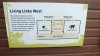
LIVING LINKS (at Edinburgh Zoo)

As noted above, this is by far the best exhibit for Common Squirrel Monkey and Brown Capuchin I have seen at any zoo - and at over 2300 m² it is certainly the largest, too.

upload_2020-12-22_0-17-33.png

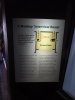
It comprises a pair of sizeable mixed outdoor exhibits, with two spacious and high indoor exhibits - one for each species - feeding each outdoor enclosure and a central research pod connecting the two halves of the complex. The following images should held explain the layout of the exhibit complex, along with the reason for this design:

P1310921.JPG

DSCF5839.JPG

P1310920.JPG


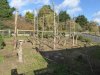
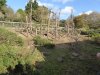
As already noted, the outdoor and indoor exhibits are spacious, provide plenty of climbing opportunity for the inhabitants, and the outdoor exhibits are well-vegetated:

P1310919.JPG

P1310916.JPG

full


full


P1310925.JPG

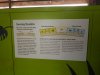
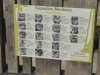
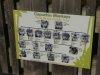
As can be seen, the exhibit complex is well-signposted with educational information - along with information on the research work taking place within the complex, and more general zoological information on the species held, there is also a large amount of information provided on subjects such as the group dynamics, hierarchy and family connections between the individual animals within the two mixed-species groups:

P1310922.JPG

P1310923.JPG
 

Attachments

  • upload_2020-12-22_0-17-33.png
    upload_2020-12-22_0-17-33.png
    975 KB · Views: 66
  • DSCF5839.JPG
    DSCF5839.JPG
    84.7 KB · Views: 64
  • P1310916.JPG
    P1310916.JPG
    238.5 KB · Views: 67
  • P1310920.JPG
    P1310920.JPG
    56.2 KB · Views: 66
  • P1310921.JPG
    P1310921.JPG
    94.4 KB · Views: 67
  • P1310922.JPG
    P1310922.JPG
    146.2 KB · Views: 65
  • P1310925.JPG
    P1310925.JPG
    251.3 KB · Views: 66
  • P1310919.JPG
    P1310919.JPG
    95.2 KB · Views: 65
  • P1310923.JPG
    P1310923.JPG
    134.5 KB · Views: 68
Budongo Trail (at Edinburgh Zoo)

As I previously noted, this is certainly the best chimpanzee exhibit in the UK - and puts up a bloody good fight for the European title too - with a massive outdoor exhibit (complete with a truly ridiculous amount of climbing material, poles, ropes and vegetation) supplemented by a complex of on-and-offshow indoor enclosures connected by tunnels which honeycomb the interor of the Budongo building - sometimes passing overhead within the public viewing areas. In total the exhibit covers a total of around 3,250 m², but given the amount of height present within both the indoor and outdoor enclosures the inhabitants have access to significantly more space:

upload_2020-12-22_0-59-23.png

Unfortunately for the purposes of demonstration - but a good thing in terms of the welfare of the inhabitants - the dozen or so interior exhibits are somewhat dimly lit, in order to better replicate the gloom of the thick rainforest canopy, and as such those few images of these exhibits are somewhat poor - however it should still be apparent that they are spacious, provide a lot of climbing opportunity, and have a great deal of vertical space:

full


full


As already noted, the outdoor enclosure is even better:

full


full


full


full
 

Attachments

  • upload_2020-12-22_0-59-23.png
    upload_2020-12-22_0-59-23.png
    486.2 KB · Views: 65
Back
Top