ZSL London Zoo Casson Pavillion Ideas

mcatee123

Well-Known Member
I know the Casson is a perennial favorite for enclosure bashing, I might be one of the rare people that think it is at least interesting archithechturally.

However I think in its current incarnation it doesn't work;

*The combination of animals that it houses suffer from being too small and -in the eyes of the general public- uninteresting.

* The huge scale of the building dwarfs the animals and becomes the topic of coversation.


*ultimately the building gets bashed, the animals ignored and the public leave no better off then when they arrived.

Most of us will think his problem needs to be addressed, My personal idea was to turn it into a China house.

Housing: *Giant pandas
*Golden snub nosed monkeys
*Red pandas

*Yellow legged button quail
*Grey peacock pheasant
*lady amherst pheasant
* Japanese Wood pigeon
*oriental turtle dove
* Oriental bay owl
* Oriental pied hornbill

* Chinese Soft shelled turtle


House exterior.
Split the old out door elephant paddock into two
Land scape the enclosure to create the impression of hilly terrain, the heavy concrete structure of the casson can more than take the weight.
using large boulders and vegetation to screen the two halves.
Heavliy plant the enclosure.
Add climbing surfaces and hides for the red pandas
This will be the half for the giant pandas/red pandas
Red pandas will have access to both halves
The male and female giant panda will have a half each

Land scape and plant the former rhino side.
Add climbing frames and hides.
This area will be for the Golden Snub nosed monkeys and the red pandas.


The house interior
Cover the floor with wood chips and plants.

The button quails pheasants and doves are free flying/walking with in the house.

2 full stalls for the giant pandas use mock rock and bamboo plus planting to screen the back walls of the enclosure.
(Possibly fill in the moat to increase the stall size )

Use glass to front the stall.

1 full stall for the red pandas.
mock rock climbing surfaces planting.
Wooden climbing frames and wood chip flooring substrate.

1 or 2 full stall(s) for golden snub nose troop.
similar housing to red pandas.

Housing for owls and hornbills in aviaries or

Remaining stalls landscaped and planted for free flying birds.

large raised pond for the turtles.

look into the possibility of housing chinese giant salamander.


So thoughts on feasability ?
What would you do with the casson and dont say knock it down!
 
At least half of it will be part of the new tiger development, housing tapirs if the design drwings are anything to go by.

Have to say I do like your ideas. I always thought that the lion enclosure could be adpated for pandas and the lions moved to the Mappins.
 
This tiger development seems much bigger than I thought.
How much of the zoo is it going to take up ?

I like the idea of the lions at the mappins terrace.
Although possibly Barbary lions (or better Barbary leopards :P) would work better than Asian lions in a mountainous set up ?
 
Last edited:
The tiger development will take up the area of the anoa/pygmy hippo enclosure, including the old sealion pool as well as the surrounding paths. I think the Casson moat will be a footpath.

There are links to designs and pictures in the relevant thread.
 
ah right ok, I always think London is a bigger zoo than it actually is.

I think there are better uses of space in London than a big tiger enclosure.
 
Remember it will also free up space in the cat terraces. We don't know what will be done with that though.

Walking around it often strikes me how much space there is despite the small size of the zoo. I often think that.
 
Maybe some rare bird aviaries?
Frankly I think ZSL should ship out the more common zoo fare to Whipsnade and focus on the exotic in London
 
there is a thread called 'the trouble with the casson pavillion'. Zambar came up with a great idea of turning it into a south east asian pavillion with orang-utan, gibbon, sun bear, tapir, pig, aviary's and possibly banteng, it was a great idea and i'd support for it too become that:)
 
London Zoo Casson Pavillion Ideas

The pavillion improved a lot when it incorporated enclosures for smaller mammals and birds, thus greatly increasing the number of species it contained. A quick scan through the ISIS list (ISIS :: Find Animals) will give a range of animals that are poorly represented in zoos and could be bred at London Zoo.

I would like London to follow Plzen Zoo's example of increasing the number of species. Plzen now has 245 species of mammals compared to 50 about 20 years ago. London has been going in the opposite direction for the last couple of decades, with expensive new enclosures for large animals kept in several zoos, while many of its rarities are no longer kept.

I'm sure that I'm not the only one who likes to see new species at zoos, rather than seeing larger enclosures for animals I have seen several times already, especially when these animals will never be reintroduced to the wild.
 
The pavillion improved a lot when it incorporated enclosures for smaller mammals and birds, thus greatly increasing the number of species it contained. A quick scan through the ISIS list (ISIS :: Find Animals) will give a range of animals that are poorly represented in zoos and could be bred at London Zoo.

I would like London to follow Plzen Zoo's example of increasing the number of species. Plzen now has 245 species of mammals compared to 50 about 20 years ago. London has been going in the opposite direction for the last couple of decades, with expensive new enclosures for large animals kept in several zoos, while many of its rarities are no longer kept.

I'm sure that I'm not the only one who likes to see new species at zoos, rather than seeing larger enclosures for animals I have seen several times already, especially when these animals will never be reintroduced to the wild.

Whilst (as a zoo nerd) I love the idea of this (I'm thinking a larger RSCC with more spacious enclosures) I can think of at least two problems:

1. Joe & Josephine Public have an expectation to see large ABC mammals and spectacular enclosures in the capital's zoo and that needs to be met for commercial reasons (tickets sold);

2. A lot of the smaller interesting animals are difficult to spot and some are not very active, again a stumbling block for the general punters. In particular a lot of small mammals are nocturnal/crepuscular (therefore not cheap to display well (i.e. reverse lighting)).
 
I agree with Shorts that most visitors would prefer to see large ABC mammals at London Zoo, but I also feel that zoos are concentrating too much on a very small number of species. As natural habitat is disappearing all the time, the number of endangered species is increasing, but most zoos seem to be decreasing the numbers of species they keep. Many of the popular animals will never be returned to the wild, either because there is insufficient suitable habitat or because of problems training animals to live an independent life in the wild. Many zoos are very dishonest about this as several popular animals already exceed the figure of 80 individuals, which is often quoted as the minimum number of genetically diverse individuals required to protect an animal from extinction. Perhaps 100 or 200 individuals are needed to make sure, but when figures run into several hundreds or perhaps thousands, then the animal is more likely to be kept for commercial reasons and I must admit that I would prefer zoos to spend millions of pounds protecting natural habitat, rather than pretending that an expensive new enclosure is needed to save an animal that has already been saved from extinction.

There are thousands of species represented by under 80 individuals, with some species not being kept in any zoo, even though zootierlist shows that several zoos used to keep them. I suspect that zoos need to have a balance between animals that need to be conserved and those that are purely there to attract visitors (e.g. meerkats), but I cannot accept that there is no need to try and save species. Please read 'A Gap in Nature' by Tim Flannery and Peter Schouten and see some of the animals that could have been saved from extinction. Some of these animals were kept in zoos in the 19th and 20th centuries and if there had been more concern for them, perhaps they would still be alive today.
 
Whilst (as a zoo nerd) I love the idea of this (I'm thinking a larger RSCC with more spacious enclosures) I can think of at least two problems:

1. Joe & Josephine Public have an expectation to see large ABC mammals and spectacular enclosures in the capital's zoo and that needs to be met for commercial reasons (tickets sold);

2. A lot of the smaller interesting animals are difficult to spot and some are not very active, again a stumbling block for the general punters. In particular a lot of small mammals are nocturnal/crepuscular (therefore not cheap to display well (i.e. reverse lighting)).

Whilst I agree ABC species are needed in most 'big' zoos, I think it'd be interesting to see a zoo that had an unusual collection but retaining a somewhat ABC feel in parts, mainly by using the more uncommon species/subspecies (Malayan tiger etc)
 
London Casson Pavillion Ideas

I agree with Javan Rhino that people need to be attracted into a zoo, so a few ABC animals are probably required, but zoos should be able to co-ordinate so that the ABC animals in nearby zoos are not the same.

A few weeks ago, I compiled a list of captive wild cats, using the ISIS list: Cheetah: 2016
Lion: 1880 lion
Tiger: 1663
Leopard: 873 leopard
Serval: 432
Puma: 407
Snow leopard, northern lynx: 398
Jaguar: 371
Wild cat: 283
Ocelot: 267
Bobcat: 243
Leopard cat: 241
Clouded leopard: 220
Fishing cat: 194
Caracal: 169
Sand cat, domestic cat: 157
Pallas's cat: 151
Jungle cat: 95
Jaguarundi, margay: 85
Geoffroy's cat: 82
Canadian lynx: 63
Oncilla: 56
Black-footed cat: 55
Rusty-spotted cat: 47
Asian golden cat: 45
Colocolo: 10
Flat-headed cat: 8
Marbled cat: 4
Iberian lynx: 3
Chinese mountain cat, Iriomote cat, pantanal cat, kodkod, Andean mountain cat, pampas cat, African golden cat, bay cat, Bornean clouded leopard: All 0, although there are some representatives not listed by ISIS.

Of the tigers, there are
463 Amur tigers (plus a stated 100,001 Amur tigers in Seoul), 61 North Indochinese tigers (P.t. corbetti), 62 Malayan tigers (P. t. jacksoni), 240 Sumatran tigers and 376 Bengal tigers.

There would be some logic in trying to breed more North Indochinese and Malayan tigers, but the other subspecies have been saved. Meanwhile, there are several species of endangered small cats that are not safe at all and should take priority over another expensive tiger enclosure.
 
Obviously the large mammals do act as good ambassadors for conservation so I do believe they have a place in zoos.

However given that ZSL have Whipsnade I do think that large projects like the new sumatran tiger enclosure are better suited to being undertaken there.

I think London zoo being a capital zoo should have an interest in conservation and undertake that with smaller species and make better decisions with the larger species, i.e. well known but rarely displayed animals.
 
Whilst I agree ABC species are needed in most 'big' zoos, I think it'd be interesting to see a zoo that had an unusual collection but retaining a somewhat ABC feel in parts, mainly by using the more uncommon species/subspecies (Malayan tiger etc)

Say Durrell? lets face it the 2 species of ape and the bears are just about ABC but predominatley the zoo remains a hot spot for the unusual species.
 
Say Durrell? lets face it the 2 species of ape and the bears are just about ABC but predominatley the zoo remains a hot spot for the unusual species.

Exactly that sort of thing, yes. One example from here is the fact they hold Sumatran orangutans whilst everywhere else in the UK (other than Chester and an individual at monkey world) hold only Bornean. (I know it is more well balanced overseas). But that's along the lines of what I meant, rarer species/subspecies of ABC animals.
 
Exactly that sort of thing, yes. One example from here is the fact they hold Sumatran orangutans whilst everywhere else in the UK (other than Chester and an individual at monkey world) hold only Bornean. (I know it is more well balanced overseas). But that's along the lines of what I meant, rarer species/subspecies of ABC animals.

I would agree with that particularly with birds they tend to go for the more attractive species than the conservation dependent species.
A Czech study on macaws held in public collections showed that zoos across Europe display mostly the common and more aesthetically pleasing species rather than the endangered species.

I also don't think what attracts us to zoos is necessarily what attracts the general public. White tigers and white lions anyone?
 
I tend to agree with the last comments. London Zoo could concentrate on smaller species, while Whipsnade could be used for larger species, which would have access to larger enclosures. Javan Rhino's idea could work, choose an endangered and unusual member of a popular animal family, rather than the obvious. There are several attractive small cats, such as the rusty-spotted and flat-headed cats, which could be kept in smaller enclosures than those used for big cats. Similarly, as McAtee suggests, some zoos fall into the same problems with birds as with mammals, often showing the same species of macaws, penguins, eagles, owls etc, while other species are rarely shown. As so many commonly kept zoo animals are 'not yet threatened' - zoos could show a lot more imagination about the species they kept, rather than becoming clones of other zoos.
 
Obviously the main issue preventing this is supply but surely the signature of the more eminent zoos is there ability to obtain and display the rarer and more difficult species *whether from other zoos or from wild stock etc*

In terms of difficulty to obtain some birds are not so difficult, there are private breeders of birds in the UK that breed species rarely seen in the zoo.
Major Mitchell's cockatoo, blue eyed cockatoos, Buffon's macaw, Cuban Amazons etc are fairly freely available to private keepers but rarely seen in zoos.
These are little more difficult to get than the species commonly kept in zoos and are rarer in captivity than say green wing macaws or Scarlets macaws
 
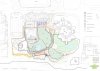
I agree that the casson pavillion is being mis-used a bit at the moment and have often toyed with how it could be utilised better. Im not a fan of the current tiger plans as it will dstroy a desnse forest-like area and the sealion pool that looks like a lush lagoon. I have often wondered if the whole area could be enclosed in an aviary, with a new mappin terace-stylerocky wall constructed over the current cafe/meet the stars cages as one of the retainers, and side of the ostrich house/reptile hpuse/cason pavillion as the other side. (ive done a cursory sketch below! sorry im a shocking artist and only used paint!). The anoa would stay were they were (and get rid of that stupid tortoise houe - ppl dont pay 20 odd quid to see emu wallaby and tortoise), and the malayan tapirs in the old hippo enclosure. Then free flying birds from indonesia fill up the aviary. The elephant bit can still be used for sumatran tigers and the bearded pigs can stay put. What do people think?
 

Attachments

  • london zoo4.jpg
    london zoo4.jpg
    129.3 KB · Views: 32
Back
Top