Catoctin Wildlife Preserve and Zoo Catoctin Species List and Review, October 2020

TinoPup

Well-Known Member
5+ year member
Since Catoctin doesn't keep any list on their website, and the species present/not present on my visit are quite different from other photos in the media gallery, I thought I'd post my species list from yesterday.
I did NOT do the safari ride. The person at the zoo entrance told me it had bison, zebras, camels, donkeys, and fallow deer. Given the lack of major species to see, and my unwillingness to get on a big truck with a bunch of strangers right now, I opted to not do it. If the employee had mentioned the "african antelope" and "exotic bovines", I might have, but oh well.

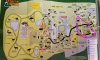
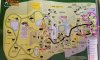
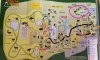
Each area is circled in purple.

Madagascar and entrance.jpg

FRONT AREA AND MADAGASCAR
Linneaus's Sloth, Red-footed Tortoise, Black-throated Magpie Jay
Azara's Night Monkey (signed as Owl Monkey)
Eastern Box Turtle
Macaws: Blue & Gold, Harlequin, Hyacinth, Military, Red & Green, Scarlet
Great Horned Owl
African Pied Crow
Madagascar:
Fossa, 2 exhibits (one large, one smaller for younger animal)
Vasa Parrot (scientific name on sign indicates Greater Vasa)
Barbary Falcon
White-eared Pheasant (scientific name on sign indicates Tibetan ssp)
Cabot's Tragopan
Black & White Ruffed Lemur, Crested Guan, Rock Pigeon

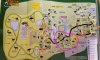
Australia.jpg

AUSTRALIA

Laughing Kookaburra
Sun Conure, Ruddy Shelduck, Paradise Shelduck, Mandarin Duck, Golden Pheasant, Western Crowned Pigeon
Budgerigar, Cockatiel
Cockatoo, unknown sp, likely sulphur-crested
Black Swan, Australian Wood Duck
Dingo
Green Tree Python
Macklot's Python
Blue-tongued Skink
Madagascar Ground Boa
Spotted Python
Woma Python
Murray River Turtle
Red Kangaroo, Bennett's Wallaby, Emu, Magpie Goose
Southern Cassowary, Cape Barren Goose
Unsigned tortoise species

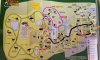
Others.jpg

OTHERS IN FRONT PART OF ZOO
Booted Macaque (signed also as Grey Armed Macaque, Ochreata Macaque)
Olive Baboon
Asian Small-clawed Otter
Burmese Mountain Tortoise
Sun Bear
Butterfly Garden
Deadly Snakes building:
Puff Adder
Cape Cobra
Rhinoceros Viper
Collett's Snake
Castinga Lancehead
Mangshan Pit Viper
Carolina Pygmy Rattlesnake
Sri Lankan Pit Viper (bright turquoise color)
Urutu
Sharp-nosed Pit Viper
White-lipped Island Pit Viper (signed as Wetar Island Pit Viper)
Broadley's Bush Viper
Gila Monster
Eastern Diamondback Rattlesnake, Rattlesnake hybrid (Eastern Diamondback x Timber)
Uracoan Rattlesnake
Eyelash Palm Pit Viper (4 colors)
West African Gaboon Viper
Bushmaster
Indochinese Spitting Cobra
Samar Cobra
King Cobra

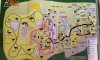
Latin America, Asia.jpg

LATIN AMERICA & NEARBY
Petting area # 1 - Fallow Deer, "Asian Sheep"
Amur Leopard
Sacred Ibis, Abdim's Stork
Capybara, Galapagos Tortoise
Koi, Goldfish
Red Crowned Crane, 2 separate exhibits
Petting area #2 - Suri alpaca, Kunekune pig, Jacob's sheep, goats, female Blackbuck, Scimitar-horned Oryx, Nilgai calf
Giant Reptiles building:
Meerkat
Green Anaconda
Yellow Anaconda
Argentine Boa
Reticulated Python
Latin America:
Jaguar
Green Iguana, Rhinoceros Iguana
Crested Screamer, Chachalaca
Aldabra Tortoise

North America.jpg

NORTH AMERICA
Eurasian Lynx
White Neck Raven
Collared Peccary
Barn Owl
Barred Owl
American Alligator
Seba's Short-tailed Bat
Egyptian Fruit Bat

Back Area.jpg

BACK AREA
Binturong
Wild Turkey, Indian Blue Peafowl
Arctic Wolf
New Guinea Singing Dog (unsigned, far from path)
Petting area #3 - goats
Patas Monkey
Leopard Tortoise, Sulcata Tortoise
Visayan Warty Pig
Aoudad
Marabou Stork
 

Attachments

  • Madagascar and entrance.jpg
    Madagascar and entrance.jpg
    479.7 KB · Views: 69
  • Australia.jpg
    Australia.jpg
    480.1 KB · Views: 67
  • Others.jpg
    Others.jpg
    480.3 KB · Views: 70
  • Latin America, Asia.jpg
    Latin America, Asia.jpg
    481.3 KB · Views: 70
  • North America.jpg
    North America.jpg
    481.4 KB · Views: 68
  • Back Area.jpg
    Back Area.jpg
    483.5 KB · Views: 68
Since Catoctin doesn't keep any list on their website, and the species present/not present on my visit are quite different from other photos in the media gallery, I thought I'd post my species list from yesterday.
I did NOT do the safari ride. The person at the zoo entrance told me it had bison, zebras, camels, donkeys, and fallow deer. Given the lack of major species to see, and my unwillingness to get on a big truck with a bunch of strangers right now, I opted to not do it. If the employee had mentioned the "african antelope" and "exotic bovines", I might have, but oh well.

Each area is circled in purple.

View attachment 463325

FRONT AREA AND MADAGASCAR
Linneaus's Sloth, Red-footed Tortoise, Black-throated Magpie Jay
Azara's Night Monkey (signed as Owl Monkey)
Eastern Box Turtle
Macaws: Blue & Gold, Harlequin, Hyacinth, Military, Red & Green, Scarlet
Great Horned Owl
African Pied Crow
Madagascar:
Fossa, 2 exhibits (one large, one smaller for younger animal)
Vasa Parrot (scientific name on sign indicates Greater Vasa)
Barbary Falcon
White-eared Pheasant (scientific name on sign indicates Tibetan ssp)
Cabot's Tragopan
Black & White Ruffed Lemur, Crested Guan, Rock Pigeon

View attachment 463326

AUSTRALIA

Laughing Kookaburra
Sun Conure, Ruddy Shelduck, Paradise Shelduck, Mandarin Duck, Golden Pheasant, Western Crowned Pigeon
Budgerigar, Cockatiel
Cockatoo, unknown sp, likely sulphur-crested
Black Swan, Australian Wood Duck
Dingo
Green Tree Python
Macklot's Python
Blue-tongued Skink
Madagascar Ground Boa
Spotted Python
Woma Python
Murray River Turtle
Red Kangaroo, Bennett's Wallaby, Emu, Magpie Goose
Southern Cassowary, Cape Barren Goose
Unsigned tortoise species

View attachment 463327

OTHERS IN FRONT PART OF ZOO
Booted Macaque (signed also as Grey Armed Macaque, Ochreata Macaque)
Olive Baboon
Asian Small-clawed Otter
Burmese Mountain Tortoise
Sun Bear
Butterfly Garden
Deadly Snakes building:
Puff Adder
Cape Cobra
Rhinoceros Viper
Collett's Snake
Castinga Lancehead
Mangshan Pit Viper
Carolina Pygmy Rattlesnake
Sri Lankan Pit Viper (bright turquoise color)
Urutu
Sharp-nosed Pit Viper
White-lipped Island Pit Viper (signed as Wetar Island Pit Viper)
Broadley's Bush Viper
Gila Monster
Eastern Diamondback Rattlesnake, Rattlesnake hybrid (Eastern Diamondback x Timber)
Uracoan Rattlesnake
Eyelash Palm Pit Viper (4 colors)
West African Gaboon Viper
Bushmaster
Indochinese Spitting Cobra
Samar Cobra
King Cobra

View attachment 463328

LATIN AMERICA & NEARBY
Petting area # 1 - Fallow Deer, "Asian Sheep"
Amur Leopard
Sacred Ibis, Abdim's Stork
Capybara, Galapagos Tortoise
Koi, Goldfish
Red Crowned Crane, 2 separate exhibits
Petting area #2 - Suri alpaca, Kunekune pig, Jacob's sheep, goats, female Blackbuck, Scimitar-horned Oryx, Nilgai calf
Giant Reptiles building:
Meerkat
Green Anaconda
Yellow Anaconda
Argentine Boa
Reticulated Python
Latin America:
Jaguar
Green Iguana, Rhinoceros Iguana
Crested Screamer, Chachalaca
Aldabra Tortoise

View attachment 463329

NORTH AMERICA
Eurasian Lynx
White Neck Raven
Collared Peccary
Barn Owl
Barred Owl
American Alligator
Seba's Short-tailed Bat
Egyptian Fruit Bat

View attachment 463330

BACK AREA
Binturong
Wild Turkey, Indian Blue Peafowl
Arctic Wolf
New Guinea Singing Dog (unsigned, far from path)
Petting area #3 - goats
Patas Monkey
Leopard Tortoise, Sulcata Tortoise
Visayan Warty Pig
Aoudad
Marabou Stork
That is the least North American North American area I have ever heard of.
 
Even though I knew about some of the rarer species here like sun bear, cassowary, and booted macaque it's still really surprising to see the size and species numbers of this place. @TinoPup what was your read on Catoctin? How does it compare to a lot of the other private, off-the-main-path zoos you've visited in the region?
 
Even though I knew about some of the rarer species here like sun bear, cassowary, and booted macaque it's still really surprising to see the size and species numbers of this place. @TinoPup what was your read on Catoctin? How does it compare to a lot of the other private, off-the-main-path zoos you've visited in the region?

It's a really odd place! Short answer: exhibit quality had the widest range I've seen. Overall, it reminded me most of Claws N Paws in PA - set in the woods, weird organization, kind of all over the place in every regard, and fairly large for roadside/non-AZA.

Long answer:
To start with, I wasn't sure what to expect when going there, other than some of the species they advertise. Their facebook is fairly sparse, with groupings of posts every few months. Their twitter has even less. The third social media linked on their website, Youtube, hasn't been updated in years; there's several "tours" of areas from 2012, but they're just 30 seconds of close up shots of a few species (most of which are no longer there). There's limited photos on here, and it's one of a few places I don't have a USDA for.

Some non-animal considerations: Parking is weird. You get off the highway onto this road with lots of old houses, and suddenly you're just ... there, with cars parked on both sides of the street. There's multiple billboards in front of the zoo, a really long building, and a "main entrance" kiosk in the middle that is closed/no longer used (?). I wasn't even sure where to go in, there's no signage. For anyone visiting in the future, it's through the gift shop in the building near the left end, where there's some greenery over an entrance-way; on the map I posted, it's marked "exit". Once inside, the paths go all over the place, there's no easy direction to follow. I don't think I've ever referenced a map so many times! There's no posted maps around the zoo at all, and the directional arrows rarely helped (many just point to the exit). Other places all at least have a map of the paths up somewhere in the zoo, even if most of the species are wrong. I spent a lot of time feeling kind of lost. There's only one set of bathrooms, at the entrance (women's had 3 stalls, one of which had a door that was really high off the ground). There are others marked on the map, but I never saw any indication that they existed/were open. The map isn't remotely to-scale.

Exhibit quality: Wow, what a range. Many were fairly typical of what I've been seeing in non-AZA establishments, starting with the first exhibits I saw (sloth, night monkey, box turtle, macaws; I upload in the order I take the photos). I was pleasantly surprised by the very large fossa exhibit, which has more climbing room than I've seen in an exhibit for them (bar Philly's animal getting to use one of the primate trails). The purple night building for them was colorful and interesting, a nice stand out. I would have liked to see some greenery, and maybe some nocturnal area for them, but the animals were all out and playing. All interacted with me through the glass. The rest of Madagascar, and all of Australia, is fairly poor, with some old corn crib cages and lots of rusting chicken fence. The dingos are hard to see because of the growth of plants in front of their exhibit. The rest of the zoo continued like this. A few would be nice, easily as good as a mid-tier AZA, most were average, and some were awful. The koi pond in particular is very nice, which was frustrating given they're just koi (not that they don't deserve great care, it's just an odd exhibit to put a lot of money into). I thought the entire exhibit was brand new, but looking through photos on here, it isn't; they just re-landscaped and got rid of a lot of plants, in favor of rocks and a small waterfall. The two absolute worst exhibits, for me, were the amur leopard and singing dogs. The leopard is the only exhibit on a small dead-end path, with remnants of past buildings among the overgrowth. It's a dark exhibit with rusting and warped fencing; it looks like someone threw it together several decades ago and left it at that. The singing dogs are nowhere near the path and have no signage at all, like you're not supposed to notice their existence.

Organization: There appears to have been an attempt, at one point? I don't really know what happened to most of the areas, but they seem to have largely gone by the way-side, and aren't even mentioned on the map itself. Some animals, like the wolves, have been moved (and seem to have gone from being white timber wolves to arctic wolves in the process), but for the most part species are gone and others have taken their place that don't fit. I hope that's the explanation for species like the Madagascar Ground Boa being right under the "Aussie Reptiles", sign, at least. A few others appear to be intentional - I found mention of the newly-built Eurasian Lynx exhibit a few years ago, and while it's a really large exhibit for the species, it's at the front of North America, instead of in their informal "Eurasia" area. The herp building next to the entrance/exit (that I didn't know was open, until I decided to test a door before leaving) has a banner sign saying it's Africa's deadliest snakes, but few of the species are from Africa (and one, the gila monster, is 0/3). All they need to do is remove the location from the title.

Species quality: Like everything else, all over the place! This is fairly typical for roadside, except their least common species don't really appear in the pet trade. Several of the snakes I've never seen before, even though I've gone to quite a few of the major herp zoos. A few of the birds were new for me, as well. Along with those you mentioned, fossa and visayan warty pig are two others that are uncommon nation-wide; they've had multiple fossa litters over the last 5 years. I was extremely surprised to see meerkats outside of the AZA (and in a small, entirely indoor exhibit with massive snakes, no less); Richmond also has them, so I'm guessing there's a connection there? I've been to 20+ zoos this year and it's my first time seeing them. I was also really surprised by the scimitars in the petting area! With no signage, even. I've gotten used to fallow deer and even blackbucks in roadside petting areas, but not large African hoofstock, especially such a vital species. I was a little surprised by the normal-ness of their bat species, given the uncommon species they have in other areas (I was going to say disappointed, but that isn't a word I'd use with bats ;) )

What they don't have was also notable. There are a lot of common roadside species that are entirely absent. They no longer have tigers, lions, American bear species, ring-tailed lemurs, coatis, or giraffes. There's no foxes at all, no cougars, no bobcats. They only have 3 primates - no capuchins, squirrel monkeys, marmosets, or tamarins. Of those 3, I didn't seen any B&W Ruffed Lemurs, which is their logo.

Overall, I'd like to see more variety in their ungulates. They don't seem to have anything uncommon in that regard.

A final note: Every mammal looked healthy, from what I could tell. All were a correct weight for their species and didn't have fur missing, visible wounds, urine stains, poor eyes or noses, or anything else. Most were awake and active; the lemurs were the only species I didn't see at all.
 
Thanks for the review @TinoPup. Sounds like about what I expected based on photos and past comments from others. At least the animals seemed healthy, which is certainly not true of too many private establishments here... as for the organization of the place, I can't say I'm too surprised. Even if Catoctin is particularly egregious, it's hard to find a zoo that doesn't stick capybara into the African zone or have an "Australasian" aviary with birds from China and Brazil :p

Did I see in the gallery that they are constructing a new booted macaque enclosure? Also how many of them do you recall seeing?
 
Thanks for the review @TinoPup. Sounds like about what I expected based on photos and past comments from others. At least the animals seemed healthy, which is certainly not true of too many private establishments here... as for the organization of the place, I can't say I'm too surprised. Even if Catoctin is particularly egregious, it's hard to find a zoo that doesn't stick capybara into the African zone or have an "Australasian" aviary with birds from China and Brazil :p

Did I see in the gallery that they are constructing a new booted macaque enclosure? Also how many of them do you recall seeing?

Capybaras are one of the worst species for that, since they're so easy going :)

I hope that's what it's for. It's a large new exhibit, being built just a few feet away from the macaques. I can't say for sure that it's intended for them, but most exhibits there have a bit of space between them, so I'd be surprised if it was for something else. I counted 15, there could be a few more. The youngest was very small and still in that generic-looking, black with big ears phase. There was a big variety in sizes, so it looks like they've been breeding fairly well.
 
Back
Top