Chlidonias presents: Bustralia

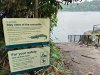
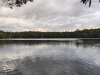
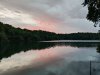
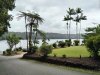
Some photos of Lake Eacham. The latter two were taken in the evening on Tuesday, hence the different lighting from the first one.

Apparently the crocodile was someone's pet which they released. I didn't see it.

IMG20251130073621.jpg IMG20251202172549.jpg IMG20251202184151.jpg
 

Attachments

  • IMG20251130073621.jpg
    IMG20251130073621.jpg
    239.7 KB · Views: 133
  • IMG20251202172549.jpg
    IMG20251202172549.jpg
    129.1 KB · Views: 129
  • IMG20251202184151.jpg
    IMG20251202184151.jpg
    92.1 KB · Views: 129
Last edited:
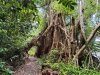
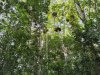
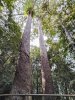
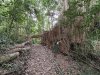
Some strangler figs and other forest photos. It doesn't come across well in the photos (see the last photo) but the epiphytic ferns here are gigantic. I've never seen such huge ferns in trees before.

IMG20251130121658.jpg IMG20251130091424.jpg IMG20251130080830.jpg IMG20251130080818.jpg
 

Attachments

  • IMG20251130121658.jpg
    IMG20251130121658.jpg
    363.5 KB · Views: 131
  • IMG20251130091424.jpg
    IMG20251130091424.jpg
    352.5 KB · Views: 128
  • IMG20251130080830.jpg
    IMG20251130080830.jpg
    368.8 KB · Views: 129
  • IMG20251130080818.jpg
    IMG20251130080818.jpg
    382.3 KB · Views: 132
Yungaburra – Lake Eachem


Yungaburra is near two crater lakes, Lake Eachem and the larger Lake Barrine. Both are surrounded by a ring of forest, and both have a walking trail encircling them, 3km long in the case of Lake Eachem and 5km in the case of Lake Barrine.

I had my usual list of birds I wanted to see, the most important ones for Lake Eachem being the Cassowary and the Tooth-billed Bowerbird. Second tier were Barred Cuckoo-Shrike and White-headed Pigeon (the latter bird is found over a much wider area than the others so I’d be bound to find it eventually but I was getting fed up with not seeing it anywhere yet!). Then there was White-eared Monarch, Mountain Thornbill, and White-browed Robin which on eBird all have less robust sighting charts at Lake Eachem. In fact, I picked up a bird checklist for the lake at the information centre in Yungaburra and White-browed Robin isn’t even on it, the Mountain Thornbill is characterised as a rare seasonal visitor (i.e. it moves higher or lower depending on the time of year, although the eBird records are scattered through the whole year), and the White-eared Monarch is classed as an uncommon resident.


When I’d had to call the hostel the other day about the cancelled booking, the lady on the phone had said I “need a car” here. When I said I would just be walking to Lake Eachem, she said emphatically that this wasn’t possible because it was much too far to walk. This is not true of course. I did it this morning easily.

From Yungaburra I walked along the highway going east. This is a country highway so it is a narrow two-lane road with minimal walking or cycling space. However I was walking it early, before 6am, and there were just a few cars. It’s just over 3km to the junction with Lake Barrine Road where you turn right. Curiously, Lake Barrine is north of Lake Eachem (i.e. you would turn left at this junction to get there, rather than turning onto Lake Barrine Road). I had estimated this stretch to take 30 minutes but it is mostly uphill and took 40 minutes. It is also farmland so is completely open, something to bear in mind if walking it in the middle of the day.

Also worth noting is that at this junction there is a cafe called The Gillies if you want coffee or food. They are open at 6am but closed by 3pm or earlier.

From the junction it is only a few hundred metres to Lake Eachem Road on your left. The forest starts immediately after The Gillies, so even though walking to the lake from this point takes about an hour it is through forest the whole way.

It was still early, maybe 6.30am when I reached the forest, but already hot and so humid that I had the same issue as the previous day where my binoculars steamed up every time I tried to see through them.

First animal seen as I began walking up Lake Eachem Road was a Musky Rat-Kangaroo foraging on the side of the road in the leaf litter. These are tiny diurnal macropods found only in the northern rainforests, which are thought to resemble the earliest forms of kangaroo. They are in their own family which was diverse during the Miocene but which now contains just this species as the sole living representative.

I had seen Musky Rat-Kangaroos last time I was in north Queensland but had forgotten how small they are, I guess like a big Guinea Pig. I saw another one later along the road – it was still quite dim along here so I didn’t even try for photos – and a third at Lake Eachem itself where the light was much better but the animal scarpered as soon as it saw me.

The only birds seen along Lake Eachem Road were Brush Turkey, Spectacled Monarch, Bower’s Shrike-Thrush and Eastern Whipbird. Partly this was due to not being able to see the birds with the aforementioned fogging of binocular lenses, but also I just didn’t see much along here anyway even though there was a lot of bird-song in the forest beyond.


The road had been quite busy, with cars regularly zooming by – it’s not the safest there so you have to constantly be aware of vehicles – and when I got to the lake I discovered that it was a very popular place for swimming. Today was a Sunday and even this early there were a dozen or more cars here. After I’d done my first circuit of the lake the car park was packed and there were swarms of people. This is mostly a weekend thing – I came back on Tuesday and there weren’t many visitors in comparison. Even on Sunday relatively few of them were on the trail though.

The crowds don’t seem to bother the birds. I counted at least a hundred Great Crested Grebes flocking out on the lake. It’s odd seeing these in tropical Queensland!

I hung around for a bit in the picnic area because there were birds in the trees, including Fairy Gerygones. I didn’t see any lifers today but new additions for the trip were these Fairy Gerygones and a bit later in the forest a Wompoo Pigeon (finally!). Most of the birds I saw today I had seen earlier at either Mt Hypipamee or at Hallorans Hill in Atherton.


The 3km trail which encircles the lake is entirely within the forest. It is an easy trail, a bit up and down, and unpaved. It took me three hours the first time I went round (going slowly, obviously) and two hours the second time. Both times I went in a clockwise direction. When I came back on Tuesday I did it in both directions. I think anti-clockwise might be a bit easier. I got a leech on the Tuesday.

I didn’t feel like I was seeing much today. As with the road there was a tonne of bird-song, but I couldn’t see many birds. Nevertheless the total at the end of the day came out at about thirty species for Lake Eachem which isn’t bad. I think it was more a perception thing, where I was only seeing birds gradually through the day, just individual birds here and there along the trail, so it didn’t seem like I was seeing many. Also I wasn’t seeing any of the birds I was specifically looking for which didn’t help.

On the non-bird side of things I saw my first Boyd’s Forest Dragon – it jumped off its branch as I walked by and ran further into the forest, which is at odds with what they are “supposed” to do when you walk by! Still, that’s the only reason I saw it, so I’m not complaining.

Another great sighting, which I wasn’t really expecting, was a Lumholtz’s Tree Kangaroo. I did see this species last time I was in Yungaburra years ago, but it was at night. This time, while looking up into the trees trying to see some birds, I happened to look to the side a little and right there, sitting out in plain view, was a tree kangaroo.

It couldn’t really go anywhere from the little bare tree where it was, so it just sat there looking at me. This was an absolutely perfect photo opportunity. Did my camera work? No. This time it wouldn’t even turn on. I tried several times to make it work, to no avail. The tree kangaroo by now had sunk a little lower behind the branch, to try and become invisible. I resorted to taking a picture on my phone, which was awful because it had to be zoomed so far out and the phone itself takes pretty rubbish photos unless they are something close. I’ll put the photo in the next post to show it, but it’s definitely not going anywhere near the gallery! I miss having a working camera.


On my second circuit of the lake I met the girls who had given me a lift to Yungaburra from Atherton, and then when I walking back along Lake Eachem Road later they passed in their car and asked if I wanted a lift. So we went to Lake Barrine.

I had been going to go to Lake Barrine on one of my other days. This would save me the walk. Heavy rain came through right after we arrived at Lake Barrine, so we just had lunch in the Tea House there. Out on the lake there were even more Great Crested Grebes than at Lake Eachem. There were also pelicans here, which weren’t at Lake Eachem.

There is a 5km trail around Lake Barrine but with the heavy rain I just went back to Yungaburra with the girls.

I didn’t go out spotlighting tonight.


I saw 42 species of birds today:

Great Crested Grebe, Australian Brush Turkey, Orange-footed Scrubfowl, Australian Pelican, Little Pied Cormorant, Little Black Cormorant, Spur-winged Plover, Wompoo Fruit Pigeon, Bar-shouldered Dove, Rainbow Lorikeet, Common Kookaburra, Forest Kingfisher, Azure Kingfisher, Welcome Swallow, Black-faced Cuckoo-Shrike, Golden-headed Cisticola, Brown Gerygone, Large-billed Gerygone, Fairy Gerygone, Yellow-throated Scrubwren, Large-billed Scrubwren, Spectacled Monarch, Black-faced Monarch, Pied Monarch, Willy Wagtail, Pale-Yellow Robin, Grey-headed Robin, Bower’s Shrike-Thrush, Rufous Shrike-Thrush, Eastern Whipbird, Magpie-Lark, Silvereye, Mistletoebird, Sahul Sunbird, Yellow Honeyeater, Dusky Myzomela, Chestnut-breasted Mannikin, Common Mynah, Australian Figbird, Spotted Catbird, Victoria’s Riflebird, Torresian Crow.
I first saw white-headed pigeons in Mallacoota Victoria, if that helps.
 
Yungaburra


I was moving rooms today so had to be around between the check-out and check-in times. I mean, I didn’t have to be, but it made things easier. I went in the early morning to the Curtain Fig and then along the Peterson Creek trail which is just beside town. I checked the Platypus viewing area when passing by in both directions, with no Platypus seen.

I ended up with a surprising number of animals seen today, with 40 species of birds and five of mammals, even though I haven’t found the Curtain Fig forest to be very productive in general and I didn’t go out to either of the lakes which are the main birding locations here.

[Just as a side-note, today was the first of December. So far on this Australian trip I had seen 365 species of birds which is a nice number because it is also the same number of days as there are in a year and I like meaningless connections like that.]

This morning I was on 19 birds just walking from the hostel to the forest (all very common birds – the least-common was a pair of King Parrots). The first bird seen in the forest was Large-billed Scrubwren, which are very common in all the forests on the Tablelands. And the next animal seen was a Dingo!

It was on the road quite a way ahead and I got my binoculars on it not knowing what it might be. It wasn’t a large sandy-coloured desert Dingo like usually pictured, but the small dark rainforest Dingo. It vanished into the forest as a car approached, but after the vehicle had passed came back out, crossed the road and disappeared again into the trees.

I saw the “usual” sorts of Tableland forest birds – e.g. White-throated Treecreeper, Brown Gerygone, Large-billed Scrubwren, Black-faced Monarch, Pied Monarch, Golden Whistler, Grey-headed Robin, Lewin’s Honeyeater, Spotted Catbird. Curiously no Spectacled Monarchs which are normally everywhere.

There was also a Little Pied Cormorant in the middle of my list of forest birds because there was one sitting incongruously on a fencepost in the fields at the other end of the forest.

On the walk back out I finally got tickable views of Topknot Pigeons for the year. These are huge pigeons with backward-wave crests. They are reported here as common and on my previous visits I had seen pigeons flying high overhead which must have been them, but today a flock landed in the top of a tree where I could see them clearly.

Even better, as I was leaving the forest onto the part of the road which goes through some fields, two birds flew into a tree. They were Barred Cuckoo-Shrikes, one of the lifer species on my “wanted” list for Yungaburra (actually they are my first lifer from the Tablelands since I was at Mt Hypipamee, which was about ten days ago). I didn’t think they would look so elegant in real life. Their underparts are horizontally pin-striped, as if they have taken a freshly-printed page from a notebook and pressed themselves onto it. Very pleased with them.


After the Curtain Fig I had a walk along the Peterson Creek trail. This used to begin at the Platypus viewing area, by going under the bridge, but that end has been blocked off with a “keep out, private property” sign. Now you have to walk (or drive) over to the end of Penda Street and the trail goes north along the creek from there.

As soon as I arrived at the trail-head I could hear the screeching of Spectacled Flying Foxes. This is where they have their colony, with the first bats being visible within a minute’s walk along the trail. So far on this trip I have only seen this flying fox in flight. I had spotted a colony from a bus in Cairns (on Grove Street) and when I get back there had been going to have a decent look at them. Instead I could see them at roost here.


There was heavy rain in middle of day (when I was at the hostel). Almost every day here it rained, but typically it rained really hard for about an hour and then it was done. There wasn’t any pattern though, the rain came in at different times each day.


At the end of the day I returned to the Curtain Fig to see if any possums would be out tonight.

The first mammal I saw was a real surprise to me. I spotted it hunched on the forest floor from the boardwalk which runs around the Curtain Fig. It was a small pale animal and at first I thought it must be a Long-nosed Bandicoot until it stood upright and looked at the torchlight, and then I saw that quite apart from not looking like a bandicoot it had a long tail. It was some sort of very small macropod, but it wasn’t a pademelon. I was puzzled over what it could be, and when it suddenly hopped away I realised it was a bettong.

I didn’t even know there were bettongs here. I did a search later online and found the government list of mammals at the Curtain Fig National Park where the Rufous Bettong was listed. There are Northern Bettongs elsewhere on the Tablelands as well, but they have extremely restricted remnant distributions and it wasn’t one of those. I also found some mammal-watching reports of Rufous Bettongs at Lake Eacham.

The next mammal was a lifer, with a White-tailed Rat wandering around on the ground under the Curtain Fig. These are giant rats, weighing up to a kilogram, and about the size of a small cat. They are great animals. I guess not everyone likes rats but these are really nice ones. I saw three White-tailed Rats tonight, one of them on the boardwalk.

The only other mammals seen tonight were a pair of Green Ringtail Possums, presumably a female and juvenile, feeding in an overhanging tree as I walked back along the road.

So still no Coppery Brushtails and still only the bare minimum of Green Ringtails seen. I don’t know what’s going on with me and possums. However the Rufous Bettong was a great thing to see, and the White-tailed Rat was a species I was particularly looking for so I class it as a successful night.


I saw 40 species of birds today:

Australian Brush Turkey, Orange-footed Scrubfowl, Little Pied Cormorant, Eastern Cattle Egret, Purple Swamphen, Spur-winged Plover, Bush Stone-Curlew, Wompoo Fruit Pigeon, Topknot Pigeon, Crested Pigeon, Spotted Dove, Bar-shouldered Dove, Peaceful Dove, Rainbow Lorikeet, Australian King Parrot, Common Kookaburra, Welcome Swallow, Barred Cuckoo-Shrike, White-throated Treecreeper, Brown Gerygone, Large-billed Scrubwren, Black-faced Monarch, Pied Monarch, Golden Whistler, Rufous Whistler, Willy Wagtail, Grey-headed Robin, Rufous Shrike-Thrush, Magpie-Lark, Silvereye, Sahul Sunbird, Brown Honeyeater, Lewin’s Honeyeater, White-breasted Woodswallow, Chestnut-breasted Mannikin, Common Mynah, Australian Figbird, Pied Currawong, Spangled Drongo, Spotted Catbird.
 
Last edited:
I had a sudden thought after reading your daily bird lists, ive never thought of brush turkeys and orange footed scrub fowl as being in the same area, dunno why..... have you literally seen them in close proximity? Do they compete for breeding mounds? I imagine the turkeys, being larger birds and quite aggressive, would drive the scrub fowl away - is this the case, or is it more like different parrots, for example, that live in the same area but seem to fit in with each other?
 
I had a sudden thought after reading your daily bird lists, ive never thought of brush turkeys and orange footed scrub fowl as being in the same area, dunno why..... have you literally seen them in close proximity? Do they compete for breeding mounds? I imagine the turkeys, being larger birds and quite aggressive, would drive the scrub fowl away - is this the case, or is it more like different parrots, for example, that live in the same area but seem to fit in with each other?
Yes, they live in exactly the same areas, although only the brush turkeys seem to utilise humans for food (e.g. being fed directly at picnic sites, or scavenging in bins). I haven't seen them interacting with one another - the scrubfowl chase scrubfowl and the brush turkeys chase brush turkeys. I think they probably feed on different things.
 
Yungaburra – Lake Eacham


The insect bites that I got at Sunland in Cairns have been driving me to distraction. There are about a dozen on each ankle and they are at the stage where they are super itchy welts which feel especially itchy when walking, I think because the socks rub them. Definitely the ones right around the tops of the shoes get rubbed when walking, which makes them even itchier. I don’t even know if they are flea bites. They might have been from bed bugs, except they are only around my ankles which would be weird. They are really hanging around as well – as I write this it is six days since I left Cairns and they are still giving me grief.


I spent all day and the evening at Lake Eacham today. There was no rain to speak of, although some thunder suggested it was going to.

A number of water birds were seen on the early morning walk between Yungaburra and The Gillies cafe. None were in water, all were in flight, with large flocks of Magpie Geese and Australian White Ibis, a small group of Australian Black Ducks, and a single Great Egret. I’m not sure where they were coming from or going to, because I didn’t see any at the lake.

Being a weekday the road to the lake was quiet (last time I came here it was a Sunday, and even early there were lots of cars). There were still people already at the lake when I arrived, but only a few.

At the lake’s car park, a different bird than usual was a Pacific Baza in one of the trees.


I did my first circuit of the lake counter-clockwise. This turned out to be a good decision because not far into the walk I found a White-headed Pigeon, which was one of the birds on my wanted list. It was in a dense tree overhanging the lake, so there was not just that tree’s foliage in the way but also that of several other trees in front. I had barely seen it crash in through the leaves so all I knew was it was some kind of big bird, and it took a little while before it moved enough to see it was a pigeon. Then it took even longer until it actually came into view. I had thought it would probably be a Wompoo because they were pretty common here, but then its white head was revealed, with the ruffly feathers which make it look like it has a striped neck.


I was about two-thirds of the way round the lake when I had another stroke of luck. I thought I’d seen a bird on the forest floor and was trying to see it (I couldn’t, and it may have been my imagination) when three ladies came walking along and asked what I’d seen. I said it was probably nothing, but added that I was actually looking for a Tooth-billed Bowerbird, whereupon they gave me directions to where they could be found on the trail!

The Tooth-billed Bowerbird was the main bird I wanted to see here after the Cassowary (and I never did see a Cassowary while at Yungaburra). They are said to be common at Lake Eacham, and this is apparently the easiest place to see them because they have display arenas right near the trail. Unlike most bowerbird which build elaborate constructions of sticks and decorate them with colourful flowers and other such trinkets, the Tooth-billed Bowerbird just clears a little space on the ground and places fresh leaves on the dirt. Then he sits on a branch nearby and calls until a female comes by to see what he has to show her.

The ladies told me that up ahead, after a steep section of the track there was a bowerbird arena near some cut logs, and to just listen out for his calls. They also said the spot had been marked by a stick on the trail.

This sounded like I would now be seeing a Tooth-billed Bowerbird. Unfortunately, “some cut logs” and “a stick on the trail” aren’t very helpful instructions on a forest trail where there are many cut logs and where every metre there is a stick lying on the trail.

I found the bit where the steep section of the trail plateaus out and there were some cut logs right there (whenever a big branch or a tree falls across the trail it is cut into sections and moved to the side to rot down, hence “cut logs” are frequent). I spent ages here, thinking this must be the spot, even though I couldn’t hear anything which sounded like it might be a bowerbird.

I eventually moved further along the trail and then I heard a persistent loud call coming from somewhere not far into the forest. This was the exact same place where two days ago I had heard this same call and had spent a long time trying to see what was making the noise. After a frustrating period of time a Rufous Shrike-Thrush had emerged so I had assumed it was that. Now I wasn’t so sure.

Today was just as frustrating. The call was so loud and harsh and continuous that it seemed like the bird should be easy to find. But I couldn’t. The call didn’t sound like the recording on eBird but it had a similar “feel”. I wasted the best part of an hour here thinking this had to be the Tooth-billed Bowerbird.

I gave up eventually, figuring I’d try a bit further ahead and could always come back down here if that didn’t produce anything. I walked a minute or two – and suddenly came across not just a stick on the trail but three sticks in the shape of an arrow on the trail, between two cut logs, pointing at the forest! Great. “Sticks in the shape of an arrow” would have been a much better instruction than just “a stick on the trail”!!

This was clearly the place, and almost immediately I heard the same call as I’d been hearing earlier. So, definitely a Tooth-billed Bowerbird then.

This time I didn’t have to wait too long. A bowerbird suddenly flew out and perched on an open branch where it sat calling. It had its back to me but I could see it clearly, and by moving to the side I could just see its streaked belly and its stubby bill. It stayed there for a minute or so, then flew to a branch further away where it was mostly hidden behind a tree trunk.

I continued on the trail, and only another minute or two further on I heard another bowerbird calling. This one was right by the trail but buried somewhere inside tangles of wait-a-while vines. As I was trying to see exactly where it was another bird flew into the branches of a tree above. This was also a Tooth-billed Bowerbird, presumably a female because it sat there staring down into the vines while the calls from below intensified, and then the calling bird suddenly emerged onto a thin branch where it stayed for several minutes.

Having multiple males within such a short section of the track I think there must be a lek situation here, with the males making their arenas in close proximity to one another so that the females can move between them choosing who has the best display.

This part of the trail is very close to the car park, well inside the first kilometre if going clockwise. The first male you would come to (which was the last one I saw) is right where there is an informational sign about wait-a-while vines – his arena must be directly in front of this sign. The last male (if continuing in the clockwise direction) is at the sign about Brush Turkeys. Once you hit the steep downhill part of the trail you’ve gone too far.


I loafed around the picnic area for an hour or so. Ate some sandwiches, had a little snooze. Figured I’d better go round again in case of Cassowary. I saw one of the bowerbirds again.

There are a few really big fig trees along the trail, some of which have huge roots going over the trail. There are some photos in an earlier post. While doing my second walk around the lake I found a Scrub Python in one of these trees. I took some photos with my phone, which because the snake was really close came out well enough to put in the gallery.

full


full


Scrub Pythons are also commonly known as Amethystine Pythons. The New Guinea populations have been recently split off from the Australian ones, so now there are two species. The New Guinea ones got to keep the name Amethystine Python while the poor Australian ones got lumbered with the low-brow name of Scrub Python. Sad.


After completing my second loop of the lake I waited around the picnic area again, twiddling my thumbs until dark.

There are several kinds of possums found here, including Lemuroid Possums and Herbert River Ringtails, neither of which I have seen.

As darkness fell I set off on the trail around the lake for the third time, where I only saw two White-tailed Rats and some frogs (a White-lipped Tree Frog and several Rainforest Stoney-Creek Frogs). I took three hours to go round the trail and when I got back to the parking area had to face that I still had 1.5 hours walk back to Yungaburra ahead of me.

On the Lake Eacham Road (which is also forest) I saw literally nothing, not even Cane Toads which were everywhere along the lake trail. I did hear the “falling bomb” calls of Sooty Owls which was neat.

I’m seriously considering giving up on spotlighting!


I saw 39 species of birds today:

Great Crested Grebe, Magpie Goose, Australian Black Duck, Australian Brush Turkey, Orange-footed Scrubfowl, Great Cormorant, Little Pied Cormorant, Little Black Cormorant, Great Egret, Eastern Cattle Egret, Australian White Ibis, Pacific Baza, Bush Stone-Curlew, White-headed Pigeon, Wompoo Fruit Pigeon, Emerald Dove, Greater Sulphur-crested Cockatoo, Common Kookaburra, Forest Kingfisher, Welcome Swallow, Golden-headed Cisticola, Large-billed Scrubwren, Spectacled Monarch, Black-faced Monarch, Pied Monarch, Golden Whistler, Pale-Yellow Robin, Grey-headed Robin, Rufous Shrike-Thrush, Eastern Whipbird, Silvereye, Lewin’s Honeyeater, Dusky Myzomela, Chestnut-breasted Mannikin, Common Mynah, Australian Figbird, Spotted Catbird, Tooth-billed Bowerbird, Victoria’s Riflebird.
 
This is a phone photo of a Tooth-billed Bowerbird. You probably won't be able to make him out, but between the tree trunks is a thin brown branch and he is on that. If I'd had a working camera I could have got some great photos!

This is the bowerbird whose arena is inside the wait-a-while vines, which are directly below him

IMG20251202112302.jpg
 

Attachments

  • IMG20251202112302.jpg
    IMG20251202112302.jpg
    216.2 KB · Views: 99
Yungaburra


There are Uncle Brian’s Tour groups in every night at the moment (they do this two-day tour every weekday). They leave at 7am so you have use of the kitchen etc either before 6am or after 7am, between those times it is full. On the other mornings I had been leaving before any of them were awake, but this morning I slept a bit longer because I’d been out late (and walking all day and evening – I just worked out that yesterday was something like 30km with walking to and from Lake Eacham and with several circuits of the 3km lake trail).

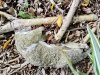
I went out at midday to get some lunch and found a freshly-dead Green Ringtail in the park across the road! I didn’t think they would be right in the town. It looked untouched so I don’t know what had happened to it. I took some photos with my phone which I’ll put in the next post to show what they look like.

There was heavy rain at about 3pm.

I spent most of the day at the hostel trying to plot out my next moves.


When I’d been looking up about bettongs at Curtain Fig the other night I had come across a Mammalwatching report from 2021 where they saw a Bennett’s Tree Kangaroo at the Jindalba boardwalk in Daintree, and they had been told that the kangaroos live in the forest behind there as well. I’d better go look for that - although that visit was during covid when there would have been few tourists so now the kangaroos may not be in such a viewable situation. Almost all the accommodation in the Daintree area was fully booked (the hazard of doing free-form make-it-up-as-you-go trips without much advance planning). The cheapest of the few available was an “eco-lodge” called Crocodylus at $150 a night. I had actually stayed there before, twenty years ago, when it was nowhere near that sort of price. The return bus fare from Cairns was $120, though, and adding $150 on top was too much, so that was out. I decided on a day-trip instead – not ideal but the chances of seeing the tree kangaroo were slim anyway.

The Trans North bus does its “coastal route” from Cairns to Cooktown three times a week (Tues, Thurs, Sat). I could fit this in on the Saturday – the stop is at Crocodylus, which is an hour’s walk from the Daintree Discovery Centre where the boardwalk is, but I get six hours (the bus arrives at Crocodylus at about 9am and is coming back south to Cairns at about 3.30pm) so it’s workable, it’s just not early morning which would probably be preferable. I can’t see it being successful as a one-day attempt but it’s worth a shot.

Checking on other accommodations, there was nothing non-dorm in Cairns cheap enough on the day I was going to leave Yungaburra, so I extended by another night at On The Wallaby (for AU$70, or c.NZ$80), then booked the Cairns City Backpackers for the next four nights (at c.NZ$70) – this is the place I stayed the first time I was in Cairns and it is right around the corner from the stop for the Trans North bus so I can get there easily for the 6.30am departure to the Daintree.


The basic plan for Cairns is therefore as follows: Yungaburra to Cairns on Friday (that is today, as of writing and posting, although I still have a couple of Yungaburra posts to gp); day-trip to the Daintree on Saturday; then Sunday and Monday in Cairns; leave again on Tuesday (heading south).

I still haven’t seen a Cassowary and while I may see one while at the Daintree tomorrow, I have also booked a contingency bus to Mission Beach and back for the Monday. This is a Greyhound bus so doesn’t cost me anything (it is covered by my Whimit pass), and if I do happen to see a Cassowary at Daintree I can just cancel the bookings. Hopefully this combination will get me a Cassowary, fingers crossed.

I don’t think I’ll be making it to Port Douglas for the Green Pigmy Geese after all – the next north-bound Trans North bus is on the Tuesday but I’d have to be staying somewhere more expensive in Cairns because the backpackers doesn’t have a room available after Monday. I could go up with another bus company but they are all more expensive (one advertised AU$33 each way – which is about the same as Trans North - but when I went to book it the price was AU$140 return and I’m not paying that for some ducks).

Maybe I’ll stay longer in Cairns to make that work. I’m not sure yet. Otherwise I’ll be heading south on Tuesday.


In the evening I went spotlighting at the Curtain Fig. I was astonished to see a Platypus from the little bridge by the viewing area. They do occur here after all! On the other side of the bridge was a van for Wait A While Tours (from Cairns) where they were watching the exodus of flying foxes from their colony. The tour leader said the Platypus was there every night at 6.30pm. I guess it’s a case of “guaranteed viewing” so long as you are there at the right time.

He also said that it’s very difficult seeing possums now. I thought it was just me being incompetent, but he said the days of people seeing a dozen each of Green Ringtails and Coppery Brushtails a night are gone as the weather has become hotter every year. He said they rarely see any Coppery Brushtails at Curtain Fig any more. I guess that’s the same reason I couldn’t find anything at Hallorans Hill when older reports had Green Ringtails and Coppery Brushtails as being very common there.

I saw a Green Ringtail quickly tonight. I saw this species every evening I went to the Curtain Fig, but only one or two animals each time. This one I had really good views of because it was quite low down in a tree hanging over the road.

At the Curtain Fig boardwalk I saw two small macropods but they vanished so quickly that I couldn’t tell what they were – I think they were probably Red-legged Pademelons because they looked a bit too big to be bettongs.

On the road outside the entrance to the boardwalk there was some small red eye-shine high on a tree trunk which turned out to be a Northern Leaf-tailed Gecko. I could just make out its outline on the trunk through my binoculars.

And, last animal of the evening, on the road back I finally saw a Coppery Brushtail which sat there on its branch most obligingly until I had seen enough and continued on my way. It might seem strange, a New Zealander watching a brushtail possum, but this particular kind of brushtail is only found on the Atherton Tablelands and it really is a beautiful possum.


I only saw nine species of birds today because I was at the hostel most of the day:

Purple Swamphen, Spur-winged Plover, Spotted Dove, Rainbow Lorikeet, Welcome Swallow, Willy Wagtail, Magpie-Lark, Common Mynah, Australian Figbird.
 
Yungaburra – Lake Barrine


Final day in Yungaburra. This was an extra day – I had extended my stay by one night because of room availability in Cairns – so decided to make a visit to Lake Barrine. I hadn’t been going to go back there after visiting briefly in a car the other day, but looking at the bird lists there were various birds which were “common” at Lake Barrine while being uncommon or rare at Lake Eacham.

The obvious one was Red-necked Crake which was on my list of birds which would be lifers. It is recorded constantly at Lake Barrine but only intermittently at Lake Eacham. I think I did actually see one at Lake Eacham two days ago when a small rail fluttered crazily off the ground on one side of the boardwalk I was on, flew-ran across and banged through the undergrowth to land in the water where it vanished amongst the tangles. I didn’t get a proper look at it because it was all so sudden. I’m guessing it was a Red-necked Crake, but there are also Pale-vented Bush-Hens and Banded Rails recorded here, so I just don’t know.

Chowchillas – awesome ground-dwelling birds kind of like a cross between a babbler and a thrush – are also reported as common at Barrine while being rare at Eacham. I have seen these before, so they are in the “already seen but would like to see again” category. In the end I didn’t see any Chowchillas, at least not for sure. I did see a pair of birds deep in the undergrowth fossicking through the leaf-litter which “must” have been Chowchillas, but because I couldn’t get any clear view of them they may just as easily have been Eastern Whipbirds or something else of similar habits.


It was nice walking weather for me today, cool and breezy and overcast, with some hints of rain. On the walk back a lady gave me a lift. I’m not a fan of hitch-hiking but if someone offers me a lift then that’s different.

It is 40 minutes walk between Yungaburra and The Gillies cafe. From here you continue on the main highway instead of turning right as you would to get to Lake Eacham, and it is another 40 minutes until you reach the forest which surrounds Lake Barrine. This section of road gets very steep in parts. I wondered if Lake Barrine was therefore at a somewhat higher altitude than Lake Eacham, but googling that question didn’t really give me an answer because different sites give different results. I think they have roughly the same surface elevation though.

When you hit the forested section of the road it gets a bit more dangerous for walking. On the previous sections of road there is enough room at the side to feel safe enough as the cars roar by, and because it is just grass you can step off when trucks go past. In the forest there is almost no side for walking and the road becomes very winding with the forest making all the bends blind.

From where the forest starts until the turn-off to the lake is another 25 minutes walk, and then the side-road off to the lake just takes a couple of minutes. There is a road-sign at this junction saying it is 8km to Yungaburra. Needless to say, this seems like a shorter distance than the walking time would suggest, but there are a lot of steep sections slowing you down.

The walking distance is almost the same from Yungaburra to either lake but the walk to Lake Barrine is the “worst” of the two because the farmland stretch is twice as far, the road gets much steeper, and as a busier road with little walking space it also seemed more dangerous.


There were lots of Australian Swiftlets everywhere along the road through the farmland where-ever there were some clusters of big trees, which was interesting because any other time I’d seen them (which was very few times!) I’d only seen a few individual birds.

A couple of other birds I haven’t normally been seeing here were a Dollarbird on the powerlines, a Tawny Grassbird, and a number of Australian Pipits.

In other “sightings” on the walk there was a Northern Brown Bandicoot freshly-dead on the road, and a dead Banded Rail (as well as lots of other road-killed animals which were unidentifiable, many of which were birds).


The trail which encircles Lake Barrine is 5km long. It is mostly level, and is a combination of dirt tracks and short sections of boardwalk. I did the trail clockwise, just because I found that side of it first when I arrived. There are two giant karri trees near the start.

My timing was good here for once – the trail had been closed for renovations until a couple of weeks ago.

Unlike Lake Eacham this lake is surrounded by small reed-beds, which is why there are crakes seen here frequently. However most of the reeds can’t be seen when walking round the trail because there is forest in the way. Where they were visible I would scan along them but the only rails I saw were a pair of Common Coots.

The forest was much quieter than any of the times I was at Lake Eacham. I guess this is random chance rather than a constant. I barely saw anything in the first kilometre of walking. The second kilometre was better and among the birds seen was one of my “seen before but want to see again” birds, the Yellow-breasted Boatbill which is a brightly-coloured flycatcher.


Lake Barrine is supposed to be a particularly good spot for Musky Rat-Kangaroos. I hadn’t been finding this to be the case at all, but then I suddenly saw five of them in quick succession right after the 2km mark (it says 3km on the sign because it is showing how far you have to go rather than how far you’ve come: philosophers may discuss).

Later I saw another two Musky Rat-Kangaroos on a smaller side-trail by the car park, and then one at the end of the main trail when I went a short way back along before leaving.

All of them were seen better than the ones I saw at Lake Eacham. They aren’t “tame” but they aren’t too skittish either, so you’d likely be able to get some good photos of them here.


The third and fourth kilometres of the trail were just as average for birds as the first two kilometres. I saw two more “new but not new” birds which I’d seen last time I was in north Queensland (Brown Cuckoo-Dove and Macleay’s Honeyeater), and also a rambunctious flock of Topknot Pigeons creating havoc in a fruiting tree above the trail.

The final kilometre was almost birdless, although this was partly because the wind had been steadily increasing and it seemed like a storm was about to erupt, and I wanted to get to cover before this happened.

I ate my sandwiches in a shelter by the car park, expecting the rain to arrive any moment, which it didn’t. After a while resting I tried out a short trail which starts by this shelter and joins onto the main trail a little further along. This trail was (surprisingly) more birdy than the main trail, although nothing different was seen. This was the trail I saw two Musky Rat-Kangaroos on, and I also heard a Tooth-billed Bowerbird calling but couldn’t find him.

I went a short way back along the main trail before leaving, seeing another Musky Rat-Kangaroo (the eighth for the day).

I walked about a third of the way back to Yungaburra and then a lady stopped to give me a lift. Immediately afterwards the rain came through, so that was lucky! I had been dreading the rain-storm arriving while I was walking.


I saw 46 species of birds today:

Great Crested Grebe, Australian Little Grebe, Australian Brush Turkey, Orange-footed Scrubfowl, Australian Pelican, Great Cormorant, Little Black Cormorant, Common Coot, Great Egret, Eastern Cattle Egret, Australian White Ibis, Spur-winged Plover, Topknot Pigeon, Wompoo Fruit Pigeon, Brown Cuckoo-Dove, Emerald Dove, Spotted Dove, Rainbow Lorikeet, Common Kookaburra, Dollarbird, Welcome Swallow, Australian Swiftlet, Australian Pipit, Tawny Grassbird, Golden-headed Cisticola, Large-billed Scrubwren, Brown Gerygone, Spectacled Monarch, Yellow-breasted Boatbill Flycatcher, Golden Whistler, Willy Wagtail, Pale-Yellow Robin, Grey-headed Robin, Bower’s Shrike-Thrush, Rufous Shrike-Thrush, Eastern Whipbird, Magpie-Lark, White-throated Treecreeper, Macleay’s Honeyeater, Yellow-spotted Honeyeater, Chestnut-breasted Mannikin, Metallic Starling, Common Mynah, Australian Figbird, Spotted Catbird, Victoria’s Riflebird.
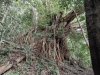
 
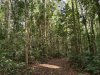
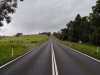
This the main road, in the first stretch between Yungaburra and the junction where The Gillies is:

IMG20251204053304.jpg


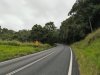
And this is on the second stretch, where the forest starts before reaching Lake Barrine:

IMG20251204064114.jpg
 

Attachments

  • IMG20251204053304.jpg
    IMG20251204053304.jpg
    137.3 KB · Views: 49
  • IMG20251204064114.jpg
    IMG20251204064114.jpg
    196.7 KB · Views: 51
Yungaburra to Cairns


I was going to roll two days into one post again, because the first one is just a travel day from Yungaburra to Cairns, but then decided to use this one as another “wrap-up” sort of post where I discuss what I will and will not be doing over the next week.

Firstly: I hitched from Yungaburra to Atherton in the morning when people were going into work. This meant I had about five hours to wait for the 1.30pm bus to Cairns, but better to make sure I got there. I said earlier that I don’t like hitching (then you have to talk to people!) but there’s only one road between Yungaburra and Atherton and it’s only about 15km, so it is short and easy. And the alternative is the AU$55 taxi. Funny thing in Australia, everyone was like “no way!” to paying that when I say the taxi is $55, but they would happily pay $25 for a burger at any cafe here.

There’s a hitch-hiking pick-up spot which was pointed out to me, where there is a sand pull-in outside the Yungaburra Park Motel on the way out of town. The very first car which came by stopped to give me a ride.

In Cairns I’m staying again at the Cairns City Backpackers, because it has cheap rooms (by Australian standards) - but mainly because it is just round the corner from the railway station which is where the Trans North bus would be leaving from the next morning at 6.30am.

I won’t bother listing the birds for this travel day because I was just sitting in Atherton most of the day and there was just a handful of the common birds. I’d kept an eye open for any roadside Cassowary as the bus went through the Kuranda area but no luck.


I was going to be in Cairns for Saturday, Sunday and Monday before heading south on Tuesday but extended by an extra day so I can get up to Port Douglas on the Tuesday (the Trans North buses only go north three times a week). It turned out the backpackers did have availability for that night even though the booking site said they didn’t.

On Saturday (yesterday) I went up to Jindalba in the Daintree for a very small chance at finding a Bennett’s Tree Kangaroo and a more likely chance at Cassowary (neither of which I saw). When I got back that evening I checked eBird for any recent sightings and saw that the Green Pigmy Geese were back at Cattana Wetland, so I went there on the Sunday (today) and successfully found five of them, yay. Tomorrow I take a day-trip down to Mission Beach to look for Cassowary again. Posts on all of those will be upcoming.

The reason I was originally going to Port Douglas was to try and see the pigmy geese at Warri Park Wetlands, which now I have seen, but I already have the bus booked so will see what else is around and will go to Wildlife Habitat (a zoo) as well.


In other places I could have gone from Cairns:

The Trans North also has a stop at the Daintree Ferry. I looked at the river cruises there but the lower river cruises likely wouldn’t give me anything new. The better cruises for birds are on the upper river, leaving from Daintree Village (this is where I could see Little Kingfisher and Spotted Whistling Duck) but there is no public transport to the village so that was out.

I looked at bird lists for Cooktown too, which is the furthest north you can get by bus. I mentioned before how I had a list of about a dozen birds from the Far North which would be lifers, but the only one I would get at Cooktown would be the Tropical Scrubwren. The others are all much further north, and honestly would be easier to see in New Guinea because most of them are not restricted to Australia – indeed, @WalkingAgnatha just recently saw several of the birds on that list while in New Guinea (see the Big Year thread). Therefore Cooktown is out as well.


Heading south from Cairns, I’ll be going to Rockhampton next. That’s a long way down the coast, so I’m breaking the journey in Townsville. I was just going to overnight there, but there’s not much in the way of cheap accommodation on the booking sites in Rockhampton which means I will be in Townsville for three nights (at the Pier Pods where I stayed last time) until moving on. I may go back to the Townsville Common to see if any different birds are around, or I may just do nothing.

I’ll have four nights in Rockhampton. I’m hoping to get a new rock wallaby there (the Unadorned Rock Wallaby), there’s the free Rockhampton Zoo, and there may be a new bird or two if I’m lucky.


My three-month Greyhound pass runs out on 15 December, while I’m in Rockhampton. The pass didn’t start until the first date of bus travel (i.e. the first Greyhound bus, which was from Adelaide to Alice Springs) – the trip itself has already passed three months. That happened a week ago on 30 November. I might extend the pass, or buy a new short one, or maybe just pay the buses individually after Rockhampton. I’ll need to work out how much they will total before deciding which. I know some of the routes further south aren’t Greyhound routes anyway, so a new pass may not be efficient, and in Victoria you can travel on all the regional buses and trains for just $11 a day.


There was another place I was intending on going to, but now am not. Between Townsville and Rockhampton is the town of Airlie Beach. The reason this was in the plan was for the Proserpine Rock Wallaby.

On Mammalwatching it was written:

“Airlie Beach is the best place to see Proserpine Rock Wallabies, a species that is both rare and hard to see because it lives in rainforest. But they are fairly easy to see on the slopes of Mount Lucas in Airlie Beach. The drive up the hill – Lucas Heights – is flanked by some expensive houses (indeed a local nickname for the road is the “Stairway to Heaven”) and the wallabies can often be seen grazing along the road side after dark (quite late in the evening is probably the best time to look once the road is quiet). I saw several in the garden of a house on Mount Lucas which the wallabies regularly visit for food. The local parks and wildlife service might be able to help.”

I’d thought “Great, I’ll go to Airlie Beach and then go to this suburb in the evening”. The problem with this is that the names don’t show when you Google them. I mean, they do, but not for Queensland. Lucas Heights is a suburb in Sydney.

Then I found someone on the Mammalwatching forum asking the same question to which the reply was: “Looking at Google Maps then I think the road I mentioned is probably Staniland Drive up Mount Lucas (Strathdickie) which just north of Proserpine itself.“

From this I found where it was on the map – and it is way outside Airlie Beach. No use to me.

I looked in David Andrew’s “The Complete Guide to Finding the Mammals of Australia”. He says Proserpine Rock Wallabies have been introduced to nearby Hayman and Gloucester Islands, and you can take ferries there. I checked these out – they are private islands which are hugely expensive to visit. That was clearly not an option either.

However the other site he gives was a definite possibility, even if a slim one. The wallabies are found along the Airlie Creek Track which is right in town. Being shy and nocturnal the chances of seeing them wouldn’t be great but I’d have still given it a shot, except that the cheapest place I could have stayed in Airlie Beach when I checked the booking sites was AU$111 a night. And that wasn’t a hotel. It was a hostel. In a dorm bed. In a 14-bed dorm. A bunk in a fourteen bed dorm for a hundred and eleven dollars!! I don't think so!

[There were a couple of cheaper hostels, in the region of AU$60+ a night, but they had age restrictions or were female-only dorms]

Proserpine Rock Wallaby was off the cards.

I’ll also just note Bredl’s Wildlife which is a zoo by Airlie Beach. When I checked their website for the price it is by tour only and costs AU$90! Some Australian prices are just mad.
 
Back
Top