European (Tea)Cup - HEAD-TO-HEAD: Chester vs Prague (Asia)

Chester vs Prague - ASIA

  • Chester 5/0 Prague

    Votes: 0 0.0%
  • Chester 4/1 Prague

    Votes: 0 0.0%
  • Prague 5/0 Chester

    Votes: 0 0.0%

  • Total voters
    19
  • Poll closed .
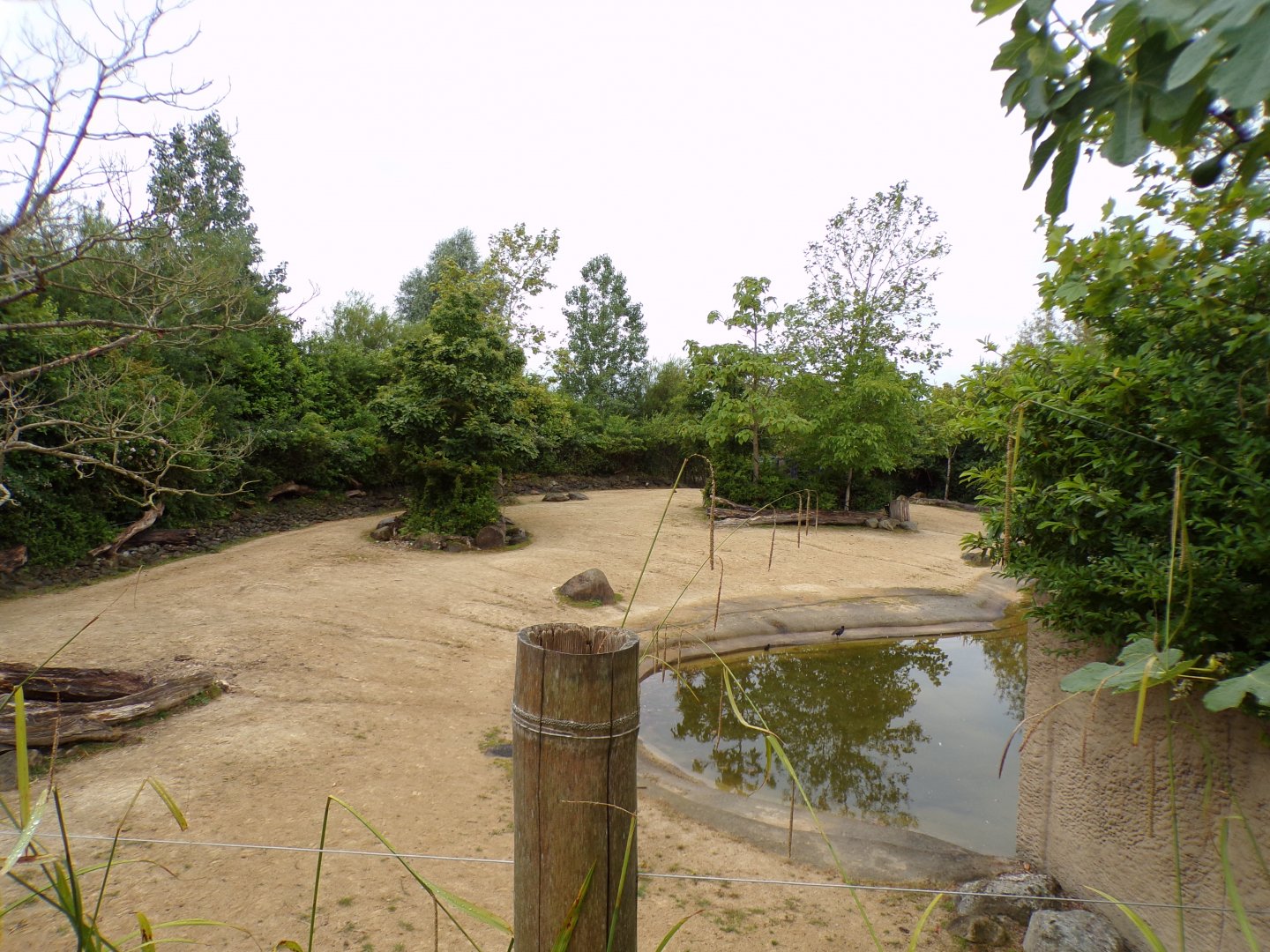
The only animals occupying the outdoor Chambal enclosure are the European pond turtles and frogs from the Rana genus.
I also want to mention the Amur tigers are officially gone and that there are plans on bulding a new exhibit for them. Those old enclosures are quite small.
The exhibits for Malayan and Sumatran tigers in the bottom part of the zoo... Well, those are quite... something. In my opinion, they are just ugly and boring.
There's also the exhibit for Malayan tapirs, where they don't have much access to water. Maybe I have high standards for them because of Zlín where they have an access to a whole pond, but even when I forget about Zlín, I find the conditions in Prague quite bad.
What annoys me about Prague is that there are no bigger plans for the Asian part in the upper part of the zoo. Sure, there are plans on building a complex for orangs and sun bears, the director also wishes to make an exhibit for Indian rhinos and there should be wild camels in the future, but that's it. But honestly, I think it would be better to simply get rid of south-american species and kangaroos, placing them elsewhere in the zoo and making more space for other asian species and creating a huuge asian area. Though, that's just my silly little wish that will probably never come true.
As for the Tartar sand boas... What annoys me is there's only a thin layer of sand for them. It may seem like there's actually a really thick layer, but that's true only for the front part of the exhibit, right next to the glass. The layer is maybe 20 cm in height, but only about 3 cm in width, which is a shame. That's because the director wanted the visitors to always be able to see the snakes. The snakes probably don't mind as much, but I believe they deserve more space to hide.
What also makes me sad is that Prague usually does not come up with anything mind blowing. Maybe it's just my point of view because it's my home zoo and I visit it quite often, but... compared to other zoos, in Prague my mind usually goes just "well, yeah, that's fine I guess". You know, I'm excited for the new Amur tiger complex, but I also know it won't be outstanding.
Although pangolins are wonderful animals and I'm always happy to see them, their exhibits aren't that good to be honest, especially the first one on the left. Two days ago, I watched Šiška acting very unnaturally, doing the same movements over and over. Her enclosure is really bland and honestly, even pangolins need some sort of enrichment... By the way, this was not my first time seeing her like this and the pangolins in other enclosures seem to be doing okay. I hope she gets better when moved to Schonbrunn.
Speaking of Indonesian jungle, the exhibit for the macaques is rather poor. It's quite small for such a group of monkeys and I really think it should be considered they don't even have an outdoor enclosure.
People here keep talking about free ranging birds in Indonesian jungle, but well, there currently aren't any. Because of the macaques, as Dave has said. Which makes the Indonesian jungle weirdly quiet and a little boring, especially if you take into count the binturongs and otters are usually hiding somewhere during the day. Oh, and even the mudskippers are now gone!
I still like the Prague zoo, I love Sechuan, Chambal and other stuff too, but I think all of us should be able to see the zoo is not perfect by any means. I'd love it to be, but I don't believe in any major changes under the current director. Trust me, there are valid reasons for why most czech people invested in zoos don't like him...
 
Actually, most photos of the sand boas here on zoochat show there's a piece of plastic? that divides the bottom of the exhibit in two parts; one where the snakes can bury themselves in the sand and one where they can't.
full
 
Last edited:
Actually, most photos of the sand boas here on zoochat actually show there's a piece of plastic? that divides the bottom of the exhibit in two parts; one where the snakes can bury themselves in the sand and one where they can't.
full
I also wanna add that specifically the front part is heated to ideal temperature via heating cables to ensure the snakes stay there.
 
I'm finding it extremely hard to pick between the two. Chester has arguably one of the best South-East asian exhibits in the world plus Himalaya and various other Asian species dotted around the zoo, as well as being home to many endangered species and having immense breeding success with many of them. However their elephant accommodation is nothing to brag about, quite in contrast to Prague. Prague also has an astonishing Asian collection including various aviaries, exhibits representing Indonesia, The Gobi, Plains of Asia, all filled to the brim with (mostly) good quality enclosures. And of course animals that are very rare in Europe, Gharials and Giant Salamanders to name a few (although admittedly I am not knowledgeable of how well the breeding has gone). This could go either way, so if anyone wants to persuade me with their opinion feel free.
 
Does Chester have any nad exhibits at this category?
I've never liked the banteng enclosure very much. Quite small and very bare with no grass at all, though the access to the moat is nice. Not anywhere near as bad as the bears or hornbills at Prague, but not good either in my mind and by some margin the worst enclosure for the species in the country (which isn't something you can say very often about Chester!).


The exhibits for Malayan and Sumatran tigers in the bottom part of the zoo... Well, those are quite... something. In my opinion, they are just ugly and boring.
I thought the outdoor islands were really quite attractive last summer. Those sterile, bathroom-like indoors are as ugly as it comes, but the outdoors struck me as well-planted and sufficiently big if not enormous, only lacking in a bit of climbing. Neither of them exactly compare to Chester's Sumatran enclosure, but they're both pretty decent to me.
There's also the exhibit for Malayan tapirs, where they don't have much access to water. Maybe I have high standards for them because of Zlín where they have an access to a whole pond, but even when I forget about Zlín, I find the conditions in Prague quite bad.
While it doesn't exactly compare to what looks like a spectacular setup at Zlín, I thought the pool provided for the Malayan Tapirs at Prague was sufficient, and certainly no less than what they have outdoors at Chester (that said, Chester does have the advantage of an indoor pool which I believe Prague, and for that matter every other zoo I've been to with the species, lacks). I liked the shade of the enclosure and the natural substrate indoors, my only real disappointment being the lack of any grass; asides from the small pool, what is it about the enclosure you don't like?
What annoys me about Prague is that there are no bigger plans for the Asian part in the upper part of the zoo. Sure, there are plans on building a complex for orangs and sun bears, the director also wishes to make an exhibit for Indian rhinos and there should be wild camels in the future, but that's it. But honestly, I think it would be better to simply get rid of south-american species and kangaroos, placing them elsewhere in the zoo and making more space for other asian species and creating a huuge asian area. Though, that's just my silly little wish that will probably never come true.
Of course, as it's your local zoo, you're in a much better position than me to complain about future developments. But rhinos, a species of camel kept by no other zoo in the world, a new bear species, and improved offerings for their existing bear species and tigers seems like a great list of future plans to me. If London or Whipsnade had even a fraction that level of ambition with their upcoming developments, I'd be over-the-moon. If you're annoyed at the lack of continuity (i.e. not making one big Asian area and rather a bunch of small ones), then that's a lot more understandable. It's all down to personal preference and Prague's ethos of making smaller exhibits, each self-contained and with a narrower theme, really appealed to me.

This is all irrelevant for the Cup as future plans can't be considered anyways, but it's an interesting discussion to have regardless.

What also makes me sad is that Prague usually does not come up with anything mind blowing. Maybe it's just my point of view because it's my home zoo and I visit it quite often, but... compared to other zoos, in Prague my mind usually goes just "well, yeah, that's fine I guess". You know, I'm excited for the new Amur tiger complex, but I also know it won't be outstanding.
You don't think the goat enclosures on the cliff are mind-blowing? That said, I do sort of agree with you that Prague excels not with the larger-than-life, mega-exhibits like you'd find at Burgers' or Zürich, but with a wide roster of smaller exhibits that together create a wonderful atmosphere. Like you say, the fact its your home zoo and completely foreign to me is probably a big factor in why we take to this approach so differently. There is nowhere in the UK which can compare to Prague in terms of completely surrounding you with different exhibits, each with a clear identity and approach and filled to the brim with rarities. By contrast, the fact that so much of Chester feels like a slightly better version something I could find at a vast multitude of other British zoos up and down the country (there are of course exceptions where they've been more imaginative) is perhaps why I'm a little bit harsher on the place. Subjectivity will inevitably always be a bit part of zoo discourse.

Although pangolins are wonderful animals and I'm always happy to see them, their exhibits aren't that good to be honest, especially the first one on the left. Two days ago, I watched Šiška acting very unnaturally, doing the same movements over and over. Her enclosure is really bland and honestly, even pangolins need some sort of enrichment... By the way, this was not my first time seeing her like this and the pangolins in other enclosures seem to be doing okay. I hope she gets better when moved to Schonbrunn.
It's really interesting to hear criticisms of the pangolin enclosure at Prague. No such thoughts crossed my mind at all when I visited, largely because I have no other pangolin enclosures to compare it to not having seen any before. I often hear people comment on how the Leipzig enclosure is better beyond the lack of breeding success, and would be fascinated to hear more on this. Is it just a lack of enrichment? What sort of enrichment would pangolins benefit from? More complex feeders, or thicker natural substrate for burrowing?

I'm not disagreeing with your criticisms of the enclosure, but I'm interested to hear more from you or anyone else with similar thoughts. I'm much saddened to hear about Šiška stereotyping, but glad the other pangolins aren't showing ay such signs. I remember reading about how the zoo have always struggled with her, particularly in terms of her diet as she often refused to eat certain foods as she matured, and had to improvise there, though I can't seem to find the article now.
Speaking of Indonesian jungle, the exhibit for the macaques is rather poor. It's quite small for such a group of monkeys and I really think it should be considered they don't even have an outdoor enclosure.
People here keep talking about free ranging birds in Indonesian jungle, but well, there currently aren't any. Because of the macaques, as Dave has said. Which makes the Indonesian jungle weirdly quiet and a little boring, especially if you take into count the binturongs and otters are usually hiding somewhere during the day. Oh, and even the mudskippers are now gone!
I largely agree here, and if I were in charge of Prague, one of the first things I'd do was to try and remove the macaques and bring back the birds. You're completely spot on to say it makes the Pavilion a little quiet and boring, and I firmly believe that for any zoo with a sizeable tropical house, free-flying birds are a necessary addition for immersion and atmosphere.

Where were the mudskippers once kept? If it is in the current Green Spotted Pufferfish pool, then I would wager they're an even better replacement. Plenty of zoos have mudskippers, but not enough have freshwater pufferfish, and I love the way that the pool is integrated into the corner of the larger otter moat: a lovely hidden detail which adds to the character of the Pavilion, and was indeed the most interesting part of the exhibit to me beyond the pangolins. I also thought the binturong enclosure was fabulous (in terms of size and the amount of climbing, the only one I've seen that surpasses it is Dresden's, barring enclosures where they're mixed with other species such as Chester where they share with sun bears). You're right though that them being difficult to see makes the place feel quieter. Hopefully if they ever do bring back the birds they will mask this fault.

Actually, most photos of the sand boas here on zoochat show there's a piece of plastic? that divides the bottom of the exhibit in two parts; one where the snakes can bury themselves in the sand and one where they can't.
full
Well that is indeed underwhelming if that's the only place where they can truly submerge themselves. I don't really take issue with zoos using methods to encourage the animals to be more visible (most big cat enclosures I know of have a heated rock in a position that makes the animals more likely to use them, with Chester indeed being such a example), but restricting their ability to perform crucial natural behaviours elsewhere in the enclosure feels too far for me...

Personally, if they made the sand deeper elsewhere so that the snakes can submerge themselves throughout, but still tried to lure them to the front using the heated cables that @Kharzo describes, then I think that would be okay. But the piece of plastic shown above doesn't sit right with me and I retract my claims about the excellent sand boa displays as a result...

Prague isn't perfect, but Chester isn't either and indeed no zoo is, but personally it struck me as very, very good. The main reason why I consider it the best zoo that I've been to is the presentation, where every exhibit is so engaging, not going too far on tasteless theming but designed in a way that appeals to visitors, usually without compromising animal welfare. The stunningly long list of breeding triumphs and their commitment to certain in situ projects was more reason for me to love the place, as is the stunning setting. There are moments where I feel as though the animals are getting the short end of the stick, but thankfully some of those (such as the Polar Bears and even the hornbills as I believe the Pheasantry is still in the process of being gradually converted to other exhibits) come with the reassurance that they will be improved in the near future. There are some enclosures where there are no such plans and therefore questions should be asked about the quality (the frustrating excess of pinioned birds or the macaques, for example), but personally I still think Prague is on the whole world-class.
 
I've never liked the banteng enclosure very much. Quite small and very bare with no grass at all, though the access to the moat is nice. Not anywhere near as bad as the bears or hornbills at Prague, but not good either in my mind and by some margin the worst enclosure for the species in the country (which isn't something you can say very often about Chester!).
If you're saying it's wrong there's no grass in the banteng exhibit in Chester, you should remember there's also no or very little grass in most of the ungulate exhibits in Prague (Przewalski's horses, kiangs, camels).
Those sterile, bathroom-like indoors are as ugly as it comes, but the outdoors struck me as well-planted and sufficiently big if not enormous, only lacking in a bit of climbing.
I'm sorry, but you find 300m2 enormous? We're talking about, as you claim, a world-class zoo...
I liked the shade of the enclosure and the natural substrate indoors, my only real disappointment being the lack of any grass; asides from the small pool, what is it about the enclosure you don't like?
The pool for the tapirs in Prague is small, that's one thing. Second thing, it's actually empty most of the times. Third, I've actually never seen the Malayan tapirs in their outdoor enclosure. Not even once. Maybe I'm just unlucky, but I still find it crazy. And those indoors are really small and very dark.
You don't think the goat enclosures on the cliff are mind-blowing?
You know, I aprecciate those. On the other hand, if Prague was more ambitious, there could be an exhibit for snow leopards for example. And... the rock was already there. Also, those enclosures are actually quite old. I was talking rather about the new stuff.
But rhinos, a species of camel kept by no other zoo in the world, a new bear species, and improved offerings for their existing bear species and tigers seems like a great list of future plans to me.
Those plans are great species-wise. But I don't expect the exhibits themselves to be outstanding.
I often hear people comment on how the Leipzig enclosure is better beyond the lack of breeding success, and would be fascinated to hear more on this. Is it just a lack of enrichment? What sort of enrichment would pangolins benefit from? More complex feeders, or thicker natural substrate for burrowing?
There's enough substrate to burrow in, but not enough climbing unfortunately. Basically, this particular exhibit is just a small room with few branches and that's it, it's actually quite sterile.
Where were the mudskippers once kept?
Yeah, the mudskippers occupied that one pool next to the mixed exhibit for otters and binturongs. I know they are not uncommon, but I can assure you this little enclosure for them was actually much nicer than any other I know of.
The stunningly long list of breeding triumphs and their commitment to certain in situ projects was more reason for me to love the place, as is the stunning setting.
Speaking of breeding successes and in-situ programmes... Yeah, Prague does good, but it can be compared to some other czech zoos (yeah, I don't even need to look behind the borders of this country), for example Ostrava. Prague zoo has one advantage and that is that's in Prague, the richest city in Czechia, and that the director is sort of a celebrity and is close with some politicians. So getting hands on some animals is easier for them. It's almost as it's not a city zoo, but kind of a state zoo to be honest..
I believe the Pheasantry is still in the process of being gradually converted to other exhibits)
I don't know of any current plans on moving the hornbills from the Pheasantary. Sometimes someone mentions it's bad and that they know about it, but that's it.
 
Last edited:
If you're saying it's wrong there's no grass in the banteng exhibit in Chester, you should remember there's also no or very little grass in most of the ungulate exhibits in Prague (Przewalski's horses, kiangs, camels).
I don't know enough about hoofstock husbandry and the benefits of different substrates to really comment here, but Przewalski's Horses and Bactrian Camels are found in semi-arid and arid habitats respectively, whereas banteng live in grasslands and tropical rainforests. The banteng enclosure at Chester doesn't reflect that habitat at all, and asides from the substrate strikes me as far too open for a rainforest species, and this isn't the only such example at Chester (though the others I can think of aren't Asian).

And, the enclosures at Chester for both camels and the closest equivalent to the Przewalski's horses (its Onager) are also kept on sand and concrete with no grass. I don't believe this is an issue because it reflects their habitat well, but the same is the case in Prague.
I'm sorry, but you find 300m2 enormous? We're talking about, as you claim, a world-class zoo...
Sorry, I worded that really badly. I meant to say something along the lines of: 'though not enormous, it's still sufficiently big' and got my words twisted there.

You know, I aprecciate those. On the other hand, if Prague was more ambitious, there could be an exhibit for snow leopards for example. And... the rock was already there. Also, those enclosures are actually quite old. I was talking rather about the new stuff.
I would also love a Snow Leopard enclosure on the cliff (look how well it's worked out for places like Highland and Zürich). Once in the past on this forum I suggested that they build one above the Zakázanka Path, between the Czech reptiles display and the Great Aviary, but learnt that this wouldn't be possible as that area is a vital breeding ground for wild Dice Snakes so must be left to nature. That means any Snow Leopard enclosure here would have to replace one of the existing goat enclosures, which could of course happen one day should the zoo, for whatever reason, lose one of those herds, and I'd love to see it.

I don't know of any current plans on moving the hornbills from the Pheasantary. Sometimes someone mentions it's bad and that they know about it, but that's it.
That's a shame. I think I've read somewhere on here before that Rakos' and 'Darwin Crater' were the first stages of what will eventually become a gradual conversion of the Pheasantry into smaller exhibits, and the long-term plan is to eventually convert the two remaining blocks of aviaries into something of that sort as well. Perhaps I'm misremembering.
 
I've never liked the banteng enclosure very much. Quite small and very bare with no grass at all, though the access to the moat is nice. Not anywhere near as bad as the bears or hornbills at Prague, but not good either in my mind and by some margin the worst enclosure for the species in the country (which isn't something you can say very often about Chester!).

I think you're being somewhat unfair to the exhibit in question, on a few levels:

Firstly, it is rather larger than the photograph you provided suggests, as the enclosure extends back beyond the indoor cattle sheds into what - in effect - is a second large paddock.

upload_2025-8-16_20-58-13.png

I think the following photograph shows the scale of the main body of the exhibit better than the one you provided does:

full


Secondly, even if one only looks at the main body of the exhibit visible from the path, it is actually significantly larger and more attractive - despite the lack of any persistent grass cover - than the exhibit at Edinburgh, which is pretty much just a small, drab grass paddock covering around 400 m²:

full


Thirdly, I actually think that this exhibit - although nowhere near as large as the exhibits at Marwell or Whipsnade - is more *interesting* in terms of appearance and design, considering the fact that these (and the West Midlands exhibit) are basically just massive empty fields, for which your criticism that the Chester example is "far too open for a rainforest species" applies just as strongly.

full
 

Attachments

  • upload_2025-8-16_20-58-13.png
    upload_2025-8-16_20-58-13.png
    834.9 KB · Views: 18
And, the enclosures at Chester for both camels and the closest equivalent to the Przewalski's horses (its Onager) are also kept on sand and concrete with no grass. I don't believe this is an issue because it reflects their habitat well, but the same is the case in Prague.

A handful of minor corrections:

  • The onager exhibit does contain grass, although sand is regularly added to the exhibit and hence masks it a lot of the time.
  • The camels are no longer held in this exhibit, and are now held within the old giraffe paddock - which again contains a mixture of grass and sand where substrate is concerned.
One side-effect of this move, incidentally, is that both species have significantly more space overall! As I argued upthread, I feel these two exhibits are some of the easier-to-overlook Asian highlights at Chester and superior to their direct equivalents at Prague in terms of both quality and size.


Chester exhibits for Onager and Bactrian Camel

Onager

full

upload_2025-8-16_21-41-59.png

Camel

full

full

upload_2025-8-16_21-44-34.png


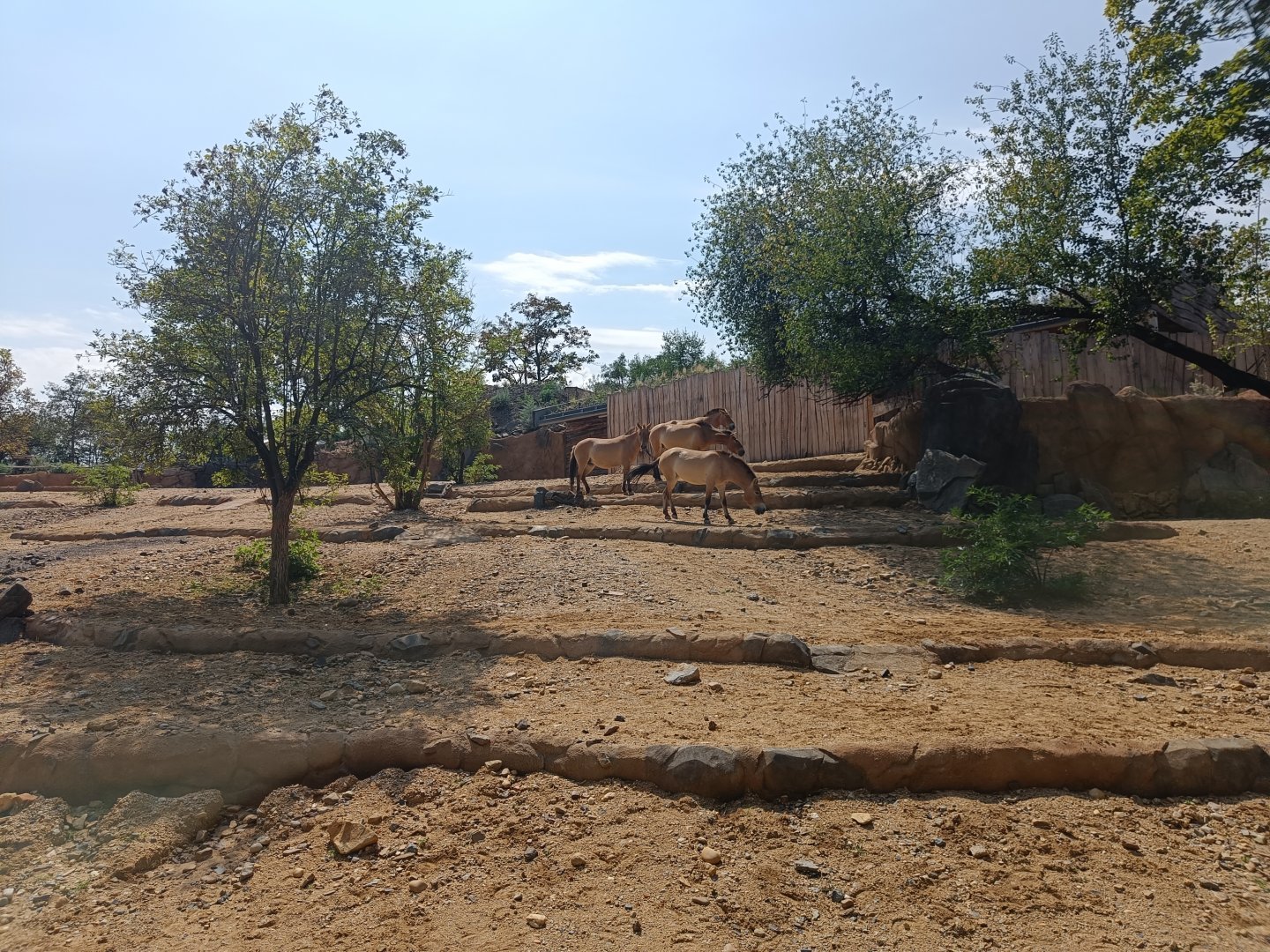
Prague exhibits for Kulan, Przewalski Horse and Bactrian Camel.

Kulan

full

upload_2025-8-16_21-56-6.png

Przewalski Horse

full

upload_2025-8-16_21-55-14.png

Bactrian Camel

full

upload_2025-8-16_21-58-41.png
 

Attachments

  • upload_2025-8-16_21-41-59.png
    upload_2025-8-16_21-41-59.png
    716.2 KB · Views: 19
  • upload_2025-8-16_21-44-34.png
    upload_2025-8-16_21-44-34.png
    988.6 KB · Views: 20
  • upload_2025-8-16_21-55-14.png
    upload_2025-8-16_21-55-14.png
    676.7 KB · Views: 20
  • upload_2025-8-16_21-56-6.png
    upload_2025-8-16_21-56-6.png
    452 KB · Views: 21
  • upload_2025-8-16_21-58-41.png
    upload_2025-8-16_21-58-41.png
    903.1 KB · Views: 17
I think you're being somewhat unfair to the exhibit in question, on a few levels:

Firstly, it is rather larger than the photograph you provided suggests, as the enclosure extends back beyond the indoor cattle sheds into what - in effect - is a second large paddock.

View attachment 816537

I think the following photograph shows the scale of the main body of the exhibit better than the one you provided does:

full


Secondly, even if one only looks at the main body of the exhibit visible from the path, it is actually significantly larger and more attractive - despite the lack of any persistent grass cover - than the exhibit at Edinburgh, which is pretty much just a small, drab grass paddock covering around 400 m²:

full


Thirdly, I actually think that this exhibit - although nowhere near as large as the exhibits at Marwell or Whipsnade - is more *interesting* in terms of appearance and design, considering the fact that these (and the West Midlands exhibit) are basically just massive empty fields, for which your criticism that the Chester example is "far too open for a rainforest species" applies just as strongly.

full
I stand corrected. Is that second paddock you mention visible to the public? I have no memory of it at all.

Going off-topic now: I haven't been to Whipsade since the banteng moved into Passage just yet, but recalling the enclosure itself, it's over 42 acres with separation paddocks attached, tall trees and a row of bushes around the perimeter for shade and cover, and long enough grasses in places that the banteng should be able to vanish simply by sitting down. So while it's still quite bare and as you say doesn't represent a rainforest at all, privacy and cover is not a problem; then again, as there is a second paddock at Chester which appears to be offshow, it isn't there either.

A handful of minor corrections:

  • The onager exhibit does contain grass, although sand is regularly added to the exhibit and hence masks it a lot of the time.
  • The camels are no longer held in this exhibit, and are now held within the old giraffe paddock - which again contains a mixture of grass and sand where substrate is concerned.
One side-effect of this move, incidentally, is that both species have significantly more space overall! As I argued upthread, I feel these two exhibits are some of the easier-to-overlook Asian highlights at Chester and superior to their direct equivalents at Prague in terms of both quality and size.


Chester exhibits for Onager and Bactrian Camel

Onager

full

View attachment 816540

Camel

full

full

View attachment 816543


Prague exhibits for Kulan, Przewalski Horse and Bactrian Camel.

Kulan

full

View attachment 816546

Przewalski Horse

full

View attachment 816545

Bactrian Camel

full

View attachment 816548
I actually really like the Onager enclosure at Chester. I love the thick and regularly replenished sand and the desert-like effect it creates. It is indeed better than the Przewalski's enclosure at Prague, though not by the widest of margins and visually I do much prefer the latter. I mentioned its sandiness in response to @merlin 's criticism of the use of sand in many of Prague's desert hoofstock enclosures (as I was saying that isn't comparable to using sand for a rainforest species like banteng), but I do really like it.

Having said that, I don't quite understand moving the camels from it to a different enclosure that is smaller by a thousand square metres, especially as I really enjoyed the two species side-by-side. Were there issues with mix?
 
Onto the apes, and images which I feel make it extremely clear that the gulf between the respective exhibits is wide, and that the gibbon exhibit at Prague is one of the worst category exhibits at the zoo:

Orangutans and Gibbons at Chester

Lar Gibbon and Bornean Orangutan

One of the most interesting aspects of these exhibits, along with their height and overall scope, is the fact that some of the indoor exhibits have mesh roofs open to the elements, allowing natural airflow and rainfall - moreover, the keeper walkways above the exhibits permit scatter-feeding. The second outdoor exhibit also contains Asian Shortclawed Otter.

full

full

full

full


Due to the layout of the Realm of the Red Ape exhibit - with onshow enclosures located within the central hub of the building and linked by offshow enclosures and tunnels, the visitor path extending over the indoor offshow enclosures, and the outdoor exhibits surrounding the house on multiple sizes, it is reasonably easy to calculate an overall area for these exhibits.

upload_2025-8-16_22-17-53.png


Sumatran Orangutan and Moloch Gibbon

The Sumatran Orangutan and Moloch Gibbon have separate outdoor exhibits, but are IIRC are able to mix within the indoor enclosures - as is the case with Realm of the Red Ape, the interior enclosures comprise a mixture of onshow exhibits, offshow exhibits and connecting tunnels, with the latter two extending underneath the visitor path. Here, too, the indoor exhibits are supplemented by keeper walkways allowing for scatter-feeding.

full

full

full

full


upload_2025-8-16_22-21-31.png

---

Orangutans and Gibbons at Prague

Sumatran Orangutan


full

full

full

full


Unfortunately, it is only possible to determine the area of the outdoor exhibit via Google Maps:

upload_2025-8-16_22-32-25.png


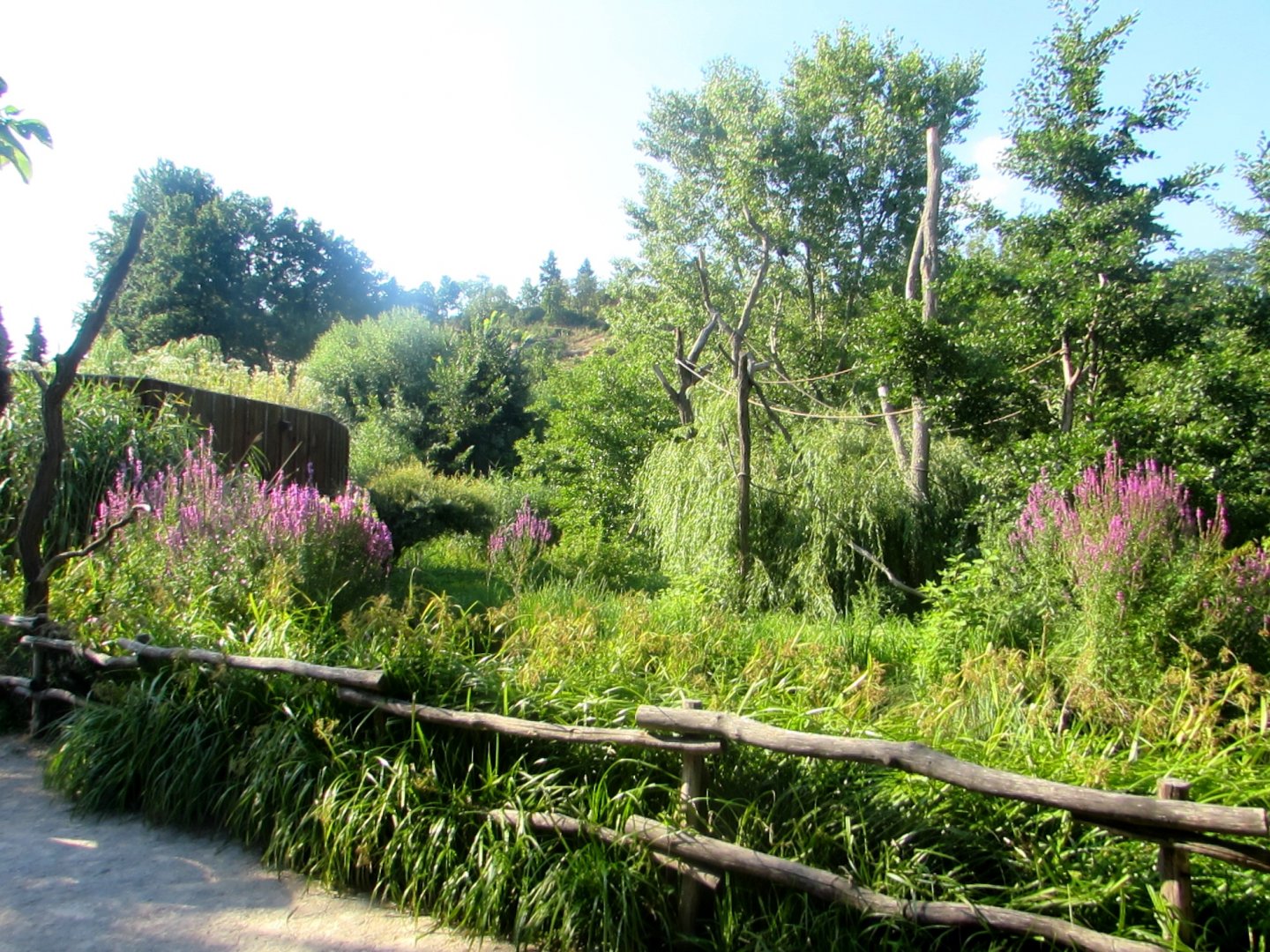
Silvery Gibbon


full


upload_2025-8-16_22-40-56.png

Unfortunately, there are no photographs showing the interior of the indoor gibbon exhibit, although this image shows the size fairly well:

full


Attachments

  • upload_2025-8-16_22-17-53.png
    upload_2025-8-16_22-17-53.png
    918.7 KB · Views: 14
  • upload_2025-8-16_22-21-31.png
    upload_2025-8-16_22-21-31.png
    825.8 KB · Views: 16
  • upload_2025-8-16_22-32-25.png
    upload_2025-8-16_22-32-25.png
    435.3 KB · Views: 17
  • upload_2025-8-16_22-40-56.png
    upload_2025-8-16_22-40-56.png
    745.3 KB · Views: 16
Unfortunately, there are no photographs showing the interior of the indoor gibbon exhibit, although this image shows the size fairly well:
Seems like I will need to take some photos next time I visit :rolleyes: Although the indoor exhibit is rather small, it actually looks decent.
And a little side note - those islands for orangutans in the Indonesian pavilion are no longer connected to each other.
 
I stand corrected. Is that second paddock you mention visible to the public? I have no memory of it at all.

You can just about see the entrance to it, but that's about it.

Having said that, I don't quite understand moving the camels from it to a different enclosure that is smaller by a thousand square metres, especially as I really enjoyed the two species side-by-side. Were there issues with mix?

No - merely the zoo not wanting a massive empty paddock and house in the centre of the zoo after the giraffes vacated it for Grasslands :rolleyes::D personally I, along with many others, would have far preferred something a bit more interesting to have moved in!
 
Asian Bears at Chester

Sun Bear

This large (at five times the size of the category rival at Prague) and attractive exhibit comprises a pair of lushly-vegetated outdoor enclosures containing a large amount of scope for the inhabitants to escape view, an indoor exhibit, and offshow indoor housing.

full

full

full


upload_2025-8-16_23-5-57.png

Asian Bears at Prague

Polar Bear

This, of course, is the exhibit which apparently is bad enough to automatically disqualify Prague from winning "Mountains and Poles", but which has no negative impact to prevent a 4-1 vote in "Water and Wetlands" or "Asia" ;)

full

upload_2025-8-16_22-56-3.png

-----

Asian Macaques at Chester

Lion-tailed Macaque

One of the older exhibits still in use at the zoo, this is part of the "Monkey Island" complex - the indoor area is a little old fashioned now but still provides a lot of opportunity for climbing and activity, whilst the outdoor exhibit was world-class when it was first constructed and is still extremely good thanks to the massive amount of vegetation and climbing opportunities:

full

full

full


Unfortunately it is impossible to calculate the area occupied by the indoor exhibit on Google Earth, and as such the following applies only to the large outdoor exhibit:

upload_2025-8-16_23-21-11.png

Sulawesi Black Macaque

I would argue that this is one of the best and largest indoor exhibits for any macaque species in Europe, and benefits even further by having an outdoor exhibit directly modelled after the "Monkey Island" exhibits elsewhere in the zoo, albeit slightly larger and slightly less densely-vegetated,

full

full

full


Unfortunately it is impossible to calculate the area occupied by the indoor exhibit on Google Earth, and as such the following applies only to the large outdoor exhibit:

upload_2025-8-16_23-10-20.png


Asian Macaques at Prague

Southern Pig-tailed Macaque

Possibly a strong rival for the worst exhibit at Prague alongside the Polar Bear exhibit, this lacks any outdoor access whatsoever, is heavily overcrowded and is ridiculously tiny:

full
 

Attachments

  • upload_2025-8-16_22-56-3.png
    upload_2025-8-16_22-56-3.png
    644.4 KB · Views: 16
  • upload_2025-8-16_23-5-57.png
    upload_2025-8-16_23-5-57.png
    630.1 KB · Views: 16
  • upload_2025-8-16_23-10-20.png
    upload_2025-8-16_23-10-20.png
    650.2 KB · Views: 20
  • upload_2025-8-16_23-21-11.png
    upload_2025-8-16_23-21-11.png
    820.6 KB · Views: 19
Onto the apes, and images which I feel make it extremely clear that the gulf between the respective exhibits is wide, and that the gibbon exhibit at Prague is one of the worst category exhibits at the zoo:

Orangutans and Gibbons at Chester

Lar Gibbon and Bornean Orangutan

One of the most interesting aspects of these exhibits, along with their height and overall scope, is the fact that some of the indoor exhibits have mesh roofs open to the elements, allowing natural airflow and rainfall - moreover, the keeper walkways above the exhibits permit scatter-feeding. The second outdoor exhibit also contains Asian Shortclawed Otter.

full

full

full

full


Due to the layout of the Realm of the Red Ape exhibit - with onshow enclosures located within the central hub of the building and linked by offshow enclosures and tunnels, the visitor path extending over the indoor offshow enclosures, and the outdoor exhibits surrounding the house on multiple sizes, it is reasonably easy to calculate an overall area for these exhibits.

View attachment 816549


Sumatran Orangutan and Moloch Gibbon

The Sumatran Orangutan and Moloch Gibbon have separate outdoor exhibits, but are IIRC are able to mix within the indoor enclosures - as is the case with Realm of the Red Ape, the interior enclosures comprise a mixture of onshow exhibits, offshow exhibits and connecting tunnels, with the latter two extending underneath the visitor path. Here, too, the indoor exhibits are supplemented by keeper walkways allowing for scatter-feeding.

full

full

full

full


View attachment 816551

---

Orangutans and Gibbons at Prague

Sumatran Orangutan


full

full

full

full


Unfortunately, it is only possible to determine the area of the outdoor exhibit via Google Maps:

View attachment 816553


Silvery Gibbon


full


View attachment 816555

Unfortunately, there are no photographs showing the interior of the indoor gibbon exhibit, although this image shows the size fairly well:

full
I am really surprised to hear that you don't like the Prague gibbon enclosure. I haven't seen it in person (got lost in 'Water World' right at the end of my visit and completely failed to locate it), but I've heard people praise it on this forum before. It's difficult to get a sense of scale in photos, but from what I can tell there is a solid amount on offer in terms of brachiating and some good height. I tend to prefer cages to islands for most primate species, especially ones as arboreal as gibbons, but as far as islands go I've always got the impression that this is one of the better ones. What is it that you don't enjoy about it?
 
I am really surprised to hear that you don't like the Prague gibbon enclosure. I haven't seen it in person (got lost in 'Water World' right at the end of my visit and completely failed to locate it), but I've heard people praise it on this forum before. It's difficult to get a sense of scale in photos, but from what I can tell there is a solid amount on offer in terms of brachiating and some good height. I tend to prefer cages to islands for most primate species, especially ones as arboreal as gibbons, but as far as islands go I've always got the impression that this is one of the better ones. What is it that you don't enjoy about it?
This photo of the island is more pleasing, but not really helpful. Although the exhibit is certainly not awful, it is not that big and doesn't offer much space for brachiating. Zlín also has islands for silvery gibbons, which are far better as there are a lot of branches and ropes for them to use. So yeah, the exhibit at Prague certainly doesn't compare to Chester's and you could also find similar exhibit at Zlín, which I think is just better.
 
Last edited:
I am really surprised to hear that you don't like the Prague gibbon enclosure. I haven't seen it in person (got lost in 'Water World' right at the end of my visit and completely failed to locate it), but I've heard people praise it on this forum before. It's difficult to get a sense of scale in photos, but from what I can tell there is a solid amount on offer in terms of brachiating and some good height. I tend to prefer cages to islands for most primate species, especially ones as arboreal as gibbons, but as far as islands go I've always got the impression that this is one of the better ones. What is it that you don't enjoy about it?

Mostly the size and limited height of the indoor housing, and the fact I've been rather spoiled by exhibits such as those at Chester, Edinburgh and Monkey World - the outside exhibit is a bit too small overall, but this wouldn't be quite as much of an issue if the area where climbing and brachiating is possible extended across more of the island, and therefore permitted this behaviour more readily.

In general I suspect that I am more "picky" when it comes to highly arboreal and active apes such as orangutans and gibbons, as opposed to chimpanzees and bonobos, where climbing opportunities are important but not as pivotal to the essential "vibe" of the species :D:p
 
Chester -- 45/95 points - 47.368%
Prague - 50/95 points - 52.632%
 
Back
Top