Hix Goes Round the Edges

  • Thread starter Thread starter Hix
  • Start date Start date

Hix

Wildlife Enthusiast and Lover of Islands
15+ year member
Premium Member
Covid-19 stopped most people in my neck of the woods from taking anything resembling a decent holiday. In March of 2020 I went up to Torres Strait on a birding holiday with other birders for a fortnight; I got back home just before the state borders were closed due to the global pandemic. The rest of the year I was confined to making 3 or 4-day sorties out and around Sydney.

In 2021, due to work commitments, I was only able to get away for a week in June (which is Winter in Australia), and as I couldn’t leave NSW (because the state borders were closed), I chose to drive out west to Sturt National Park in the desert. Unfortunately, it rained each day I was there and as the roads are often closed due to rain, I didn’t get to explore or see as many birds as I had hoped. And it rained all the way back home to Sydney. A couple of weeks later the whole state went into lockdown and we were confined to a five kilometre radius from our home for a few months.

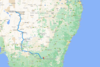
In 2022 I didn’t have much opportunity to get out of Sydney in the first six months of the year. However, I was able to take six weeks off work during winter and spent August travelling around New South Wales looking for wildlife (mainly birds). My plan was to return to Sturt National Park in the north-west and view a few other national parks out that way which I missed last year because of the rain. My maiden aunt in Brisbane had been requesting I come and visit because I hadn’t seen her for 12 years, so I decided to go there first and then travel to Sturt National Park. Looking at a map to see the shortest route I saw a number of towns with names that I’d heard many times before, iconic Australian towns, and decided they would be great places to stay on the way. During this planning phase I made several changes to my itinerary to incorporate some more of these towns and some more national parks. After a few weeks the final itinerary looked like this:

(Note – I’m detailing the route so anyone with an atlas or Googlemaps who’s interested can follow my path).

Starting in Sydney I travel up the coast to Kempsey and camp overnight in Hathead National Park before continuing on to the Gold Coast, then to O’Reilly’s in Lamington National Park, and then on to Brisbane where I would stay for five days with my aunt. After that I’d head west, camping in Goondiwindi, Cunnamulla, Thargomindah and finally Innamincka, before heading down to Sturt National Park and Tibooburra via Cameron’s Corner.

upload_2023-6-5_20-52-27.png

From Tibooburra I drive south to Broken Hill and Mutawintji National Park, then on to Menindee, the Menindee Lakes and Kinchega National Park. Continuing south into Victoria I would visit Hattah-Kulkyne National Park and then on to Barham.

upload_2023-6-5_20-52-40.png

After Barham I would go to Glenrowan in Victoria, then up through Albury-Wodonga to Wagga Wagga, then on to my brother’s farm at Jerangle for a couple of days. The last leg was to travel over to the coast at Narooma, and then back up to Sydney via Ulladulla and Shoalhaven. I estimated the whole trip would take about 32 days and I would cover about 5000 kilometres. And with the price of fuel the way it is, I might have to mortgage my house to pay for the diesel.

upload_2023-6-5_20-52-51.png

Because I planned on camping in national parks a lot of the way, a few days before I left I purchased a rooftop tent and a side annex and had it installed on top of my Pajero. This was going to save me on accommodation costs, would allow me to camp in national parks where there is more wildlife, and keep me off the ground if it rained again (which it did). While this sounded great in theory, in practice something unexpected happened and I only got to camp in the tent for six nights.

In case it rained and I got stuck in a National Park for a few days because the roads were closed, I put in the back of my car 12 x 1.5 litre bottles of fresh water and plenty of dry food snacks (like Cashews, Macadamias, fruit, biscuits and 6 boxes of Pop-Tarts). I also had half-a-dozen Sumo Citrus and four Raspberry-and-White-Chocolate Muffins.

If you followed the itinerary outlined above you’ll see that I’m following the edges of New South Wales while venturing over the borders a few times. Hence the title of this thread.

And, apart from getting away from the usual day-to-day grind and do some travelling, and visiting my aunt, I had some major wildlife objectives: increase my life list, increase my year list which at that point was sitting on 189 species of birds, and increase my photo list (i.e. a list of species of which I have good photos). Birds were the main focus, but any mammals or reptiles that came along would also be gladly viewed and photographed.

:p

Hix
 

Attachments

  • upload_2023-6-5_20-52-27.png
    upload_2023-6-5_20-52-27.png
    604.5 KB · Views: 23
  • upload_2023-6-5_20-52-40.png
    upload_2023-6-5_20-52-40.png
    624.1 KB · Views: 32
  • upload_2023-6-5_20-52-51.png
    upload_2023-6-5_20-52-51.png
    626.6 KB · Views: 42
Day 1, Monday 1st of August, 2022
Sydney to Kempsey


I was up early, at 3:00 am, with the intention of leaving at 4:00 but it took longer to pack the car than I anticipated and I didn’t get away until 4:40. It had been raining overnight and there was still moisture in the air but thankfully it didn’t rain while I was packing the car. It did however start raining half an hour after I left and continued for a few hours. I was leaving this early in the morning because I wanted to get through Sydney before the morning peak-hour traffic built up. My destination today was Hathead National Park on the coast near Kempsey, a distance of roughly 460 kilometres and 5 hours travelling time if I didn’t stop. But of course, I did stop.

Last year my work had taken me up to Newcastle for a few days and when I finished drove north for the weekend to do some birding outside of Taree at the Cattai Wetlands and also in Boyter’s Lane, Jerseyville. This last location in particular was very profitable as in the two hours I was there I got four lifers, and Cattai was good because they have Comb-crested Jacanas which are fairly easily seen. So my intention was to visit these areas again on my way to Hathead.

The Cattai Wetlands open at 8:00 in the morning and I made good time arriving there at 8:45 and staying until 11 o’clock. It was overcast but luckily there was no rain, however all the rains previously had flooded the lakes and there were large puddles across many of the paths which were mostly muddy, and in some places beside the lake the ground was so sodden and/or flooded that some trees had fallen over into the lake. The lake itself was fairly empty of birdlife; a few Ducks, Moorhens, a Grebe or two, a couple of Pelicans, two Egrets and a few Swamphens. However, from the viewing hide I did see three Jacanas, albeit from a distance. This is pretty much the southernmost extent of the jacanas range, although in the past there have been the occasional sightings a little further south of here.

https://www.zoochat.com/community/media/comb-crested-jacana.596697/full

There is a fair amount of forest surrounding the wetlands and a number of forest species can be found here, but again the forest seemed a little sparse on birds (compared to my visit last year in summer). However, I did see a small group of Varied Sittellas, and some Brown Thornbills collecting nesting material, along with Whistlers, Robins, Kookaburras, Fairy Wrens, Grey Fantails, Whipbirds, Willie Wagtails, and four species of honeyeater (Yellow-faced, Brown, Lewin’s, and Noisy Friarbirds). In total I saw 33 species.

https://www.zoochat.com/community/media/brown-thornbill-collecting-nesting-material.596694/full

https://www.zoochat.com/community/media/eastern-yellow-robin.596701/full

https://www.zoochat.com/community/media/varied-sittella.596707/full

https://www.zoochat.com/community/media/grey-fantail.596713/full

Continuing north I arrived in Jerseyville at a little before 1:00. Boyter’s Lane is a little over 2 km long but is generally very good for birding. Unfortunately, like the Cattai Wetlands, the lane was very muddy with lots of water around and many paddocks flooded. Still, I saw 25 species, the most common being the Chestnut Teal, but also Black Ducks, Cattle Egrets, Swamphens, one Dusky Moorhen and one Black Swan, six Pelicans, and the ubiquitous Magpie-Lark and Willie Wagtail. I think with all the rain there are so many flooded paddocks around the birds are not congregated in one area and can spread out over the countryside, which is why these good birding areas are comparatively empty.

https://www.zoochat.com/community/media/chestnut-teal.596711/full

Right next to Jerseyville is Hathead National Park and it has two widely separated campgrounds. Smoky Cape campground in the north was not far from Jerseyville and although I wasn’t staying there I went and checked it out anyway. It looks like a nice campground in the forest, with lots of palms, but I was booked into the Hungry Gate campground further south because it was supposedly good for goannas.

I arrived at Hungry Gate at around 3 o’clock and proceeded to put up my rooftop tent and the attached annex. It took me about an hour to work out how it all went together but I expect I’ll be faster next time.

I didn’t see any goannas, but I did see three Glossy Cockatoos flying overhead, and the grassy campground was home to a pair of Masked Lapwings and a relatively tame Eastern Grey Kangaroo that allowed you to approach it to within a few metres. There were also a pair of Pied Butcherbirds, a Pair of Black-backed Magpies, and a trio of Kookaburras that hung around, especially near the picnic tables, keeping a close eye on all the campers while we ate dinner (there were three other groups camping there).

https://www.zoochat.com/community/media/kookaburra.596715/full

As it was getting dark at about 5:00 I had my dinner (a Sumo Citrus and one of the Muffins) and went to bed in my new rooftop tent at about 5:30pm.


Number of birds seen today: 47 species
Additions to my year list: 5 species

:p

Hix
 
G'day Hix. I'm going to enjoy this thread I think.
I hope so - it's taken me all this time to write it!

:p

Hix
 
In case it rained and I got stuck in a National Park for a few days because the roads were closed, I put in the back of my car 12 x 1.5 litre bottles of fresh water

Glad to hear someone give a shout-out to keeping a large supply of water on hand! I always keep ~8.5 L (2 gallon jugs and a 1 L water bottle) in my car when driving in desert here, just in case I break down far from a town or outpost - and that's in somewhat populated areas with no intention of driving into the wilderness.

Looking forward to hearing more about the trip. Already jealous of the Comb-crested Jacanas, although the muffin-and-orange dinner sounds less enviable :p
 
Day 2, Tuesday 2nd of August, 2022
Kempsey to the Gold Coast


I woke up about 1:00am needing to pee so I turn on my torch to make sure I didn’t fall down the ladder and stepped out. It was quite cold outside so I was glad when I got back inside and climbed into my sleeping bag. I lay awake for a while thinking about what I would be doing on the day ahead and after about 30 minutes I realised I was still wide awake and wondered why I couldn’t get back to sleep. Then I realised I usually get about six or seven hours sleep a night and falling asleep at 5:30 meant that a little after midnight I’d be ready to wake up. Not wanting to use up the batteries in my torch meant I would be spending several hours awake in the darkness. I’ll need to think about how I handle this in the future. Eventually, I ended up dozing for a few hours.

I got up at 6:30 and stepped outside to find that it was much colder than it had been earlier and there was dew on everything, but the sky was clear and it was looking like it would be a great sunny day. I changed my clothes, grabbed a Sumo and a muffin, sat down at the picnic table to have breakfast and was immediately joined by the Pied Butcherbirds and Magpies, although the Kookaburras maintained their distance in the trees.

https://www.zoochat.com/community/media/pied-butcherbird.596717/full

After breakfast I decided to pack up the tent and the annex and found it was much more difficult than anticipated because of the cold and the dew. My hands were cold and didn’t want to work which made it difficult when trying to pull the zip on the cover around the folded up tent. I had to stop several times and put my hands in my pockets to warm them up again. The dew made everything wet, which added to the difficulties. It ended up taking me about two hours to pack it all away.

During this time I’d been keeping an eye on the birdlife. Now that the tent was dealt with I picked up my camera and walked around the campground to see what I could photograph. I’d seen a pair of White-headed Pigeons and a Spangled Drongo while I was wrestling with the tent but they were too far away for a decent photo. A nearby flowering Banksia had attracted four different species of honeyeaters, the most common of which was the White-cheeked Honeyeater. Following a path between the trees up onto a dune I got a nice view of the sand dunes heading south along the coast. Returning to the car I got some photos of the Butcherbirds, Kookaburras and the Lapwings but the Kangaroo unfortunately was nowhere to be seen. Nor did I see any goannas, but then again it’s Winter, so maybe they’ll be more visible when it warms up in a few months.

https://www.zoochat.com/community/media/golden-whistler.596718/full

I left the National Park at 9:30. My first stop would be Kempsey to get fuel, but my final destination today was the Gold Coast, with stops along the way at Urunga and Ballina. On the way to Kempsey I passed through a small town called Gladstone and while driving through I saw a pair of Buff-breasted Rails by the side of the road next to a paddock overgrown with long grass. I stopped the car and tried to get photos without success - the birds were obviously used to vehicles driving past, but someone on foot with a 400mm zoom lens on their camera was too much of a threat and they dived into the grass and I never saw them again.

At about 11:15 I arrived at the Urunga Wetlands. This is a reclaimed wetlands area with walking trails and a boardwalk and I was here because a Wompoo Pigeon had been sighted here the previous week. Because I arrived in the middle of the day there weren’t too many birds around (a few ducks and a Little Pied Cormorant in the distance) and unfortunately, after an hour looking, I didn’t find the Wompoo. However, I did find a few Blue-faced Honeyeaters feeding in a low Grevillea.

Heading north my next stop was Ballina, or more specifically the Victoria Park Reserve outside Ballina in Alstonville. According to eBird this reserve is good for Wompoo Pigeons, Pacific Emerald Doves, Rose-crowned and Wonga Pigeons, Scaly-breasted Lorikeets, Noisy Pittas, Rufous Shrike-thrush, Russet-tailed Thrush, Pale Yellow Robins, and White-eared and Spectacled Monarchs.

Turning off the highway and heading towards Alstonville I missed the turnoff and travelled about ten kilometres before I realised I’d gone too far, so by the time I got to the reserve it was 3:30pm, and although there was still about 90 minutes before it would get dark, what I didn’t realise was how dark it was in the reserve, being a tall, dark forest with little light.

I spent only 30 minutes in the reserve, following the boardwalk, and although there were a few birds flitting around up in the treetops, it was difficult to get an ID on most of them. But then, sitting on a tree root I found a Noisy Pitta. I had seen one once before in Queensland a few years ago and got a crappy photo of it, but I hadn’t seen one in NSW and this one appeared to be posing for me! Unfortunately, the best shutter speed I could get was 1/25 of a second, so I had to brace the camera against a tree to steady it. I thought the bird would run off but it seemed used to people and just ignored me.

https://www.zoochat.com/community/media/noisy-pitta.596720/full

https://www.zoochat.com/community/media/noisy-pitta.596721/full

Pittas are all very attractive birds, generally with bright contrasting colours, and the Noisy Pitta is no different but, despite the name, this one wasn’t making any noise at all. They have a simple three note call which a friend of mine thinks it sounds like “Walk to work! Walk to work!” After the Pitta foraged around in the leaf litter it wandered off and I continued following the boardwalk. A few minutes later I saw another pitta, but it was in an even darker part of the forest. And as I was leaving the forest I found a Red-necked Pademelon near the path in some dappled light - this was a lifer for me!

https://www.zoochat.com/community/media/red-necked-pademelon.596719/full

I had planned on visiting Flat Rock in Ballina itself, but it was late so I continued on up to the Gold Coast, arriving at my hotel (there aren’t really many camping areas in the Gold Coast) about an hour-and-a-half later.

Mammal Lifers: 1 species
Number of birds seen today: 34 species
Additions to my year list: 3 species

:P

Hix
 
Day 3, Wednesday 3rd of August, 2022
Gold Coast to O’Reilly’s


Another sunny day. I slept in until 7:00 and checked out of the hotel at 8:30, driving to Currumbin Beach. My grandmother used to own a holiday home at Currumbin and every summer during the 60’s and 70’s my family would holiday there for three or four weeks. So on the rare occasions when I visit the Gold Coast I always take the opportunity to walk along the beachfront and look at the changes that have taken place over the years. Many of the old buildings and houses are still there, some have been spruced up a bit, some have been removed completely and replaced by brand-new structures. After walking the beachfront for 10 minutes I drove my car around the corner to the Bird Sanctuary.

I was last at the Bird Sanctuary twelve years ago, and while there have been some changes since then it was pretty much as I remembered it. They now have Capybara, Red Pandas, Lemurs and Tamarins in the collection, and the Green Challenge – a ropeway through the treetops – seems to have expanded. The Green Cauldron, a three-story structure displaying reptiles and nocturnal creatures, is now only the ground floor with the upper level blocked off and it looked like some of the exterior walls had been removed. In an area at the bottom, which may have once been a lizard enclosure, there was a life-size model of the Komodo Dragon alongside a label for Megalania (a prehistoric giant monitor lizard that was more than twice the size of the Komodo Dragon). And the photo accompanying the label was of a Komodo Dragon.

https://www.zoochat.com/community/media/capybara.596944/full

https://www.zoochat.com/community/media/capybara-enclosure.597009/full

https://www.zoochat.com/community/media/red-panda.596943/full

https://www.zoochat.com/community/media/lumholtz-tree-kangaroo.596945/full

https://www.zoochat.com/community/media/label.597023/full

Something new was a Veterinary Centre which the public can walk past and see the vets at work through large windows. Another new area was called the Extinction Trail and I walked in thinking it would have endangered species on display. But no, it has life-size models of dinosaurs. Initially I thought they were only dinosaurs from the Jurassic Park movies, but then I came across several models of Australian dinosaurs and fossil fauna, like Muttaburrasaurus, Thylacoleo, the Demon Duck of Doom, Diprotodon, a crapping looking wombat, a Mihirung and Megalania. Towards the end they also had a couple of more recent extinctions – a Dodo and a trio of Thylacines.

https://www.zoochat.com/community/media/entrance-to-the-extinction-trail.597022/full

https://www.zoochat.com/community/media/muttaburrasaurus.597026/full

https://www.zoochat.com/community/media/thylacoleo.597028/full

https://www.zoochat.com/community/media/demon-duck-of-doom.597019/full

https://www.zoochat.com/community/media/phascolonus-gigas.597027/full

https://www.zoochat.com/community/media/mihirung.597025/full

https://www.zoochat.com/community/media/megalania.597024/full

https://www.zoochat.com/community/media/dodo.597021/full

Walking around the back of the park I can came across a small encampment of fruit bats in the top of some trees. From that distance I couldn’t identify which species they were so I asked a few staff members, but nobody even knew that they were there. I’m fairly certain there were Grey-headed Fruit Bats present, but there might have also been Little Red Fruit Bats and possibly Black Fruit Bats.

After almost 3 hours I left the sanctuary and drove to Burleigh Heads to David Fleay’s Wildlife Park, which I also saw on my last visit twelve years ago. The first enclosure held a number of Australia’s fossil fauna models identical to the ones I'd just seen at the Bird Sanctuary, with the addition of a fossil Long-nosed Echidna, a Wakaleo and a Short-faced Kangaroo. They also had the Komodo Dragon.

https://www.zoochat.com/community/media/prehistoric-australian-fauna.597054/full

https://www.zoochat.com/community/media/hacketts-long-beaked-echidna.597055/full

https://www.zoochat.com/community/media/short-faced-kangaroo.597056/full

The Koalas have been moved, and an amphitheatre for a free-flight bird show is now in its place, the reptiles have also moved and the aviaries up the hill are now empty and blocked off. Apart from some renovations on the large kangaroo yard, pretty much nothing else has changed at the park and I was ready to leave after 45 minutes. That’s not to say it’s not worth visiting if you’ve never been there before, but I was in a bit of a hurry because I had a reasonable drive ahead of me.

https://www.zoochat.com/community/media/koala.597050/full

My destination this afternoon was O’Reilly’s Rainforest Retreat in Lamington National Park, a well-known birdwatching location on a mountain plateau with a variety of habitats. The only access is on Mount Lamington National Park Road which is a very winding, narrow, 35 km mountain road. I found it one of the more challenging roads I have ever driven. Several times I had to stop because of roadworks, or because the narrow road only had room for one vehicle for a short distance. On the way up I glimpsed some fairy wrens flying away into the long grass; most were grey females but one was a male, black with a brilliant red back, and I recognised it immediately as a Red-backed Fairy Wren – a lifer! Unfortunately, this was only a brief glimpse out of the corner of my eye for a fraction of a second as I drove around a bend so I’m not counting it on my bird list. Further up the road, coming around a hairpin bend I drove past a trio of Whiptail Wallabies – this was also a lifer! This time I was able to pull over and walk back to the wallabies and got some photos. It was an adult pair with a juvenile.

https://www.zoochat.com/community/media/whiptail-wallaby.597529/full

The road finally got me to the top of the mountain, and after passing a road sign that warned “Damaged Road next 15kms”, I eventually arrived at the resort a little after four o’clock.

After finding the room I’d be spending the next couple of nights in, and bringing my luggage in from the car, I saw on the lawn beyond my verandah a Red-necked Pademelon grazing on the grass (with pouch young), plus six Welcome Swallows that were nesting in the eaves of my veranda. Just before dusk I put on my fleecy jacket (as it suddenly got quite cold) and went for a quick walk through the bush and saw some Eastern Yellow Robins, Yellow-throated and White-browed Scrubwrens, and three Australian Logrunners, the latter of which was another lifer. After dinner I walked along the path once again, this time spotlighting with a torch, and saw two Common Ringtail Possums.

https://www.zoochat.com/community/media/red-necked-pademelon.597491/full

https://www.zoochat.com/community/media/welcome-swallow-and-nest.597494/full

https://www.zoochat.com/community/media/australian-logrunner-female.597508/full

https://www.zoochat.com/community/media/australian-logrunner-male.597509/full

https://www.zoochat.com/community/media/red-necked-pademelon.597492/full

https://www.zoochat.com/community/media/ringtail-possum.597493/full

A nice end to a very full day!

Mammal Lifers: 1 species
Bird Lifers: 1 species
Number of birds seen today: 26 species
Additions to my year list: 1 species

:p

Hix
 
Day 4, Thursday 4th of August, 2022
O’Reilly’s Rainforest Retreat


I was up at 6:00am, had a quick shower and a bite to eat before heading off to the reception area for the morning Bird Walk which commences at 06:45. It was a cloudy morning and remained that way for much of the day, although there were some sunny periods. The Bird Walk started with a bird feeding and before I arrived there were already around 40 Crimson Rosellas and a few King Parrots waiting around in trees, on the ground, on the veranda, and on some of the guests. Our guide arrived and after a brief introduction gave us all some crushed walnuts which we held in our hands for the birds to feed on while she talked about the different species.

upload_2023-6-7_20-2-51.png

https://www.zoochat.com/community/media/crimson-rosella.597516/full
https://www.zoochat.com/community/media/australian-king-parrot.597512/full

As well as the parrots there was also a Wonga Pigeon and a couple of Brush Turkeys wandering on the lawn. After we had exhausted the crushed walnuts and the parrots decided to head off and look for food the hard way, the guide handed out sultanas which attracted the Satin and Regent Bowerbirds. These birds were shyer than the Rosellas and would land on our hands momentarily to grab the sultana which we held in our fingers and would then fly back into the trees. If you held the sultana tightly they might stop and try hard to winkle it out of your fingers, but they were nervous and always ready to fly off at a moment’s notice. I counted nine of the Regents and four of the Satins – male and females of both species were present.

https://www.zoochat.com/community/media/wonga-pigeon.597527/full
https://www.zoochat.com/community/media/australian-brush-turkey.597511/full
https://www.zoochat.com/community/media/satin-bowerbird.597526/full
https://www.zoochat.com/community/media/regent-bowerbird.597525/full
https://www.zoochat.com/community/media/pair-of-regent-bowerbirds.655196/full


When the sultanas were all gone the guide took us into the forest on the boardwalk where we fed the Eastern Yellow Robins and both species of ScrubwrensYellow-throated and White-browed – with powdered biscuit, and surprisingly, some Eastern Whipbirds which are very shy. The guide said it had taken two years to get the whipbirds accustomed to feeding from your hand (the robins and scrubwrens had taken about three months).

https://www.zoochat.com/community/media/yellow-throated-scrubwren.597528/full
https://www.zoochat.com/community/media/eastern-whipbird.597517/full

The walk finished and I continued along the path a few hundred metres to the Treetop Walk, an elevated boardwalk consisting of nine suspension bridges that extends out over the forest to a height of 16 metres. At one point there is a tree with a ladder that takes you a further five metres up to a platform, where there is another ladder taking you up to another platform in the top of the tree. Unfortunately, there weren’t any birds in this tree at the time and all I saw was a few Brush Turkeys foraging in the leaf litter far below. But some spectacular views from the top, even if it is an effort to get up there.

There is a Botanic Gardens in the forest and I had been told there were Albert’s Lyrebirds that live there (this is a different species to the more famous Superb Lyrebird, and has a much smaller distribution). I didn’t find the Lyrebird, although I did see a Green Catbird, a Grey Shrike-thrush and another Wonga Pigeon, along with the usual Scrubwrens and Robins. Back along the path I saw a pair of Logrunners, a Pademelon and a pair of Bassian Thrushes before returning to my room at around 08:30.

https://www.zoochat.com/community/media/green-catbird.597519/full
https://www.zoochat.com/community/media/grey-shrike-thrush.597520/full
https://www.zoochat.com/community/media/yellow-throated-scrubwren.655197/full
https://www.zoochat.com/community/media/australian-logrunner-vocalising.655202/full

I went out again at 11:00 along the same paths and saw the same birds with the addition of a Lewin’s Honeyeater, some Brown Thornbills and a pair of Golden Whistlers. After a couple of hours I returned for lunch at the Mountain Cafe where I had a Chicken Parmigiana outside on the balcony. I quickly discovered, along with other patrons, that this is a popular hangout for the birds too as we were joined by a few Rosellas, several Pied Currawongs (and I counted 25 in the trees around the Café), a Lewin’s Honeyeater and a male Superb Fairy Wren. Between the café and the hotel reception area I saw a pair of Bush Stone Curlews and a Pied Butcherbird.
https://www.zoochat.com/community/media/crimson-rosella-having-lunch.655194/full
https://www.zoochat.com/community/media/pied-currawong.655198/full
https://www.zoochat.com/community/media/pied-currawongs-for-lunch.655199/full
https://www.zoochat.com/community/media/tree-full-of-pied-currawongs-a-dozen.655195/full
https://www.zoochat.com/community/media/superb-blue-wren.655201/full
https://www.zoochat.com/community/media/lewins-honeyeater.597521/full
https://www.zoochat.com/community/media/bush-stone-curlew.597515/full
https://www.zoochat.com/community/media/pied-butcherbird.597523/full

I went out again at around 3:30pm for a little over 90 minutes, to the Treetop Walk again and saw a pair of King Parrots, four Noisy Friarbirds, some Brown Gerygones and heard a Green Catbird and a Torresian Crow. On the walk back I saw the usual robins, scrubwrens, and whipbirds along with a pair of Logrunners and another Bassian Thrush.

https://www.zoochat.com/community/media/brown-gerygone.597513/full

It was getting dark when I returned to my room and a fog was rolling in. After dinner the fog had got much thicker, making spotlighting impossible so I stayed in my room and worked on the computer until late.


Number of birds seen today: 24 species
Additions to my year list: 6 species

:p

Hix
 

Attachments

  • Me and Crimson Rosella 2, O'Reillys, August 2022.JPG
    Me and Crimson Rosella 2, O'Reillys, August 2022.JPG
    123.2 KB · Views: 1
  • upload_2023-6-7_20-2-51.png
    upload_2023-6-7_20-2-51.png
    1.4 MB · Views: 29
Last edited:
Day 5, Friday 5th of August 2022
O’Reilly’s to Brisbane


Cloud covered the mountains and valleys this morning making everything damp and photography difficult. I joined the morning birdwalk again and we had a different guide. Towards the end of the walk he stopped mid-sentence, listened and then said “Do you hear that ‘gronk-gronk’ noise in the distance?”

We all said we could, albeit faintly. It was a fairly distinctive noise.

“Albert’s Lyrebird” he said.

After the walk I went back to my room to pack up my belongings and checked out of the hotel. After buying some souvenirs from the shop I drove a short way down the road to the Python Rock track and walked the track to the lookout at the end. The return trip took a little under two hours. The cloud was still quite heavy and in the forest it was dark so I attached my flash to my camera before going on the walk. There wasn’t a lot of birdlife to see, but I did photograph a Large-billed Scrubwren, and some more Logrunners. Also saw three Sulphur-crested Cockatoos in the more open Eucalypt forest.

https://www.zoochat.com/community/media/large-billed-scrubwren.597507/full

And on the way back to the car I heard a familiar sound in the distance – “Gronk-gronk”! It was too far away and I wasn’t even sure what direction it was in so I couldn’t go looking for it but I was excited to hear it just the same. Although it would be a lifer for me, I’m not counting it as I haven’t actually seen one yet.

The drive down the mountain was uneventful, although the three Whiptail Wallabies were back at the same bend of the road, stuffing their faces with grass. I continued on to Brisbane, arriving at my aunt’s house in the early afternoon.

https://www.zoochat.com/community/media/whiptail-wallaby-joey.597510/full


Number of birds seen today: 13 species
Additions to my year list: 1 species

______________________________________________________

Day 6 & Day 7, 6th-7th August, 2022
Brisbane


These days were spent catching up with friends and family.

:p

Hix
 
Day 8, Monday 8th of August 2022
Australia Zoo


Left my aunt’s for the drive to Beerwah to visit Australia Zoo, planning to arrive when the zoo opens at 09:00, but a traffic accident on the freeway delayed me by 40 minutes and so when I arrived the carpark was quite full and there were a few thousand people in the zoo. A good thing I didn’t come on the weekend!

I’d only visited the zoo once before, back in the late 90’s, and the zoo has changed significantly since then. After looking at the map I made a beeline for the bus that takes guests to the African section - figured I’d start there and work my way back around the zoo to the entrance. I wasn’t interested in any of the shows or feedings so I didn't need to worry about being at a specific place or time.

The first enclosure, a replica of the African savanna, was enormous. But with only a few giraffes, a couple of zebras and a pair of white rhinos, it seemed empty. Half a dozen antelope would have made a nice addition. Actually, I think there was room for at least a dozen antelope. And at the eastern end of the enclosure there are a couple of Meerkat exhibits.

https://www.zoochat.com/community/media/african-exhibit.597654/full
https://www.zoochat.com/community/media/african-exhibit.597653/full
https://www.zoochat.com/community/media/meerkat-enclosure.597661/full
https://www.zoochat.com/community/media/meerkat.597680/full

Following the path back around we came to Bindi’s Island, which is an actual island (although it’s possibly man-made by digging a wide circular trench and filling it with water). The island is heavily vegetated and accessed by a bridge. And on the island is a colony of free-ranging Ring-tailed Lemurs you can walk amongst. There’s also a large three-storey structure like a treehouse/observation post on the island which has some views over to other parts of the zoo, mainly another smaller island also with lemurs on it. Walking around the island I saw a few common waterbirds (like Dusky Moorhens, Great Egret and Little Pied Cormorants), and a couple of Eastern Water Dragons, one that was swimming across the moat. There’s also an enclosure with Aldabran Tortoises.

https://www.zoochat.com/community/media/treehouse-on-bindis-island.597666/full
https://www.zoochat.com/community/media/eastern-water-dragon-wild.597675/full
https://www.zoochat.com/community/media/ring-tailed-lemur.597685/full

Leaving the island and following the path I came to a large complex for Sumatran Tigers. Unfortunately, the place was packed with people – some sort of show was going to start and I didn’t have the time, or patience, to stand around waiting for it. But from what I could see the enclosures were quite large. The glimpse I got of one tiger was it sitting at the back of the exhibit, presumably waiting for the keeper to arrive.

Continuing on I came to the Red Pandas, and the large Sumatran Elephant enclosure. I ignored the Koala Walkthrough (again because of the crowds) and wandered into their small bird area which consisted of a yard with emus, an aviary for cockatoos, and several pens of wetland birds like Brolga and Black-necked storks. As you would expect, there were wild ducks and ibis in here as well.

https://www.zoochat.com/community/media/red-panda-exhibit.597662/full
https://www.zoochat.com/community/media/elephant-exhibit.597659/full

Next up was a very large walkthrough for kangaroos which also had some weird building that looked like it might have been some sort of ethnographic display (like an Asian or Mayan temple), but now had some enclosures with echidnas in front of it.

The Crocoseum had a fast food eatery and as I was hungry and it was lunchtime I grabbed a hot dog. Despite the queues it only took a few minutes to get my dog and pay for it. As it was a hot day I enjoyed the shade while I had lunch and decided where next to go. Downstairs were a few enclosures with Anacondas and Burmese Pythons, and an amelanistic Reticulated Python (more popularly, but erroneously, called an albino). And next to the souvenir shop was an annexe promoting Robert Irwin Photography which, when I saw the sign, made me cringe.

https://www.zoochat.com/community/media/anaconda-enclosure.597655/full
https://www.zoochat.com/community/media/amelanistic-reticulated-python.597665/full

My first thoughts were ‘Robert’s got a camera, and friends (who probably only take photos on their phones) are telling him he takes great photos, and someone decided this would be an extra revenue stream for the zoo’. So I entered the annexe expecting to see some good images, maybe a few really good ones, but nothing too spectacular.

Well, I was soooo wrong. Every photo I saw was brilliant. And diverse – there were the expected animal portraits (in zoos and in the wild), but also closeups (of invertebrates), landscapes, sunsets, monochromes, underwater, timelapse, architecture and nightsky. I was very impressed and encourage anyone who visits the zoo to spend a few minutes looking at his portfolio.

Feeling a little disappointed with myself for my initial cynicism I headed into the rest of the zoo, to see it as quickly as possible. There are still a number of enclosures with large pools for saltwater crocodiles, but also enclosures for Binturongs, Dingos, Cassowaries, Tasmanian devils, Small-clawed Otters, Komodo Dragons, Alligators, Rhino Iguanas and Australian Lizards.

https://www.zoochat.com/community/media/salty-enclosure.597658/full
https://www.zoochat.com/community/media/binturong.597672/full
https://www.zoochat.com/community/media/small-clawed-otter.597669/full
https://www.zoochat.com/community/media/cunningham-skink.597674/full

The last things to see were in the middle of the zoo: Wombats, Birds of Prey Aviary, Robert’s Reptile House and Grace’s Bird Garden. The Reptile House looks a fairly recent addition. The enclosures lined the two side of the building and were all well-lit, while the public viewing area was darkened. In the middle of the public area was a glass display case containing, wrapped around a tree, the skeleton of a Reticulated Python.

https://www.zoochat.com/community/media/interior-of-roberts-reptile-house.597663/full
https://www.zoochat.com/community/media/reticulated-python-skeleton.597664/full
https://www.zoochat.com/community/media/king-cobra.597678/full

While Reptile House is new, the Bird Garden (a walk-through aviary) I remember from my last visit more than 20 years ago. Back then many of the plants were small, but now they have grown into a dense, lush understory which is ideal for the occupants. Lots of different species (particularly pigeons) and lots of individual birds. I spent about 20 minutes in here happily photographing what I could.

https://www.zoochat.com/community/media/interior-of-graces-bird-garden.597657/full
https://www.zoochat.com/community/media/eclectus-parrot.597676/full
https://www.zoochat.com/community/media/radjah-shelduck.597682/full
https://www.zoochat.com/community/media/torresian-imperial-pigeon.597687/full

Overall, I was impressed with the zoo as the enclosures were all large (although some could be larger) and the animals appeared healthy and well looked after. The zoo has grown a lot since my last visit and I like the way it has turned out. I left the zoo at about 1:00pm having spent a little over three hours there.

My next destination was in the mountains further north where I had recently learned that Joe, an old friend of mine from Taronga, was now living. I hadn’t seen him since his retirement ten years ago (although we keep in contact on Facebook) and was looking forward to catching up with him and his wife Suzie.

It was in September 1982 that I first met Joe in the Casson Pavillion – also known as the Elephant and Rhino House – at London Zoo. I was in the building hanging over the rails of the rhino enclosure trying to see the marmosets that had been released into the indoor enclosure and were out of view, and Joe had come out of the office and was wondering what I was doing. Then he saw the t-shirt I was wearing with the Taronga Zoo logo on it and he stopped to chat. After about a minute he decided I was worth more than a passing conversation and he invited me into the office for a cup of tea. That cup of tea and conversation lasted 45 minutes until he had to get back to work. A few years later he migrated to Australia and started working at Taronga and we’ve been good friends ever since.

After dinner and lots of talking, reminiscing and general catching up on the last ten years, I had to leave and drive the two hours back to my aunt’s house in Brisbane.

Number of (wild) birds seen today: 20 species
Additions to my year list: nil

:p

Hix
 
Day 4, Thursday 4th of August, 2022
O’Reilly’s Rainforest Retreat


I was up at 6:00am, had a quick shower and a bite to eat before heading off to the reception area for the morning Bird Walk which commences at 06:45. It was a cloudy morning and remained that way for much of the day, although there were some sunny periods. The Bird Walk started with a bird feeding and before I arrived there were already around 40 Crimson Rosellas and a few King Parrots waiting around in trees, on the ground, on the veranda, and on some of the guests. Our guide arrived and after a brief introduction gave us all some crushed walnuts which we held in our hands for the birds to feed on while she talked about the different species.

View attachment 627018

https://www.zoochat.com/community/media/crimson-rosella.597516/full
https://www.zoochat.com/community/media/australian-king-parrot.597512/full

As well as the parrots there was also a Wonga Pigeon and a couple of Brush Turkeys wandering on the lawn. After we had exhausted the crushed walnuts and the parrots decided to head off and look for food the hard way, the guide handed out sultanas which attracted the Satin and Regent Bowerbirds. These birds were shyer than the Rosellas and would land on our hands momentarily to grab the sultana which we held in our fingers and would then fly back into the trees. If you held the sultana tightly they might stop and try hard to winkle it out of your fingers, but they were nervous and always ready to fly off at a moment’s notice. I counted nine of the Regents and four of the Satins – male and females of both species were present.

https://www.zoochat.com/community/media/wonga-pigeon.597527/full
https://www.zoochat.com/community/media/australian-brush-turkey.597511/full
https://www.zoochat.com/community/media/satin-bowerbird.597526/full
https://www.zoochat.com/community/media/regent-bowerbird.597525/full
https://www.zoochat.com/community/media/pair-of-regent-bowerbirds.655196/full


When the sultanas were all gone the guide took us into the forest on the boardwalk where we fed the Eastern Yellow Robins and both species of ScrubwrensYellow-throated and White-browed – with powdered biscuit, and surprisingly, some Eastern Whipbirds which are very shy. The guide said it had taken two years to get the whipbirds accustomed to feeding from your hand (the robins and scrubwrens had taken about three months).

https://www.zoochat.com/community/media/yellow-throated-scrubwren.597528/full
https://www.zoochat.com/community/media/eastern-whipbird.597517/full

The walk finished and I continued along the path a few hundred metres to the Treetop Walk, an elevated boardwalk consisting of nine suspension bridges that extends out over the forest to a height of 16 metres. At one point there is a tree with a ladder that takes you a further five metres up to a platform, where there is another ladder taking you up to another platform in the top of the tree. Unfortunately, there weren’t any birds in this tree at the time and all I saw was a few Brush Turkeys foraging in the leaf litter far below. But some spectacular views from the top, even if it is an effort to get up there.

There is a Botanic Gardens in the forest and I had been told there were Albert’s Lyrebirds that live there (this is a different species to the more famous Superb Lyrebird, and has a much smaller distribution). I didn’t find the Lyrebird, although I did see a Green Catbird, a Grey Shrike-thrush and another Wonga Pigeon, along with the usual Scrubwrens and Robins. Back along the path I saw a pair of Logrunners, a Pademelon and a pair of Bassian Thrushes before returning to my room at around 08:30.

https://www.zoochat.com/community/media/green-catbird.597519/full
https://www.zoochat.com/community/media/grey-shrike-thrush.597520/full
https://www.zoochat.com/community/media/yellow-throated-scrubwren.655197/full
https://www.zoochat.com/community/media/australian-logrunner-vocalising.655202/full

I went out again at 11:00 along the same paths and saw the same birds with the addition of a Lewin’s Honeyeater, some Brown Thornbills and a pair of Golden Whistlers. After a couple of hours I returned for lunch at the Mountain Cafe where I had a Chicken Parmigiana outside on the balcony. I quickly discovered, along with other patrons, that this is a popular hangout for the birds too as we were joined by a few Rosellas, several Pied Currawongs (and I counted 25 in the trees around the Café), a Lewin’s Honeyeater and a male Superb Fairy Wren. Between the café and the hotel reception area I saw a pair of Bush Stone Curlews and a Pied Butcherbird.
https://www.zoochat.com/community/media/crimson-rosella-having-lunch.655194/full
https://www.zoochat.com/community/media/pied-currawong.655198/full
https://www.zoochat.com/community/media/pied-currawongs-for-lunch.655199/full
https://www.zoochat.com/community/media/tree-full-of-pied-currawongs-a-dozen.655195/full
https://www.zoochat.com/community/media/superb-blue-wren.655201/full
https://www.zoochat.com/community/media/lewins-honeyeater.597521/full
https://www.zoochat.com/community/media/bush-stone-curlew.597515/full
https://www.zoochat.com/community/media/pied-butcherbird.597523/full

I went out again at around 3:30pm for a little over 90 minutes, to the Treetop Walk again and saw a pair of King Parrots, four Noisy Friarbirds, some Brown Gerygones and heard a Green Catbird and a Torresian Crow. On the walk back I saw the usual robins, scrubwrens, and whipbirds along with a pair of Logrunners and another Bassian Thrush.

https://www.zoochat.com/community/media/brown-gerygone.597513/full

It was getting dark when I returned to my room and a fog was rolling in. After dinner the fog had got much thicker, making spotlighting impossible so I stayed in my room and worked on the computer until late.


Number of birds seen today: 24 species
Additions to my year list: 6 species

:p

Hix

Haven't I seen you on an Australian TV series? lol
 
Day 9, Tuesday 9th August 2022
Lone Pine Koala Sanctuary


https://www.zoochat.com/community/media/entrance.597919/full

I arrived at Lone Pine at about 9:30am, a little after opening time. After walking through the entrance I soon discovered that little had changed in the 12 years since I had last been there. The first things I passed were the Fruit Bat cage and a row of aviaries that had looked old last time and looked even older now, and the Tasmanian Devil exhibits which were also unchanged. But next to the Platypus House was a new building called the Brisbane Koala Science Institute which houses a research laboratory and rooms for research scientists, some educational displays and a treetop boardwalk past some koala exhibits. Lone Pine has made its name with Koalas and they have well over a hundred, possibly more than all the other zoos and wildlife parks in Australia combined, but Koalas are not an attraction for me. However, having a research facility that other institutions can work with or use can only be a positive thing for both the koalas and the organisation.

https://www.zoochat.com/community/media/parrot-aviaries.597916/full
https://www.zoochat.com/community/media/sign.597934/full

Ignoring the multitude of enclosures with koalas I found a few relatively new exhibits – a pair of Dingo enclosures with a walkway between that permitted the dingos to lie on top of the walkway above the visitors, and attached to this complex was also a large enclosure for Saltwater Crocodiles. Looking back at my photos from 2010, this structure was around back then but held koalas and pademelons – so old exhibit but new for Dingos and Salties.

https://www.zoochat.com/community/media/dingo-exhibit.597918/full
https://www.zoochat.com/community/media/dingo.597909/full

Nearby was something else I hadn’t seen at Lone Pine before – a lorikeet feeding. Not as impressive or with the number of birds Currumbin Sanctuary gets, but there was still a large number of Rainbow Lorikeets and much smaller number of Scaly-breasted Lorikeets present for the feeding.

https://www.zoochat.com/community/media/scaly-breasted-lorikeet-at-feeding-wild-bird.656288/full

On my previous visit was a Reptile House that contained lots of glass-fronted wooden enclosures with a large variety of reptiles. That facility has been replaced with a reptile house that only has eleven large enclosures housing Woma, Shinglebacks and Inland Bearded Dragons, Broad-headed Snake, Death Adder, White-lipped Tree Frog, Magnificent Tree Frog, Olive Python, Coastal Taipan, Centralian Python, Collett’s Snake, Pygmy Mulga Monitor and Hosmer’s Skink. There’s also a presentation/demonstration area. Although the enclosures are all larger than the previous building, I thought it suffered a little from a lack of diversity, especially as there appeared to be a lot of ‘dead’ space with in the building.

https://www.zoochat.com/community/media/reptile-house-interior.597933/full
https://www.zoochat.com/community/media/reptile-house-interior.597932/full
https://www.zoochat.com/community/media/coastal-taipan-enclosure.597917/full
https://www.zoochat.com/community/media/tree-frog-exhibit.597938/full
https://www.zoochat.com/community/media/magnificent-tree-frog.597912/full

Outside was a trio of lizard enclosures for Perentie, Merten’s Water Monitor and Lace Monitors. The Water Monitor enclosure was under construction last time I was here, so it was nice to see the finished product, with well established planting within all three exhibits. The Perentie enclosure had recently been completed and didn’t have much in the way of vegetation but it is well established now, so well that I couldn’t even find the Perentie!

This is the Perentie exhibit 12 years ago (top) and now (bottom).
https://www.zoochat.com/community/media/perentie-enclosure.149377/full
https://www.zoochat.com/community/media/perentie-exhibit.597931/full

And the Merten's exhibit.
https://www.zoochat.com/community/media/mertens-water-monitor-exhibit-under-construction.656281/full
https://www.zoochat.com/community/media/mertens-water-monitor-exhibit.656282/full

The rest of the park consists of a large grassy enclosure with an island and a tiered seating area for the free-flight raptor display, a barnyard area with some farm animals (and apparently sheepdog demonstrations) and a very large macropod and emu walk-through. Like most walk-throughs there’s a refuge area for the animals to escape the public, and with a few school groups in most of the animals had retired here to relax in the shade. There were Red and Eastern Grey Kangaroos, Red-necked and Swamp Wallabies. Something I found interesting was the airlock/double doors for entering and exiting the walkthrough (see first photo below).

https://www.zoochat.com/community/media/exit-from-the-kangaroo-walkthough.597920/full
https://www.zoochat.com/community/media/kangaroo-walkthrough.597924/full
https://www.zoochat.com/community/media/kangaroo-walkthrough.597922/full
https://www.zoochat.com/community/media/red-kangaroos.597913/full
https://www.zoochat.com/community/media/emu.597910/full

And the last thing I want to mention is the signage – there were some large signs on the side of enclosures proclaiming the species held within; I first though these were frosted glass but are just a partially translucent plastic and they look good, but are probably expensive. And most of the labels on the exhibits had at the bottom a recommendation as to where you could best see that species in the wild, which I thought was different, but good as it gets people to thinking about seeing wildlife in the wild (even if only subliminally).

https://www.zoochat.com/community/media/signage.597936/full
https://www.zoochat.com/community/media/signage.597935/full
https://www.zoochat.com/community/media/label.597927/full
https://www.zoochat.com/community/media/label.597928/full
https://www.zoochat.com/community/media/label.597929/full

Overall I found the Park to still be OK but some of the older exhibits, while still functional, should be replaced with more modern enclosures. The park certainly fulfils an important educational function and the Koala Institute will advance that further. And of course, if koalas are your thing, then this is the place to get your fix.


Number of (wild) birds seen today: 12 species
Additions to my year list: 1 species

:p

Hix
 
Last edited:
Day 10, Wednesday 10th August 2022
Brisbane to Goondiwindi


I farewelled my aunt around 10:00am and headed west (well, south-west actually) towards the country town of Goondiwindi on the Queensland side of the border with New South Wales (NSW) and about 320 kms (200miles) inland from the Pacific. To get there I passed through the impressive Main Range National Park on some winding roads to get up through the range and to the other side. Shortly thereafter, while driving through Warwick, I stopped at a hardware store and bought a small but sturdy plastic stepladder about ½ a metre in height, to assist me with the unpacking and packing up of the rooftop tent.

A little before 3pm I arrived in Goondiwindi and was immediately taken by how clean and neat the town was. Everything looked new, all the lawns and grassed areas were mowed and well maintained, and the place had a really nice country town feel to it. I stopped to buy some supplies from a supermarket and then saw an establishment called Porky’s Pizzas and decided that an early dinner was called for, and with a name like that I just had to give it a try. Ten minutes later I was on my way again out of town, this time across the border into NSW to a small town seven kilometres away called Boggabilla. It’s one of those towns with an odd name that I felt compelled to visit. But after the delightfulness of Goondiwindi this was a very different country town, with not very much there, and what I saw appeared old and unkempt. I turned around and headed back into Queensland.

On the outskirts of Goondiwindi I turned East and drove for 17 kilometres to a free camping spot called Rainbow Reserve, on the banks of the McIntyre River. There were three other groups of people already there with either caravans or campers, and so after driving around I found a spot away from the others but still close to the river and not under any of the magnificent gum trees that lined the river. It was 4:00PM and with only an hour or so of light left I grabbed a slice of pizza and went for a quick walk around the reserve to see what birdlife was around. Near my tent, in a dead tree was a pair of Striated Pardalotes, the male displaying to the female with fluttering wings, and next to car watching me eat my pizza was a Willie Wagtail. Down on the river there were three Pelicans just cruising back and forth, and on dead tree branches on the opposite bank I could see Australian Darters, Great and Intermediate Egrets, Royal Spoonbills, Nankeen Night Herons, Little Black Cormorants and Grey Teal. In the trees on both sides of the river were Sulphur-crested Cockatoos and Galahs, Kookaburras and some Australian Wood Ducks. And as dusk approached I saw flying overhead Great Cormorants, more Little Black Cormorants, Red-winged Parrots, Blue-faced Honeyeaters, a Yellow-billed Spoonbill and a Whistling Kite.

https://www.zoochat.com/community/media/striated-pardalote.656495/full
https://www.zoochat.com/community/media/willie-wagtail.656497/full
https://www.zoochat.com/community/media/australian-pelican.656493/full
https://www.zoochat.com/community/media/australian-darter.656494/full
https://www.zoochat.com/community/media/sulfur-crested-cockatoo.656496/full

As it was getting dark I finished off the pizza and setup the tent. The stepladder made it much easier and it was all ready within 20 minutes. I then spent the next hour downloading photos to my laptop and doing a bit of reading before going to bed at about 7:00pm.

I woke around 11:30pm. While trying to get back to sleep I became aware of the sides of the tent moving, as if something was rubbing against it. Thinking it was a kangaroo I climbed down as quickly and quietly as I could but when I stepped outside there was nothing there. I went back inside and was about to go back up the ladder when the whole tent rocked again but there was still no sign of the culprit when I walked out. Then I realised there was no animal, it was just an intermittent breeze. Looking up at the sky I couldn’t see any stars because it had clouded over and I remembered that rain had been forecast for tomorrow.

Just before climbing back in and trying to get to sleep again I heard a Boobook Owl calling from the other side of the river.

Number of birds seen today: 22 species
Additions to my year list: 1 species

:p

Hix
 
Day 11, Thursday 11th August 2022
Goondiwindi to Cunnamulla


I woke at 0545am with a slightly sore back. It was cold outside, which I hadn’t noticed in my sleeping bag until I crawled out of it. I had a quick breakfast and, as the sun was coming up, went out with my binoculars to see what birds were about.

upload_2023-6-18_23-27-29.png

upload_2023-6-18_23-27-41.png
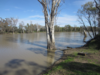
McIntyre River at Rainbow Reserve​

The first thing I saw were the two Striated Pardalotes again. And not far from my car was a Restless Flycatcher, in the same area the Willie Wagtail had been the night before. Not far away I could hear some Fairy Wrens calling from some dense undergrowth. There wasn’t much else around so I started packing up the tent which took about half-an-hour, but I kept my eye open for any other birds. Once everything was secure on top of the car I grabbed my camera as the light was now good enough for photography and headed to the river.

https://www.zoochat.com/community/media/striated-pardalote-pair.604864/full
https://www.zoochat.com/community/media/striated-pardalote.604863/full

There was only a single Pelican and a few ducks on the river, and the opposite banks still had a few egrets, night herons and spoonbills, and eight Australian Darters. In the trees above me a Grey Fantail was calling, and a single Striped Honeyeater was feeding on some early flowering gums along with half-a-dozen Noisy Miners. There were more Sulphur-crested Cockatoos around, as well as a few Galahs and three Little Corellas, but also a pair of Pale-headed Rosellas which I was keen to get a photo of. I had seen a Pale-headed outside of Cairns in 2020 after my Torres Strait Island trip, but only glimpsed it from behind and didn’t get a good photo of it, so I was happy to get some better ones today. While taking photos of them six Cockatiels flew into the tree and the Rosellas immediately started chasing the Cockatiels into the next trees. While the rosellas were distracted, one pair of tiels arrived back in the tree and started mating. The rosellas returned and started harassing them, but the Cockatiels just threatened them with open beaks until the male had finished and dismounted, and then they flew off.

https://www.zoochat.com/community/media/great-egret.604857/full
https://www.zoochat.com/community/media/pale-headed-rosella.604860/full
https://www.zoochat.com/community/media/cockatiel-pair.604856/full

On a dead stick overhanging the river a pair of Sacred Kingfishers hunted, while their larger relatives, the Kookaburras laughed in the gum trees above and a single Welcome Swallow hawked up and down the river.

https://www.zoochat.com/community/media/sacred-kingfisher.604861/full

The Fairy Wrens were popping out of the undergrowth to feed, mostly Purple-backed Fairy Wrens but there was also a pair of Superb Blue Wrens too. The Striated Pardalotes were active again and not too perturbed by my presence and allowed me to approach reasonably close, as did a male Rufous Whistler. And finally, a pair of Torresian Crows were hassling a single Australian Raven who was standing his ground (or should that be standing his perch?) in a tree a little further up the river.

https://www.zoochat.com/community/media/torresian-crow.604865/full
https://www.zoochat.com/community/media/australian-raven.604854/full

At about 10:00am I left Rainbow Reserve and as I was driving out onto the main road I passed a pair of Nankeen Kestrels mating in a tree.

My destination was Cunnamulla, about 500kms west and a five-and-a-half hour drive. Although the morning had started with some light cloud and some sunny periods, over the day the cloud got heavier and denser until it was heavily overcast by the time I reached Cunnamulla at around 4:00pm, and I could see from the roads it had already been raining that day.

I had booked a spot at Bowra Sanctuary, a bird reserve about 20 kilometres north of Cunnamulla. Bowra is on a large property, formerly a farm, and the only accommodation for guests is camping. There are a few volunteers who get to stay in the old Shearer’s Quarters, but all other guests have to either camp in tents or have a caravan. And you have to book prior to arriving as they have limited spots. If you don’t want to stay overnight you can visit for the day, but they limit visitors to only about 12 people per day.

Being a large property it has lots of many differing habitats and therefore has a high bird count with over 200 species recorded. There are a number of popular birding sites throughout the reserve, however as most of the roads are dirt, when it rains they may be closed. I didn’t want to waste time there if all the roads are closed, especially the entrance road which is a six kilometre track from the front gate to the camping area, so when I arrived in Cunnamulla I phoned them to ask for an update. They advised that most of the roads were already closed, and if there was any rain overnight then all roads would be closed (apart from the entrance road which was an all-weather road) and all birding would have to be done on foot. So, even though I’d already paid for two nights camping, I said I would stay in town tonight and if it didn’t rain overnight and the weather looked good tomorrow I’d come up.

While on the phone I had noticed several old model cars with sponsor’s stickers and logos all over the vehicles driving past, and I guessed some charity car rally was passing through town. It turns out they weren’t passing through, this was one of the checkpoints on one of the legs and they were all staying overnight. I learnt this when I called every hotel in town and found they were all full, even the town caravan park. “You won’t find anything tonight, Luv” said one hotel receptionist, “The Variety Club Big Bash is in town.”

“That explains the car with a full-size Dalek strapped to the roof” I replied.

As there was nowhere to stay I had a choice – go up to Bowra or drive west for another couple of hours to Thargomindah. As I’d already paid for Bowra the decision was pretty simple, so I called Bowra and told them I’d be there in 20 minutes. Although if I’d known what the next few days was going to be like I would have continued west.

It was about 5:00pm when I drove through the gates and was just getting dark when I arrived at the campsite. After checking in and hosing down the car thoroughly in a washdown area (basically just a bed of rocks – the washdown is mandatory for all vehicles), I found the site allocated to me and set up the tent as quickly as I could before it became really dark. Then I had something to eat for dinner before retiring to bed. The rain started a couple of hours later and rained, lightly, all night.

Number of birds seen today: 37 species
Additions to my year list: 2 species


:p

Hix
 

Attachments

  • upload_2023-6-18_23-27-29.png
    upload_2023-6-18_23-27-29.png
    469.9 KB · Views: 23
  • upload_2023-6-18_23-27-41.png
    upload_2023-6-18_23-27-41.png
    440 KB · Views: 21
Last edited:
Day 12, Friday 12th August 2022
Bowra Sanctuary


I woke a couple of times during the night because my back hurt and kept waking me until I moved to new position that ultimately wouldn’t work anyway and I’d be jarred awake again by a sharp pain.

The site where I parked was under a tree, and at 5:30am I was awoken, not by my back, but by a Grey Shrike-thrush and a Willie Wagtail calling in the tree above my tent. A nice start to the day. Going out to the loo I found it was still raining, but only lightly, so after breakfast I went for a short walk with my binoculars only because although the rain was light, I felt it was too wet for the camera. And the light was bad for photography anyway.

A short distance from the campsite is a small lagoon, and I headed in this direction. Despite the weather there were a few birds about. In the lagoon itself were four White-headed Stilts and some Black-fronted Dotterels running along the shoreline. Perched on top of a dead tree was a Rufous Songlark that was quite vocal, some Martins wheeled about through the air high above the lagoon and a few Crested Pigeons braved the weather foraging on the ground. And perched on an exposed branch where it could watch the water was a Red-backed Kingfisher – a lifer for me!

A few minutes after I arrived the rain got heavier, so I hurried back to the campsite and the shelter of my tent, and I spent much of the rest of the day there as the rain continued pretty much non-stop. Which is when I discovered exactly how much fun a tent in the rain isn’t.

Firstly, the tent being on top of the car, when you get into it you can’t stand up and there’s barely enough room to sit up which, at my age, can’t be done without some sort of back support or something to lean against. And in this tent it was just uncomfortable for me. The side annexe I purchased attaches to the tent roof over the doorway and extends out a couple of metres from the car to create a room that has the ladder in the middle. I could stand here, or sit in a camp chair, but again it was cramped and uncomfortable and whenever I went outside rain would blow in and my boots would bring mud inside too. The floor of the annexe was of a tough plastic material that held the water and mud and it was difficult to keep both out of the tent on the roof of the car.

During a brief lull in the rain I grabbed my laptop and went into the Shearing Shed (which one of the volunteers had opened up) and started labelling the pictures I had taken over the last week or so. After a couple of hours of that the battery was running low and so I returned to the car and decided to try and catch up on some of the sleep I had missed. It was about midday and, lulled to sleep by the rain beating down upon the tent roof (and sometimes thumping down) I slept for a good three hours or so until the pain in my back re-appeared and woke me with a jolt.

I was re-arranging things around me in the tent when I noticed the foam mattress was a different colour along one edge and in one corner, like a shadow on it, but it couldn’t be a shadow as there was no light source to create a shadow. Poking in with my finger I found it was sodden with water all along one side – the tent had a leak! Checking the inside of the tent I found the water was entering through the zip on one of the windows. So I headed outside to investigate further.

Each window in this tent has three parts – an inner mesh screen to keep insects out, but can be unzipped and rolled up, an opaque fabric layer that can also be unzipped and rolled up, and a thicker waterproof cover that sits on the outside and keeps out the rain and wind, and on sunny days can be held out by supports to provide shade when the window is open. I found that I hadn’t secured this outer flap properly and the wind had blown it up onto the top of the tent, thereby leaving the zippers exposed to the rain, which is where it leaked in. I quickly took care of that and checked the other windows to make sure they were secure – they were.

As it was only a little drizzly I grabbed my camera and binoculars and headed back out towards the lagoon again. This time was a little more productive than earlier. The Stilts and Dotterels, the Red-backed Kingfisher, Brown Songlark and one of the Crested Pigeons were still around, but there was also a one Peaceful Dove, a Nankeen Kestrel soaring above the shrublands, four Cockatiels that flew overhead, a pair of Spotted Bowerbirds, a pair of White-plumed Honeyeaters, a Black-faced Cuckoo-shrike, two Magpie-larks and a pair of Willie Wagtails. And the Martins I’d seen in the morning were still there – about 40 of them – and as they were now perching in a tree I could confirm they were Fairy Martins.

https://www.zoochat.com/community/media/red-backed-kingfisher.604983/full
https://www.zoochat.com/community/media/spotted-bowerbird.604984/full
https://www.zoochat.com/community/media/white-plumed-honeyeater.604985/full
https://www.zoochat.com/community/media/black-fronted-dotterel.604980/full
https://www.zoochat.com/community/media/rufous-songlark.604981/full

Walking back on another path to the campsite I surprised a Chestnut-crowned Babbler that was foraging in a tree, and at the campsite was another Willie Wagtail (probably the same one that was serenading in the tree above my tent this morning), and a Jacky Winter.

https://www.zoochat.com/community/media/jacky-winter.604982/full

Not long after arriving back was the daily Bird Call – where all the visitors sit around in the Shearing Shed and all birds sighted that day are recorded. Not much was seen on this particular day because the rain kept people around the campsite, and I was the only one to see the Chestnut-crowned Babbler.

Afterwards I stayed in the Shearing Shed for a little while downloading photos from my camera, before returning to my tent, having some dinner, and then retiring for another night of interrupted sleep.

Number of birds seen today: 17 species
Additions to my year list: 5 species
Bird Lifer: 1 species.

:p

Hix
 
Day 13, Saturday 13th August 2022
Bowra Sanctuary/Cunnamulla to Thargomindah


Another early morning, up at 6:30 am. Despite my back problems, I had kept my sleeping bag over to one side of the mattress successfully avoiding the wet areas. I remember the rain stopping at about 8:30pm the night before, and now there were no clouds at all and a bright sunny day was just beginning. I got dressed, had something to eat (ate my last Sumo), and headed out with my camera towards the lagoon again.

The first thing a I saw was a pair of bedraggled Emus, not quite fully grown. They looked at me rather suspiciously and after I had taken I few photos they decided they didn’t like my company and turned and stalked off into the bush. On the south side of the lagoon I received another surprise, a quartet of Brown Quail. I’ve only seen Brown Quail in the wild three times previously, and then only very brief glimpses as they dive under cover. The last time I managed to get a couple of blurry photos of them running away, but this time they were out in the open and I managed to get some half-decent shots of them.

https://www.zoochat.com/community/media/brown-quail.604986/full
https://www.zoochat.com/community/media/brown-quail.604987/full

The lagoon itself now had three Black-fronted Dotterels (there was probably a fourth around as they seem to always be in pairs, but I couldn’t see it) and six White-headed Stilts. As it was still early morning I tried to catch an image of them in the ‘Golden Light’, the first rays of the sun that lend a golden sheen to the subject, but was unsuccessful although I did get a nice backlit shot. Back at camp were a pair of Peaceful Doves sunning themselves in the sunshine, and three Brown Treecreepers foraging in the grass around the campsite and poking their beaks under the bark on the tree trunks. A loud vocalisation from a nearby Eucalypt (gum tree) revealed a Little Friarbird that remained quite vocal for a good half-hour as it flew from tree to tree looking for food.

https://www.zoochat.com/community/media/white-headed-stilt.604996/full
https://www.zoochat.com/community/media/brown-treecreeper.604988/full
https://www.zoochat.com/community/media/little-friarbird.604992/full

I put down my camera and binoculars and removed the foam mattress from the tent, laying it across the bonnet of my car in the sun. Then I unzipped the annexe and dragged it over to the cleaning station which consists of a bed of rocks about three metres wide and eight metres long. These rocks have been placed here next to a hose so any vehicle coming into the reserve can hose the vehicle and caravans/trailers down to remove any weed seeds. All vehicles entering the park do this. It was an ideal location to hose out the annexe and get rid of the mud, and then to leave it there to dry in the sun.

While doing this I heard some parrots squawking while in flight and saw five Red-winged Parrots fly into a Eucalypt and start feeding on some mistletoe. It appeared to be a female and four juveniles, and after several attempts I was able to get a few photos – they seemed keen to be in the denser parts of the foliage, or towards the top of the tree. Also seen in the trees were a Spotted Bowerbird and some White-plumed Honeyeaters.

https://www.zoochat.com/community/media/red-winged-parrot.604993/full

Checking on the annexe I found the water had dried but left some red sand behind, so I had to hose it again and leave it to dry once more. Nearby, at the homestead where the ranger lives, I could see the Fairy Martins building their mudnests under the eves and not only got photos of them at the nests, but also at a nearby puddle collecting the mud. I estimated there to be about 40 of them, but with all the flying around it could well have been much more. Fairy Martins and the similar Tree Martins are often difficult to tell apart in flight, unless you get a good look at them, but their nests are dead giveaways – Fairy Martins build mudnests under an overhang (like the roof of a house) whereas Tree Martins next in tree hollows.

https://www.zoochat.com/community/media/fairy-martins.604991/full
https://www.zoochat.com/community/media/fairy-martins.604990/full

The mattress was dry so I shoved it back into the tent and packed it all away. The annexe was finally dry too, so I rolled it up and stored it in the back of the car. A pair of Willie Wagtails had been around all morning, in the tree or on the ground looking for insects. I now noticed a Restless Flycatcher, unrelated but superficially similar in colour to the wagtails, on the roof of the shearing shed vocalising at one of the wagtails in what appeared to be some sort of courtship display. The wagtail seemed very confused and didn’t know how to respond, so in the end it flew off into the tree and joined its mate, leaving the flycatcher to sing alone.

https://www.zoochat.com/community/media/restless-flycatcher.604994/full

By now it was midday and as the roads were still closed I decided to go for a walk on one of the paths I hadn’t yet been on. Unfortunately, even though it was Winter the day had become quite hot and midday is not the best time of day to go bird watching as the bird’s peak activity is early in the morning; in the heat of the day they tend to become less active, often just sitting in the treetops immobile for a few hours, sleeping or preening. Still, I thought I might see something of interest. I did better than I thought over the next hour with a group of eight Chestnut-crowned Babblers, a Black-faced Woodswallow, several Spiny-cheeked Honeyeaters, four Yellow-throated Miners, two Pied Honeyeaters, a Singing Honeyeater, six Budgerigars and a Common Bronzewing Pigeon. Plus the usual Crested Pigeons, Rufous Songlarks and White-plumed Honeyeaters.

upload_2023-6-18_23-25-24.png

https://www.zoochat.com/community/media/common-bronzewing.604989/full

After some lunch I left Bowra, a little disappointed by the rain, but determined to return one day to see more of the reserve. As I drove out I saw a Wallaroo a short distance off the road.

https://www.zoochat.com/community/media/wallaroo.604995/full

In Cunnamulla I got some fuel and headed west on a road optimistically named The Adventure Way. I had planned on camping at Lake Bindegolly, a popular camping and birding site but because of my back I wanted a hotel with a decent bed so I decided to keep on going to the small town of Thargomindah. The drive from Cunnamulla is only two hours so there was no rush (and two hours driving is better than the four or five hours I’ve been doing of late).

The heavy rains had left a lot of water in large puddles alongside the road in drainage ditches, but at one point the water had puddled out onto the bitumen and was about a foot deep. As I knew the underside of the car was covered in mud from the dirt road out of Bowra I swerved onto that side of the road and drove through the puddle at speed to splash the water up and hopefully get rid of some of the clods. Then I turned around and did the same with the other side of the car. When I went past the final time I noted the clear water of the puddle had turned decidedly red.

Passing Lake Bindegolly, a popular site for birders, I noticed a sign erected by the side of the road warning drivers to watch out for Birders. I thought this was a good thing and there should be more signs like this around. The fact that someone with a rifle had used it for target practice is irrelevant. Not far beyond the Lake I came across an Emu, and another a short distance further along. About ten kilometres before Thargomindah I saw an Australian Bustard standing in a field not far from the road. I slowed down to get a photo, but it flew off before I could get back to it.

upload_2023-6-18_23-25-5.png

https://www.zoochat.com/community/media/emu.605019/full

In Thargomindah I found the Oasis Motel, a pleasant little place and one of only three lodgings in this small town (the others being a hotel/motel/pub opposite, and a caravan park down the road). After dinner in the restaurant I retired to my room where I got a good nights sleep without any complaints from my back.

Number of birds seen today: 27 species
Additions to my year list: 3 species

:p

Hix
 

Attachments

  • upload_2023-6-18_23-25-5.png
    upload_2023-6-18_23-25-5.png
    398.9 KB · Views: 19
  • upload_2023-6-18_23-25-24.png
    upload_2023-6-18_23-25-24.png
    361.9 KB · Views: 21
Day 14, Sunday 14th August 2022
Thargomindah to Innamincka


One morning, more than 27 years ago, when my alarm clock went off, I found I couldn’t get out of bed because every muscle in my back seemed to have frozen and were all screaming at me. With difficulty I managed to slide out of bed to turn off the alarm, and after ten minutes of walking and trying to stretch or bend, I called work and told them I wouldn’t be in. I went back to bed and a couple of hours later when it hadn’t got better I called my GP and made an appointment. With great difficulty I got dressed and drove to the clinic, and after examining me the doctor told me I had sustained an injury to my skeletal frame and that a few days at home, mainly lying down, and it should settle down. And he was right; three days later I was back at work. But over the next few years, if I did anything overly strenuous my back would seize up again. However, over time those instances became fewer and fewer.

I can’t be sure but I think a combination of things regarding my rooftop tent has been what’s been aggravating the old injury and causing me back pain while sleeping. Firstly, there’s a lot of stretching, pulling and pushing to get the tent setup, and even more so when packing it up. When it’s set up there’s a ladder to climb up and down to get into the tent, and when inside the tent there’s not a lot of room so you’re always hunched over or lying down, and moving generally involves a lot of twisting. The foam mattress, although reasonably thick, during the night sags under me until my back is hitting the baseboard. And I think everything combined is what had been causing the muscles to seize up. And each night in the tent it gets worse and the pain more excruciating.

However, the hotel bed in Thargomindah was great, I got a good nights uninterrupted sleep and when I woke the next morning there was no pain at all and I was completely refreshed. After packing the car I left for a café the hotel proprietor recommended where I could get some breakfast.

The day was sunny, not a cloud in the sky, but there were puddles everywhere and evidence that the rain that had drenched Bowra had come this way first. Having breakfast outside I could hear a loud commotion from a large flock of Little Corellas and once I had finished I drove in the direction of the noise and found several dozen corellas – possibly 100 or more – feeding on the ground in someone’s backyard. With my camera out I decided to drive around town for a few minutes to see what else was about bird-wise and saw Crested Pigeons and Peaceful Doves, some Black Kites circling high above the edges of town, Willie Wagtails, Black-faced Cuckoo-shrikes and White-plumed Honeyeaters. In some flowering shrubs within a median strip in the middle of the road was a Mallee Ringneck feeding on the flowers, and above on a powerline was a Red-backed Kingfisher. Some Fairy Martins were at the public swimming pool, flying down into the water (not sure if they were drinking or bathing) and I followed them down the street to an old abandoned building where they were building their nests. On the roof of the building was a dozen or so House Sparrows. Just as I was getting back into the car I saw a Black-faced Woodswallow – just one – sitting on the road in front of me. Unusual, as this is one of the more communal species and you normally would see a small group of them. Then I filled up with fuel and headed west again, this time to Innamincka over the border in South Australia.

full


After about two hours of driving I made a short diversion to Noccundra as their waterhole is a popular birding site. There’s a campsite right beside the waterhole which is perfect as it’s quite picturesque. However, I got there at midday and there wasn’t a lot of birds to see – a stately White-necked Heron, a Whistling Kite overhead, some White-plumed Honeyeaters, and three Zebra Finches. After 30 minutes I left as I still had a three-to-four hour drive a head of me.


A couple of hours later, on the Innamincka Rd (which is still part of the Adventure Way) I saw a group of large birds on the road ahead, and as I approached they all flew up and started circling. There was a dead pig on the road and the raptors had been feeding upon it, so I stopped the car a bit further along and got out with my camera to wait. However, the birds were not coming down while I was there so I photographed them as best I could while they were gliding overhead. I counted 15 Black Kites and three Whistling Kites. There were also a dozen or so Fairy Martins zooming about like they do, looking for insects. I also saw something else flying in a straight line, very fast, through the Kites. The photos showed it to be a Brown Falcon, and it wasn’t interested in the pig; it just kept flying in a straight line towards the horizon.


Another hour or so and I had crossed the border into South Australia and into the Innamincka Regional Reserve, and eventually I came into Innamincka town itself, a hot, dry, dusty town but with a charm of its own. I tried both hotels to see if I could get a room for the night but they were both booked solid for the next three weeks! I had no choice but to camp again.

Innamincka Town Common is a public camping area, it covers quite a large area including alongside Cooper’s Creek (which I think is actually big enough to be called a river). I found a vacant spot on the riverbank between a couple of large River Gums, but not under any large branches, and set up my tent again with the main window looking out over the creek. Afterwards, I walked the kilometre or so back to the town to grab some dinner in the pub and some supplies from the shop.

The parrots were the obvious birds here – there was well over a hundred Little Corellas in the River Gums on both sides of the river, all constantly screaming at one another and foraging in the trees or on low bushes at the foot of the trunks. There was also about forty Red-rumped Parrots in the trees and I saw a flock of twenty-two Cockatiels fly overhead. Eight Galahs, a dozen White-plumed Honeyeaters and twenty Tree Martins were also visible.
full


full


As I climbed into my tent and put the window down so I could look out over the river I decided to leave the window open for a while (but the mesh screen closed to keep out the mosquitos) and as I lay back in my sleeping bag I could see up into the cloudless and starry sky. The parrots had quietened down for the night and the soft sound of the water against the banks was mixed with the insect noises of the night and was very peaceful. The light from the full moon kept me awake for a couple of hours but I didn’t mind and eventually I drifted off to sleep with the window still open.
upload_2023-6-20_21-16-53.png
Sunset over Coopers Creek​

Number of birds seen today: 22 species
Additions to my year list: 3 species

:p

Hix
 

Attachments

  • upload_2023-6-20_21-14-46.png
    upload_2023-6-20_21-14-46.png
    301.1 KB · Views: 1
  • upload_2023-6-20_21-15-2.png
    upload_2023-6-20_21-15-2.png
    634.1 KB · Views: 1
  • upload_2023-6-20_21-16-22.png
    upload_2023-6-20_21-16-22.png
    772.8 KB · Views: 1
  • upload_2023-6-20_21-16-53.png
    upload_2023-6-20_21-16-53.png
    908.5 KB · Views: 25
Last edited:
Day 15, Monday 15th August 2022
Innamincka to Tibooburra


Once again my back flared up, at about 1:00am, and woke me. I looked up at the starry sky and realised how cold my face was, but the rest of me was fine in my sleeping bag. I tried to get back to sleep, but all I did was doze for a while here and there until the pain returned. At one point I rolled onto my belly and looked out over Coopers Creek, which I could make out in the moonlight, although the moon had moved behind the trees so was creating deep shadows. And then I could just make out something white moving up the river, near to my bank. I couldn’t make out what it was but I thought it might be a pelican as it seemed to be about that size. But in the dark I can’t be sure my eyes weren’t playing tricks on me.

Eventually the sun came up and I could see it would be another beautiful day. After some breakfast I went for a walk with my camera and binoculars to see what birds I could find, which wasn’t hard as there were lots about. The Little Corellas were still there, all screaming as only cockatoos can, and there seemed to be even more Red-rumps than last night – well over fifty. The ubiquitous White-plumed Honeyeaters were speeding around amongst the flowering gums while the Tree Martins hawked overhead.

full

full

full


Sailing up the river were three Pelicans, so I’m fairly certain that must have been what I saw earlier in the morning. Perched in a dead tree on the other side of the river were Little Black Cormorants and Pied Cormorants, a Great Egret, and a Whistling Kite. The Kite eventually flew over to my side of the river briefly before flying north up the river towards a second kite that was calling. And there were fourteen Black-faced Woodswallows in total, eight of which were clustered together on a dead branch.
upload_2023-6-20_21-31-30.jpeg
Coopers Creek, camping areas on the left​

full

full

full


My plan today had been to drive south through the desert on the Strzelecki Track for 160 kms, then drive east for another 100 kms to Cameron Corner, the point where Queensland, South Australia and New South Wales meet. From there I could head into NSW and Sturt National Park, planning to camp at Fort Grey overnight. However, none of these roads were sealed, they were all dirt or gravel, and I’d been told that parts of the Strzelecki Track were closed as a result of the rains earlier in the week. So, reluctantly, I headed back to Queensland on the Adventure Way. The plan being to drive back the way I came in, to Noccundra and further south to Tibooburra, a total of almost 500 kms. After getting fuel at Innamincka I started out through the reserve I had been through the day before.

upload_2023-6-20_21-32-19.jpeg
The Adventure Way, Innamincka Regional Reserve​

Shortly after crossing into Queensland I saw signs for the Burke and Wills ‘DIG’ tree, about 17 kms off the main road. I had seen the signs the day before, but I was keen to get to Innamincka before it got too dark, and today I decided I might not ever be here again and I should probably have a look at one of Australia’s more historical sites.

The names of Burke and Wills are known to most Australians as part of this country’s heritage, although the details of their story are not necessarily as well-known. Most people know they were early explorers who both died, and there was a tree with the words DIG carved into the trunk. And that’s about all most people know; certainly, that’s all I knew when I decided to visit the DIG tree, but reading some of the educational signs at the location, and some quick searches online later gave me a better appreciation of the events.

In 1860 an expeditionary party of 19 men left Melbourne in an attempt to traverse the mostly unexplored interior of Australia by heading North to reach the Gulf of Carpentaria, a distance of over 3,000 kilometres. The party was led by Robert O’Hara Burke, with George James Landell as second-in-command and William John Wills as third-in-command. Burke had never led and expedition before and had no skills in the bush, and was apparently not a very good leader either, and when Landell resigned Wills took over as 2IC.

Despite having 26 horses and 26 camels the expedition moved slowly and after three months they reached Bullah Bullah Waterhole on Coopers Creek. They establish Camp 65 there, and the number LXV were carved into the trunk of a coolabah tree by the river. They remained there for a month before Burke, Wills, John King and Charles Grey took off for the Gulf in what was the beginning of Summer, leaving the remainder of the party at the camp. Burke left instructions with William Brahe to wait three months for them before the party was to return to Melbourne. Wills was the expedition navigator and surveyor, and after looking at the maps secretly instructed Brahe to wait for four months.

Despite temperatures in the high 40’s and even low 50’s (that’s Celcius – over 120ºF) Burke and Wills almost made it to the Gulf, but extensive mangrove swamps stopped them short. Running low on supplies they headed back towards Camp 65. Burke and Grey both got dysentery and Grey eventually died.

Four months after they had left, Brahe packed up Camp 65 and led the remaining members back to Melbourne. Before leaving he buried some supplies, with a letter, under another Coolabah tree and carved the word DIG into the trunk. When Burke, Wills and King arrived in camp and dug up the supplies they learnt from the letter that Brahe and his men had left that morning - nine hours earlier. But the trio were so exhausted they couldn’t go on and knew they couldn’t catch up with the rest of the group. After two days Burke decided they would not continue south to Melbourne, but head west through the Strzelecki Desert to a cattle station 250kms away, despite objections from Wills and King. A note explaining what they were doing was buried under the DIG tree, but they did nothing to indicate they had put a note there, like carving a message or a date in the tree.

In the meantime Brahe had encountered William Wright who was bringing up supplies from Menindee, and the two of them returned to Camp 65 arriving about a week after Burke, Wills and King had left. There was no indication anyone had been in camp and Brahe didn’t think to dig up the supplies he had left, so he and Wright returned to Menindee.

A couple of months later Burke, Wills and King were trying to return to Camp 65 all weak from lack of food. Wills died first and Burke died three days later. King eventually found some local aborigines who were friendly and looked after him for two months until a rescue party from Melbourne found him. He returned to Melbourne in poor health and never really recovered, although he lived another eleven years, eventually passing away in his early thirties.

The seventeen kilometres of road from the Adventure Way to Camp 65 was a very rough, rocky road that led to Coopers Creek, 40 kilometres upstream from Innamincka. There was plenty of information boards an although some of the carvings – including the famous ‘DIG’ - have been grown over and not visible, I could still just make out the ‘LXV’ and a carving of Burke made on another tree in 1899 by a fan. The Coolabahs with the carvings are estimated to be over 250 years old.

upload_2023-6-20_21-33-7.jpeg
You can just make out the dark ‘LXV’ in the middle

upload_2023-6-20_21-33-24.jpeg

There were also some birds here – 15 Pelicans in the river, a White-necked Heron on the far bank, a Willie Wagtail, some Galahs and a Brown Treecreeper feeding on one of the Coolabahs. But it was getting hot, even in the shade, so after only half-an-hour I resumed my journey towards Tibooburra thinking about how it was only August (the end of Winter), but when Burke and party where here it was December, the beginning of Summer.

full

full

full


Most of the rest of the day was pretty uneventful. I saw the dead pig with all the kites feasting once more, but I didn’t stop this time for it. I did, however, stop at Noccundra Hotel for lunch.

It was late afternoon when I came to the border with New South Wales. To prevent livestock from crossing from Queensland into NSW and vice versa the border has a fence along it, and where the road crosses the border are large gates. Gates like on any farm, only bigger (to accommodate road trains) and with black and white striped boards on it so that it can easily be seen at night from a distance. I stopped my car five metres from the gate and got out to open it and found there was a very strong wind blowing, and it was blowing along the fenceline. So, when I pushed the gate open the wind would blow it shut with some force. With the boards catching the wind it was actually an effort to open the gate, but as soon as I left it to go back to the car the gate would slam shut.

upload_2023-6-20_21-33-39.jpeg
The Warri Gate​

I looked for some large rocks to chock the gate open, but there were none around. I tried using smaller rocks, but the gate just pushed them out of the way or crushed them into the ground. Frustrated, I went to the car and got out the 12 pack of 1.5 litre bottles of water and, pushing the gate open, used the 12 pack thinking the 18 kilos (40 pounds) of water would be sufficient to hold it. But when I got back to the car the gate had pushed the bottles aside and ripped a couple of them so they were leaking.

I considered just driving up to the gate and gently pushing it aside with my bulbar, but realised the gate would then scrape along doors and damage the side panels, so I scrapped that idea. So then I thought about lining up the wheels, putting the car in neutral, taking off the handbrake and holding open the gate while the car rolled through. But the road was not on a slope so the car wouldn’t roll of its own accord, I’d have to push it. And I could see me pushing it to get it rolling, holding the gate open and the car slowing down and stopping in the gap, and then the gate slamming into the side of the car while I tried to move it. So I abandoned that idea as well.

By now I’d been fighting the gate for about 20 minutes and so I stopped to appreciate how absolutely ridiculous the situation was. Something that should have taken 30 seconds to complete and I was still where I was when I arrived. No other vehicles had come along, from either direction, during this time and I suspected it might not be until tomorrow when someone else happens along. “Think” I thought to myself. “You’ve got more than half a brain, you have a science degree, you got into Mensa, and you’ve annoyed your family by telling them you’re a self-confessed genius – and now a gate, with some help from Mother Nature, is thwarting you and providing evidence to the contrary”.

I then I knew what to do. I had to unpack part of the boot of the 4WD, and buried under important impedimenta I found a box with a snatchstrap which has been sitting, unused, in the boot of the car for years. In fact, it’s been sitting unused in the boot of three cars for the last 20 years. Almost forgotten I had it. I tied it to the gate, then pulled the gate open and tied the other end to the fence. Problem solved, but feeling a little silly it took almost half-an-hour to remember I had the damn thing.

It was another 50kms to Tibooburra and, as I suspected, I didn’t pass another vehicle along the way. I arrived about 5:45pm and checked into one of the few motels for the night, went up to the pub for dinner (Chicken Parmigiana) and then downloading images from camera onto the computer until about midnight. And I didn’t realise it at the time, but today, Day 15, was the halfway point in my journey.

upload_2023-6-20_21-34-38.jpeg
Silver City Highway – to Tibooburra​

Number of birds seen today: 24 species
Additions to my year list: nil

:p

Hix
 

Attachments

  • upload_2023-6-20_21-31-30.jpeg
    upload_2023-6-20_21-31-30.jpeg
    211.3 KB · Views: 19
  • upload_2023-6-20_21-32-19.jpeg
    upload_2023-6-20_21-32-19.jpeg
    177.4 KB · Views: 22
  • upload_2023-6-20_21-33-7.jpeg
    upload_2023-6-20_21-33-7.jpeg
    136.1 KB · Views: 20
  • upload_2023-6-20_21-33-24.jpeg
    upload_2023-6-20_21-33-24.jpeg
    152.4 KB · Views: 23
  • upload_2023-6-20_21-33-39.jpeg
    upload_2023-6-20_21-33-39.jpeg
    259.4 KB · Views: 22
  • upload_2023-6-20_21-34-38.jpeg
    upload_2023-6-20_21-34-38.jpeg
    262.2 KB · Views: 31
Last edited:
Back
Top