How Many Duikers Do We Need?

Coelacanth18

Well-Known Member
10+ year member
Premium Member
I'm not a big ungulate person, so maybe this is a simpler query than I'm making it out to be... but duikers seem to be a species several people have interest in, and there's frequently a lot of lamenting about how some number of the 5 species held in American zoos are in a precarious state.

My question: is this just a general "these are nice animals, it's a shame we might lose the diversity" sentiment, or is there something specific about this group that losing some of them would be more impactful than losing some parrot or primate species? How many duikers do people think are necessary to showcase the clade? Given that all of them are rated a lower concern than Vulnerable, are there any reasons to continue with one species and not another? And how many sustainable populations do people think we can support long-term with the space available?
 
Intresting subject! The hard truth is that the ones that need most urgent help, Jentink's, Zebra, Adder's and Abbott's, are likely one of the most difficult to keep in captivity. Out of eight species currently kept in captivity ( There are Maxwell and Common in Africa, AFAIK) none is Vulnerable or Endangered. They are fantastic animals and important ambassador of the group. I don't think any of the populations doing good in particular, but the Yellow-backed seems to be one of the most fascinating and intresting to the broad public spieces. In situ conservation is desperately needed.
 
Duikers are ungulates/ruminants. These species are basicaly impossible to import from 99% African countries into the US or Europe because of vet-related bans. Or better to say - once the captive population in the US/EU dies out it cant be even restarted. Duikers are small, upkeep is cheap, can be mixed with other species. Zero reason to phase them out from zoos unless their population becomes unsustainable on its own due to inbreeding depression etc.
 
Okay this will sound like crazy talk and I might not be able to articulate things well but hear me out.

It is indeed a shame that duikers are in a pickle and that we lost duikers that could leave a mark to the average Joe (thanks to their distinguishable coat colors) such as the zebra duiker or the jentink’s duiker. I also am not a fan of the homogenization of collections. However I don’t think having losing a few species will be the end of the world as long as we still have a duiker. They are faring better than most other taxa such as possums and cuscusses which as far as I know don’t have an association based/linked studbook (except for bear cuscuses which got an eep recently).

So yea, if zoos are fine without having distinct amazing marsupials, then I am sure that objectively speaking the world won’t end if we are left with one or two species of duikers, which is better than not duikers. And again I say this despite not being a fan if losing species.
 
ZTL lists the following duikers that have existed in ZTL collections:
Endangered: Abbott's (0 ZTL collections), Jentink's (0)
Near Threatened: yellow-backed (4), bay - no subspecies (0), white-bellied (0)
Vulnerable: Brooke's (0), zebra (0)
Least concern: Red (10), Grey (1), black (0); black-fronted (0); Maxwell's (0); Ogilby (0); Peter's (0), red-flanked (0), southern bush (0), Weyn's (0)

Not stated: western blue (5), Angolan bush (0); Blue - no subspecies (0), Campbell's bush (0); Cape blue (0), eastern bay (0); Ethiopian crowned (0); Malawi blue (0); Sahel crowned (0), Uganda crowned (0), western bay (0), western bush (0), Zanzibar blue (0)

Out of 30 listed types of duikers, only 4 are kept in ZTL collections. This can hardly be said to be too many duikers.
 
Duikers are ungulates/ruminants. These species are basicaly impossible to import from 99% African countries into the US or Europe because of vet-related bans. Or better to say - once the captive population in the US/EU dies out it cant be even restarted. Duikers are small, upkeep is cheap, can be mixed with other species. Zero reason to phase them out from zoos unless their population becomes unsustainable on its own due to inbreeding depression etc.
Can there not be exceptions for conservation breeding?

Tbh, I assumed accredited zoos got various exceptions for certain import laws as long as quarantine protocols are still followed.
 
We need ALL the duikers. Duh.

Duikers are a pretty diverse group of ungulates - what other group has the height range between blue and yellow-backed? - that you don't see in the wild unless you really go looking for one. The ones in the USA may generally not be endangered, but they help raise attention to what a duiker is. Everyone knows what a parrot is, there's even a major blockbuster movie devoted to the rarest species. They also help create populations (or did, for 3/5 of them) for if something happened to their wild counterparts.

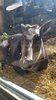
How can you not love this face?
20181020_120323.jpg
 

Attachments

  • 20181020_120323.jpg
    20181020_120323.jpg
    88 KB · Views: 45
ZTL lists the following duikers that have existed in ZTL collections:
Endangered: Abbott's (0 ZTL collections), Jentink's (0)
Near Threatened: yellow-backed (4), bay - no subspecies (0), white-bellied (0)
Vulnerable: Brooke's (0), zebra (0)
Least concern: Red (10), Grey (1), black (0); black-fronted (0); Maxwell's (0); Ogilby (0); Peter's (0), red-flanked (0), southern bush (0), Weyn's (0)

Not stated: western blue (5), Angolan bush (0); Blue - no subspecies (0), Campbell's bush (0); Cape blue (0), eastern bay (0); Ethiopian crowned (0); Malawi blue (0); Sahel crowned (0), Uganda crowned (0), western bay (0), western bush (0), Zanzibar blue (0)

Out of 30 listed types of duikers, only 4 are kept in ZTL collections. This can hardly be said to be too many duikers.
Well this post is in the US Forum, so ZTL holding numbers aren't exactly the most relevant. The five species in US zoos are: yellow-backed, blue, bay, red-flanked, and black duikers. You do bring up a good point though of comparing what the international holdings are, and honestly I would be pleased if US zoos continued to keep three duiker species- the blue, red-flanked, and yellow-backed duikers. These are the three species that are the most well-off in US zoos, and also provide good diversity in both size and coat pattern.

It's also worth noting that duikers do rather well in mixed-species exhibits. It's not necessarily a matter of them taking up space, but rather a matter of how should zoos use space most effectively. Some duikers, for instance, mix well with Afro-Eurasian monkey species, and adding a ground-dwelling antelope species to an exhibit with arboreal primates is a good way to add multi-level interest to an exhibit, and a great way to incorporate more species into a collection without requiring additional exhibit space. Duikers also have been mixed with okapi and have been featured in aviaries as well. Really, a lot of species (such as duikers) I think would be doing a whole let better in zoos if the zoos simply took advantage of the space they already have and consider ways to incorporate additional mixed-species exhibits.

It's also worth noting that none of the small ungulate species in zoos are particularly endangered, with the only non-least concern species being the near-threatened Southern Pudu and a few of the wild pig/peccary species. For a lot of smaller zoos, large ungulates aren't necessarily a realistic option due to spatial limitations. It's great to have multiple options for small ungulates available to spatially-limited zoos so that they can still educate about this diverse and beautiful group of mammals.
 
Thanks for the feedback so far everyone. I know this is a question that can be asked of virtually any group that has multiple species in captivity; I just thought duikers would make an interesting case study, since it's a group I'm not really knowledgeable about or have an emotional bias for. I can easily expand on why we need half a dozen kinds of crocodile, though :p

Definitely good arguments as to why duikers make good zoo animals in general, and I can see how having some diversity within the group can be broadly positive from a display standpoint. The import restrictions @Jana mentioned also might change the calculus on phasing out struggling populations, since it would probably be an irreversible decision.

I do still think this group - with successful breeding - would have to hit a space ceiling at some point, but it doesn't seem like we're at that point yet... and honestly by then we might be looking at a smaller number of species anyway, unfortunate as that would be.

Some duikers, for instance, mix well with Afro-Eurasian monkey species, and adding a ground-dwelling antelope species to an exhibit with arboreal primates is a good way to add multi-level interest to an exhibit, and a great way to incorporate more species into a collection without requiring additional exhibit space.

Funny enough, it seems like African monkeys are another tenuous group in American zoos as well... plenty of room to use mixed species displays to save two birds with one stone! Your point about it creating a dynamic enclosure is spot on, the combo could better justify the cost of adding both in as a side exhibit to new major complexes.
 
Can there not be exceptions for conservation breeding?

Tbh, I assumed accredited zoos got various exceptions for certain import laws as long as quarantine protocols are still followed.

Not easily, no. It does happen but it's neither common nor large scale when it does.

It's also worth noting that duikers do rather well in mixed-species exhibits. It's not necessarily a matter of them taking up space, but rather a matter of how should zoos use space most effectively. Some duikers, for instance, mix well with Afro-Eurasian monkey species, and adding a ground-dwelling antelope species to an exhibit with arboreal primates is a good way to add multi-level interest to an exhibit, and a great way to incorporate more species into a collection without requiring additional exhibit space. Duikers also have been mixed with okapi and have been featured in aviaries as well. Really, a lot of species (such as duikers) I think would be doing a whole let better in zoos if the zoos simply took advantage of the space they already have and consider ways to incorporate additional mixed-species exhibits

They do fit these situations fairly well, and in many cases I've seen duikers (and dik-diks) in mixed species exhibits. The larger duikers do pose some risk to small birds, but generally there's not much reason for concern.

It's also worth noting that none of the small ungulate species in zoos are particularly endangered, with the only non-least concern species being the near-threatened Southern Pudu and a few of the wild pig/peccary species.

Bay and Yellow-backed are NT - though still not particularly endangered.

Something not yet brought up is the issues with fractiousness - both duikers and dik-diks are problematic for it. It's not uncommon for young ones in particular to spook and promptly hurt or kill themselves running into something. I've heard some say the caution required when working with this group and especially when young are present does impact their prevalence.
Also duikers in particular tend to be shy - I've frequently either not seen them at all or they're at the back of the exhibit. Not the best quality for a display animal.

That said, I quite like duikers and hope at least a couple species will continue successfully into the future. The size and color ranges are quite incredible to compare, and they're attractive if you actually see them.
 
Something not yet brought up is the issues with fractiousness - both duikers and dik-diks are problematic for it. It's not uncommon for young ones in particular to spook and promptly hurt or kill themselves running into something. I've heard some say the caution required when working with this group and especially when young are present does impact their prevalence.
Also duikers in particular tend to be shy - I've frequently either not seen them at all or they're at the back of the exhibit. Not the best quality for a display animal.

That said, I quite like duikers and hope at least a couple species will continue successfully into the future. The size and color ranges are quite incredible to compare, and they're attractive if you actually see them.

That applies to a lot of hoofstock in captivity, though. I tend to have the opposite experience with them; I rarely don't see them, and I see them lying down/resting more than any other ungulate. The photo I shared was from Omaha, the animal had a large enough exhibit with other places to rest but chose to be right up against the glass. A kid banged on the glass and it didn't react.
 
I'm not a big ungulate person, so maybe this is a simpler query than I'm making it out to be... but duikers seem to be a species several people have interest in, and there's frequently a lot of lamenting about how some number of the 5 species held in American zoos are in a precarious state.

My question: is this just a general "these are nice animals, it's a shame we might lose the diversity" sentiment, or is there something specific about this group that losing some of them would be more impactful than losing some parrot or primate species? How many duikers do people think are necessary to showcase the clade? Given that all of them are rated a lower concern than Vulnerable, are there any reasons to continue with one species and not another? And how many sustainable populations do people think we can support long-term with the space available?

If the IUCN category is the main reason for collection choices, we should get rid of hyraxes, aardvark and countless other interesting groups too. Given the bushmeat crisis in tropical Africa it seems highly likely to me that multiple duikers will get "promoted" to a higher category such as endangered. Together with pangolins and primates duiker are a highly targeted group in the bushmeat trade and that alone should give them educational value enough. Whether one needs 5 species or 3 is one I cannot answer, but the space for 5 would be there if zoos were interested. And what you lose with hoofstock in terms of species is nigh impossible to replace as @Jana already said. So better make sure you don't regret such a choice in the future....
 
As a person who have never seen a duiker and afaik none in Asia, at least one.
I'm not sure if this what you meant by "afaik none in Asia", but there were Blue and Grey Duikers at Vinpearl Safari in Vietnam when I was there in 2017 (although I only saw the Blues). Don't know if they are still there now though.
 
I feel that, with the space limitations for antelope in AZA, the two top priorities should be conservation and diversity - that we should strive to have the most conservation-dependent species of antelope represented in zoo collections (keeping in mind that there are some species which are endangered but which we can't get at this time due to import logistics), and wanting a representative sample of the diversity of antelope. So at the bare minimum we should strive to have *a* duiker, *a* gazelle, *a* horse antelope, etc.

Obviously things are a bit lop-sided, which is why every species of horse antelope (which are all big and impressive looking) is represented, while dikdiks and duikers struggle. If we're able to manage a handful of duiker species in the US, it would be great to try to have species that display the diversity of that family - a yellow-back and a blue duiker are both duikers, but very different, just as a Speke's gazelle is different from an addra. Besides making things more interesting for visitors, there's less competition for a limited number of spaces between similar species.
 
I'm going to post three things that are in direct contradiction. I'm saying this ahead of time because I know each perspective will sound more objectionable by itself, and I have objections to both, but don't really have a unified answer.

The kid in me wants to have as many animals as possible, and is fine making compromises that might allow for a few additional species. The kid in me learned a lot about ungulates specifically from zoo visits - oryx and addax are animals I'd never have known about if they hadn't been held in local facilities, and if I hadn't felt their presence in person first. The kid in me hates the idea certain animals, especially within a related group, have more value than others, and the kid in me hates the thought if any of these species are lost in captivity, they may never be visible to the public again, really, especially given they are not an animal that will attract focus in a documentary the way some outside-captive species like Indri or Pandas might be.

The adult in me says we don't *need* any of them. Duikers are not particularly impressive or interesting to the average visitor, and a duiker or a dik-dik or a klipspringer are probably all a 'baby antelope' if they even know what an antelope is. No zoo would be left 'incomplete' without this group of animals any more than without certain other groups that are becoming de-prioritized with less protest. The only person who would notice them leave is a nerd on zoochat like myself, but to the average visitor, nothing would change. The species held are also not as conservation reliant or threatened as many others either to be integral.

On a personal note, red-flanced duikers have become one of my favorites at Brookfield Zoo. I think they're lovely animals. On a personal level, I don't want them gone, but there's a lot of animals I'd rather not see gone that have been argued to death on zoochat already.
 
The adult in me says we don't *need* any of them. Duikers are not particularly impressive or interesting to the average visitor, and a duiker or a dik-dik or a klipspringer are probably all a 'baby antelope' if they even know what an antelope is. No zoo would be left 'incomplete' without this group of animals any more than without certain other groups that are becoming de-prioritized with less protest. The only person who would notice them leave is a nerd on zoochat like myself, but to the average visitor, nothing would change. The species held are also not as conservation reliant or threatened as many others either to be integral.

I think this is a hopeless argument that goes against the core business of any zoo. For most people zoos are the most accessible place to see a variety of wildlife and a core mission of zoos is getting people to care about wildlife. While you may get people to the zoo with the ABCs, a zoo should have a lot more on offer to show what is all out there and make them care about more than just a few ABCs. With the right enclosures a lot of people could have some kind of an a-ha experience and learn them there is more than they know. If you would fill a zoo just with the animals average people are very familiar with, you are down to a 50 species zoo... Zoos should at least try to highlight that diversity and duikers are a relatively easy group to as they combine well with okapi or bongo (who are both increasing in holders). In Europe because of a scarcity of duikers multiple zoos have Kirk dikdik from arid shrub together with their okapi and bongo. Add a good story on bushmeat and there is plenty of reason for duikers to have a place in zoos.

I think you also underestimate a sizeable group of visitors who are not zoo nerds, but have an above average interest in animals. They are most easily delighted about oddities as duikers....

Unfortunately too many zoos seem to be run by economists who know next to nothing about animals, fortunately at least in Germany many zoos are still led by people with a biology background, but as Berlin shows that is not enough to maintain a diverse collection....
 
I think this is a hopeless argument that goes against the core business of any zoo. For most people zoos are the most accessible place to see a variety of wildlife and a core mission of zoos is getting people to care about wildlife. While you may get people to the zoo with the ABCs, a zoo should have a lot more on offer to show what is all out there and make them care about more than just a few ABCs. With the right enclosures a lot of people could have some kind of an a-ha experience and learn them there is more than they know. If you would fill a zoo just with the animals average people are very familiar with, you are down to a 50 species zoo... Zoos should at least try to highlight that diversity and duikers are a relatively easy group to as they combine well with okapi or bongo (who are both increasing in holders). In Europe because of a scarcity of duikers multiple zoos have Kirk dikdik from arid shrub together with their okapi and bongo. Add a good story on bushmeat and there is plenty of reason for duikers to have a place in zoos.
I agree everything you've said -- this all overlaps with the 'kid in me' argument -- oryx and addax were a-ha experiences for me, and my growing interest in hoofstock is largely due to a combination of species held locally now or in the recent past and zoochat specifically, and much less to do with the kinds of media-based wildlife sources that I think most people outside zoo spaces engage with.

The 'adult in me' argument is a hopeless argument in that it is one that comes from a place that does not have so much hope.
 
I agree everything you've said -- this all overlaps with the 'kid in me' argument -- oryx and addax were a-ha experiences for me, and my growing interest in hoofstock is largely due to a combination of species held locally now or in the recent past and zoochat specifically, and much less to do with the kinds of media-based wildlife sources that I think most people outside zoo spaces engage with.

The 'adult in me' argument is a hopeless argument in that it is one that comes from a place that does not have so much hope.
Sometimes I like to bring up something I saw at Marwell a while ago.
I was in the desert-antelope house, which provides shelter for the zoo's gazelles and addax, along with educational signs about the threats addax face in the wild. At the time of my visit, one of the addax was using the house.
I remember some children, at the time of my visit, were reading the signs, in adoration of the beautiful animal in front of them, and when they read the signs - they expressed dismay that this lovely animal was being hunted to endangerment/extinction in the wild! Sometimes I say, the television campaigns can get people to care about some big names such as polar bears and orangutans, which methinks definitely belong in zoos, but have you ever seen an addax star in a television campaign? Zoos very much fulfill this empty space!
To reduce a zoo's animal collection to a mere 50 familiar species is to fly in the face of everything that a modern zoo should stand for. In doing so, you do not create an experience of education, or enlightment, you create one of monotony, one that suggests that 'this is all there is and all there ever will be'.
 
Back
Top