Key Largo and Everglades Trip

jayjds2

Well-Known Member
10+ year member
Should have posted this earlier to get a few tips, but that's my fault. I'm on a school trip with the MarineLab program in Key Largo, Florida. It will include three days (starting later today, Saturday) of lectures, labs, and snorkeling. I'll be snorkeling three times, once in sea grass/mangroves and twice around a coral reef. I'll also be able to visit John Pennekamp Coral Reef State Park, and the small aquarium there. On Tuesday I will have a few hours in the Everglades. I'll be posting summaries here, lists of wildlife I see, and a review of the aquarium. To those who have visited the area: what wildlife should I look for? I don't want to miss anything that I should be looking for, and because I have limited time, I need to know what to see. Thanks in advance!
 
I saw white-crowned pigeons at Pennekamp, not sure if they would be there this time of year. Any time you're in the keys keep your eyes split for American crocodiles.
 
If you go down to the Flamingo visitor center at the southernmost part of the Everglades you can see American crocodiles and alligators in the same area, the only place in the world where alligators and crocs coexist. There are manatees in the harbor also.

If you are near the main visitor center be sure to take the Anhinga Trail. It has more alligators than you can imagine as well as anhingas, cormorants, and many other water bird species.
 
I thought I posted an update yesterday, but apparently something didn't go through. It was an ok day, learning how to snorkel and passing a swim test. Saw a few lizards, some fish, some birds. Nothing special.

Today started off right: right before breakfast, we saw a Florida manatee. However, it swam away fairly fast, so I barely saw it, much less got a photo. Apparently a group of three is usually in our dock area in the morning, so there's hope for the next two days.

Later we went snorkeling in a sea grass and mangrove area. This wasn't all that great. I'm a fairly tall individual and the water was quite shallow. Additionally, I have a very low body weight. I actually had problems staying afloat. This led to me getting stung, though I'm not sure by what. The only jellies in the area were upside-down jellies, and when I quickly looked I saw none in the immediate area. I guess I'll never know. The sting is barely visible on my leg, but it's an annoying somewhat constant pain. However, all my problems were resolved by the time of my second snorkeling trip today:

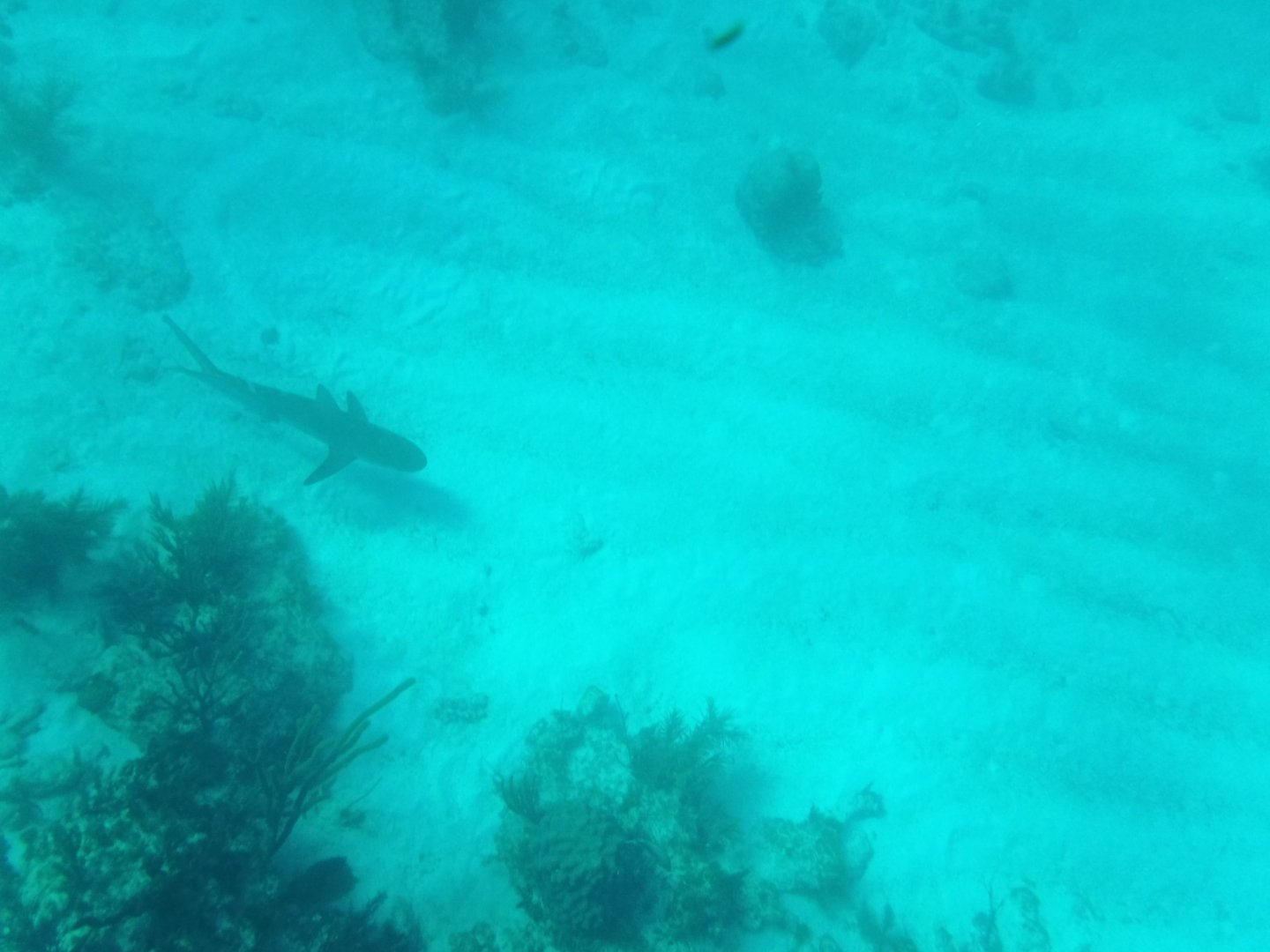
Coral reefs! Much more fun, much more along the lines of what I was expecting, and I saw a lot of cool animals. We started in one area (I think the southernmost of the Northern Rocks) and moored to a buoy, practically right on top of a blacktip reef shark. Later someone else saw a Caribbean reef shark, but it was gone by the time I got there. A shame, because I've never seen that species. Saw some other fish, too. It's hard to identify some of the species without my glasses on. We then went to a different spot:

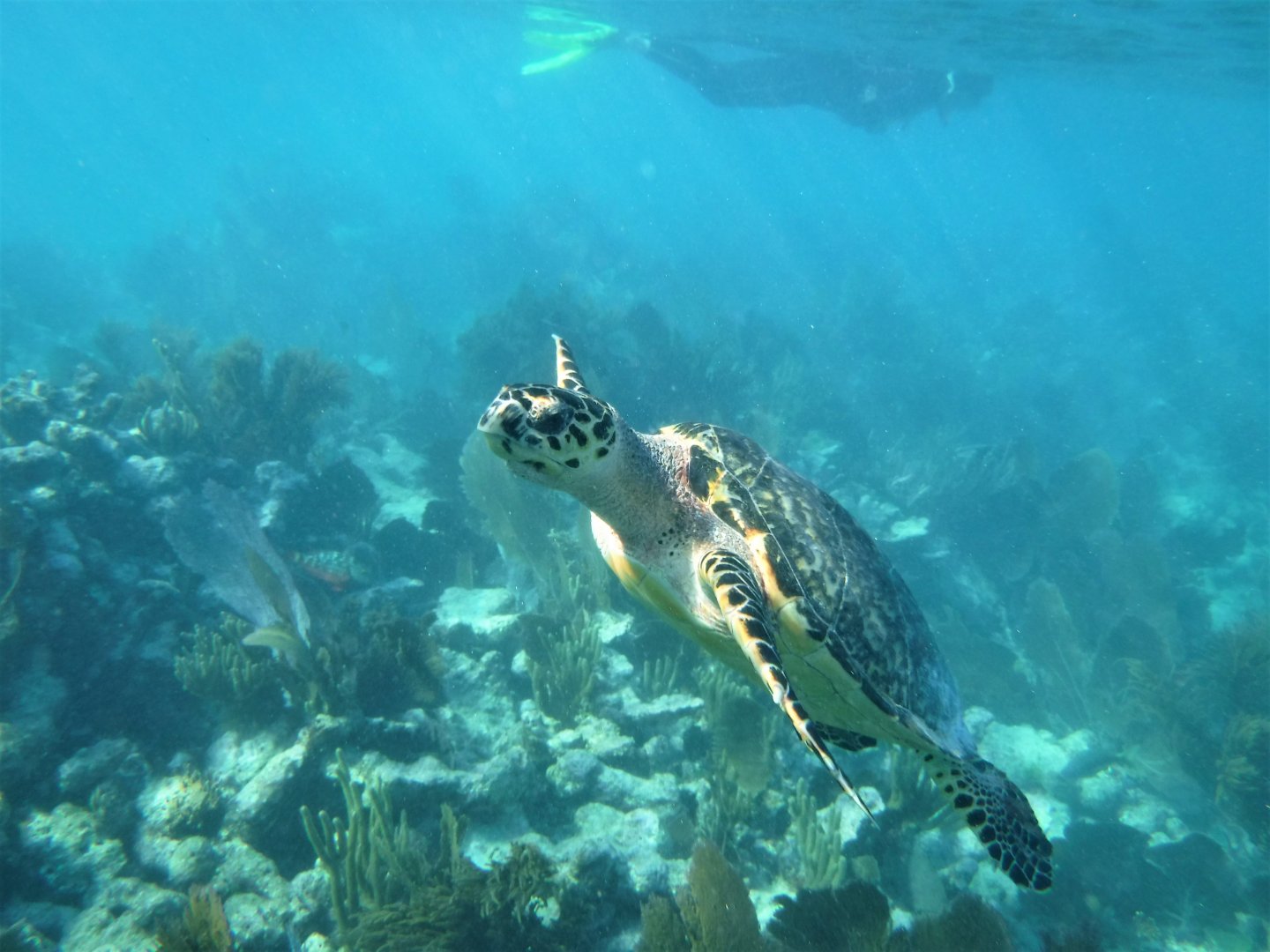
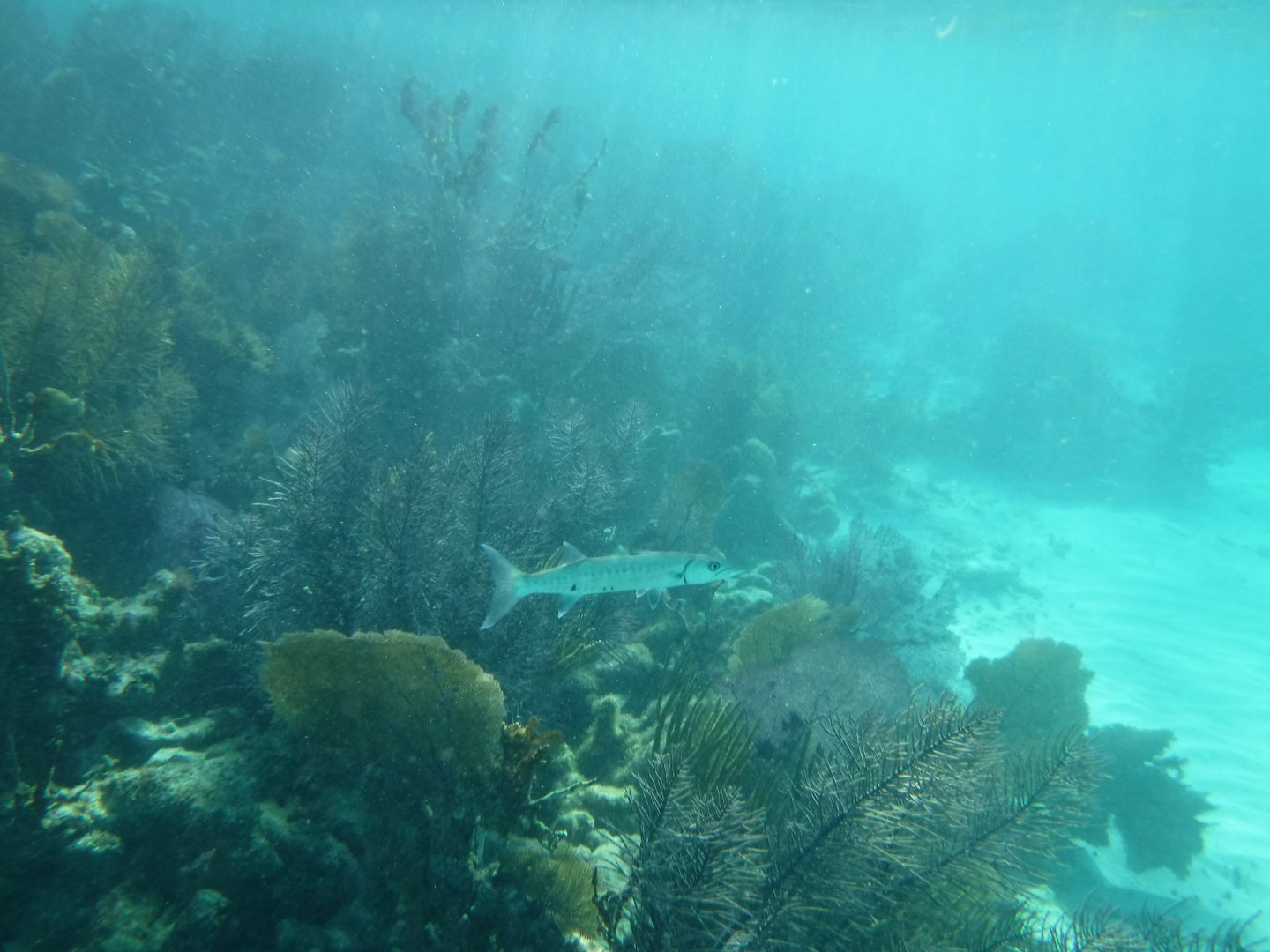
Dry Rocks (I think). One staff member hopped in the second we moored, and shouted "sea turtle"! That caused quite a scramble, but by the time I could get in, it had turned into a chase. I slowly meandered in the general direction, viewing the reef until someone located it. I saw the largest barracuda I'd ever seen. There were a lot of sea fans, seargent majors, other reef fish. Finally, someone found the sea turtle. It turned out to be a hawksbill, my favorite species and something I'd really not expected to see. Me and a good chunk of our group followed it for a bit, and at one point it turned around and swam towards me, allowing for a great shot! It has been the highlight so far. On the way back, we saw a loggerhead sea turtle diving, bringing my total wild sea turtle list to three. Tomorrow is once again reef snorkeling, and then our trip to Pennekamp. We have only two hours, including a one mile walk each way, but I'll do my best to visit the aquarium so I can post a review, and then look for wildlife. A crocodile would be amazing. The day after, I have a couple hours in the Everglades. The coral reefs, I think, are still "taking the cake" so to speak. I hope to see a hammerhead but that is extremely unlikely. I'll post an update tomorrow if possible, and the review will come within the next few days.
 
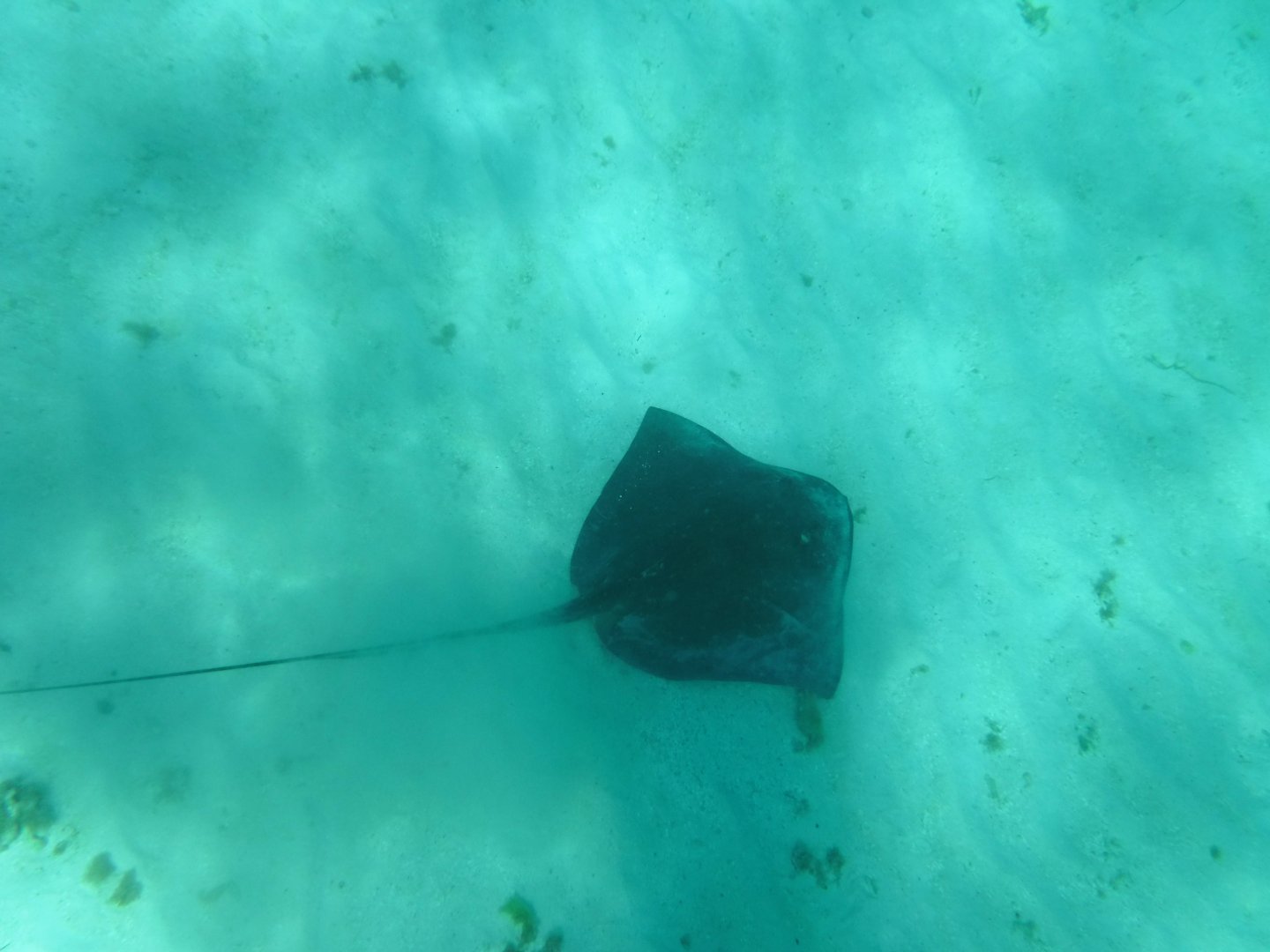
Today we snorkeled at Grecian Rocks, at two different points on the reef. I saw a lot of barracudas, around 20 in a group at one point. I saw two ray species, a southern stingray and a yellow-spotted ray. Another species which got me excited, but not really anyone else was a cigar comb jelly (Beroe sp.). I don't know of any aquarium keeping them currently but I know the Monterey Bay Aquarium kept B. forskalii in the past. I saw a few before moving on, because my "buddy" was (as expected) relatively uninterested in them. I saw more sea fans today than anywhere else.

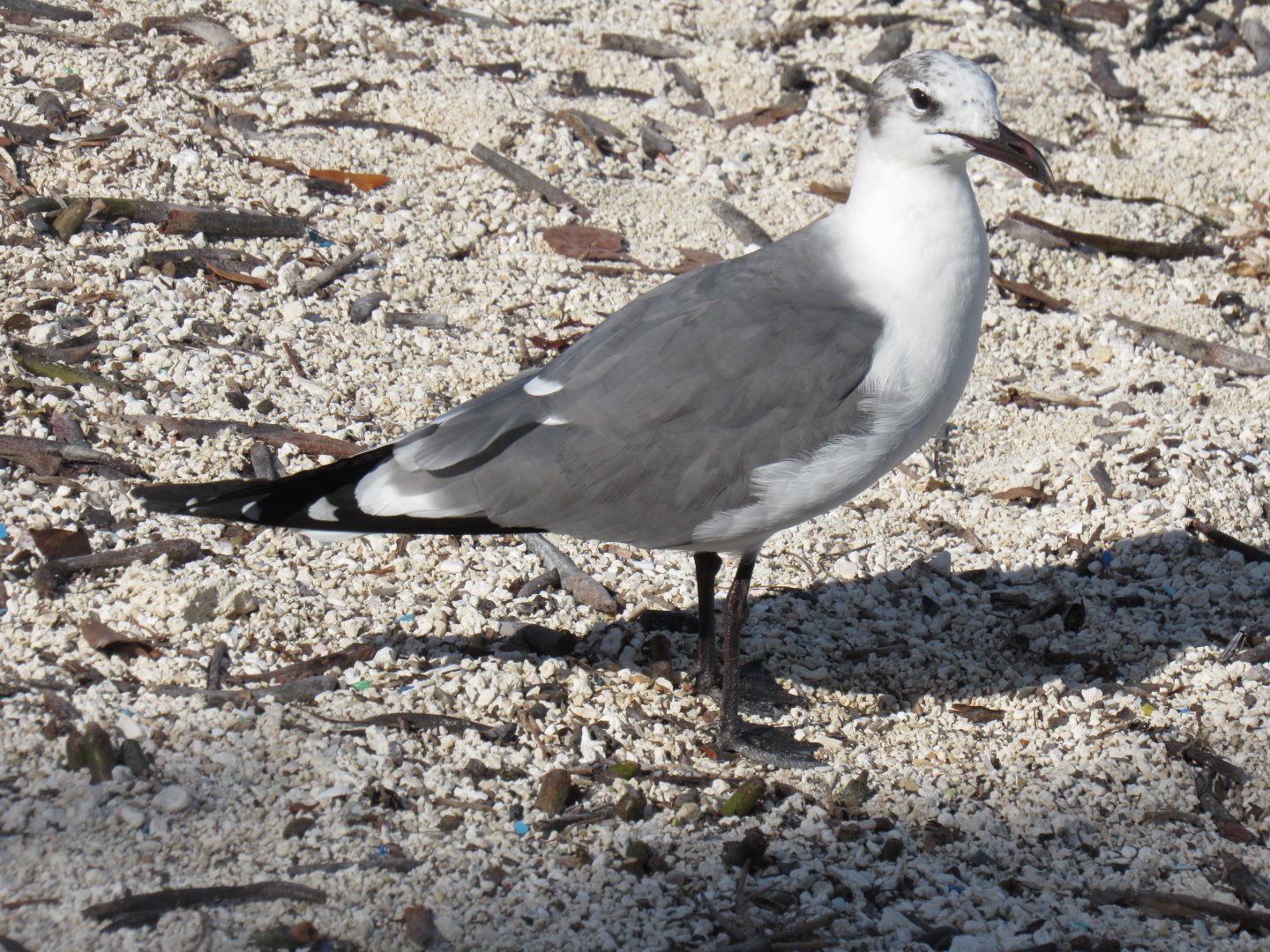
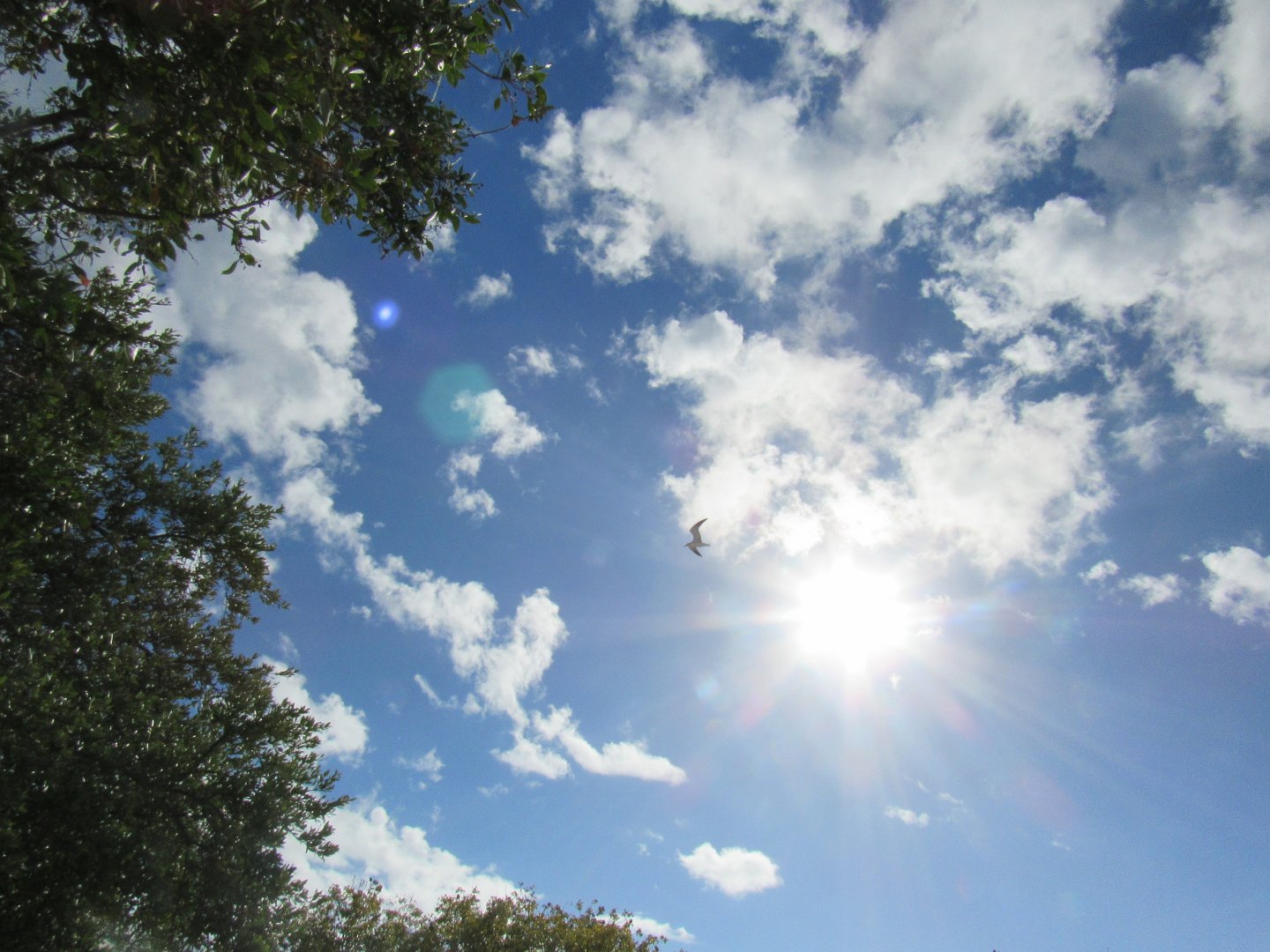
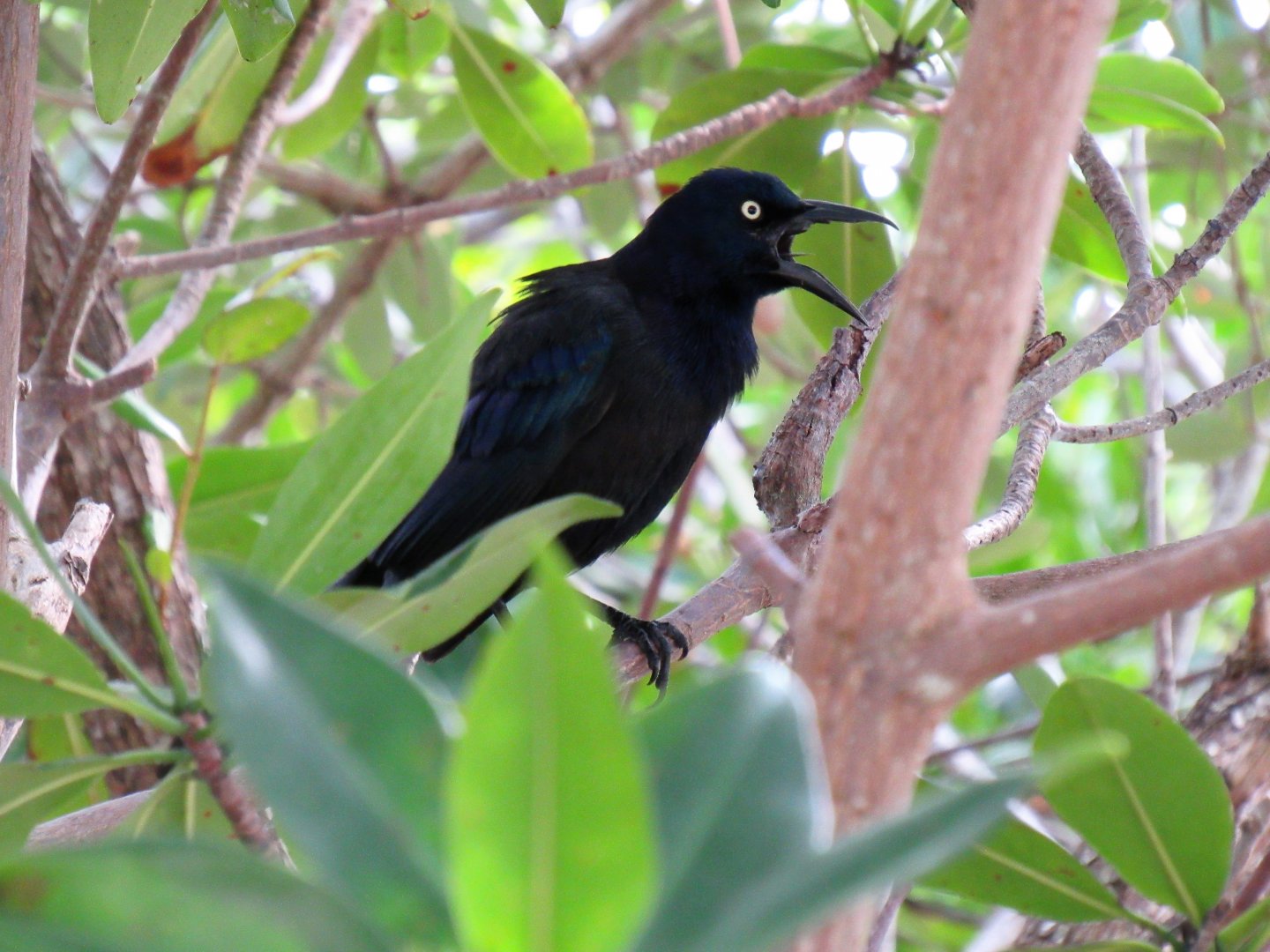
Later we walked to Pennekamp Park. On the nature trail I saw a grand total of two birds, neither of which was a white-crowned pigeon, the only thing I really knew to look for. There were several smaller lizards and one big spider. On the beach I saw juvenile laughing gulls, a ringed gull, a double crested cormorant, and some terns (my best guess is Forster's but I never got a good look). In a small patch of mangroves and the visitor area, I saw common grackle and white ibis, as well as Eurasian collared dove and mourning dove. The aquarium itself was quite small at 7 tanks, most of which were small themselves. I'll post a review within a few days, after I get caught up on homework.

Tomorrow is the Everglades, for about four hours. We are walking the Anhinga Trail. I'm hoping for both American crocodile and flamingo, but that's quite unlikely, to say the least. I can hope, though.
 
Tomorrow is the Everglades, for about four hours. We are walking the Anhinga Trail. I'm hoping for both American crocodile and flamingo, but that's quite unlikely, to say the least. I can hope, though.

You won't see crocodiles in that part of the park unfortunately. They are down at the southernmost part of the park in the Flamingo section. You should see LOTS of alligators.

Flamingos are very rare visitors to the park from what I was told when I visited in 2015. When they do show up they are apparently also in the Flamingo area.

Thanks for the narration of what you saw out in the coral reefs. It sounds like you are seeing many cool things. I went on the glass-bottom boat tour from Pennekamp park out to the reefs - you are definitely having a much richer experience by snorkeling it.
 
You won't see crocodiles in that part of the park unfortunately. They are down at the southernmost part of the park in the Flamingo section. You should see LOTS of alligators.

Flamingos are very rare visitors to the park from what I was told when I visited in 2015. When they do show up they are apparently also in the Flamingo area.

Thanks for the narration of what you saw out in the coral reefs. It sounds like you are seeing many cool things. I went on the glass-bottom boat tour from Pennekamp park out to the reefs - you are definitely having a much richer experience by snorkeling it.
I suspect the 'Eurasian Collared Doves' may be feral Barbary Doves, descended from escaped or released stock. I may be wrong, but I don't think Eurasian Collared Dove occurs in the New World, except possibly as a vagrant.
 
I suspect the 'Eurasian Collared Doves' may be feral Barbary Doves, descended from escaped or released stock. I may be wrong, but I don't think Eurasian Collared Dove occurs in the New World, except possibly as a vagrant.

Nope. They are in fact Eurasian Collared Doves. They are now found in all 48 contiguous US states descended from escapees originally in Florida. They are quite common now, especially in urban or suburban areas.
 
You won't see crocodiles in that part of the park unfortunately. They are down at the southernmost part of the park in the Flamingo section. You should see LOTS of alligators.

Flamingos are very rare visitors to the park from what I was told when I visited in 2015. When they do show up they are apparently also in the Flamingo area.

Thanks for the narration of what you saw out in the coral reefs. It sounds like you are seeing many cool things. I went on the glass-bottom boat tour from Pennekamp park out to the reefs - you are definitely having a much richer experience by snorkeling it.

I figured that was the case with flamingos and crocodiles. The only other thing I'm hoping to see is a manatee, because they've been no-shows st the dock except for the lone individual we saw. There's quite a drive to the Everglades, actually, and I think the time we have there will be closer to two hours. On the bright side, I can look for manatees in all the waterways in between Key Largo and there.

I'm glad you're enjoying reading this. Snorkeling is definitely the right way to be able to experience some of the reefs. They're very shallow (which makes me nervous that I'll hit something) but great to swim through. The largest barracuda I saw (yesterday, it was even more enormous than the one I saw two days ago) as well as the hawksbill sea turtle were both in areas that a boat wouldn't be able to get to. It was particularly enchanting to swim with the sea turtle through the reef. That's by far my favorite thing that's happened on this trip, and a memory I'll cherish for a long time.

I also forgot to mention that yesterday I saw a flying fish. It flew past our boat as we were gearing up to get in. I don't know the species, but it was small and brown.

I suspect the 'Eurasian Collared Doves' may be feral Barbary Doves, descended from escaped or released stock. I may be wrong, but I don't think Eurasian Collared Dove occurs in the New World, except possibly as a vagrant.

I'm not particularly sure that it was a Eurasian collared dove. I'll post a photo later for ID. However, they do occur over a large portion of North America.
 
I suspect the 'Eurasian Collared Doves' may be feral Barbary Doves, descended from escaped or released stock. I may be wrong, but I don't think Eurasian Collared Dove occurs in the New World, except possibly as a vagrant.
Sorry about that. I hadn't realised what Collared Doves have achieved over the past three decades!
 
Are you sure it was a flying fish and not a mullet? They launch themselves out of the water quite frequently.
 
Are you sure it was a flying fish and not a mullet? They launch themselves out of the water quite frequently.
Yes, it definitely appeared to be flapping "wings". Several of the guides agreed on this.

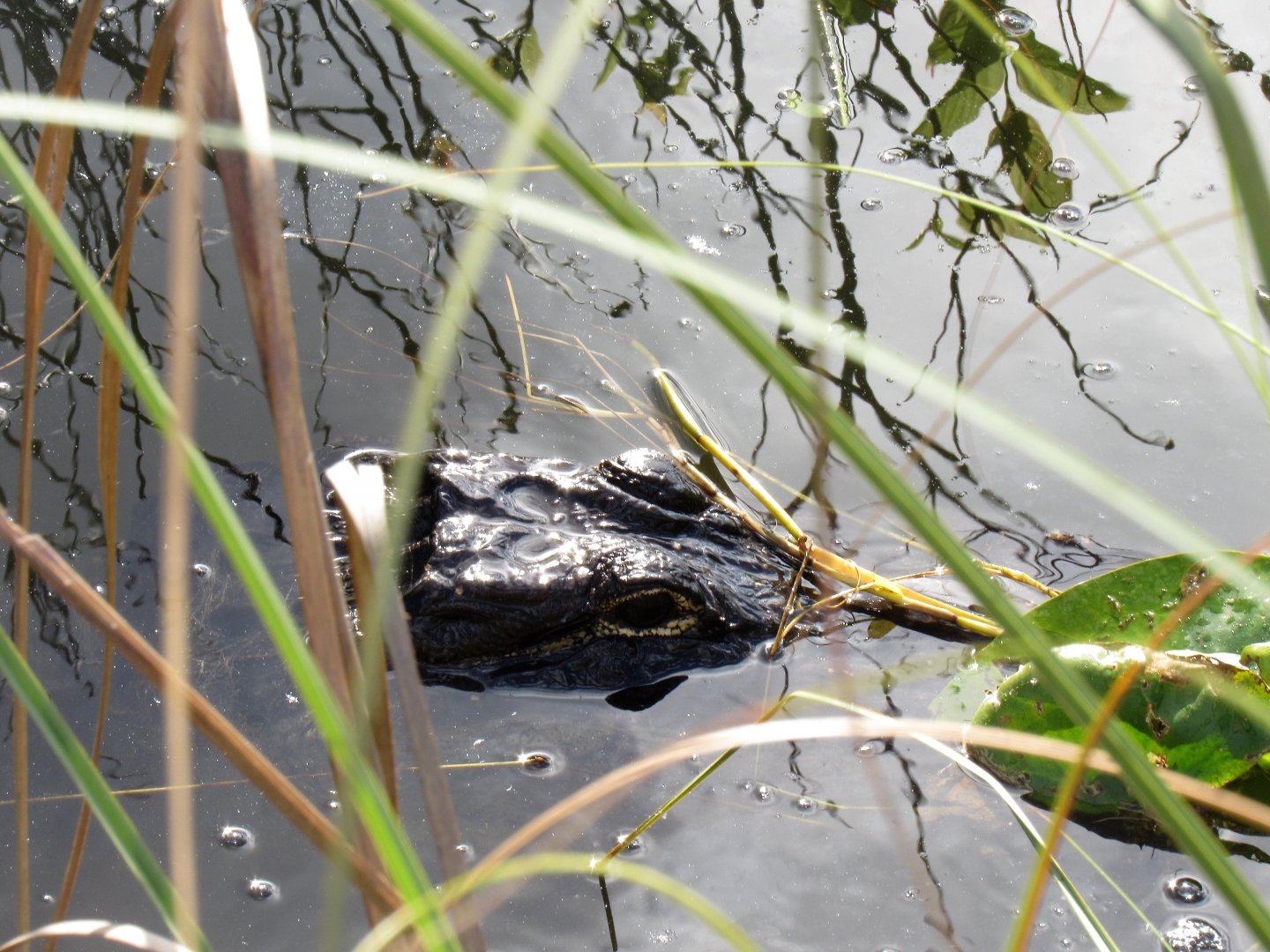
My trip is now over, aside the flight home. The Everglades were exciting, even if I didn't see any of the species that I had wanted to. We walked the Gumbo Limbo Trail first, and learned a lot about the various plants. Then we were set free to wander about the Anhinga Trail for around an hour. I saw of course anhinga, and a few other species of bird. No wood storks or spoonbills, but I saw those last July. I saw three turtle species and no mammals or amphibians. I also saw a few fish species, mostly invasive. There were a lot more alligators than the last time I visited Florida. Overall, it was enjoyable and hopefully I can look more extensively for crocodiles and/or flamingos.

We are lunch at a fruit stand called Robert is Here. I wouldn't have discussed it here, but it actually had three animal enclosures in the back. One held the most: cows, pigs, sulcatta tortoises, emus, muscovy ducks, a turkey, some domesticated geese, and some really fat koi. Two aviaries had an assortment of parrot and chicken breeds, as well as a rabbit.

Within the next week or two, I'll post a review of the aquarium, a species list of what I know I saw (will be far lower than what I actually saw, as I couldn't identify many far-off birds or fish), and photos.
 
Species that I saw:
Mammals:
West Indian manatee Trichechus manatus latilostris
Birds:
Turkey vulture Cathartes aura
Lesser black-backed gull Larus fuscus
Herring gull Larus (argentanus) smithsonianus
Ring-billed gull Larus delawarensis
Laughing gull Leucophaeus atricilla Forster's tern (potentially) Sterna forsteri American white ibis Eudocimus albus
Common grackle Quiscalus quiscula Eurasian collared dove Streptopelia decaocto
American black vulture Coragyps atratus
Great blue heron (normal and white coloration) Ardea herodias herodias and A. h. occidentalis
Great egret Ardea alba egretta
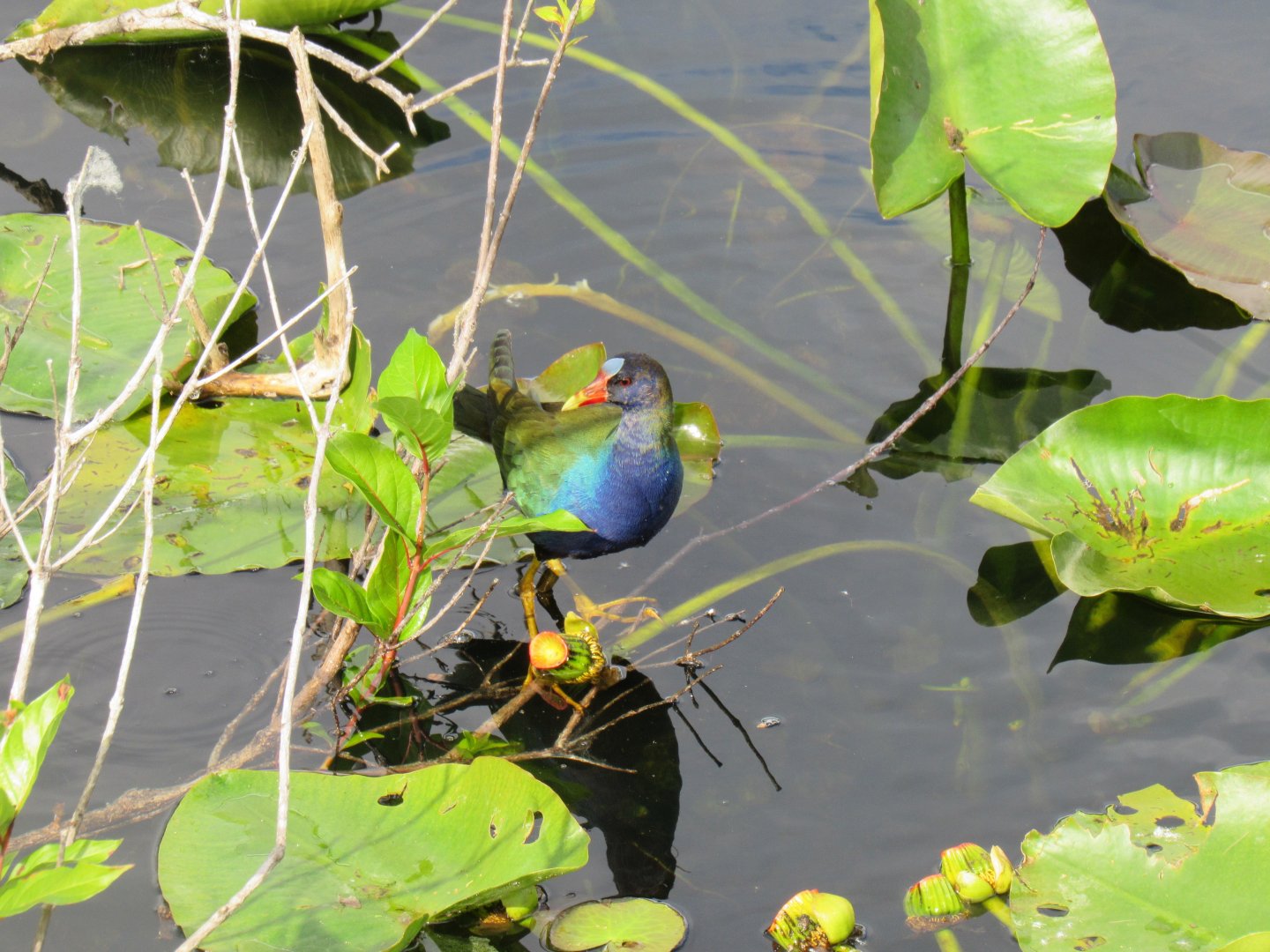
American purple gallinule Porphyrio martinicus Black-crowned night heron Nycticorax nycticorax
American crow Corvus brachyrhynchos
Eastern brown pelican Pelecanus occidentalis occidentalis
Reptiles:
Green iguana (invasive) Iguana iguana
Hawksbill sea turtle Eretmocheyls imbricata imbricata Loggerhead sea turtle Caretta caretta
American alligator Alligator mississippiensis Florida red-bellied turtle Pseudemys nelsoni
Florida cooter Pseudemys floridana
Florida softshell turtle Apalone ferox
Four unknown species of lizard
Fish:
Great barracuda Sphyraena barracuda Blacktip reef shark Carcharhinus melanopterus Atlantic blue tang Acanthurus coeruleus
Yellow Ray Urobotis jamaicensis
Southern Stingray Dasyatis americana Stoplight parrotfish (Initial and terminal phases) Sparisoma viride
French angelfish Pomacanthus paru
Bluehead wrasse Thallasoma bifasciatum
Blue-striped grunt Haemulon scirius
Spotted trunkfish Lactophyrs bicaudalis
Unknown anthias Serranidae
Unknown damselfish Pomacentridae
Four unknown species
Sergeant major Abudefduf saxatilis
Flying fish Exocoetidae
Mayan cichlid (invasive) Mayaheros urophthalmus
Oscar cichlid (invasive) Astronotus ocellatus
Tilapia (invasive) Oreochromis aureus
Florida gar Lepisosteus platyrhincus
Bluegill Lepomis macrochirus
Remora Echeneidae
Hogfish Lachnolaimus maximus
Invertebrates:
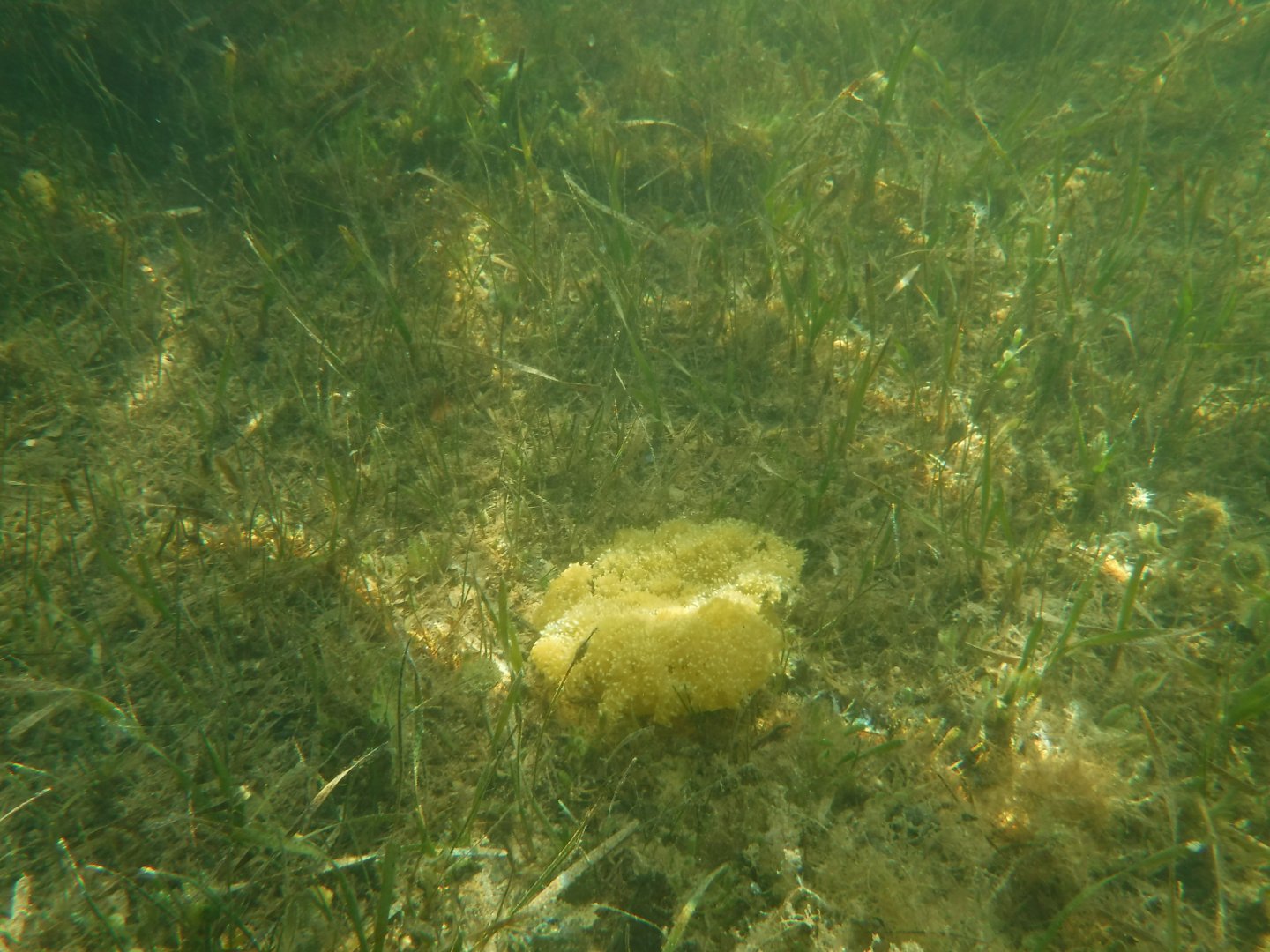
Upside-down jelly Cassiopea sp. Brittle star Ophiuroidea
Nudibranch (two species) Nudibranchia
Tulip snail Fasciolaria tulipa
Comb jelly Ctenophora
Oven mitt jelly Beroe sp.
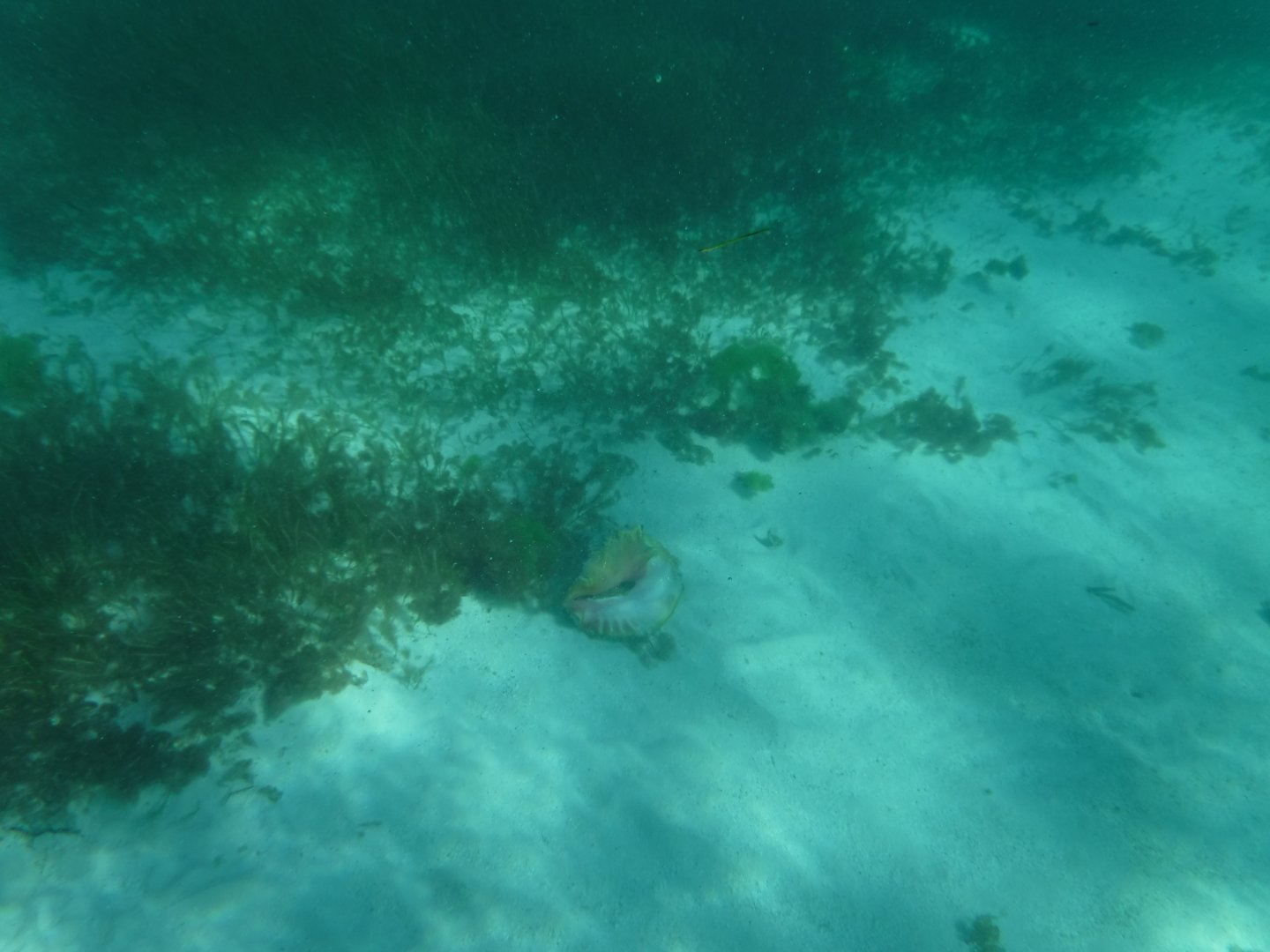
Queen conch Lobatus gigas Seen in Labs:
Decorator crab
Emerald crab Mithraculus sculptus
Common mantis shrimp Pseudosquilla ciliata
Lettuce sea slug Elysia crispata

There are more photos in the United States- Wildlife gallery.
 
Back
Top