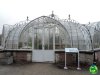
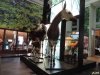
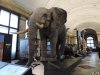
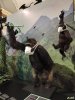
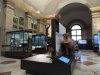
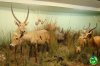
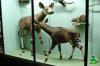
Yesterday I had to pleasure for a quick visit to the Brussels Natural History Museum. Although they do have a zoo licence they are an natural history museum. Although the core of their collection is a dinosaur (and mosasaur) exhibition they also have interesting sections in biodiversity in urban areas, human evolution, evolution in general and an exhibition on 250 years of history of the natural history which includes information on the 19th century Brussels zoo (which was next to the museum) showing among others one of the former zoos elephants, a thylacine and several former inhabitants of Antwerp Zoo, like an Eastern Lowland Gorilla. The reason they have a zoo licence is that next to their pinned invertebrate collection they also have around 20 enclosures with different invertebrates on show.
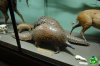
This as a background as my main goal of the visit was a temporary exhibition on poison (more information here. Next to general information on why animals have poison and on how they use it there is quite an interesting collection on display. The set up is very nice with big boards with pictures and the background information in four languages (French, English, German and Dutch). The exhibition is divided by taxon and by function. So there is a section with snakes, one with amphibians, one with lizards, one with spiders and one with other invertebrates (although that one includes one scorpion). Then there is a separate row with poisonous animals whose poison is being researched for medicinal porpoises. Mammals and birds are being addressed as well, but only by stuffed animals. It was pretty nice to see a Variable Pitohui, a Hispaniolan Solenodon and a Platypus among others even though they were just skins.
The terrarium set up was good and while suitable for the animals it was as well easy to spot them. All enclosures had double glass as it can be quite crowed at times and I thought this was an interesting way of both protecting the animals as the public. The species on display are:
Bitis arietans
Bitis gabonica
Crotax atrox
Dendrobates tinctorius "azureus"
Phyllobates terribilis
Bombina orientalis
Varanus glauerti
Heloderma suspectum
Bothriechis schlegelii
Ophiophagus hannah
Rhynchophis boulengeri
Lethocerus grandis
Latrodectus mactans
There was one more assassin bug on display, plus three species of tarantula, a centipede and one more snake, salamander and two more frog species. For those in Belgium I can strongly recommend it as I spend a very nice 45 minutes in the exhibition. Even though the collection is small the way it is presented is nicer than that of many zoos and the education is done in such a way it keeps especially children busy for a while.
This as a background as my main goal of the visit was a temporary exhibition on poison (more information here. Next to general information on why animals have poison and on how they use it there is quite an interesting collection on display. The set up is very nice with big boards with pictures and the background information in four languages (French, English, German and Dutch). The exhibition is divided by taxon and by function. So there is a section with snakes, one with amphibians, one with lizards, one with spiders and one with other invertebrates (although that one includes one scorpion). Then there is a separate row with poisonous animals whose poison is being researched for medicinal porpoises. Mammals and birds are being addressed as well, but only by stuffed animals. It was pretty nice to see a Variable Pitohui, a Hispaniolan Solenodon and a Platypus among others even though they were just skins.
The terrarium set up was good and while suitable for the animals it was as well easy to spot them. All enclosures had double glass as it can be quite crowed at times and I thought this was an interesting way of both protecting the animals as the public. The species on display are:
Bitis arietans
Bitis gabonica
Crotax atrox
Dendrobates tinctorius "azureus"
Phyllobates terribilis
Bombina orientalis
Varanus glauerti
Heloderma suspectum
Bothriechis schlegelii
Ophiophagus hannah
Rhynchophis boulengeri
Lethocerus grandis
Latrodectus mactans
There was one more assassin bug on display, plus three species of tarantula, a centipede and one more snake, salamander and two more frog species. For those in Belgium I can strongly recommend it as I spend a very nice 45 minutes in the exhibition. Even though the collection is small the way it is presented is nicer than that of many zoos and the education is done in such a way it keeps especially children busy for a while.