Nicaragua's Zoochat Debut: A trip report of the Zoológico Nacional

ralph

Well-Known Member
10+ year member
TRIP REPORT AND REVIEW OF THE ZOOLOGICA NACIONAL IN NICARAGUA


In november 2024, I visited Nicaragua. After Costa Rica in 2017 and Mexico (Yucatan and Cozumel) in 2019, this was my third time visiting Central America.
My focus was on bird- and wildlife watching, as well as enjoying nature in general (I visited mangroves, volcanoes, cloud forests and rainforests). The birding was really succesful with a whopping 163 species, including a lof of lifers. The mammal-watching however was really underwhelming and I had no luck whatsoever. If anyone is interested in the birding/wildlife part of my trip, let me know.

Nicaragua also has a few zoos, of which very little information is to be found on the internet. Even the national zoo did not have its own gallery on zoochat (nor does the country). I could not find any indication other zoochatters have visited this place. I am the first zoochatter to visit this zoo? Possibly so! Therefor, I feel obligated to do a trip report and review on this zoo!

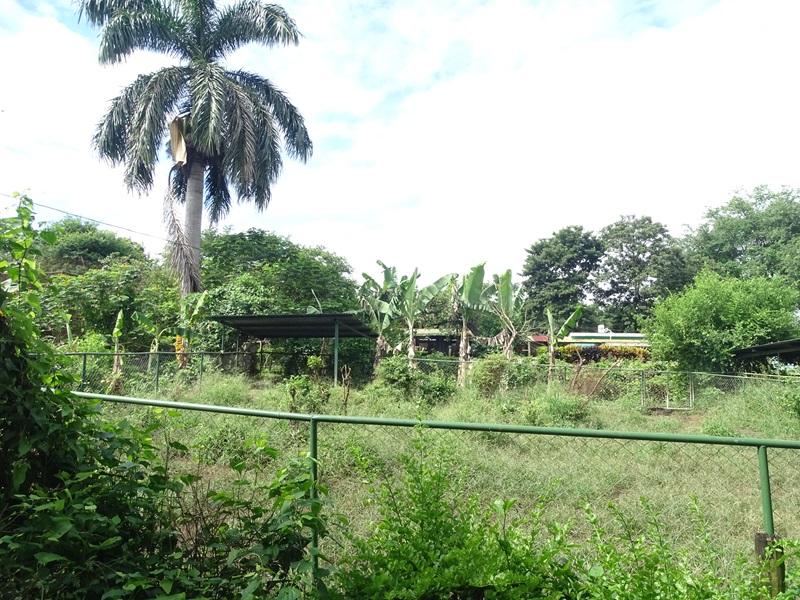
I had a visit to the zoo as an option for my final day in Nicaragua, as it was on route towards my hotel near the airport. I did not really know what to expect, but my expectations were low. Turns out, those low expectations were more than justified. The zoo is not good. It’s not even average. Is it the worst I’ve visited? Yes, I would say so. This trip report should make clear why.

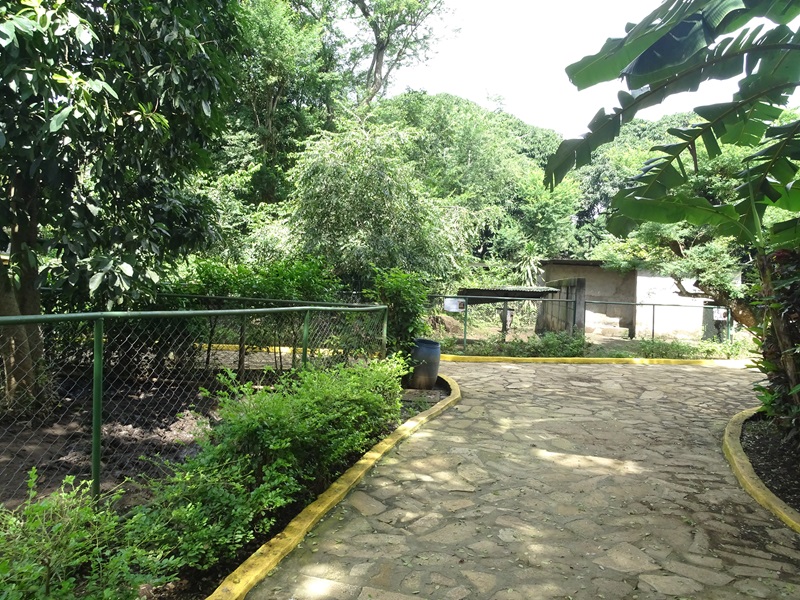
Should I start with a positive? Parking at the zoo is free of charge. After parking our rental, we walked towards the entrance, which is dominated by colourful murals of animal species kept in the zoo.

After purchasing tickets (a few dollars per person) I was immediately adressed by a staff member who noticed my camera bag. Despite the language barrier, I understood he was telling me it is not allowed to take photographs…! Wait, what?
This is a really remarkable rule that I had never encountered in a zoo before. It might partially explain the lack of footage from this zoo on the internet. It makes me wonder why this is a thing though. Do they know the conditions of the animals are bad and do they not want this information to be made public? I don’t really know.
I initially left my camera in my bag, but when I noticed other (local) visitors taking photo’s with their phones without any of the staff saying anything about it, I decided to take out my camera as well. The zookeepers and gardeners did not seem to mind at all, so luckily I was able to photograph after all (except for the tiny 'reptile area' directly after the entrance, where that one staff member kept watching me).

So with the introduction out of the way, let’s start this trip report!
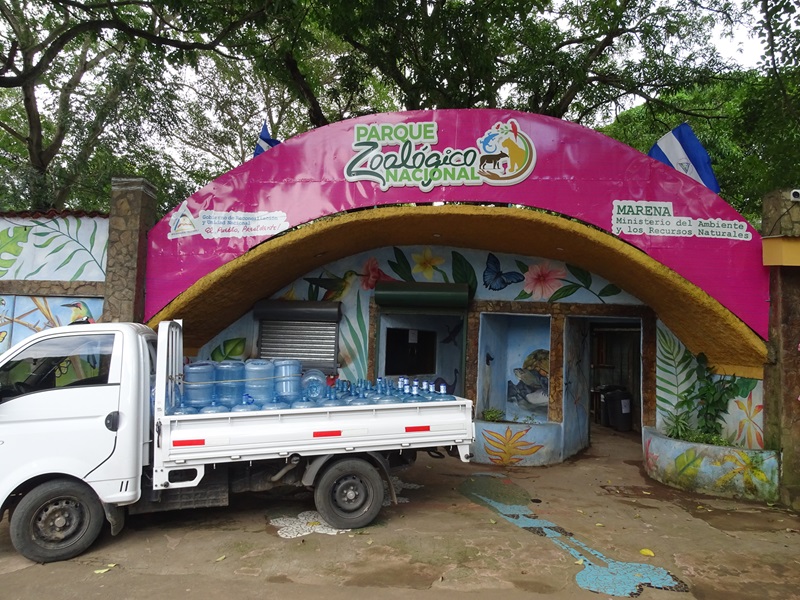
 
PART 1


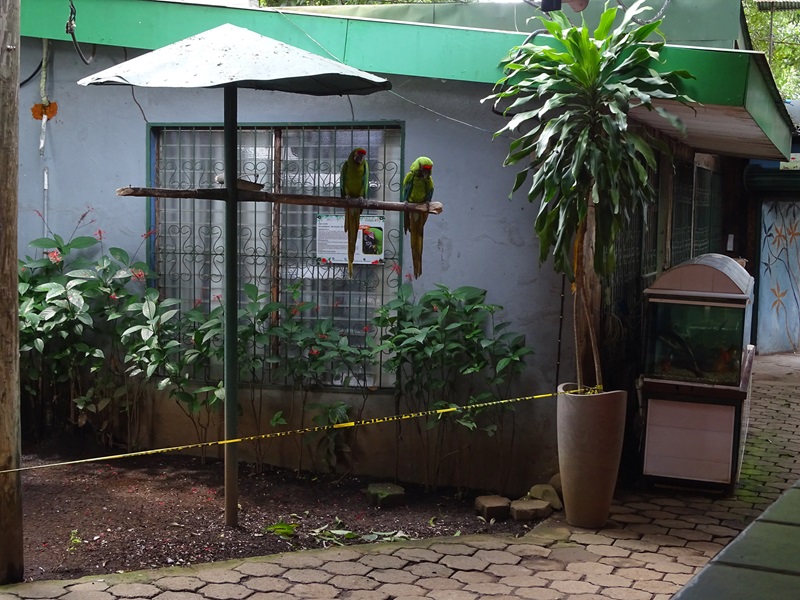
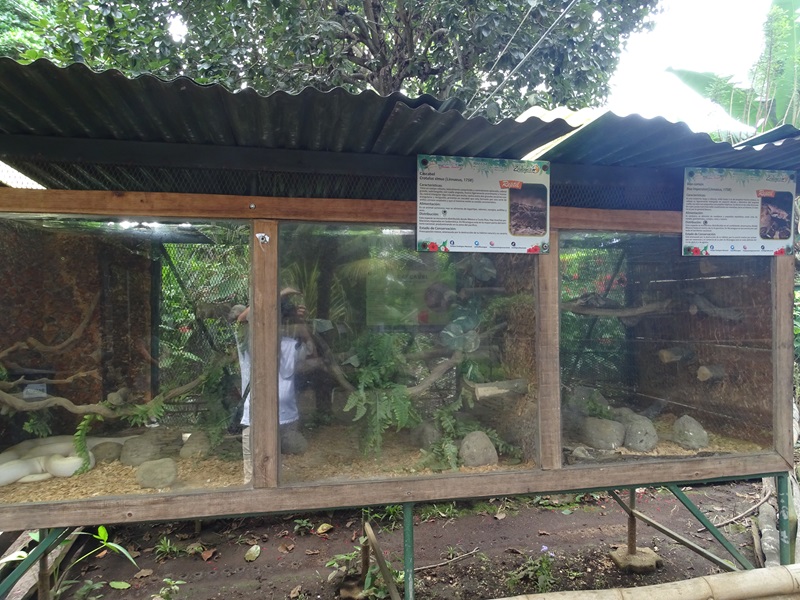
Immediately after the entrance are a few (I think 3) tanks for reptiles. None had signage, but I did recognize an eyelash viper and a milk snake (not sure which (sub)species though!) Next to the snakes is an old-fashioned ‘birds-on-a-stick’ type enclosure for a couple of great green macaws.


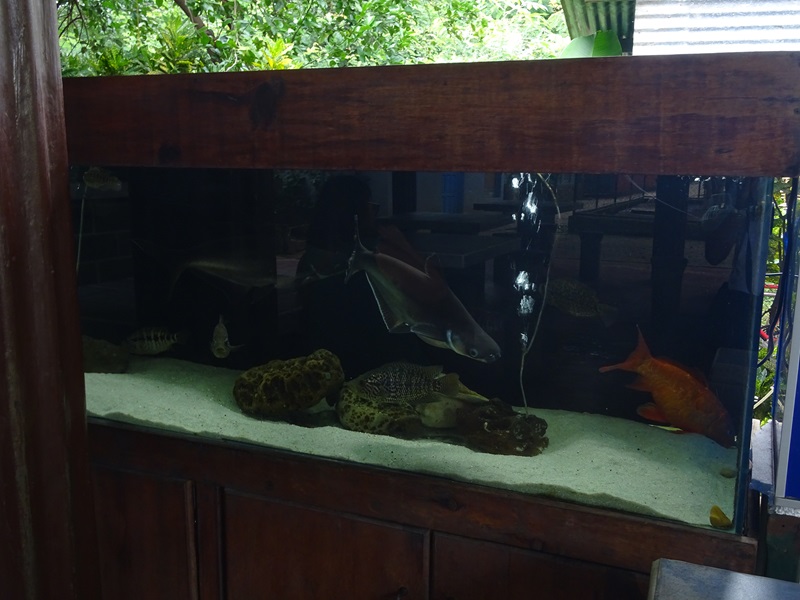
From a covered seating area, you can view a few small ‘pet store type’ aquaria, with some unsigned fishes in them. I saw an Asian giant catfish, a goldfish and some cichlids.


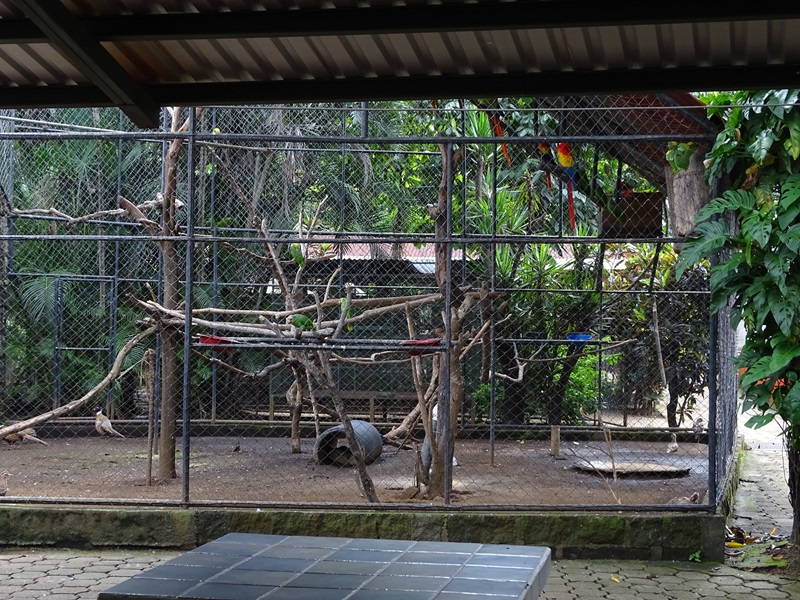
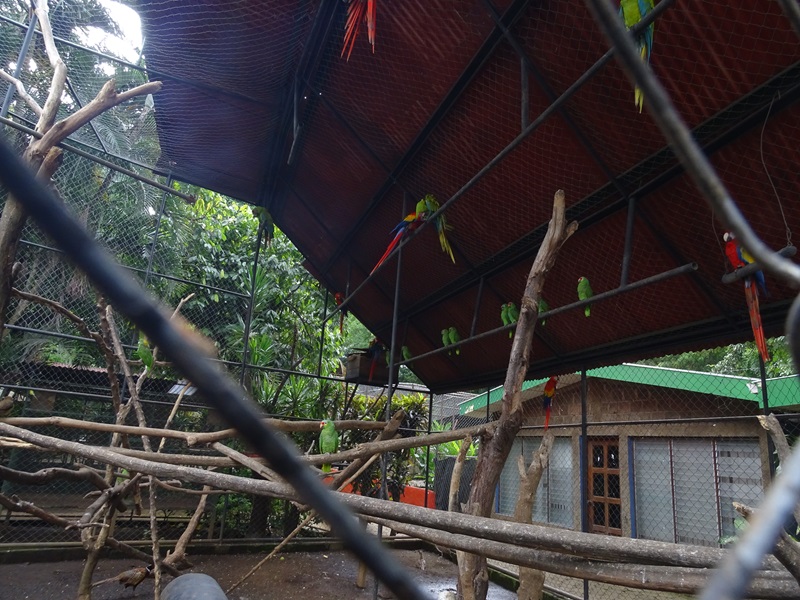
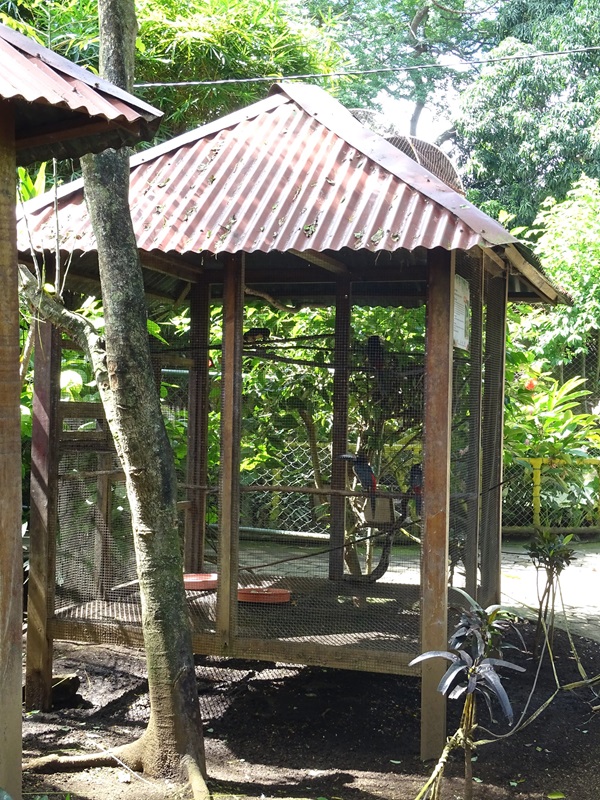
Across from the seating area is the first aviary. This one is actually quite large and has a good amount of branches for the birds to perch on. It is however quite overstocked with birds. The inhabitants are scarlet macaws, great green macaws, red-fronted and yellow-naped amazon parrots, ring-necked pheasants and double-striped thick-knees. I was quite excited to see the thick-knees, as it was a new species for me - it was also one of the species I tried to look for, but I failed to find in the wild. Besides birds, this aviary is also home to a few red-footed tortoises.


Next to this aviary is another one that’s only half the size. It does however have more foliage cover and a small pond, so it’s a somewhat decent aviary. The enclosure is home to a variety of native bird species (and again, pheasants). First off, a single Montezuma oropendola. This species is now gone from European collections and I would have been really excited so see one it weren’t for the fact that I saw wild oropendolas 12 times during my trip! Two species that would have been new to me if I hadn’t just encountered wild ones are the common gallinule (a small group, unsigned) and the American coot (just one). Other species in this aviary are white ibis, laughing gull and black-necked stilt (all single individuals). Clay-colored trush is signed, but I did not see one inside the aviary. I did however see multiple wild ones on the zoo grounds! Two other species that are signed that I didn’t see are bronzed cowbird and northern jacana; both would have been my first time seeing them in captivity. Lastly this aviary is home to an unsigned collared aracari. (I forgot to photograph this aviary)
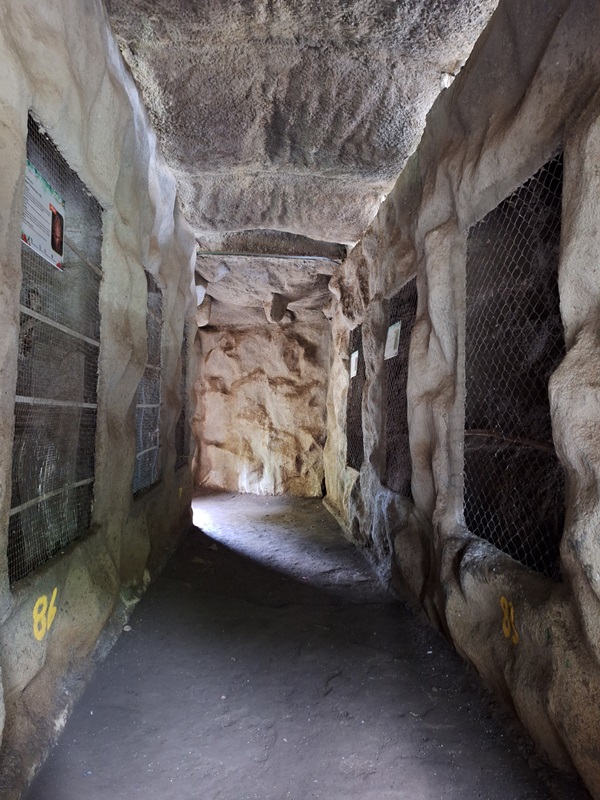
I had now arrived at the ‘nocturnal birds’. This a covered section is themed as a cave, with aviaries on both sides of the visitor path. Unlike actual nocturnal houses, this means the aviaries are darkened 24/7 as little sunlight gets in here, aside from the entrance, exit and a few 'mesh windows'. Inside, I found 7 basic and rather small aviaries for owls. On the left side, I found a striped owl, a barn owl and a small group of mottled owls. On the right side, there are another striped owl (although the signage said great horned owl), another barn owl, a group of ferruginous pygmy owls (which saw in the wild for the first time this trip!) and most excitingly, two Pacific screech-owls. Latter species did not have any entries on ZTL yet, so this species surely is extremely rare in captivity.


When I exited the owl cave, I got my first shock of the day. A small, low and dark enclosure with dirty windows looked empty at a first glance until I noticed an ocelot lying on the concrete floor.
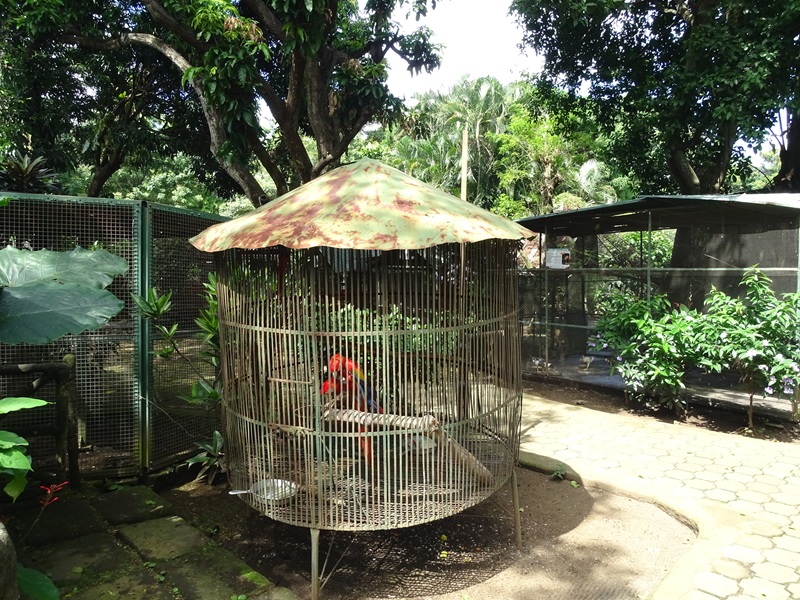
A mere meters away, was the second terrible enclosure; an extremely tiny cage for a small group of scarlet macaws! A real contrast with the reasonably large parrot aviary from before!


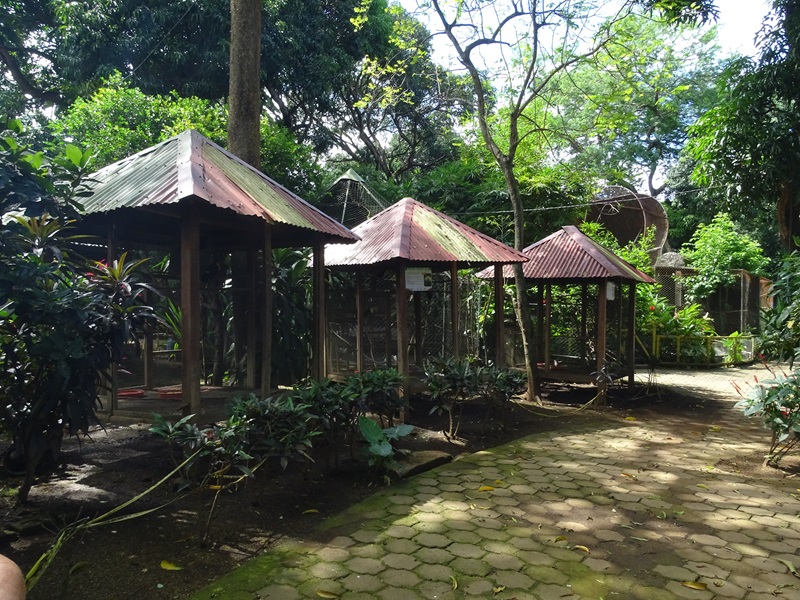
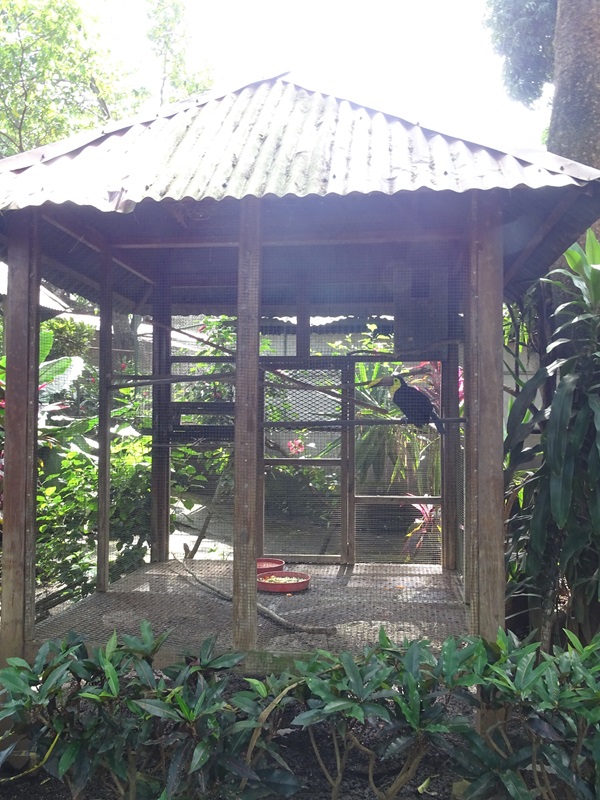
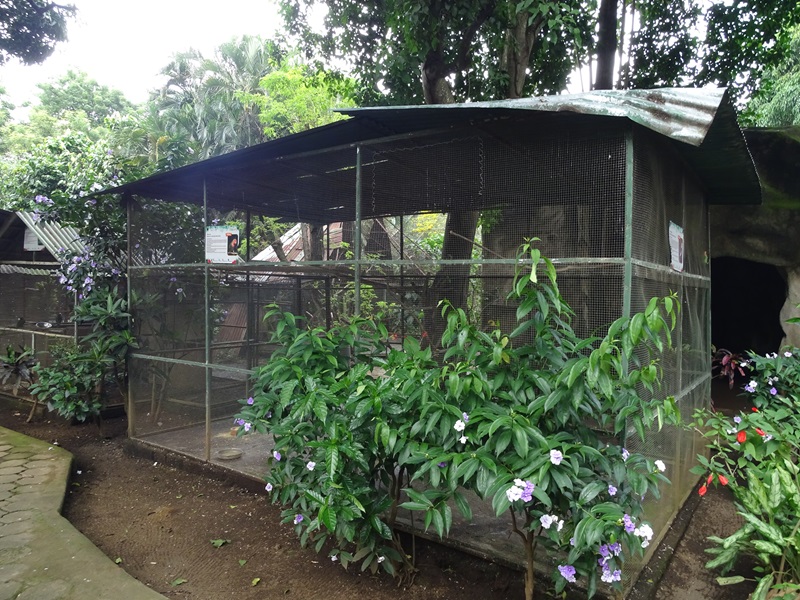
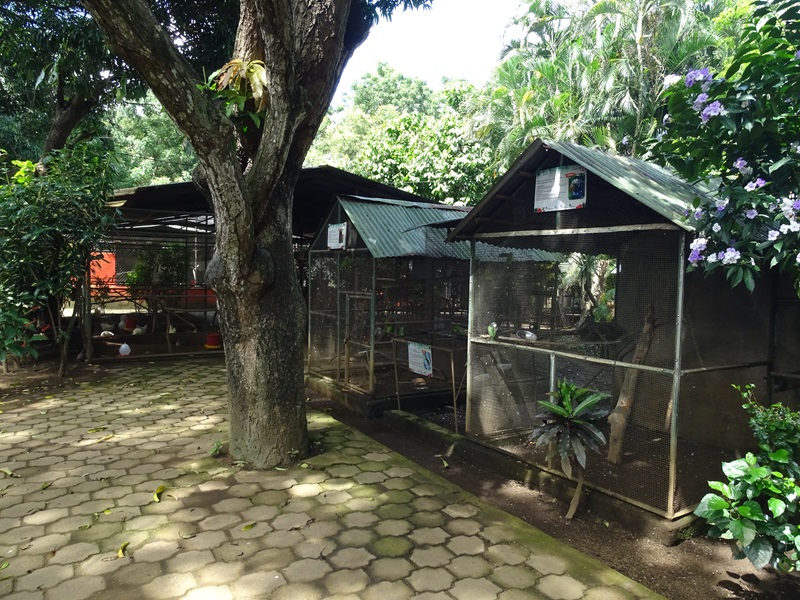
The macaw cage kicks off a row of bird cages/aviaries. Next to the macaws is a set of toucan aviaries. These were all very basic and small, but not as bad as the one for the macaws. The first aviary keeps a Swainsons toucan, the second had three keel-billed toucans and the third a small group of collared aracari. (all of them species I saw in the wild, although the former not in Nicaragua but only in Costa Rica)


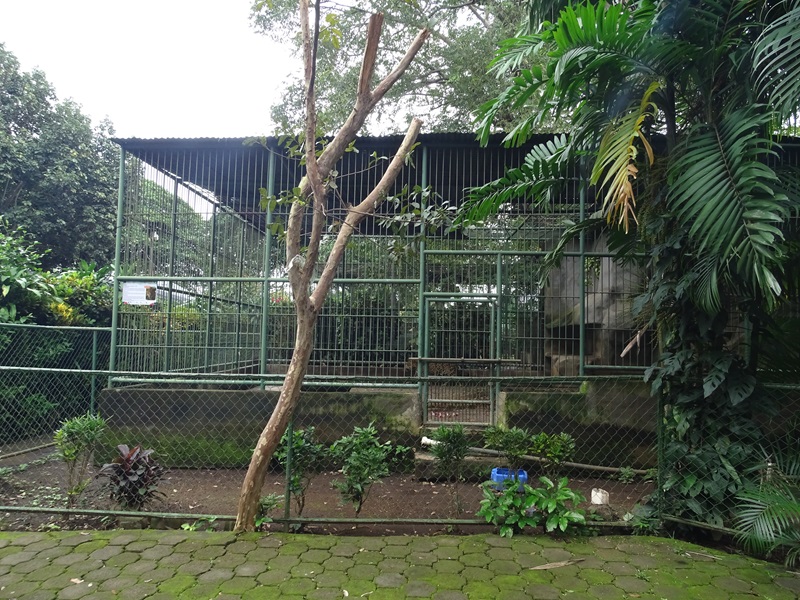
Opposite of the path (across from the toucan aviaries) are some parrot aviaries. The first one is the largest of the bunch and offers adequate space for a group of peach-faced lovebirds. It is also home to some black-bellied whistling ducks, for which the aviary is much less suited. A group of white-crowned parrots is kept in a barren, pet-store sized cage, just like the group of white-fronted amazon parrots. Between those is a very tiny, all-mesh cage for a group of 8 orange-fronted parrots. A similar tiny cage has a group of Pacific parakeets in them. It’s quite despressing to see such intelligent birds in such puny cages.


After the parrots is a set of 6 aviaries, with a path in between them, all covered by a
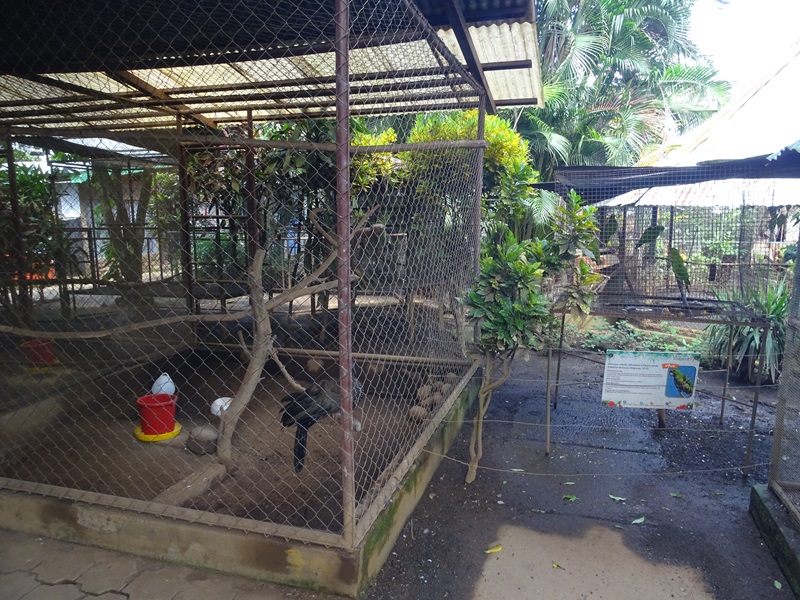
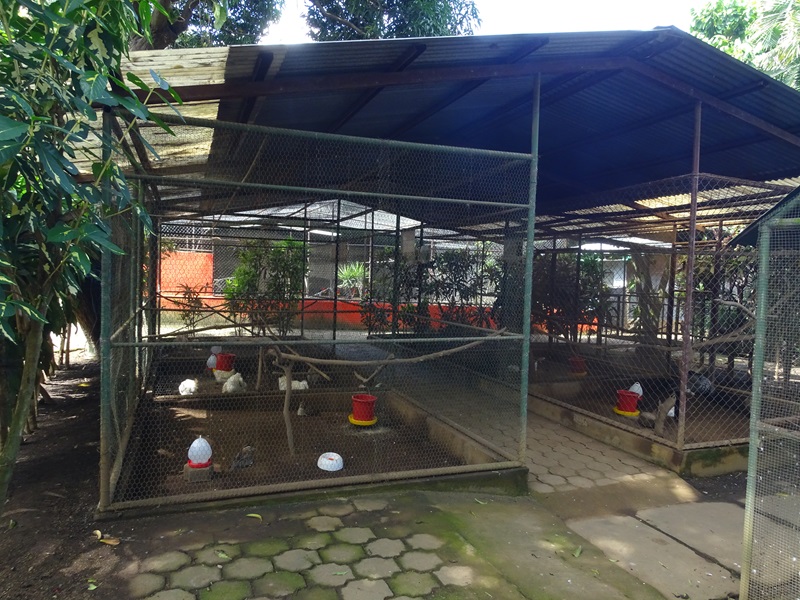
plastic roof. On one side of the path are 3 species of galliformes; a single crested guan, a threesome of plain chachalaca and a cpair of great curassow. These are all large birds, and the aviaries are defenitely too small for them, not to mentioned way too barren as these are all forest species. On the other side is a second pair of double-striped thick-knees, some domestic (silky) chickens and more pheasants. The path then leads to what is by far the largest aviary of the zoo, but unfortunately it is overstocked with Indian peafowls, the only species in this enclosure.

'

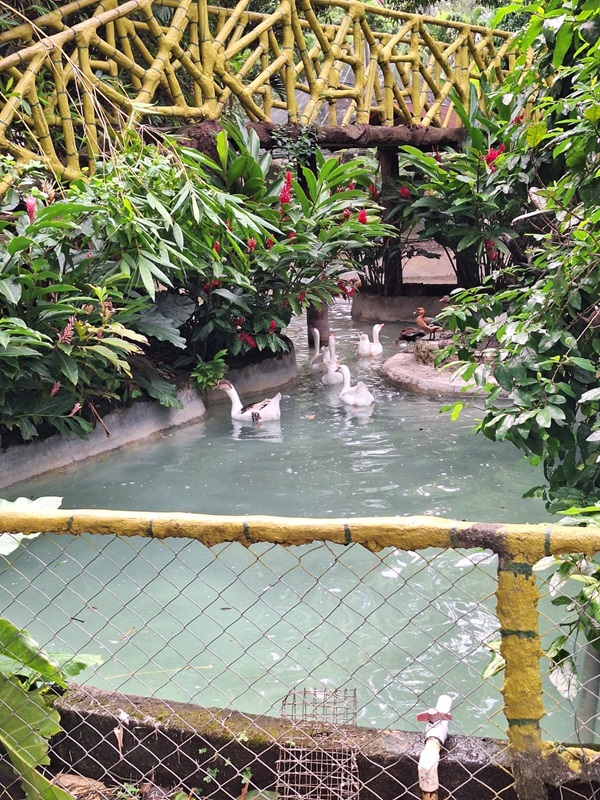
Going right from the peafowl aviary would lead me past the macaw/thick-knee aviary and back to the entrance, so I turned left. Here I found an open-topped waterfowl enclosure. This enclosure was actually quite decent and there was some room for swimming for the inhabitants; domestic ducks and geese, blue-winged teals, black-bellied whistling ducks and fulvous whistling ducks (all of which I also encountered in the wild!).


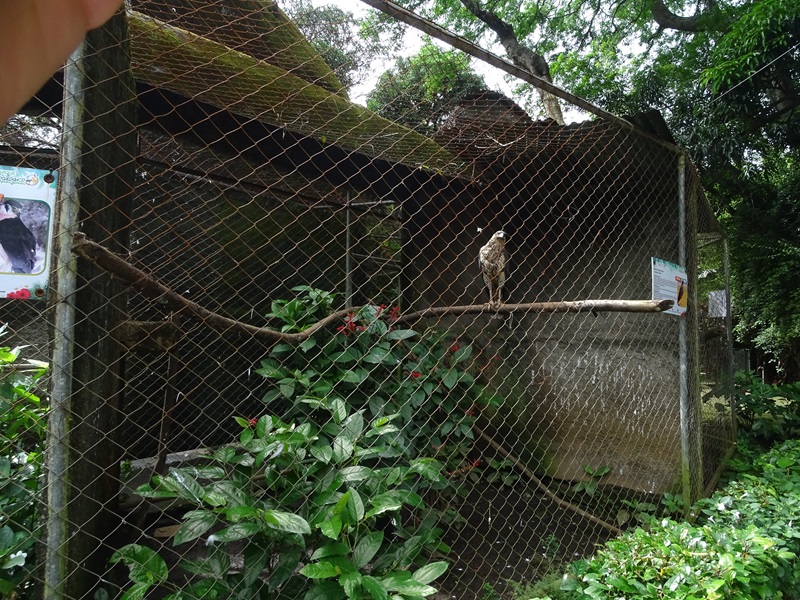
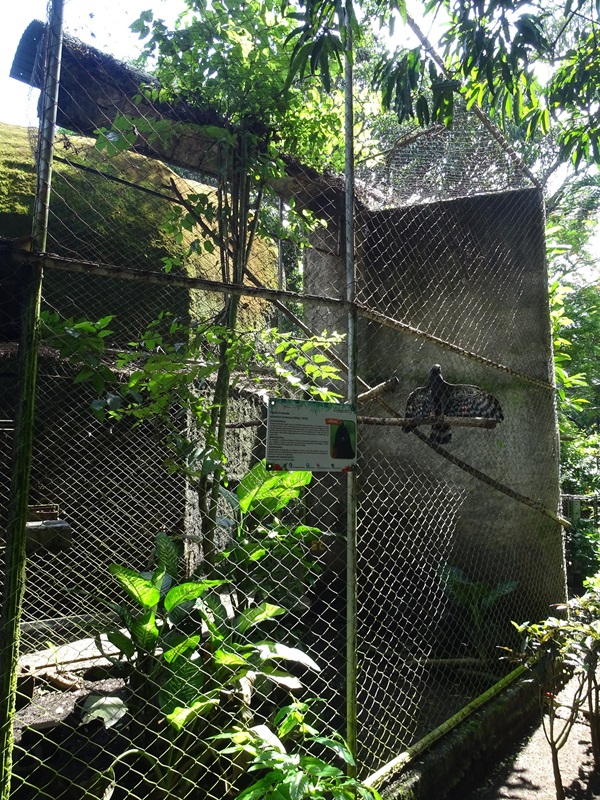
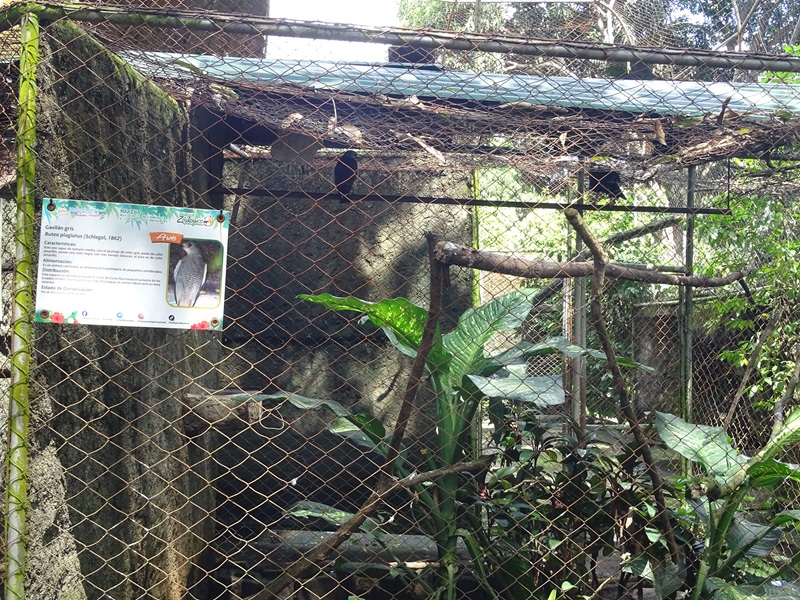
Next to the duck ‘pond’ is a section dedicated to birds of prey. Nine small and basic cages are home to one species each. First up is a black vulture, an extremely common species in Central America. This individual had an lighter coloration than is usual for the species. The next species was much more exciting though; a Collared forest falcon! This was my third new bird species of the day. Unfortunately, the animal seemed really stressed and shy, but had no place to go in its tiny cage. Next to the falcon was a juvenile great black hawk. I had seen the common black hawk in the wild a few times, but never the great black hawk, so this was another new species to me! The fourth species is a pair of northern caracara, a species I saw in the wild for the first time during this trip. The fifth aviary is almost double in size compared to the others since it is a lot higher. The inhabitant is another zoological rarity and again a new species for me; a beautiful black-hawk eagle! A Harris’ hawk inhabits the sixth aviary. The seventh species of raptop is the Swainson’s hawk, yet another new one! This section ends with an aviary for a pair of grey hawks, a species I had just seen once before. A ninth aviary has king vultures and can best be viewed from a bridge over the waterfowl pond. The bird-of-prey area was a true delight collection-wise ( 4 new species!) , but unfortunately the aviaries themselves left much to be desired.


Next time: Some primates, some carnivores, and a zoological rarity I did not expect to see!
 
Last edited:
I appreciate you taking the time to review a zoo so obscure that you might be the very first ZooChatter to visit. So far, it's been almost all small bird aviaries and so I'm excited to read about the mammals in your next post. Hopefully there's no more nasty little Ocelot exhibits.
 
Nicaragua is in a bad economic and political situation so it evident that there are no funds to improve their national zoo, though I hope that someday that will change. At least Nicaragua still has a zoo, since zoos have closed in El Salvador and Costa Rica. By the way, Mexico is part of North America not Central America.
 
Nicaragua is in a bad economic and political situation so it evident that there are no funds to improve their national zoo, though I hope that someday that will change. At least Nicaragua still has a zoo, since zoos have closed in El Salvador and Costa Rica. By the way, Mexico is part of North America not Central America.
Central America and North America are defined differently by different people. Personally, I would argue that Mexico is in both, with the Isthmus of Tehuantepec as the dividing line. Of course, others argue that all of Central America is just a region of North America. Some people even use a cultural definition of North American and exclude Mexico altogether!

Costa Rica still has zoos, just not government run zoos.
 
I appreciate you taking the time to review a zoo so obscure that you might be the very first ZooChatter to visit. So far, it's been almost all small bird aviaries and so I'm excited to read about the mammals in your next post. Hopefully there's no more nasty little Ocelot exhibits.

Well, I got bad news for you

PART 2

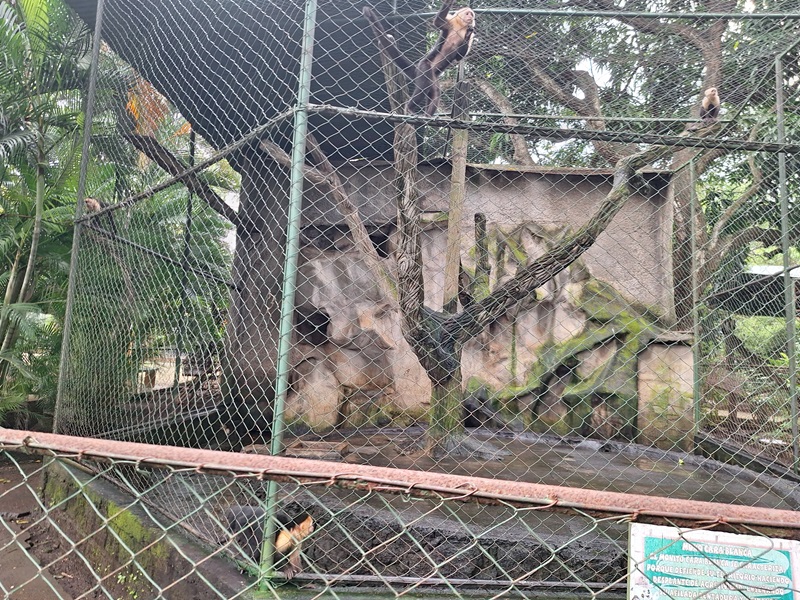
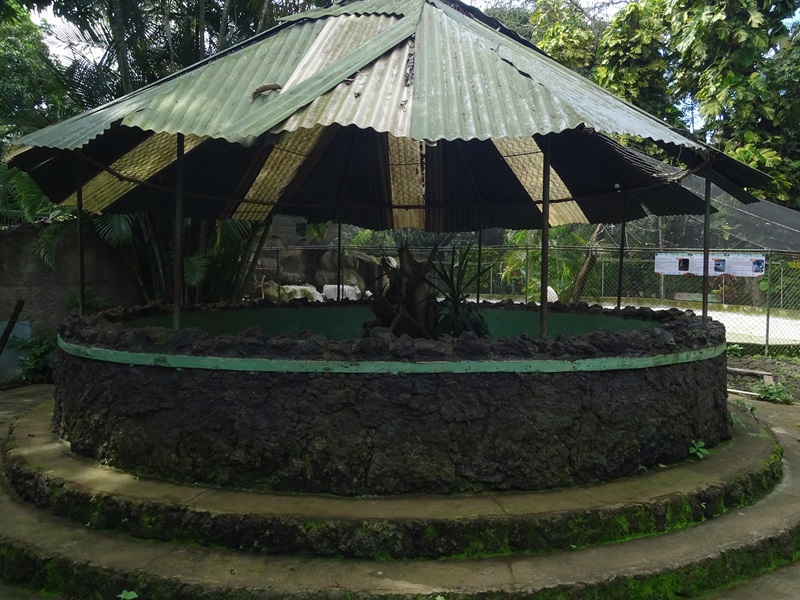
After the birds of prey area is a small area with two enclosures for primates, connected to eachother at the backsides (with the indoor/backstage area) so together they make a circle you can walk around. I checked out the enclosure for white-shouldered capuchins first. Size-wise, the enclosure is decent for a small group of these primates (one of my local zoo keeps them in cage of similar size). However, the enclosure lacks any natural substrate or greenery; it’s completely made up of concrete and mockrock, with just a single fake tree in the middle. This is one of enclosures in the zoo that could be improved immensly with little effort, so it’s a real shame the zoo doesn’t seem to want to take that effort. I guess concrete is easy to clean, so it has the preference.


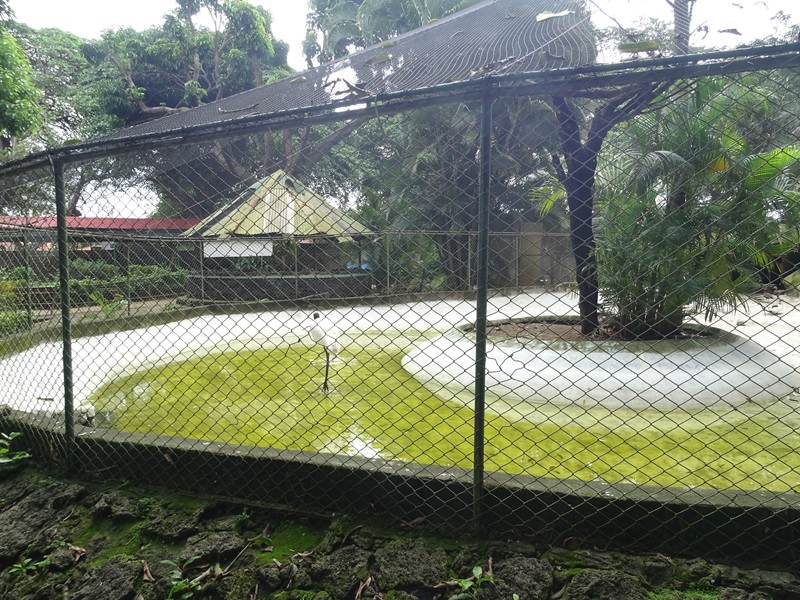
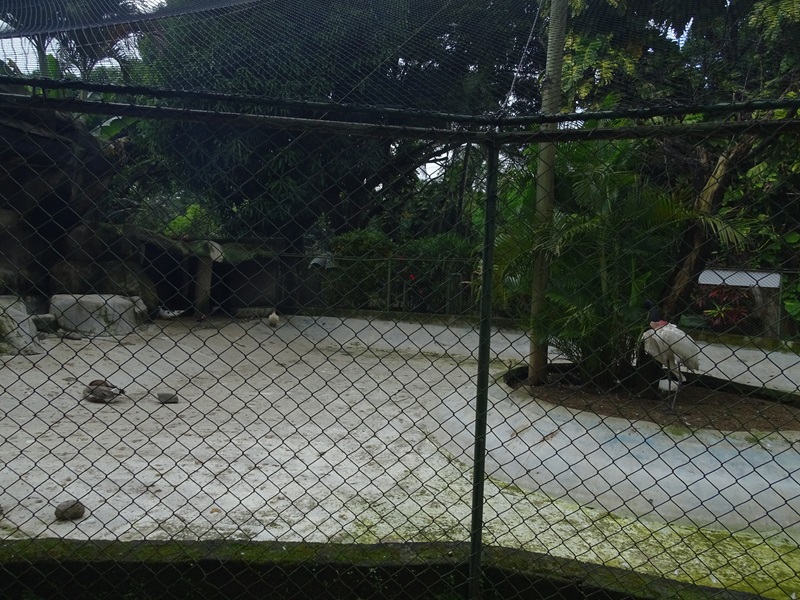
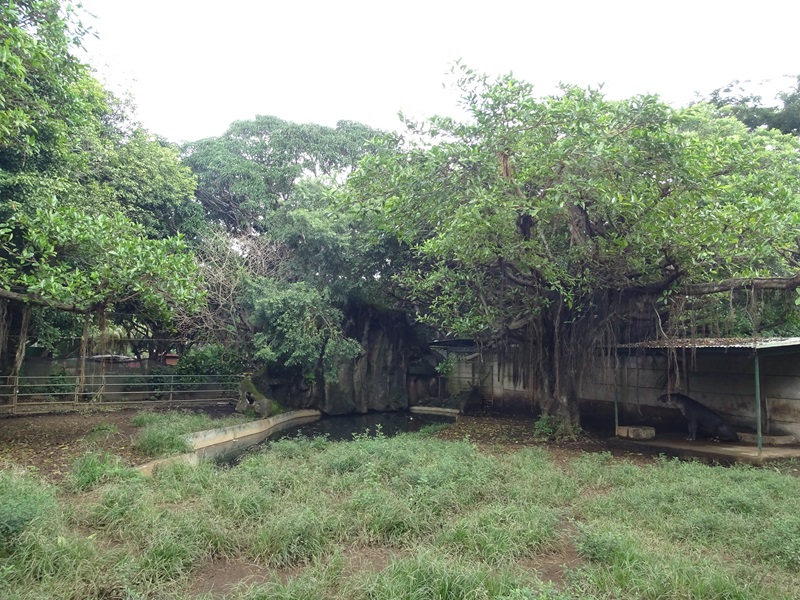
Then I turned around, and when I had my back to the capuchins, I could not believe what I was seeing! Another bad enclosure? No, not this time. It was one the animals inside of this aviary that took me by surprise. A bird species I had never seen before, but always wanted to. A species that lives in Central America, but is very rare there. I species I wouldn’t even imagine seeing until I would visit South America some day… yes, I was really looking at a jabiru! I had no idea this species was kept here (after all, how could I know with the limited information available) so this was a really, really nice surprise. Ofcourse, the excitement of seeing a rare species can be really tempered when it’s kept in terrible conditions. Fortunately, this wasn’t the case here. The aviary was quite spacious, and adequate for a bird of this size. There was of course a large water section, although the water level was currently really low. And however limited, there was at least some natural substrate and foliage. Besides the jabiru, this aviary also houses black-bellied and fulvous whistling ducks, as well as domesticed geese and muscovy ducks.


(The moment I saw the jabiru was the moment I decided to take out my camera. There was a staff member nearby, but there was no way I wasn’t going to take photos of this species! Since the staff member didn’t say anything, I mostly kept my camera out of my bag from that moment onward)

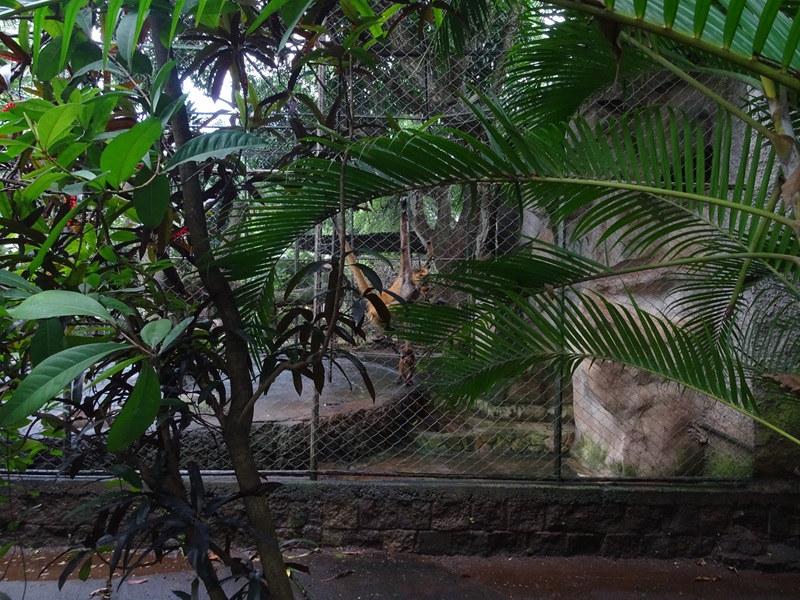
After watching the jabiru for a few minutes, I walked around the capuchin enclosure to view the other monkey enclosure, which houses black-handed spider monkeys. This enclosure was slighty bigger than the capuchin one, but suffered from the same issues regarding a lack of enrichment and natural substrate. The spider monkeys seem to breed here nonetheless evidenced by a youngster in the group.


Across from the monkeys are two enclosures for American crocodiles and pond turtles. The crocodiles have very basic, concrete shallow pools with a decent land area. Nothing great, not terrible. (I forgot to photograph these enclosures.)

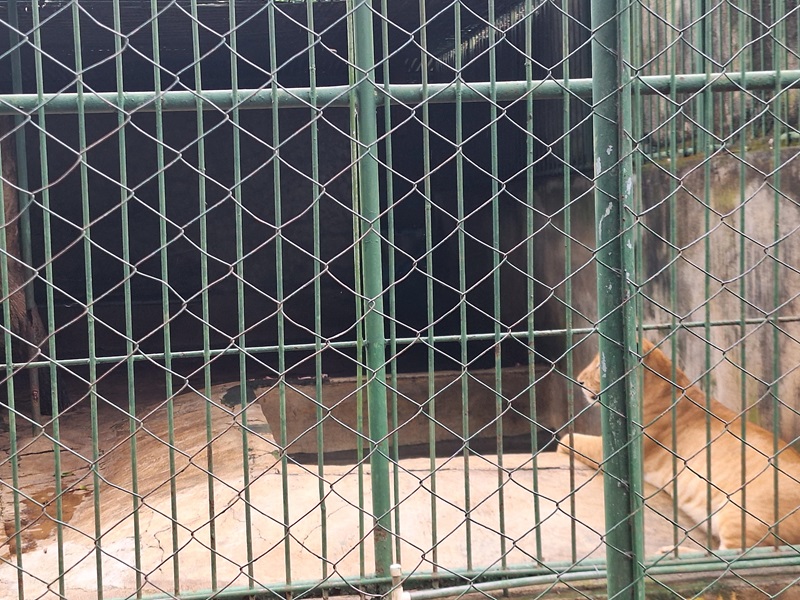
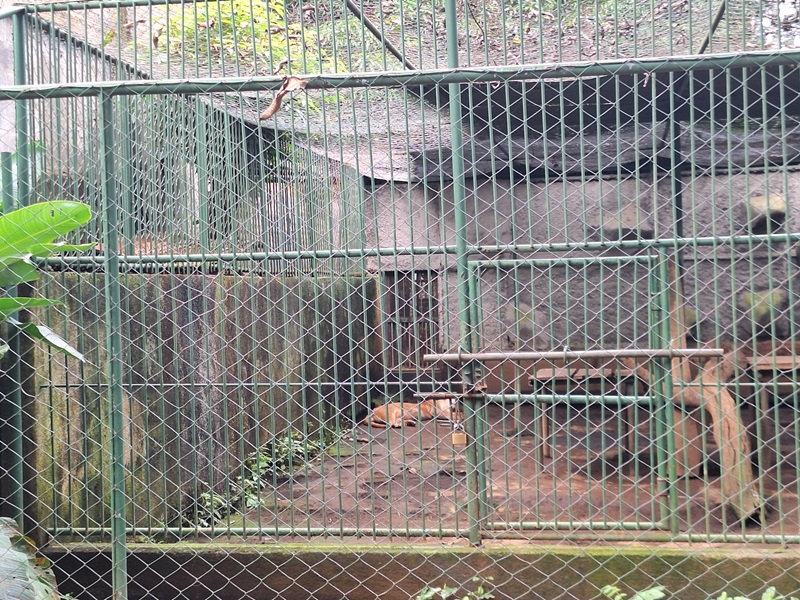
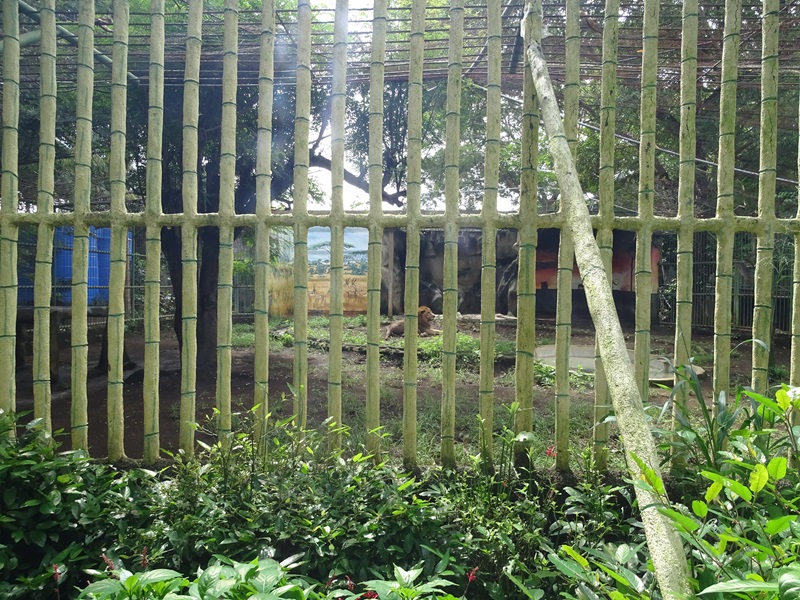
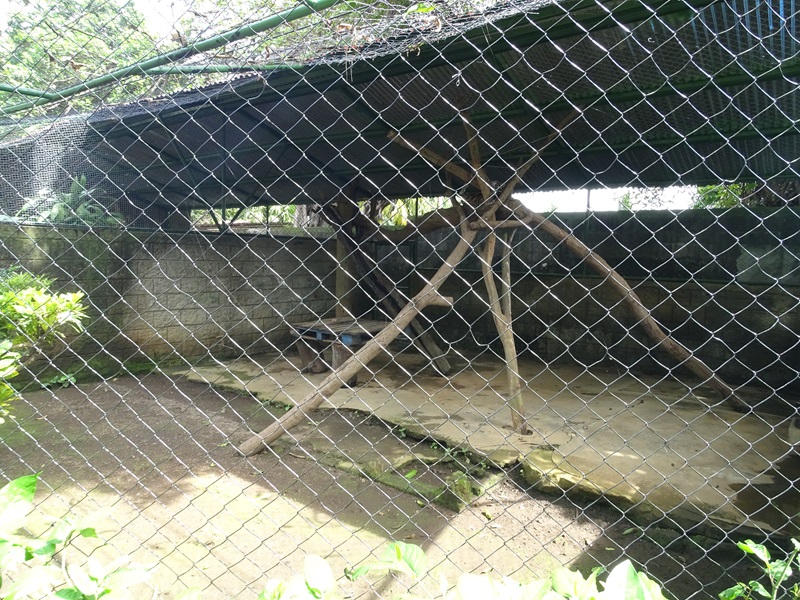
What is terrible though is the row of cat enclosures next to the monkeys/crocodile section. Four extremely tiny, concrete disasters that are completely unacceptable. These are not enclosures, these are prisons for large cats. The first and last enclosure both held a cougar; mesh roof, bars, concrete walls and floors and a small wooden platform to ‘climb’ on. It offers the animals absolutely nothing; all they can do is lay down, or pace two meters back and forth. And still, the other two enclosure were worse; For one, they even lacked the platform. Also, the inhabitants are even larger than cougars, making these cages even more unsuited. In one enclosure lived a female lion (‘African’) and in the other.. a liger. Yes, an actual liger. An animal that shouldn’t even exist, in an enclosure that shouldn’t be allowed. A lot of sadness in this corner of the zoo. A few meters further is another big cat enclosure, this time housing a tiger (‘Bengal’). That one was only a tiny bit larger and slightly less terrible.


(I’m sorry I’m lacking in photographs for this section, but there was another staff member looking at me funny here. A photo of this section from the zoos facebook page: https://tinyurl.com/ye28ju2m )

Next to tigers is a toilet building, with next to that enclosures for sheep (signed as mouflon, which they certaintly weren’t) and goats. Across from that is a large structure that looked like a butterfly garden, but it seemed to be closed.


The path leads to a T-junction with another big cat enclosure right in front of it, home to a male lion (unsigned). This enclosure is about triple the size of the other big cat enclosures and has natural substrate. It;s still not a good enclosure by any means, but it is a lot better compared to the other big cat enclosures.


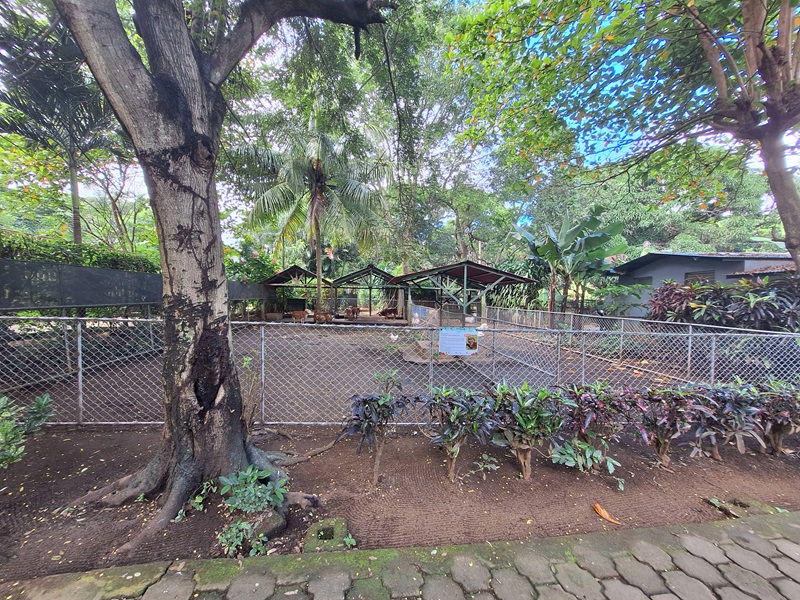
I turned right here, and that takes me to an area that focuses on hoofstock, but the first two species I found here were non-ungulates. First of is an enclosure for a species that I’ve seen only once before; the coyote. Their enclosure is not large, but at least these animals had natural substrate, some vegetation and lots shade due a large tree inside of/above the enclosure. Two employees were working on the roof of the enclosure, and one of the coyotes was locked up in the seperation pen. The other coyote was out though, and looking stressed, pacing along the back fence. Based on the very obvious pacing trail along this fence, this is likely normal behavior for this animal. Forgot to photograph the enclosure.

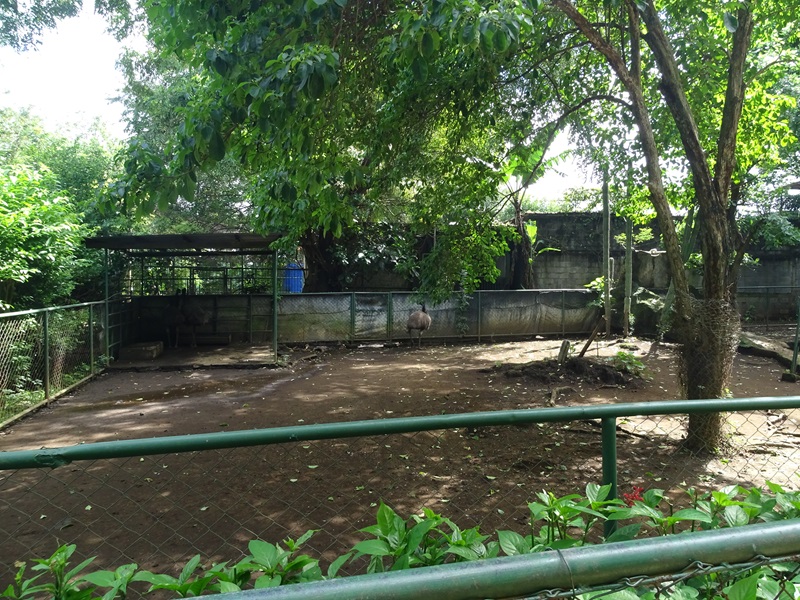
The only Australian species in this zoo is the emu. I saw tree adult birds in a very basic enclosure, and three juveniles in a fenced-off section of said enclosure. The young emus were very curious and kept walking up to the fence whenever people walked by.


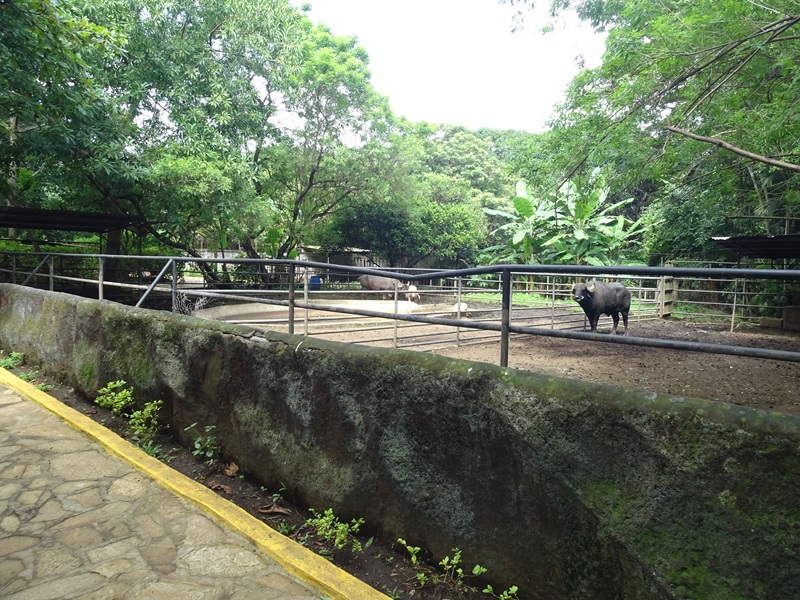
Across from the emus are enclosures for domesticated hoofstock. On one side of the path are donkeys in a very basic enclosure, on the other are water buffalo. The buffalo enclosure is a simply muddy paddock, currently devided into two. A male inhabits one half, a female with calf the other half. The female and calf have access to a shallow concrete pool, the male has nothing but mud.


Next to the emus is a reasonably sized yet overstocked enclosure for white-tailed deer. There was signage warning about the agressive behavior of the buck, and it was indeed following everyone alongside the fence, seemingly ready to attack anyone who would come to close to him or any of his does/fawns. This was only my third zoo where I’ve seen this species, so I enjoyed watching them for a bit before moving on to the next enclosure.


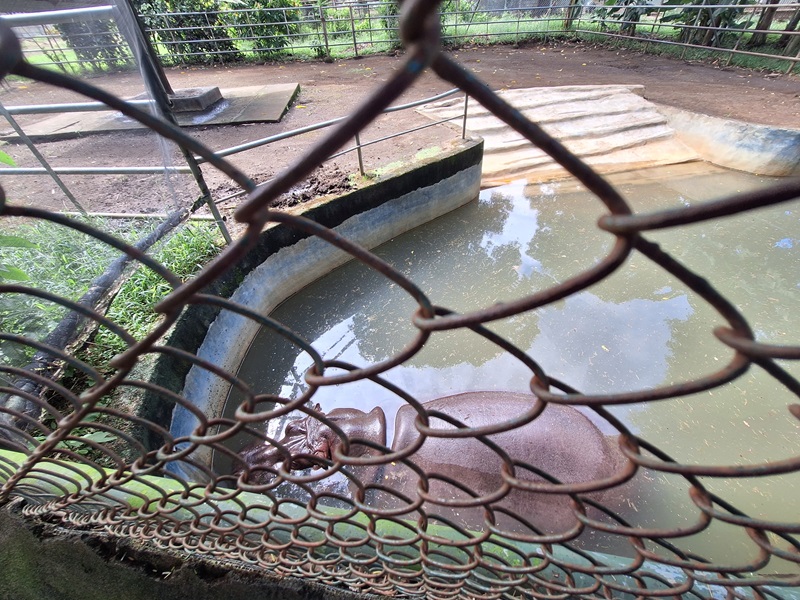
I defenitely did not expect to see a hippopotamus in this zoo, yet there was one. Its enclosure consisted of a small and basic land area, bordered off with a simple iron fence and a shallow concrete pool. At least there was a canvas above the pool to provide some shade for the animal.


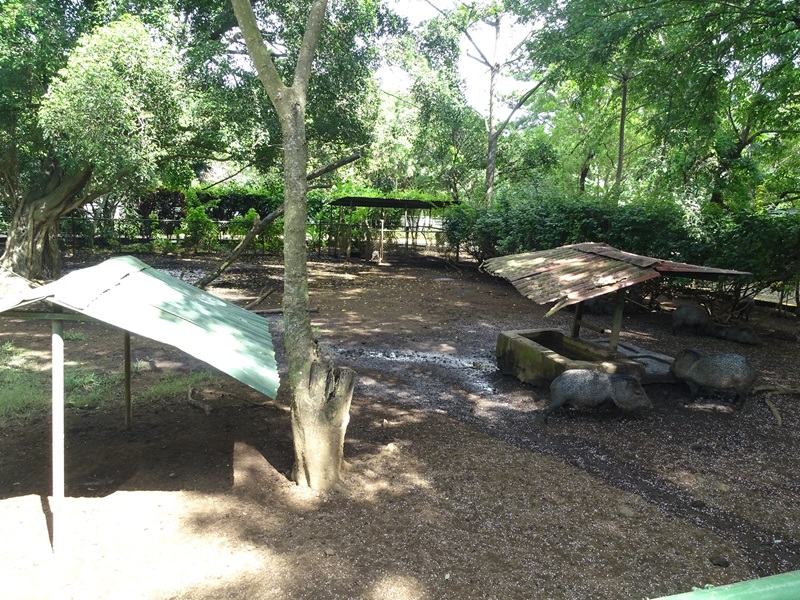
On the other side of the paths are two peccary enclosures. These were basic but decent; natural substrate for digging, some living trees and bushes and a few additional small structures for shade. One of the enclosures is home to a group of collared peccaries, the second to a small group of white-lipped peccaries in addition to another collared peccary.


Starting at the hippo enclosure and ending back at the emus, you can walk around the peccary enclosures. On the outside of this path are no less than 8 (!) enclosures for Bairds tapir. Two of those had a couple, the others all had single individuals. The quality of the enclosures varies, with the best one including a small pool and plenty of shade, and the worst one being small fenced-off plots of muddy land. I had now seen more Bairds tapirs in a time spin 5 minutes than I had seen in my entire life before this. With the tapirs, I had seen the entire ‘hoofstock corner’ and made my way back to the lion enclosure, and took the path in the other direction.


In part 3 (the last part): Can it get worse? Yes.
 
Last edited:
Interesting that they had a Jabiru - possibly a rescue. This species can be seen relatively easily in Costa Rica if you go to the right place (north).
 
Interesting that they had a Jabiru - possibly a rescue. This species can be seen relatively easily in Costa Rica if you go to the right place (north).

Not sure if is a rescue, it might as well be.
Unfortunately I did not visit the northern part of Costa Rica. Perhaps someday, although I'm more likely to visit South America than I am to revisit Costa Rica.


PART 3 (Of 3)

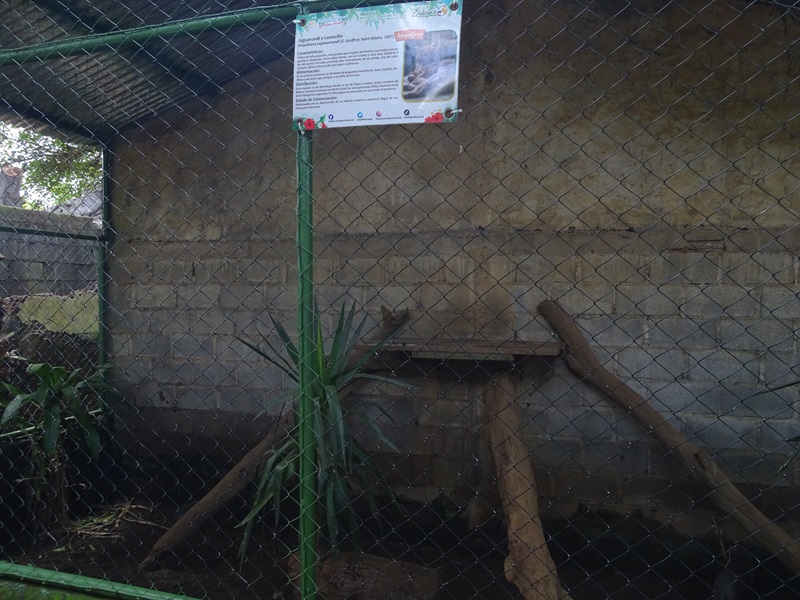
Of course a zoo in Central America is likely to house some jaguars, and this zoo is no exception. Unfortunately, the streak of terrible enclosures continues with two cages for jaguars. Both were small, concrete, barred disasters. One of them had a shallow pond in it, but that’s it. Behind the second cage was a seperation cage with another jaguar in it. This ‘enclosure’ couldn’t have been larger than a few square meters. Absolutely unacceptable. To add insult to injury, there was was an empty, unused plot of land behind the jaguar cages. There is no reason for these enclosures to be so small, expect for saving money on building materials.


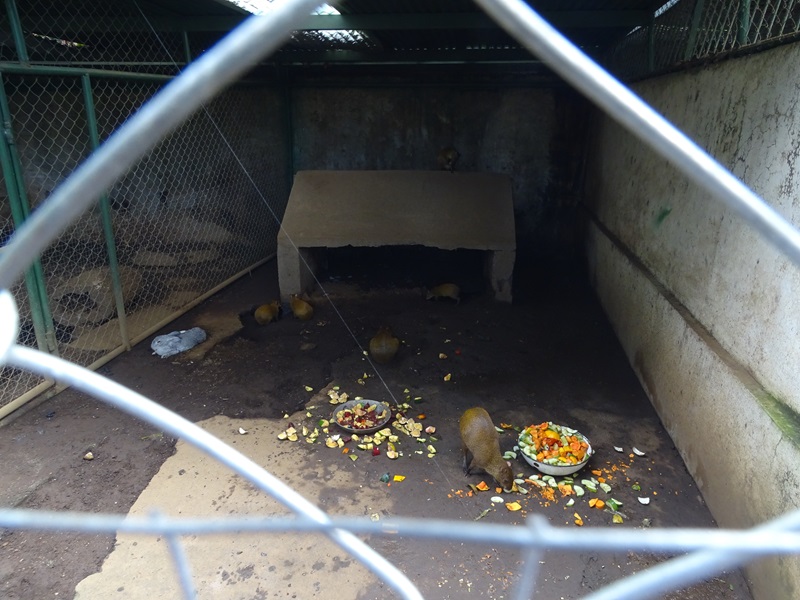
A row of three aviaries/enclosures features Central-American agoutis, domesticated rabbits and great curassows (1.2). These were dark and basic with the only good thing about it being the natural substrate, so the agoutis and rabbits can at least do some grubbing.


A row of three small and basic terraria is up next. Two of them held a boa constictor (one of them a breeding form) and the third one a cascaval. Closeby is a larger terrarium for a Burmese python.


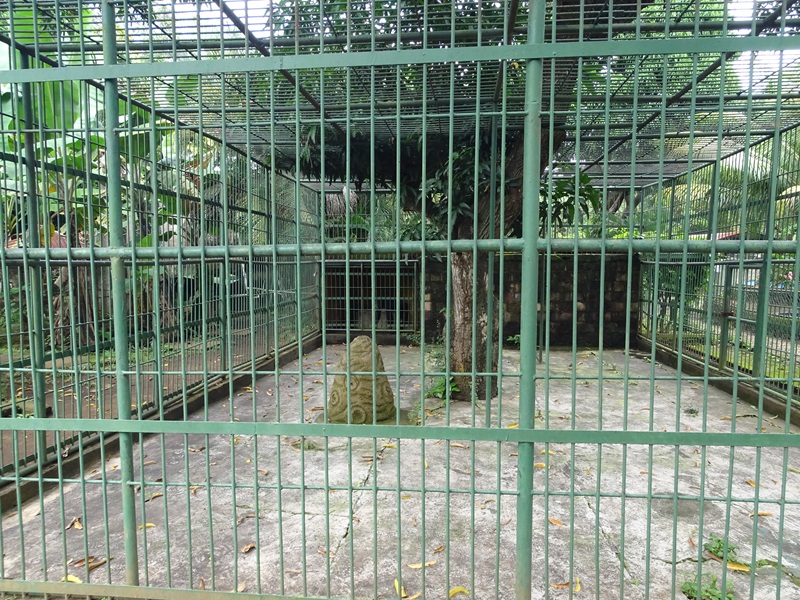
I thought it couldn’t get any worse than the big cat enclosures, but unfortunately I was proven wrong. A very small, concrete-floored, iron-barred cage is home to a single chimpanzee. Inside the enclosure is nothing except a fake, concrete termite mound and a tree that goes through the top of the cage. The tree does not have any branches inside of the enclosure though and therefor offers no climbing. The enclosure lacks any ropes, tires, poles or other structures. It’s an absolute appaling enclosure. To make matters even worse, the chimpanzee even wasn’t allowed access to this enclosure, but was instead locked up in the seperation cage, which is just barely bigger than the ape itself. It’s a complete disagrace and without competition the worst thing I’ve ever seen in a zoo.


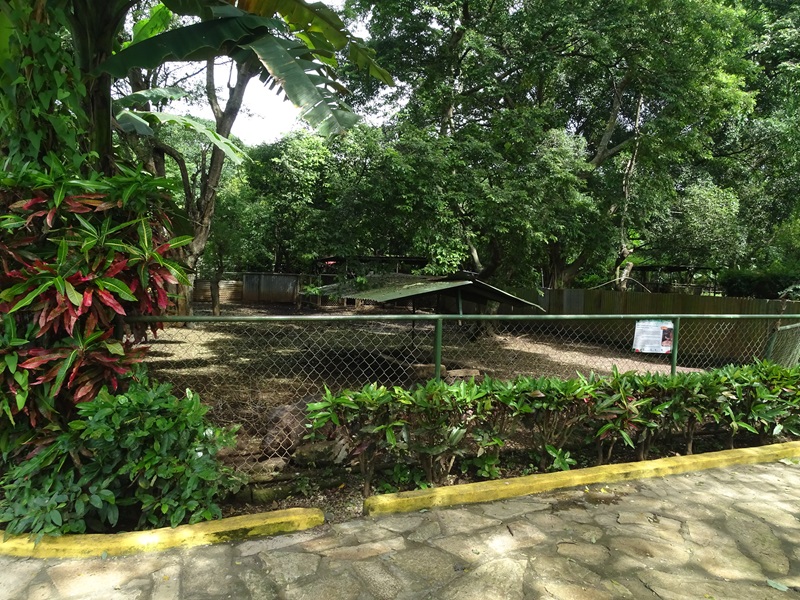
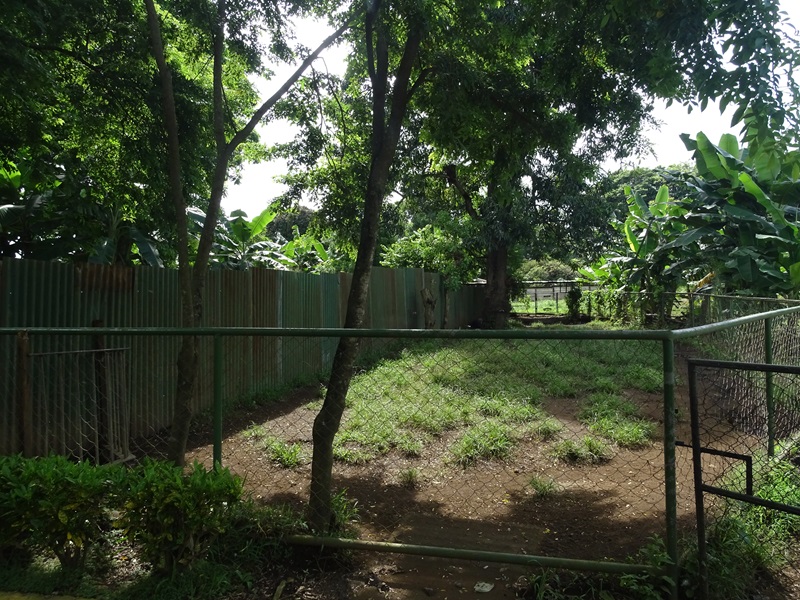
Next to the chimpanzees is an enclosure that currently was not inhabitated. Based on the look of the enclosure, I am quite confident in guessing this enclosure must have housed either sloths or tree porcupines previously (neither species were currently kept in the zoo, at least not on display). I passed an enclosure for furrowed wood turtles that was currently being cleaned by keepers. It’s an open-topped enclosure with a decent land area including living plants, as well as a decent water area. This one is actually not bad. Closeby is another open-topped enclosure for green basilisks. This is actually not bad either. At this point, I had returned to the jabiru aviary, but there was still a pathway to an area I had not yet explored.


The next area focuses on native small mammals/carnivores, starting with a couple of margay. Their enclosure also uses a lot of concrete and is very barren, but at least the space is decent and the cats have lots of shade and an actual climbing stucture! Despite being a lot smaller, these animals had about the same amount of space as the jaguars! Next to the margays is a second enclose for ocelot, and design-wise it’s a lot like the margay enclosure. Not good, but at least it’s not terrible.


The third small cat species present at the zoo (not counting cougar as a small cat) is the jaguarundi. These were currently kept in two enclosures. The first one was nothing special, but at least the space was somewhat acceptable, there was natural substrate as well as a few plants and a small climbing frame. It’s the bare minimum these animals need, but at least here those minimum requirements are met.


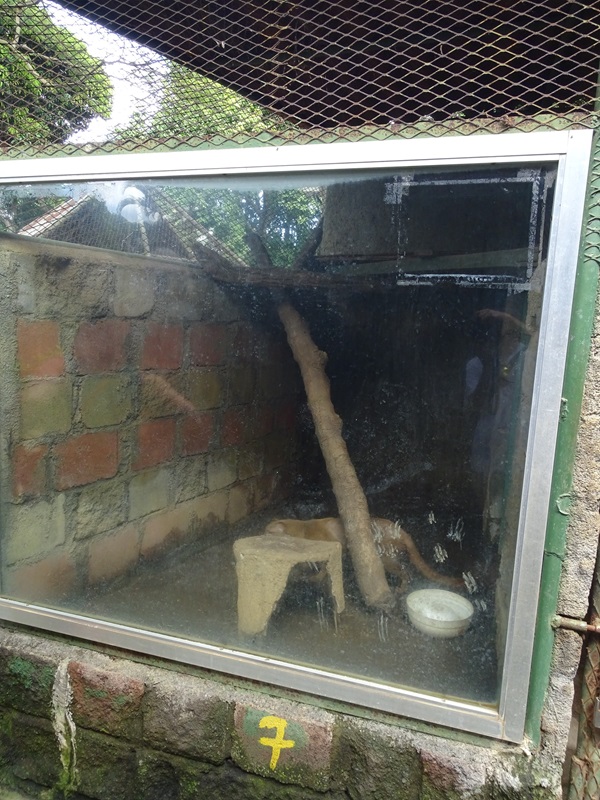
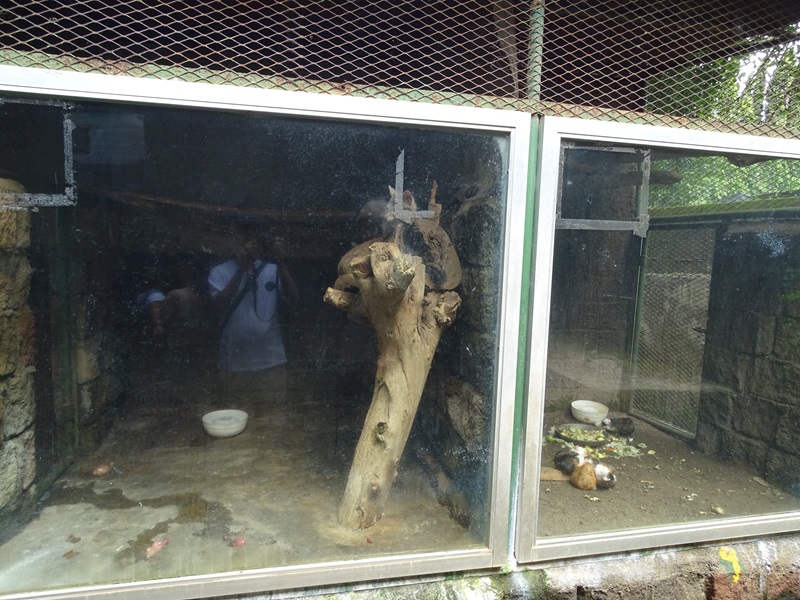
Immediately across from this enclosure though, is the secondary jaguarundi enclosure. Or actually there are three enclosures, with the left one for a single jaguarundi, the middle one for 2 grey foxes (my third time seeing this species) and the last one for a group of guinea pigs. These enclosures are extremely tiny and depressing! They are nothing more than a square box with glass in front, barely big enough for the animals to turn around in. Both the fox and jaguarundi had a log for ‘climbing’, and nothing else, not even a place to hide. Even if these three enclosures would be merged, it would still be a terrible enclosure. Completely unacceptable.


Across from the small cats is a third enclosure for a jaguar. It’s bad, but not as bad as the other two. This one was almost double in size, had mud instead of concrete flooring, and has a small climbing frame. This individual also had access to its (tiny) indoor enclosure, a luxery most other animals did not have.


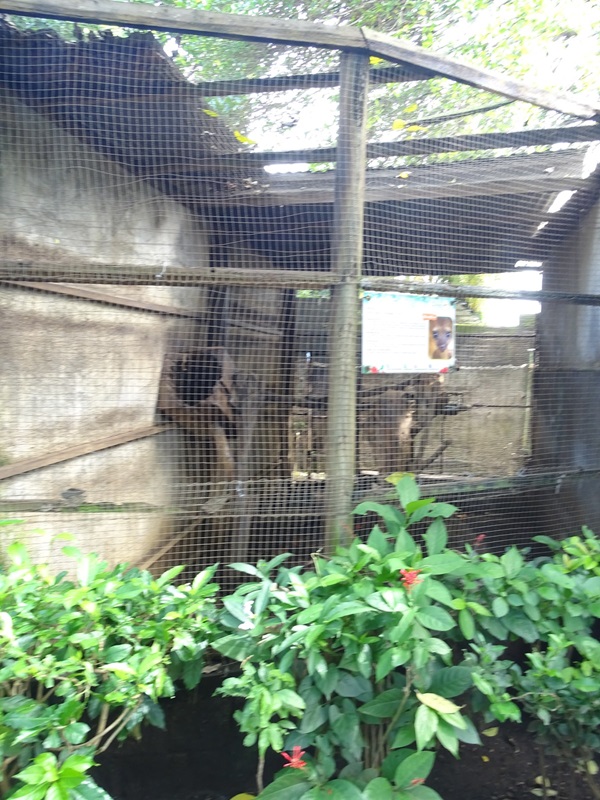
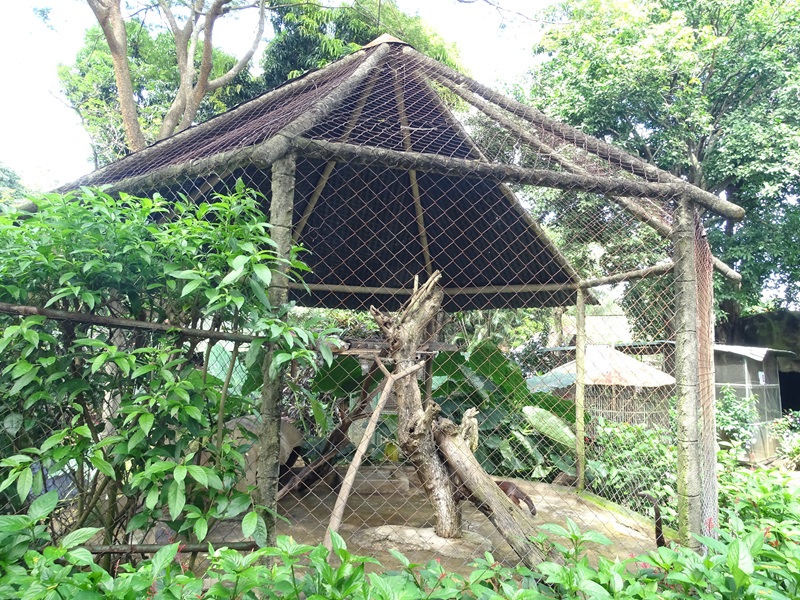
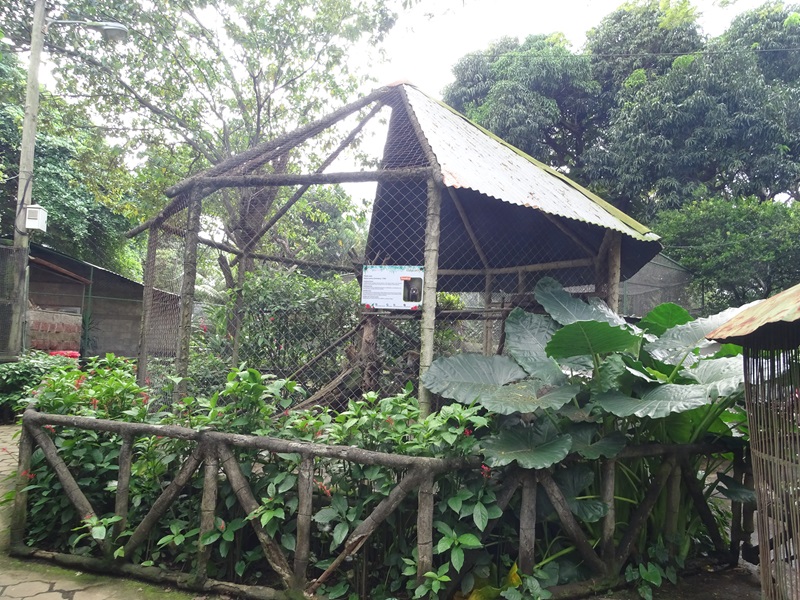
The next mammal in this section is the kinkajou, which lives in a somewhat decent sized yet very barren enclosure. The animals was doing the only thing it could; sleep in its log. Its neighbor is a variegeted squirrel, who has a reasonably large enclosure compared to the rest of the zoo. This row of enclosures ends with another despressing concrete box for raccoons. The final species in the zoo is the white-nosed coati. A group of three inhabits a small, concrete-floored aviary-like enclosure, but at least these animals have access to a reasonable amount of logs and branches for climbing.


I had now returned to the parrot/toucan corner of the zoo, meaning I had seen it all. I have to say, I had a hard time enjoying myself at this zoo. The only positivite thing I got out of this visit, is seeing some rare species I had never seen or seen only a few times before, with the jabiru being an excellent highlight. Enclosure-wise though, there was nothing to like about this zoo. Their best enclosures would qualify as 'decent/mediocre' while their worst are absolutely awful.

Out of the three zoos I visited in Central America, this one is by far the worst. The National Zoo in Costa Rica (which no longer exists) was mediocre, but not terrible. The VallaZoo in Yucatan was better than both. Not great, but acceptable to good on most counts.

To whoever finds themselves in Nicaragua at some point in the future; now you know what you can expect from the National Zoo. Is it worth a visit? Only if you are insisting on seeing the rare species this zoo holds, or if you wanna add another country to your list. But if you are a person that prefers to stay away from zoos with bad animal welfare, do not put this zoo on your itinerary.

Two days after visiting this zoo, I got to visit my first zoo in the USA, the Houston Zoo, which was really good. I only got to be here three hours and had to skip some parts and rush through others, but I had an amazing time here nonetheless.
I don't think I'll do a trip report on it, since this zoo is already well covered on Zoochat and other media.
 
Last edited:
Indeed it can be quite sad to see some of those animals in quite little and dark cages. Sadly you did not see the best exhibit, the "Mariposario". One has to pay extra at the entrance of the Zoo, and can enter the Mariposario at the booked time. At first a video introduction, than the walk trough with the butterflies, and a second part with birds and some fish. Quite nice!
A lot of the zoo animals, like the tigers, are rescued animals, for example from circus, and have been in worse conditions. The male (castrated) lion is from Germany, it was traded for a Margay cat. There is also an offshow area with rescued animals (national species) that are rehabilitated and released.
 
Indeed it can be quite sad to see some of those animals in quite little and dark cages. Sadly you did not see the best exhibit, the "Mariposario". One has to pay extra at the entrance of the Zoo, and can enter the Mariposario at the booked time. At first a video introduction, than the walk trough with the butterflies, and a second part with birds and some fish. Quite nice!

So that is why it appeared closed. I didn't know about this exhibit or that it had to be booked. Then again, the information I was able to gather was limited, as so is my knowledge of the Spanish language.
I am not particulary interested in butterflies (at least not in zoos, I do enjoy seeing them in the wild) but the birds and fishes may have been interesting.

A lot of the zoo animals, like the tigers, are rescued animals, for example from circus, and have been in worse conditions. The male (castrated) lion is from Germany, it was traded for a Margay cat. There is also an offshow area with rescued animals (national species) that are rehabilitated and released.

I'm happy to read about the rehabilitation projects. It's good to know the zoo is actively trying to help the local wildlife.
Of course, the good does not cancel out the bad.
The cats may be 'rescued' from worse conditions, but that does not excuse their current accommodations.
I am aware Nicaragua is one of the least developed countries in Central America and the second poorest country in the Americas, so it's not fair to expect the same quality from their zoos than I would from European zoos.
Still, like I wrote before, there are easy ways to improve quality of life for the animals, for example adding natural substrate or more enchriment. It doesn't have to be a huge investment. Some sand or dirt would work just fine, and that's free! It would add some workload to the staff, but honestly, the staff didn't seem particularly overwhelmed with work.
 
Back
Top