
Modern digital cameras can perform much better in low light situations than their predecessors. This makes it possible to get better photos of animals in Nocturnal Houses. I find that auto white balance works pretty well with my Nikon, if the lighting is dim but covers a fair section of the spectrum. However I find photos taken in exhibits illuminated with red light are less satisfactory.
The first photo in my illustration shows a pygmy slow loris feeding on a log which a keeper had just primed with a liquid sap or gum mixture. It has been been adjusted for basic exposure and cropped, but the colour is unchanged. The second shows a colour corrected version, converted using Capture NX-D, selecting a point on the background as neutral grey (this is not an exact science, the colours are probably not entirely accurate) which turned some liquid drops and highlight in the eye bright purple - I removed these highlights with Photoshop. The third one shows a black and white conversion of the original red image, also created with Photoshop.
I know which one I like best - but I would like to learn the opinions of other ZooChatters. Please enlarge the image and then respond below.
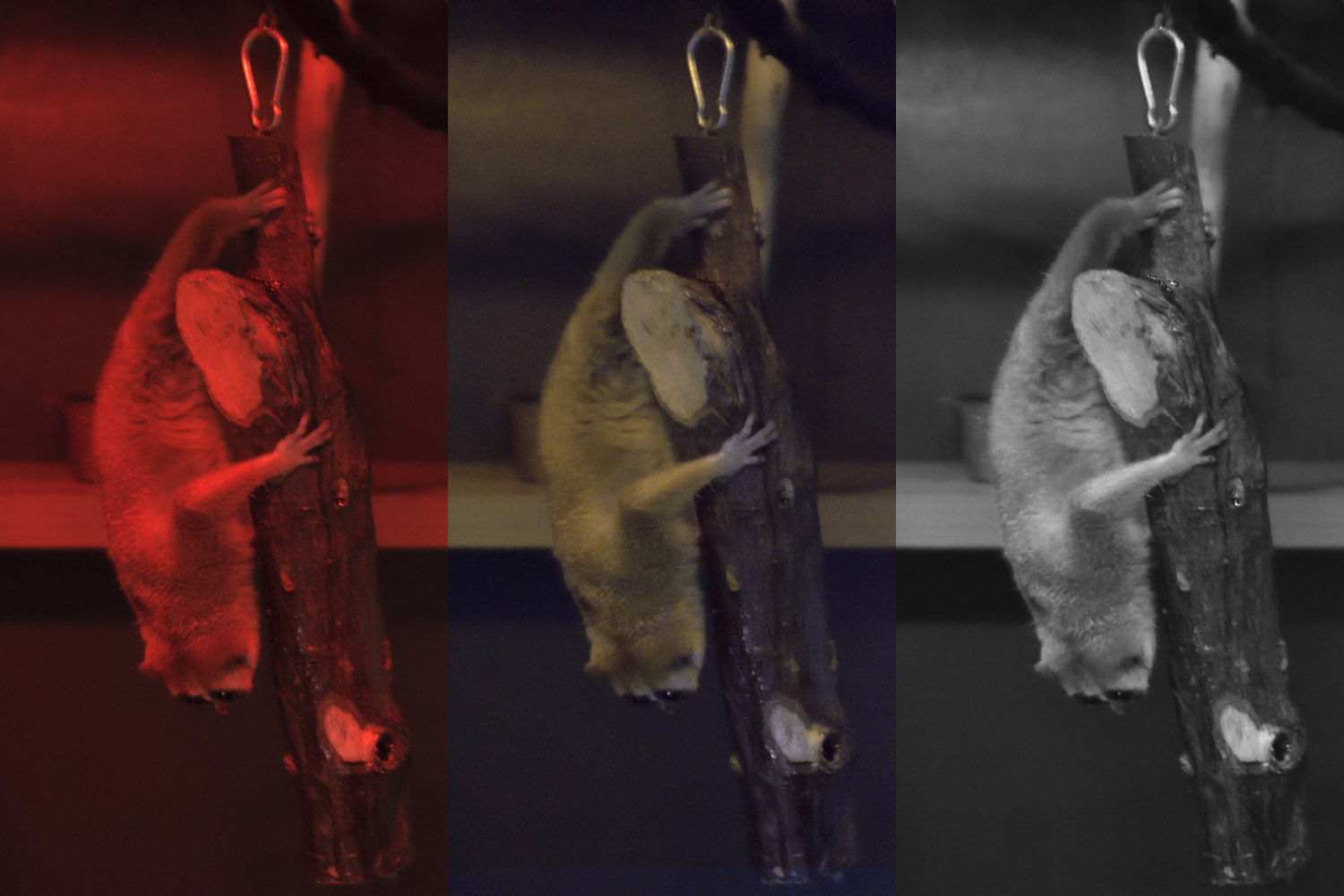
The first photo in my illustration shows a pygmy slow loris feeding on a log which a keeper had just primed with a liquid sap or gum mixture. It has been been adjusted for basic exposure and cropped, but the colour is unchanged. The second shows a colour corrected version, converted using Capture NX-D, selecting a point on the background as neutral grey (this is not an exact science, the colours are probably not entirely accurate) which turned some liquid drops and highlight in the eye bright purple - I removed these highlights with Photoshop. The third one shows a black and white conversion of the original red image, also created with Photoshop.
I know which one I like best - but I would like to learn the opinions of other ZooChatters. Please enlarge the image and then respond below.


