So, another of these "visitor design a zoo of his dreams" threads. I hope zoo direction doesn't mind 
FRANKFURT ZOO TODAY
Frankfurt zoo is an old city zoo. It is surrounded by city buildings, has several existing features which must stay (theater, rhino house, big pond etc), modern exhibits (cat house, gibbon house, Bongori ape house, bird house), planned exhibits (entrance and bear and monkey exhibit, penguin house), good old exhibits (Grzimek house for small mammals) and outdated exhibits (giraffe house, monkey house). I tried to include all these limitations in my plan.
PERSONAL VISION OF FRANKFURT ZOO
I decided, that Frankfurt zoo must continue to keep large, charismatic animals to raise interest among new generation of young people. I noticed that the zoo has space for them when it reduces the number of exhibits and develops some low-value green space. Also, I noticed that although zoo has old, systematic design, it is still possible to create themed zones.
I decided to do four zones: Asian, African, Underwater zone with family-friendly areas and Primates, since logo of Frankfurt zoological society is gorilla.
ASIAN ZONE:
Theater building (1) remains unchanged from today. Newly build entrance and naturalistic exhibit for bears and monkeys (2) is also according to plan. However, species are changed for Asian sun bears and lion-tailed macaques. Unchanged is also cat jungle (3) for Asian lions, tigers, asian golden cats and rusty-spotted cats. Unchanged is also gibbon island (4).
To the south is big difference. The area (5) near the restaurant houses two-humped camels and small children petting zoo with goats and rabbits.
The large area to the south is developed for asian elephants (6). It is ca. 1 ha in size, sufficient to keep these giants. There are old trees there, which stay protected by logs and rocks. The big pond has no ducks anymore, and is divided by underwater fence of metal poles and cable. Southern 2/3 of the pond becomes large bathing pool for elephants. Elephant house (6) houses also komodo dragons. Asian area includes also short-clawed otters in remodeled pelican pond near new Grzimek (7)
UNDERWATER ZONE
This area is themed for water and underwater exhibits. Grzimek house and Exotarium are rebuild and joined together into new Grzimek's exotarium (7).
This complex resembles Oceanium at Rotterdam Zoo, and shows invertebrates, fish, reptiles and small mammals. This brings much needed extra space for animals, and gives opportunity to add new species. The building has two levels underground which are are occupied by aquaria and night exhibits.
Outside it is as high as houses on the nearby Thuringer Strasse. It has up to six floors, with several exhibits tall for 2-3 floors. Its size is hidden because walls are outdoor mammal enclosures overgrown with trees and creeping plants – for eg. small-clawed otters, squirrel monkeys, marmosets and bush dogs.
The upper two floors are covered by glass roof. Under it there is a restaurant with winter garden with butterfiles, hummingbirds and crocodiles. The restaurant is accessible also from Thuringer Strasse outside the zoo, and can be rented for events.
The new building has many large freshwater and saltwater aquaria, and terraria for insects, reptiles and small mammals. Therefore most of animals of current exotarium and Grzimek house remain at the zoo. Night exhibit of kiwi is enlarged and shared with morepork owls. It is themed with tree ferns and moa footprints.
There are also several big multi-species exhibits, each high for 2-3 floors. They include:
-coral reef tank.
- Shark tank with underwater tunnel.
- Enlarged Amazon exhibit. Water part has fish and turtles. Land part is seen from suspended pathway at tree level, and shows iguanas, toucans, parrots, sloths and marmosets on branches around, above and below visitors.
- Several big night exhibits are walk-through halls. One is Australian forest, separated by waist-high glass. It shows echidnas, tree kangaroos, cuscus, some small kangaroo species, water rats, frogmouths and maybe koalas.
- Safari camp of Dr Grzimek is night hall of African savanna. It has tent, fireplace, a jeep and a sound of snoring of sleeping man coming from the tent. On the ground and trees around live aardvarks, porcupines, springhares, bushbabys, flying foxes and white-faced scops owls.
- Asian rainforest at night has a walkway enclosed in thin piano wire. This allows animals to walk over visitors heads. It has slow loris, civets and fruit bats (naturally separated from each other by panes of glass).
- Restaurant on top level opens into glass-covered greenhouse with butterflies, hummingbirds, and crocodiles. It is divided in half by the movable glass partition, so the animal exhibits could be separated from the resturant garden to give animals privacy.
Besides new Grzimek exotarium, underwater zone contains existing pool for seals and fur seals wth underwater viewing (8) and planned penguin exhibit (9). Children zoo (10) is fitted with a fountain with water sprouting from a mouth of river dolphin, to follow the water theme. The animal breeding station is modernized, but remains on the spot. Hunting dogs leave the zoo.
New is exhibit of polar bears (11). It is designed for a breeding pair and can be subdivided into two. It has naturalistic cracked rocks and areas of stones, where keepers can hide food for bears to look for. Ground is mostly grassy, and some columnar “arctic” spruce trees provide shade. There is also large pool with underwater viewing. This exhibit has many viewpoints for visitors – across moats, from the glass panel hidden in rocks, from above in water etc.
Existing bird aviaries (11) and bird house (12) remain unchanged. One of bird aviaries is fitted for auks and waders. Owl aviary near the second entrance has keas.
PRIMATE ZONE
This area illustrates evolution of primates. It begins near the second entrance with walking underground (14). Here we see large night panorama of rainforest at night, with 25m long glass wall, behind which are several exhibits visually looking like one. Inhabitants are mouse lemurs, aye-aye, pygmy loris , night monkeys and probably some non-primate species.
Then visitors go outside to the walk-through area for several diurnal lemurs and tamarins (15). Then the path returns back into the building (14), where primate exhibits can be seen from the ground level, or from the second floor on tree level. There is open walk-through exhibit for tamarins and marmosets.
There are also glass-fronted exhibits for spider monkeys, yellow-breasted capuchins, javan langurs, diana monkeys and possibly howler monkeys, proboscis monkeys or other very rare species. All have outside enclosures. Possibly, some other animals are kept, eg. birds with tamarins, pacas in mixed exhibit with spider monkeys and radiated tortoises with lemurs. Old and very popular rocks for hamadryas baboons near the restaurant remain, but are enlarged, made higher, naturalistic and fitted with natural sandy substrate.
One education topic is monkeys in culture. There are replicas of Egyptian artifacts of baboons, and Asian statues and artifacts related to reverence given to monkeys in cultures of India, China nad Japan. There are also artifacts about a theme of monkeys changing into men, compared with current research on similarities of mind of monkeys and humans. There are also details of ZGAF work to protect Asian primates.
After monkeys, we pass to the existing Bongori house for great apes: orangutans, gorillas and bonobos (16), which remains unchanged.
AFRICAN ZONE:
It began with gorillas and bonobos from Bongori house (16). Old house for rhinos and hippos (17) is protected and cannot be demolished. Therefore it becomes okapi house with larger paddocks. Interior of the building has small visitor area at the entrance, and the rest of the building is turned into okapi area. Only one paddock, divisible into two, the large one next to the public, is visible for visitors. Okapis are viewed inside through glass, and their stall is decorated with artifical tree trunks and green lianas and epiphytes overhead, resembling exhibits of tiger and clouded leopard in cat house. Above okapis live turacos and glossy starlings. The area currently housing hippos is developed for meerkats.
Bird of prey aviaries (18) now house African birds like grey parrots, and possibly small mammal like serval or talapoin monkey. Black rhinos get new paddock and house (19) which they share with banded mongoose. The house inside is naturalistic panorama, decorated with vegetation, based on rhino house in Zurich zoo. Hippos leave the zoo.
Next is the petting zoo with african goats, donkeys and chicken (20). Mhorr gazelles live in the former okapi paddocks (20) which they possibly share with spur-thighed tortoises. Giraffe outside paddock (22) is extended over antelope stalls and becomes shared exhibit with Grevvy zebras and ostriches.
Smaller stalls of giraffe house (23) are made into rocky exhibit which has giraffes as background. Second rocky exhibit for small animals is on the other side of the path. These exhibits are inhabited by klippspringer, dikdik, rock hyrax and fennec fox.
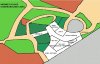
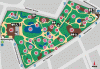
MAP OF FRANKFURT ZOO TODAY
1. Zoo society house. 2. New entrance, bears under construction, 3. Cat jungle: Asian lion, tiger, fossa, rusty-spotted cat. 4. Gibbon house. 5. Grzimek house: small mammals, night house. 6. Exotarium: fish, invertebrates, amphibians, reptiles. 7. Takins and wallabies. 8. Children playground, kea, breeding station. 9. hunting dogs, 10. sable antelope, ostrich, Grzimek exhibition. 11. Aviaries, 12. Bird house. 13. Owls. 14. Meerkats, 15. Monkey house, 16. Borgori house (apes). 17. Rhino house.
18. Birds of prey. 19. Babirussa, cassowaries. 20. Red-crowned cranes. 21. Flamingos. 22. seals and fur seals. 23. Alapcas. 24. Pelicans, 25. pond and meadow. 26. Camels. 27. Petting zoo. 28. Grevy zebras. 29. Giraffes. 30. Okapi. 31. Mhorr gazelles, bongo. 32. Maned wolves. 33. Vicugna, mara, rhea, capbara. Image zoofrankfurt.de, I hope using it is OK since it is downloadable for the public.
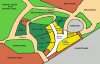
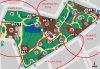
MAP OF THE PERSONAL VISION OF FRANKFURT ZOO
ASIAN ZONE:
1. Theater building. 2. New entrance, sun bears, lion-tailed macaques. 3. Cat jungle . 4. Gibbons. 5. Camels, pygmy goats. 6. Asian elephants, komodo dragons.
UNDERWATER ZONE
7. Grzimek's exotarium: butterflies, fish, amphibians, reptiles, small mammals. 8. Common seals, fur seals. 9. Penguins. 10. Dolphin fountain, children zoo, breeding station. 11. Polar bears. 12. Aviaries. 13. Bird house.
PRIMATE ZONE
14. Lemur and monkey house. 15. Walk-through lemurs. 16. Bongori Wald: apes.
AFRICAN ZONE:
17. Okapis, meerkats. 18. African birds. 19. Black rhinos, zebra mongoose. 20. Petting zoo. 21. Mhorr gazelles, spurred tortoises. 22. Giraffe, Grevvy zebra, ostrich. 23. Klippspringer, dikdik, rock hyrax, fennec fox.
FRANKFURT ZOO TODAY
Frankfurt zoo is an old city zoo. It is surrounded by city buildings, has several existing features which must stay (theater, rhino house, big pond etc), modern exhibits (cat house, gibbon house, Bongori ape house, bird house), planned exhibits (entrance and bear and monkey exhibit, penguin house), good old exhibits (Grzimek house for small mammals) and outdated exhibits (giraffe house, monkey house). I tried to include all these limitations in my plan.
PERSONAL VISION OF FRANKFURT ZOO
I decided, that Frankfurt zoo must continue to keep large, charismatic animals to raise interest among new generation of young people. I noticed that the zoo has space for them when it reduces the number of exhibits and develops some low-value green space. Also, I noticed that although zoo has old, systematic design, it is still possible to create themed zones.
I decided to do four zones: Asian, African, Underwater zone with family-friendly areas and Primates, since logo of Frankfurt zoological society is gorilla.
ASIAN ZONE:
Theater building (1) remains unchanged from today. Newly build entrance and naturalistic exhibit for bears and monkeys (2) is also according to plan. However, species are changed for Asian sun bears and lion-tailed macaques. Unchanged is also cat jungle (3) for Asian lions, tigers, asian golden cats and rusty-spotted cats. Unchanged is also gibbon island (4).
To the south is big difference. The area (5) near the restaurant houses two-humped camels and small children petting zoo with goats and rabbits.
The large area to the south is developed for asian elephants (6). It is ca. 1 ha in size, sufficient to keep these giants. There are old trees there, which stay protected by logs and rocks. The big pond has no ducks anymore, and is divided by underwater fence of metal poles and cable. Southern 2/3 of the pond becomes large bathing pool for elephants. Elephant house (6) houses also komodo dragons. Asian area includes also short-clawed otters in remodeled pelican pond near new Grzimek (7)
UNDERWATER ZONE
This area is themed for water and underwater exhibits. Grzimek house and Exotarium are rebuild and joined together into new Grzimek's exotarium (7).
This complex resembles Oceanium at Rotterdam Zoo, and shows invertebrates, fish, reptiles and small mammals. This brings much needed extra space for animals, and gives opportunity to add new species. The building has two levels underground which are are occupied by aquaria and night exhibits.
Outside it is as high as houses on the nearby Thuringer Strasse. It has up to six floors, with several exhibits tall for 2-3 floors. Its size is hidden because walls are outdoor mammal enclosures overgrown with trees and creeping plants – for eg. small-clawed otters, squirrel monkeys, marmosets and bush dogs.
The upper two floors are covered by glass roof. Under it there is a restaurant with winter garden with butterfiles, hummingbirds and crocodiles. The restaurant is accessible also from Thuringer Strasse outside the zoo, and can be rented for events.
The new building has many large freshwater and saltwater aquaria, and terraria for insects, reptiles and small mammals. Therefore most of animals of current exotarium and Grzimek house remain at the zoo. Night exhibit of kiwi is enlarged and shared with morepork owls. It is themed with tree ferns and moa footprints.
There are also several big multi-species exhibits, each high for 2-3 floors. They include:
-coral reef tank.
- Shark tank with underwater tunnel.
- Enlarged Amazon exhibit. Water part has fish and turtles. Land part is seen from suspended pathway at tree level, and shows iguanas, toucans, parrots, sloths and marmosets on branches around, above and below visitors.
- Several big night exhibits are walk-through halls. One is Australian forest, separated by waist-high glass. It shows echidnas, tree kangaroos, cuscus, some small kangaroo species, water rats, frogmouths and maybe koalas.
- Safari camp of Dr Grzimek is night hall of African savanna. It has tent, fireplace, a jeep and a sound of snoring of sleeping man coming from the tent. On the ground and trees around live aardvarks, porcupines, springhares, bushbabys, flying foxes and white-faced scops owls.
- Asian rainforest at night has a walkway enclosed in thin piano wire. This allows animals to walk over visitors heads. It has slow loris, civets and fruit bats (naturally separated from each other by panes of glass).
- Restaurant on top level opens into glass-covered greenhouse with butterflies, hummingbirds, and crocodiles. It is divided in half by the movable glass partition, so the animal exhibits could be separated from the resturant garden to give animals privacy.
Besides new Grzimek exotarium, underwater zone contains existing pool for seals and fur seals wth underwater viewing (8) and planned penguin exhibit (9). Children zoo (10) is fitted with a fountain with water sprouting from a mouth of river dolphin, to follow the water theme. The animal breeding station is modernized, but remains on the spot. Hunting dogs leave the zoo.
New is exhibit of polar bears (11). It is designed for a breeding pair and can be subdivided into two. It has naturalistic cracked rocks and areas of stones, where keepers can hide food for bears to look for. Ground is mostly grassy, and some columnar “arctic” spruce trees provide shade. There is also large pool with underwater viewing. This exhibit has many viewpoints for visitors – across moats, from the glass panel hidden in rocks, from above in water etc.
Existing bird aviaries (11) and bird house (12) remain unchanged. One of bird aviaries is fitted for auks and waders. Owl aviary near the second entrance has keas.
PRIMATE ZONE
This area illustrates evolution of primates. It begins near the second entrance with walking underground (14). Here we see large night panorama of rainforest at night, with 25m long glass wall, behind which are several exhibits visually looking like one. Inhabitants are mouse lemurs, aye-aye, pygmy loris , night monkeys and probably some non-primate species.
Then visitors go outside to the walk-through area for several diurnal lemurs and tamarins (15). Then the path returns back into the building (14), where primate exhibits can be seen from the ground level, or from the second floor on tree level. There is open walk-through exhibit for tamarins and marmosets.
There are also glass-fronted exhibits for spider monkeys, yellow-breasted capuchins, javan langurs, diana monkeys and possibly howler monkeys, proboscis monkeys or other very rare species. All have outside enclosures. Possibly, some other animals are kept, eg. birds with tamarins, pacas in mixed exhibit with spider monkeys and radiated tortoises with lemurs. Old and very popular rocks for hamadryas baboons near the restaurant remain, but are enlarged, made higher, naturalistic and fitted with natural sandy substrate.
One education topic is monkeys in culture. There are replicas of Egyptian artifacts of baboons, and Asian statues and artifacts related to reverence given to monkeys in cultures of India, China nad Japan. There are also artifacts about a theme of monkeys changing into men, compared with current research on similarities of mind of monkeys and humans. There are also details of ZGAF work to protect Asian primates.
After monkeys, we pass to the existing Bongori house for great apes: orangutans, gorillas and bonobos (16), which remains unchanged.
AFRICAN ZONE:
It began with gorillas and bonobos from Bongori house (16). Old house for rhinos and hippos (17) is protected and cannot be demolished. Therefore it becomes okapi house with larger paddocks. Interior of the building has small visitor area at the entrance, and the rest of the building is turned into okapi area. Only one paddock, divisible into two, the large one next to the public, is visible for visitors. Okapis are viewed inside through glass, and their stall is decorated with artifical tree trunks and green lianas and epiphytes overhead, resembling exhibits of tiger and clouded leopard in cat house. Above okapis live turacos and glossy starlings. The area currently housing hippos is developed for meerkats.
Bird of prey aviaries (18) now house African birds like grey parrots, and possibly small mammal like serval or talapoin monkey. Black rhinos get new paddock and house (19) which they share with banded mongoose. The house inside is naturalistic panorama, decorated with vegetation, based on rhino house in Zurich zoo. Hippos leave the zoo.
Next is the petting zoo with african goats, donkeys and chicken (20). Mhorr gazelles live in the former okapi paddocks (20) which they possibly share with spur-thighed tortoises. Giraffe outside paddock (22) is extended over antelope stalls and becomes shared exhibit with Grevvy zebras and ostriches.
Smaller stalls of giraffe house (23) are made into rocky exhibit which has giraffes as background. Second rocky exhibit for small animals is on the other side of the path. These exhibits are inhabited by klippspringer, dikdik, rock hyrax and fennec fox.
MAP OF FRANKFURT ZOO TODAY
1. Zoo society house. 2. New entrance, bears under construction, 3. Cat jungle: Asian lion, tiger, fossa, rusty-spotted cat. 4. Gibbon house. 5. Grzimek house: small mammals, night house. 6. Exotarium: fish, invertebrates, amphibians, reptiles. 7. Takins and wallabies. 8. Children playground, kea, breeding station. 9. hunting dogs, 10. sable antelope, ostrich, Grzimek exhibition. 11. Aviaries, 12. Bird house. 13. Owls. 14. Meerkats, 15. Monkey house, 16. Borgori house (apes). 17. Rhino house.
18. Birds of prey. 19. Babirussa, cassowaries. 20. Red-crowned cranes. 21. Flamingos. 22. seals and fur seals. 23. Alapcas. 24. Pelicans, 25. pond and meadow. 26. Camels. 27. Petting zoo. 28. Grevy zebras. 29. Giraffes. 30. Okapi. 31. Mhorr gazelles, bongo. 32. Maned wolves. 33. Vicugna, mara, rhea, capbara. Image zoofrankfurt.de, I hope using it is OK since it is downloadable for the public.
MAP OF THE PERSONAL VISION OF FRANKFURT ZOO
ASIAN ZONE:
1. Theater building. 2. New entrance, sun bears, lion-tailed macaques. 3. Cat jungle . 4. Gibbons. 5. Camels, pygmy goats. 6. Asian elephants, komodo dragons.
UNDERWATER ZONE
7. Grzimek's exotarium: butterflies, fish, amphibians, reptiles, small mammals. 8. Common seals, fur seals. 9. Penguins. 10. Dolphin fountain, children zoo, breeding station. 11. Polar bears. 12. Aviaries. 13. Bird house.
PRIMATE ZONE
14. Lemur and monkey house. 15. Walk-through lemurs. 16. Bongori Wald: apes.
AFRICAN ZONE:
17. Okapis, meerkats. 18. African birds. 19. Black rhinos, zebra mongoose. 20. Petting zoo. 21. Mhorr gazelles, spurred tortoises. 22. Giraffe, Grevvy zebra, ostrich. 23. Klippspringer, dikdik, rock hyrax, fennec fox.

 , how did you creat your map?