I figured this would sort of fit in here, but as I said a couple of posts up, I have been watching through every single Dorling Kindersley Vision show I can find. As part of that, I noted down all the animals included in each episode and divided them up into studio species (animals filmed, mostly in a studio, but rarely also on location) and stock species (animals that appear via stock footage from other programmes - the differences between animals filmed on location and those appearing via stock footage are fairly obvious).
I have managed to see 107 out of the 114 episodes in full, across the four different programmes:
- See How They Grow (8 of 10)
- Eyewitness (39 of 39)
- Amazing Animals (52 of 52)
- Creatures Fantastic (8 of 13)
I figured I would share some figures about the number of species that appear in the shows. I have tried to identify as many species as possible but, courtesy of not knowing the sources of some stock footage, many smaller animals such as insects and some frogs and fishes remain unidentified.
At least 320 species appear that were filmed in the studio. At least 63 appear in See How They Grow, 204 in Eyewitness, 186 in Amazing Animals and at least 21 in Creatures Fantastic. The ten most common studio species, in order, are:
- Domestic dog (38 appearances)
- European rabbit (25 appearances)
- Domestic cat (25 appearances)
- Mallard (20 appearances)
- House mouse (16 appearances)
- Domestic chicken (14 appearances)
- Domestic horse (14 appearances)
- Brown rat (12 appearances)
- Imperial scorpion (11 appearances)
- Tiger (11 appearances)
At least 1,371 species appear via stock footage. See How They Grow has none, being the only programme relying entirely on studio footage, Eyewitness has 887, Amazing Animals has 815 and Creatures Fantastic has at least 83 species. The most common stock footage species, in order, are:
- Blue wildebeest (25 appearances)
- Lion (24 appearances)
- Plains zebra (24 appearances)
- African bush elephant (23 appearances)
- Cheetah (22 appearances)
- Domestic horse (21 appearances)
- Grey wolf (18 appearances)
- Chimpanzee (17 appearances)
- Masai giraffe (17 appearances)
- Domestic dog (16 appearances)
- Nile crocodile (16 appearances)
When both filming methods are combined, the number of species that appear by studio footage, stock footage or a combination of the two is 1,495. The most common species to appear across the programmes, by any means, are:
- Domestic dog (44 appearances)
- Domestic cat (32 appearances)
- Lion (30 appearances)
- Domestic horse (29 appearances)
- European rabbit (29 appearances)
- African bush elephant (27 appearances)
- Plains zebra (27 appearances)
- Blue wildebeest (25 appearances)
- Cheetah (23 appearances)
- Mallard (23 appearances)
So, onto the programmes themselves, to see how they performed individually.
4. See How They Grow has the fewest number of animals so far identified, with 63 species.
The low number of species is not entirely surprising. Some episodes, such as 'Pets', contain only their title species (so the entire 40-minute programme only contains domestic dog and cat, budgerigar and common goldfish). A total of 7 species appear only in See How They Grow (the Amazon tree boa, Cunningham's skink and 5 species of invertebrate).
One episode that would add a lot of new species is 'Sea Animals', which appears to have been filmed in a UK public aquarium (many species are fairly standard native aquaria fare, such as smooth-hounds, brill and gilt-head bream). Although this episode is available online in its US release format, I find the narration so ghastly that it is hard to watch and I also know, courtesy of seeing the UK version when I was younger, that the US release is not the complete episode. One episode, 'Tree Animals', has not been uploaded online and I have also never seen it for sale before.
3. Creatures Fantastic has the second lowest species total, with 76 species.
This is not so surprising, considering the series' focus on mythology. Even so, a total of 14 species only appear in Creatures Fantastic among the DK Vision media (including the leopard cat, European wildcat and Asiatic golden cat).
I am still missing five episodes from this series. I imagine some, like 'Creatures of the Deep' and 'Birds and Things with Wings' will add a number more animals to the series total. I don't imagine 'Mythical Horses' will add much, while 'Man Beasts' and 'Tricky Tricksters' are a mystery - the series does have a knack for surprising with animal numbers. I did not, for instance, expect that 'The Underworld' episode would have had 18 different species shown in it.
2. Amazing Animals has a very respectable total of 870 species.
Well over half of the species in Amazing Animals, a total of 469, do not appear in any of the other three programmes. These include some well-known and charismatic species like the black rhinoceros, blue whale, warthog and Central American spider monkey, as well as more unusual animals including the ground pangolin, mountain beaver, giant forest hog and Las Cajas water mouse.
One reason why Amazing Animals has so many unique animals is that, rather than being made partly by the BBC like the other three programmes, it was partly made by Partridge Films. That opens up a whole range of stock footage sources unavailable to the other three programmes.
1. Eyewitness has the runaway lead species total, with at least 951 different animal species appearing in it.
This total is even more impressive when it is remembered that some episodes (Planets and Human Machine most notably) have hardly any animals in them at all, and Eyewitness has one less season than Amazing Animals.
A total of 432 species only appeared in Eyewitness, including several species of bear (the sun, sloth and Asiatic black), aye-aye, Indian rhinoceros and several species of shark, including the tiger, sand tiger and great white sharks.
---
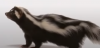
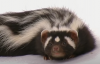
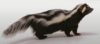
As for the zorilla specifically, it appears as moving footage (rather than still images) in five episodes - as studio footage it appears in Mammal (Eyewitness) and Animal Senses and Poisonous Animals (Amazing Animals), while it also appears in Nighttime Animals and Animal Colors (also Amazing Animals) as stock footage.