It was a wonderful surprise to find out there was a small, twenty-eight acre somewhat obscure zoo located between my hometown of Chicago and Milwaukee, a city which I was very familiar with from childhood. After an earlier aborted attempt to visit, I finally made a visit to the Racine Zoo on Thursday October 19, 2023, though during off-season and at the time of the zoo’s annual Halloween Jack O’ Lantern walkthrough season. I also made a subsequent visit on May 24, 2024, which allowed me to revisit much of the facility and see two exhibits missed on the previous visit.
All images are my own unless otherwise stated. Direct links provided in case they do not display in the post correctly. I have split the review into two to accommodate the number of images.
Although the facility is a small one, I still find it useful to go exhibit by exhibit.
(direct link)
Entrance and Zootique
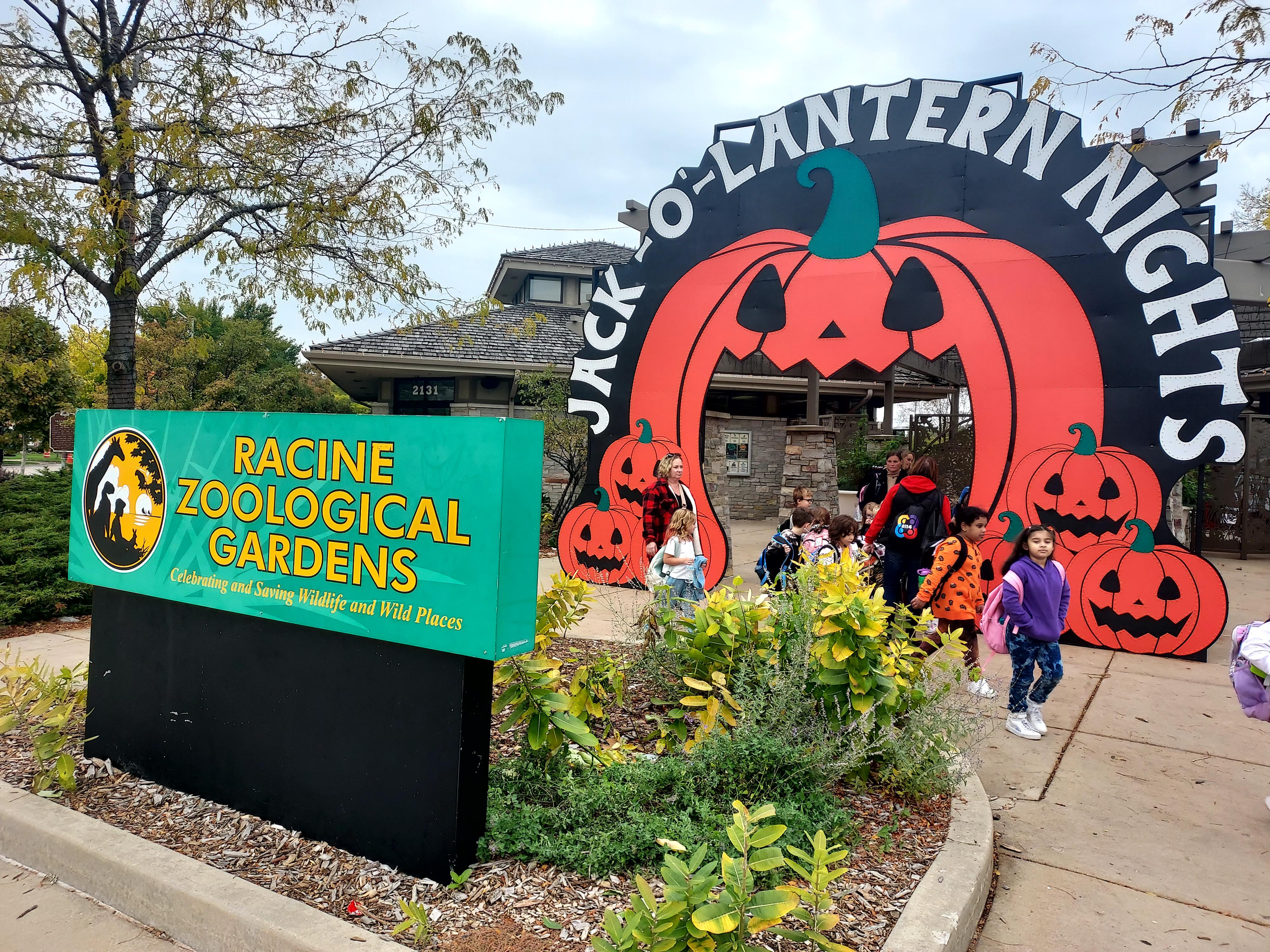
The entrance to the facility is on a street corner overlooking Lake Michigan directly, and is where two of the main buildings are located. The entrance building is also the zoo’s main gift shop, also known as the Zootique. An admissions window faces outward from the register counter. The employee working was friendly and knowledgeable about the facility and happy to answer questions, and the shop itself is fairly well-stocked with a wide variety of merchandise. In addition, a small indoor habitat in the corner of the shop holds different animals depending on the season. While the small exhibit is not immersive, it does have natural substrate, windows and vertical space.
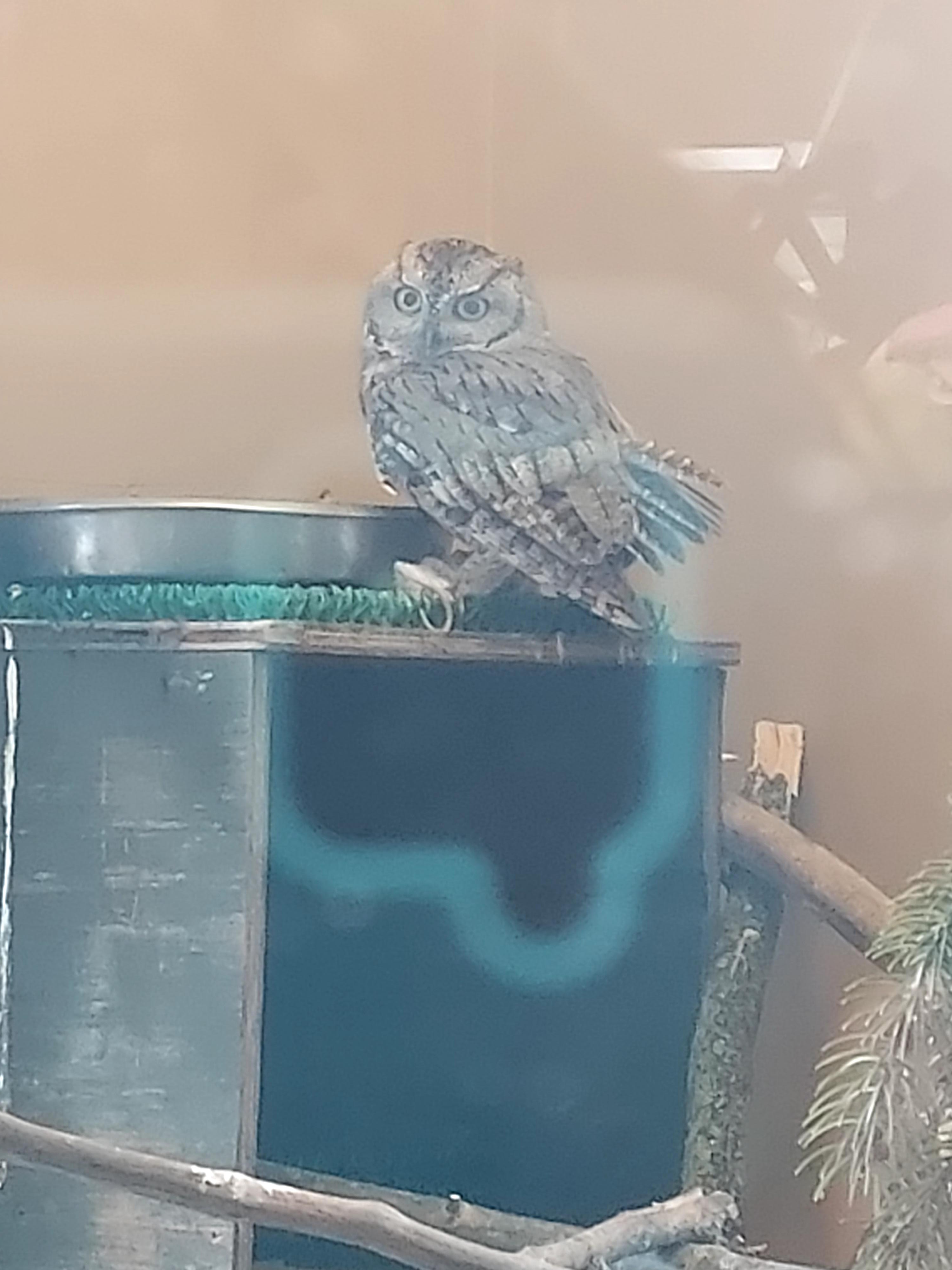
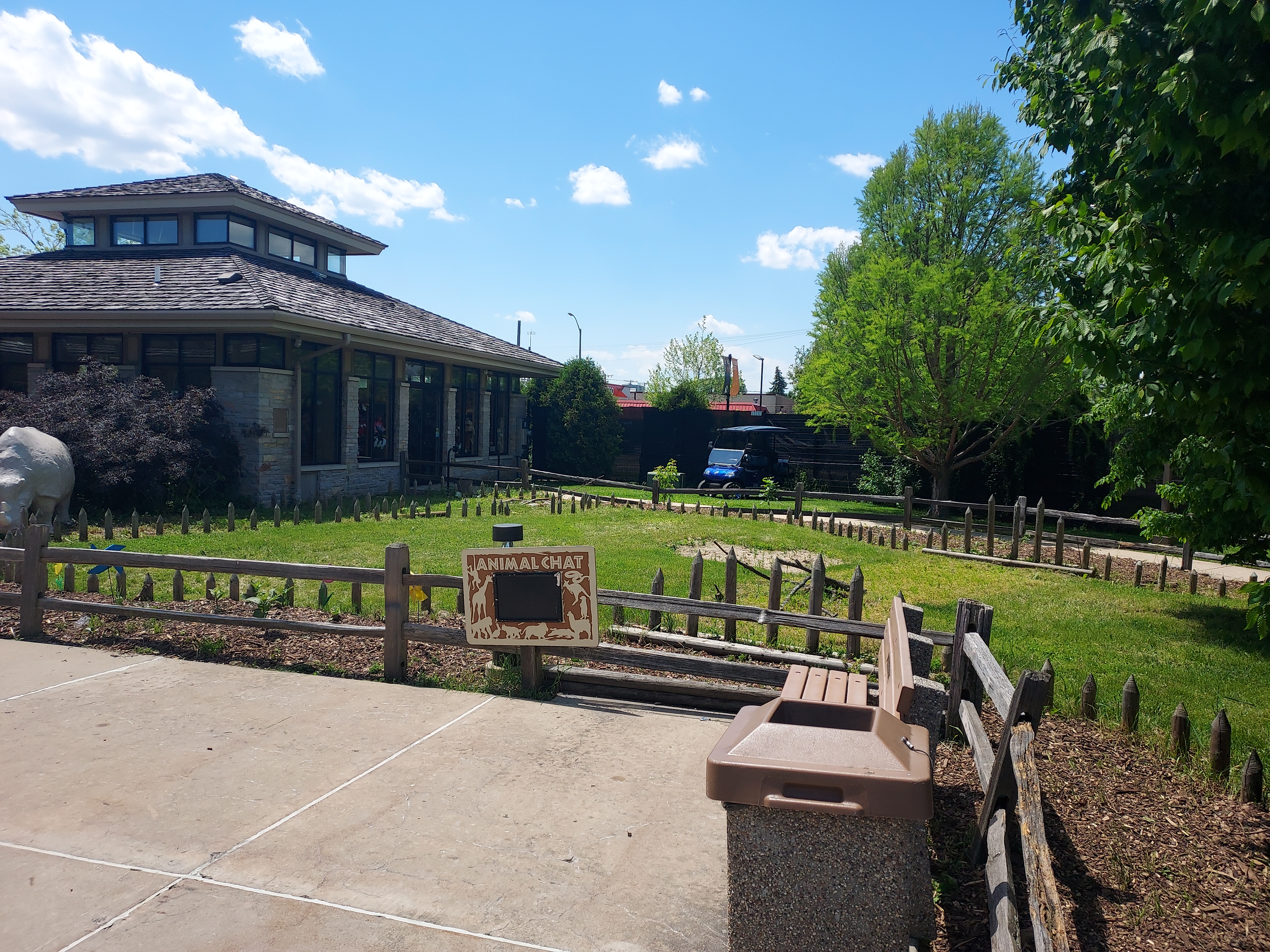
There is a small indoor habitat in the corner that sometimes holds a tortoise and sometimes holds a western screech owl, depending on the season. On my visit in October, the owl was indoors. Outside of the building there is a small lawn that has sometimes been used as an outside enclosure for the tortoise, and also includes a small aviary for the owl.
(direct link)
(direct link)
Discovery Center
One of the zoo’s core buildings and directly next to the entrance, the Discovery Center houses the zoo’s reptile, amphibian and fish collection, as well as a bird and a mammal. It was closed for unspecified renovations during my October visit, but re-opened quietly sometime by my subsequent visit in May. The door’s a bit easy to miss and it’s a little cramped. In terms of species, the building feels a bit like a grab bag of odds and ends, to be honest, without any hint of theme. It’s a bit like a nocturnal house with terrariums and enclosures in the walls surrounding you.
The Umbrella Cockatoo exhibit is two-sided, so guests can view it outside the zoo through a window facing the outside sidewalk; at night, it is hidden by a garage door-like cover. The cockatoo seemed to be an active individual who enjoyed people. The exhibit is tall and has no substrate but a decent amount of climbing equipment with enough room for the cockatoo to spread its wings a little, and probably some very limited flight. It is by no means a naturalistic aviary as you might find at a typical zoo, and could therefore easily be improved, but not bottom of the barrel.
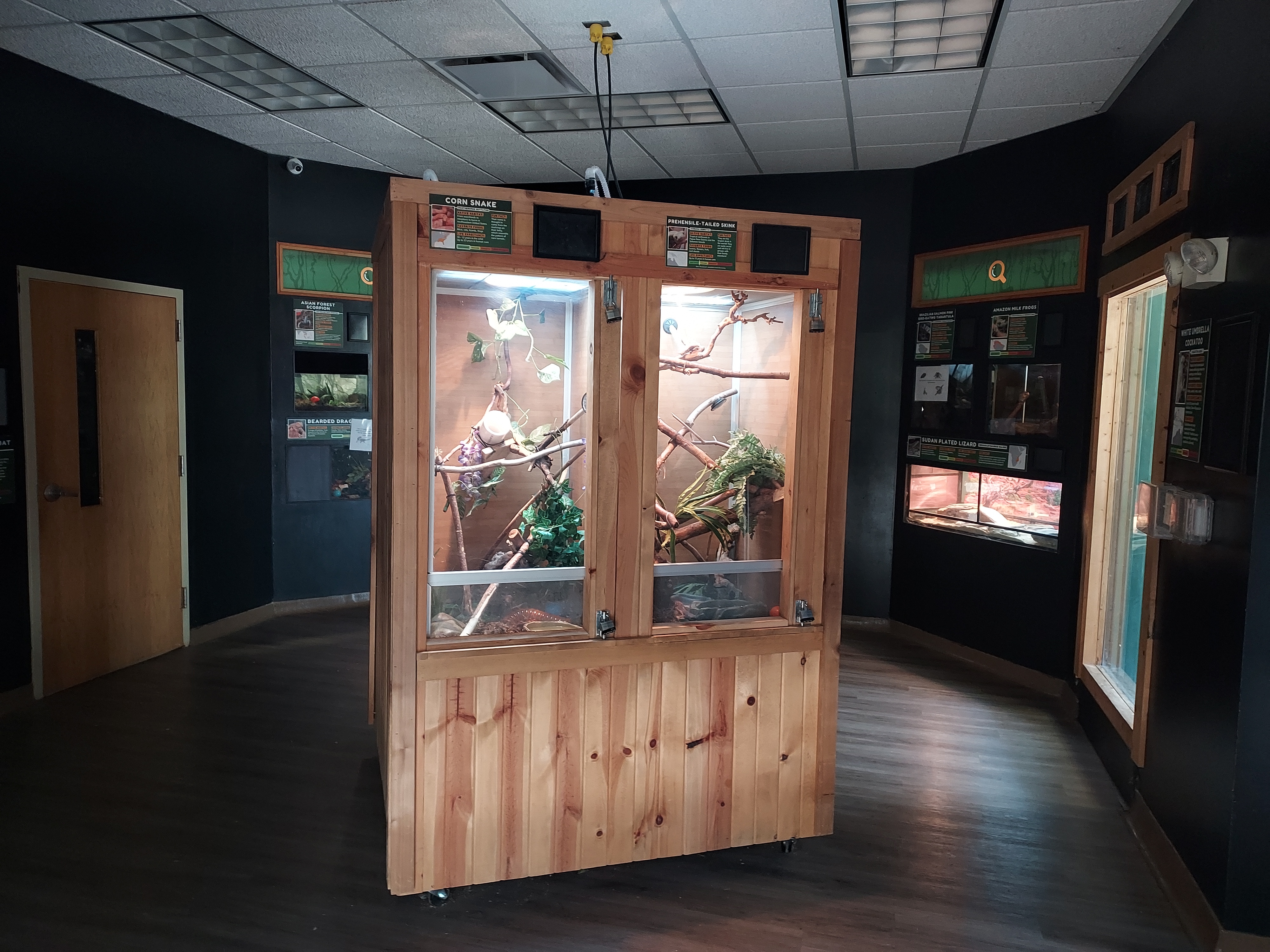
A lot of the reptile terrariums are about all right, a step above a pet store but certainly not impressive next to a modern reptile house. A green tree python exhibit is tall and furnished with branches and a plated lizard has a sandy home. There is decent signage which includes animals’ favorite foods, home range, habitat, and fun facts - some of these convey a little personality for the individual animal. The cichlid tank is one of the highlights, bright and green with colorful fish. A nocturnal exhibit with straw-colored fruit bats are present but the visibility isn’t great, though the bats have room to fly and places to perch.
(direct link)
Vanishing Kingdom
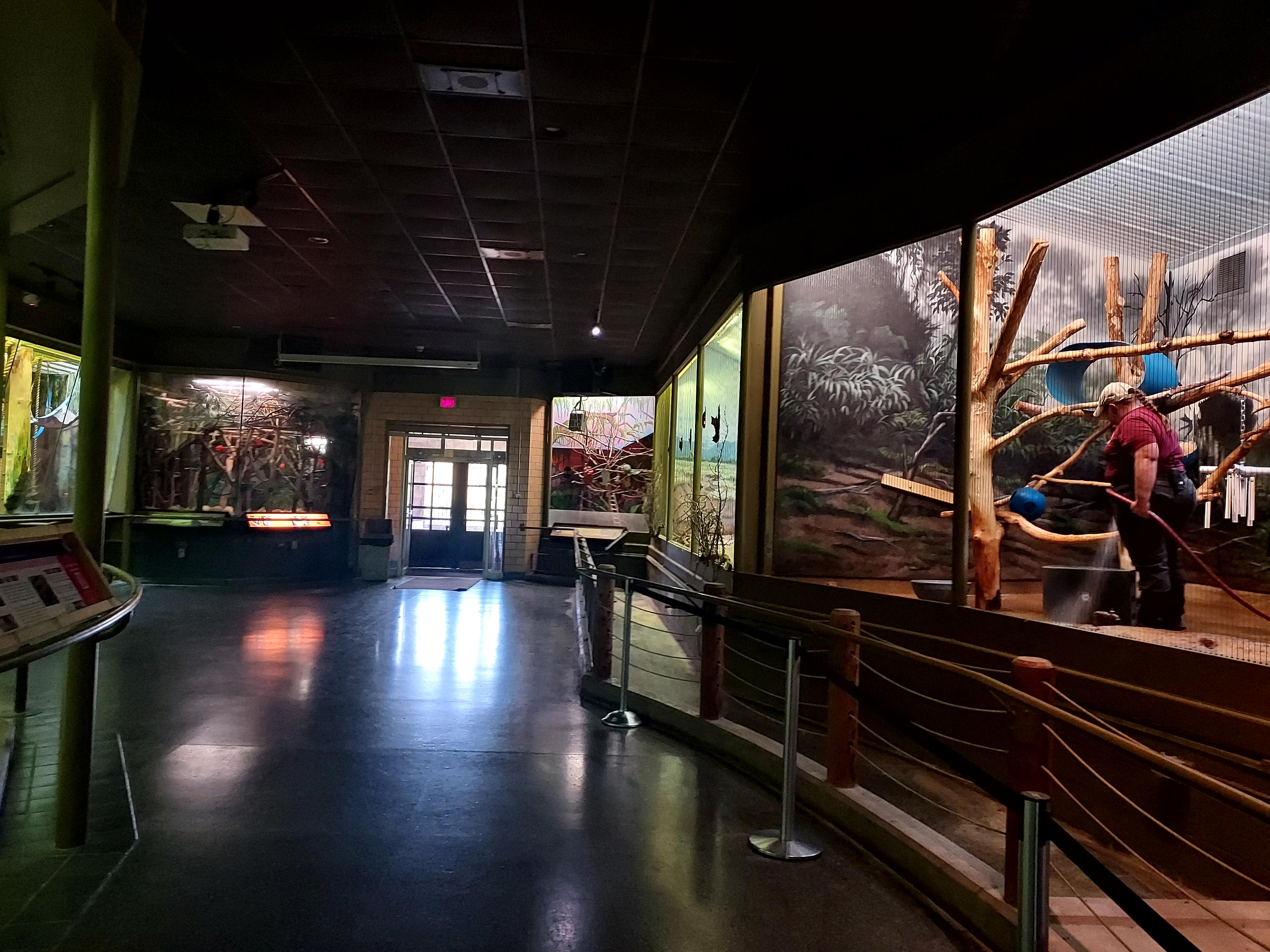
The zoo’s other core animal building is Vanishing Kingdom, also located near the entrance, which is an architecturally fascinating multi-level historical building with some unique castle-like features, including a turret, that has contained a variety of animal species over the years. The current version favors primates a little. There are two exterior enclosures, while the interior of this exhibit involves going up a few stairs on each side, reaching a long hallway with around five enclosures on each side of varying size.
One of the first exhibits I saw was a smaller exhibit for Yellow-crowned Amazon with branches, a ladder and a visible cage. I always like when individual bird species are highlighted, but the bird was mostly inactive. Like a lot of the exhibits at this facility, the animal had access to a lot of toys and enrichment, which is a plus for the lack of naturalism.
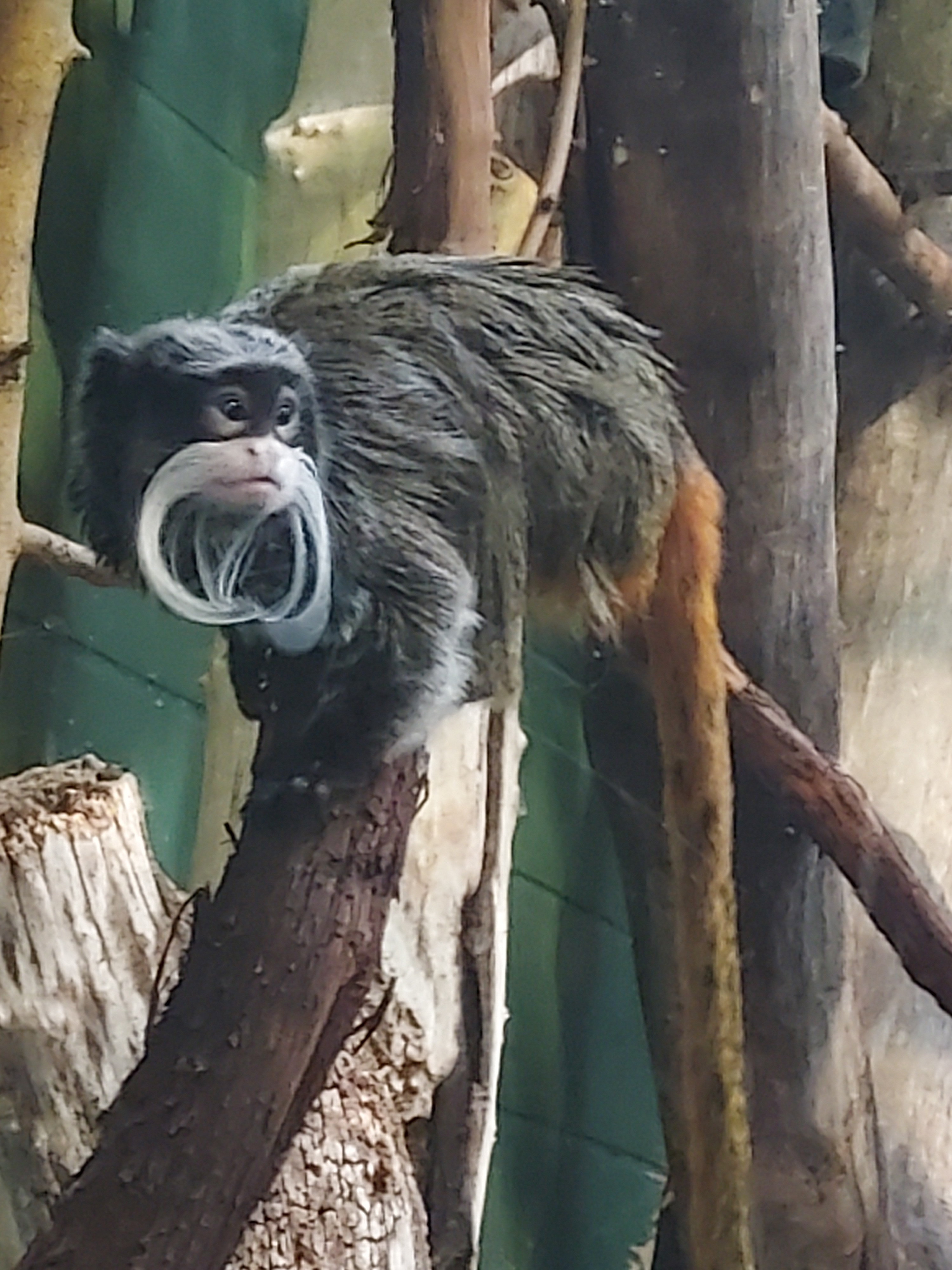
There were two small exhibits on opposite ends of the hall for Bearded Emperor tamarins and while the habitats themselves were small and the windows a little foggy, the family of tamarins almost always seem extremely active and still prove wonderful to watch. The habitat was dense with the number of climbing structures, allowing the tamarins plenty of room to climb and explore. I had seen a single individual before this in a slightly better exhibit, but the active family was a more fun viewing experience. Signage also boasted the zoo’s prolific breeding program for these cute little critters. It’s great that even a smaller zoo like Racine can power a breeding program and help other, larger facilities in the process.
(direct link)
(direct link)
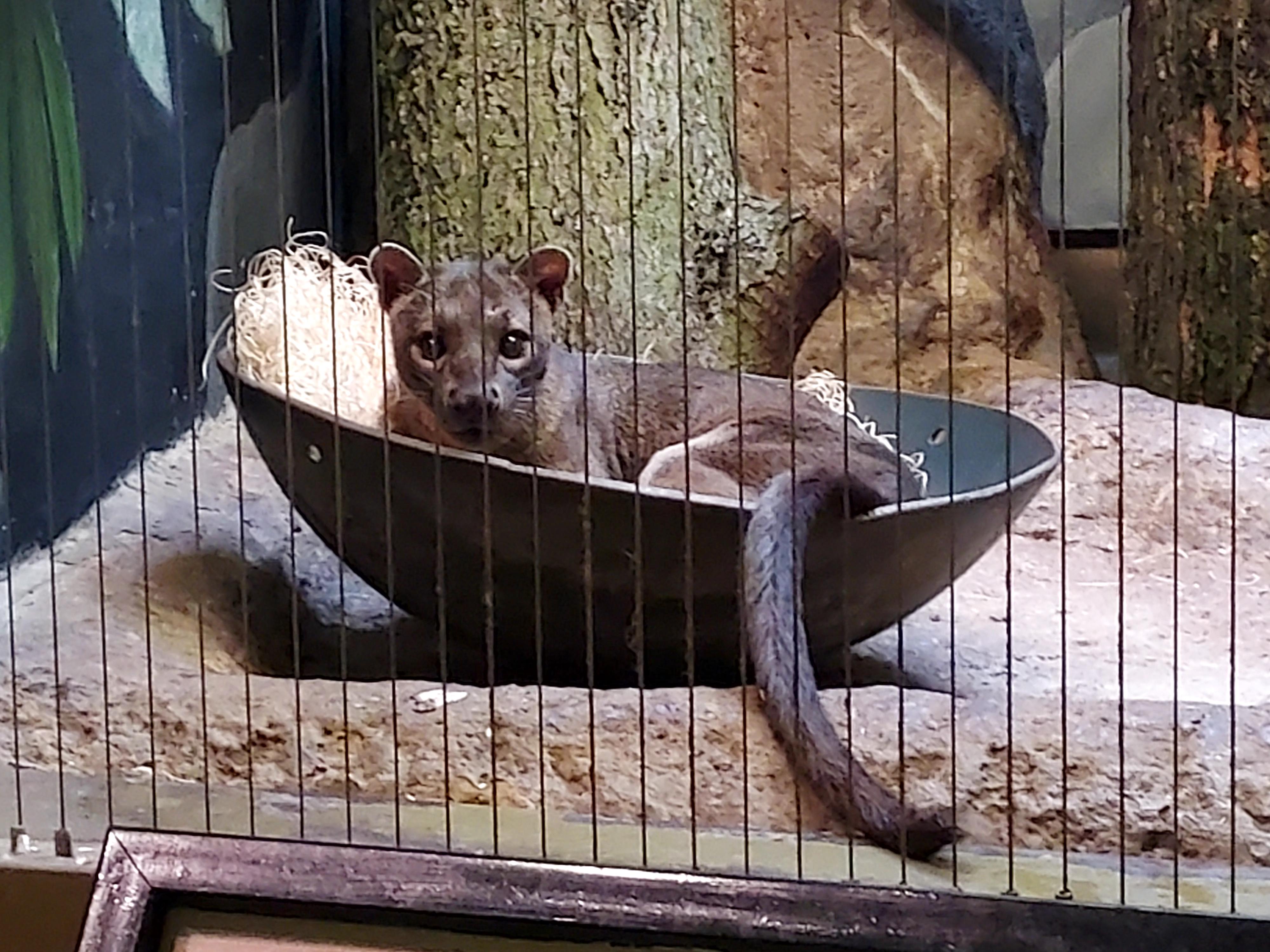
There were two unremarkable, small side-by-side exhibits for Fossa, with a single active individual who had access to both spaces at any time. This was my first time seeing this species, which did make it exciting, and fake trees and branches offered lots of room to climb, supplanted by a few boards of wood. However, this exhibit had no substrate and the animal largely stayed on the ground, and seemed to sometimes like staring out at me.
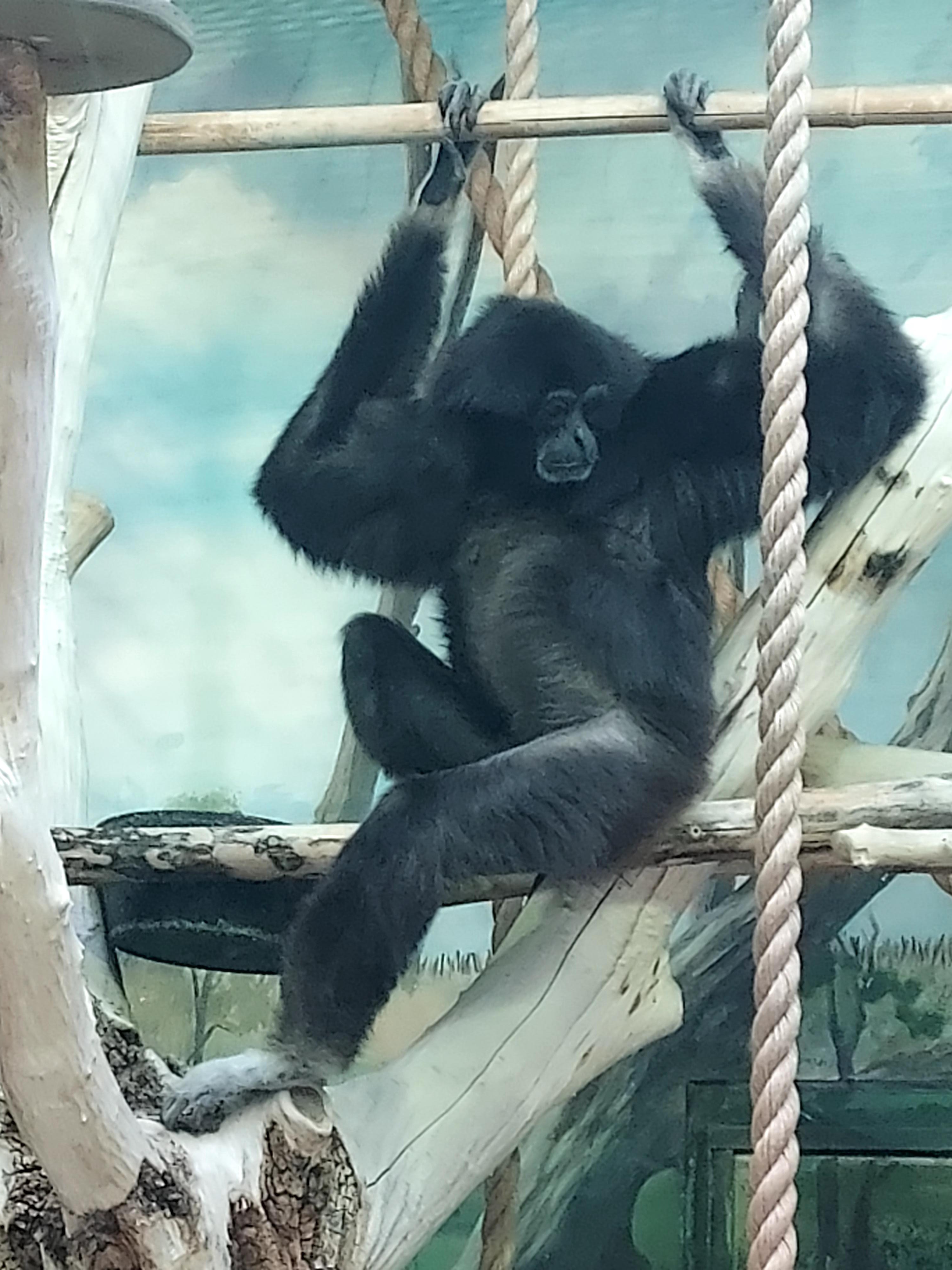
Two similar moderately-sized (relative to the other habitats in the building) exhibits held Black-Handed Spider Monkey and White-Handed Gibbon respectively. Both used murals (one more forest-inspired, one more treetop-inspired) alongside artificial trees and lots of rope to provide the animals lots of climbing space and enrichment. The spider monkeys often illustrated their use of their prehensile tails, more so than I have seen at nearby Milwaukee. The animals were, again, very arboreal, which made them very fun to watch in terms of activity. The indoor habitats are smaller than is typical or preferred for these species, but the great news is these two primate species have access to larger outdoor enclosures during the warmer months.
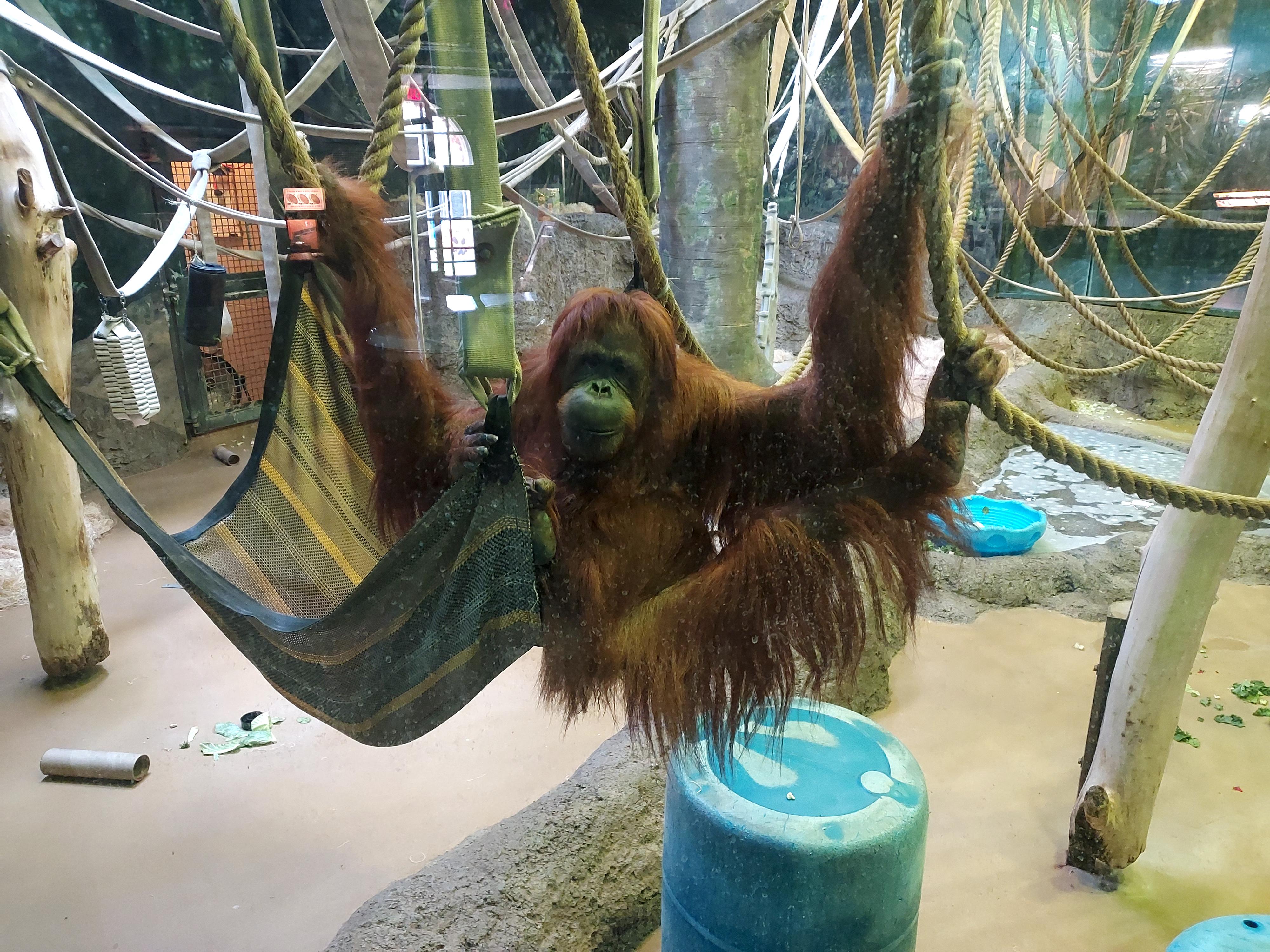
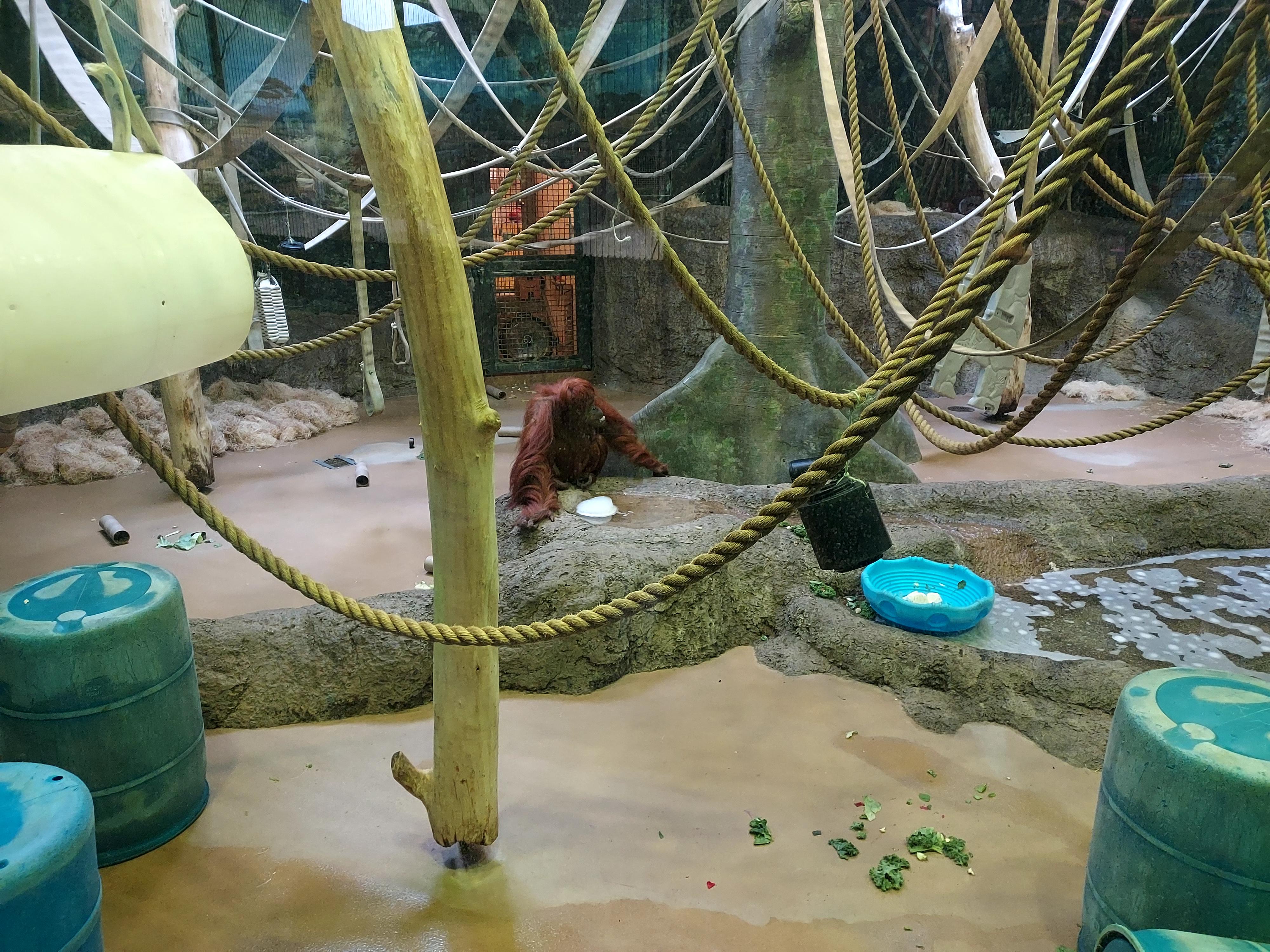
The largest indoor habitat was for Orangutan, and setting aside the critical lack of outdoor access for just a moment, it was a surprisingly effective indoor habitat and better than four of the five indoor orangutan habitats I had seen at the time. While by no means large enough to be ideal for orangutans, it was still larger than I thought it was from the galleries here, with the floor deeper and the glass curved outward into the building. Jenny the orangutan was especially active and very arboreal, and seemed to enjoy coming up to the glass where she could see visitors clearly, while frequently swinging around her habitat. The other orangutan Max stayed back and was harder to see. The floor of the exhibit had some limited substrate and on my visit there were a few drums. This was one of my best experiences viewing this species at the time and proved one of the most memorable aspects of the trip.
Now to actually address the elephant in the room: it is obviously no longer acceptable to keep great apes indoors, and getting the orangutans outdoor access should be a top priority for any future renovation plans; however, the existing indoor habitat would be an above average dayroom if outdoor access could be provided at the current space. As orangutan and gibbon can be mixed, it could be very fruitful to build a larger outdoor enclosure for both species and expand the indoor orangutan exhibit into the current gibbon space to accommodate the mix as well.
(direct link)
(direct link)
(direct link)
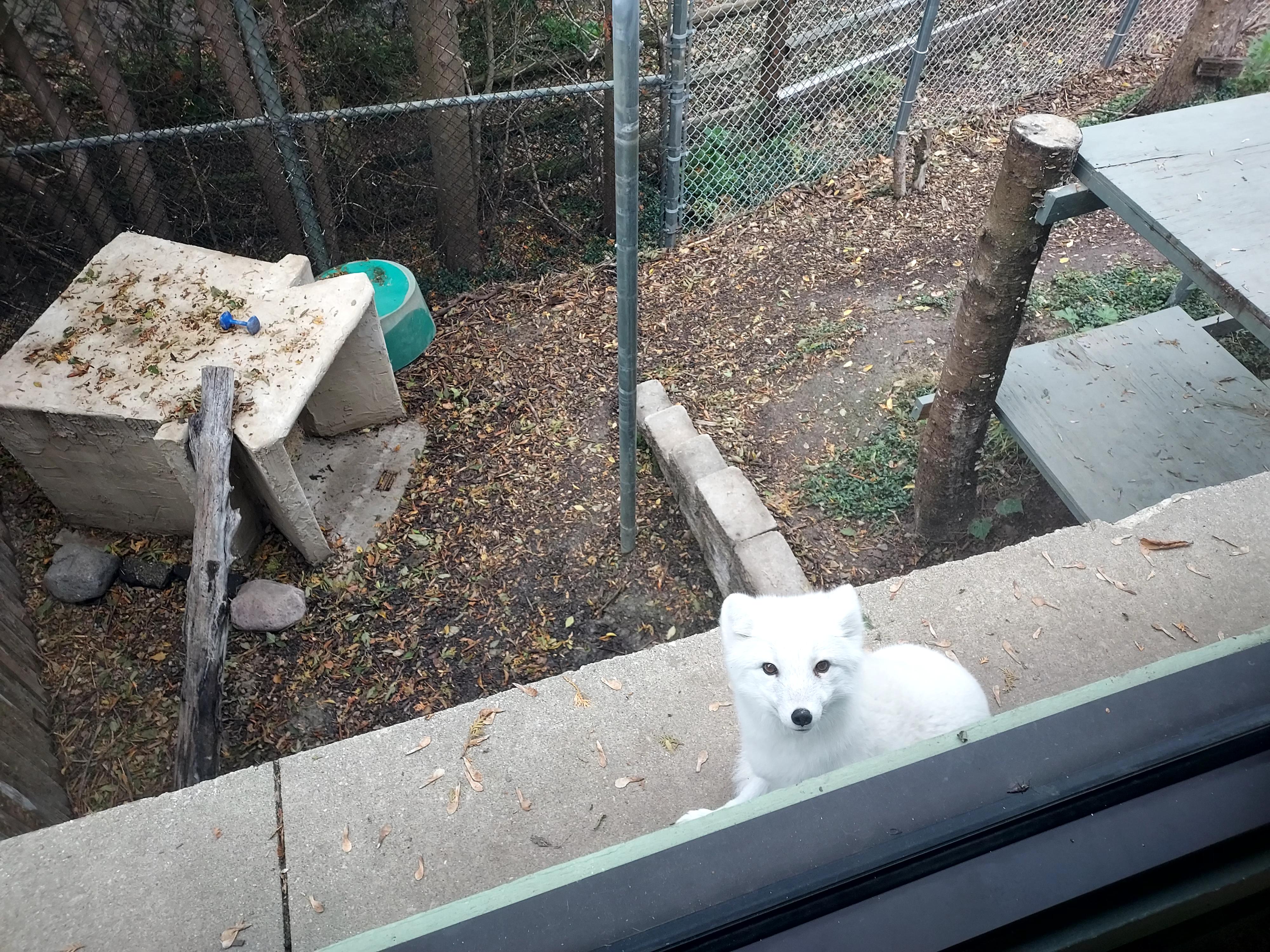
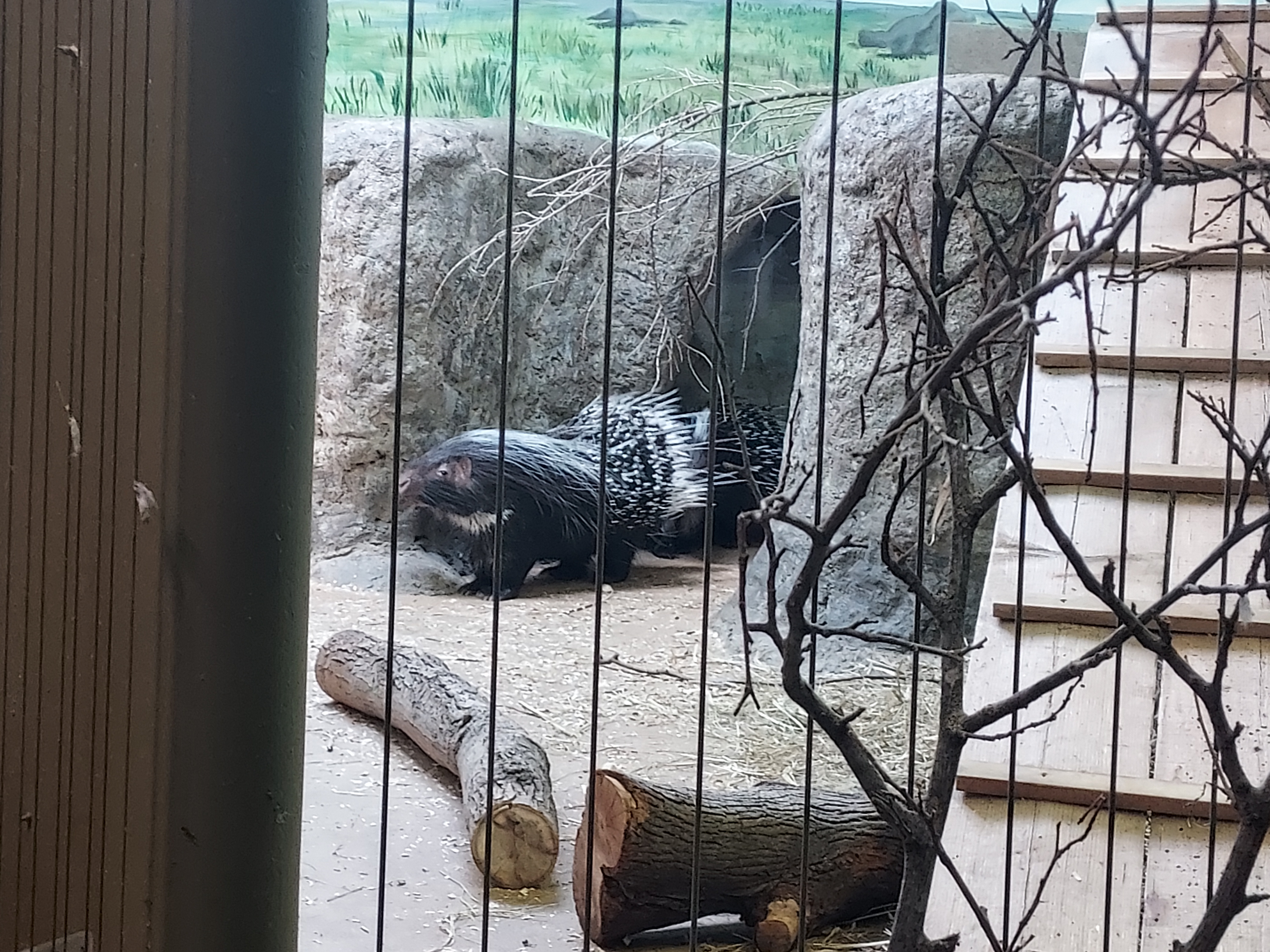
There were two larger habitats opposite the primates, on each side of the fossa, one of which appeared to be an indoor den for lions, and the other which held Cape Porcupine. These exhibits have also been used in the past for Arctic fox, Coati and Amur tiger, from my understanding. They were both rather barren, intending to represent a desert/savanna rather than a rainforest. The porcupine exhibit was being cleaned at the time of my first visit and the lion exhibit was not in use, which may have affected my perception. I did briefly see porcupine in the exhibit on my subsequent visit.
All of these exhibits, save the orangutan habitat, are boxy and use murals to suggest a natural environment, and therefore lack naturalism and are not as visually or aesthetically impressive, but the zoo does provide the animals an impressively high level of enrichment for a smaller facility.
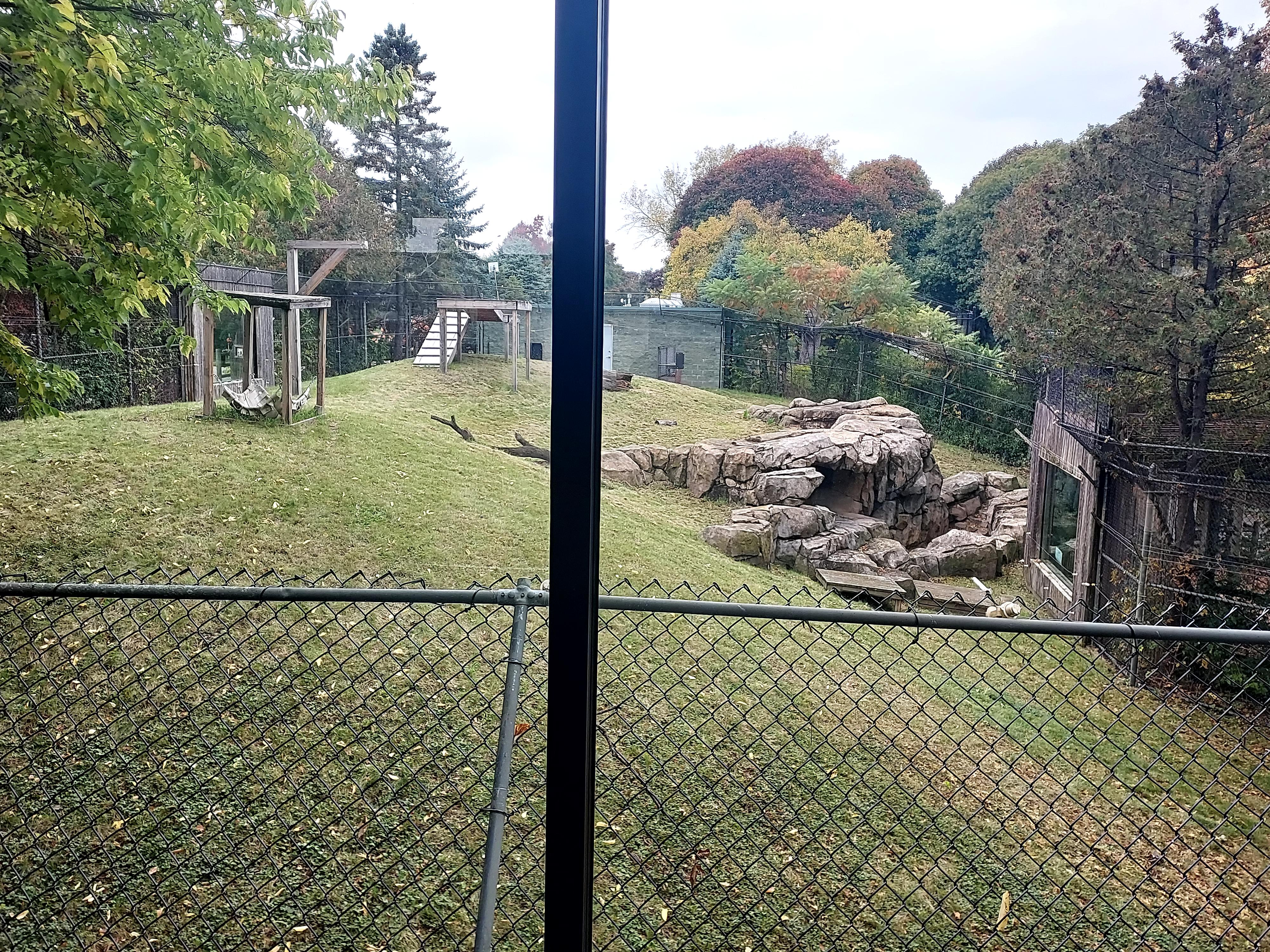
West of the building is a path with two outdoor primate enclosures that are decent in size, larger than I have seen at some mid-level major facilities, which contain lots of ropes to swing from and many plastic toys, as well as grass, rock and natural substrate, allowing varied heights and textures, overall providing a somewhat impressive level of enrichment. These exhibits provide outdoor access for the zoo’s White-Handed Lar Gibbons and Black-Handed Spider Monkeys. While they are not particularly impressive compared to world class zoos, they seem effective enough for a small zoo to endear comparison to nearby larger facilities -- Brookfield did not offer outdoor enclosures for gibbons or spider monkeys (at the time of this visit) though with ample space and enrichment indoors, and Milwaukee’s outdoor enclosures for these animals are less furnished. The zoo staff sometimes use plastic children’s toys for the animals, which can be a little charming but also takes away from the naturalism; at the same time, the exhibits are hardly naturalistic to start.
Former residents of the above building also include Prehensile-tailed porcupine and blue-eyed black lemur.
(direct link)

(backup link)
Great Cat Canyon
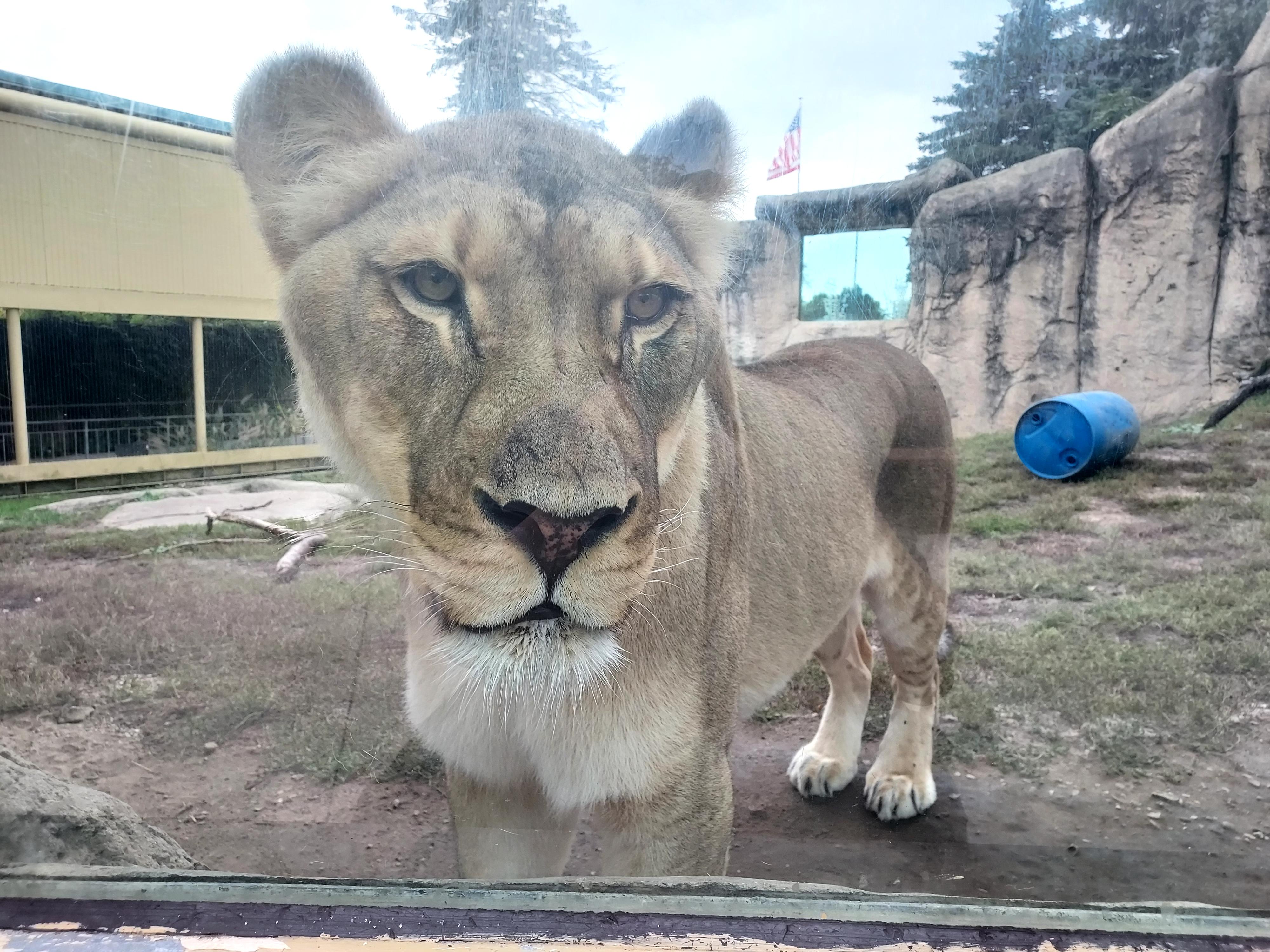
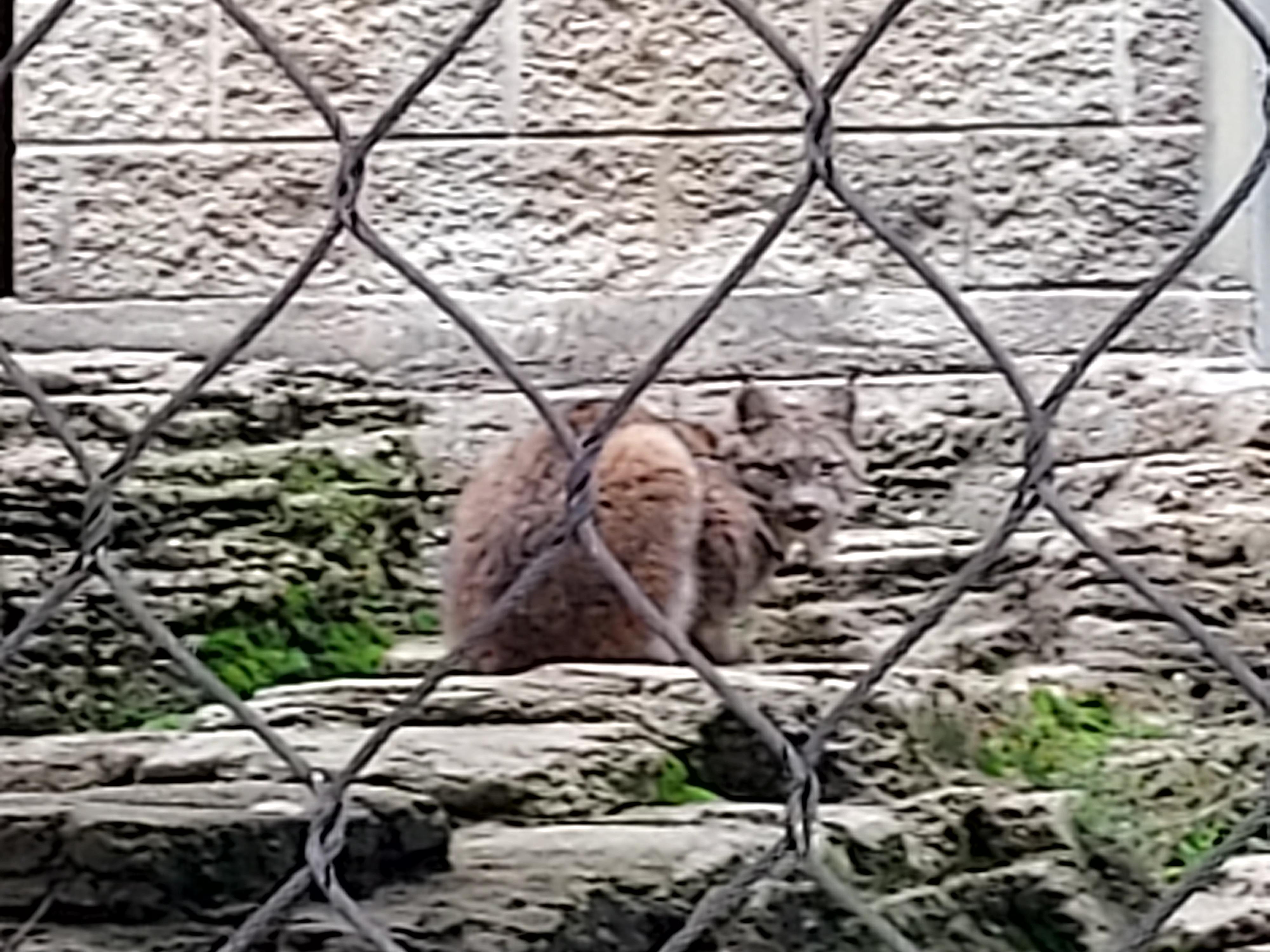
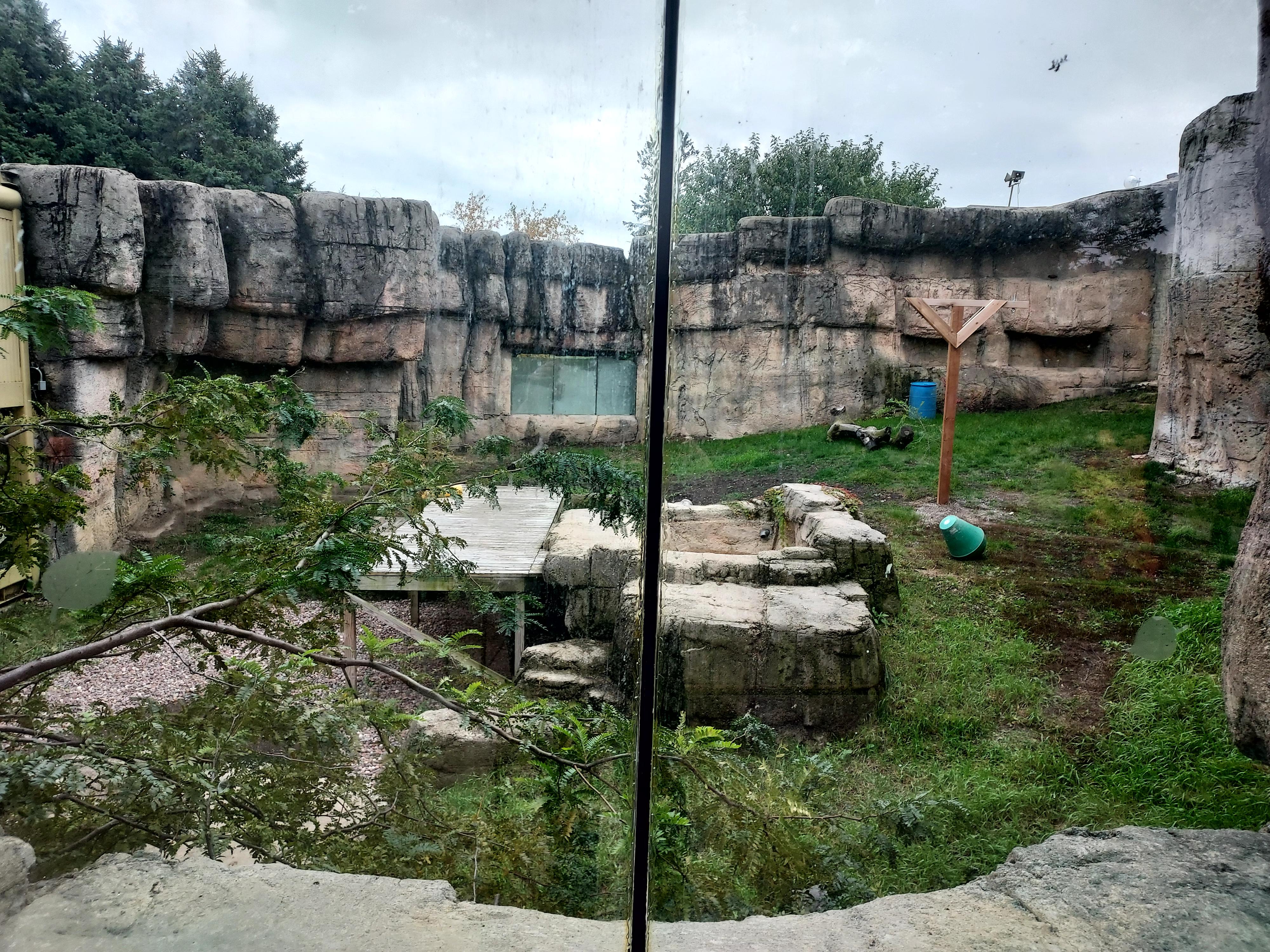
The zoo’s big cat complex, known as Great Cat Canyon, is located east of the Vanishing Kingdom building and connects to it. Tall concrete “canyon walls” surround two of the three habitats, containing small pools, branches, and wooden climbing structures with a lot of grass. Both of these larger habitats have two viewing areas at two different levels - a window here and two windows with covered tops and benches there, allowing comfortable viewing and making nose-to-nose encounters with the cats possible. The central exhibit between the two canyons is mesh-covered and looks more like a rocky grotto, with the bare walls of the holding building much more clearly visible behind it, and is clearly a bit small for a big cat.
The two larger “canyon” exhibits currently hold two female African lions in one and an Amur tiger in the other, while the smaller exhibit now holds a Canada lynx, but once held a Snow leopard. The exhibit has a successful mountainous feeling and despite the unattractive nature of the bare back wall, even compared to rockwork, it feels a good fit for the species. The varied, steep terrain is a great fit for the smaller, secretive species, and while it would be too small for a snow leopard it feels acceptable for a lynx.
The two larger enclosures are far from impressive. I felt the canyon design provided some novelty compared to traditional historic grottos, and while I know many find all forms of artificial rockwork unsightly and ugly, but I find it preferable to the bare walls on the lynx exhibit. The windows do allow for some close-up viewing and I really appreciated that it was multi-level allowing multiple options - this was useful on my second visit for spotting the tiger, who was using a hiding space. The enclosures are still too small for their inhabitants though and all three are very light on vegetation besides grass. The lions could have used some more varied terrain or enrichment.
This is an area in need of renovation but that I think would also benefit a lot from a robust master plan, as there's only room to favor one species at this location, so perhaps creating a more naturalistic exhibit for one of the big cats elsewhere will enable the remaining big cat enclosure to be improved and larger in this location.
(direct link)
(direct link)
(direct link)
Stork Aviary
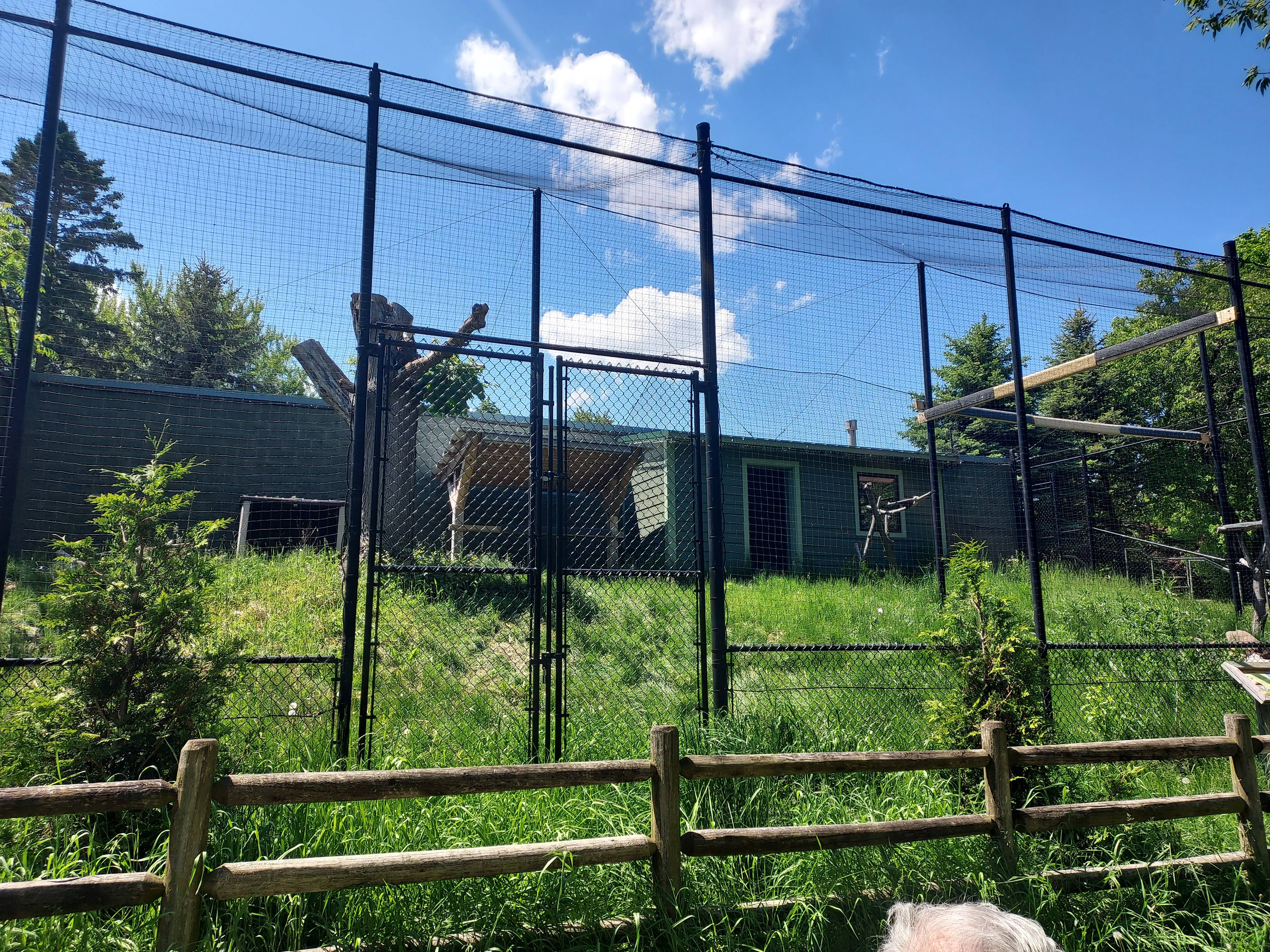
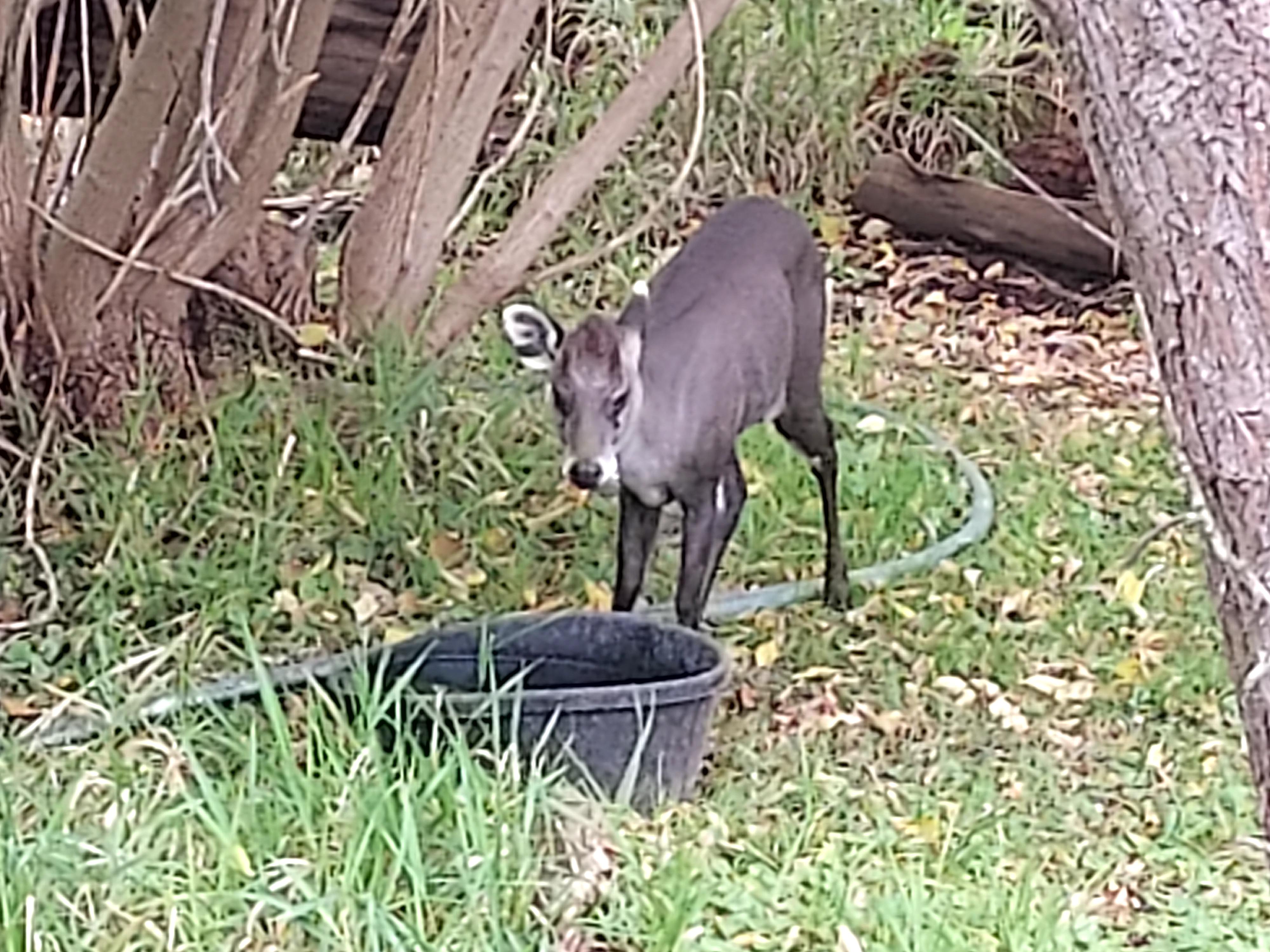
The most famous exhibit at the zoo is an impressive aviary that holds a Tufted Deer and, until recently, held Lesser Adjutant Storks. The exhibit can be viewed through from the outside, but guests may enter the aviary and view from a small boardwalk inside the habitat, which is met on one side by a large pond and on another by a small greenhouse-looking indoor holding space. The entire area is quite marshy and even in the fall weather, it felt quite lush -- the resident tufted deer could easily disappear and reappear from the foliage and proved surprisingly challenging to spot. This was my first time seeing the species and I found them much more charismatic than I expected - the little fangs are very neat.
At the time of my visit, on a warmer day in fall, signage for the stork had been removed, and the indoor holding door was open. I asked an employee later if the zoo had gone out of the species, but was told they were simply off-display for the winter already. Sadly, it turned out the last stork was sent away within days of my visit after all. Per the gallery it appears it was once common for the stork to perch on top of the entrance above guests, which seems thrilling. This exhibit also long ago held pelicans, before the storks arrived. For now, it is only home to a single tufted deer, with the pond near the boardwalk empty. I hope a new species of water bird joins the facility, as it is tragic to have such an excellent exhibit nearly empty.
(direct link)
Goat/Tur Mountain
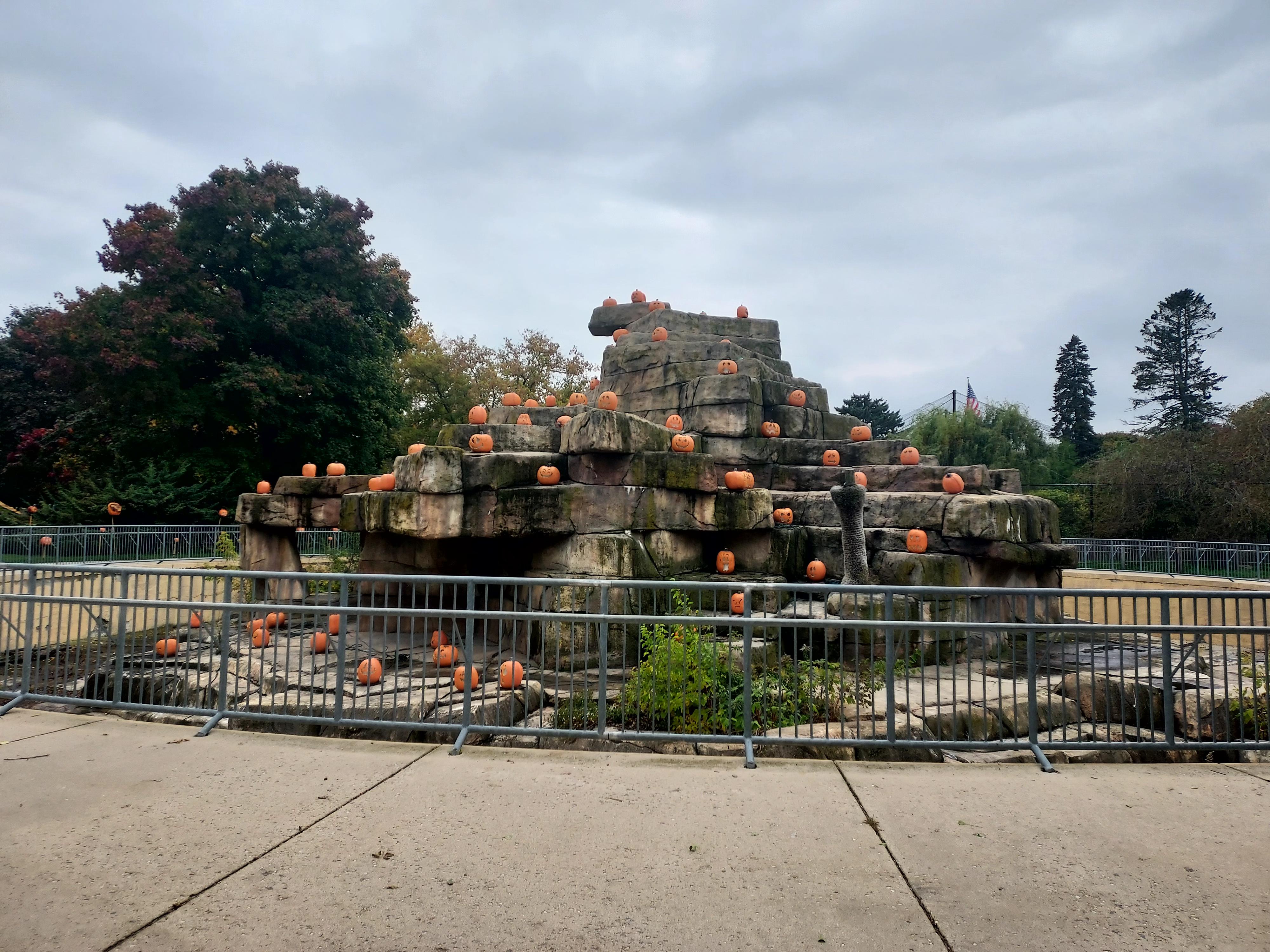
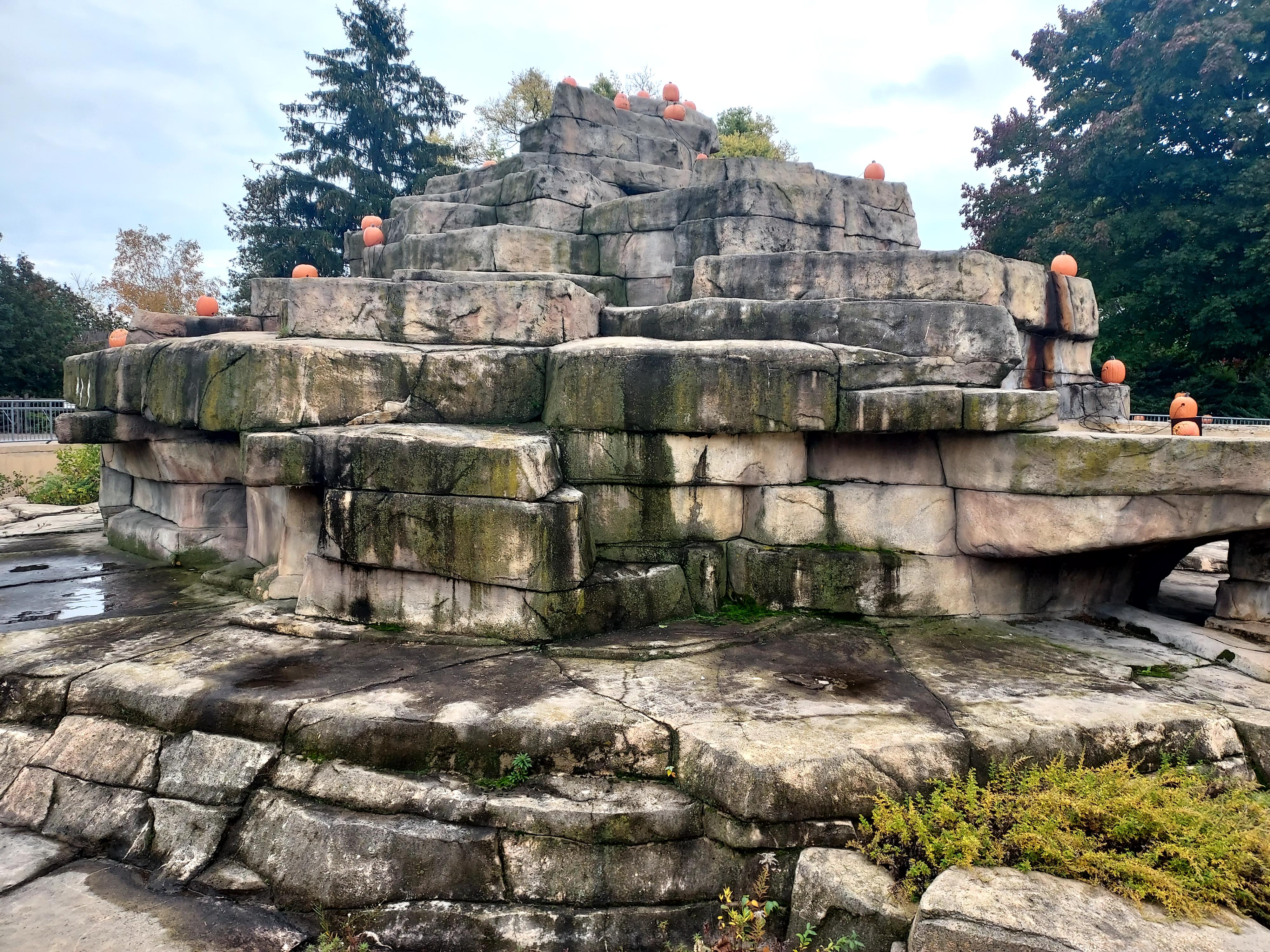
Just outside near the aviary is a moderately-sized rockwork exhibit that once held the last West Caucasian Tur in an AZA facility. It must be said that this exhibit is not impressive in naturalism, instead consisting entirely of concrete rockwork, but I imagine it provided guests an excellent view of its inhabitants and the varied terrain would certainly encourage any caprid to showcase some of their natural abilities. Adding some grass and substrate at the bottom layer would be a welcome improvement to the space though and allow the animals to both take advantage of the verticality and varied terrain while also allowing them soft ground for relaxing. Some trees would also be nice.
I know some would probably prefer to see this old exhibit bulldozed, but given how many zoos seem to be dismantling caprid exhibits and phasing them out, and that there are better use of funds at this facility (letting orangutans outside) I would personally hope to see Racine improve the space and receive another caprid species for this habitat - such as takin, markhor, ibex or more tur. For my visit instead, it was covered in pumpkins to promote the Halloween festivities, which is not comparable to an animal exhibir, but at least ensured it wasn’t a wasted, empty space.
(direct link)
Penguin Pals and Meerkat Manor
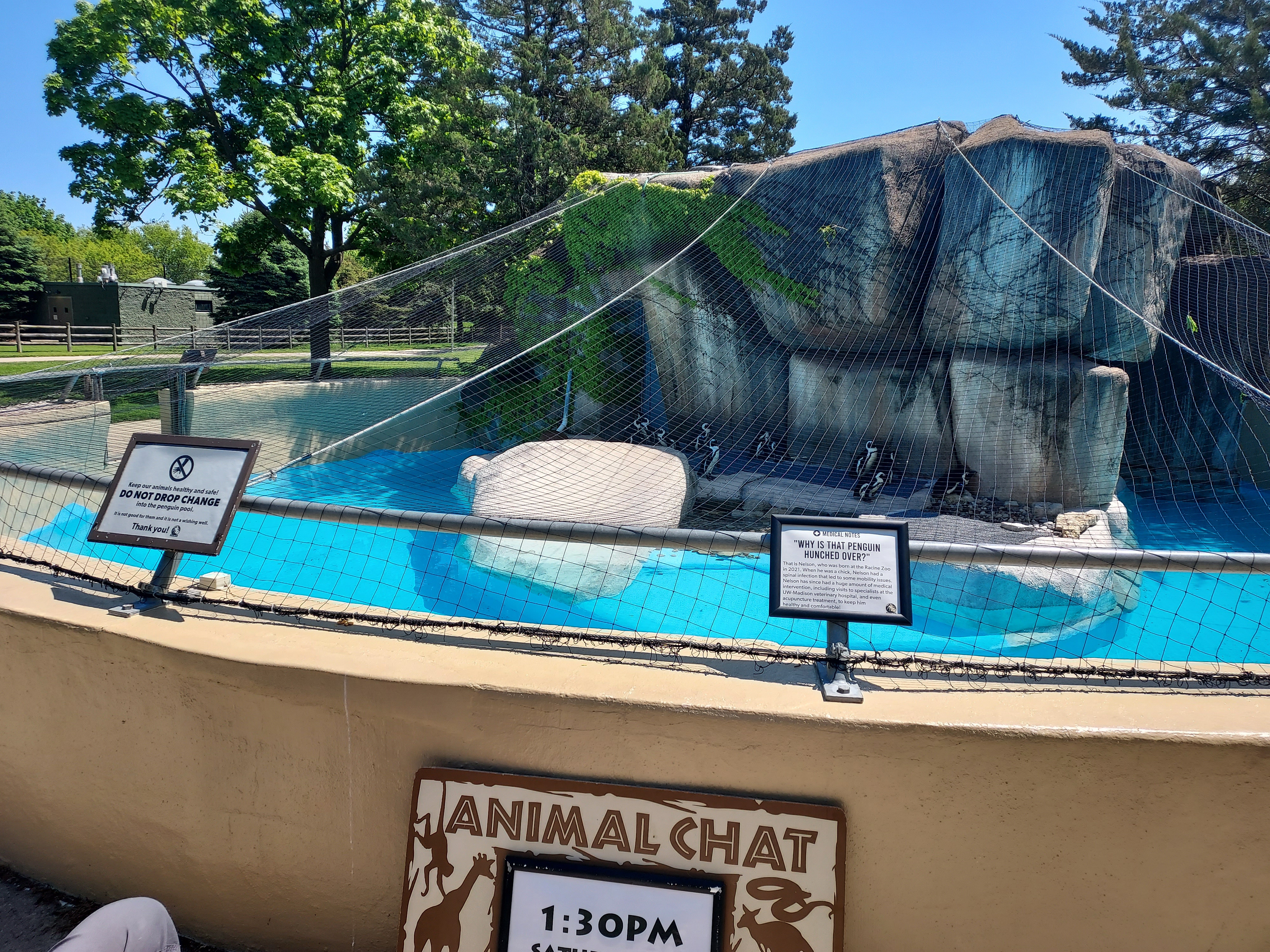
The next two habitats are both smaller but share similar, round footprints, shaped somewhat like a half-circle with a metal railing and animals a few feet down, with tall, rockwork backing areas, allowing the guests lots of visibility to appreciate some smaller species.
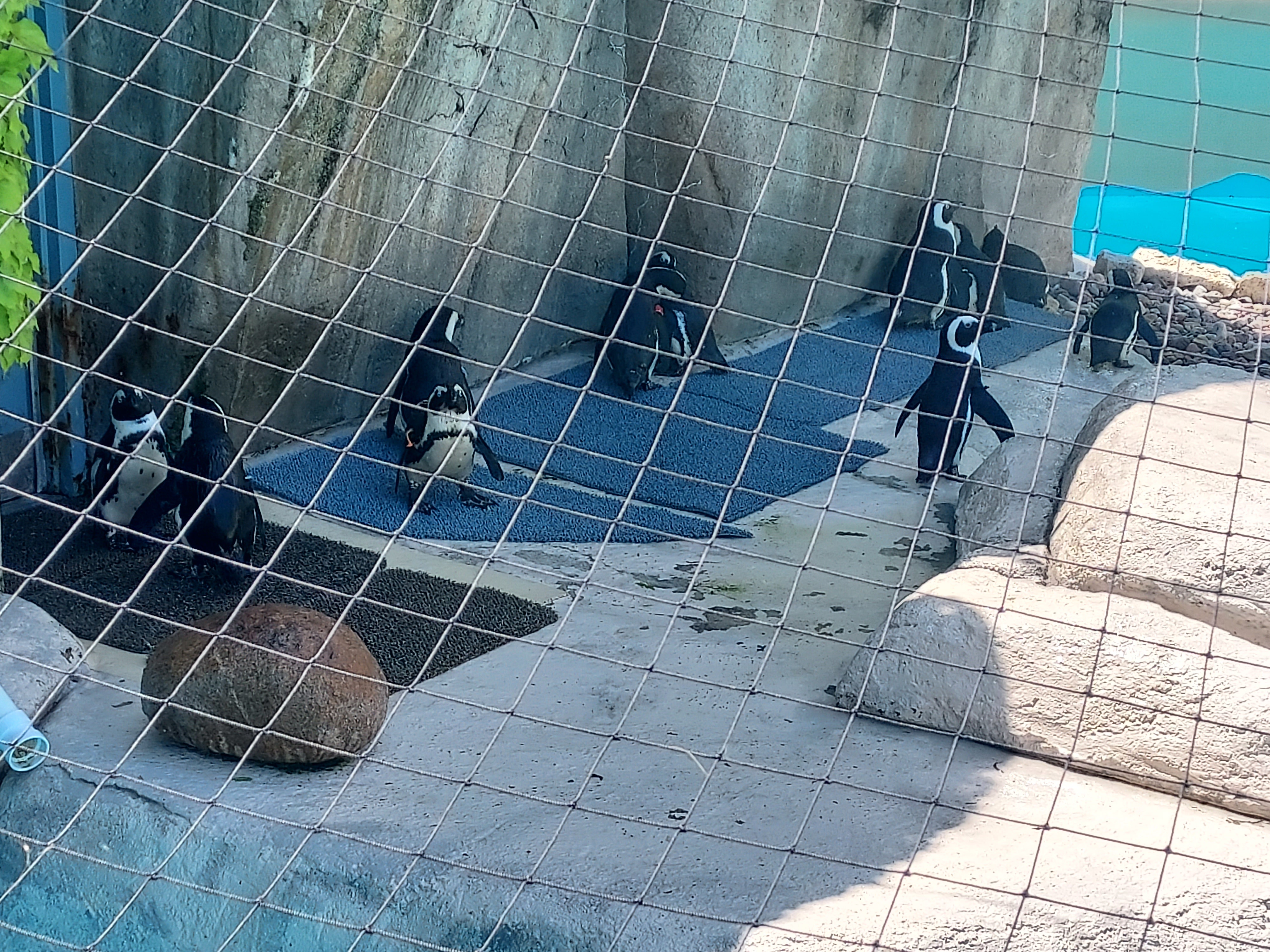
Penguin Pals is home to the zoo’s colony of African penguins, but lacks any sense of naturalism. The water area is highlighted in bright blue, giving it a glow that feels artificial, making up around half to two-thirds of the visible space, while the rest is rockwork and gravel, sometimes adorned with mats, and tall rockwork to separate the indoor facilities. I did not have the pleasure to see the penguins themselves until my second visit, where they mostly stood in place. A small window allows visitors to see a small indoor area for the penguins, but it feels almost unnecessary given the lack of theming or space. While the use of rock and gravel is not unlike many other penguin habitats, the highlighted water detracts strongly. Credits for distinctiveness, I suppose. This exhibit also once held cormorants.
(direct link)
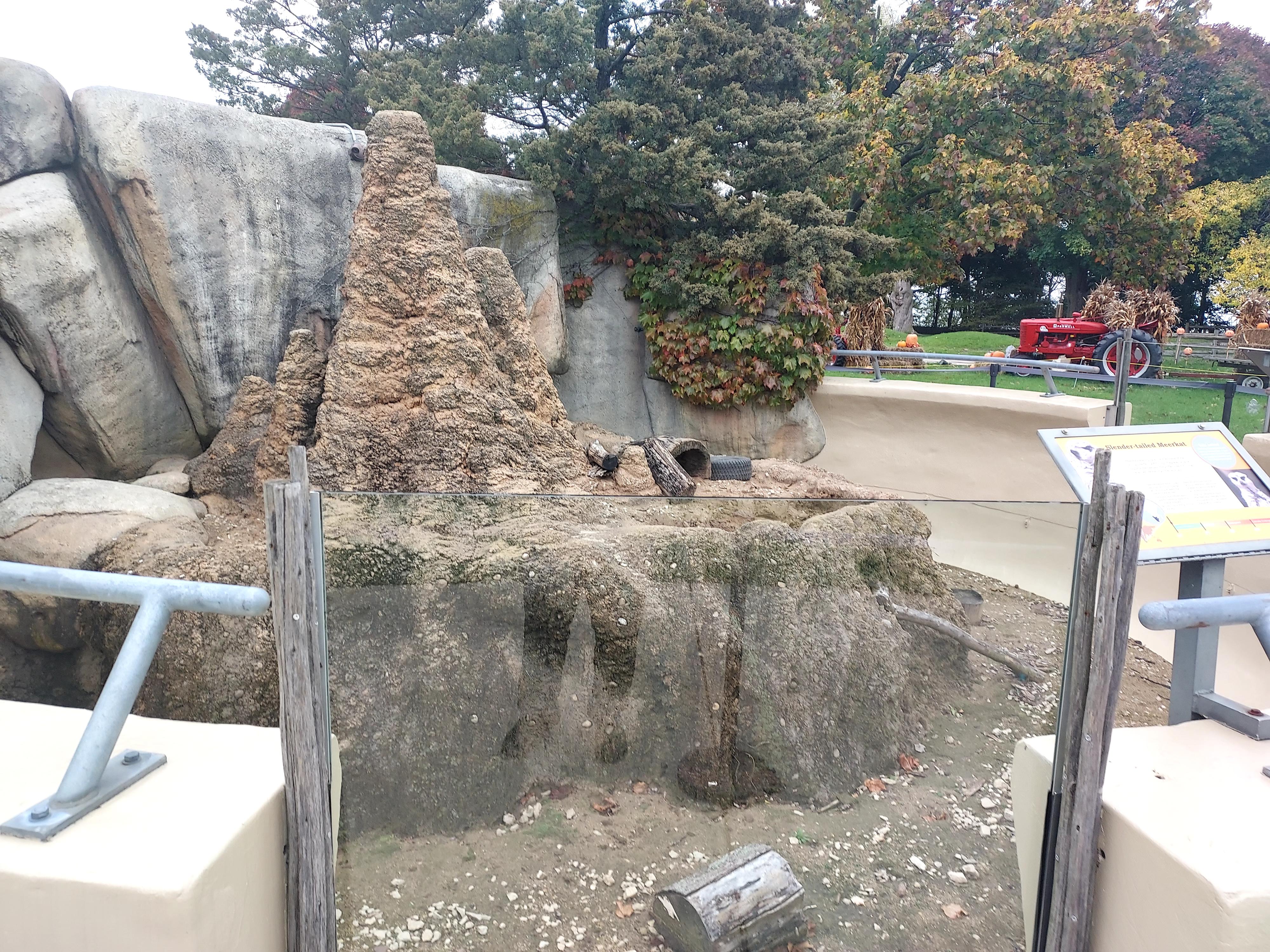
On the other hand, Meerkat Manor is a small exhibit that resembles the animals’ native habitats in arid parts of Africa. A large termite mound (or rock formation in a similar shape) helps paint the landscape while a log offers the animals somewhere to hide or cool off. It is multi-level as well, which is very good. No meerkat were visible on either visit and I’ve heard since then that the zoo currently has none. It’s serviceable for the species overall though; I have seen them in smaller and less naturalistic exhibits in the past and not often outdoors.
(direct link)
All images are my own unless otherwise stated. Direct links provided in case they do not display in the post correctly. I have split the review into two to accommodate the number of images.
Although the facility is a small one, I still find it useful to go exhibit by exhibit.
(direct link)
Entrance and Zootique
The entrance to the facility is on a street corner overlooking Lake Michigan directly, and is where two of the main buildings are located. The entrance building is also the zoo’s main gift shop, also known as the Zootique. An admissions window faces outward from the register counter. The employee working was friendly and knowledgeable about the facility and happy to answer questions, and the shop itself is fairly well-stocked with a wide variety of merchandise. In addition, a small indoor habitat in the corner of the shop holds different animals depending on the season. While the small exhibit is not immersive, it does have natural substrate, windows and vertical space.
There is a small indoor habitat in the corner that sometimes holds a tortoise and sometimes holds a western screech owl, depending on the season. On my visit in October, the owl was indoors. Outside of the building there is a small lawn that has sometimes been used as an outside enclosure for the tortoise, and also includes a small aviary for the owl.
(direct link)
(direct link)
Discovery Center
One of the zoo’s core buildings and directly next to the entrance, the Discovery Center houses the zoo’s reptile, amphibian and fish collection, as well as a bird and a mammal. It was closed for unspecified renovations during my October visit, but re-opened quietly sometime by my subsequent visit in May. The door’s a bit easy to miss and it’s a little cramped. In terms of species, the building feels a bit like a grab bag of odds and ends, to be honest, without any hint of theme. It’s a bit like a nocturnal house with terrariums and enclosures in the walls surrounding you.
The Umbrella Cockatoo exhibit is two-sided, so guests can view it outside the zoo through a window facing the outside sidewalk; at night, it is hidden by a garage door-like cover. The cockatoo seemed to be an active individual who enjoyed people. The exhibit is tall and has no substrate but a decent amount of climbing equipment with enough room for the cockatoo to spread its wings a little, and probably some very limited flight. It is by no means a naturalistic aviary as you might find at a typical zoo, and could therefore easily be improved, but not bottom of the barrel.
A lot of the reptile terrariums are about all right, a step above a pet store but certainly not impressive next to a modern reptile house. A green tree python exhibit is tall and furnished with branches and a plated lizard has a sandy home. There is decent signage which includes animals’ favorite foods, home range, habitat, and fun facts - some of these convey a little personality for the individual animal. The cichlid tank is one of the highlights, bright and green with colorful fish. A nocturnal exhibit with straw-colored fruit bats are present but the visibility isn’t great, though the bats have room to fly and places to perch.
(direct link)
Vanishing Kingdom
The zoo’s other core animal building is Vanishing Kingdom, also located near the entrance, which is an architecturally fascinating multi-level historical building with some unique castle-like features, including a turret, that has contained a variety of animal species over the years. The current version favors primates a little. There are two exterior enclosures, while the interior of this exhibit involves going up a few stairs on each side, reaching a long hallway with around five enclosures on each side of varying size.
One of the first exhibits I saw was a smaller exhibit for Yellow-crowned Amazon with branches, a ladder and a visible cage. I always like when individual bird species are highlighted, but the bird was mostly inactive. Like a lot of the exhibits at this facility, the animal had access to a lot of toys and enrichment, which is a plus for the lack of naturalism.
There were two small exhibits on opposite ends of the hall for Bearded Emperor tamarins and while the habitats themselves were small and the windows a little foggy, the family of tamarins almost always seem extremely active and still prove wonderful to watch. The habitat was dense with the number of climbing structures, allowing the tamarins plenty of room to climb and explore. I had seen a single individual before this in a slightly better exhibit, but the active family was a more fun viewing experience. Signage also boasted the zoo’s prolific breeding program for these cute little critters. It’s great that even a smaller zoo like Racine can power a breeding program and help other, larger facilities in the process.
(direct link)
(direct link)
There were two unremarkable, small side-by-side exhibits for Fossa, with a single active individual who had access to both spaces at any time. This was my first time seeing this species, which did make it exciting, and fake trees and branches offered lots of room to climb, supplanted by a few boards of wood. However, this exhibit had no substrate and the animal largely stayed on the ground, and seemed to sometimes like staring out at me.
Two similar moderately-sized (relative to the other habitats in the building) exhibits held Black-Handed Spider Monkey and White-Handed Gibbon respectively. Both used murals (one more forest-inspired, one more treetop-inspired) alongside artificial trees and lots of rope to provide the animals lots of climbing space and enrichment. The spider monkeys often illustrated their use of their prehensile tails, more so than I have seen at nearby Milwaukee. The animals were, again, very arboreal, which made them very fun to watch in terms of activity. The indoor habitats are smaller than is typical or preferred for these species, but the great news is these two primate species have access to larger outdoor enclosures during the warmer months.
The largest indoor habitat was for Orangutan, and setting aside the critical lack of outdoor access for just a moment, it was a surprisingly effective indoor habitat and better than four of the five indoor orangutan habitats I had seen at the time. While by no means large enough to be ideal for orangutans, it was still larger than I thought it was from the galleries here, with the floor deeper and the glass curved outward into the building. Jenny the orangutan was especially active and very arboreal, and seemed to enjoy coming up to the glass where she could see visitors clearly, while frequently swinging around her habitat. The other orangutan Max stayed back and was harder to see. The floor of the exhibit had some limited substrate and on my visit there were a few drums. This was one of my best experiences viewing this species at the time and proved one of the most memorable aspects of the trip.
Now to actually address the elephant in the room: it is obviously no longer acceptable to keep great apes indoors, and getting the orangutans outdoor access should be a top priority for any future renovation plans; however, the existing indoor habitat would be an above average dayroom if outdoor access could be provided at the current space. As orangutan and gibbon can be mixed, it could be very fruitful to build a larger outdoor enclosure for both species and expand the indoor orangutan exhibit into the current gibbon space to accommodate the mix as well.
(direct link)
(direct link)
(direct link)
There were two larger habitats opposite the primates, on each side of the fossa, one of which appeared to be an indoor den for lions, and the other which held Cape Porcupine. These exhibits have also been used in the past for Arctic fox, Coati and Amur tiger, from my understanding. They were both rather barren, intending to represent a desert/savanna rather than a rainforest. The porcupine exhibit was being cleaned at the time of my first visit and the lion exhibit was not in use, which may have affected my perception. I did briefly see porcupine in the exhibit on my subsequent visit.
All of these exhibits, save the orangutan habitat, are boxy and use murals to suggest a natural environment, and therefore lack naturalism and are not as visually or aesthetically impressive, but the zoo does provide the animals an impressively high level of enrichment for a smaller facility.
West of the building is a path with two outdoor primate enclosures that are decent in size, larger than I have seen at some mid-level major facilities, which contain lots of ropes to swing from and many plastic toys, as well as grass, rock and natural substrate, allowing varied heights and textures, overall providing a somewhat impressive level of enrichment. These exhibits provide outdoor access for the zoo’s White-Handed Lar Gibbons and Black-Handed Spider Monkeys. While they are not particularly impressive compared to world class zoos, they seem effective enough for a small zoo to endear comparison to nearby larger facilities -- Brookfield did not offer outdoor enclosures for gibbons or spider monkeys (at the time of this visit) though with ample space and enrichment indoors, and Milwaukee’s outdoor enclosures for these animals are less furnished. The zoo staff sometimes use plastic children’s toys for the animals, which can be a little charming but also takes away from the naturalism; at the same time, the exhibits are hardly naturalistic to start.
Former residents of the above building also include Prehensile-tailed porcupine and blue-eyed black lemur.
(direct link)
(backup link)
Great Cat Canyon
The zoo’s big cat complex, known as Great Cat Canyon, is located east of the Vanishing Kingdom building and connects to it. Tall concrete “canyon walls” surround two of the three habitats, containing small pools, branches, and wooden climbing structures with a lot of grass. Both of these larger habitats have two viewing areas at two different levels - a window here and two windows with covered tops and benches there, allowing comfortable viewing and making nose-to-nose encounters with the cats possible. The central exhibit between the two canyons is mesh-covered and looks more like a rocky grotto, with the bare walls of the holding building much more clearly visible behind it, and is clearly a bit small for a big cat.
The two larger “canyon” exhibits currently hold two female African lions in one and an Amur tiger in the other, while the smaller exhibit now holds a Canada lynx, but once held a Snow leopard. The exhibit has a successful mountainous feeling and despite the unattractive nature of the bare back wall, even compared to rockwork, it feels a good fit for the species. The varied, steep terrain is a great fit for the smaller, secretive species, and while it would be too small for a snow leopard it feels acceptable for a lynx.
The two larger enclosures are far from impressive. I felt the canyon design provided some novelty compared to traditional historic grottos, and while I know many find all forms of artificial rockwork unsightly and ugly, but I find it preferable to the bare walls on the lynx exhibit. The windows do allow for some close-up viewing and I really appreciated that it was multi-level allowing multiple options - this was useful on my second visit for spotting the tiger, who was using a hiding space. The enclosures are still too small for their inhabitants though and all three are very light on vegetation besides grass. The lions could have used some more varied terrain or enrichment.
This is an area in need of renovation but that I think would also benefit a lot from a robust master plan, as there's only room to favor one species at this location, so perhaps creating a more naturalistic exhibit for one of the big cats elsewhere will enable the remaining big cat enclosure to be improved and larger in this location.
(direct link)
(direct link)
(direct link)
Stork Aviary
The most famous exhibit at the zoo is an impressive aviary that holds a Tufted Deer and, until recently, held Lesser Adjutant Storks. The exhibit can be viewed through from the outside, but guests may enter the aviary and view from a small boardwalk inside the habitat, which is met on one side by a large pond and on another by a small greenhouse-looking indoor holding space. The entire area is quite marshy and even in the fall weather, it felt quite lush -- the resident tufted deer could easily disappear and reappear from the foliage and proved surprisingly challenging to spot. This was my first time seeing the species and I found them much more charismatic than I expected - the little fangs are very neat.
At the time of my visit, on a warmer day in fall, signage for the stork had been removed, and the indoor holding door was open. I asked an employee later if the zoo had gone out of the species, but was told they were simply off-display for the winter already. Sadly, it turned out the last stork was sent away within days of my visit after all. Per the gallery it appears it was once common for the stork to perch on top of the entrance above guests, which seems thrilling. This exhibit also long ago held pelicans, before the storks arrived. For now, it is only home to a single tufted deer, with the pond near the boardwalk empty. I hope a new species of water bird joins the facility, as it is tragic to have such an excellent exhibit nearly empty.
(direct link)
Goat/Tur Mountain
Just outside near the aviary is a moderately-sized rockwork exhibit that once held the last West Caucasian Tur in an AZA facility. It must be said that this exhibit is not impressive in naturalism, instead consisting entirely of concrete rockwork, but I imagine it provided guests an excellent view of its inhabitants and the varied terrain would certainly encourage any caprid to showcase some of their natural abilities. Adding some grass and substrate at the bottom layer would be a welcome improvement to the space though and allow the animals to both take advantage of the verticality and varied terrain while also allowing them soft ground for relaxing. Some trees would also be nice.
I know some would probably prefer to see this old exhibit bulldozed, but given how many zoos seem to be dismantling caprid exhibits and phasing them out, and that there are better use of funds at this facility (letting orangutans outside) I would personally hope to see Racine improve the space and receive another caprid species for this habitat - such as takin, markhor, ibex or more tur. For my visit instead, it was covered in pumpkins to promote the Halloween festivities, which is not comparable to an animal exhibir, but at least ensured it wasn’t a wasted, empty space.
(direct link)
Penguin Pals and Meerkat Manor
The next two habitats are both smaller but share similar, round footprints, shaped somewhat like a half-circle with a metal railing and animals a few feet down, with tall, rockwork backing areas, allowing the guests lots of visibility to appreciate some smaller species.
Penguin Pals is home to the zoo’s colony of African penguins, but lacks any sense of naturalism. The water area is highlighted in bright blue, giving it a glow that feels artificial, making up around half to two-thirds of the visible space, while the rest is rockwork and gravel, sometimes adorned with mats, and tall rockwork to separate the indoor facilities. I did not have the pleasure to see the penguins themselves until my second visit, where they mostly stood in place. A small window allows visitors to see a small indoor area for the penguins, but it feels almost unnecessary given the lack of theming or space. While the use of rock and gravel is not unlike many other penguin habitats, the highlighted water detracts strongly. Credits for distinctiveness, I suppose. This exhibit also once held cormorants.
(direct link)
On the other hand, Meerkat Manor is a small exhibit that resembles the animals’ native habitats in arid parts of Africa. A large termite mound (or rock formation in a similar shape) helps paint the landscape while a log offers the animals somewhere to hide or cool off. It is multi-level as well, which is very good. No meerkat were visible on either visit and I’ve heard since then that the zoo currently has none. It’s serviceable for the species overall though; I have seen them in smaller and less naturalistic exhibits in the past and not often outdoors.
(direct link)