Jordan-Jaguar97
Well-Known Member
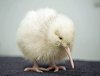
Earlier this month, the Pukaha Mount Bruce National Wildlife Center in New Zealand welcomed a rare white Kiwi chick-Named Manukura.


Many thanks for the link!!!

24 May 2011
A rare white kiwi chick has been born - the first to be hatched in captivity.
The chick, named Manukura, is not an albino but the rare offspring of some North Island brown kiwi from Little Barrier Island.
He was born at the Pukaha Mount Bruce National Wildlife Centre, 24km north of Masterton, on May 1, weighing approximately 250 grams.
The Little Barrier Island kiwi were transferred to Pukaha in May last year.
Elders from the Rangitane o Wairarapa iwi gave the chick his name, which means "of chiefly status".
Rangitane chief executive Jason Kerehi said tribal elders saw the white chick as a "tohu" or "sign" of new beginnings.
"Every now and then something extraordinary comes along to remind you of how special life is," Kerehi said. "While we're celebrating all 14 kiwi hatched this year, Manukura is a very special gift."
Manukura is being hand-reared in Pukaha Mount Bruce's new kiwi nursery. He will remain in the nursery until the end of May, where visitors can view him in his nocturnal brooder box and at his daily weigh-in at 2pm.
The white chick will then remain in captivity with other chicks at Pukaha for at least four to six months. When it is old enough to protect itself, it could potentially be released into the sanctuary.
Department of Conservation (DOC) rangers, who manage the kiwi programme at Pukaha, will ensure the best interests of the bird remain a priority.
"A white kiwi might really stand out making it more vulnerable," said DOC area manager Chris Lester.
"We want to ensure that as many people as possible get a chance to see it, and that we keep it as safe as possible."
02 June 2011
The white kiwi chick hatched in Wairarapa may be destined for a life in advocacy, having already attracted global attention for his species.
The chick, now a month old, was the 13th of 14 kiwis successfully hatched at Pukaha Mt Bruce this breeding season. After reaching the required weight and all the expected milestones, including eating on his own, the chick has been moved to a predator-proof enclosure where 12 other chicks have been raised this season.
Named Manukura, which means "of chiefly status", the white chick is the rare offspring of kiwi transferred to Pukaha from Little Barrier Island last year. He will stay in his new enclosure for at least four months.
Conservation Department area manager Chris Lester said it was not clear where the chick would go after this time but an advocacy role was an option.
"We will keep his best interests in mind but he has already contributed hugely. It is good for New Zealand and good in a conservation sense that the kiwi's story be told around the world."
Reports the white chick would be at greater risk from predators would only be true if the bird was out in the daytime, so it was possible he would be set free in the wild at some stage, he said.
Manukura has captured the world's imagination, with news stories about him published in Middle East, the United States and Europe. Visitor numbers at Pukaha wildlife centre have been considerably greater while he has been on display, with 200 to 300 people there at peak times.
"We have had good crowds through over the past week and there have been lots of comments from people who see it as a sign of good things," manager Kathy Houkamau said.
Though Manukura is being referred to as a male, "his" sex will not be clear for a few more weeks.
photo on the link too, for anyone who wants to see him again1 July 2011
Pukaha Mt Bruce Wildlife Centre is reaping the financial rewards of having little white kiwi Manukura within its walls, with more than 1000 visitors paying to see him since he began public viewings only a month ago.
The kiwi, now two months old, attracted huge national and international attention when he was born at the centre from two North Island brown kiwi on May 1.
He was introduced to the world on May 26 and in the following two weeks was visited by 700 people.
His pure white colouring was the result of a recessive gene and he was believed to be the first all-white kiwi born in captivity. His parents were taken from Little Barrier Island, where there were a few other white kiwi and several with white patches.
Manukura could be viewed at the centre on Sundays only because of his nocturnal nature.
Field centre supervisor at Pukaha Mt Bruce, Kathy Houkamau, said the interest in Manukura had been incredible, with visitor numbers for June up 25 per cent from last year, but she could not put a figure on the financial impact.
"He's pretty much tipped our world on its ear, it's had a huge impact," she said.
"It is helping with our revenue at a time of the year when we don't expect it; it helps us to pay the bills."
Winter was usually quiet at the centre, but the combination of a star attraction and mild weather had brought people to the centre in their droves.
People were learning more about kiwi and the challenges they faced through their experience with Manukura and were inspired to learn more.
Manukura had his own Facebook page with more than 1000 fans already, and he was generating a lot of interest off-shore.
One foreign visitor even wanted to buy Manukura as a pet for his mother – a request that was politely declined.
Many people inquired about whether or not another white kiwi could be born if the same parents were to breed again.
Ms Houkamau said the chances were quite slim.
"There is a good chance they will breed again," she said. "There was no way we could've ever planned him [to be all white]."
MANUKURA'S VISITORS
May 29:200
June 5:500
June 12:200
June 19:100
June 26:100

5 August 2011
Manukura, the first white kiwi chick hatched in captivity has confounded expectations by turning out to be girl.
Many DOC rangers at Pukaha Mt Bruce National Wildlife Centre in northern Wairarapa had her pegged as a boy, but Massey University DNA tests have revealed the truth.
Born on May 1 she is seen as a sign of new beginnings by local Maori and the rare chick may be just that because new, out-of-season kiwi eggs have been found in the native forest at her Pukaha Mount Bruce home.
Since hatching, the star thirteenth chick of Pukaha's record kiwi breeding season has commonly been referred to as 'he.'
"I had a feeling all along that Manukura was a male and we'd come to think of her as a boy," DOC captive breeding ranger Darren Page said.
"It was yet another surprise from this extraordinary bird,'" he said.
The only way to find out the sex of a juvenile kiwi is to remove a feather and take DNA from the tip of the feather where it enters the skin.
Manukura remains in captivity in a fenced outdoor enclosure sharing with another female chick named Potiki, meaning 'youngest' because she was the fourteenth chick hatched last season.
22 December 2011
It is a white Christmas at Pukaha Mount Bruce with the surprise hatching of a second rare white kiwi at the national wildlife centre.
The rare bird was born last Sunday at Mt Bruce Wildlife Centre's kiwi nursery.
The first white kiwi, Manukura, was born at the nursery in May this year.
A small number of North Island brown kiwi carry the rare recessive gene that creates white kiwi offspring.
Local Maori iwi Rangitane o Wairarapa has named the chick Mauriora meaning sustained life.
Used as an exclamation or definition of something important, Mauriora is a powerful name, Rangitane chief executive and Pukaha board member Jason Kerehi said.
This new kiwi is seen as an assurance that we are blessed with more than one special creature and there is potential for more.
Centre manager Kathy Houkamau said staff were "gob-smacked" when the chick was born.
"While every kiwi is precious, to have a second white chick is a delightful gift, especially at this time of year."
We thought Christmas had come early in May when Manukura arrived but now its come twice.
Department of Conservation captive breeding ranger Darren Page said it was remarkable that two birds with the rare white gene had paired up in 940-hectare Pukaha forest to produce two white chicks over two seasons.
It's been phenomenal - not just because of the white chicks but the record kiwi breeding here over the past two seasons, Page said.
There was always a chance we could get another white kiwi but we didn't really expect it. We hope it will further raise the profile of our work here and other kiwi recovery programmes.
Both white birds have the same father, who we have identified through his transmitter, Page said.
"We can't identify the mother but assume she is the same because of the rarity of the white gene."
The parents of the white chicks were both among 30 transferred from Little Barrier Island last year to boost the adult population at Mt Bruce.
The white gene is thought to have found its way into the kiwi population on Little Barrier after a white kiwi was put on the island early last century.
The new chick will be on show from Boxing Day.
Eleven kiwi have hatched at the centre so far this season and with at least four months to go, more are expected. Of the two kiwi eggs currently incubating in the nursery one is from the same nest as Mauriora.

Are they going to release this bird into the wild? The mortality rates for white animals in the wild is a lot less than those of normal colours!

I think Vulpes meant to say that the survival rates for (aberrant) white animals in the wild are a lot less than those of normal colours.
9 July 2012
A rare white kiwi in the Wairarapa has been paired with a young brown kiwi and it is hoped the two will one day mate.
Fourteen-month-old Manukura, and her male friend MB27 – named after the order of his hatching – have moved into the same indoor enclosure and have been “getting on okay”, according to Department of Conservation captive breeding ranger Philip Wisker.
Manukura, believed to be the first all-white chick hatched in captivity, was hatched last May in the Pukaha Mt Bruce National Wildlife Centre.
''She goes over to him and gives him a prod with her beak and when he jumps and gets a fright, then she runs off,” Mr Wisker told the Dominion Post.
''She's certainly the one in charge, though. She checks to make sure he's still there but she's the one that gets the pick of the nest boxes.”
Although the pair are not yet sexually active – that happens at around three years of age for the birds – breeders at the Operation Nest Egg programme are hopeful the two will hit it off and their budding friendship will eventually lead to more.
Despite being solitary animals Mr Wisker says that if put together while young the birds will often “snuggle up together”.
Manukura's parents were transferred to Wairarapa from Little Barrier Island in 2010.

A third white kiwi chick has hatched at Pukaha Mount Bruce, in the southern Tararua district.
The so far unnamed bird hatched on Monday and follows Manukura, hatched in May last year and Mauriora born in December.
The white feathers are caused by a genetic trait. Department of Conservation staff knew the eggs had come from Manukura's father, so knew there was a 25 per cent possibility of another white kiwi, but it still came as a surprise.
''We did know there was the chance of another white kiwi, so of course we weren't surprised, but it is still exciting for us'', Mt Bruce wildlife centre manager Kathy Houkamau said.
''It is rare enough that two brown kiwi carrying the rare recessive white gene mate in the first place, that they would go on to produce three white kiwi is... well, we're very blessed.
''Depending on how much support this little white kiwi chick needs, visitors may be able to see the chick at the 12pm feeding time in the next week or two,'' Houkamau said.
She went on to say unfortunately Pukaha can't guarantee whether the chick will be able to be viewed as it is really up to the kiwi chick and how quickly it begins to feed itself.
A small number of North Island Brown Kiwi carry the recessive white gene which both the male and female must have to produce a white chick.
''All three white birds have the same father, who we have identified through his transmitter,'' Department of Conservation captive breeding ranger Darren Page said.
''We can't identify the mother but assume she is the same because of the rarity of the white gene.''
The parents of the three white chicks were among 30 kiwi transferred from Hauturu/Little Barrier Island in 2010 to boost the adult kiwi population at Pukaha. White kiwi are known to exist on the island.
The island, north of Auckland, is generally off-limits to visitors.
Local Maori iwi Rangitane o Wairarapa are delighted that Pukaha Mount Bruce has been blessed a third time.
''We have always known the reserve at Pukaha Mount Bruce is a very special and spiritual place, this third white kiwi is confirmation of what we have always known,'' Rangitane chief executive and Pukaha board member Jason Kerehi said.
The iwi will name the chick over the next few days.
This white kiwi is the seventh to have hatched at the centre so far this season, with more birds expected before the season ends.
Another egg currently incubating in the nursery is from the same nest as this white kiwi chick, meaning there is a 25 per cent chance of a fourth white kiwi chick.

Another egg currently incubating in the nursery is from the same nest as this white kiwi chick

Same nest? I thought they only produced one egg at a time?
North Island brown kiwi regularly lay two eggs to a clutch, but there is about a month between them due to their size.Same nest? I thought they only produced one egg at a time?