Roger Williams Park Zoo Roger Williams Park Zoo Review and Species List - June 2025

MOG2012

Well-Known Member
Hello Zoochatters, I have another species list. I'll be talking about Roger Williams Park Zoo, a facility I've visited many times.

Roger Williams Park Zoo is located in Providence, Rhode Island. It's AZA and WAZA accredited with a size of 40 acres. It's the third oldest Zoo in the country, being founded in 1872.


I visited the Zoo on June 1, 2025 and spent 2 hours there with the review being based on this visit. Overall, the Zoo is decent, arguably being the best (or second) AZA-accredited Zoo in New England. Exhibit quality and theming is good with mostly decent/excellent enclosures.

I'm also going to provide my thoughts, a species list, and ideas, for each of the zoos exhibits over a series of posts.

Free-Roaming:
  • Indian Peafowl (Pavo cristatus) [Not Seen]

The next post will cover the African section.
 
Last edited:
Part 1 - Lower Savanna and Upper Savanna
For this review, I will go by the path I took while visiting the zoo. The zoo is mostly one path. I started at the main entrance.

Lower Savanna
The very first exhibit that visitors are met with is an aviary and the loud noises of the Trumpeter hornbills. I think it's a good start though signing should be included. Another thing is that the dinosaur moving statues are blocking views of this enclosure and others which is annoying. Next to this enclosure is the indoor serval exhibit which has a new, acclimating individual. Something that's a problem with this Zoo (along with several other New England zoos) is the glass as there is always a glare. Additionally, walls of the indoor enclosure should be painted to be more naturalistic.


  • Blue-bellied Roller (Coracias cyanogaster) [unsigned, not seen]
  • Hadada Ibis (Bostrychia hagedash) [unsigned]
  • Hamerkop (Scopus umbretta) [unsigned]
  • Ross's Turaco (Tauraco rossae) [unsigned, not seen]
  • Speckled Pigeon (Columba guinea) [unsigned]
  • Trumpeter Hornbill (Bycanistes bucanitor) [unsigned]
  • Serval (Leptailurus serval)
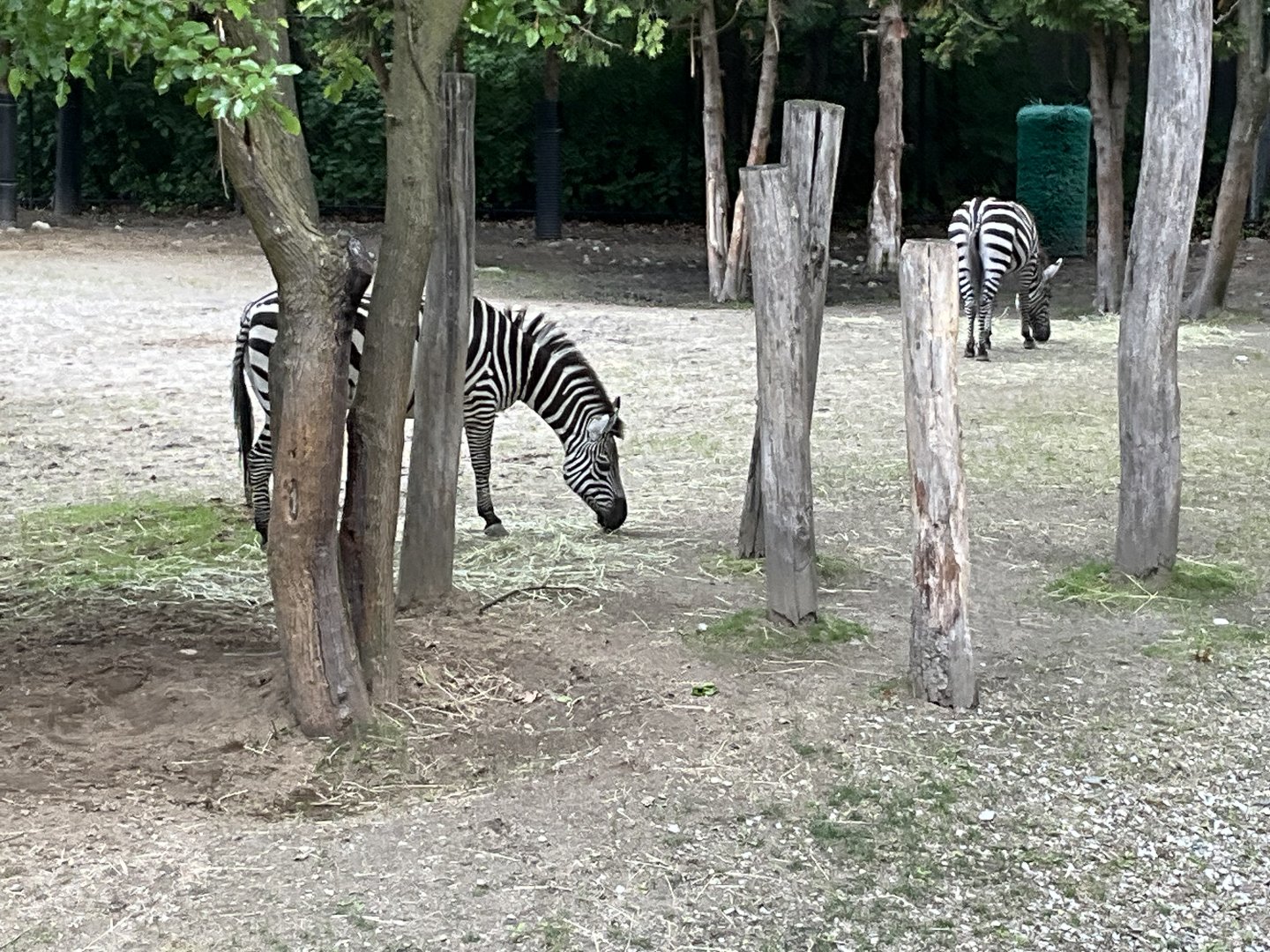
Then, if visitors go to the right path next to the aviary, it looks into a hoofstock enclosure with zebra, wildebeest, and Ankole-watusi. It should have more vegetation and enrichment because the enclosure looks lackluster. Additionally, the plains Zebra should get replaced with Hartmann's Mountain Zebra (SSP) and the Ankole-Watusi should be replaced by a spiral-horned antelope (nyala, greater kudu or lesser kudu). There is also a look at the outdoor serval enclosure.
  • Ankole-Watusi (Bos taurus x Bos indicus) [Signed as Watusi Cow]
  • Eastern White-bearded Wildebeest (Connochaetes taurinus albojubatus)
  • Grant's Zebra (Equus quagga boehmi) [Signed as Plains Zebra]
  • Serval (Leptailurus serval)

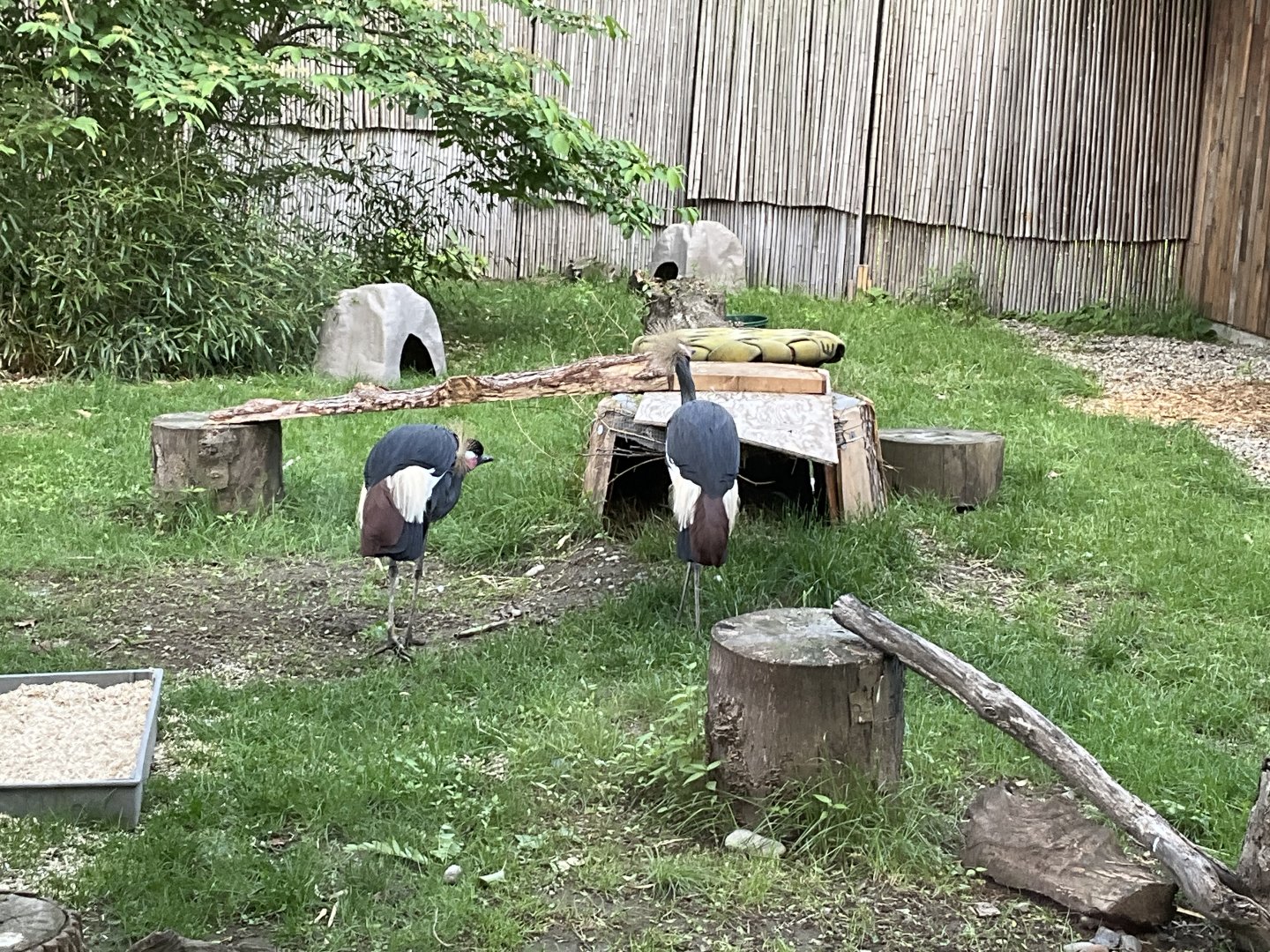
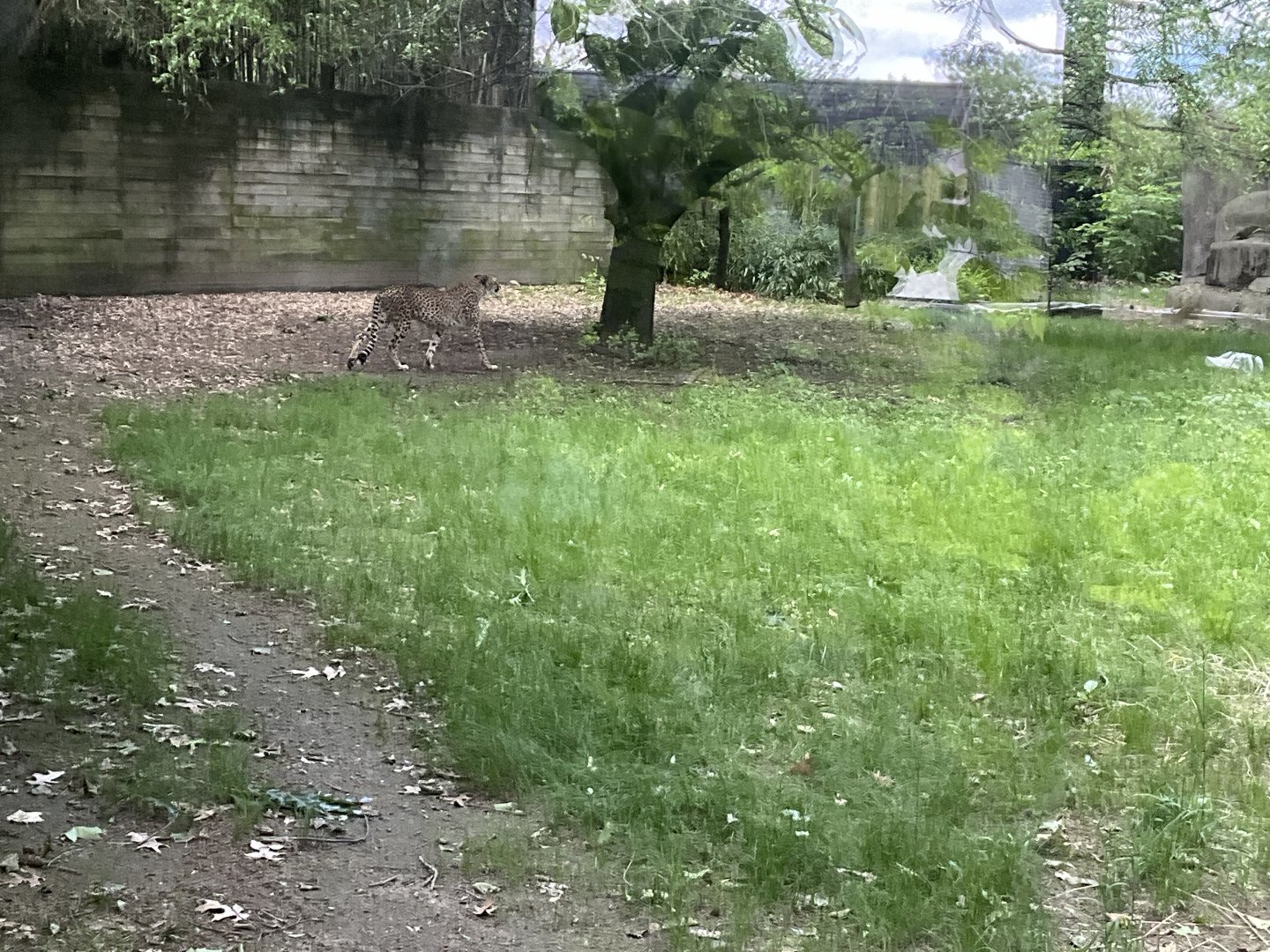
Then, the main pathway has several "offshoots" where visitors can see a Cheetah enclosure and a mixed species enclosure with crowned cranes and bat-eared Fox (used to have dik-diks). The cranes are flight restricted. Next to the crane enclosure is viewing into the elephant enclosure.


  • Cheetah (Acinonyx jubatus)
  • Bat-eared Fox (Otocyon megalotis)
  • West African Black Crowned Crane (Balearica pavonina pavonina)
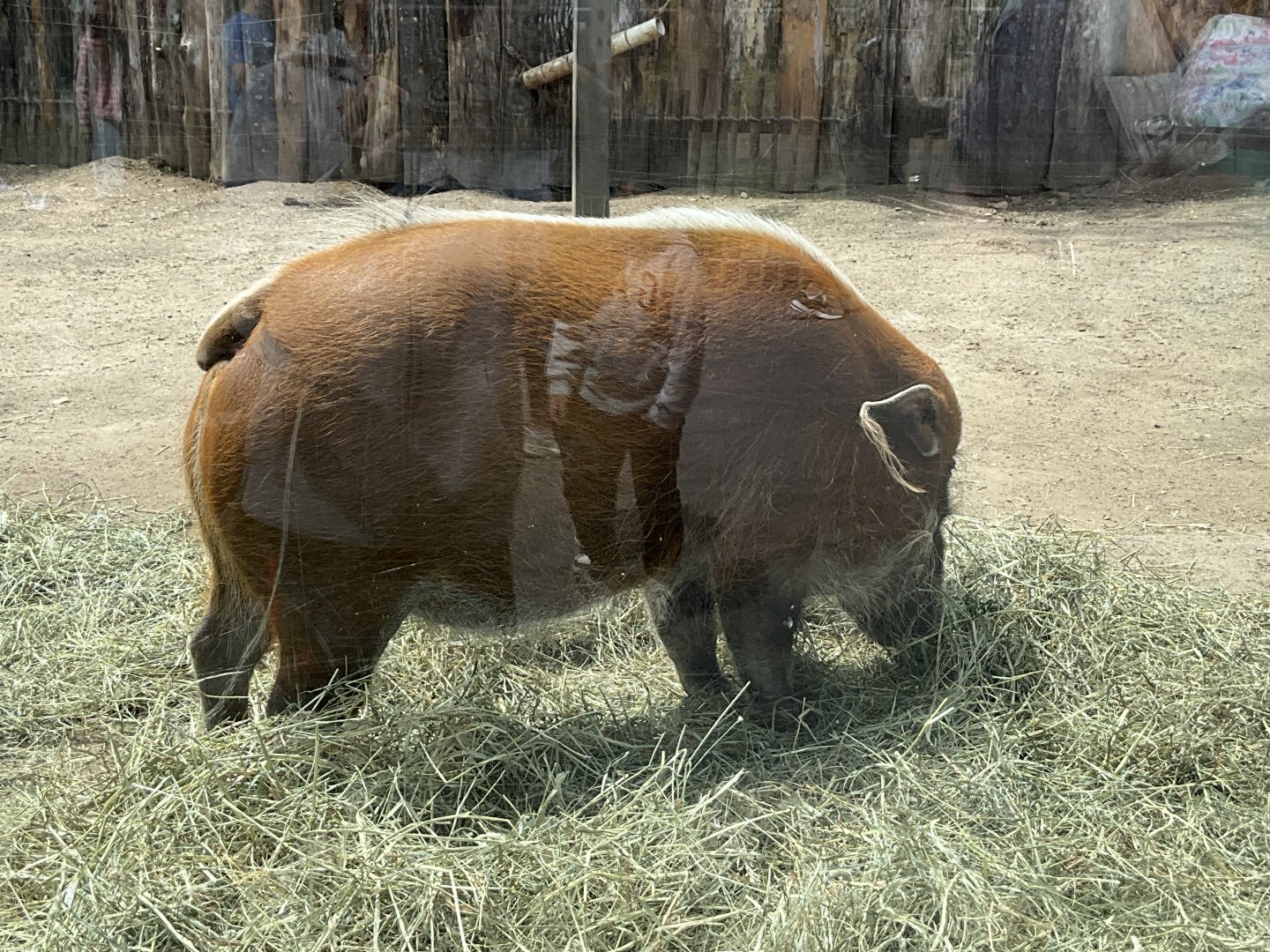
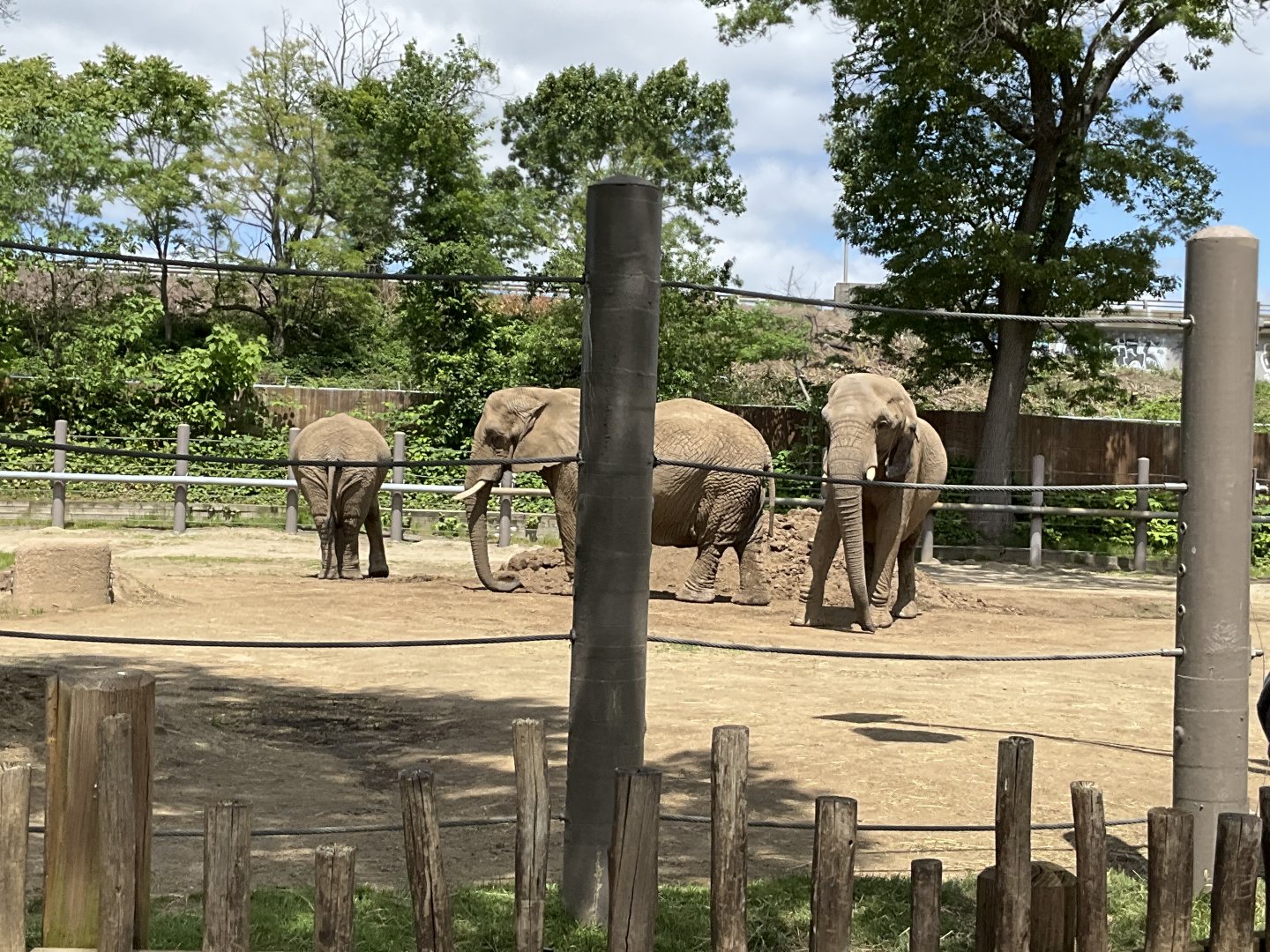
Then, there are 2 massive enclosures for the elephants and the giraffes with a decent enclosure for red River hogs near it. The elephants and the giraffes also have a viewable barn. The elephants are leaving in late 2027 though. In my opinion, the elephants should be replaced with a "new" giraffe building with various small species. A new indoor aviary next to the giraffe enclosure was added recently with the glare being a big problem (I could barely look into the enclosure) though the signage is helpful in identifying the birds


  • Red River Hog (Potamochoerus porcus)
  • African Savanna Elephant (Loxodonta africana)
  • Maasai Giraffe (Giraffa tippelskirchi tippelskirchi)
  • Snowy-crowned Robin-Chat (Cossypha niveicapilla) [Signed as Snowy-capped Robin-Chat]
  • Superb Starling (Lamprotornis superbus)
  • Taveta Golden-Weaver (Ploceus castaneiceps)
  • White-headed Buffalo-Weaver (Dinemellia dinemelli)


To Be Continued.
 
Part 2 - Penguins to Piranhas
This next part will continue my journey from the Coastal Penguin enclosure to Faces of the Rainforest. This part will encompass the following exhibits.
  • Coastal Penguin Habitat
  • Farmyard
  • Faces of the Rainforest
I also would like to thank @Astrotom3000 for an amazing format for reviews which is my inspiration for this "format/layout"

Coastal Habitat
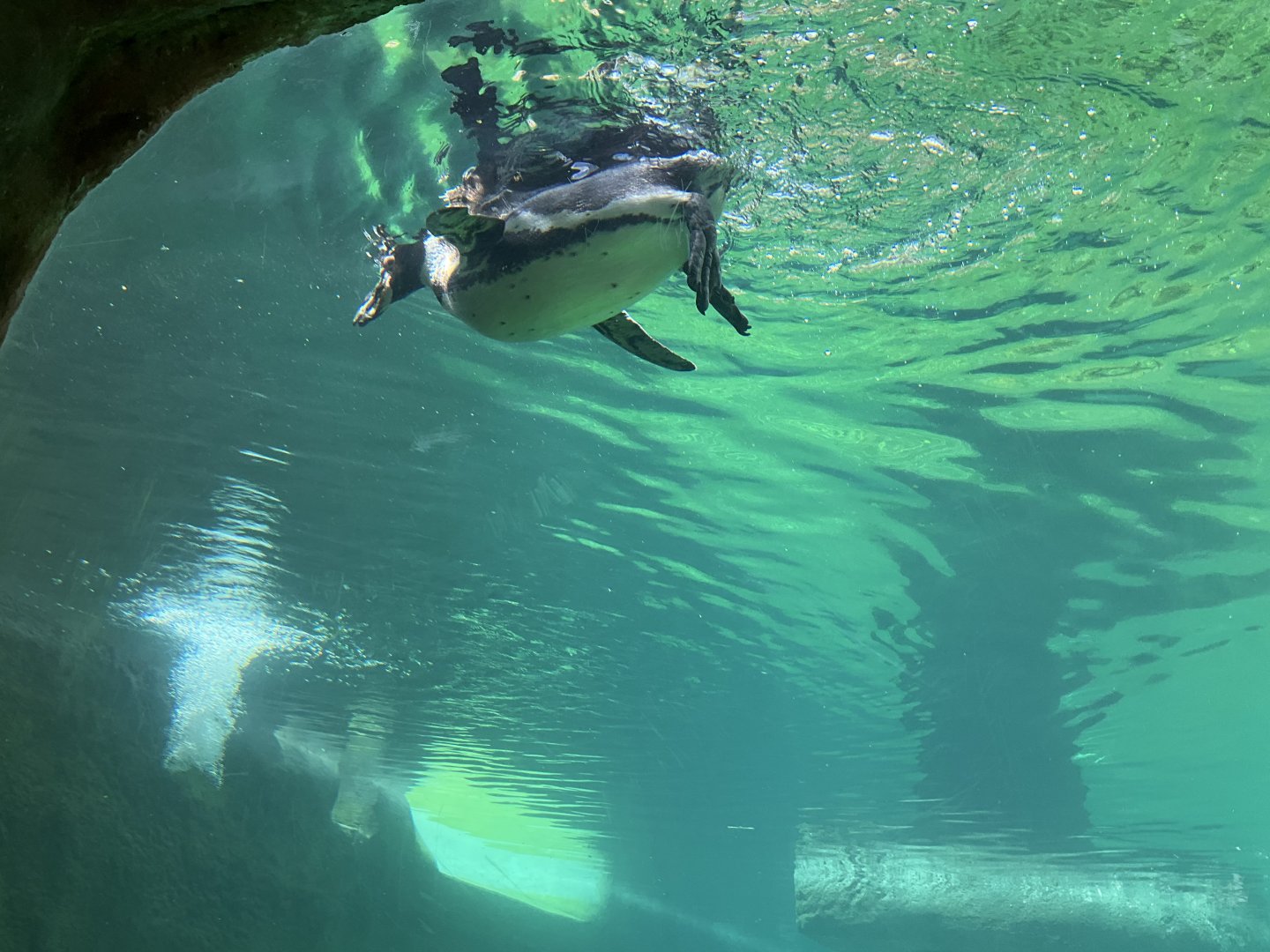
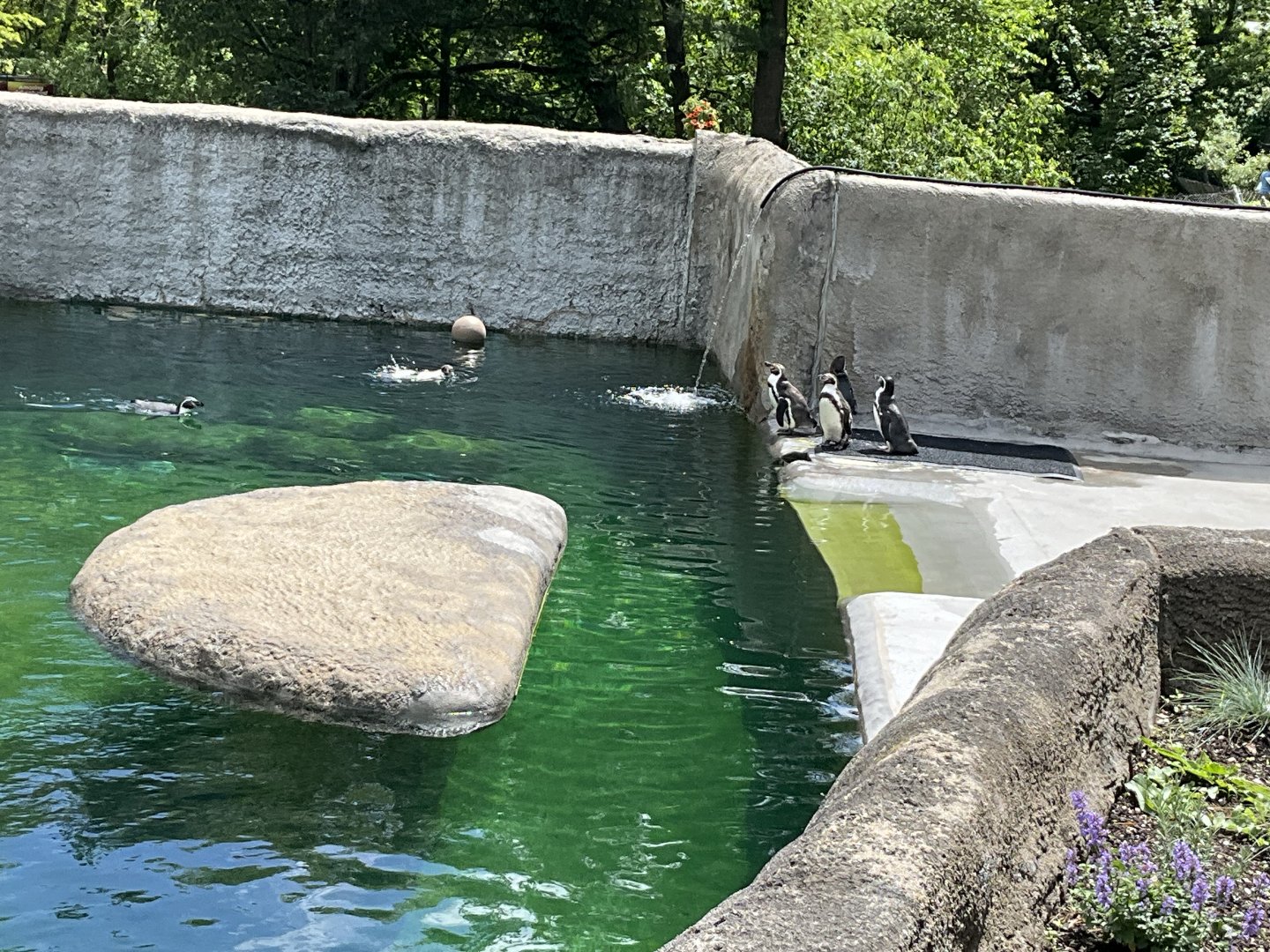
This penguin enclosure opened just last Friday (May 23rd), having Humboldt Penguins. It looks nice and used to house Bubba, the harbor seal (until they were transferred to Woods Hole Aquarium).


  • Humboldt Penguin (Spheniscus humboldti)
Farmyard
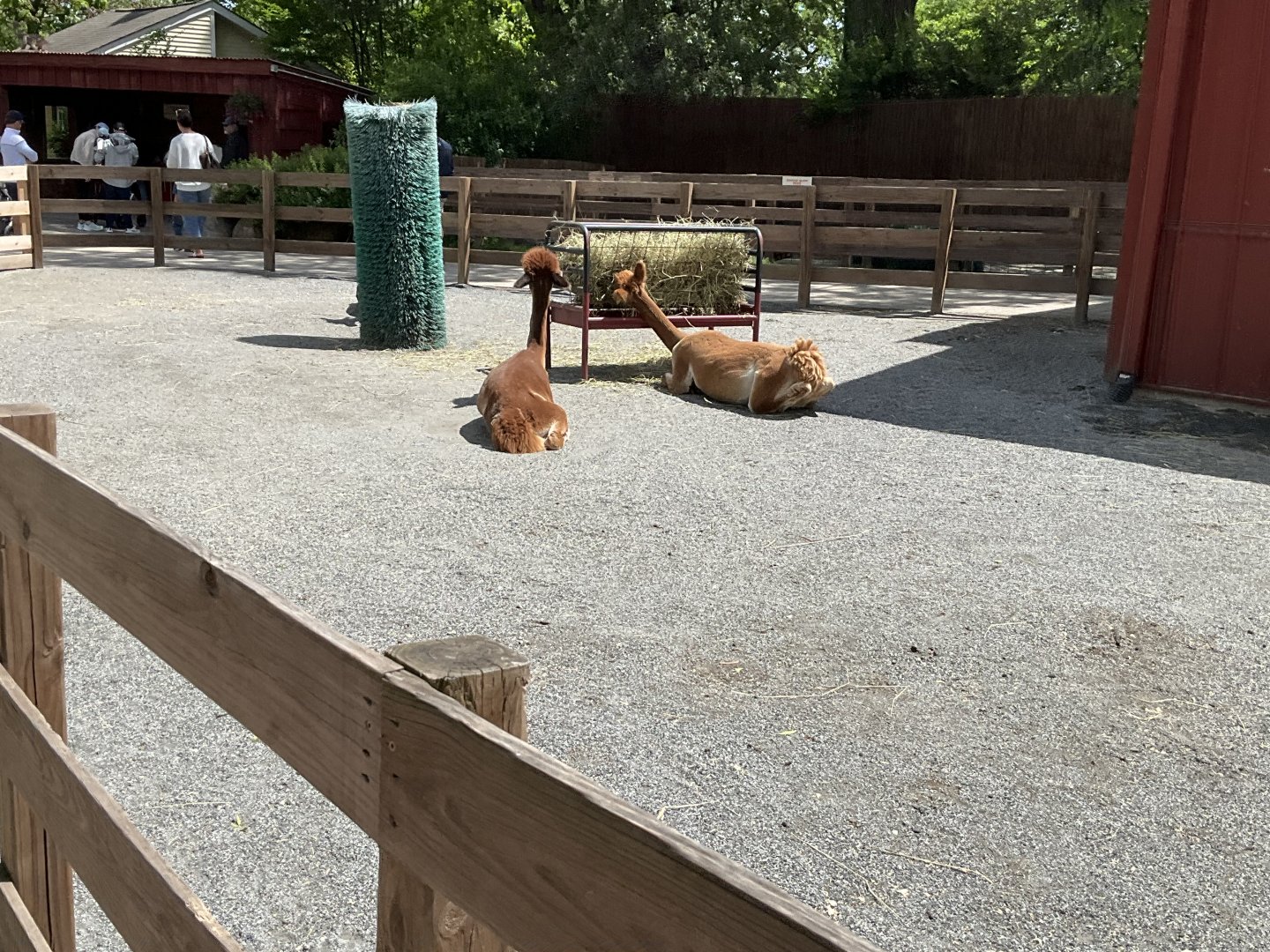
Also known as Alex and Ani Farmyard, it's a decent farmyard. There isn't really anything that is notable. The indoor owl enclosure is reasonably sized and is one of the better indoor ones. I also saw the Flemish giant rabbits for the first time which are constantly on-and-off exhibit


  • Flemish Giant Rabbit (Oryctolagus cuniculus domesticus)
  • Ossabaw Island Hog (Sus scrofa domesticus)
  • American Barn Owl (Tyto furcata)
  • Miniature Nubian Goat (Capra hircus hircus)
  • Nigerian Dwarf Goat (Capra hircus hircus) [unsigned]
  • Shetland (Ovis aries aries)
  • Huacaya Alpaca (Vicugna pacos)
Faces of the Rainforest
This exhibit opened on November 30, 2018, being part of the now discontinued? 20-year master plan for the Zoo. It replaced the old Tropical America building (which now holds the life support system for the new building). Connected to the building is a mixed primate enclosure where the primates can travel between indoors and outdoors.


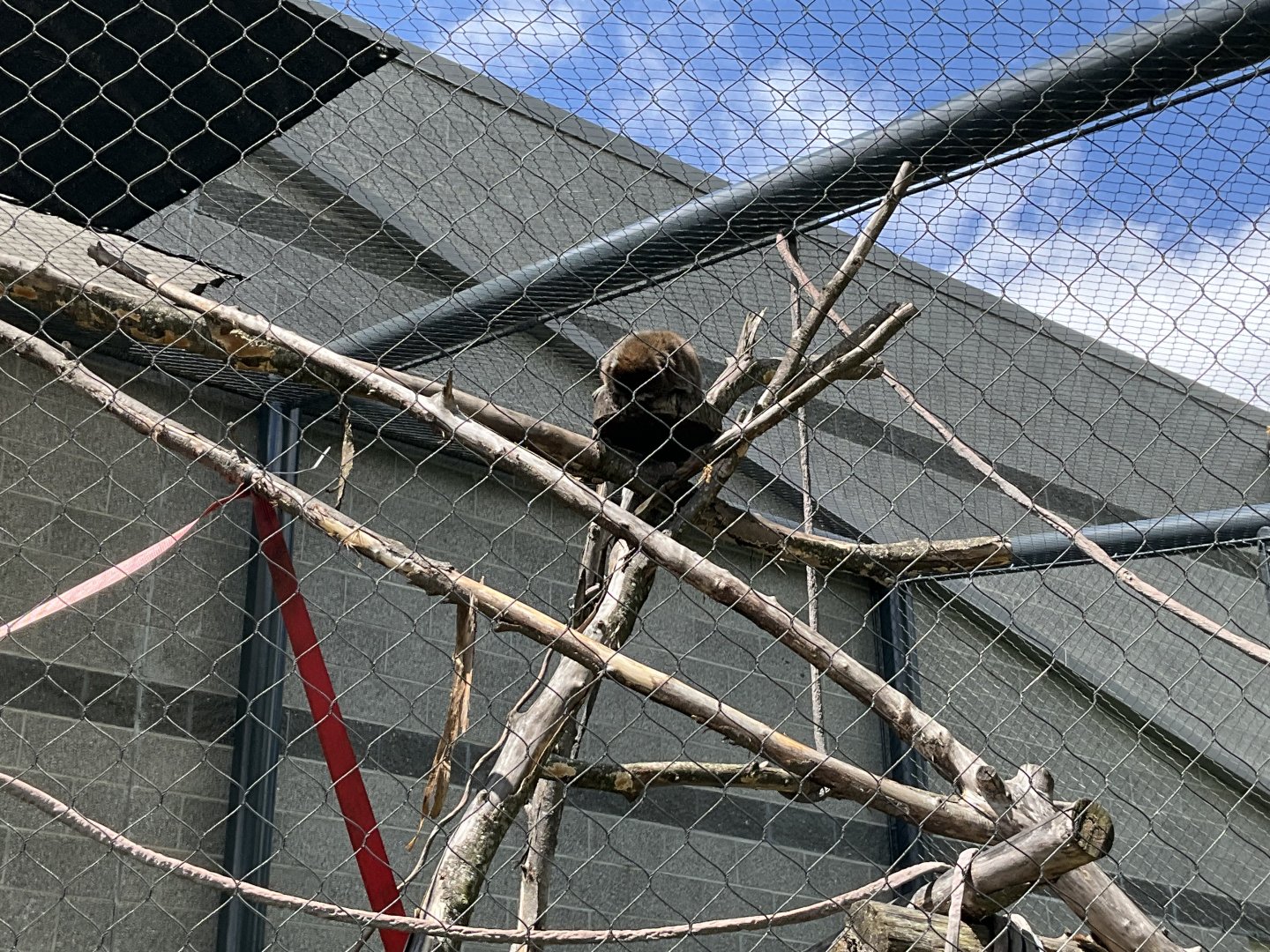
  • Black-and-gold Howler Monkey (Alouatta caraya) [not seen]
  • Bolivian Gray Titi (Plecturocebus donacophilus)
  • White-faced Saki (Pithecia pithecia)

Once visitors enter via the motion detector doors (a species escaped because of this), they are met with the indoor primate enclosure (with a bad glare), and the free-roaming species. If you look up, you might see golden lion tamarins crossing a "bridge" over your head. There are also several terrariums and aquariums before a giant otter enclosure.

  • Emerald Swift (Sceloporus malachiticus)
  • Dyeing Poison Dart Frog (Dendrobates tinctorius)
  • Emerald Tree Boa (Corallus caninus) [unsigned]
  • Yellow-headed Poison Dart Frog (Dendrobates leucomelas) [Signed as Yellow Banded Poison Dart Frog]
  • Bleeding Heart Tetra (Megalamphodus erythrostigma) [unsigned]
  • Cardinal Tetra (Paracheirodon axelrodi) [unsigned]
  • Freshwater Angelfish (Pterophyllum scalare) [unsigned]
  • Rummy-nose Tetra (Petitella rhodostoma) [unsigned]
  • Black Spot Piranha (Pygocentrus cariba)
  • Giant Otter (Pteronura brasiliensis) [not seen]
Then, there is a small anaconda enclosure and a mixed enclosure between tamandua and toucans. I have never seen the tamanduas though. Hyacinth macaws were present inside despite typically being kept outside (likely due to the weather).

  • Green Anaconda (Eunectes murinus)
  • Keel-billed Toucan (Ramphastos sulfuratus) [not seen]
  • Southern Tamandua (Tamandua tetradactyla) [not seen]
  • Hyacinth Macaw (Anodorhynchus hyacinthus)
Free-roaming:
  • Boat-billed Heron (Cochlearius cochlearius)
  • Giant Wood-Rail (Aramides ypecaha) [not seen]
  • Golden Lion Tamarin (Leontopithecus rosalia)
  • Linnaeus's Two-toed Sloth (Choloepus didactylus)
  • Red-footed Tortoise (Chelonoidis carbonarius)
  • Scarlet Ibis (Eudocimus ruber)
  • Sunbittern (Eurypyga helias) [not seen]
  • Yellow-rumped Cacique (Cacicus cela)
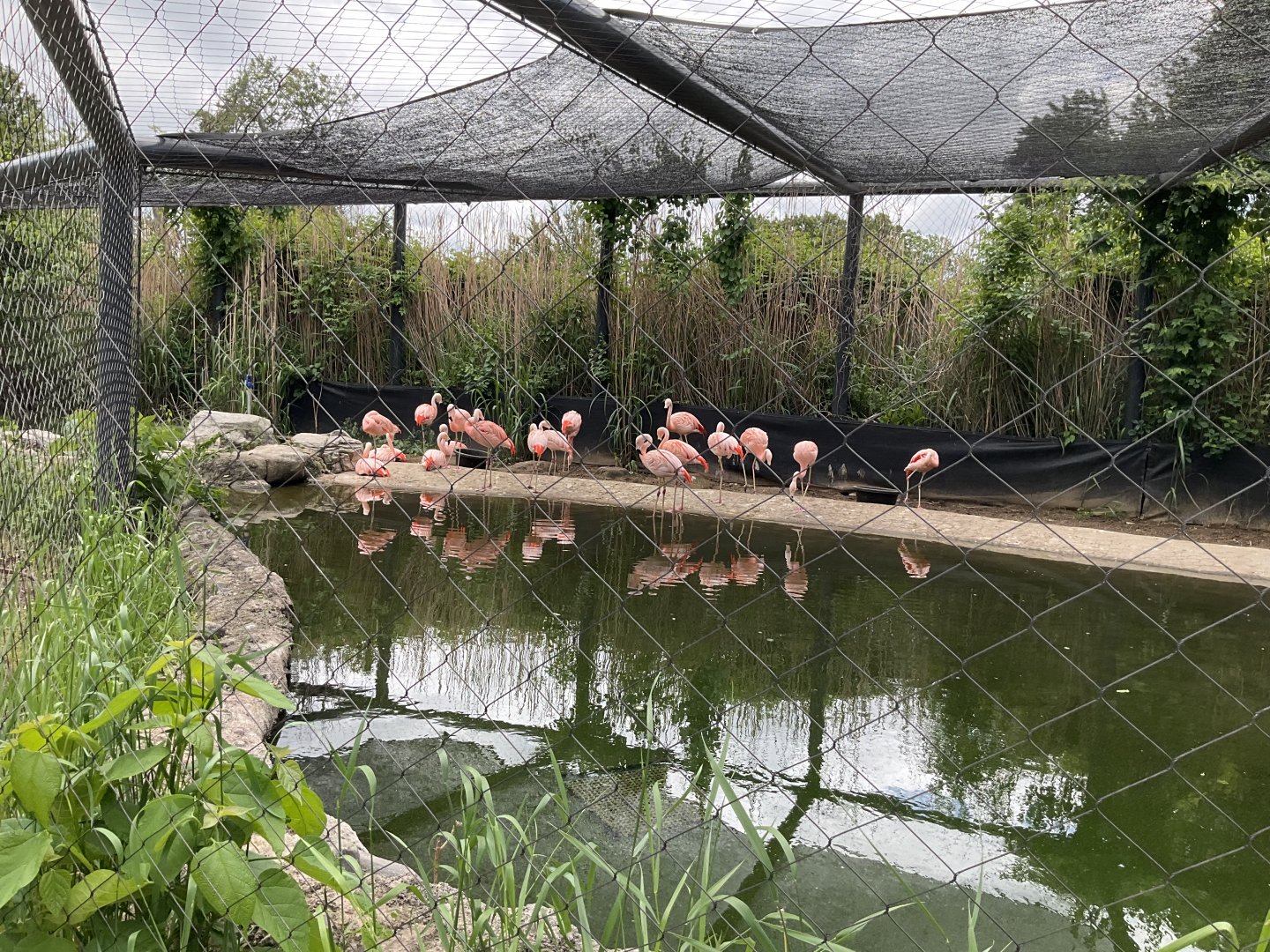
Once visitors go outside, there is an anteater enclosure, a large flamingo aviary (though they are flight-restricted), and a macaw enclosure.

  • Giant Anteater (Myrmecophaga tridactyla)
  • Chilean Flamingo (Phoenicopterus chilensis)
  • Hyacinth Macaw (Anodorhynchus hyacinthus) [not seen, inside]


To Be Continued.
 
Part 3 - Rosellas to Ravens
This final part (other than species total) will focus on my journey from the World of Adaptations to Our Big Backyard. This part will encompass the following exhibits.
  • World of Adaptations
  • Himalayan Trek
  • Wild Woodlands
  • Feinstein Junior Scholar Wetlands Trail
  • Our Big Backyard
World of Adaptations
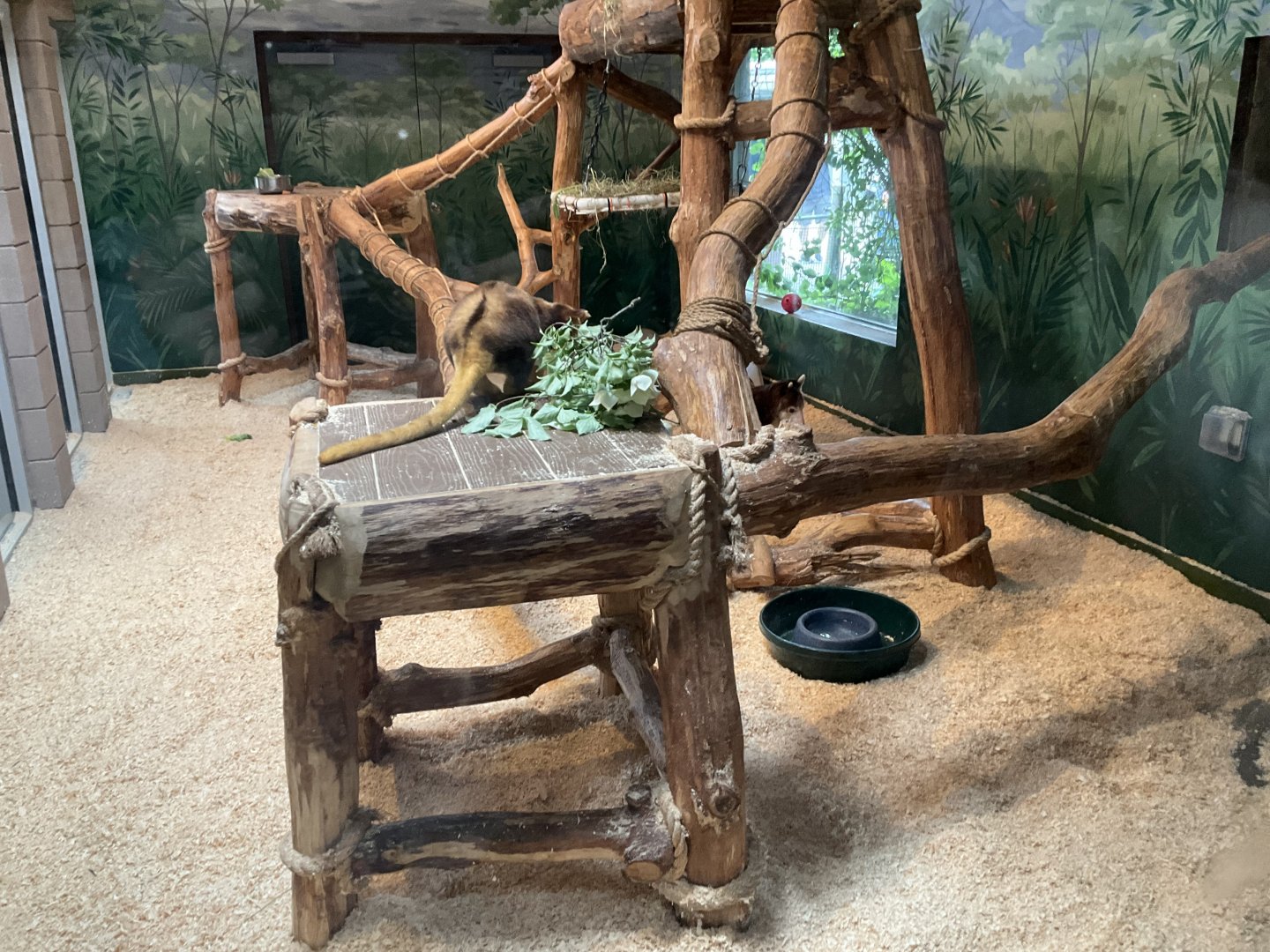
Next to the entrance of the exhibit is an outdoor enclosure for radiated tortoises which was empty (they were inside). Once entering, there is a tree kangaroo enclosure on the left side of the room and the right side of the room has a Komodo enclosure with a radiated tortoise enclosure in front of you. Once passing these enclosures, there is a hornbill enclosure, a paludarium, an indoor aviary, and a future home for Giant African Pouched Rats. I would replace the hornbill with Raggiana Bird of Paradise, and the Emerald Tree Boas with Green Tree Pythons which would be more "thematically" appropriate.


  • Huon Tree Kangaroo (Dendrolagus matschiei) [Signed as Matschie's Tree Kangaroo]
  • Komodo Dragon (Varanus komodoensis)
  • Radiated Tortoise (Astrochelys radiata)
  • Wrinkled Hornbill (Rhabdotorrhinus corrugatus)
  • Eastern Rosella (Platycercus eximius)
  • Speckled Mousebird (Colius striatus) [not seen]
  • Eastern Snake-necked Turtle (Chelodina longicollis) [Signed as Snake-necked Turtle]
  • Emerald Tree Boa (Corallus caninus)
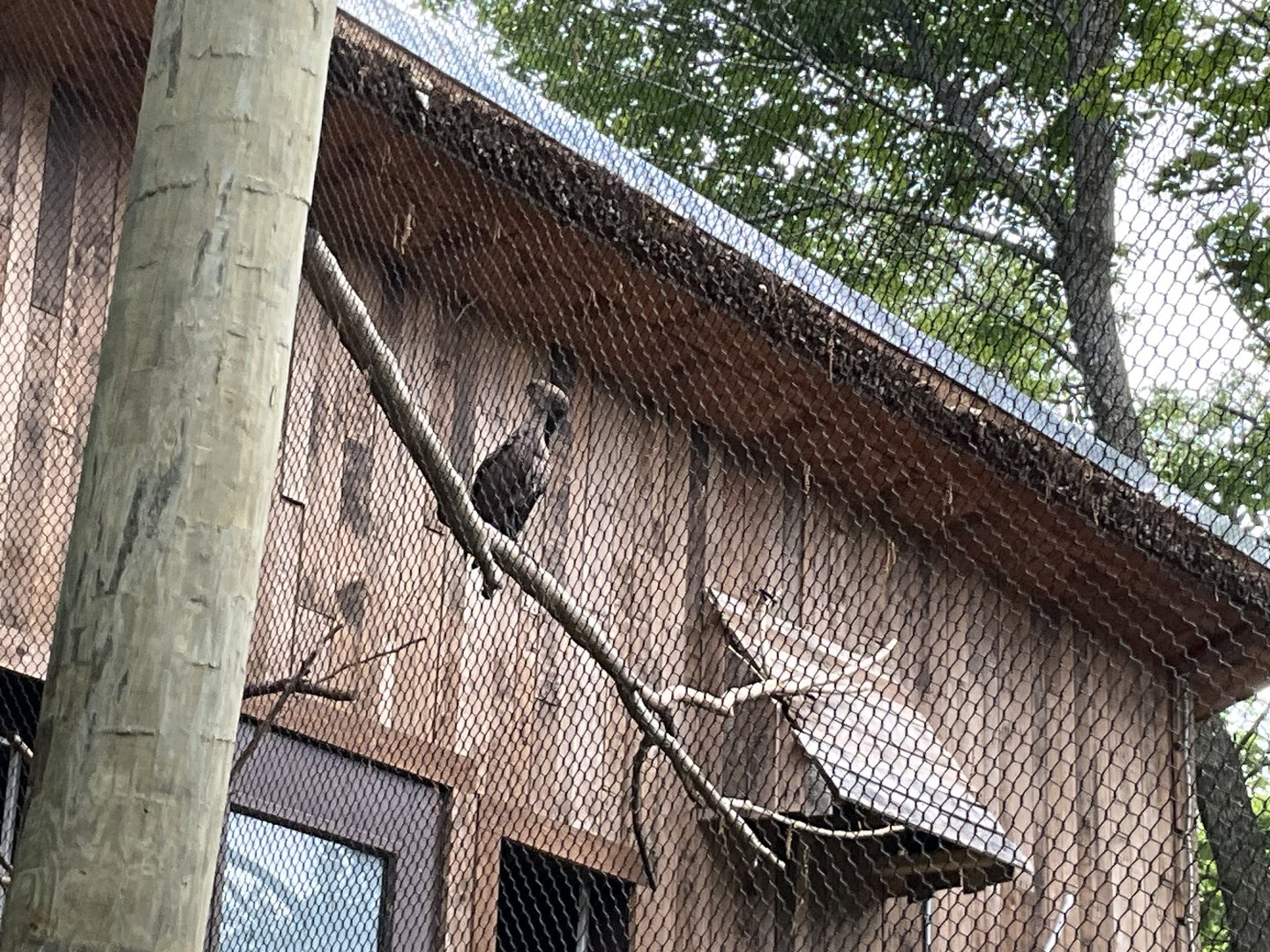
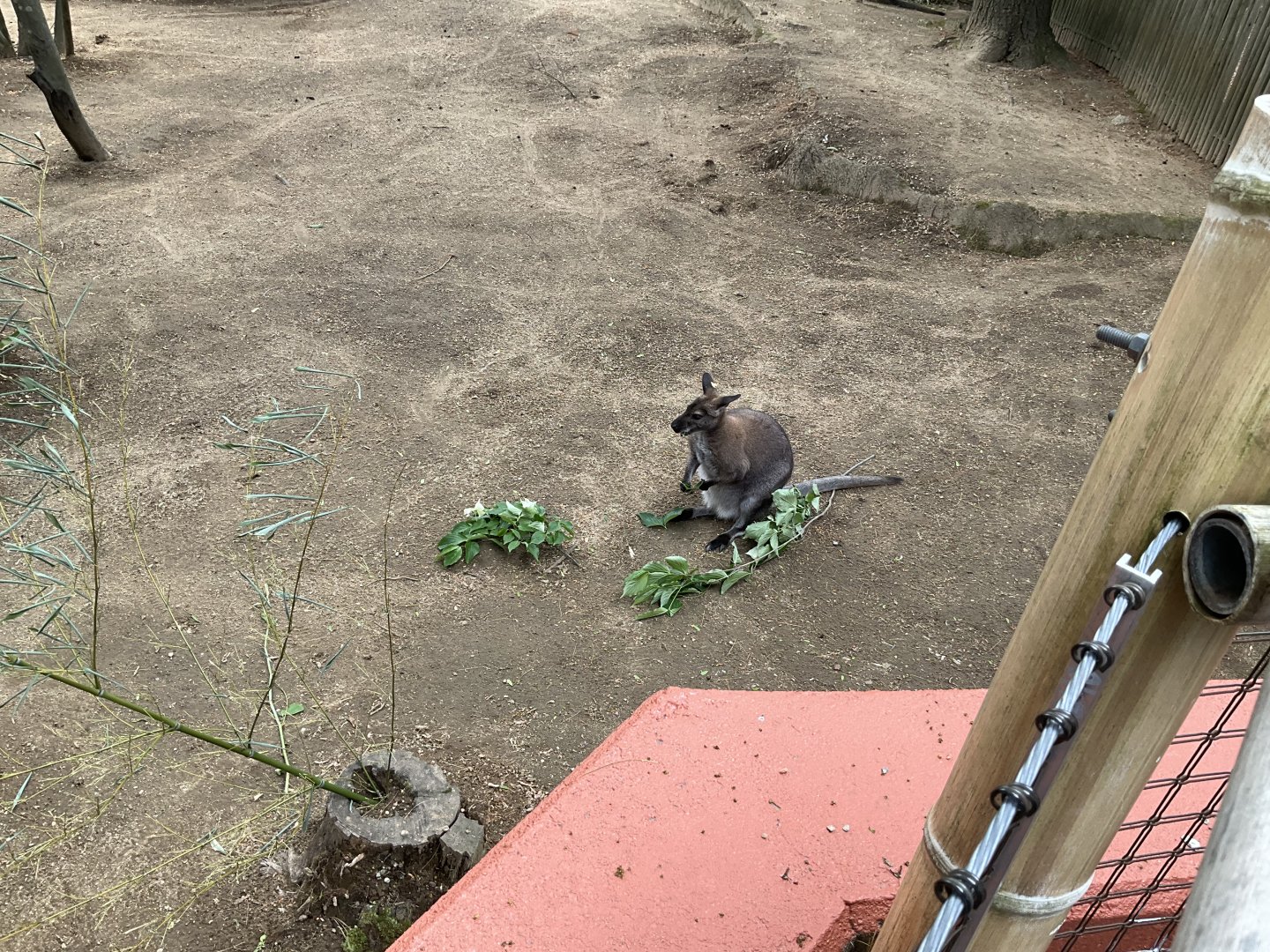
Once outside, there is a wallaby and otter enclosure on either side of the pathway. Then, there is the former walkthrough aviary which now has King Vultures and a Binturong enclosure which is going under renovations. There is also a babirusa, and kookaburra enclosure before exiting. Finally, there is a Gibbon enclosure past the exit. I would replace the wallaby with the Aldabra Giant Tortoise from Our Big Backyard, the kookaburras with Kea, and the otters with waterfowl like Nene.


  • Red-necked Wallaby (Notamacropus rufogriseus) [Signed as Bennett's Wallaby]
  • North American River Otter (Lontra canadensis) [not seen]
  • King Vulture (Sarcoramphus papa)
  • Sundaic Binturong (Arctictis binturong binturong) [Signed as Binturong] [not seen]
  • Sulawesi Babirusa (Babyrousa celebensis) [Signed as Babirusa]
  • Laughing Kookaburra (Dacelo novaeguineae)
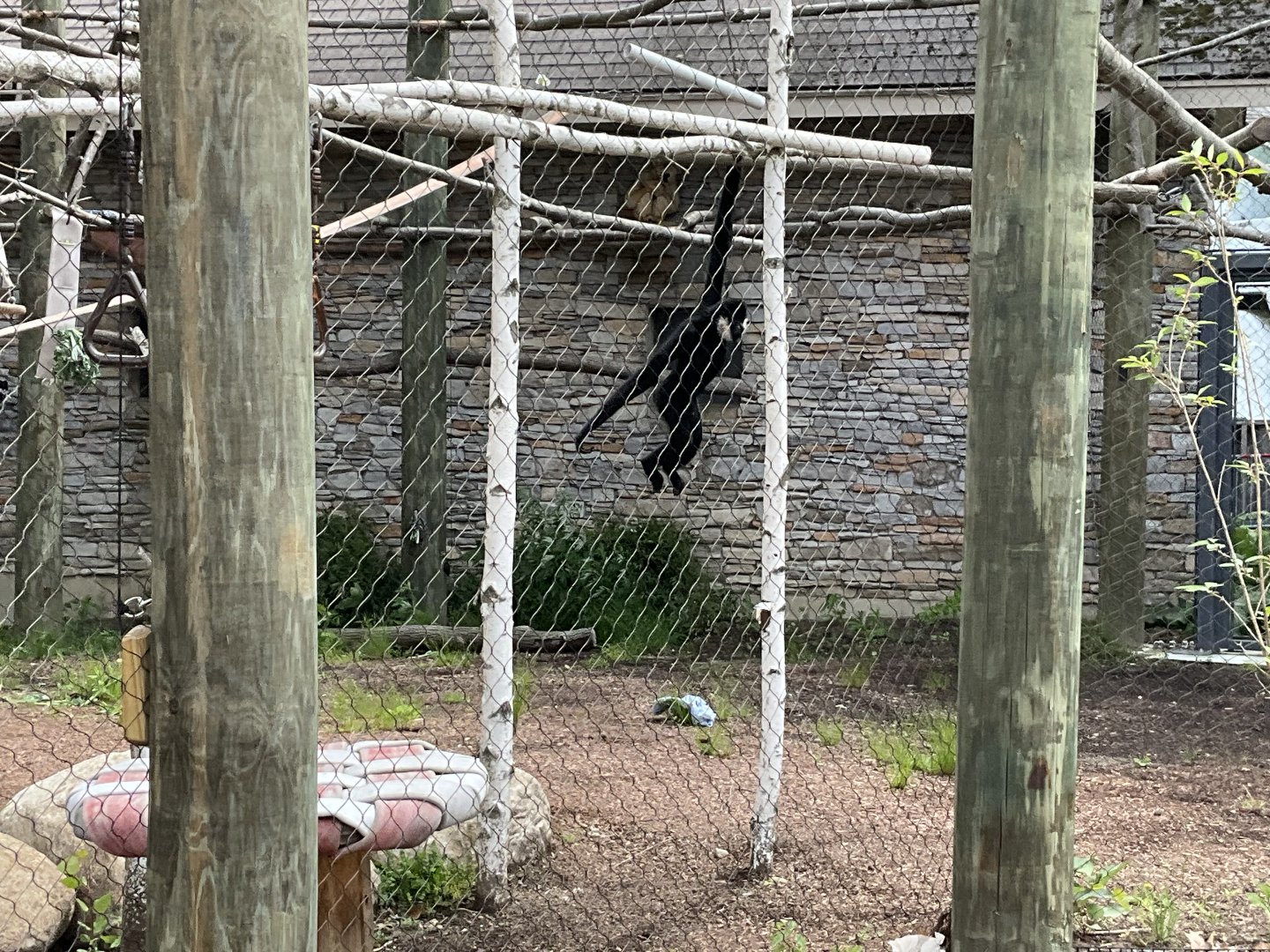
  • Northern White-cheeked Gibbon (Nomascus leucogenys) [Signed as White-cheeked Gibbon]
Himalayan Trek
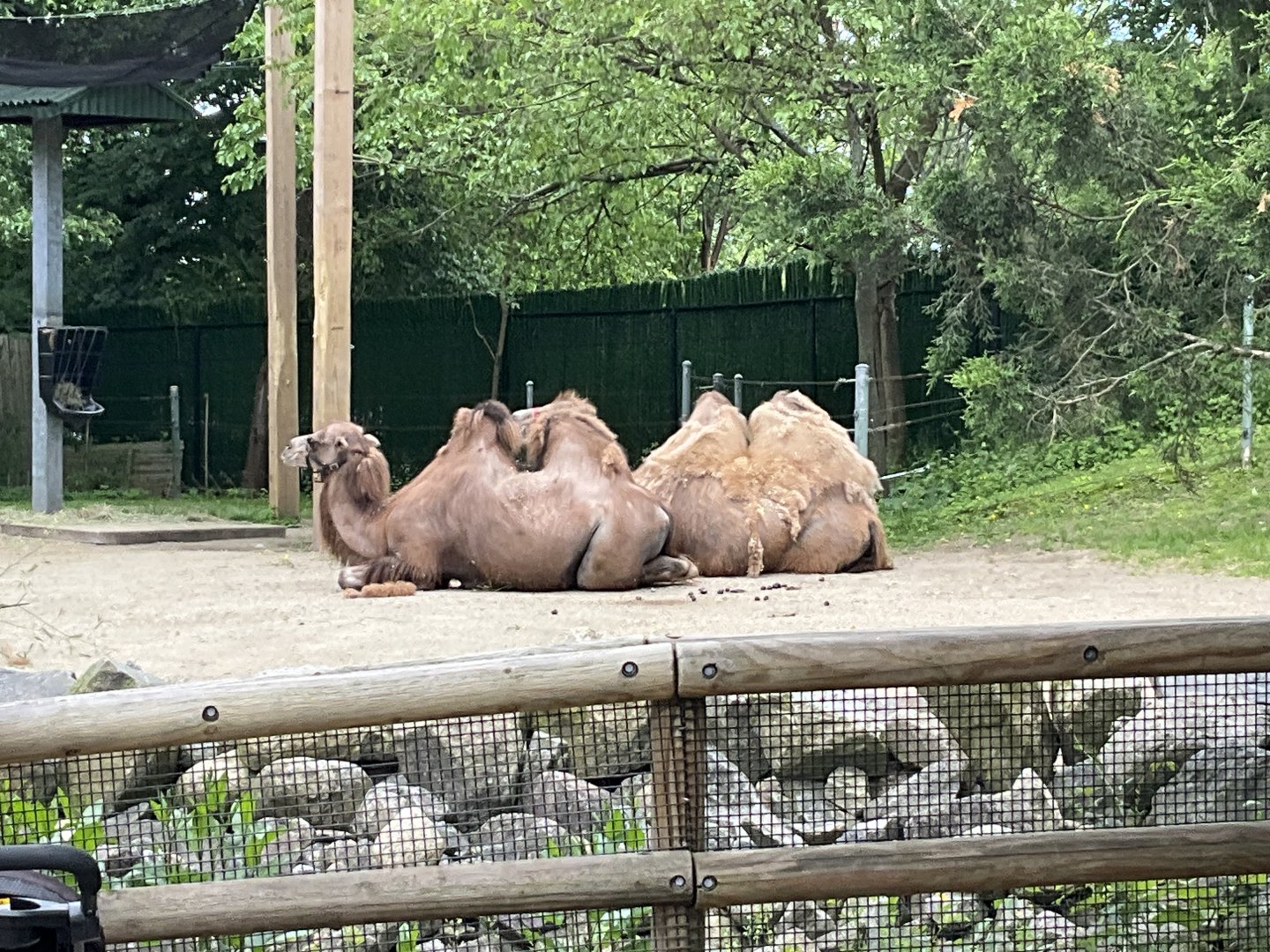
This area is formally known as the Marco Polo Adventure Trail which I like more. It starts off with a decent paddock for camels (though they could use more vegetation), then a large enclosure for a male Asian black Bear. After that, there is a red-crowned Crane enclosure going under renovation, a massive snow Leopard enclosure, the new red Panda enclosure, and a takin enclosure. I liked the theming of the original name so I would replace the black Bear with Sloth Bears, add waterfowl to the crane enclosure, and move the muntjac to the red Panda enclosure.

  • Domestic Bactrian Camel (Camelus bactrianus) [Signed as Bactrian Camel]
  • Asian Black Bear (Ursus thibetanus) [Signed as Moon Bear]
  • Red-crowned Crane (Grus japonensis) [not seen]
  • Snow Leopard (Panthera uncia)
  • Chinese Red Panda (Ailurus styani) [Signed as Red Panda]
  • Chinese Takin (Budorcas thibetana) [Signed as Takin]

Wild Woodlands
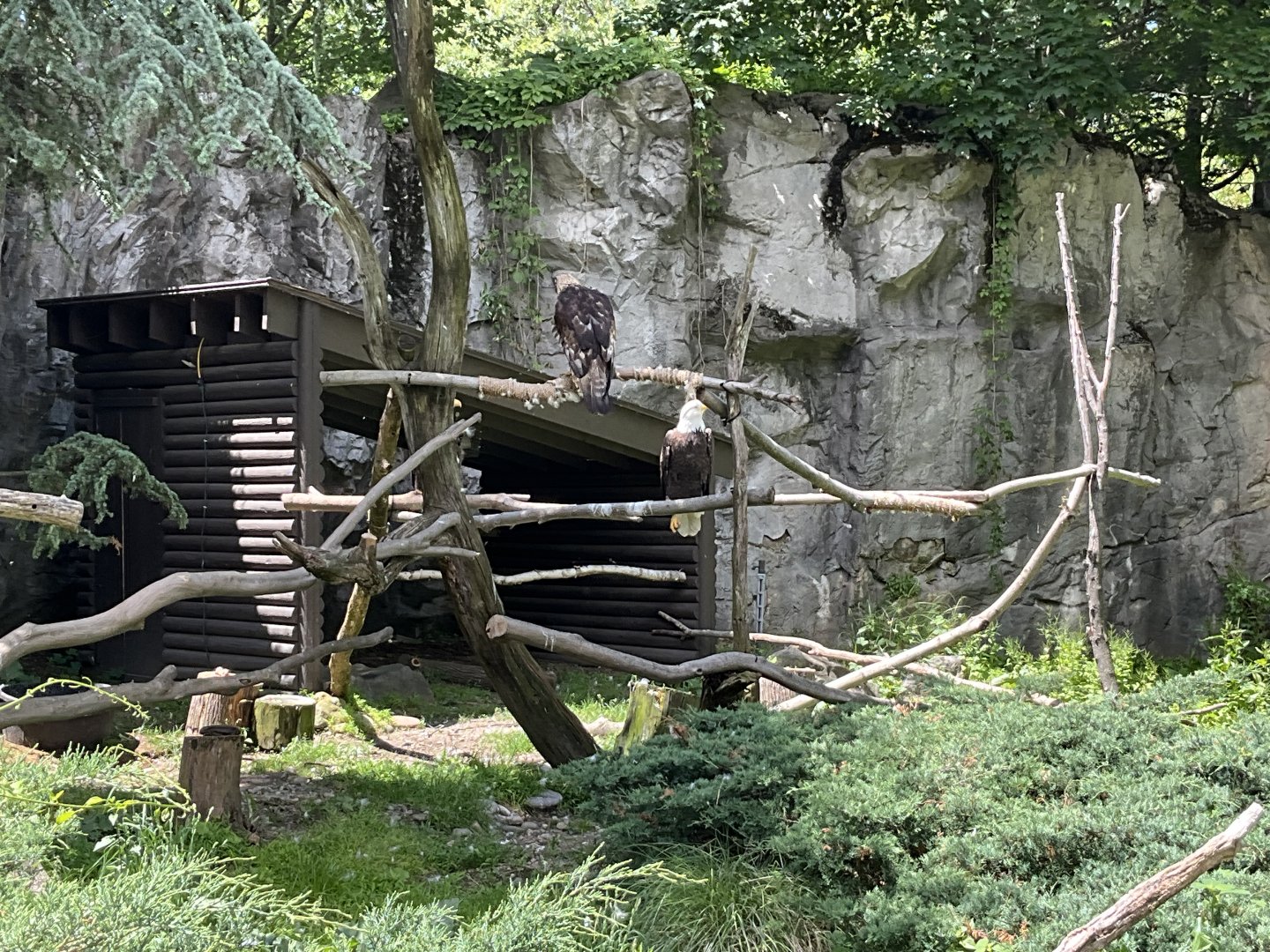
This area mainly focuses on North American wildlife. The first part is the Snake Den which has two snake terrariums with a vulture enclosure and an Animal Ambassador area adjacent (typically has Nine-banded armadillos). Then, there is a mixed eagle enclosure, a pronghorn enclosure, a wolf enclosure, and a bison enclosure.

  • Eastern Copperhead (Agkistrodon contortrix) [Signed as Northern Copperhead]
  • Eastern Ratsnake (Pantherophis alleghaniensis) [Signed as Black Ratsnake] [not seen]
  • Timber Rattlesnake (Crotalus horridus)
  • Timber Rattlesnake (Crotalus horridus)
  • American Black Vulture (Coragyps atratus)
  • Bald Eagle (Haliaeetus leucocephalus)
  • Golden Eagle (Aquila chrysaetos)
  • American Pronghorn (Antilocapra americana americana) [Signed as Pronghorn]
  • Eastern Wild Turkey (Meleagris gallopavo silvestris) [Signed as Wild Turkey]
  • Red Wolf (Canis rufus) [not seen]
  • Plains Bison (Bison bison bison) [Signed as American Bison]

Feinstein Junior Scholar Wetlands Trail
Next to the bison enclosure, there is a muntjac enclosure which had what I thought would be the most active muntjac I've seen (this would be proven wrong later that day). I didn't see that much there wild-wise other than a couple starling, catbirds, and mallards.

  • Reeve's Muntjac (Muntiacus reevesi) [Signed as Muntjac]
Our Big Backyard
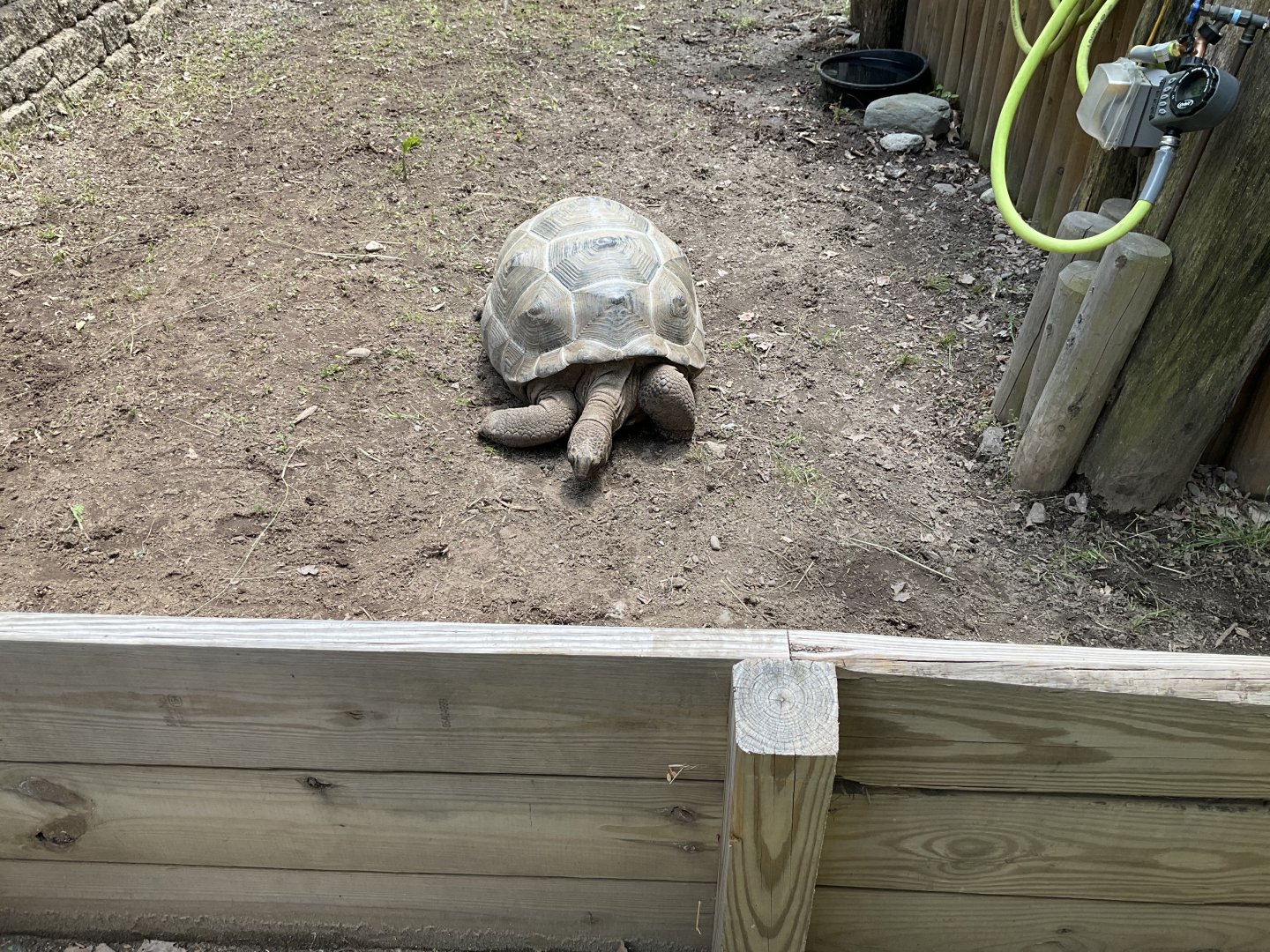
This area is somewhat "hidden" with the enclosures being very hard to find. I couldn't see the raven as I didn't go to the tree house but the giant tortoise enclosure was more in the open.


  • Common Raven (Corvus corax) [not seen]
  • Aldabra Giant Tortoise (Aldabrachelys gigantea gigantea)

To Be Concluded...
 
Conclusion
Now that I've finished the species list, here is the breakdown.
Total Species (not including ambassadors) - 86 species
  • Even-toed Ungulates and Cetaceans (Order Artiodactyla) - 14
  • Carnivorans (Order Carnivora) - 8
  • Primates (Order Primates) - 5
  • Sloths and Anteaters (Order Pilosa) - 3
  • Kangaroos, Possums, Wombats, and Allies (Order Diprotodontia) - 2
  • Lagomorphs (Order Lagomorpha) - 1
  • Odd-toed Ungulates (Order Perissodactyla) - 1
  • Proboscideans (Order Proboscidea) - 1
  • Perching Birds (Order Passeriformes) - 6
  • Pelicans, Herons, Ibises, and Allies (Order Pelecaniformes) - 4
  • Cranes, Rails, and Allies (Order Gruiformes) - 3
  • Hawks, Eagles, Kites, and Allies (Order Accipitriformes) - 2
  • Hornbills and Hoopoes (Order Bucerotiformes) - 2
  • New World Vultures (Order Cathartiformes) - 2
  • Kingfishers, Bee-eaters, Rollers and Allies (Order Coraciiformes) - 2
  • Landfowl (Order Galliformes) - 2
  • Parrots (Order Psittaciformes) - 2
  • Mousebirds (Order Coliiformes) - 1
  • Pigeons and Doves (Order Columbiformes) - 1
  • Kagu and Sunbittern (Order Eurypygiformes) - 1
  • Turacos (Order Musophagiformes) - 1
  • Flamingos (Order Phoenicopteriformes) - 1
  • Woodpeckers, Barbets, Toucans and Honeyguides (Order Piciformes) - 1
  • Penguins (Order Sphenisciformes) - 1
  • Owls (Order Strigiformes) - 1
  • Snakes (Suborder Serpentes) - 5
  • Turtles and Tortoises (Order Testudines) - 4
  • Lizards (Suborder Sauria) - 2
  • Characins (Order Characiformes) - 4
  • Cichlids and Allies (Order Cichliformes) - 1
  • Frogs and Toads (Order Anura) - 2

Invertebrates are sadly not represented and could easily replace a terrarium in Faces of the Rainforest (do we really need two dart frogs?) This is the end of my review and species list for Roger Williams Park Zoo. I really enjoy this Zoo.

I hope you all find this species list helpful and accurate but feel free to notice anything missing or incorrect. I'm going to start another review for Capron Park Zoo which I also visited today. Stay tuned...

 
Himalayan Trek
This area is formally known as the Marco Polo Adventure Trail which I like more. It starts off with a decent paddock for camels (though they could use more vegetation), then a large enclosure for a male Asian black Bear. After that, there is a red-crowned Crane enclosure going under renovation, a massive snow Leopard enclosure, the new red Panda enclosure, and a takin enclosure. I liked the theming of the original name so I would replace the black Bear with Sloth Bears, add waterfowl to the crane enclosure, and move the muntjac to the red Panda enclosure.

  • Domestic Bactrian Camel (Camelus bactrianus) [Signed as Bactrian Camel]
  • Asian Black Bear (Ursus thibetanus) [Signed as Moon Bear]
  • Red-crowned Crane (Grus japonensis) [not seen]
  • Snow Leopard (Panthera uncia)
  • Chinese Red Panda (Ailurus styani) [Signed as Red Panda]
  • Chinese Takin (Budorcas thibetana) [Signed as Takin]
Just a note, the "Chinese takin" are actually Sichuan/Himalayan takin.
 
Just a note, the "Chinese takin" are actually Sichuan/Himalayan takin.
Thanks, I didn't know if it was confirmed to be that subspecies.
  • Domestic Bactrian Camel (Camelus bactrianus) [Signed as Bactrian Camel]
  • Asian Black Bear (Ursus thibetanus) [Signed as Moon Bear]
  • Red-crowned Crane (Grus japonensis) [not seen]
  • Snow Leopard (Panthera uncia)
  • Chinese Red Panda (Ailurus styani) [Signed as Red Panda]
  • Sichuan Takin (Budorcas thibetana thibetana) [Signed as Takin]
 
Back
Top