For many years, I had heard of the Saint Louis Zoo as one of the best in the country, but it always felt so far away. After a previous attempt to plan a trip there didn't work out, the stars aligned by chance, and I finally made it out there and experienced it for myself!
Introduction
The primary zoo visit took place on September 22, 2023, from around noon until post-closing, with a follow-up visit the next morning on September 23 for an additional hour. For some exhibits in the review below, I drew from both days’ experiences; for others I mentioned both separately.
At the time of the visit, I had only previously been to seven previous zoological facilities, and most observations are based on this framing. As with Denver, I wrote the majority of the review shortly after my visit, then stepped away and completed the draft when the ‘new zoo’ haze was gone; the final draft does contain a few brief comparisons to zoos I visited later on from editing. I think I finally found my 'voice' in the process of writing this one though.
I originally embedded several photos to break up the text, but there were too many, so I turned many of them into external links, and there are also external links for the embedded ones remaining in case they do not display correctly. All photos are my own, besides the map and master plan information.
Now, exhibit by exhibit-ish...
The Living World
The north entrance to this facility is a surprisingly impressive structure (40,000-square ft, I’m told) with separate public entrances to the zoo’s Welcome Center and the Gift Shop, the Living World. There are two employee desks in the welcome area - one that helps you purchase tickets to any attractions you want to see, and another for guest services. The employees were helpful as I was traveling with a disabled relative who needed assistance and they were very kind in providing such for him and we had no issues securing a mobility chair for him. The next section of the building allows guests further options between the Gift Shop itself, a dining arena, and a lower level with event and classroom spaces and offices. A model giant squid and shark are hung above and welcome you to the facility.
I did not have the chance to check out Cafe Kudu so far, but I did visit the Tree Top Shop and spent a while there. The employees were friendly and helpful and there and there was a better (or more personally appealing) selection of merchandise than I’ve seen at some facilities, including a decent variety of branded shirts, the increasingly rare recycled plastic animals, and plush toys. The selection was great for stocking up on souvenirs for people back home.
I do have to say for such a large building, I do think it’s a shame some animal exhibit couldn’t have been worked into it - some older sources suggest there was once a small aquarium and possibly an amphibian exhibit but I’ve not found much detail and didn’t see any sign of such a thing.
Grizzly Bear Ridge
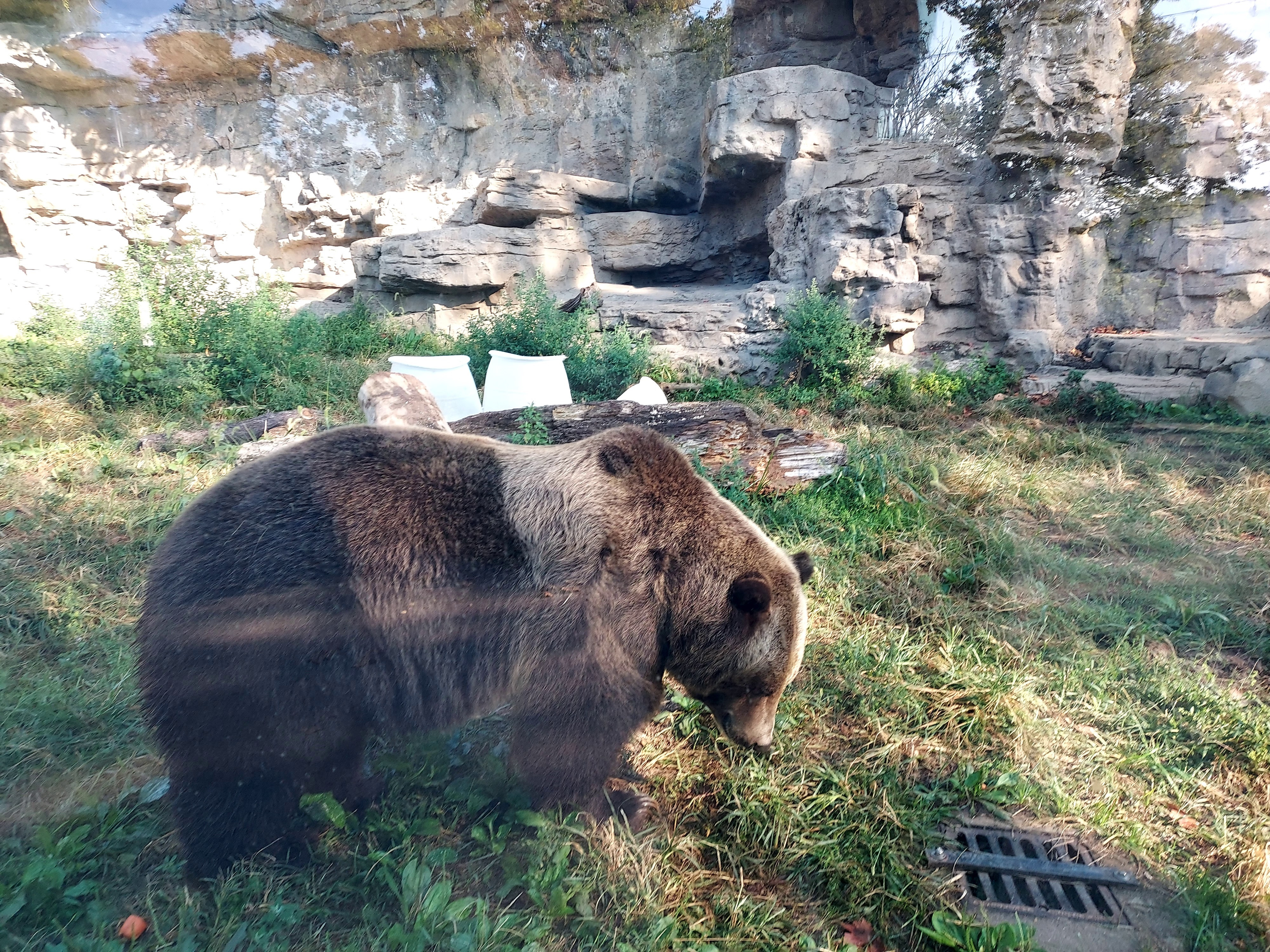
The first animal exhibit I saw after entering the zoo proper was empty on the first day but on the second day contained two larger, active bears. There were two viewing areas (the “Palisades” and “Hermann Family Grizzly Hollow”) at the exhibit. The habitat had a rockwork backdrop, which I believe came from the zoo’s historic original bear grottos, but was lush with grass and had large logs, while the rockwork acted as climbing space. One bear relaxed on the rockwork by choice, which was a cool surprise to see, while another played by the logs and then came close to the glass.
I was honestly pretty charmed by the effectiveness of the exhibit as a renovation - some zoos I have visited with historic grottos seemed to struggle to rehabilitate these into modern bear exhibits, but this felt like it met that challenge. The fact the bears could use the historic rock work to climb gave more reason to preserve it, but they still had access to soft grass, logs, and the lack of a moat and use of glass allowed guests a pretty close look at the animals, so it felt like the past met present well. The only downside is the exhibit is pretty narrow overall and some more depth would be a welcome improvement. Still, I’ve never seen brown bears this active or this close before!
(link)
Penguin and Puffin Coast
One of the top exhibits I wanted to target and our second stop for the day. This was one of the habitats I was most looking forward to, and it did not disappoint. The exhibit is built into a former rockwork bear grotto, which leads to an indoor exhibit, but also includes an outdoor exhibit (Dennis & Judy Jones Family Humboldt Haven) for a colony of humboldt penguins, with waist-high glass surrounding a large pool and a recreation of a rocky shore including nesting room. The inclusion of an outdoor exhibit for a banded penguin is pretty ingenious as it guarantees guests waiting in the queue for a while or those just passing by will still be able to see penguins, while also creating an effective contrast with the cold weather species indoors. The main downsides are the ugly greenish hue of the water and that I think a higher angle is more effective so views of the penguins are not blocked for guests further back. On my second visit, I also witnessed a keeper feeding the penguins, handing each penguin fish one by one - always fun!
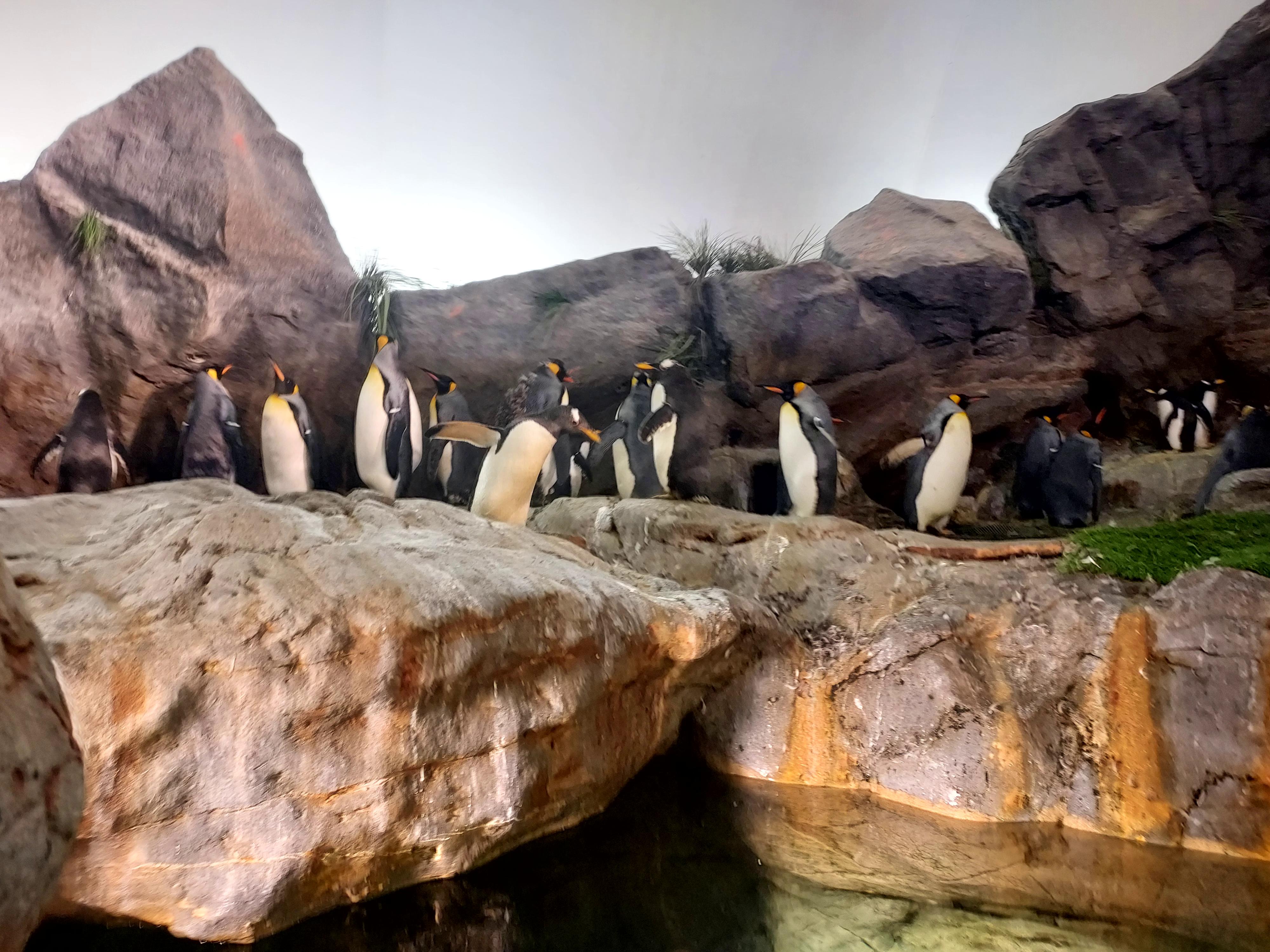
The interior often commands a famously long queue but luckily it was not too long on this particular day, with the first and larger room being Lichtenstein Penguin Cove, a chilly walkthrough with sizable colonies of three penguin species. A dome simulates (sub-)Antarctic weather while the rockscape is dotted with shrubs. The simulated rocky shore has higher and lower levels and arches over doors, offering penguins the chance to perch at eye level or above guests’ heads and to traverse to both sides of the exhibit. The path cuts through two underwater viewing areas, immersing you with penguins on both sides as if crossing through the water. Rockhoppers and Gentoo penguins were very active, with many of the former in the water, while several Kings remained off to the side, a little harder to see. An employee keeps supervision during the otherwise immersive experience.
The walkthrough then leads under a cave to Taylor Family Puffin Bay, which houses horned and tufted puffins in a similar rocky shore environment, though this one is smaller and less regal, only one side of the exhibit. The puffins mostly avoided the water on my visit save a single tufted, though it was still cool to see these unique seabirds in person. Excellent signage discusses what makes penguins and puffins similar and how they share these adaptations as seabirds, not because of relation. This all leads to a gift shop themed around penguins and the Arctic, which has some really cute items but it felt too early to start buying things.
(link)
McDonell Polar Bear Point
After exiting the Coast you arrive at the first window for this exhibit, an exhibit that I found very personally appealing. There are superior polar bear exhibits out there for miles, but I was charmed by the mixture of the old school rockwork to the background and the left in the “Cave” section, and the “Tundra” with real sand and grass in the foreground to the right, an exhibit that seemed to bridge the past and present for keeping this species. The glass curves, letting you feel surrounded by the habitat, rather than having to look over a moat towards a distance. In fact, the whole exhibit can feel quite narrow, but diagrams show significantly more space and depth in the Private Patio and Bear Care Center, so I don’t assume welfare is compromised to hold it against the exhibit. I was disappointed to later hear the rockwork was new and not in fact, historic.
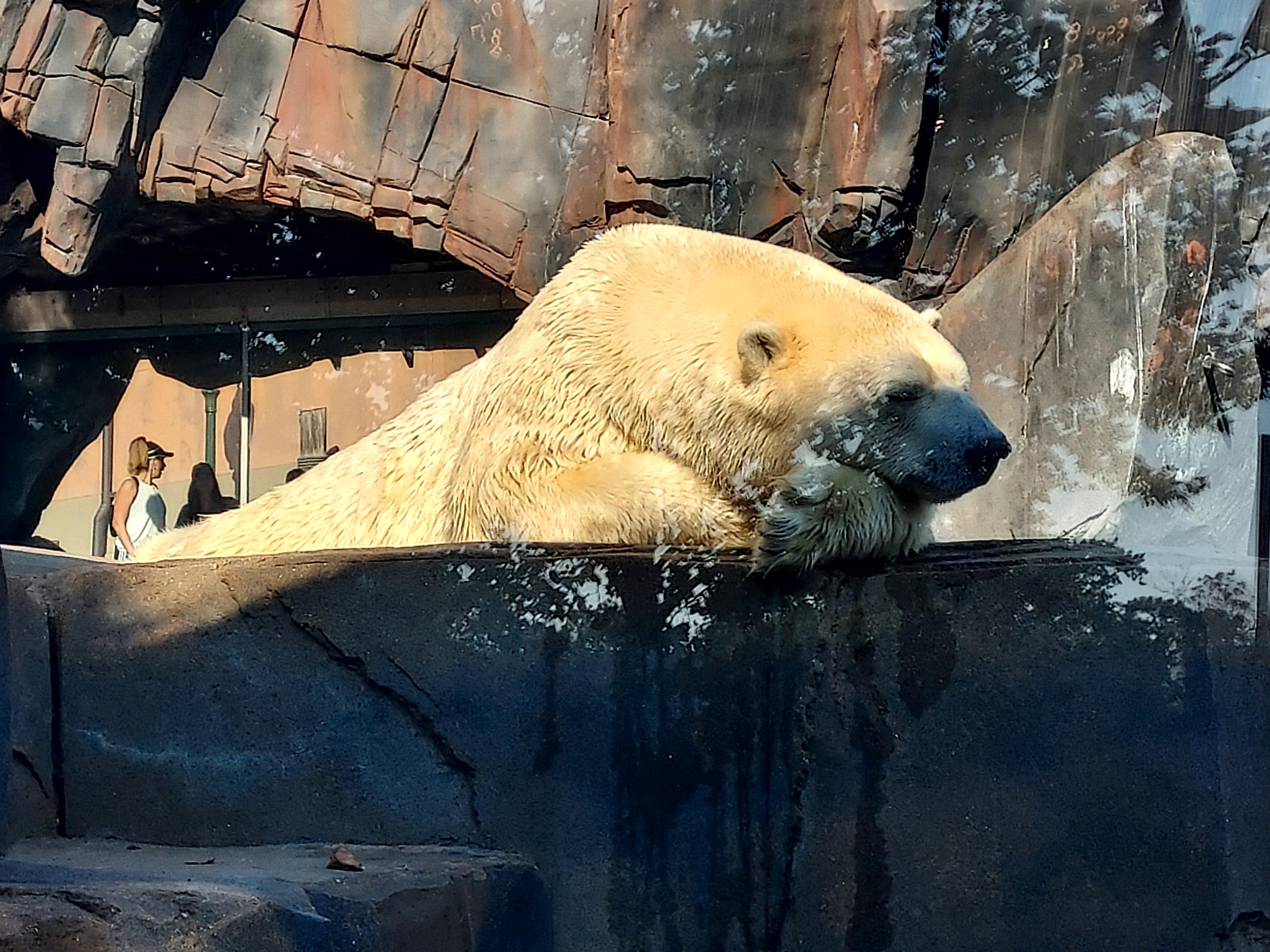
In terms of experience, Kali is an impressive specimen, large and imposing, even while sleeping on a rock, seeming to look at us a few times before drifting off again, which gave him a little more sense of personality. There was also a docent or employee who seemed happy to talk about Kali and answer questions, discussing both him as an individual and the habitat, mentioning more than once that the zoo hopes to breed him (this was before it was public knowledge on Zoochat that the ban on breeding wild-caught bears had been lifted) and there was a video playing to educate guests. These added a lot to the exhibit’s appeal as both days Kali was resting, and I think it would be a positive experience in spite of this.
(link)
The Fragile Forest and Jungle of the Apes
While the above exhibits leaned towards an arctic or northern theme, not far away were the outdoor habitats for the zoo's Great Ape collection. The Fragile Forest title applies to at least the outdoor chimpanzee and orangutan habitats constructed more recently, near which is a building called Jungle of the Apes, but between this is an outdoor gorilla habitat and I'm unsure which 'label' this falls under... so they all get one header.
This is one of those cases where the habitats are objectively excellent but the animals were not active which made it a little harder to evaluate at first. Both main exhibits had multiple covered viewing areas into the larger habitats which was great and gave multiple chances to view the animals from different angles. Trees, logs, ropes, grass, woodchips and rock work were all part of these expansive habitats. The orangutan had hammocks and blankets and a waterfall while the gorilla exhibit has a cliffside element.
All of these enclosures are truly massive and well-suited to hold huge troops of these animals, far more so than the zoo actually seems to hold. The chimpanzee were visible in the distance but seemed scarce, with only a few individuals visible. A male orangutan hid near the top of the exhibit's waterfall while a female, close to the glass, spread out a blanket to sleep, accompanied by another individual. One gorilla of four from the bachelor troop was perched near the glass. These exhibits are fantastic but larger groups might maximize their potential.
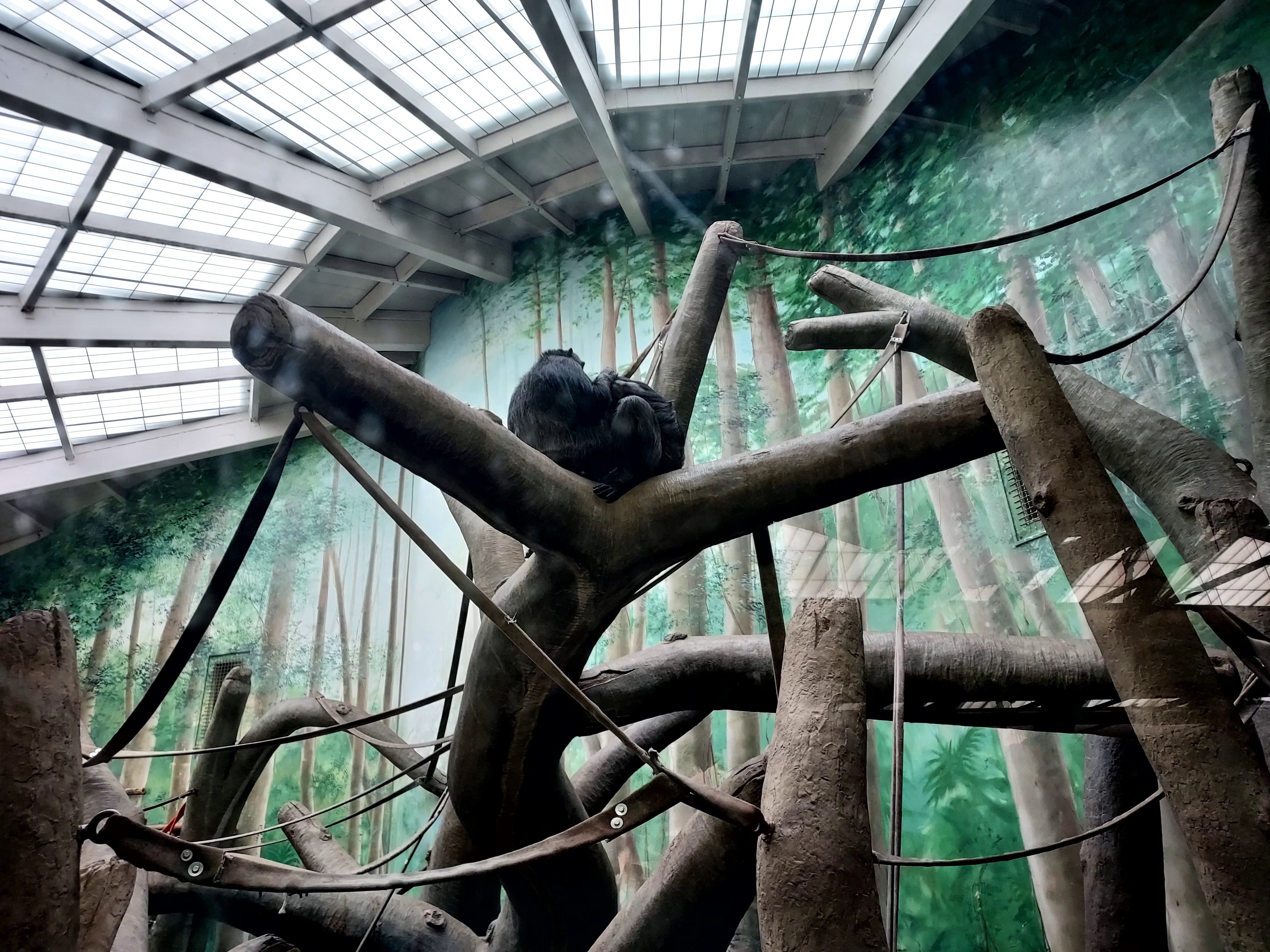
The indoor building, Jungle of the Apes is impressive at first for sheer scale, though admittedly it is perhaps the worst exhibit at the facility just by nature of being an older, larger indoor megafauna building. Guests walk on a boardwalk at canopy level with massive artificial trees and climbing frames, hammocks, and jungle murals, illuminated by natural sunlight. Two chimpanzees were indoors on this day and they sat on the top of a tall tree which really emphasized the huge scale of these habitats.
Dating to the same era as Brookfield’s Tropic World, it has some similar features and feelings, although it definitely outclasses the latter’s indoor gorilla and orangutan enclosures, though without the additional monkeys to add further interest. I do wish it had a few terrariums or small additions like the excellent Realm of the Red Ape at Chester does, for example, as it would add some purpose to the building when the apes are outdoors, but I suppose the tight focus makes it an easy skip when Fragile Forest is active.
(link)
Lakeside Crossing
We next reached Lakeside Crossing, another shopping-and-dining area, and had a small lunch. There are several dining options, including Lakeside Cafe which has the widest selection, but also a candy shop, an ice cream shop, and more. There is also a booth promoting Chevy vehicles, as they are one of the zoo’s major corporate sponsors. I had a hot dog somewhere around here. It’s good that a lot of this is centralized as it does make it an easy place to gather and gives everyone different options, rather than feeling like you’re limited to what is closest.
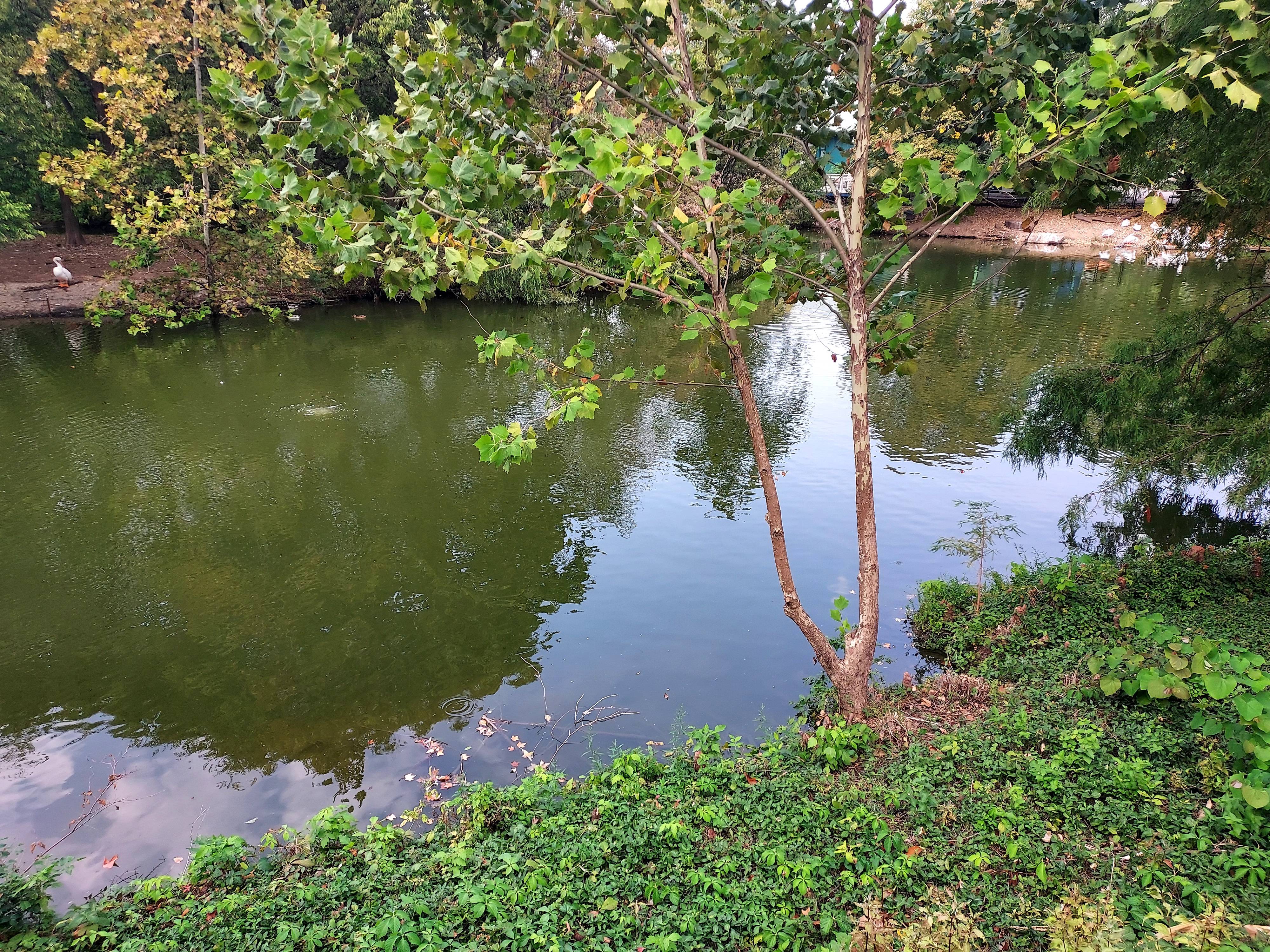
Lakeside Crossing refers to the central region of the zoo, with the cafe located in the middle of three lakes, a stingray touch area, and the seal/sea lion exhibit; however, what can make this a hair confusing is the larger, northerly lake is considered part of ‘The Wild’ region, which contains most of the other nearby animal habitats such as the bears, penguins and apes. I genuinely do not understand the point of making a distinction between these regions, especially splitting the lakes between them. They don’t feel like they convey different themes in even the slightest way; if someone can define a difference besides the sheer number of restaurants, do tell.
(link)
The lakes are large and impressive spaces, with decent foliage. White pelicans are often visible; the northern lake contains flamingos and swan geese while the southern lakes contain swans. Also in the area is Stingrays at Caribbean Cove which we skipped for now and thought we might get back around to later, but did not. I did pass close by. These touch tanks are usually not remarkably different between facilities besides the presence of small sharks around half of the time.
Sea Lion Sound
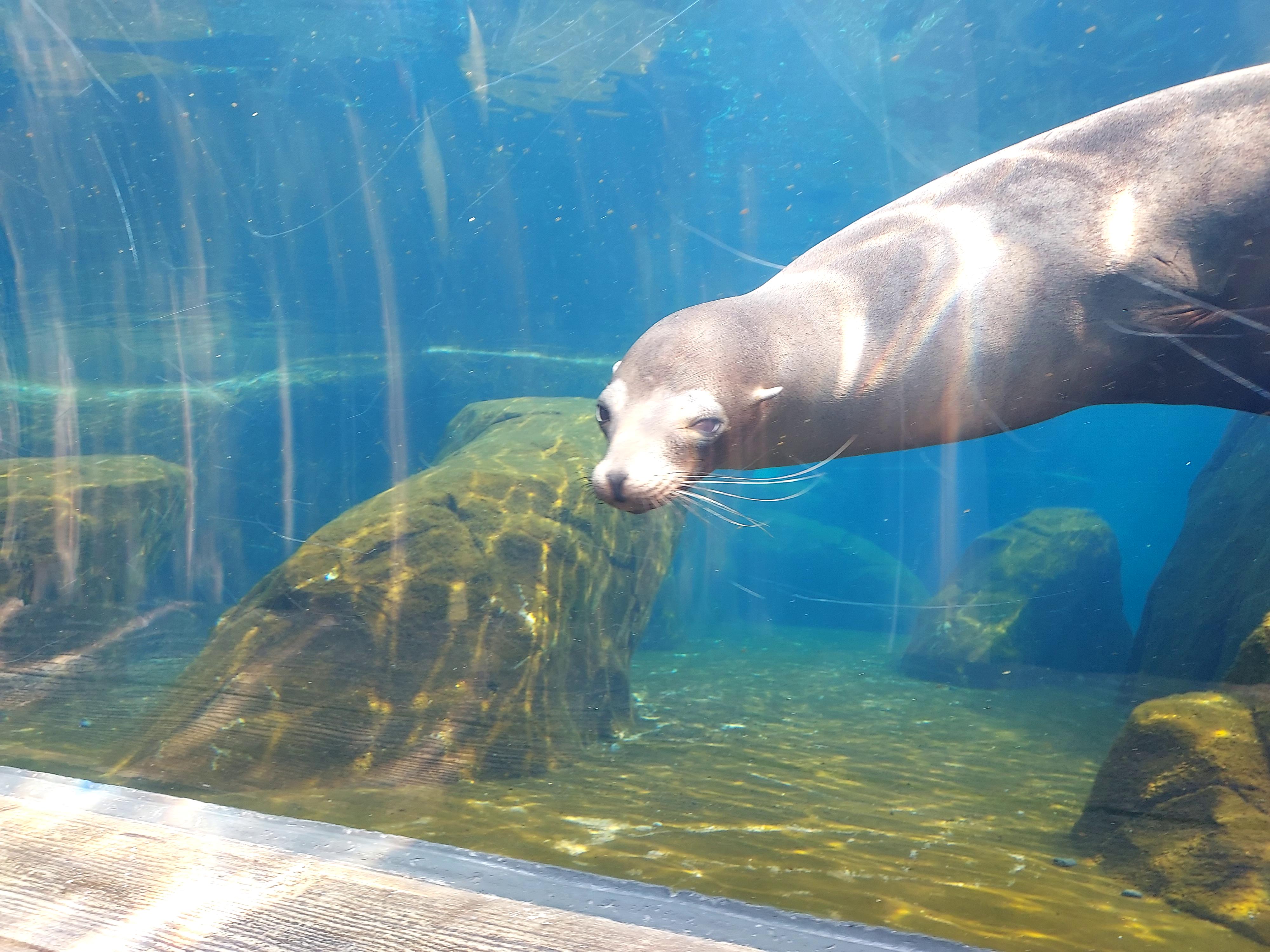
One of my favorite exhibits at the facility was Sea Lion Sound, also part of the Lakeside Crossing section, which is at the heart of the zoo and surprisingly expansive. The exhibit also has harbor seals on display but the real attraction and focus is on the impressive California sea lions. There are three components to the exhibit, including an amphitheater space for shows, and an above water viewing area (the Guth Foundation Pinniped Viewing Area) that is fine. There is clearly plenty of water for the animals as well as a flat beach and some significant rock work to resemble the animals’ rocky shores. Plenty of trees nearby add to the sense of naturalism though a clock building peeks out in the back of my photos.
The exhibit has a truly impressive centerpiece though: the Holekamp Aqua Tunnel, a 35-foot long underwater viewing tunnel through the mixed pinniped exhibit, allowing guests to be fully immersed in the animals' underwater world. The added joy, however, is that sea lions absolutely love it too, clearly as interested in guests as they are them. During my visit, a sea lion was focused on a specific guest, moving wherever he placed his finger, eager and playful, while seals whizzed lazily by at other points. Another sea lion moving by looked back through the glass directly at guests, including me. The whole thing is very charming and fosters the sense of wonder and connection zoos strive towards.
(link)
Red Panda Grotto
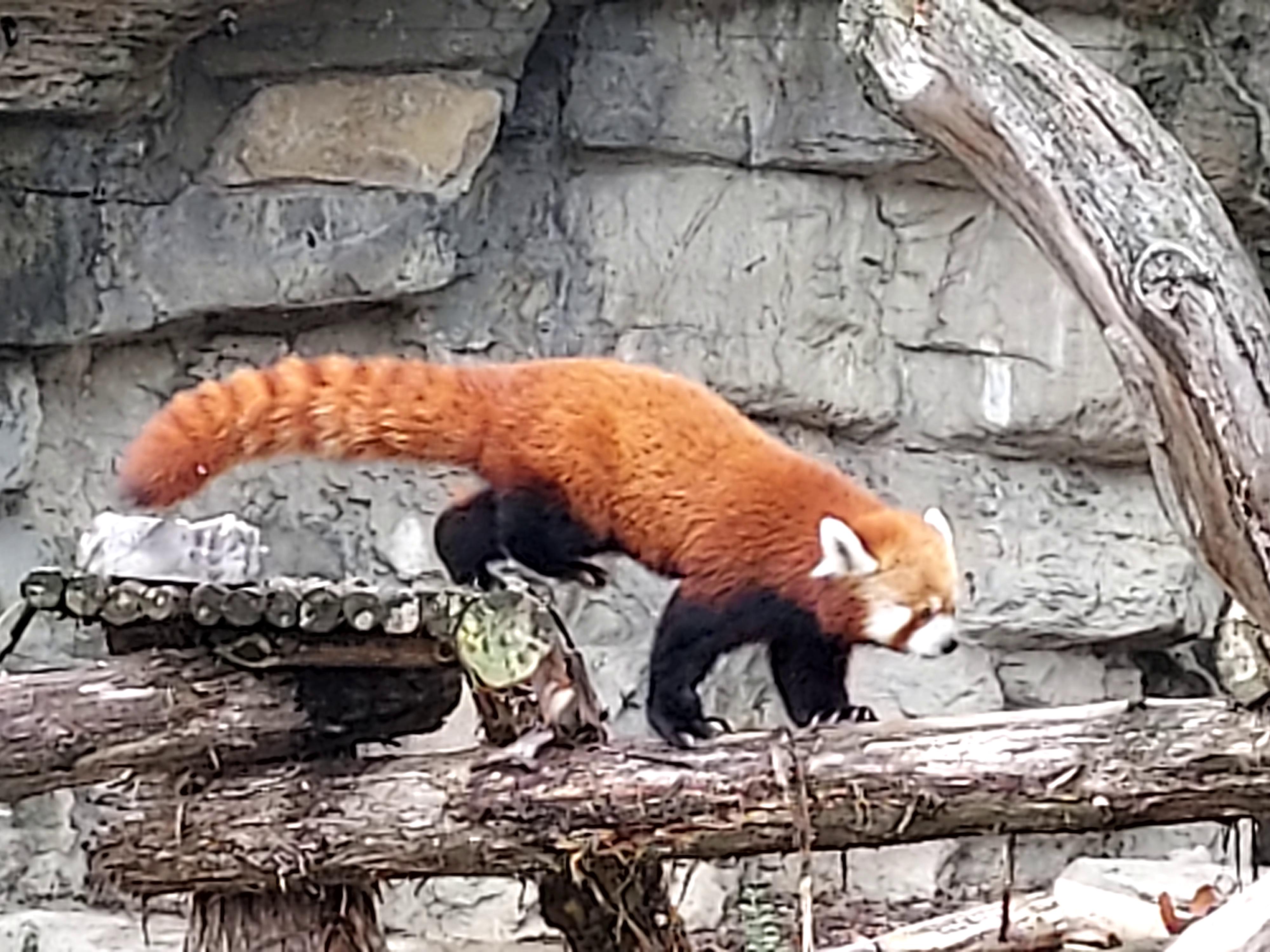
Near the crossing and dining area is a small outdoor grotto habitat for red panda, which seemed unmarked on the map. The exhibit included grass, a large climbing frame, and a few real trees. On our first pass by, both pandas appeared to be sleeping, but later, one of which seemed happy to show off by moving all about the climbing frame. These are one of my favorite animals and always a treat to see active, with their colorful fur sticking out beautifully. I definitely found this a preferable habitat to those I’ve seen locally for the species.
(link)
The Historic Hill section is home to some of the zoo’s most famous and historic buildings, but I admit I found it somewhat difficult to navigate, owing to the massive valley with a ton of empty, unused space. I’ve since found this is the former location of the “Chain of Lakes” exhibits at the zoo, which contained otters, turtles and waterfowl. Such a shame this habitat was lost as the resulting area feels like a complete dead zone, almost completely pointless, and I found myself getting twisted around there more than once on my visit. I also accidentally tried to enter Peabody Hall, mistaking it for the Bird House.
Charles H. Hoessle Herpetarium
The clear highlight of the Historic Hill area is clear is an incredible blend of historic zoo architecture with modern exhibits, featuring plenty of common species as well as some notable rarities. No reptile house I have visited as an adult so far has felt ‘complete’ like this building did. A large King Cobra statue guards the entrance, while nearby there are spacious outdoor enclosures for giant tortoises, American alligator and Chinese alligator. It was great to see these animals outdoors, the tortoises feeding and one of the gators perched just near the water. The chance to contrast both alligators is also welcome.
I love the lower wing of the building focused on larger species, which is surprisingly lush. I struggled to see the target Sunda gharial, which was barely visible between ferns unless you look from just the right angle, and a few tortoises remained inside as well; across the same area a fly river turtle was active and right by the glass and a tall exhibit had a Gray’s Monitor hiding up in the tree, both among my favorite reptiles. The multi-level viewing for these was a neat touch. Another multi-level terrarium formerly housed anaconda from my understanding.
The Main Hall core of the historic building is also impressive even without the lower level and outdoor habitats. A lower ‘garden’ area in the center holds a variety of turtles, with the narrow-headed softshell turtle being the star of the show in my book. Me and my dad spent probably ten minutes looking for the guy in the mud before we spotted practically just an eye. When preparing to leave the herpetarium, a keeper came to feed the turtles, and we were able to watch the turtle roar to life to get a meal in, which was really cool to see.
There is a wide variety of smaller terrariums surrounding this central area, populated by various reptiles and amphibians with a slight focus towards Asian vipers. The Armenian viper, Ocellate mountain viper and Mangshan pit viper were highlights. I tend to forget how much I enjoy snakes until I see one active and moving, and I recorded some video of the mountain viper moving against the glass. A couple of terrariums seem a little smaller than would be appropriate in a newly constructed building, but the majority of them seem significantly roomier than typical reptile houses and well-designed, with a few mixed habitats including those themed around Missouri. I had fun looking for and failing to locate some of the aquatic amphibians, as well as my first.Mountain Chicken.
The main drawback was what appeared to be a large empty wall space at the back of the building that seemed perfect for a large, superstar species. It was only later on zoochat I found out this area used to hold the ‘greenhouse’ section with three reptile exhibits including dwarf caiman and Komodo dragon. I really hope the zoo is able to reopen this space in the future. Komodo Dragon or a large crocodilian would make a perfect centerpiece to this excellent, species-diverse collection of reptiles.
Bird House and Bird Garden
In terms of species selection and collection, this exhibit was really cool, but in terms of the exhibits themselves, I found this building really disappointing. The majority of exhibits are backed by bare wall -- there is something to be said about the minimalism in letting these colorful, beautiful animals stand out against the blank wall, but when so many outdated indoor mammal exhibits at other facilities have used murals to create a sense of depth and the animals' natural habitats, it felt a little shocking to not see this done in the dozens of enclosures here. Most of the birds have access to plenty of perches, dirt, plants, small streams, and more, so there is an amount of naturalism to appreciate, and the Bee Eater exhibit (sadly empty on my visit) is particularly naturalistic and impressive. Some of these exhibits are a decent size but others are also simply too small, and you can feel it straight away because of this.
The collection is impressive nonetheless - there are hornbills, owls, bee eaters, doves, birds of prey, tinamou and more, offering a lot of species diversity. I had a brief encounter with Horned Guan, a species then held only at Saint Louis and much larger than I had expected, a closer look than usual at a Rhinoceros hornbill, one of my favorite large birds, and an encounter with an imposing red-legged seriema. The exhibit quality and presentation may lag but for the species collector there is a lot to appreciate.
Outside the building, there is a walk-through aviary, some outdoor aviaries for birds of prey, an overlook, and a few more small aviaries. I’m not sure if this is all considered the Bird Garden or just parts of it. The birds-of-prey aviaries were all right, with some really cool species like king vulture and Bateleur eagle. mixed with some old familiar ones, with the Cinerous vulture noticeably active while the others largely stayed perched. The small walk-in aviary was closed the day of my visit, not sure why, but I did really like the overlook towards the White-naped cranes, much more in person than when I was previously aware of the exhibit. The rest of the garden was not active that day and somewhat forgettable besides a brief glimpse at a pheasant mostly hidden in the bush of an aviary. I think this was probably an excellent area, just not well-served the day of my visit.
Primate House and Primate Canopy Trails
I had surprising trouble finding this building. To be honest, I feel like I can’t judge the historic primate building much - on my visit, al but a few of the residents were outdoors for one thing, but for another, none of the indoor exhibits were labeled to evaluate their effectiveness for particular habitats or species. I actually really want to do a winter visit sometime partly to experience the building closer to how it stood for decades before. I do really like the ‘diagonal’ exhibit walls allowing both the animals more space and more dynamic viewing, and the climbing structures are more dynamic than the ‘glass boxes’ some places use. The largest exhibit in the center back held a surprisingly large, active family of ringtail lemurs; this exhibit appears from zoochat to have once held macaques. Seeing such a large group is of course impressive, and I wished I had spent a little more time there. Also indoors were cotton top tamarins and Coquerel’s sifaka. The latter were a new species for me and thoroughly impressive, and I loved watching them leaping around, though the sifaka were in one of the smaller enclosures on this occasion, though some zoochat photos depict them instead where I saw the ringtail lemurs. The cotton tops also put on a good display and though widely held, this is one of my better experiences with this species.
I confess my expectations were high for the recently constructed Canopy Trails extension, and I have to admit I was a little disappointed here, too. It is always an objective improvement in welfare for animals to have outdoor access rather than being kept indoors year round, and I support using complex climbing structures to help get primates outside of historic buildings without changing their character, but the whole exhibit felt like a playground for children which made navigation a bit confusing in a few spots. The rotation of dozens of species between the enclosures reduced the opportunity for species-specific signage and education as well. I briefly glimpsed a Geoffery’s marmoset leap, but I didn’t actually know what it was in the moment and sort of guessed. Not far, there were twenty signs for various species. Many exhibits have mesh and mix fake trees with hammocks and other enrichment. By no means was this a bad exhibit though.
One of the main enclosures included a number of eastern black and white mantled guereza colobus monkeys sitting near an overheard glass tunnel with a thick red frame, but the glass was blurry and a bit dirty, and I have my suspicions about the substance the monkeys had smeared on it before our arrival. I looked for the spectacled langurs to what seemed to be no avail, but later read they are apparently mixed with Francois langur anyway. I spotted the mongoose lemur as well scampering across branches in one enclosure and elsewhere watched the familiar sight of black-handed spider monkeys swinging. On the second day, I saw some some Sifaka outdoors as well, some cuddled up.
Bayer Insectarium
I’m honestly not sure what happened here. I couldn’t get in. There was no signage to say it was closed but the door didn’t work. I went around looking for another door, no luck, stumbled into a pollinator garden for a few minutes. I did want to give it an honest shot but I never made it inside and moved on to exhibits I had more interest in. Should I make it there on a future visit, I will update this thread accordingly.
River’s Edge
Two things can be true -- this is both still a great immersion complex and yet has aged kind of poorly. The positive is that the twisting, forested path really gives a sense of exploration as you traverse, with lush plantings and trees that make you feel as if you really are on a forest trail, especially in the sections where moats and fences are hidden; a key negative is there are spots that definitely feel empty, especially towards the beginning. That is no doubt partly due to a section that once held macaws on sticks; it’s good to end the practice but it’s bittersweet when the animals are sent out rather than given a proper habitat and empty space remains. Perhaps a sloth could have filled a similar role as an introductory animal without taking up a large ground footprint.
The South America section was anchored by a large capybara/anteater habitat, alongside a great viewing area for the former Andean Bear habitat. The latter animal had recently been sent out at the time of my visit but ample, impressive signage remained alongside a very cool exhibit with a pond and room to roam. It’s a shame the exhibit was not sound for the resident as I imagine it would have been a sight and it offered lots to do. The capybara/anteater habitat also felt quite empty, with only a single capybara actually present. The anteater is a notorious no-show and the former bush dog enclosure was signed as empty.
By this point on my visit, it had started to rain hard. I initially laughed to myself about how it felt appropriate to be in a rainforest-themed exhibit while it rained, but it came down pretty hard and soon me and several visitors were crowding a viewing shelter.
The centerpiece of River’s Edge is the extensive Africa section, of course. The viewing shelter was for a small group of African painted dog - it was one of the smaller exhibits in an exhibit that otherwise gave most animals plenty, but painted dogs are naturally entertaining even during the rain, crouching near their own shelter for a while. Nearby, a Black rhinoceros stood in the far back of its exhibit and seemed to step off display to avoid the rain, with African sacred ibis also visible far off. Tons of room and a solid exhibit but not a great viewing experience. Next was a small exhibit for red river hog (which formerly mixed with bat-eared fox) which seemed empty at the time of my visit, and a cramped aviary containing red-billed hornbill.
I very rarely hear Saint Louis’ Common hippopotamus exhibit discussed, neither held up as a blemish on the zoo nor as a particularly good or bad enclosure for a species notorious for bad enclosures. There’s no denying that the exhibit does not meet today's standards, but I found a lot to like and it does look quite bigger and better in person than in photos. The land and water areas felt proportionally balanced for what space was available, and I liked the above water viewing off to the side and the level of the water and floor for the exhibit felt perfect for guest viewing. I loved that they mixed fish in with the hippos, which made it feel much more authentic to a river and immersive. It also had a decent number of hippos, more than I have seen together anywhere else so far. It's also the first time I saw a hippo open it's mouth to yawn!
After exploring the zoo’s nutrition center for a little while, which has extensive signage, I arrived at a section of trail for cheetah and dwarf mongoose on one side and a hilly exhibit for Spotted hyena on the other. I was too late for the former animals, apparently having just missed the cheetah according to my dad who had gone ahead, but it was a huge and lush enclosure. Across the trail, the Spotted hyena were active and seemed to be enjoying their hilly enclosure. I loved the uneven terrain and cave-like structure, which made watching the hyenas playing feel much more dynamic. Varied terrain is such an underrated aspect of exhibit design and really helped the species pop here in my view.
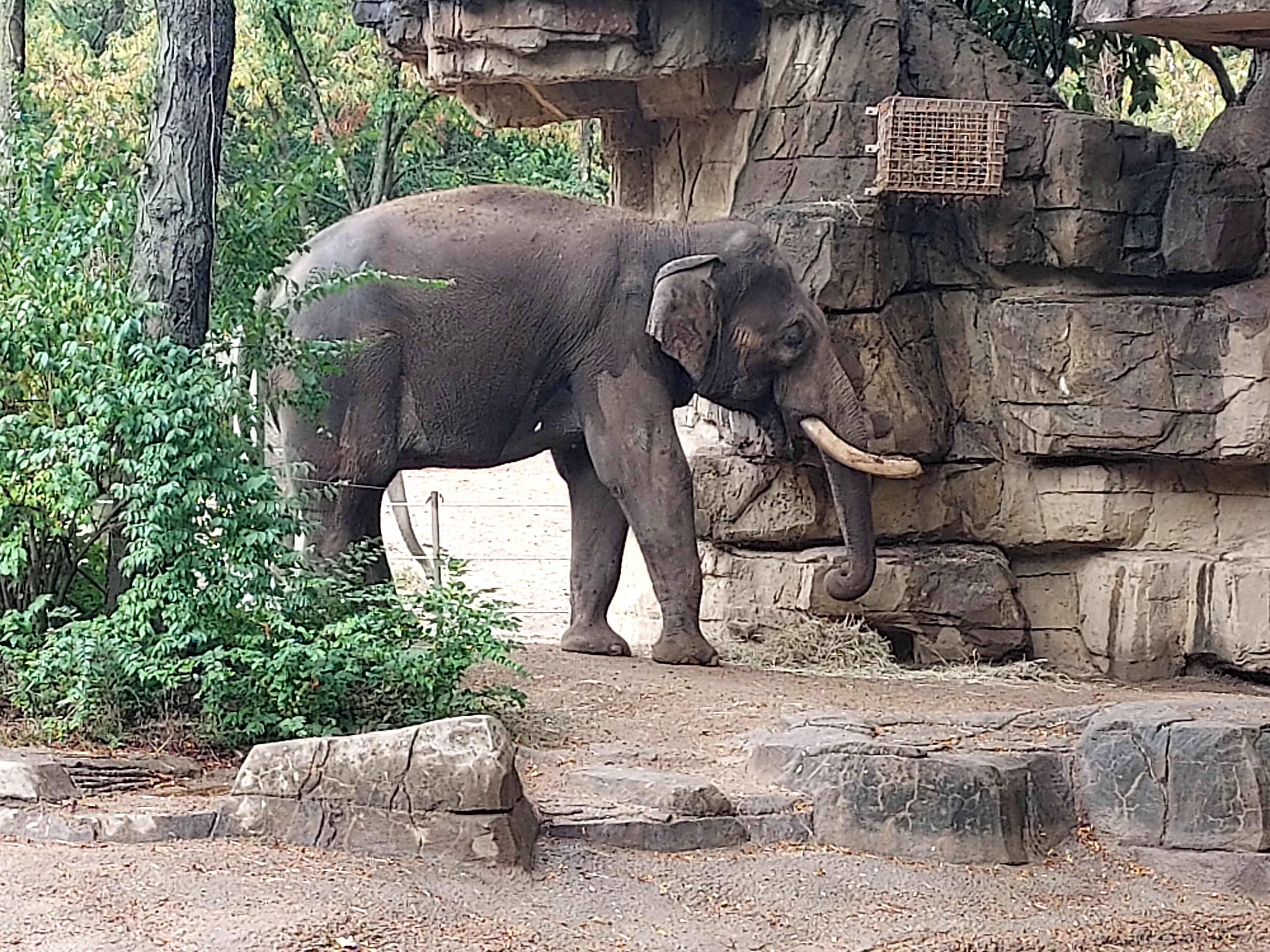
The next section, Asia, is anchored by a large enclosure for Asian elephants, alongside an impressive enclosure to the side for Rimba, the zoo’s aged Malayan sun bear. The elephant enclosure was one of the largest I’d seen, with a lot more depth than Denver’s habitats I have also praised, and with what appeared to be live trees, dead logs, water features and less obtrusive than typical fencing. There was a second larger part of the exhibit visible in the distance as well behind the fences. It looked like a great habitat for the species; only a single male elephant was visible but I really hope to go back and see the elephants again sometime, hopefully more active.
The nearby sun bear enclosure was also fantastic - lushly planted, with a streaming water feature and a climbing tree, in which Rimba seemed to be resting and relaxing.
After the elephant and bear, towards the exit of the River’s Edge complex is a small North America section that seems limited to fish from a Missouri river. I love the narrative intent here but I think coming from massive megafauna back to local fish doesn’t quite land as effectively as it should, and some kind of North American animal might be a good addition here to add a bigger interest to the space, or if something like the Cypress Swamp aviary had been able to be located here.
(link)
Big Cat Country
A smaller section of the Red Rocks region, which is mostly the exhibit of the same name, is this area dedicated to big cats, which I managed to stumble through twice. Three larger enclosures sank into the ground hold African lion, as well as Amur tiger, and Jaguar, all three open-topped, while four smaller, netted enclosures hold Snow leopard, Amur leopard, and Cougar, all of which can be viewed from an elevated plaza, which allows the guests a fairly close look at the latter three cats. Seeing three active Amur leopards at once across two enclosures was fun, as was the moment a hidden Snow leopard emerged unexpectedly. The larger enclosures had a lot of space for traditional zoo enclosures, too. All five Panthera species is pretty rare in US zoos today. The Jaguar are in a rare open-topped enclosure, but the animal was not visible.
I have to admit though, I oddly felt the age of this exhibit more acutely than many of the historic buildings at the zoo. Looking down into large enclosures for big cats just didn’t quite hit right compared to seeing bears up close through glass and elephants across moats at eye level, and the small concrete areas between guest barriers and the animals’ mesh seemed oddly dingy and dirty compared to anywhere else. The smaller enclosure, for the snow leopard, offers a lot of vertical space but still felt a bit cramped for the species, as did the leopard exhibits; this stuck out all the more because the nearby lion, tiger and jaguar exhibits were fairly large. The potential for improvement is very apparent for an exhibit that really has no true sin to bear.
Red Rocks
I think if there is a second exhibit I keep thinking back on, it’s this. It feels very familiar to me and yet also feels leaps and bounds ahead; similar in concept to the Camel-Zebra Area at Lincoln Park Zoo and yet with vastly improved sight lines, larger groups of species, some much larger enclosures and with four ‘islands’ full of enclosures, almost all filled with various hoofstock, including many critically endangered species. The ‘red rock’ theming is attractive but at once never feels overly garish, giving the exhibit a subtle sense of identity, and you can feel surprisingly close to the animals thanks to the downward sloping common to older hoofstock exhibits. It was lovely to feel so close to a Nile lechwe!
Very little about the enclosures is particularly remarkable, especially if you are the type of zoochatter who is only satisfied by endless plains and hidden moats - some of them are mere ‘dusty’ paddocks - but nonetheless many of them are an impressive size to me, and the terrain is fairly varied, with a fairly large grassland for giraffe and ostrich, a rocky climbable area for takin and chinese goral as well as one for urial. The okapi exhibit is a bit more lush and planted with shade while the addax exhibit is more arid. The lesser kudu-stork mixed exhibit is also one of the larger grasslands. The zebra exhibit was the most empty though and easily the weakest exhibit, a quality I've noticed with Grevy's zebra at other facilities, oddly.
It’s easy to reduce the complex to a species list, but many of the enclosures do feel unique for their inhabitants and not interchangeable. Some of the placement is wise as well -- seeing okapi next to giraffe, for example, contrasting two different species of gazelle in enclosures next to each other, or spotting a single Tammar wallaby hiding amongst a larger group of Red kangaroo.
Exhibits like this often suffer gravely from comparison to large mixed savannas or to safari parks (both of which I did not experience personally until the following year) but in some ways this adds to Red Rocks’ impression to me -- it manages to take a more traditional zoo setup that might sound outdated and maximizes it. While a mixed savanna can be incredibly dynamic and Saint Louis’ giraffe, ostrich and sometimes antelope mix is surely a mixed savanna, there is benefit to being able to manage species individually, as some do not do well in group settings, such as Grevy’s Zebra and gerenuk, and the varied terrain and presence of suids, caprids and birds helps it feel like much more than old antelope yards.
This was also the hotbed for me seeing a lot of 'first' species for me - babirusa, banteng, kudu, the gazelles, urial, and goral were all brand new species for me, which added a lot to the excitement here. That said, the giraffe, addax, ass, okapi and takin, all familiar hoofstock, were still in some of the best accommodations I've seen.
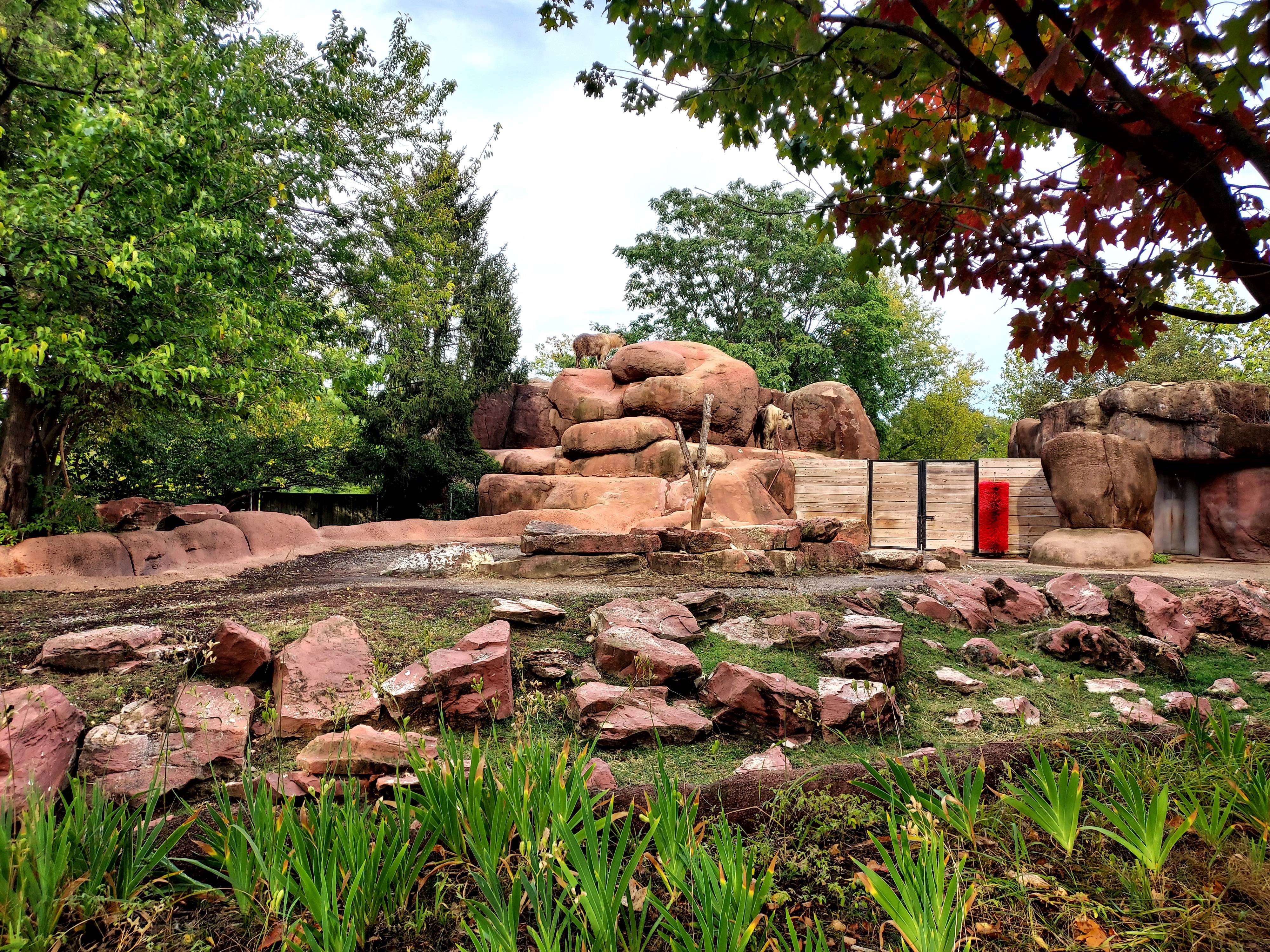
(link)
Prairie Dog Grotto
Somewhere along the line there is also a prairie dog exhibit that is quite large for the smaller species but otherwise unremarkable, with logs, hay, woodchips, but no prairie dogs the day of my visit.
Cypress Swamp / 1904 Flight Cage
The last new stop for my trip was the Cypress Swamp exhibit, better known as the 1904 World’s Fair Flight Cage. This was actually the second outdoor walkthrough aviary I’ve ever been through and - wow, what a beautiful exhibit! The boardwalk is surprisingly strong, the surrounding swamp is large and it is now only well-stocked with a variety of birds but they are surprisingly friendly - I was within inches of the zoo’s double-crested cormorant, one of my target species. I was one of the first visitors to enter but also just in time to see them feeding the birds.
Often historic exhibits feel horrendously dated, by nature of advancements of science and welfare, and how strongly to hold this against them is an open question, but the ancient aviary’s transformation into an immersive, authentic recreation of a swamp is enormously successful in spite of its age. It was easily my favorite walkthrough aviary I had visited, probably my favorite bird exhibit I had seen, and well worth making a return trip to the zoo the next day to experience fully!
Evaluation
The overall exhibit quality of the facility is pretty high and well balanced by mostly strong guest experience. There are multiple exhibits with strong immersion elements, guests are often able to get quite close to the animals, there is enough open space to relax but also dense enough that only a few ‘empty spots’ really exist. Almost all of the exhibits are on the fairly large side, especially for a traditional or urban zoo setting, and many of them have not only foliage but varied terrain to keep things interesting. There are also lots of dining and shopping options but also enough animals to keep you busy for a full day trip.
River’s Edge, the Cypress Swamp and Penguin and Puffin Coast are probably the best exhibits by most measures. All three facilities include strong habitat immersion, letting you feel as if you are in the animals’ actual environment and promoting a sense of discovery, while also containing nice collections of species, and the latter allow for some fairly close encounters. Penguin and Puffin Coast’s variety of species allow for great signage explaining the differences between penguins and puffins while also allowing guests to contrast the banded penguins outside with the sub-Antarctic species indoors. The swamp contains a wide variety of fascinating water birds.
River’s Edge is a brilliant complex in concept but I didn’t have a satisfying experience there and look forward to trying again on a future visit. It has also notably experienced some decline - the South America section has been empty at various times and the painted dogs seem to have jumped around. There are other small changes that could add to the experience as well, such as a smaller species added to Asia, which is only represented by megafauna at present. A refresh might be needed here, not a reinvention but perhaps some bolder change may help.
Sea Lion Sound is one of my favorite zoo exhibits and it’s because the underwater tunnel is sheer genius. You feel totally enveloped by the animals surrounding you on all sides, and while it may feel a little bit cramped for guests, this did help the sense of collective experience for the crowd experiencing the pleasure of watching a sea lion follow the finger of a guest. I always preferred seals over sea lions, but Sea Lion Sound really taught me to love sea lions, too.
The Herpetarium and Red Rocks lack modern day biogeography and immersion and could easily feel dated to whom those are necessary requirements or strong preferences rather than merely choices, but they’re still easy highlights for a zoo nerd, with unusually large collections of herps and hoofstock in mostly above average exhibits. Both complexes had moments where I stopped to appreciate familiar species in a new way as well as where I was delighted by new species. Both specialize slightly with gazelles and Asian vipers but these focuses don’t feel at the expense of anything else but just a subtle additional character to the exhibits.
The bear and ape habitats were also impressive in my view, though not as memorable or particularly world-class. Jungle of the Apes is massive with some incredible scale and the outdoor Fragile Forest exhibits are very well-made, but seeing small groups of apes did somewhat undercut the experiences for me, and I think larger ape troops would probably be a worthwhile investment to add some more interest to these spaces. I don’t think much can be done to improve the bears in the current footprint. The red panda exhibit also seemed pretty good to me with lots of climbing space.
I have to confess that while I enjoy historic buildings and am forgiving to dated exhibits, the bird and reptile buildings both left me wanting in a way the similar Herpetarium did not. The interior gardens were inactive in both buildings and I’m still unsure what was supposed to be in the primate building garden, and the outdoor expansions were a mixed experience. The Herpetarium lacks in neither comparison. I loved the crane overlook, but the walkthrough aviary was closed and many of the bird garden exhibits were not in use, while Canopy Trails was a little confusing to navigate with its playground-like elements. I expect some of this was just an ‘off day’ and a future visit may provide new insight, and I hope it does. Still, the buildings are solid and probably better than a great deal of zoos, but not up to Saint Louis' overall exceptional level of quality, and could use a refresh to meet the standards of the excellent Herpetarium.
I did enjoy Big Cat Country but I would have to count it as my least favorite major exhibit at the zoo. While leaps and bounds of what was considered acceptable as late as twenty years ago and offering excellent views up close of snow and amur leopards with elevated viewing as a great option to have, all of which lend it a unique and distinctive character even for an aged exhibit, but it doesn’t feel as modern and maintained as the rest of the facility and I think a refresh to this space would be a top priority for me.
There is also a prairie dog grotto that was empty at the time of my visit and I kind of sped past. I almost forgot to include it in the review, to be honest.
Let’s talk about the collection for a moment. Saint Louis has one of the most comprehensive species lists in a major zoo -- the four biggest megafauna, all five classic “big cats” and some of their major cousins, the three major apes, multiple crocodilians, tons of hoofstock, more bears than most, there is so much to appreciate. That does not mean there are a few omissions, however. Like a surprising number of major zoos, wolves are nowhere to be found; African painted dogs, as often, carry the zoo’s canids, though they have also held bush dog, bat-eared and fennec fox in the recent past. I would recommend reacquiring one of these. With such an excellent primate collection, it is a bit disappointing to realize gibbons are not included. There are no tapirs which is unfortunate but sadly reasonable as they are obscure and there is no obvious space. My visit did not include otters, but they are set to return in the updated Children’s Zoo. There appear to be no bats, either. Wolves and bats are definitive ABC species that should really be brought back somewhere.
Two groups that are not well represented at this zoo are small mammals and nocturnal animals. The prairie dog and red panda grottos, and dwarf mongoose at River’s Edge, comprise almost the entire small mammal collection. While there are many birds and herps, the mammals are almost exclusively megafauna. I know a number of small mammals were formerly held in the defunct children’s zoo and will return in the successor exhibit which should balance this out. There is no equivalent to a nocturnal house, which is a real shame.
The amenities throughout the zoo were fairly strong. There were a surprising number of places to eat throughout the zoo. Food was never scarce, aside from River’s Edge and Red Rocks at each farther end, and there were quite a few different menus across these places as well, although I order pretty basic. A few are dedicated to desserts. There were also a couple of gift shops, particularly in the Living World building and by Penguin and Puffin Coast, with a pretty solid selection. There are indeed a lot of plazas throughout the central zoo dedicated to these sorts of amenities, especially at the Lakeside Crossing area, but my favorite spot was near the sea lions and red pandas. I always love getting lunch near animals when possible!
Outside the animals, the zoo’s other attractions are an appropriately endangered animal-themed carousel, a 4D theater, and a train. I did not experience any of these personally, but they sound like great options if you have kids you need to entertain and a great way for a free zoo to gain some much-needed revenue.

(Zoo map link)
In terms of layout, there’s a mixed bag. The central part of the zoo (Discovery Corner/The Wild/Lakeside Crossing) feels a bit stitched together, with no clear definition or theming differences between some of these zones to make them feel more cohesive. In terms of species, Lakeside Crossing has seals and sea lions, Discovery Corner has insects, and the Wild has apes, waterfowl, bears and penguins, but both the Wild and Lakeside Crossing have lakes and lots of amenities, and Discovery Corner also has the latter and will soon hold the renovated children’s zoo. I don’t know the rationale between keeping these zones separate. Historic Hill has some theme and definition, but the empty space for the former Chain of Lakes exhibit is a glaring flaw and an easy spot to get lost, especially with how hilly it is. Something should really be placed there. The Flight Cage also is very missable and feels a bit out of the way for what it is. I like that the large and very clearly defined River’s Edge and Red Rocks act as the zoo’s flanks though, and with Historic Hill in tow, these three zones are thematically strong, letting the rest of the zoo feel like the meat of a sandwich between these more defined areas.
Future and Improvements
There’s not a lot at this zoo in dire need of improvement, to be honest, but there are always things that could be done.
The biggest missing species at the zoo during my visit was clearly otters, but they plan to bring them back in the upcoming Children’s Zoo renovation, so I did not factor them into these plans. The other big misses were bats and wolves, though the zoo once had a surprisingly good canid collection without them. Also missing were gibbons and tapirs. In broader categories, the zoo is light on small mammals or animals from Australia and North America in the collection, and lacks the dedicated rainforest or aquatics buildings typical at many other midwestern zoos. I factored almost all of this into my ideas for the future, as well as my dissatisfaction with the big cat complex.
Big Cat Country is the only area that feels to me like it needs a refresh but I’d love to retain the essential character by keeping a central raised plaza section surrounded by larger, outdoor enclosures. I think it would be cool to have glass-fronted viewing at the exhibits’ ground level though, enabling closer encounters with the lions, tigers, jaguars and more while also retaining the ability to look down from the plaza unobstructed. Multi-level viewing is a fantastic way to refresh exhibits like this in my opinion. I would borrow some inspiration from the bear renovations for these changes. The smaller cat exhibits could be modified into two larger spaces or one. It would be a shame to lose Amur leopard, Snow leopard, or cougar, but at least one would probably need to go.
Looking at River’s Edge, I think there are easy routes to improve the complex, though space is at a premium. I don’t think Africa demands change much - though the return of bat-eared foxes mixed with hogs would be nice (though this depends a lot on character of individual animals, I know) but a new small species near the Asian elephant and Sun bear is an easy change - perhaps a python enclosure would be a good fit here, to break up the megafauna and bring in a reptile. I would love to add another North American species to the Missouri river section but I’m doubtful there is sufficient space. In contrast to these, I would probably redo the entire South America section from almost scratch, however. The entrance is empty without the macaws on sticks, but this space can then be taken some advantage. The Andean bear enclosure could possibly still be modified to bring back the species. It’s a big loss for the zoo and there’s been no strong replacement. The outdoor sections would be altered to create a large, mixed tapir/anteater/capybara space, with sufficient creeps to avoid the tapir, and I would push to bring back bush dogs.
Although it would run a risk of alienating the theme of the zone, I would give serious consideration to using the empty space in Historic Hill for a new exhibit featuring small mammals or nocturnal species, allowing the zoo to include bats in the collection as well as species like pygmy slow loris, aardvark, fennec fox and sand cat, for examples. Modern design would allow diurnal animals outdoor access in the warm months, while architecture would intentionally ape the other historic buildings. This would take up one of the two empty lawn squares between the sea lions and Red Rocks. I am thinking of filling the other empty lawn square with exhibits for beaver, wolf and caribou exhibits, with beavers at the bottom of the meadow and caribou towards Red Rocks to tie into the hoofstock at Red Rocks nearby.
More thematically appropriate but potentially more expensive and radical would be to transform the northern section of the zoo by reducing the waterfowl lake in The Wild across from the Grizzly Ridge and Polar Bear Point exhibits, and transforming this into a more North America-driven zone, using the space from the lake reduction to build exhibits for wolf, beaver and caribou, with eagle and wolverine added if space is still available without draining the lake completely. “The Wild” and “Discover Corner” would be grouped into a North America-driven zone while Fragile Forest would be subsumed into Lakeside Crossing or Historic Hill.

(Master Plan details link)
Snapping back to reality, the zoo recently purchased the former site of a nearby hospital to gain space to develop, and some master plans were released, which I tried not to factor into my thinking above. The current south parking lot would transform into the savanna-themed Acacia Grasslands, moving flamingo, giraffe, lion, zebra, painted dog and unspecified hoofstock (“mixed herds”) from the lakes and Red Rocks areas, and potentially linking with River’s Edge, freeing up Red Rocks for a dramatic transformation into Silk Road, which includes tigers, amur and snow leopards, camels, takin, urial and goral from Red Rocks, and introduces new species such as sea otters, musk deer, pallas cat, golden monkeys and potentially both pandas, as well as including a nocturnal house. The upper area of the plan appears to maintain African gazelles, Addax, wild ass, and wattled crane. This plan includes very few potential losses besides okapi, cougar and jaguar, kangaroo, as far as I can tell, though some of these are significant.
The final idea proposed at that time was “Legends of the Forest” which may already be defunct by the Canopy Trails construction, but includes ambitious concepts like bubbled domes and retractable roofs, with a Southeast Asia section built off the Reptile House, a Madagascar area between the reptile and primate houses, a Congo section in front, and South America and Flooded Forest areas around the primate building. Perhaps the okapi and jaguar were destined for this concept. While the Canopy Trails has cancelled out the ‘flooded forest’ idea, the other areas still appear clear. A Madagascar area with new lemur enclosures and space for crocodiles or Madagacan boas could still be a cool concept to bring to life and add a crucial link between these excellent exhibits, and maybe open space up in the Canopy Trails to bring in even a few more primates, such as gibbons.
These plans are obviously very, very ambitious, and clearly not going to pan out exactly as proposed. The Canopy Trails are mentioned; the new children’s zoo will contain a new flamingo exhibit so one may not be needed in Acacia Grasslands. Looking at them broadly though, Savanna and Asia complexes would renew biogeographic focus at the zoo and replace the defunct cat and hoofstock exhibits. A nocturnal house is even one of the suggestions included which I am impressed with. The biggest losses would be kangaroo and a continued neglect of North American wildlife; however, the former Chains of Lake sites mentioned abode would not be filled in by these plans and the lake currently holding flamingo will be less necessary once the new Children’s Zoo renovation opens, so there may still be room to develop North America and Australia concepts at both or either site. I would love to see their approach to the latter.
The main ‘leftover’ not covered by any of the above ideas is debatably a major rainforest (which I feel the ‘Legends of the Forest’ might cover) or some kind of aquatics facility. An aquarium could also be a good use of the former Chain of Lakes site in Historic Hill, but I wouldn’t prioritize it over anything mentioned above.
Conclusions
Saint Louis is a particularly fascinating zoo in how it remains reverent to its history and maintains a strong collection while still holding some incredibly effective exhibits and surprisingly immersive habitats. In balancing successfully what modern zoos do so well with the classic hallmarks of historic city zoos, it serves as a vivid illustration how much execution and design truly make the difference in great exhibits, and how zoos have managed to adapt and overcome.
I definitely plan to visit again and hope future visits - and future additions - bring me fresh insights on this excellent facility.
Introduction
The primary zoo visit took place on September 22, 2023, from around noon until post-closing, with a follow-up visit the next morning on September 23 for an additional hour. For some exhibits in the review below, I drew from both days’ experiences; for others I mentioned both separately.
At the time of the visit, I had only previously been to seven previous zoological facilities, and most observations are based on this framing. As with Denver, I wrote the majority of the review shortly after my visit, then stepped away and completed the draft when the ‘new zoo’ haze was gone; the final draft does contain a few brief comparisons to zoos I visited later on from editing. I think I finally found my 'voice' in the process of writing this one though.
I originally embedded several photos to break up the text, but there were too many, so I turned many of them into external links, and there are also external links for the embedded ones remaining in case they do not display correctly. All photos are my own, besides the map and master plan information.
Now, exhibit by exhibit-ish...
The Living World
The north entrance to this facility is a surprisingly impressive structure (40,000-square ft, I’m told) with separate public entrances to the zoo’s Welcome Center and the Gift Shop, the Living World. There are two employee desks in the welcome area - one that helps you purchase tickets to any attractions you want to see, and another for guest services. The employees were helpful as I was traveling with a disabled relative who needed assistance and they were very kind in providing such for him and we had no issues securing a mobility chair for him. The next section of the building allows guests further options between the Gift Shop itself, a dining arena, and a lower level with event and classroom spaces and offices. A model giant squid and shark are hung above and welcome you to the facility.
I did not have the chance to check out Cafe Kudu so far, but I did visit the Tree Top Shop and spent a while there. The employees were friendly and helpful and there and there was a better (or more personally appealing) selection of merchandise than I’ve seen at some facilities, including a decent variety of branded shirts, the increasingly rare recycled plastic animals, and plush toys. The selection was great for stocking up on souvenirs for people back home.
I do have to say for such a large building, I do think it’s a shame some animal exhibit couldn’t have been worked into it - some older sources suggest there was once a small aquarium and possibly an amphibian exhibit but I’ve not found much detail and didn’t see any sign of such a thing.
Grizzly Bear Ridge
The first animal exhibit I saw after entering the zoo proper was empty on the first day but on the second day contained two larger, active bears. There were two viewing areas (the “Palisades” and “Hermann Family Grizzly Hollow”) at the exhibit. The habitat had a rockwork backdrop, which I believe came from the zoo’s historic original bear grottos, but was lush with grass and had large logs, while the rockwork acted as climbing space. One bear relaxed on the rockwork by choice, which was a cool surprise to see, while another played by the logs and then came close to the glass.
I was honestly pretty charmed by the effectiveness of the exhibit as a renovation - some zoos I have visited with historic grottos seemed to struggle to rehabilitate these into modern bear exhibits, but this felt like it met that challenge. The fact the bears could use the historic rock work to climb gave more reason to preserve it, but they still had access to soft grass, logs, and the lack of a moat and use of glass allowed guests a pretty close look at the animals, so it felt like the past met present well. The only downside is the exhibit is pretty narrow overall and some more depth would be a welcome improvement. Still, I’ve never seen brown bears this active or this close before!
(link)
Penguin and Puffin Coast
One of the top exhibits I wanted to target and our second stop for the day. This was one of the habitats I was most looking forward to, and it did not disappoint. The exhibit is built into a former rockwork bear grotto, which leads to an indoor exhibit, but also includes an outdoor exhibit (Dennis & Judy Jones Family Humboldt Haven) for a colony of humboldt penguins, with waist-high glass surrounding a large pool and a recreation of a rocky shore including nesting room. The inclusion of an outdoor exhibit for a banded penguin is pretty ingenious as it guarantees guests waiting in the queue for a while or those just passing by will still be able to see penguins, while also creating an effective contrast with the cold weather species indoors. The main downsides are the ugly greenish hue of the water and that I think a higher angle is more effective so views of the penguins are not blocked for guests further back. On my second visit, I also witnessed a keeper feeding the penguins, handing each penguin fish one by one - always fun!
The interior often commands a famously long queue but luckily it was not too long on this particular day, with the first and larger room being Lichtenstein Penguin Cove, a chilly walkthrough with sizable colonies of three penguin species. A dome simulates (sub-)Antarctic weather while the rockscape is dotted with shrubs. The simulated rocky shore has higher and lower levels and arches over doors, offering penguins the chance to perch at eye level or above guests’ heads and to traverse to both sides of the exhibit. The path cuts through two underwater viewing areas, immersing you with penguins on both sides as if crossing through the water. Rockhoppers and Gentoo penguins were very active, with many of the former in the water, while several Kings remained off to the side, a little harder to see. An employee keeps supervision during the otherwise immersive experience.
The walkthrough then leads under a cave to Taylor Family Puffin Bay, which houses horned and tufted puffins in a similar rocky shore environment, though this one is smaller and less regal, only one side of the exhibit. The puffins mostly avoided the water on my visit save a single tufted, though it was still cool to see these unique seabirds in person. Excellent signage discusses what makes penguins and puffins similar and how they share these adaptations as seabirds, not because of relation. This all leads to a gift shop themed around penguins and the Arctic, which has some really cute items but it felt too early to start buying things.
(link)
McDonell Polar Bear Point
After exiting the Coast you arrive at the first window for this exhibit, an exhibit that I found very personally appealing. There are superior polar bear exhibits out there for miles, but I was charmed by the mixture of the old school rockwork to the background and the left in the “Cave” section, and the “Tundra” with real sand and grass in the foreground to the right, an exhibit that seemed to bridge the past and present for keeping this species. The glass curves, letting you feel surrounded by the habitat, rather than having to look over a moat towards a distance. In fact, the whole exhibit can feel quite narrow, but diagrams show significantly more space and depth in the Private Patio and Bear Care Center, so I don’t assume welfare is compromised to hold it against the exhibit. I was disappointed to later hear the rockwork was new and not in fact, historic.
In terms of experience, Kali is an impressive specimen, large and imposing, even while sleeping on a rock, seeming to look at us a few times before drifting off again, which gave him a little more sense of personality. There was also a docent or employee who seemed happy to talk about Kali and answer questions, discussing both him as an individual and the habitat, mentioning more than once that the zoo hopes to breed him (this was before it was public knowledge on Zoochat that the ban on breeding wild-caught bears had been lifted) and there was a video playing to educate guests. These added a lot to the exhibit’s appeal as both days Kali was resting, and I think it would be a positive experience in spite of this.
(link)
The Fragile Forest and Jungle of the Apes
While the above exhibits leaned towards an arctic or northern theme, not far away were the outdoor habitats for the zoo's Great Ape collection. The Fragile Forest title applies to at least the outdoor chimpanzee and orangutan habitats constructed more recently, near which is a building called Jungle of the Apes, but between this is an outdoor gorilla habitat and I'm unsure which 'label' this falls under... so they all get one header.
This is one of those cases where the habitats are objectively excellent but the animals were not active which made it a little harder to evaluate at first. Both main exhibits had multiple covered viewing areas into the larger habitats which was great and gave multiple chances to view the animals from different angles. Trees, logs, ropes, grass, woodchips and rock work were all part of these expansive habitats. The orangutan had hammocks and blankets and a waterfall while the gorilla exhibit has a cliffside element.
All of these enclosures are truly massive and well-suited to hold huge troops of these animals, far more so than the zoo actually seems to hold. The chimpanzee were visible in the distance but seemed scarce, with only a few individuals visible. A male orangutan hid near the top of the exhibit's waterfall while a female, close to the glass, spread out a blanket to sleep, accompanied by another individual. One gorilla of four from the bachelor troop was perched near the glass. These exhibits are fantastic but larger groups might maximize their potential.
The indoor building, Jungle of the Apes is impressive at first for sheer scale, though admittedly it is perhaps the worst exhibit at the facility just by nature of being an older, larger indoor megafauna building. Guests walk on a boardwalk at canopy level with massive artificial trees and climbing frames, hammocks, and jungle murals, illuminated by natural sunlight. Two chimpanzees were indoors on this day and they sat on the top of a tall tree which really emphasized the huge scale of these habitats.
Dating to the same era as Brookfield’s Tropic World, it has some similar features and feelings, although it definitely outclasses the latter’s indoor gorilla and orangutan enclosures, though without the additional monkeys to add further interest. I do wish it had a few terrariums or small additions like the excellent Realm of the Red Ape at Chester does, for example, as it would add some purpose to the building when the apes are outdoors, but I suppose the tight focus makes it an easy skip when Fragile Forest is active.
(link)
Lakeside Crossing
We next reached Lakeside Crossing, another shopping-and-dining area, and had a small lunch. There are several dining options, including Lakeside Cafe which has the widest selection, but also a candy shop, an ice cream shop, and more. There is also a booth promoting Chevy vehicles, as they are one of the zoo’s major corporate sponsors. I had a hot dog somewhere around here. It’s good that a lot of this is centralized as it does make it an easy place to gather and gives everyone different options, rather than feeling like you’re limited to what is closest.
Lakeside Crossing refers to the central region of the zoo, with the cafe located in the middle of three lakes, a stingray touch area, and the seal/sea lion exhibit; however, what can make this a hair confusing is the larger, northerly lake is considered part of ‘The Wild’ region, which contains most of the other nearby animal habitats such as the bears, penguins and apes. I genuinely do not understand the point of making a distinction between these regions, especially splitting the lakes between them. They don’t feel like they convey different themes in even the slightest way; if someone can define a difference besides the sheer number of restaurants, do tell.
(link)
The lakes are large and impressive spaces, with decent foliage. White pelicans are often visible; the northern lake contains flamingos and swan geese while the southern lakes contain swans. Also in the area is Stingrays at Caribbean Cove which we skipped for now and thought we might get back around to later, but did not. I did pass close by. These touch tanks are usually not remarkably different between facilities besides the presence of small sharks around half of the time.
Sea Lion Sound
One of my favorite exhibits at the facility was Sea Lion Sound, also part of the Lakeside Crossing section, which is at the heart of the zoo and surprisingly expansive. The exhibit also has harbor seals on display but the real attraction and focus is on the impressive California sea lions. There are three components to the exhibit, including an amphitheater space for shows, and an above water viewing area (the Guth Foundation Pinniped Viewing Area) that is fine. There is clearly plenty of water for the animals as well as a flat beach and some significant rock work to resemble the animals’ rocky shores. Plenty of trees nearby add to the sense of naturalism though a clock building peeks out in the back of my photos.
The exhibit has a truly impressive centerpiece though: the Holekamp Aqua Tunnel, a 35-foot long underwater viewing tunnel through the mixed pinniped exhibit, allowing guests to be fully immersed in the animals' underwater world. The added joy, however, is that sea lions absolutely love it too, clearly as interested in guests as they are them. During my visit, a sea lion was focused on a specific guest, moving wherever he placed his finger, eager and playful, while seals whizzed lazily by at other points. Another sea lion moving by looked back through the glass directly at guests, including me. The whole thing is very charming and fosters the sense of wonder and connection zoos strive towards.
(link)
Red Panda Grotto
Near the crossing and dining area is a small outdoor grotto habitat for red panda, which seemed unmarked on the map. The exhibit included grass, a large climbing frame, and a few real trees. On our first pass by, both pandas appeared to be sleeping, but later, one of which seemed happy to show off by moving all about the climbing frame. These are one of my favorite animals and always a treat to see active, with their colorful fur sticking out beautifully. I definitely found this a preferable habitat to those I’ve seen locally for the species.
(link)
The Historic Hill section is home to some of the zoo’s most famous and historic buildings, but I admit I found it somewhat difficult to navigate, owing to the massive valley with a ton of empty, unused space. I’ve since found this is the former location of the “Chain of Lakes” exhibits at the zoo, which contained otters, turtles and waterfowl. Such a shame this habitat was lost as the resulting area feels like a complete dead zone, almost completely pointless, and I found myself getting twisted around there more than once on my visit. I also accidentally tried to enter Peabody Hall, mistaking it for the Bird House.
Charles H. Hoessle Herpetarium
The clear highlight of the Historic Hill area is clear is an incredible blend of historic zoo architecture with modern exhibits, featuring plenty of common species as well as some notable rarities. No reptile house I have visited as an adult so far has felt ‘complete’ like this building did. A large King Cobra statue guards the entrance, while nearby there are spacious outdoor enclosures for giant tortoises, American alligator and Chinese alligator. It was great to see these animals outdoors, the tortoises feeding and one of the gators perched just near the water. The chance to contrast both alligators is also welcome.
I love the lower wing of the building focused on larger species, which is surprisingly lush. I struggled to see the target Sunda gharial, which was barely visible between ferns unless you look from just the right angle, and a few tortoises remained inside as well; across the same area a fly river turtle was active and right by the glass and a tall exhibit had a Gray’s Monitor hiding up in the tree, both among my favorite reptiles. The multi-level viewing for these was a neat touch. Another multi-level terrarium formerly housed anaconda from my understanding.
The Main Hall core of the historic building is also impressive even without the lower level and outdoor habitats. A lower ‘garden’ area in the center holds a variety of turtles, with the narrow-headed softshell turtle being the star of the show in my book. Me and my dad spent probably ten minutes looking for the guy in the mud before we spotted practically just an eye. When preparing to leave the herpetarium, a keeper came to feed the turtles, and we were able to watch the turtle roar to life to get a meal in, which was really cool to see.
There is a wide variety of smaller terrariums surrounding this central area, populated by various reptiles and amphibians with a slight focus towards Asian vipers. The Armenian viper, Ocellate mountain viper and Mangshan pit viper were highlights. I tend to forget how much I enjoy snakes until I see one active and moving, and I recorded some video of the mountain viper moving against the glass. A couple of terrariums seem a little smaller than would be appropriate in a newly constructed building, but the majority of them seem significantly roomier than typical reptile houses and well-designed, with a few mixed habitats including those themed around Missouri. I had fun looking for and failing to locate some of the aquatic amphibians, as well as my first.Mountain Chicken.
The main drawback was what appeared to be a large empty wall space at the back of the building that seemed perfect for a large, superstar species. It was only later on zoochat I found out this area used to hold the ‘greenhouse’ section with three reptile exhibits including dwarf caiman and Komodo dragon. I really hope the zoo is able to reopen this space in the future. Komodo Dragon or a large crocodilian would make a perfect centerpiece to this excellent, species-diverse collection of reptiles.
Bird House and Bird Garden
In terms of species selection and collection, this exhibit was really cool, but in terms of the exhibits themselves, I found this building really disappointing. The majority of exhibits are backed by bare wall -- there is something to be said about the minimalism in letting these colorful, beautiful animals stand out against the blank wall, but when so many outdated indoor mammal exhibits at other facilities have used murals to create a sense of depth and the animals' natural habitats, it felt a little shocking to not see this done in the dozens of enclosures here. Most of the birds have access to plenty of perches, dirt, plants, small streams, and more, so there is an amount of naturalism to appreciate, and the Bee Eater exhibit (sadly empty on my visit) is particularly naturalistic and impressive. Some of these exhibits are a decent size but others are also simply too small, and you can feel it straight away because of this.
The collection is impressive nonetheless - there are hornbills, owls, bee eaters, doves, birds of prey, tinamou and more, offering a lot of species diversity. I had a brief encounter with Horned Guan, a species then held only at Saint Louis and much larger than I had expected, a closer look than usual at a Rhinoceros hornbill, one of my favorite large birds, and an encounter with an imposing red-legged seriema. The exhibit quality and presentation may lag but for the species collector there is a lot to appreciate.
Outside the building, there is a walk-through aviary, some outdoor aviaries for birds of prey, an overlook, and a few more small aviaries. I’m not sure if this is all considered the Bird Garden or just parts of it. The birds-of-prey aviaries were all right, with some really cool species like king vulture and Bateleur eagle. mixed with some old familiar ones, with the Cinerous vulture noticeably active while the others largely stayed perched. The small walk-in aviary was closed the day of my visit, not sure why, but I did really like the overlook towards the White-naped cranes, much more in person than when I was previously aware of the exhibit. The rest of the garden was not active that day and somewhat forgettable besides a brief glimpse at a pheasant mostly hidden in the bush of an aviary. I think this was probably an excellent area, just not well-served the day of my visit.
Primate House and Primate Canopy Trails
I had surprising trouble finding this building. To be honest, I feel like I can’t judge the historic primate building much - on my visit, al but a few of the residents were outdoors for one thing, but for another, none of the indoor exhibits were labeled to evaluate their effectiveness for particular habitats or species. I actually really want to do a winter visit sometime partly to experience the building closer to how it stood for decades before. I do really like the ‘diagonal’ exhibit walls allowing both the animals more space and more dynamic viewing, and the climbing structures are more dynamic than the ‘glass boxes’ some places use. The largest exhibit in the center back held a surprisingly large, active family of ringtail lemurs; this exhibit appears from zoochat to have once held macaques. Seeing such a large group is of course impressive, and I wished I had spent a little more time there. Also indoors were cotton top tamarins and Coquerel’s sifaka. The latter were a new species for me and thoroughly impressive, and I loved watching them leaping around, though the sifaka were in one of the smaller enclosures on this occasion, though some zoochat photos depict them instead where I saw the ringtail lemurs. The cotton tops also put on a good display and though widely held, this is one of my better experiences with this species.
I confess my expectations were high for the recently constructed Canopy Trails extension, and I have to admit I was a little disappointed here, too. It is always an objective improvement in welfare for animals to have outdoor access rather than being kept indoors year round, and I support using complex climbing structures to help get primates outside of historic buildings without changing their character, but the whole exhibit felt like a playground for children which made navigation a bit confusing in a few spots. The rotation of dozens of species between the enclosures reduced the opportunity for species-specific signage and education as well. I briefly glimpsed a Geoffery’s marmoset leap, but I didn’t actually know what it was in the moment and sort of guessed. Not far, there were twenty signs for various species. Many exhibits have mesh and mix fake trees with hammocks and other enrichment. By no means was this a bad exhibit though.
One of the main enclosures included a number of eastern black and white mantled guereza colobus monkeys sitting near an overheard glass tunnel with a thick red frame, but the glass was blurry and a bit dirty, and I have my suspicions about the substance the monkeys had smeared on it before our arrival. I looked for the spectacled langurs to what seemed to be no avail, but later read they are apparently mixed with Francois langur anyway. I spotted the mongoose lemur as well scampering across branches in one enclosure and elsewhere watched the familiar sight of black-handed spider monkeys swinging. On the second day, I saw some some Sifaka outdoors as well, some cuddled up.
Bayer Insectarium
I’m honestly not sure what happened here. I couldn’t get in. There was no signage to say it was closed but the door didn’t work. I went around looking for another door, no luck, stumbled into a pollinator garden for a few minutes. I did want to give it an honest shot but I never made it inside and moved on to exhibits I had more interest in. Should I make it there on a future visit, I will update this thread accordingly.
River’s Edge
Two things can be true -- this is both still a great immersion complex and yet has aged kind of poorly. The positive is that the twisting, forested path really gives a sense of exploration as you traverse, with lush plantings and trees that make you feel as if you really are on a forest trail, especially in the sections where moats and fences are hidden; a key negative is there are spots that definitely feel empty, especially towards the beginning. That is no doubt partly due to a section that once held macaws on sticks; it’s good to end the practice but it’s bittersweet when the animals are sent out rather than given a proper habitat and empty space remains. Perhaps a sloth could have filled a similar role as an introductory animal without taking up a large ground footprint.
The South America section was anchored by a large capybara/anteater habitat, alongside a great viewing area for the former Andean Bear habitat. The latter animal had recently been sent out at the time of my visit but ample, impressive signage remained alongside a very cool exhibit with a pond and room to roam. It’s a shame the exhibit was not sound for the resident as I imagine it would have been a sight and it offered lots to do. The capybara/anteater habitat also felt quite empty, with only a single capybara actually present. The anteater is a notorious no-show and the former bush dog enclosure was signed as empty.
By this point on my visit, it had started to rain hard. I initially laughed to myself about how it felt appropriate to be in a rainforest-themed exhibit while it rained, but it came down pretty hard and soon me and several visitors were crowding a viewing shelter.
The centerpiece of River’s Edge is the extensive Africa section, of course. The viewing shelter was for a small group of African painted dog - it was one of the smaller exhibits in an exhibit that otherwise gave most animals plenty, but painted dogs are naturally entertaining even during the rain, crouching near their own shelter for a while. Nearby, a Black rhinoceros stood in the far back of its exhibit and seemed to step off display to avoid the rain, with African sacred ibis also visible far off. Tons of room and a solid exhibit but not a great viewing experience. Next was a small exhibit for red river hog (which formerly mixed with bat-eared fox) which seemed empty at the time of my visit, and a cramped aviary containing red-billed hornbill.
I very rarely hear Saint Louis’ Common hippopotamus exhibit discussed, neither held up as a blemish on the zoo nor as a particularly good or bad enclosure for a species notorious for bad enclosures. There’s no denying that the exhibit does not meet today's standards, but I found a lot to like and it does look quite bigger and better in person than in photos. The land and water areas felt proportionally balanced for what space was available, and I liked the above water viewing off to the side and the level of the water and floor for the exhibit felt perfect for guest viewing. I loved that they mixed fish in with the hippos, which made it feel much more authentic to a river and immersive. It also had a decent number of hippos, more than I have seen together anywhere else so far. It's also the first time I saw a hippo open it's mouth to yawn!
After exploring the zoo’s nutrition center for a little while, which has extensive signage, I arrived at a section of trail for cheetah and dwarf mongoose on one side and a hilly exhibit for Spotted hyena on the other. I was too late for the former animals, apparently having just missed the cheetah according to my dad who had gone ahead, but it was a huge and lush enclosure. Across the trail, the Spotted hyena were active and seemed to be enjoying their hilly enclosure. I loved the uneven terrain and cave-like structure, which made watching the hyenas playing feel much more dynamic. Varied terrain is such an underrated aspect of exhibit design and really helped the species pop here in my view.
The next section, Asia, is anchored by a large enclosure for Asian elephants, alongside an impressive enclosure to the side for Rimba, the zoo’s aged Malayan sun bear. The elephant enclosure was one of the largest I’d seen, with a lot more depth than Denver’s habitats I have also praised, and with what appeared to be live trees, dead logs, water features and less obtrusive than typical fencing. There was a second larger part of the exhibit visible in the distance as well behind the fences. It looked like a great habitat for the species; only a single male elephant was visible but I really hope to go back and see the elephants again sometime, hopefully more active.
The nearby sun bear enclosure was also fantastic - lushly planted, with a streaming water feature and a climbing tree, in which Rimba seemed to be resting and relaxing.
After the elephant and bear, towards the exit of the River’s Edge complex is a small North America section that seems limited to fish from a Missouri river. I love the narrative intent here but I think coming from massive megafauna back to local fish doesn’t quite land as effectively as it should, and some kind of North American animal might be a good addition here to add a bigger interest to the space, or if something like the Cypress Swamp aviary had been able to be located here.
(link)
Big Cat Country
A smaller section of the Red Rocks region, which is mostly the exhibit of the same name, is this area dedicated to big cats, which I managed to stumble through twice. Three larger enclosures sank into the ground hold African lion, as well as Amur tiger, and Jaguar, all three open-topped, while four smaller, netted enclosures hold Snow leopard, Amur leopard, and Cougar, all of which can be viewed from an elevated plaza, which allows the guests a fairly close look at the latter three cats. Seeing three active Amur leopards at once across two enclosures was fun, as was the moment a hidden Snow leopard emerged unexpectedly. The larger enclosures had a lot of space for traditional zoo enclosures, too. All five Panthera species is pretty rare in US zoos today. The Jaguar are in a rare open-topped enclosure, but the animal was not visible.
I have to admit though, I oddly felt the age of this exhibit more acutely than many of the historic buildings at the zoo. Looking down into large enclosures for big cats just didn’t quite hit right compared to seeing bears up close through glass and elephants across moats at eye level, and the small concrete areas between guest barriers and the animals’ mesh seemed oddly dingy and dirty compared to anywhere else. The smaller enclosure, for the snow leopard, offers a lot of vertical space but still felt a bit cramped for the species, as did the leopard exhibits; this stuck out all the more because the nearby lion, tiger and jaguar exhibits were fairly large. The potential for improvement is very apparent for an exhibit that really has no true sin to bear.
Red Rocks
I think if there is a second exhibit I keep thinking back on, it’s this. It feels very familiar to me and yet also feels leaps and bounds ahead; similar in concept to the Camel-Zebra Area at Lincoln Park Zoo and yet with vastly improved sight lines, larger groups of species, some much larger enclosures and with four ‘islands’ full of enclosures, almost all filled with various hoofstock, including many critically endangered species. The ‘red rock’ theming is attractive but at once never feels overly garish, giving the exhibit a subtle sense of identity, and you can feel surprisingly close to the animals thanks to the downward sloping common to older hoofstock exhibits. It was lovely to feel so close to a Nile lechwe!
Very little about the enclosures is particularly remarkable, especially if you are the type of zoochatter who is only satisfied by endless plains and hidden moats - some of them are mere ‘dusty’ paddocks - but nonetheless many of them are an impressive size to me, and the terrain is fairly varied, with a fairly large grassland for giraffe and ostrich, a rocky climbable area for takin and chinese goral as well as one for urial. The okapi exhibit is a bit more lush and planted with shade while the addax exhibit is more arid. The lesser kudu-stork mixed exhibit is also one of the larger grasslands. The zebra exhibit was the most empty though and easily the weakest exhibit, a quality I've noticed with Grevy's zebra at other facilities, oddly.
It’s easy to reduce the complex to a species list, but many of the enclosures do feel unique for their inhabitants and not interchangeable. Some of the placement is wise as well -- seeing okapi next to giraffe, for example, contrasting two different species of gazelle in enclosures next to each other, or spotting a single Tammar wallaby hiding amongst a larger group of Red kangaroo.
Exhibits like this often suffer gravely from comparison to large mixed savannas or to safari parks (both of which I did not experience personally until the following year) but in some ways this adds to Red Rocks’ impression to me -- it manages to take a more traditional zoo setup that might sound outdated and maximizes it. While a mixed savanna can be incredibly dynamic and Saint Louis’ giraffe, ostrich and sometimes antelope mix is surely a mixed savanna, there is benefit to being able to manage species individually, as some do not do well in group settings, such as Grevy’s Zebra and gerenuk, and the varied terrain and presence of suids, caprids and birds helps it feel like much more than old antelope yards.
This was also the hotbed for me seeing a lot of 'first' species for me - babirusa, banteng, kudu, the gazelles, urial, and goral were all brand new species for me, which added a lot to the excitement here. That said, the giraffe, addax, ass, okapi and takin, all familiar hoofstock, were still in some of the best accommodations I've seen.
(link)
Prairie Dog Grotto
Somewhere along the line there is also a prairie dog exhibit that is quite large for the smaller species but otherwise unremarkable, with logs, hay, woodchips, but no prairie dogs the day of my visit.
Cypress Swamp / 1904 Flight Cage
The last new stop for my trip was the Cypress Swamp exhibit, better known as the 1904 World’s Fair Flight Cage. This was actually the second outdoor walkthrough aviary I’ve ever been through and - wow, what a beautiful exhibit! The boardwalk is surprisingly strong, the surrounding swamp is large and it is now only well-stocked with a variety of birds but they are surprisingly friendly - I was within inches of the zoo’s double-crested cormorant, one of my target species. I was one of the first visitors to enter but also just in time to see them feeding the birds.
Often historic exhibits feel horrendously dated, by nature of advancements of science and welfare, and how strongly to hold this against them is an open question, but the ancient aviary’s transformation into an immersive, authentic recreation of a swamp is enormously successful in spite of its age. It was easily my favorite walkthrough aviary I had visited, probably my favorite bird exhibit I had seen, and well worth making a return trip to the zoo the next day to experience fully!
Evaluation
The overall exhibit quality of the facility is pretty high and well balanced by mostly strong guest experience. There are multiple exhibits with strong immersion elements, guests are often able to get quite close to the animals, there is enough open space to relax but also dense enough that only a few ‘empty spots’ really exist. Almost all of the exhibits are on the fairly large side, especially for a traditional or urban zoo setting, and many of them have not only foliage but varied terrain to keep things interesting. There are also lots of dining and shopping options but also enough animals to keep you busy for a full day trip.
River’s Edge, the Cypress Swamp and Penguin and Puffin Coast are probably the best exhibits by most measures. All three facilities include strong habitat immersion, letting you feel as if you are in the animals’ actual environment and promoting a sense of discovery, while also containing nice collections of species, and the latter allow for some fairly close encounters. Penguin and Puffin Coast’s variety of species allow for great signage explaining the differences between penguins and puffins while also allowing guests to contrast the banded penguins outside with the sub-Antarctic species indoors. The swamp contains a wide variety of fascinating water birds.
River’s Edge is a brilliant complex in concept but I didn’t have a satisfying experience there and look forward to trying again on a future visit. It has also notably experienced some decline - the South America section has been empty at various times and the painted dogs seem to have jumped around. There are other small changes that could add to the experience as well, such as a smaller species added to Asia, which is only represented by megafauna at present. A refresh might be needed here, not a reinvention but perhaps some bolder change may help.
Sea Lion Sound is one of my favorite zoo exhibits and it’s because the underwater tunnel is sheer genius. You feel totally enveloped by the animals surrounding you on all sides, and while it may feel a little bit cramped for guests, this did help the sense of collective experience for the crowd experiencing the pleasure of watching a sea lion follow the finger of a guest. I always preferred seals over sea lions, but Sea Lion Sound really taught me to love sea lions, too.
The Herpetarium and Red Rocks lack modern day biogeography and immersion and could easily feel dated to whom those are necessary requirements or strong preferences rather than merely choices, but they’re still easy highlights for a zoo nerd, with unusually large collections of herps and hoofstock in mostly above average exhibits. Both complexes had moments where I stopped to appreciate familiar species in a new way as well as where I was delighted by new species. Both specialize slightly with gazelles and Asian vipers but these focuses don’t feel at the expense of anything else but just a subtle additional character to the exhibits.
The bear and ape habitats were also impressive in my view, though not as memorable or particularly world-class. Jungle of the Apes is massive with some incredible scale and the outdoor Fragile Forest exhibits are very well-made, but seeing small groups of apes did somewhat undercut the experiences for me, and I think larger ape troops would probably be a worthwhile investment to add some more interest to these spaces. I don’t think much can be done to improve the bears in the current footprint. The red panda exhibit also seemed pretty good to me with lots of climbing space.
I have to confess that while I enjoy historic buildings and am forgiving to dated exhibits, the bird and reptile buildings both left me wanting in a way the similar Herpetarium did not. The interior gardens were inactive in both buildings and I’m still unsure what was supposed to be in the primate building garden, and the outdoor expansions were a mixed experience. The Herpetarium lacks in neither comparison. I loved the crane overlook, but the walkthrough aviary was closed and many of the bird garden exhibits were not in use, while Canopy Trails was a little confusing to navigate with its playground-like elements. I expect some of this was just an ‘off day’ and a future visit may provide new insight, and I hope it does. Still, the buildings are solid and probably better than a great deal of zoos, but not up to Saint Louis' overall exceptional level of quality, and could use a refresh to meet the standards of the excellent Herpetarium.
I did enjoy Big Cat Country but I would have to count it as my least favorite major exhibit at the zoo. While leaps and bounds of what was considered acceptable as late as twenty years ago and offering excellent views up close of snow and amur leopards with elevated viewing as a great option to have, all of which lend it a unique and distinctive character even for an aged exhibit, but it doesn’t feel as modern and maintained as the rest of the facility and I think a refresh to this space would be a top priority for me.
There is also a prairie dog grotto that was empty at the time of my visit and I kind of sped past. I almost forgot to include it in the review, to be honest.
Let’s talk about the collection for a moment. Saint Louis has one of the most comprehensive species lists in a major zoo -- the four biggest megafauna, all five classic “big cats” and some of their major cousins, the three major apes, multiple crocodilians, tons of hoofstock, more bears than most, there is so much to appreciate. That does not mean there are a few omissions, however. Like a surprising number of major zoos, wolves are nowhere to be found; African painted dogs, as often, carry the zoo’s canids, though they have also held bush dog, bat-eared and fennec fox in the recent past. I would recommend reacquiring one of these. With such an excellent primate collection, it is a bit disappointing to realize gibbons are not included. There are no tapirs which is unfortunate but sadly reasonable as they are obscure and there is no obvious space. My visit did not include otters, but they are set to return in the updated Children’s Zoo. There appear to be no bats, either. Wolves and bats are definitive ABC species that should really be brought back somewhere.
Two groups that are not well represented at this zoo are small mammals and nocturnal animals. The prairie dog and red panda grottos, and dwarf mongoose at River’s Edge, comprise almost the entire small mammal collection. While there are many birds and herps, the mammals are almost exclusively megafauna. I know a number of small mammals were formerly held in the defunct children’s zoo and will return in the successor exhibit which should balance this out. There is no equivalent to a nocturnal house, which is a real shame.
The amenities throughout the zoo were fairly strong. There were a surprising number of places to eat throughout the zoo. Food was never scarce, aside from River’s Edge and Red Rocks at each farther end, and there were quite a few different menus across these places as well, although I order pretty basic. A few are dedicated to desserts. There were also a couple of gift shops, particularly in the Living World building and by Penguin and Puffin Coast, with a pretty solid selection. There are indeed a lot of plazas throughout the central zoo dedicated to these sorts of amenities, especially at the Lakeside Crossing area, but my favorite spot was near the sea lions and red pandas. I always love getting lunch near animals when possible!
Outside the animals, the zoo’s other attractions are an appropriately endangered animal-themed carousel, a 4D theater, and a train. I did not experience any of these personally, but they sound like great options if you have kids you need to entertain and a great way for a free zoo to gain some much-needed revenue.
(Zoo map link)
In terms of layout, there’s a mixed bag. The central part of the zoo (Discovery Corner/The Wild/Lakeside Crossing) feels a bit stitched together, with no clear definition or theming differences between some of these zones to make them feel more cohesive. In terms of species, Lakeside Crossing has seals and sea lions, Discovery Corner has insects, and the Wild has apes, waterfowl, bears and penguins, but both the Wild and Lakeside Crossing have lakes and lots of amenities, and Discovery Corner also has the latter and will soon hold the renovated children’s zoo. I don’t know the rationale between keeping these zones separate. Historic Hill has some theme and definition, but the empty space for the former Chain of Lakes exhibit is a glaring flaw and an easy spot to get lost, especially with how hilly it is. Something should really be placed there. The Flight Cage also is very missable and feels a bit out of the way for what it is. I like that the large and very clearly defined River’s Edge and Red Rocks act as the zoo’s flanks though, and with Historic Hill in tow, these three zones are thematically strong, letting the rest of the zoo feel like the meat of a sandwich between these more defined areas.
Future and Improvements
There’s not a lot at this zoo in dire need of improvement, to be honest, but there are always things that could be done.
The biggest missing species at the zoo during my visit was clearly otters, but they plan to bring them back in the upcoming Children’s Zoo renovation, so I did not factor them into these plans. The other big misses were bats and wolves, though the zoo once had a surprisingly good canid collection without them. Also missing were gibbons and tapirs. In broader categories, the zoo is light on small mammals or animals from Australia and North America in the collection, and lacks the dedicated rainforest or aquatics buildings typical at many other midwestern zoos. I factored almost all of this into my ideas for the future, as well as my dissatisfaction with the big cat complex.
Big Cat Country is the only area that feels to me like it needs a refresh but I’d love to retain the essential character by keeping a central raised plaza section surrounded by larger, outdoor enclosures. I think it would be cool to have glass-fronted viewing at the exhibits’ ground level though, enabling closer encounters with the lions, tigers, jaguars and more while also retaining the ability to look down from the plaza unobstructed. Multi-level viewing is a fantastic way to refresh exhibits like this in my opinion. I would borrow some inspiration from the bear renovations for these changes. The smaller cat exhibits could be modified into two larger spaces or one. It would be a shame to lose Amur leopard, Snow leopard, or cougar, but at least one would probably need to go.
Looking at River’s Edge, I think there are easy routes to improve the complex, though space is at a premium. I don’t think Africa demands change much - though the return of bat-eared foxes mixed with hogs would be nice (though this depends a lot on character of individual animals, I know) but a new small species near the Asian elephant and Sun bear is an easy change - perhaps a python enclosure would be a good fit here, to break up the megafauna and bring in a reptile. I would love to add another North American species to the Missouri river section but I’m doubtful there is sufficient space. In contrast to these, I would probably redo the entire South America section from almost scratch, however. The entrance is empty without the macaws on sticks, but this space can then be taken some advantage. The Andean bear enclosure could possibly still be modified to bring back the species. It’s a big loss for the zoo and there’s been no strong replacement. The outdoor sections would be altered to create a large, mixed tapir/anteater/capybara space, with sufficient creeps to avoid the tapir, and I would push to bring back bush dogs.
Although it would run a risk of alienating the theme of the zone, I would give serious consideration to using the empty space in Historic Hill for a new exhibit featuring small mammals or nocturnal species, allowing the zoo to include bats in the collection as well as species like pygmy slow loris, aardvark, fennec fox and sand cat, for examples. Modern design would allow diurnal animals outdoor access in the warm months, while architecture would intentionally ape the other historic buildings. This would take up one of the two empty lawn squares between the sea lions and Red Rocks. I am thinking of filling the other empty lawn square with exhibits for beaver, wolf and caribou exhibits, with beavers at the bottom of the meadow and caribou towards Red Rocks to tie into the hoofstock at Red Rocks nearby.
More thematically appropriate but potentially more expensive and radical would be to transform the northern section of the zoo by reducing the waterfowl lake in The Wild across from the Grizzly Ridge and Polar Bear Point exhibits, and transforming this into a more North America-driven zone, using the space from the lake reduction to build exhibits for wolf, beaver and caribou, with eagle and wolverine added if space is still available without draining the lake completely. “The Wild” and “Discover Corner” would be grouped into a North America-driven zone while Fragile Forest would be subsumed into Lakeside Crossing or Historic Hill.
(Master Plan details link)
Snapping back to reality, the zoo recently purchased the former site of a nearby hospital to gain space to develop, and some master plans were released, which I tried not to factor into my thinking above. The current south parking lot would transform into the savanna-themed Acacia Grasslands, moving flamingo, giraffe, lion, zebra, painted dog and unspecified hoofstock (“mixed herds”) from the lakes and Red Rocks areas, and potentially linking with River’s Edge, freeing up Red Rocks for a dramatic transformation into Silk Road, which includes tigers, amur and snow leopards, camels, takin, urial and goral from Red Rocks, and introduces new species such as sea otters, musk deer, pallas cat, golden monkeys and potentially both pandas, as well as including a nocturnal house. The upper area of the plan appears to maintain African gazelles, Addax, wild ass, and wattled crane. This plan includes very few potential losses besides okapi, cougar and jaguar, kangaroo, as far as I can tell, though some of these are significant.
The final idea proposed at that time was “Legends of the Forest” which may already be defunct by the Canopy Trails construction, but includes ambitious concepts like bubbled domes and retractable roofs, with a Southeast Asia section built off the Reptile House, a Madagascar area between the reptile and primate houses, a Congo section in front, and South America and Flooded Forest areas around the primate building. Perhaps the okapi and jaguar were destined for this concept. While the Canopy Trails has cancelled out the ‘flooded forest’ idea, the other areas still appear clear. A Madagascar area with new lemur enclosures and space for crocodiles or Madagacan boas could still be a cool concept to bring to life and add a crucial link between these excellent exhibits, and maybe open space up in the Canopy Trails to bring in even a few more primates, such as gibbons.
These plans are obviously very, very ambitious, and clearly not going to pan out exactly as proposed. The Canopy Trails are mentioned; the new children’s zoo will contain a new flamingo exhibit so one may not be needed in Acacia Grasslands. Looking at them broadly though, Savanna and Asia complexes would renew biogeographic focus at the zoo and replace the defunct cat and hoofstock exhibits. A nocturnal house is even one of the suggestions included which I am impressed with. The biggest losses would be kangaroo and a continued neglect of North American wildlife; however, the former Chains of Lake sites mentioned abode would not be filled in by these plans and the lake currently holding flamingo will be less necessary once the new Children’s Zoo renovation opens, so there may still be room to develop North America and Australia concepts at both or either site. I would love to see their approach to the latter.
The main ‘leftover’ not covered by any of the above ideas is debatably a major rainforest (which I feel the ‘Legends of the Forest’ might cover) or some kind of aquatics facility. An aquarium could also be a good use of the former Chain of Lakes site in Historic Hill, but I wouldn’t prioritize it over anything mentioned above.
Conclusions
Saint Louis is a particularly fascinating zoo in how it remains reverent to its history and maintains a strong collection while still holding some incredibly effective exhibits and surprisingly immersive habitats. In balancing successfully what modern zoos do so well with the classic hallmarks of historic city zoos, it serves as a vivid illustration how much execution and design truly make the difference in great exhibits, and how zoos have managed to adapt and overcome.
I definitely plan to visit again and hope future visits - and future additions - bring me fresh insights on this excellent facility.


