
I was very interested to read about the concept behind this new development: to display endangered freshwater fishes and associated species and to promote their conservation. So I was determined to visit it soon after it opened and I took my camera gear to try to record some of the experience.
I also want to write about it here, in the hope that some people will also be interested. But I am mindful that some ZooChatters may be planning a visit in the next few months and may not want to know too many details in advance. So I will only write about a few of the species and give generalised comments here. I will try illustrate these points with photos of some of the exhibits, rather than photos of individual fishes, which I will post later. On the other hand, if you want to know all the details that I recorded follow the instructions in the SPOILER. I will also add that I thought that the choice of species included some beautiful ones and some interesting ones, including 2 that have been described recently which I had never seen before.
The first thing to say is the Aquarium is not very big, with just 10 permanent exhibits. It is housed in the existing building which was at one time the Cloisters Cafeteria. At the Entrance, you pass a Gift Shop (about which more later) and go through the Aquarium and then pass through the Butterfly House to return to the Gift Shop.
The interior of the Aquarium is fairly bright and nicely carpeted. The exhibits are on alternating sides of the walkway, which is not very wide, so it was quite crowded when I visited because the zoo was very busy.
View media item 452559Each exhibit has an information panel with small labels naming each species, but I thought it was odd that this came before the exhibit, so many visitors walked straight past the labels and then asked 'What are those?'
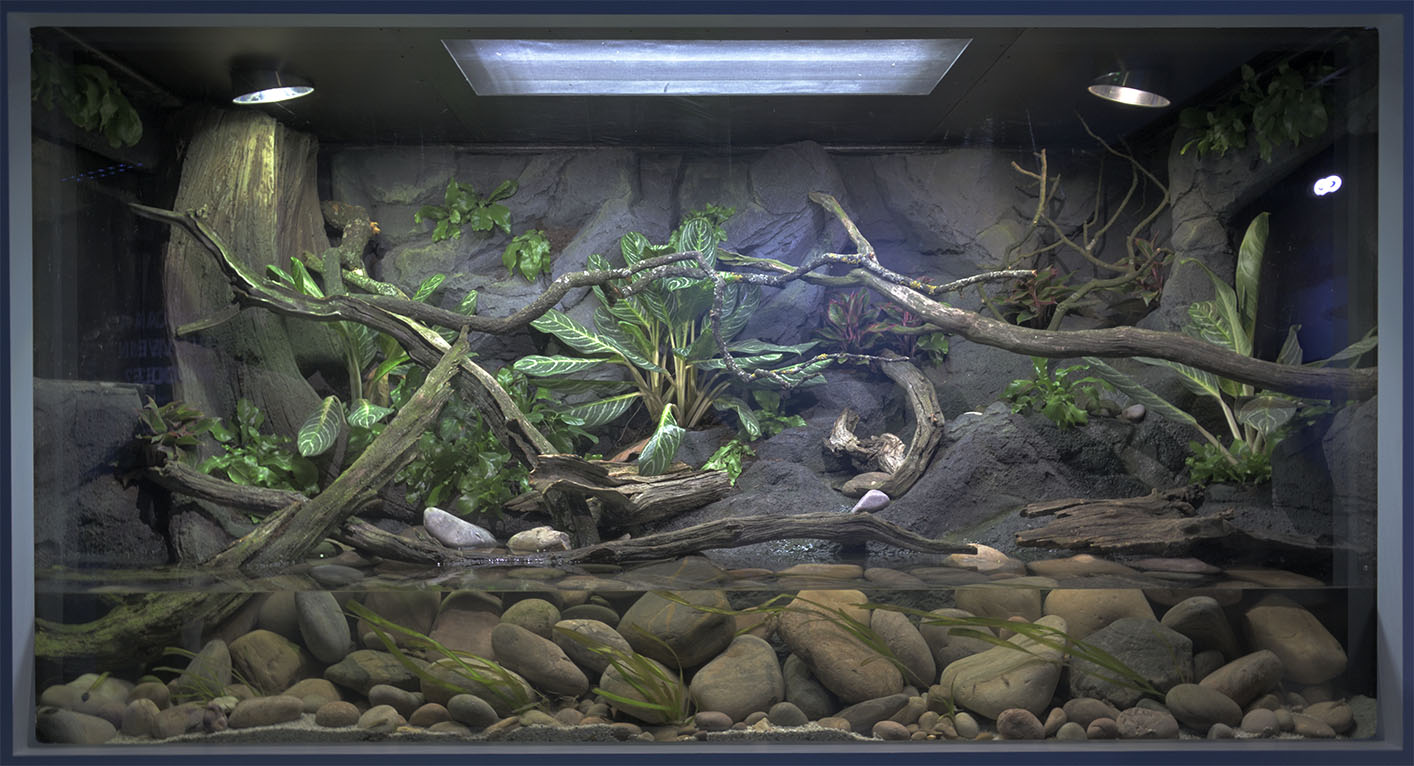 Most of the tanks are stocked with young fishes, generally about half grown, so you need to look carefully to see the hillstream fishes and gobies in the first display. The area above the water is due to hold Chinese crocodile lizard(s) but I think they have not been added yet. Several other exhibits also have space for another species above the water surface, but all these other species are invertebrates.
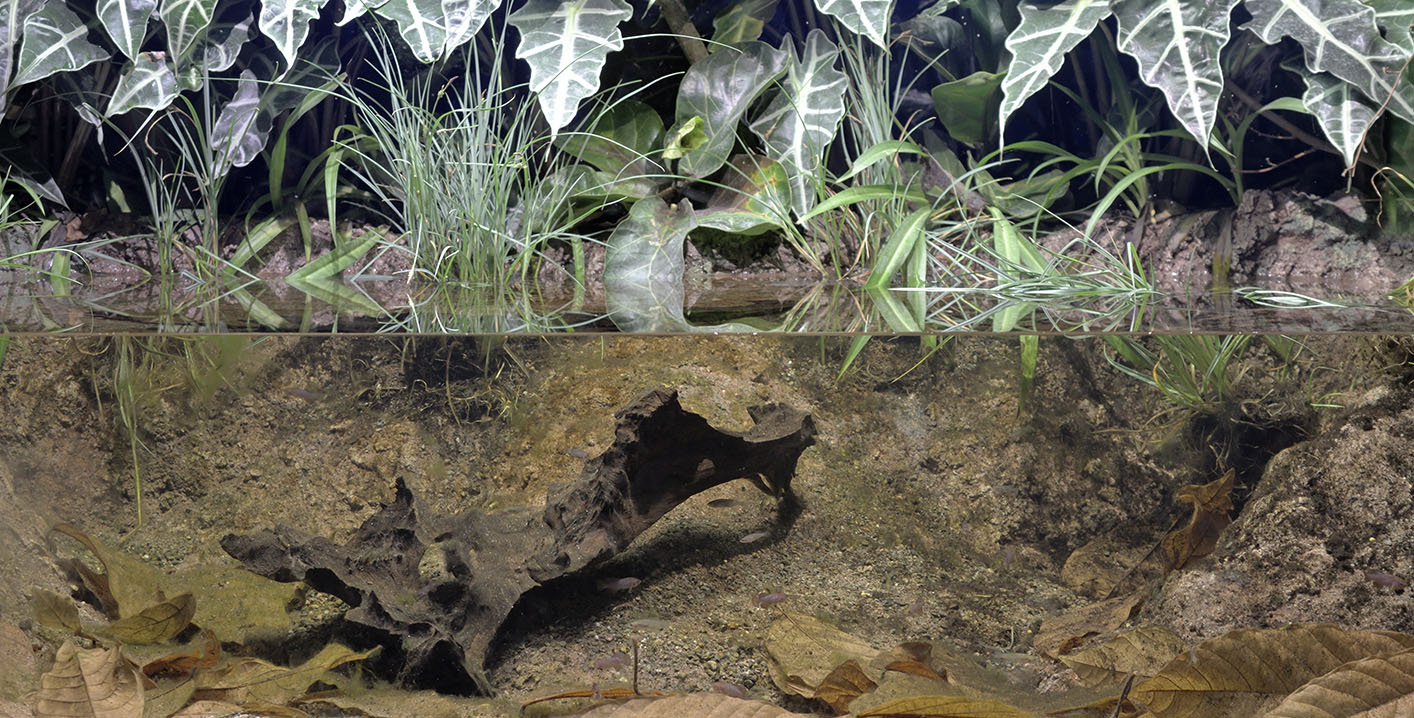 The second exhibit holds Nothobranchius sainthousei which has been mentioned in ZSL's publicity material. This is one of the annual killifishes which live in pools that only exist in the rainy season. I liked the underwater parts of these first two exhibits because I thought they were expertly aquascaped to resemble the natural habitats of the fishes: on the other hand I felt the land areas looked like job lots of houseplants. Am I being unfair? I think the same could be said for the other exhibits with planting above the waterline too.
The other thing I hated was the video screen showing the labels for the big Amazon exhibit (it is just visible near the centre of the first photo). It show labels for 6 species at a time and changes every minute.
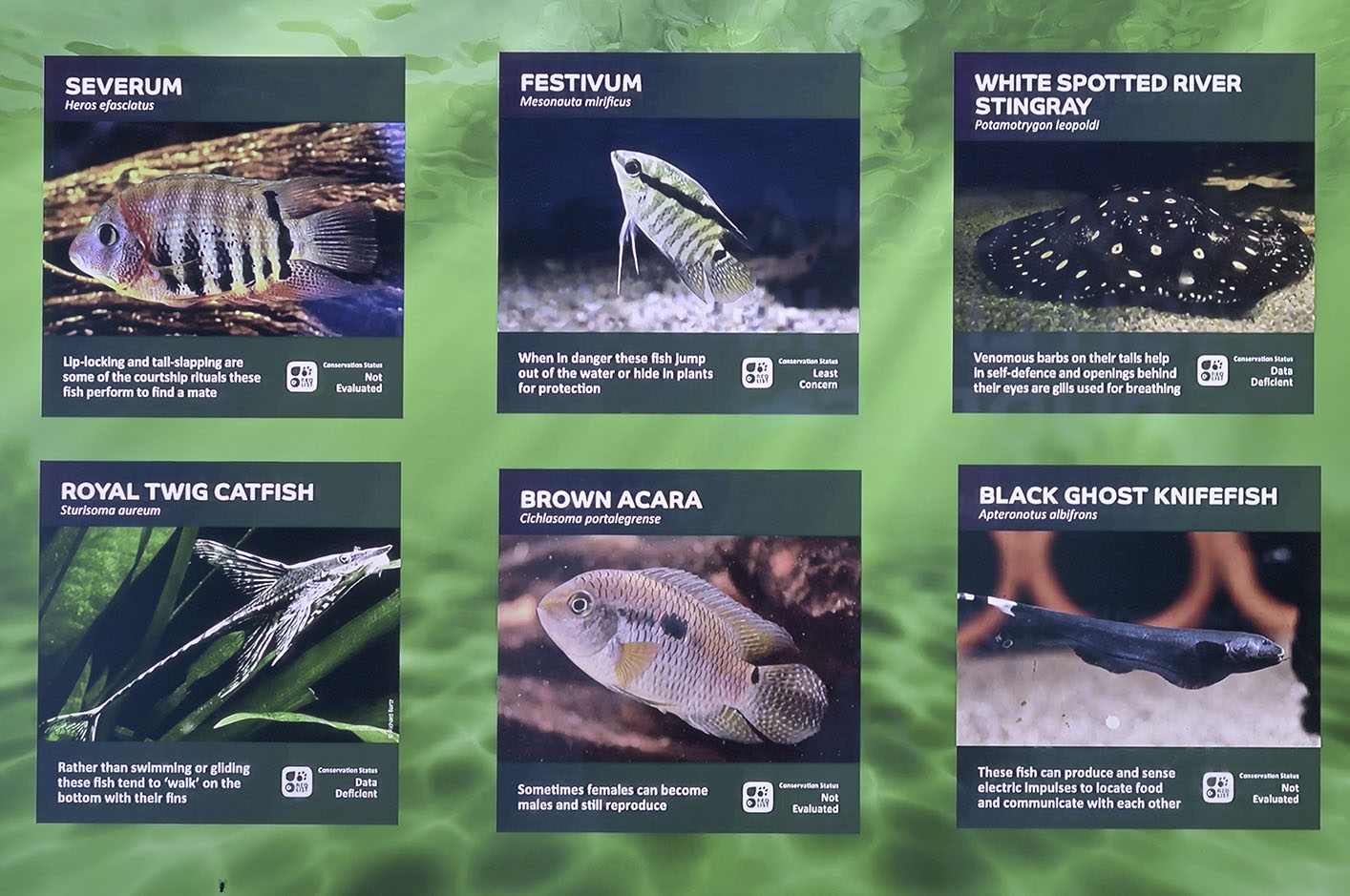 As there are labels for 30 species, you have to watch for 5 minutes to see them all, and you will almost certainly have forgotten some of them before you even look at the fishes!
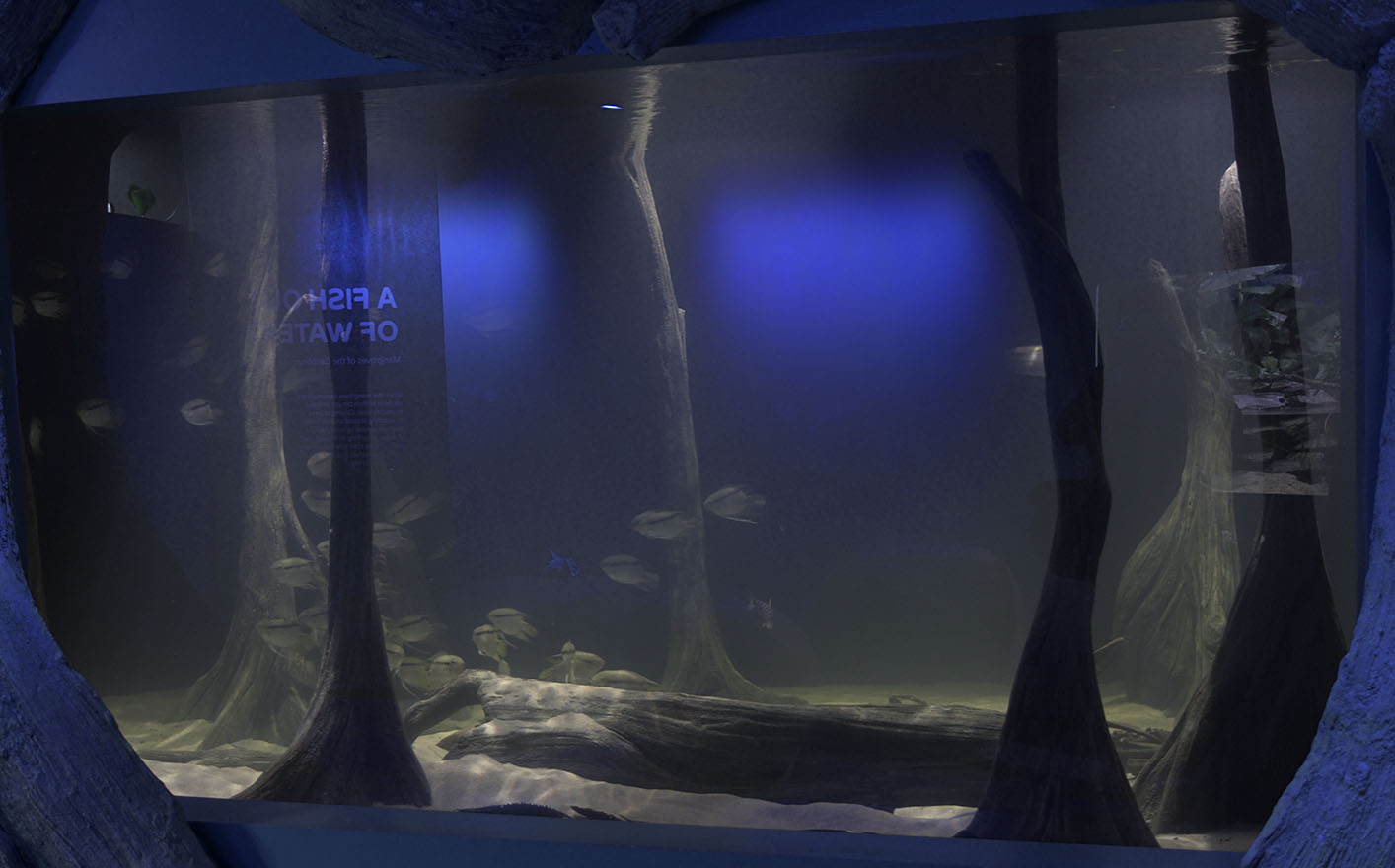 This exhibit holds some large fishes from Regent's Park and I think it was still maturing. I only saw 4 species but I expect that more will arrive (although I'd be amazed if they can fit all 30 into the tank).
I liked the mangrove tank and the smaller exhibits near it.
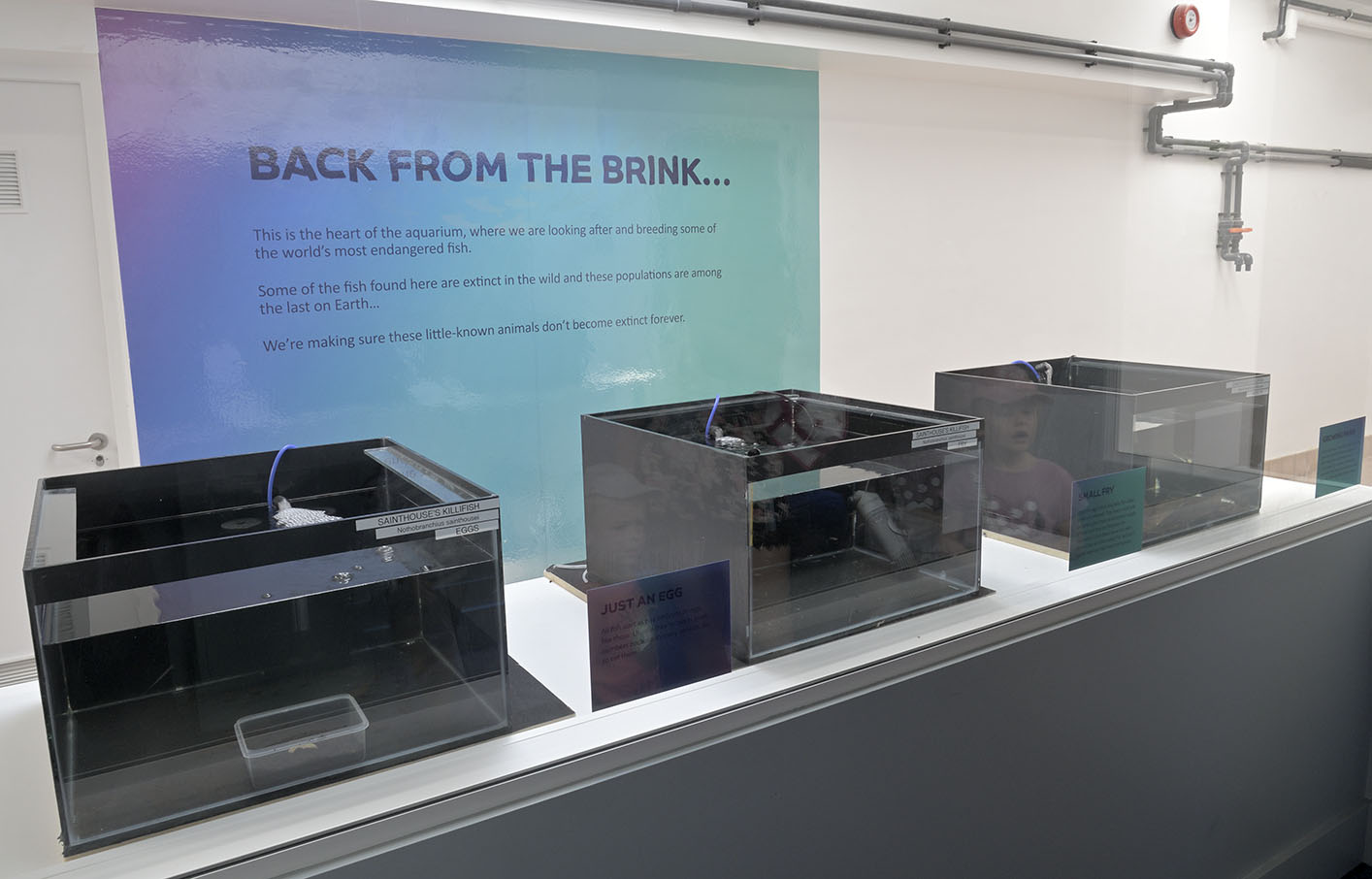
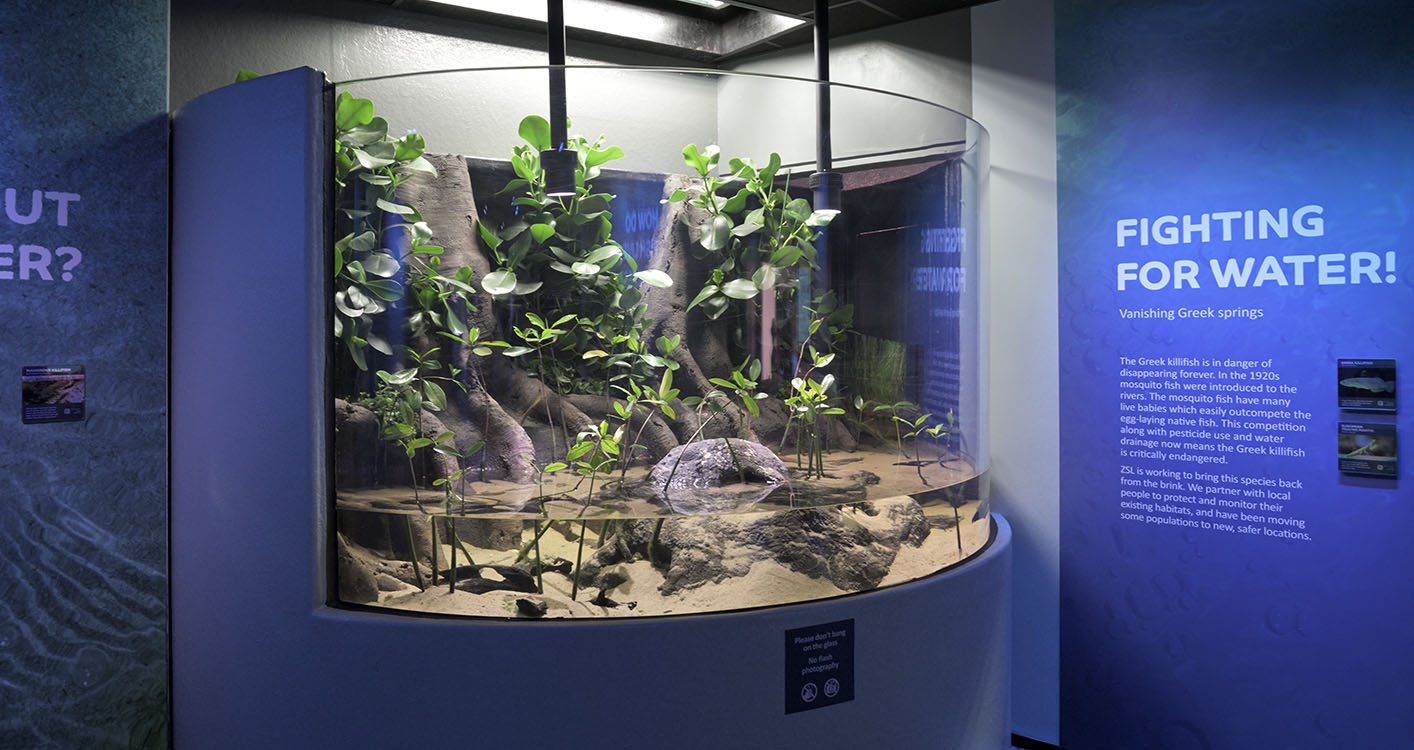 The next section has large windows and a sign saying that it will become the conservation lab. There is only a very simple display of the Nothobranchius at the moment, but there is space for interesting future developments.
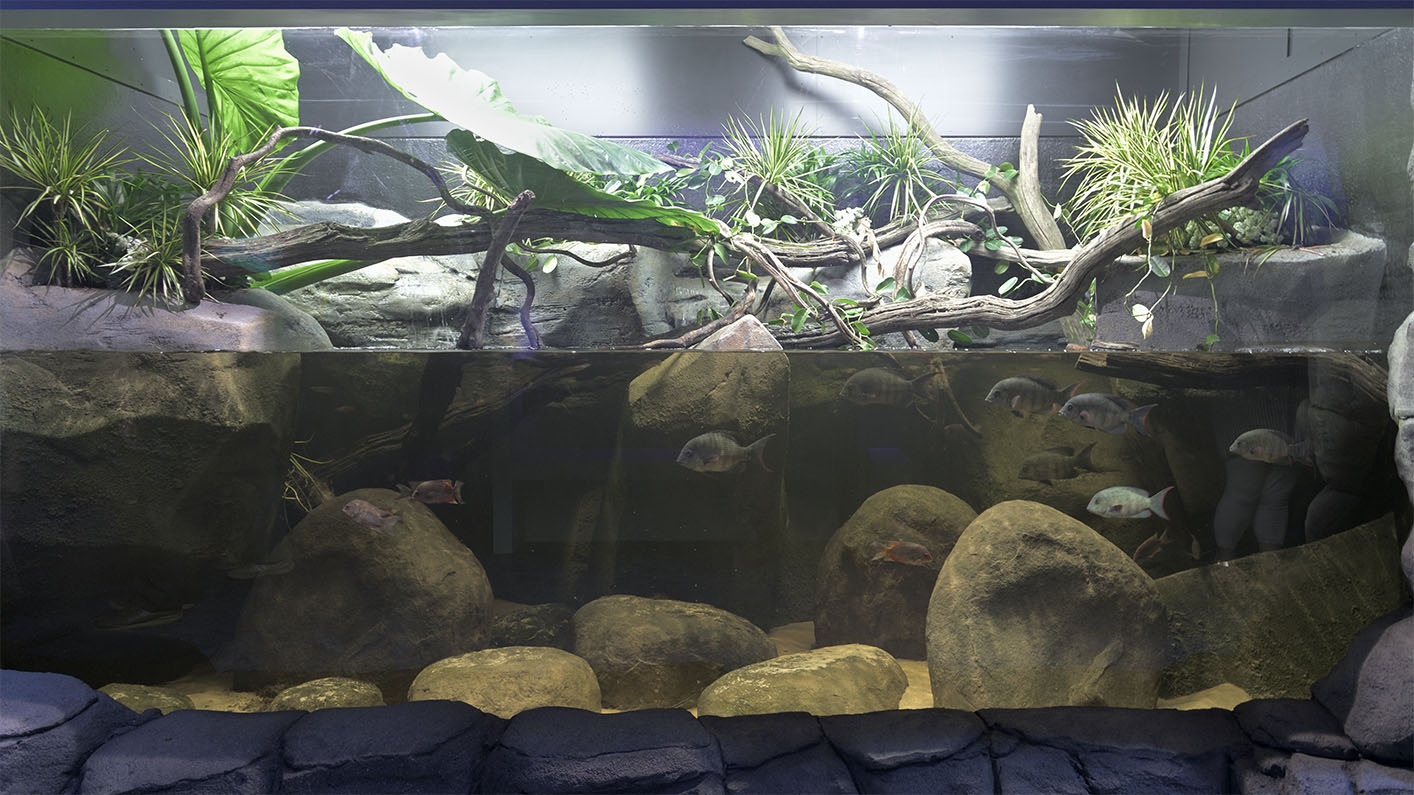
 A big display for Malagasy fishes comes next. The labels for these fishes are hidden opposite the tank! I was disappointed that I did not see 2 of the species mentioned. They may not have arrived yet or they may be in quarantine or they may have been hiding out of sight.
 Likewise I could only see 2 species in the Lake Tanganyika exhibit. I'm sure more will follow.
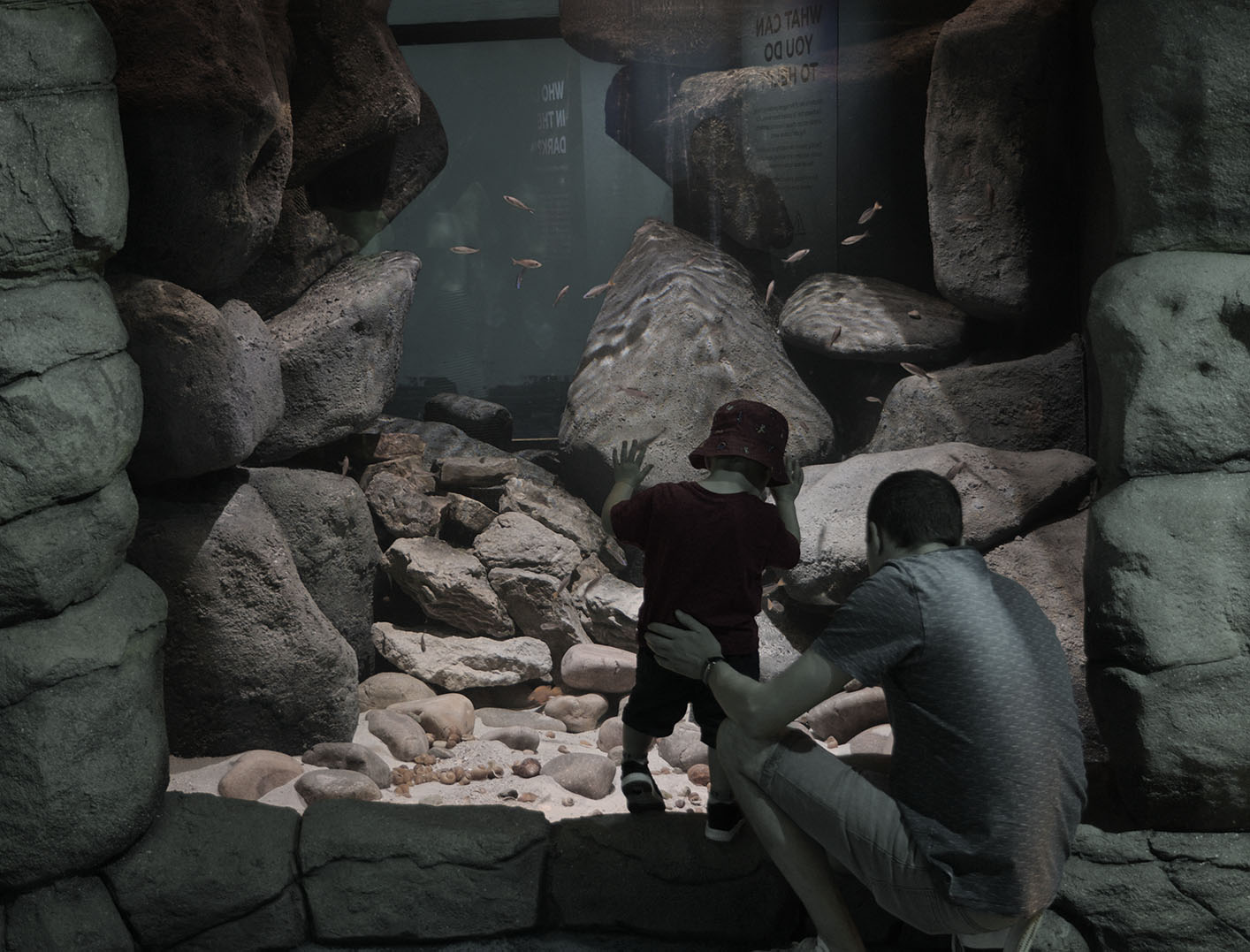 This photo shows one of the problems that ZSL will have. Even the most diligent parents were unable to stop their small children from touching, pushing or leaning against the glass of the tanks. They seem to have been designed to make it easy for children to do so. An hour after the zoo opened there were sticky finger marks on most of the tanks. I can't blame small children for doing this when they are excited at seeing the fishes, but there were no staff or volunteers in the Aquarium to discourage this or to clean up while I was there.
Finally to return to the Aquarium Gift Shop: this is not a little kiosk, but a significant space within the building, which could house a very large display tank or extend the area for conservation breeding. I only looked inside briefly, but very little of the merchandise seemed to have anything to do with fishes or butterflies. A few minutes with the zoo map and Google Earth showed that there are 4 other shops nearby, in Hullabazoo (the children's area) about 75m away, the Sea Lion Shop ~140m away, the Station Store ~220m and in the Visitor Centre, at the zoo entrance, 250m away.
Is ZSL coming close to Charity Mugging?
I also want to write about it here, in the hope that some people will also be interested. But I am mindful that some ZooChatters may be planning a visit in the next few months and may not want to know too many details in advance. So I will only write about a few of the species and give generalised comments here. I will try illustrate these points with photos of some of the exhibits, rather than photos of individual fishes, which I will post later. On the other hand, if you want to know all the details that I recorded follow the instructions in the SPOILER. I will also add that I thought that the choice of species included some beautiful ones and some interesting ones, including 2 that have been described recently which I had never seen before.
The first thing to say is the Aquarium is not very big, with just 10 permanent exhibits. It is housed in the existing building which was at one time the Cloisters Cafeteria. At the Entrance, you pass a Gift Shop (about which more later) and go through the Aquarium and then pass through the Butterfly House to return to the Gift Shop.
The interior of the Aquarium is fairly bright and nicely carpeted. The exhibits are on alternating sides of the walkway, which is not very wide, so it was quite crowded when I visited because the zoo was very busy.
View media item 452559Each exhibit has an information panel with small labels naming each species, but I thought it was odd that this came before the exhibit, so many visitors walked straight past the labels and then asked 'What are those?'
The other thing I hated was the video screen showing the labels for the big Amazon exhibit (it is just visible near the centre of the first photo). It show labels for 6 species at a time and changes every minute.
I liked the mangrove tank and the smaller exhibits near it.
Finally to return to the Aquarium Gift Shop: this is not a little kiosk, but a significant space within the building, which could house a very large display tank or extend the area for conservation breeding. I only looked inside briefly, but very little of the merchandise seemed to have anything to do with fishes or butterflies. A few minutes with the zoo map and Google Earth showed that there are 4 other shops nearby, in Hullabazoo (the children's area) about 75m away, the Sea Lion Shop ~140m away, the Station Store ~220m and in the Visitor Centre, at the zoo entrance, 250m away.
Is ZSL coming close to Charity Mugging?
Download the Whipsnade Aquarium Table from the Resources Section. It is a .pdf file
Last edited:


