The Hidden Influence of Zoo Layout

pendraig_milnerae

Well-Known Member
5+ year member
There have been threads talking about layout before, however they have all been limited to arrangement of exhibits based on things like ecoregions of taxonomy. However, overall layout and positioning is a surprisingly important factor in regards to a zoo's exhibit design and guest experience. For instance, Port Lympne is composed approximately of two main loops, a vehicular one and a walking one. The latter of these is roughly rectangular in shape, and as a result all of the exhibits are also rectangular and viewable along the length of one of their sides, from small closed-topped primate enclosures to multi-acre hoofstock fields, and there is a less-developed woodland in the centre. There are a couple of exceptions (mostly on corners) like Palace of the Apes and the first couple of rhino fields, but the principle remains. The result is that a visit to this institution is fairly straightforward, so long as the steep inclines and massive size of the park are considered.
On the other hand may be somewhere like Chester Zoo, which appears to be a general circuit at first glance, but has many cross-links and areas where the pathing becomes significantly more complicated like the current northeastern corner between Elephant Bridge and Spirit of the Jaguar. This is accentuated by a number of unidirectional exhibits, most of which contain a number of the more interesting species, so a lot of backtracking is required in certain places. This can impact timing, as Chester not only has a huge diversity of species as-is, but significant time can be wasted simply by trying to get to a certain exhibit, as I have experienced on both of my visits. The upside is that it allows
Part of the reason this is important is because of what someone wants to see on a visit, but also because of photography as well, which can cause delays. I, as an autistic person, am easily stressed by simply large number of other visitors, so negotiating a difficult layout can make an ordinarily enjoyable visit less easy. Part of the reason I remain fond of PL is because it's essentially just a decision of left or right, whereas other places require far more weaving like a string on an investigative cork board. Of course I am not saying that layouts need to be changed to accommodate people, but it is an often overlooked aspect that adds up surprisingly easily.
 
I do think that the layout of a zoo is certainly more thought out these days than in the early days and as a transportation engineer this also fascinates me just as much as exhibit design and seeing animals themselves.

In the old days, most collections crammed as much in and wherever they could. You see a lot of this with places like Chester, London, San Diego. San Diego is notorious for having many routes that require you to backtrack numerous times to see everything.

Currently in the US, a lot of zoos when creating a master plan, include main routes and pedestrian loops so one can find their way to the main loop and get to the next exhibit without missing major pieces. There are a number of zoos that have started putting this to good use. Me, being from Omaha, is certainly very aware of how Omaha has created a main loop that all the exhibits stem from and lead you back to the main loop. Omaha wasn't always this way. Before their master plan came out around 2010, there were multiple areas one easily could get turned around or miss things. The one exception is the Gorilla Valley "shortcut" that let's you get from the back of the zoo to the front without following the path all the way around.

Other zoos in the US that have started to implement this way of thinking, Memphis comes to mind with all their new exhibits, St. Louis with River's Edge almost brings back to where it starts, Denver's newer exhibits all feed from the main loop. Pedestrian circulation is certainly a much bigger consideration these days than it used to be. After all, if your patrons can't easily find the things they want to see or where to find a place to eat, it greatly reduces the guest experience and might not return. Even moreso these days when some zoos don't provide paper maps to cut down on paper waste, even though not all guests may have access to a cell phone or simply do not like relying on the battery life of a device.
 
I think the structure of a main loop with multiple smaller loops branching off from it (and returning back to it, in approximately the same spot so I don't miss anything) is probably what works the best for me. It gives both structure and the opportunity for choice (while not overloading me with too much choice!).

Ideally, I think I'd love to see seven things:
1. a clear main loop, very clearly marked and identified on both the map and at the zoo itself, preferably with a recommended direction of which way to start.
2. multiple smaller loops branching off from this, each again clearly marked on the map and at the zoo itself, (could be signs pointing the direction, or paw prints on the ground), with the exhibits and habitats designed in a way that you can easily see all of them without having to backtrack or criss cross. (I'm okay with them switching back and forth between left and right if there's some clear way to tell that's what's supposed to happen. But if they are competing then I worry that I'll miss something.)
3. optional "short cuts" for advanced navigators to jump between loops if we want to, but have them clearly marked as shortcuts (rather than the regular loop), and be smaller so that it's clear you're going "off-trail". (and perhaps even with a warning of what you'll miss out on by making the jump).
4. in general, I'd love to see more loops, but have each of them be a little smaller than happens at a lot of zoos. For example, I'd prefer to have 2 or 3 loops of African animals, rather than one huge African loop that takes forever to get all the way around.
5. Clearer signs and wayfinding, that matches what's on the map. I get that they all want us to "explore", but it's really frustrating when you're visiting and only have a day, and then end up spending part of it going in the wrong direction! I get to so many intersections and wonder "where am I now?"
6. Maps that are to scale, and that show the locations of all animals -- big and small. I get frustrated when I'm at an exhibit, then look at the map and it doesn't exist. Or when the map shows two loops as the same size, but one is actually three times longer. Or when I walk along a path that looks like it has animals on it, only to discover that it's just trees and also four times longer than it looked.
7. Bring back paper maps! I realize that this one makes me an old fogey that should be put out to pasture. But I'll never be able to find that pasture because you took away my map! HA!
 
Yeah I definitely do like a loop where you can easily see all the animals without needing to always look at the map. When I go to a zoo i mostly don't have any preference on which animal to see first, so it's good to just follow a path.
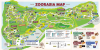
e.g Zoorasia Yokohama
Zoorasia map.png
As you can see all the exhibit are on the same path, so it is easy to see all the animals. There are other path and one to get back to the entrance without seeing all again. The African loop, being an extension of the original zoo, is a bit out of place but still you don't need to backtrack.
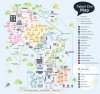
Another example is Taipei Zoo:
2051e588-322b-4053-8b8e-338e07436dc2.jpg
Taipei zoo have a main path that goes in the middle, with each area being a loop of itself (rather than a full zoo loop). So you can choose which area to visit first. Yes there is only one main path and it is a dead end, but that is because the zoo is located on a small slope/hill and there are trains allow people to go from the lower part to the upper part.

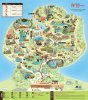
Compare this to Singapore Zoo:
sz-en-map.jpg
Yes Singapore Zoo is a great zoo and there is a clear loop around, but the area in the middle like Fragile forest can be a little bit hard to navigate. And without looking at the map places like the sun bear or gharial might be missed. I myself have missed the tortoise shelter when i visited it.
 

Attachments

  • Zoorasia map.png
    Zoorasia map.png
    997.9 KB · Views: 58
  • sz-en-map.jpg
    sz-en-map.jpg
    177.4 KB · Views: 55
  • 2051e588-322b-4053-8b8e-338e07436dc2.jpg
    2051e588-322b-4053-8b8e-338e07436dc2.jpg
    128.6 KB · Views: 57
I actually really like zoos that you can just explore and get lost in, though I'll admit its frustrating when there's something in particular you're trying to see. When I went to the San Diego Zoo I kind of had a love-hate relationship with how it was laid out. I did have a lot of things I was hoping to see in particular and it could be frustrating trying to navigate the zoo to find them. That being said, it was really fun to just explore the zoo and see what I could find. I ended up discovering a lot of animals I probably would have overlooked had the layout been more straighforward.
 
Auckland Zoo offers guests the best of both worlds. It has five precincts (Africa, Americas, South East Asia, New Zealand and Australia), which each consist of a simple loop.

My favourite thing is that you can mix and match depending on what you want to see (e.g. you might want to miss a precinct out if it’s raining or you’re short on time).

I also like being able to change the routes up. Most people head for Africa, so I always go to South East Asia first. From here, you can choose to do the Americas, Australia or New Zealand - the latter links to Africa. All of the precincts have shortcuts, which you can take to cut bits out that don’t interest you.

upload_2022-8-16_20-19-31.jpeg
 

Attachments

  • upload_2022-8-16_20-19-31.jpeg
    upload_2022-8-16_20-19-31.jpeg
    103.7 KB · Views: 57
Melbourne Zoo have a great design revolving a single path leading from the lower entrance to the other. It's great as it allows you to chose which trails you wish to see, and can allow you to easily skip those you don't wish to see. The design also allows for a fairly easy trip without any backtracking needed, and it's relatively easy to navigate, with the added benefit of ending up where you started off.

mz-epic.jpg
 
Paleoarchontas brings up a fascinating topic.
Keep in mind that the site often determines the lay-out. A zoo may be like a huge flat field where any route is possible. Or it may be long and thin (think Seneca Park Zoo) where options are limited. Or it may have big elevation changes (Cheyenne Mountain Zoo) or canyons and hills (San Diego Zoo). Any Master Plan starts with topography and site analysis
 
I always thought that from the point of visitors, good zoo layout is bottom-up, not top-down.

I much prefer the traditional layout with a net of paths cutting short between exhibits. Long loops look attractive on a map, and perhaps help poor designers to force visitors into doing what they imagined. But for the visitors themselves, loops are tedious.

I will share my personal experience from Leipzig zoo. It created a number of long loops with different themes. Then, inevitably, two paths were temporarily closed for maintenance, and my young one wanted to the toilet. And the zoo visit became finding a way through a long labyrinth with an unhappy, tired child to get to the toilet.
 
This is definitely an unpopular opinion, but I'm not a big fan of zoos that have just one loop to see everything. I like a variety of loops and pathways in which I can see the animals easily. Obviously I don't want to be in a maze(San Diego zoo lost forest), but I also don't want a single loop. It's somewhat boring to go to the same zoo again and follow the exact same path.
 
One thing I found really interesting is how when Brookfield Zoo was constructed in 1934, they intentionally kept most of the dedicated indoor habitats (ie Reptile House, Small Mammal House, Primate House, both Bird Houses) near the South Gate so in the winter you could visit only those habitats for a short visit. I thought that was cool.

I've taken a few different routes through Brookfield over the years and there's always points I have to backtrack or where I miss something out because it's out of the way of the chosen path; so my first time visiting a zoo that was a loop felt amazing. I also think it incentivizes casual visitors to see more of the zoo than they would otherwise. I do like having some side paths to view an exhibit differently or smaller exhibit loops off the main path, for sure though.
 
Having thought about it, I find myself agreeing with Jurek and Pleistocene.

When initially reading the thread I did think about the zoos I know well and where you need to double back on yourself or repeat a path before taking a different turn if you want to see everything and thought a loop that covers everything would be a good idea.

The more I thought about it though I realised you do want the option to bypass sections or criss-cross the zoo. I can think of several reasons why.
  • You want to return to an exhibit because you couldn't see the animal earlier on.
  • You realise you missed something and want to go back to it.
  • You want to head to one of the more popular exhibits as soon as you arrive to beat the crowds.
  • You want to take an alternative route to what the map suggests to avoid the worst of the crowds even if this might be a longer route overall.

I prefer having the option to choose my own route and be able to easily backtrack to another section if I wish to. It might still be possible to achieve this whilst having a route that involves no backtracking or repeated sections, but I think it would be very hard to achieve.
 
I've often found that something between a spider-web and a loop makes for optimum visitation. On the one hand a loop offers a simple navigation where more complicated paths can lead to backtracking and, sometimes, inability to see certain things, but equally a loop tends to result in monotonisation of exhibits, often having been constructed around the same time, whereas exhibit design in complex layouts is often more interesting. Of course there are a thousand nuances based on potential factors, so no one system can be considered the right way. As @NMM pointed out, bypasses and crossing paths make navigation to a specific point a lot easier, especially when backtracking is required. Ultimately though it depends on the zoo, and each have their own problems and advantages.
 
As @NMM pointed out, bypasses and crossing paths make navigation to a specific point a lot easier, especially when backtracking is required.
This brings up the difference experiences of repeat visitors and occasional or new visitors. Lots of bypasses and crossing paths create a confusing experience for people not familiar with a landscape (zoos that have such layouts often get complaints), while the regular visitor likes being able to zip directly from here to there.
 
I have really enjoyed reading this thread and seeing the different perspectives on how zoos should be designed regarding navigation. Two suggestions of my own:

Signage pointing in the direction of exhibits can be really helpful. A great example is at Burgers' Zoo, where around every corner there are signs pointing to each of the exhibits, and they are usefully equipped with each eco-display's 'icon', so that they are easy to use at a glance. Additionally, there is an icon on top to show you which eco-display you are currently in. The below photo from EmperorTamarin shows it very well:

Ewqc4TiPcZnFTypc2alE2pfsaXlctfSnpDOO7dK5oXIGtX3GBOPWiTvbO1SKRsloZ3rWawFZZqAHdMvnB0C97_F_ctWFL_2mdTC-2zqEEwwH_WWe0XzFZGfUxOvH2u1l4_ScKvCJyFEY5w6F9D9UgQE


Of course, facilities are also marked on these signs.

I also think that, to help with navigation, zoo maps should not only show the animals but also the shape of the buildings and other structures around the zoo. It is inevitable that not every species in a collection will be marked on the map, so having other icons to help you know your location is very useful! I think both the ZSL collections, particularly London Zoo, have maps that are very good in this regard.

89983b39611808e78a769e94_rw_3840.jpg


For example, some sides of the Casson (former Elephant & Rhino Pavilion) have no animals to help visitors find where they are, but the Casson is a very distinct building. If they can find that on the map, they have found their location and can navigate from there. The map even shows such details as the Polar Bear statue behind the amphitheatre and the bug hotel in front of the West Tunnel. I no longer need maps when visiting my two home zoos, but back when I did, the attention to detail was life-saving whenever I, as I often did, got lost.

A zoo that executes this very poorly, in my opinion, would be Beauval, which shows many of their buildings on the map, but not all of them. I spent at least five minutes searching for the hippos, with no idea that the aviary right in front of me was the Hippo dome, as the map did not show any structure besides the hippos whatsoever.

Similarly, there is Colchester, which does show buildings, but shows them all in the same style. I have lost count of how many times this has confused me while visiting Colchester Zoo:

Colchester_Zoo_Map.png


As for my thoughts on loops, I think that @NMM sums it up perfectly, so I will not repeat what has already been said.
 
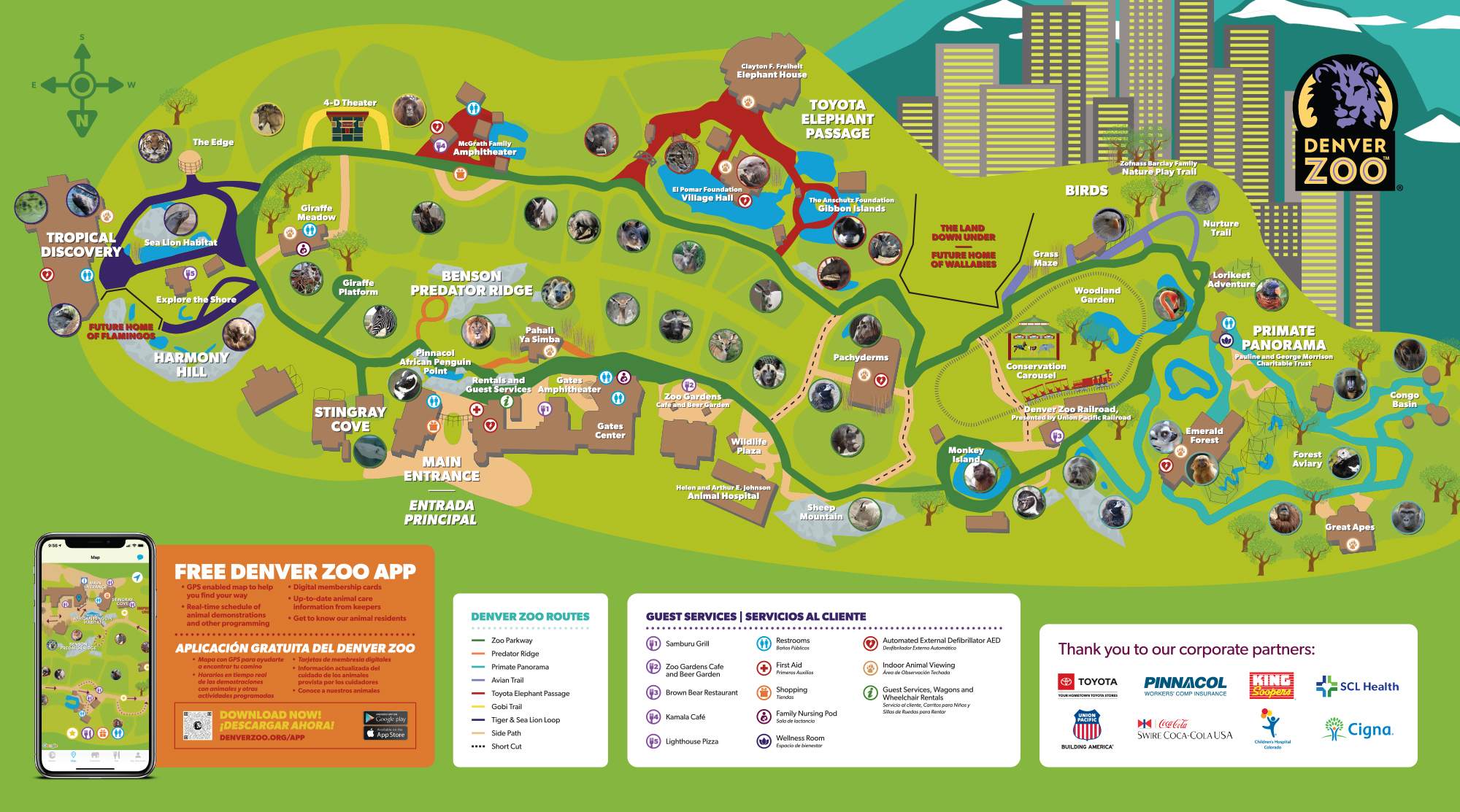
I quite like Denver Zoo's layout:

GED-214_Maps_Web_Spring22_V1.0_JH_03-22-22.jpg


There is obviously a central loop in green, with sub loops to explore Northern Shores, Elephant Passage, and Primate Panorama, rendering these exhibits both completely skippable but also ensuring you can see the complete exhibits and return to your place on the original path (rather than potentially miss exhibits by following a parallel path, requiring backtracking to return to your starting point) but there are also four paths that cross through the main loop, so one could rather easily cut past Pachyderm House to reach Elephant Passage, for example. I could imagine another area cutting through the hoofstock paddocks would do a lot of good as well, if we focus on paths instead of exhibit space.

I think it works well to offer a clear main pathway for visitors with a few bypasses, branches, and side crossings available for experienced visitors but not too distracting from the main path. That's the best of both worlds.
 
What I particularly like about that Denver map is that the cross-cutting paths are clearly marked as short cuts (with dotted lines). Presuming that there's also an on-site visual cue letting guests know these are short cuts (so that you don't go down them by mistake), then this seems nearly perfect for me.
 
Last edited:
Back
Top