The Intersection Between Birders and Zoogoers

RatioTile

Well-Known Member
5+ year member
Birding’s a pastime similar to ours, where people keep life lists and collect species they’ve seen. Many people on this forum avidly do both birding and zoogoing. But by and large, most birders I’ve met in the field are only ever interested in seeing and keeping track of wild birds, and they’re surprised my bird life list consists of both wild and captive birds from zoos, rescue centers, aviculture, etc. What are people’s reasons for collecting only wild birds? Are so many of them anti-captivity, or are they just committed to a game with different rules and consider going to a zoo cheating?
 
Birding’s a pastime similar to ours, where people keep life lists and collect species they’ve seen. Many people on this forum avidly do both birding and zoogoing. But by and large, most birders I’ve met in the field are only ever interested in seeing and keeping track of wild birds, and they’re surprised my bird life list consists of both wild and captive birds from zoos, rescue centers, aviculture, etc. What are people’s reasons for collecting only wild birds? Are so many of them anti-captivity, or are they just committed to a game with different rules and consider going to a zoo cheating?

They are "games" with different "rules" in my opinion, being myself a zoo fan and an occasional birdwatcher. For many birdwatchers, the habitat, the search, the walk, the photography, and the different plumages/age stages are way more important than just the species. Birdwatching is not only about seeing as many species as possible, most of the time. There is an intrinsic pleasure in being in the woods or in the countryside and seeing birds. But even among birdwatchers or zoo fans, there are many different people. I, for example, do not care much about species (although I like to see as many as possible). For me, the goal of a zoo is more about the enclosure, the exhibit, the experience, the message and the animals themselves. And even common zoo species are very pleasant to see (I love to see giraffes, and they are everywhere!). Also, for example, a place like Masoala Rainforest in Zurich Zoo is something that drives me way more than going to a small outdated and boring collection that has the sub/species A, Y or Z and are the only ones in the world. For me, the environment/enclosure where the animals are is definitely something that gives me enjoyment to see. And the small cages/aviaries/terraria where some private breeders or exhibitions hold their animals are so depressing that I do not find any enjoyment. For me, visiting a private breeder or an aviculture exhibition would be extremely boring if the purpose would be to just tick one more checkbox on a list. I know many birdwatchers that feel the same regarding captive birds. The pleasure of birdwatching is the "hunt" and for being in the same natural environment as the bird. I know birdwatchers that are only interested in seeing rareties (everything else is "trash birds"), others that have favourite groups and aim specifically at them, and others that are more into taking the perfect photo or searching for that specific courtship behaviour.

Even the other day at Basel Zoo, visiting with a great birdwatcher friend, I told him: If we see a Socorro Dove (extinct in the wild) here you can put it on your list because you will not see it in its natural habitat "ever". He just said no, because for him birdwatching is about wild birds and their habitats, the struggle to find them, etc. In captivity, the bird is there for you while in the wild you have to be there for the bird so to speak. In conclusion of the story, the new birdhouse in Basel Zoo is so lush that we could not find the Socorro dove. Sometimes even zoo animals offer a challenge.

P.S. This friend of mine, although a birdwatcher he also appreciates to visit zoos.
 
For some, it's about being local. A close friend of mine is very into birding and conservation of our native species. She once went to a zoo with me and didn't have a clue about most of the exotic species we saw.
 
I myself am both an avid birdwatcher & zoo-goer. I find that certainly here in the UK that many of our natives are seldom kept in public collections, and your only chance of seeing the species is out in the wild. In my experience the birds I see wild in the UK that I also see in collections are often waders but also certain waterfowl like swans & geese.

I find a greater satisfaction in seeing wild birds as I personally enjoy how encouraging factors such as predator control, physical habitat management, supplementary feeding, erecting of nest boxes etc can benefit species, or even in some cases decrease numbers. I enjoy monitoring what species are in my area and feel contented that my actions are indeed making a positive impact on species numbers.

With zoos I enjoy large mixed species free flight halls rather than small aviaries. Much like with birding you have to seek out the birds which always adds to the enjoyment of a visit and how there can often be something new to see that you missed on your last visit. The variation of species also allows you to watch interactions between other species whether that be a more dominant species at feeding stations or two separate species from opposite ends of the world preening one another.
 
Birding’s a pastime similar to ours, where people keep life lists and collect species they’ve seen. Many people on this forum avidly do both birding and zoogoing. But by and large, most birders I’ve met in the field are only ever interested in seeing and keeping track of wild birds, and they’re surprised my bird life list consists of wild and captive birds from zoos, rescue centers, aviculture, etc. What are people’s reasons for collecting only wild birds? Are so many of them anti-captivity, or are they just committed to a game with different rules and consider going to a zoo cheating?

As a birder and a zoogoer, I feel that seeing a particular species that is not rare in captivity but in the wild is completely different. In captivity, you are almost guaranteed to see it, but in the wild, you must have a combination of luck and knowledge of where to look and how to find it. The more times you go birdwatch, the longer your time in the field, the better you get, and the better you will feel that you deserve the species, and your find was the result of skill, not just luck.

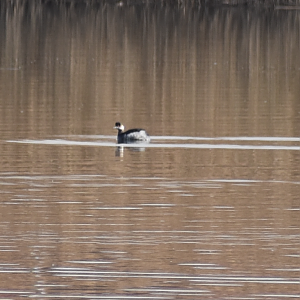
One example of this was in Tokyo Port Wild Bird Park, where I visited 8 days ago. I was looking out onto the saltwater pond when I saw 5 grebes far in the distance. If I were any amateur wildlife watcher, I would have just dismissed them as all little grebes. However, as I always spent my free time submerged in bird field guides and encyclopedias, I had known to check the coloration and head shape of the grebes. I saw that most of them were indeed little grebes, but one of them which was constantly diving and only surfaced for 2 seconds each was a black-necked grebe, a first-timer for me. Birding therefore builds a skill of quick if not immediate identification, which indeed does develop for zoogoers, but never the outgoing level of that of wildlife watchers.

That is not to say, I indeed love zoo-trips. I particularly enjoy zoos with rare species, and I do keep track of the rare species, such as the Philippine Eagle, Dwarf Sawfish, and Great Slaty Woodpecker. Zoo trips for me (excluding local zoo trips, they are just for fun) are mainly for seeing exotic species, which I will do anything to see. For these species, I don't care if they are in captivity and does not take much skill to see them (Unless they are in a biodome of some sort, where I will have to constantly search for it), because these species are rare, and just seeing them brings me joy.

Black Necked Grebe ~ Tokyo Port Wild Bird Park

Speaking of birding, I'm just going to go on a week's trip to Karuizawa, Nagano Japan for Skiing and birding, I'm aiming to see Crested kingfisher, Japanese Green Woodpecker, and Mandarin Duck. Wish me luck!
 
I guess I’m not really a birder in terms of listing birds or having many goals about them (though I went to the East coast to see bee eaters so perhaps I am fooling myself there!) however I like to go out to nature reserves and bird areas / wetlands and see what I can find and photograph. I have some nice small guidebooks so I can identify the birds on the go and there is a different challenge in providing your own signage!

As mentioned above most of our native birds are not kept in zoos in the U.K. and I enjoy seeing them out in the wild or even in the garden.

I also enjoy seeing birds in collections particularly in free flight and mixed spaces as they are birds I doubt I’d see in the wild and I like the colours, diversity of songs and different behaviours. It’s not the same from a getting a shot pov but I enjoy it as much. If you visit a collection regularly you can see how behaviour plays out and watch the young birds growing up etc which is fascinating.

You often get good wild birds in U.K. collections as predator control and food provision attract some nice species if you look around enough.

I’m also conscious that sometimes when I go to remote locations with camera gear, as a woman travelling alone there are some risks associated with going to places that are in the middle of nowhere. More controlled spaces like zoos do offer a different experience in that regard.

I’ve only been hassled once and that was at a nature reserve but tbh it wasn’t the most fun moment reflecting no one else was there and I was 20 mins walk from the car etc. I’ve travelled to lots of countries and to some nice remote places and I’m not sitting in a closed box having a cry or anything but it’s something you have to take into account when heading off for some bird photography.

In terms of general appreciation, it’s also a shame that some visitors race past bird enclosures at the zoo. I’ve noticed people wandering around in nature reserves not really stopping to watch the birds there either. Part of thinking about the environment and our impact on it can come from seeing how birds are inhabiting the local spaces. Perhaps i have a low bar though as I’m pretty delighted the sparrows who fledged this year are still in the garden hedge and visiting the feeder this winter so it’s all perspective!
 
For some, it's about being local. A close friend of mine is very into birding and conservation of our native species. She once went to a zoo with me and didn't have a clue about most of the exotic species we saw.
I've joked about this before, being a bird enthusiast but also (I'd say primarily) a zoo enthusiast, that I am the rare bird enthusiast who is better at identifying birds from around the world than local birds :p. I can confidently identify a number of Asian columbiform species, but ask me to identify a bunch of native warbler species? I'd be screwed.
 
Interesting question and I just wanted to highlight that a lot of UK birders don't list at all and call those who do "tickers" which has a slightly disparaging association to it...

Reason being, as I understand it, many birders believe that the thrill of the hobby is either in the time in nature or in the time spent on your local patch watching the seasons and associated birdlife change and fluctuate etc and not just making your way through as many sites as possible as quickly as possible to tick off target species.

Worse slang befalls those who travel long distances to just see rare birds for their lists; the "twitchers"!

I am unsure if these terms are universal.

As a casual bird watcher and avid zoogoer myself I list wild birds but don't list captives on my life list.
 
  • Like
Reactions: JVM
I live right in the centre of a city, and the only birds I see regularly are feral pigeons and the very occasional pied wagtail, so for me a visit to the zoo is a way of seeing and experiencing both exotic AND native wildlife. There is great joy in seeing native birds, even common garden ones, when out at the zoo and I always make sure to keep an eye out for them at any zoo I visit.
 
I've joked about this before, being a bird enthusiast but also (I'd say primarily) a zoo enthusiast, that I am the rare bird enthusiast who is better at identifying birds from around the world than local birds :p. I can confidently identify a number of Asian columbiform species, but ask me to identify a bunch of native warbler species? I'd be screwed.

I'm the same way. I've gotten better than I realized at zoo birds, but if something shows up on my balcony that isn't a rock pigeon or mourning dove, I probably don't know what it is :D My current thing is ducks, so I've been learning a lot of those, at least! Just have to find them.
 
I'm the same way. I've gotten better than I realized at zoo birds, but if something shows up on my balcony that isn't a rock pigeon or mourning dove, I probably don't know what it is :D My current thing is ducks, so I've been learning a lot of those, at least! Just have to find them.
Ducks (and geese) are like the one native bird group I am confident in, lol. Other than that, I basically just know wild turkey, American robin, northern cardinal, and gray catbird!
 
Birding’s a pastime similar to ours, where people keep life lists and collect species they’ve seen. Many people on this forum avidly do both birding and zoogoing. But by and large, most birders I’ve met in the field are only ever interested in seeing and keeping track of wild birds, and they’re surprised my bird life list consists of both wild and captive birds from zoos, rescue centers, aviculture, etc. What are people’s reasons for collecting only wild birds? Are so many of them anti-captivity, or are they just committed to a game with different rules and consider going to a zoo cheating?
You could add mammal-watchers, herpers, fish and insect people. (Butterfly and dragonfly watching is becoming increasingly popular). There are all sorts of rules out there, for instance what can be recorded on a Big Day, what is acceptable for eBird or iNaturalist. Everybody has their own personal rules, for instance I have heard of birders who only record birds that they have a clear view of and are sitting on a perch . If you want to include captive birds on your list, that is fine, but it is not common. I don't think most birders are "anti-zoo" as such, it is more they see it as a waste of time when they could be out twitching that rare vagrant they just heard of.

As for me, I don't normally record animals I see in zoos, and until I joined Zoochat it is not anything I ever would have thought of doing. In fact I only started recording animals I see in the wild seven years ago. The only time I record the species I see in a zoo is if I am visiting a really obscure zoo unlikely to be visited by other Zoochatters, and I only do that because I know many people here enjoy seeing those lists.
 
Last edited:
Adding on, a birder and zoogoer’s mindset of certain phrases may be different. For example, when a local bird watcher hears “BOP”, they will most likely think it stands for Bird of Prey, (unless they are in New Guinea), while a zoogoer will think it stands for “Bird of Paradise”. Furthermore, if you ask a birder in my area and a zoogoer what is the missing letter in “Baikal _eal, a birder will say Baikal Teal while a zoogoer will say Baikal Seal.
 
Adding on, a birder and zoogoer’s mindset of certain phrases may be different. For example, when a local bird watcher hears “BOP”, they will most likely think it stands for Bird of Prey, (unless they are in New Guinea), while a zoogoer will think it stands for “Bird of Paradise”. Furthermore, if you ask a birder in my area and a zoogoer what is the missing letter in “Baikal _eal, a birder will say Baikal Teal while a zoogoer will say Baikal Seal.
I'm confused now because as a zoogoer I thought the opposite to your observation haha
 
Back
Top