the Las Vegas Zoological Park: the Masterplan of a "New" Project

MOG2012

Well-Known Member
Yes, it's another thread of a similar zoo. This is the last one, and I will try to limit my constructive mindset. This version of the zoo will have semi-realism with posts released every week or so.

All Major Zones and Subdivisions (names subjects to change, suggestions are encouraged):
  • Inside Africa - the Giraffe House; the Zebra House; the Lion House; the Hippo House
  • the Silk Routes - the Mediterranean Trail; Crossroads; Sloth Bear Forest; the Far East; Maritime Building
  • Zoo Center - Creatures of the Night; Poison vs. Venom; Children’s Zoo; the Penguinarium; Intelligence; Conservation Corner
  • the New World - the Gran Chaco; Middle America
  • the Desert Dome
  • the Land Down Under
  • Islands Alive - Oceania; the Malay Archipelago, Madagascar, the Neotropics
The zoo has two entrances but I will only explain the first one, the North Entrance.

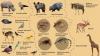
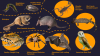
After passing the outdoor pay booths, there is a gift shop with a 300 cm long, 120 cm wide, and 150 cm tall terrarium with a trio of 1.2 Dwarf Shield-tailed Agama Xenagama taylori. The enclosure is integrated on a rockwork wall. Inside, there are simulated red-lit burrows, sandstone ledges, a basking rock, climbing logs, and branches. Additionally, there is a small pool, aloe, succulents, and shrubs.

full

Possible Look | @Dhole dude

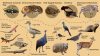
On the opposite side of the pathway, there’s a 7,200 m² enclosure with a 12 m tall, tensile net dome. Visitors can view the enclosure from the outdoor path and a lodge. There is a 190,000 litre waterhole along with trees, shrubs, grasses, logs, and dead trees. Additionally, there are kopje outcrops, open-facing structures, perches, large nesting cavities, fake termite mounds, and boulders. It’s home to a breeding pair of 1.1 Abyssinian Ground Hornbill Bucorvus abyssinicus, a breeding herd of 1.4 Lesser Kudu Tragelaphus imberbis australis, a breeding trio of 1.2 North African Ostrich Struthio camelus camelus, and a breeding herd of 1.4 Speke’s Gazelle Gazella spekei. From January to August, the male 1.0 Speke’s Gazelle Gazella spekei is housed in an adjacent, behind-the-scenes enclosure.

full

Possible Look | @Green_mamba

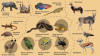
Next, there is a 7,160 m² aviary that’s 15 m tall with cliffs, rocky outcrops, rock ledges, perches, and platforms. There are also deadwood snags, nest sites, a shallow water palm, trees, shrubs, and patches of grass. Regularly, there are fresh carcasses for the birds. It houses a breeding pair of 1.1 Lappet-faced Vulture Torgos tracheliotos tracheliotos, a breeding muster of 3.3 Marabou Stork Leptoptilos crumenifer, and a breeding committee of 2.2 Rüppell’s Griffon Gyps rueppelli.

full

Possible Look | @Julio C Castro

Across from the enclosure, there is a small amphitheater stage which has daily Animal Ambassador Shows. The exact list of ambassadors will be provided after I finish posting all of Inside Africa.

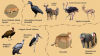
Then, there is an ellipse shaped, 7,540 m² enclosure which is home to a coalition of 3.0 Cheetah Acinonyx jubatus jubatus. There are sand dunes, rocky slopes, a central kopje, and boulder piles along with a small pool. Additionally, there are open-faced shelters, heated rocks, logs, deadwood, trees, shrubs, and tall grasses.

full

Possible Look | @Coelacanth18

Finally, there is a 5,700 m² enclosure topped with a 12 m tall netted dome with a butte, cliff escarpments, ravines & canyons, grottoes, heated rocks, and boulder piles. Additionally, there are rope-ladder bridges, dead trees, platforms, and a large pool connected to a waterfall. There are trees, shrubs, and grasses along with open-facing shelters. It houses a breeding troop of 5.26 Hamadryas Baboon Papio hamadryas. Visitors can view into the enclosure via 360° clear tunnels and panoramic window overlooks from opposite sides of the enclosure. The path then splits between two pathways. On the left, the pathway goes to the Inside Africa complex while the right pathway goes to the Silk Routes complex.

full

Possible Look @pachyderm pro

Screenshot 2025-09-26 8.06.49 PM.png

Mammals: 4 taxa
Birds: 5 taxa
Reptiles: 1 taxa
Total: 10 taxa

Zoo Document: the Las Vegas Zoological Park
Species Analysis and Stocklist: Species Analysis and Stocklist

Acknowledgements: @Paul.Haerle for their bird help, @Daktari JG & @Tigeanderson for general species list help, and @Mr Gharial for the animal photos. Additionally, inspiration from spec concepts made by @Haliaeetus , @Van Beal , @Austin the Sengi , @elefante ,@Sphenisciologist , @KevinB , @Mr Gharial , @Aardwolf ,@Breckenridge , etc.

Posting Plan:
  • Next Week - Giraffe House outside trail and 1st floor
  • Following Week - Giraffe House 2nd floor and outside trail
What do you think so far? Any predictions, comments, questions, etc.?
 

Attachments

  • Screenshot 2025-09-26 8.06.49 PM.png
    Screenshot 2025-09-26 8.06.49 PM.png
    364.1 KB · Views: 168
It’s always nice to see each version of your project MOG, especially with how quiet the Spec Zoo Forums have been as of late (not completely so, but still).
 
Wondering why you would need a Desert Dome when Las Vegas is built on a desert.
  • "Inside Africa - the Giraffe House; the Zebra House; the Lion House; the Hippo House"
Again, why would you need houses for these animals? Shade shelters would suffice for the animals.

"360° clear tunnels" Keep in mind any confined space, especially anything like a clear tunnel, will be expensive to keep cool.

Lastly keep in mind Las Vegas has a water shortage, which is unlikely to be resoved. Friends of mine were paid $6000 to replace their lawn with artificial grass. I know that golf courses etc use recycled wastewater for irrigation, what volume of water might be available? Is it suitable for animals? You might consider how to minimize water useage.
 
Last edited:
Wondering why you would need a Desert Dome when Las Vegas is built on a desert.
  • "Inside Africa - the Giraffe House; the Zebra House; the Lion House; the Hippo House"
Again, why would you need houses for these animals? Shade shelters would suffice for the animals.

"360° clear tunnels" Keep in mind any confined space, especially anything like a clear tunnel, will be expensive to keep cool.

Lastly keep in mind Las Vegas has a water shortage, which is unlikely to be resoved. Friends of mine were paid $6000 to replace their lawn with artificial grass. I know that golf courses etc use recycled wastewater for irrigation, what volume of water might be available? Is it suitable for animals? You might consider how to minimize water useage.
First, the houses are just the name of the exhibits (they are buildings, "old") which star these animals (but all of them are outside) but minimizes guests being in the heat for too long (air condition). For the tunnel, there would be misting/fans during the summer but it's fine during the other seasons. For the water crisis, using reclaimed water isn't that suitable for animals unless it's had lots of treatment. The water at the zoo would be recycled though (from other places at the zoo). To minimize the use of water, most animals are drought and dry tolerant
 
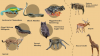
Once visitors enter the Inside Africa trail, they are met with the Giraffe House exhibit. Along the pathway, there is a 9,650 m² enclosure, topped with a 14 m tall dome. There are artificial termite mounds, kopjes, boulder piles, and a waterhole along with mud wallows, trees, shrubs, and grasses. Additionally, there are open-faced shelters, dead tree perches, and nest towers. It houses a solitary 1.0 Eastern Black Rhinoceros Diceros bicornis michaeli and a breeding pair of 1.1 Secretarybird Sagittarius serpentarius.

full

Possible Look | @Green_mamba

Then, there is a tall building called the Giraffe Building which has a 2,400 m² enclosure in front of it. There are kopjes, boulder piles, logs, a seasonal water pan, and artificial termite mound replicas. There are also open-faced shelters, trees, shrubs, and grasses. Visitors can also view the red-lit dens from inside the building. It’s home to a breeding pair of 1.1 Bat-eared Fox Otocyon megalotis and a breeding pair of 1.1 Cape Porcupine Hystrix africaeaustralis.

full

@pachyderm pro

The first floor of the building has several terrariums along with a panoramic window and a tall enclosure. The first terrarium on the left is 350 cm long, 200 cm wide, and 200 cm tall with a solitary 0.1 White-throated Monitor Varanus albigularis albigularis. There are rocky outcrops, a vertical tree trunk, hollow logs, artificial termite mounds, and a shallow pool along with several plants. The other terrarium is a 100 cm long, 50 cm wide, and 50 cm tall enclosure with red lighting. There are artificial burrows, rocks, stones, cork bark hides, and a tree trunk section along with a hollow log, water dish, and plants. It houses a solitary 0.1 Stout-leg Baboon Spider Eucratoscelus pachypus.

full

Possible Look of Monitor Enclosure | @biggiesmalls

Then, there is a two-story, 11 m tall indoor aviary that’s 1,064 m². There is a shallow lagoon with various floating islands, reeds, and sedges. There are also kopjes, dead tree limbs, trees, shrubs, and grasses along with nest towers, and platforms. It’s home to a pair of 1.1 Black Crake Zapornia flavirostra, a dole of 2.2 Emerald-spotted Wood-Dove Turtur chalcospilos, a breeding murmuration of 2.5 Golden-breasted Starling Lamprotornis regius, a pair of 1.1 Kirk’s Dik-Dik Madoqua kirkii, a breeding flock of 1.3 Maccoa Duck Oxyura maccoa, a breeding colony of 3.7 Taveta Golden Weaver Ploceus castaneiceps, a breeding colony of 2.4 White-headed Buffalo-Weaver Dinemellia dinemelli, and a breeding colony of 3.7 White-throated Bee-Eater Merops albicollis.

full

Possible Look | @TinoPup

Then, there is a panoramic view into a 26,300 m² enclosure with a breeding herd of 1.8 Eastern White-bearded Wildebeest Connochaetes taurinus albojubatus, a breeding pair of 1.10 Impala Aepyceros melampus, and a breeding herd of 1.4 Maasai Giraffe Giraffa tippelskirchi tippelskirchi. There are kopjes, a waterhole, various trees, shrubs, grasses, browsing towers, and open-facing shelters. This is the first of several viewing locations into the main enclosure.

full

Possible Look | @LaughingDove

The next enclosure is 140 cm long, 70 cm wide, and 60 cm tall which is home to a solitary 0.1 Kenyan Sand Boa Eryx colubrinus loveridgei. It’s red-lit with artificial burrows, basking rocks, rocky outcrops, driftwood, and plants along with a shallow water bowl. Then, there is a 400 cm long, 250 cm wide, and 220 cm tall terrarium that’s red-lit and has a pair of 0.2 Southern Giant Pouched Rat Cricetomys ansorgei. There are rocky outcrops, logs, branches, a climbing frame, ropes, and bridges along with various plants and a shallow drinking pool.

full

Possible Look of Rat Enclosure | @MagpieGoose

Screenshot 2025-10-04 7.12.59 AM.png

Mammals: 12 taxa
Birds: 13 taxa
Reptiles: 3 taxa
Invertebrates: 1 taxa
Total: 29 taxa

Zoo Document: the Las Vegas Zoological Park
Species Analysis and Stocklist: Species Analysis and Stocklist

Acknowledgements: @Paul.Haerle for their bird help, @Daktari JG & @Tigeanderson for general species list help, and @Mr Gharial for the animal photos. Additionally, @Austin the Sengi and @MRJ for the feedback

Posting Plan:
  • Week of 10/10 - Giraffe House 2nd floor and outside trail
  • Week of 17/10 - the Zebra House
What do you think so far? Any predictions, comments, questions, etc.?
 

Attachments

  • Screenshot 2025-10-04 7.12.59 AM.png
    Screenshot 2025-10-04 7.12.59 AM.png
    417.4 KB · Views: 132
Very exciting stuff with the Giraffe House thus far, and I’m looking forward for what’s to come with the remaining half of the building!

Additionally, for the Zebra House respectively, which one of the three species of zebra are you planning to incorporate for this building?
 
Very exciting stuff with the Giraffe House thus far, and I’m looking forward for what’s to come with the remaining half of the building!

Additionally, for the Zebra House respectively, which one of the three species of zebra are you planning to incorporate for this building?
Hartmann’s mountain zebra, focusing on south and East African kopjes and mountainous regions(arid)
 
After that, visitors are redirected to go upstairs to a midfloor look outside into the mixed hoofstock enclosure where they can feed the giraffes. Then, when you go back inside, there’s another set of terrariums. The first terrarium is 120 cm long, 90 cm wide, and 220 cm with 3-sided viewing. There are various plants, branches, vines, and rocks for a solitary 1.0 Jackson’s Chameleon Triceros jacksonii.

full

Possible Look | @TinoPup

Then, there is a 600 cm long, 250 cm wide, and 300 cm tall terrarium with a solitary 0.1 Black Mamba Dendroaspis polylepis. There are rocky escarpments, an artificial termite mound, tall branches, and various vines along with plants, a water dish, and hollow log. Inside the hollow log is a camera which can be viewed next to the enclosure. Between these terrariums is more viewing into the two-floor aviary mentioned before.

full

Possible Look | @NNM.

After that, there is a 150 cm long, 90 cm wide, and 180 cm tall, red-lit paludarium with an army of 2.6 Riggenbach's Reed Frog Hyperolius riggenbachi. There is a small waterfall and pool along with various plants, branches, and vines.

full

Possible Look | @SwampDonkey

The final terrarium is red-lit, 160 cm long, 90 cm wide, and 90 cm tall with a cluster of 0.0.6 Giant African Millipede Archispirostreptus gigas. There is an artificial cave, cork bark flats, logs, mossy rocks, and several plants along with a shallow pool.

full

Possible Look | @TinoPup

Once visitors go outside, they can view another look into the mixed hoofstock enclosure. Then, there is a 1,310 m² aviary with a breeding pair of 1.1 Verreaux's Eagle-Owl Ketupa lactea. There is a rocky cliff with ledges, nesting boxes, and crevices along with a seasonal waterhole, plants, perches, and artificial termite mound replica.

full

Possible Look | @Maguari

After that, there is a 2,200 m² enclosure with a breeding pair of 1.1 Serval Leptailurus serval. There are rocky outcrops, a marshy pool, various plants, artificial termite mounds, tree trunks, hollow logs, and open-facing shelters.

full

Possible Look | @twilighter

Finally, there are two enclosures on both sides of the path. One is 2,300 m² and the other is 1,650 m². They are connected via an overhead glass tunnel. There are rocky outcrops, shallow pools, various plants, and termite mounds along with rope bridges, platforms, nets, ropes, and tree trunks. It’s home to a breeding troop of 3.20 Vervet Monkey Chlorocebus pygerythrus.

full

Possible Look | @Zoofan15

Screenshot 2025-10-11 9.31.37 AM.png

Mammals: 14 taxa
Birds: 14 taxa
Reptiles: 5 taxa
Amphibians: 1 taxa
Invertebrates: 2 taxa
Total: 36 taxa

Zoo Document: the Las Vegas Zoological Park
Species Analysis and Stocklist: Species Analysis and Stocklist

Acknowledgements: @Paul.Haerle for their bird help, @Daktari JG & @Tigeanderson for general species list help, and @Mr Gharial for the animal photos. Additionally, @Austin the Sengi for animal photo look inspiration.

Posting Plan:
  • Week of 17/10 - the Zebra House
  • Week of 24/10 - First Half of the Lion House
  • Week of 31/10 - Halloween Surprise
What do you think so far? Any predictions, comments, questions, etc.?
 

Attachments

  • Screenshot 2025-10-11 9.31.37 AM.png
    Screenshot 2025-10-11 9.31.37 AM.png
    355.6 KB · Views: 133
I must say, it’s a very nice project of Africa you are doing!

Looking forward to the Zebra House. I wonder what other animals we’re going to see in this world. Meerkats or yellow mongooses maybe? Since you are going for Hartmann’s mountain zebras. :)
 
Here is the 1st half of the seasonal exhibit focusing on Dia de Los Muertos & Halloween. It lasts from late September (around when Hispanic Heritage Month starts) and ends in early November. It's located in the Zoo Center building complex.

Before visitors enter the building, there is a 1,080 m² large aviary that’s 10 m tall with a pair of rescued 1.1 Black Vulture Coragyps atratus atratus and a pair of rescued 1.1 Common Raven Corvus corax sinuatus. There are rocky cliffs, ledges, hardwood logs, dead tree snags, and skull-shaped stone structures along with marigold gardens, and perches. Additionally, there is a dry riverbed, shallow basin, trees, shrubs, and vines

full

Possible Look | @merlin

Once visitors enter the building, they are met with a group of enclosures. The first enclosure is a 504 litre aquarium with a trio of 0.3 Axolotl Ambystoma mexicanum. There is a fragmented ceramic temple, several caves, and plants along with smooth driftwood pieces.

full

Possible Look | @SivatheriumGuy

Then, there is a 150 cm long, 70 cm wide, and 70 cm tall terrarium with a solitary 1.0 West Mexican Milksnake Lampropeltis polyzona. There is a volcanic rock cave, skull-shaped stones, a small water bowl, driftwood, and branches along with plants.

full

Possible Look | @TinoPup

After that, there is a 180 cm long, 90 cm wide, and 160 cm tall terrarium with a breeding army of 3.2 Panamanian Golden Frog Atelopus zeteki. There is a small stream and pool along with stone caves, moss, plants, and branches.

full

Possible Look | @Dhole dude

Then, there is a 63,000 litre aquarium with a breeding bale of 1.4 Central American River Turtle Dermatemys mawii. There is a small ramp to a small nesting beach while in the water, there are plants, stones, a volcanic rock cave, and a fallen log.

full

Possible Look | @Hvedekorn

After that, there is a 700 cm long, 350 cm wide, and 350 cm tall terrarium with a trio of 1.2 Black Spiny-tailed Iguana Ctenosaura similis. There is a stepped temple plinth, volcanic caves, heated rocks, branches, and logs along with plants.

full

Possible Look | @merlin

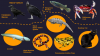
Then, there is a 200 cm long, 90 cm wide, and 150 cm tall platform with a 230 litre saltwater section. The land area has viewable artificial burrows, freshwater crock, heated basking stone, and driftwood while in the water there are lava rocks, mangrove root clusters, and plants. In the land, visitors can view a solitary 0.0.1 Halloween Crab Hartnollius quadratus while in the water, visitors can view a school of 0.0.8 Mangrove Rivulus Kryptolebias marmoratus.

full

Possible Look | @Giant Panda

Finally, there is a 70 m² enclosure with a pair of rescued 2.0 Bombay Cat Felis catus. There are faux stone graves, heated stone benches, heated dens, and a water basin along with logs, vertical sisal posts, and plants.

Screenshot 2025-11-02 9.29.13 AM.png

Mammals: 15 taxa
Birds: 16 taxa
Reptiles: 7 taxa
Amphibians: 3 taxa
Fish: 1 taxa
Invertebrates: 3 taxa
Total: 45 taxa

Zoo Document: the Las Vegas Zoological Park
Species Analysis and Stocklist: Species Analysis and Stocklist

Acknowledgements: @Paul.Haerle for their bird help, @Mr Gharial , @KevinB , @Iguana_Cabana & @AndyJ08 for species list help and @Mr Gharial for the animal photos. Additionally, @Austin the Sengi for animal photo look inspiration.

Posting Plan:
  • 2nd Half of the Temporary Exhibit
  • the Zebra House
  • First Half of the Lion House
  • Second Half of the Lion House
What do you think so far? Any predictions, comments, questions, etc.?
 

Attachments

  • Screenshot 2025-11-02 9.29.13 AM.png
    Screenshot 2025-11-02 9.29.13 AM.png
    366.4 KB · Views: 108
Here is the 1st half of the seasonal exhibit focusing on Dia de Los Muertos & Halloween. It lasts from late September (around when Hispanic Heritage Month starts) and ends in early November. It's located in the Zoo Center building complex.

Before visitors enter the building, there is a 1,080 m² large aviary that’s 10 m tall with a pair of rescued 1.1 Black Vulture Coragyps atratus atratus and a pair of rescued 1.1 Common Raven Corvus corax sinuatus. There are rocky cliffs, ledges, hardwood logs, dead tree snags, and skull-shaped stone structures along with marigold gardens, and perches. Additionally, there is a dry riverbed, shallow basin, trees, shrubs, and vines

full

Possible Look | @merlin

Once visitors enter the building, they are met with a group of enclosures. The first enclosure is a 504 litre aquarium with a trio of 0.3 Axolotl Ambystoma mexicanum. There is a fragmented ceramic temple, several caves, and plants along with smooth driftwood pieces.

full

Possible Look | @SivatheriumGuy

Then, there is a 150 cm long, 70 cm wide, and 70 cm tall terrarium with a solitary 1.0 West Mexican Milksnake Lampropeltis polyzona. There is a volcanic rock cave, skull-shaped stones, a small water bowl, driftwood, and branches along with plants.

full

Possible Look | @TinoPup

After that, there is a 180 cm long, 90 cm wide, and 160 cm tall terrarium with a breeding army of 3.2 Panamanian Golden Frog Atelopus zeteki. There is a small stream and pool along with stone caves, moss, plants, and branches.

full

Possible Look | @Dhole dude

Then, there is a 63,000 litre aquarium with a breeding bale of 1.4 Central American River Turtle Dermatemys mawii. There is a small ramp to a small nesting beach while in the water, there are plants, stones, a volcanic rock cave, and a fallen log.

full

Possible Look | @Hvedekorn

After that, there is a 700 cm long, 350 cm wide, and 350 cm tall terrarium with a trio of 1.2 Black Spiny-tailed Iguana Ctenosaura similis. There is a stepped temple plinth, volcanic caves, heated rocks, branches, and logs along with plants.

full

Possible Look | @merlin

Then, there is a 200 cm long, 90 cm wide, and 150 cm tall platform with a 230 litre saltwater section. The land area has viewable artificial burrows, freshwater crock, heated basking stone, and driftwood while in the water there are lava rocks, mangrove root clusters, and plants. In the land, visitors can view a solitary 0.0.1 Halloween Crab Hartnollius quadratus while in the water, visitors can view a school of 0.0.8 Mangrove Rivulus Kryptolebias marmoratus.

full

Possible Look | @Giant Panda

Finally, there is a 70 m² enclosure with a pair of rescued 2.0 Bombay Cat Felis catus. There are faux stone graves, heated stone benches, heated dens, and a water basin along with logs, vertical sisal posts, and plants.

View attachment 839340

Mammals: 15 taxa
Birds: 16 taxa
Reptiles: 7 taxa
Amphibians: 3 taxa
Fish: 1 taxa
Invertebrates: 3 taxa
Total: 45 taxa

Zoo Document: the Las Vegas Zoological Park
Species Analysis and Stocklist: Species Analysis and Stocklist

Acknowledgements: @Paul.Haerle for their bird help, @Mr Gharial , @KevinB , @Iguana_Cabana & @AndyJ08 for species list help and @Mr Gharial for the animal photos. Additionally, @Austin the Sengi for animal photo look inspiration.

Posting Plan:
  • 2nd Half of the Temporary Exhibit
  • the Zebra House
  • First Half of the Lion House
  • Second Half of the Lion House
What do you think so far? Any predictions, comments, questions, etc.?
It's interesting to introduce (Domestic) Black Cats into a zoo exhibit !
 
Here is the 1st half of the seasonal exhibit focusing on Dia de Los Muertos & Halloween. It lasts from late September (around when Hispanic Heritage Month starts) and ends in early November. It's located in the Zoo Center building complex.

Before visitors enter the building, there is a 1,080 m² large aviary that’s 10 m tall with a pair of rescued 1.1 Black Vulture Coragyps atratus atratus and a pair of rescued 1.1 Common Raven Corvus corax sinuatus. There are rocky cliffs, ledges, hardwood logs, dead tree snags, and skull-shaped stone structures along with marigold gardens, and perches. Additionally, there is a dry riverbed, shallow basin, trees, shrubs, and vines

full

Possible Look | @merlin

Once visitors enter the building, they are met with a group of enclosures. The first enclosure is a 504 litre aquarium with a trio of 0.3 Axolotl Ambystoma mexicanum. There is a fragmented ceramic temple, several caves, and plants along with smooth driftwood pieces.

full

Possible Look | @SivatheriumGuy

Then, there is a 150 cm long, 70 cm wide, and 70 cm tall terrarium with a solitary 1.0 West Mexican Milksnake Lampropeltis polyzona. There is a volcanic rock cave, skull-shaped stones, a small water bowl, driftwood, and branches along with plants.

full

Possible Look | @TinoPup

After that, there is a 180 cm long, 90 cm wide, and 160 cm tall terrarium with a breeding army of 3.2 Panamanian Golden Frog Atelopus zeteki. There is a small stream and pool along with stone caves, moss, plants, and branches.

full

Possible Look | @Dhole dude

Then, there is a 63,000 litre aquarium with a breeding bale of 1.4 Central American River Turtle Dermatemys mawii. There is a small ramp to a small nesting beach while in the water, there are plants, stones, a volcanic rock cave, and a fallen log.

full

Possible Look | @Hvedekorn

After that, there is a 700 cm long, 350 cm wide, and 350 cm tall terrarium with a trio of 1.2 Black Spiny-tailed Iguana Ctenosaura similis. There is a stepped temple plinth, volcanic caves, heated rocks, branches, and logs along with plants.

full

Possible Look | @merlin

Then, there is a 200 cm long, 90 cm wide, and 150 cm tall platform with a 230 litre saltwater section. The land area has viewable artificial burrows, freshwater crock, heated basking stone, and driftwood while in the water there are lava rocks, mangrove root clusters, and plants. In the land, visitors can view a solitary 0.0.1 Halloween Crab Hartnollius quadratus while in the water, visitors can view a school of 0.0.8 Mangrove Rivulus Kryptolebias marmoratus.

full

Possible Look | @Giant Panda

Finally, there is a 70 m² enclosure with a pair of rescued 2.0 Bombay Cat Felis catus. There are faux stone graves, heated stone benches, heated dens, and a water basin along with logs, vertical sisal posts, and plants.

View attachment 839340

Mammals: 15 taxa
Birds: 16 taxa
Reptiles: 7 taxa
Amphibians: 3 taxa
Fish: 1 taxa
Invertebrates: 3 taxa
Total: 45 taxa

Zoo Document: the Las Vegas Zoological Park
Species Analysis and Stocklist: Species Analysis and Stocklist

Acknowledgements: @Paul.Haerle for their bird help, @Mr Gharial , @KevinB , @Iguana_Cabana & @AndyJ08 for species list help and @Mr Gharial for the animal photos. Additionally, @Austin the Sengi for animal photo look inspiration.

Posting Plan:
  • 2nd Half of the Temporary Exhibit
  • the Zebra House
  • First Half of the Lion House
  • Second Half of the Lion House
What do you think so far? Any predictions, comments, questions, etc.?
I love the idea of a seasonal exhibit focusing on Halloween and Dia de los Muertos, especially as a Latino myself. It's a very fun and unique concept that should really be explored more often in actual zoos.
 
I love the idea of a seasonal exhibit focusing on Halloween and Dia de los Muertos, especially as a Latino myself. It's a very fun and unique concept that should really be explored more often in actual zoos.
Beauval Zoo (in France) has displayed events themed on the Dia de los muertos for a couple of years, with notably replicae of many recently extinct species skeletons across the park.
 
Finally, now here's the second half of the seasonal Dia De Los Muertos & Halloween exhibit.


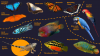
Then, there is a 780 m² greenhouse with free-roaming kaleidoscope of 0.0.20 Common Morpho Morpho helenor, a kaleidoscope of 0.0.15 Giant Owl Caligo telamonius memnon, a kaleidoscope of 0.0.15 Julia Heliconian Dryas iulia, a kaleidoscope of 0.0.20 Monarch Danaus plexippus, and a kaleidoscope of 0.0.10 Mourning Cloak Nymphalis antiopa. There are several plants, nectar islands, driftwood pieces, and shallow pools & streams.

Visitors can follow a pathway and find a 70 m² enclosure with a trio of 1.2 Green Iguana Iguana iguana. It’s opentopped with artificial ceiba climbing towers, basking decks, skull-shaped stone sculptures, weathered ceramic urns, and basking rocks. Additionally, there is a water basin with a waterfall along with several plants.

full

Possible Look | @Chlidonias

After that, there is a 6,000 litre open-topped aquarium with a pair of 1.1 Jack Dempsey Rocio octofasciata, a solitary 1.0 Mayan Cichlid Mayaheros urophthalmus, a pair of 1.1 Redhead Cichlid Vieja melanurus, and a solitary 1.0 Tricolored Cichlid Trichromis salvini. There are volcanic rock stacks, hollow stone skull caves, driftwood, and various plants.

full

Possible View | @British explorer

Then, there is a 180 m² aviary with a breeding pair of 1.1 Blue-and-yellow Macaw Ara ararauna and a breeding pair of 1.1 Scarlet Macaw Ara macao. There are perches, stone ledges, tree stumps, trees, and various plants along with a shallow bathing pool and waterfall.

full

Possible Look | @Philipine eagle

Then, visitors are led into a nocturnal gallery with several red-lit enclosures. The first enclosure is 150 cm long, 60 cm wide, and 75 cm tall terrarium with a nest of 1.3 Slender Brown Scorpion Centruroides gracilis. There are stone altars, skull-shaped stones, a water dish, roots, and artificial tunnels along with plants and an UV light.

full

Possible Look | @Hvedekorn

The next enclosure is 120 cm long, 60 cm wide, and 60 cm tall with a solitary 0.1 Yellow-kneed Skeleton Tarantula Ephebopus murinus. There are water dishes, a limestone facade, a stone altar block, skull-shaped stones, stones, and branch pieces along with an artificial burrow and plants.

full

Possible Look | by yours truly

After that, there is a 160 cm long, 80 cm wide, and 70 cm terrarium with a cluster of 0.0.6 Bumblebee Millipede Anadenobolus monilicornis and an intrusion of 0.0.10 Death’s Head Cockroach Blaberus craniifer. There is a shallow water dish, a stone altar block, limestone ledges, skull-shaped stones, cork bark tunnels, and plants.

full

Possible Look | @CarnotaurusSastrei

Then, there is a 150 cm long, 75 cm wide, and 80 cm wide terrarium with a solitary 0.1 Smoky Jungle Frog Leptodactylus pentadactylus. There are tree-root buttresses, cork-bark hides, vines, rock clusters, stones, and a small pool along with plants and moss

full

Possible Look | @Westcoastperson

After that, there is a 450 cm long, 300 cm wide, and 200 cm tall terrarium with a breeding pair of 1.1 Rio Fuerte Beaded Lizard Heloderma exasperatum. There are basking rocks, skull-shaped stones, driftwood pieces, logs, a shallow water basin, and an artificial burrow.

full

Possible Look | @biggiesmalls

Then, there is a 78 m² enclosure with a solitary 1.0 Kinkajou Potus flavus and a solitary 1.0 Nine-banded Armadillo Dasypus mexicanus. There are skull-shaped stones, tree-root buttresses, hollow logs, wooden branches, rope bridges, vines, and stones along with artificial burrows, nest boxes, and plants

full

Possible Look | @Dhole dude

Finally, there is a 90 m² enclosure with a colony of 1.8 Jamaican Fruit-eating Bat Artibeus jamaicensis. There are banana-leaf bundles, roost boxes, vine loops, branch perches, and a small pool along with stone arches, ladders, skull-shaped stones, and plants.

full

Possible Look | @Dhole dude

Once visitors go outside, there is a 240 m² aviary with a pair of 1.1 American Barn Owl Tyto furcata. There is a small pool, carved stone archways, stone outcrops, vines, logs, driftwood pieces, and perches along with plants, and roost boxes.

full

Possible Look | @KevinB

Screenshot 2025-11-08 8.52.27 PM.png
Screenshot 2025-11-08 8.54.24 PM.png

Mammals:
18 taxa
Birds: 19 taxa
Reptiles: 10 taxa
Amphibians: 4 taxa
Fish: 5 taxa
Invertebrates: 12 taxa
Total: 60 taxa

Zoo Document: the Las Vegas Zoological Park
Species Analysis and Stocklist: Species Analysis and Stocklist

Acknowledgements: @Paul.Haerle for their bird help, @Mr Gharial , @KevinB , @Iguana_Cabana & @AndyJ08 for species list help and @Mr Gharial for the animal photos. Additionally, @Austin the Sengi for animal photo look inspiration.

Posting Plan:
  • the Zebra House
  • First Half of the Lion House
  • Second Half of the Lion House
  • First Section of the Hippo House
  • Seasonal Winter Exhibit
What do you think so far? Any predictions, comments, questions, etc.?
 

Attachments

  • Screenshot 2025-11-08 8.52.27 PM.png
    Screenshot 2025-11-08 8.52.27 PM.png
    506.2 KB · Views: 86
  • Screenshot 2025-11-08 8.54.24 PM.png
    Screenshot 2025-11-08 8.54.24 PM.png
    465.9 KB · Views: 80
Here is the 1st half of the seasonal exhibit focusing on Dia de Los Muertos & Halloween. It lasts from late September (around when Hispanic Heritage Month starts) and ends in early November. It's located in the Zoo Center building complex.
One question regarding the seasonal nature of this exhibit.
Would the species kept in this exhibit have homes elsewhere in the zoo, and simply be moved here for the time of the seasonal event, or are they kept permanently in the area?
 
One question regarding the seasonal nature of this exhibit.
Would the species kept in this exhibit have homes elsewhere in the zoo, and simply be moved here for the time of the seasonal event, or are they kept permanently in the area?
They are mostly kept behind-the-scenes in larger groups (some are animal ambassadors), a couple are kept in other exhibits, and some are there for multiple seasons.
Also (this is off-topic) but here are the stats of the first third of the Zoo we're exploring (the Old World, the Zoo Center, and Australasia are the sections);
MAMMALS: 61 taxa (4 in the North Entrance, 28 in Inside Africa, 29 in the Silk Routes)
BIRDS: 97 taxa (5 in the North Entrance, 40 in Inside Africa, 52 in the Silk Routes)
REPTILES: 39 taxa (1 in the North Entrance, 17 in Inside Africa, 21 in the Silk Routes)
AMPHIBIANS: 8 taxa (4 in Inside Africa, 4 in the Silk Routes)
FISH: 78 taxa (28 in Inside Africa, 50 in the Silk Routes)
INVERTEBRATES: 69 taxa (9 in Inside Africa, 60 in the Silk Routes)
TOTAL: 352 taxa (10 in the North Entrance, 126 in Inside Africa, 216 in the Silk Routes)
 
Last edited:
Here is the Zebra House which is a bit late regarding the posting schedule. It's the next exhibit down the Inside Africa trail, after the Giraffe House which was mentioned before.

Then, visitors are met with the Zebra House building. When visitors enter, they are first met with a 120 cm long, 60 cm wide, and 60 cm terrarium with a cluster of 0.0.6 Whitespot Assassin Bug Platymeris biguttatus. There is a large rockwork with various twigs, branches, plants, and a water dish.

full

Possible Look | @merlin

After that, there is a 50 m² terrarium that’s 350 cm tall. There are various kopje rockworks, flay rocks, crevides, a drinking pan, and various plants. It’s home to a solitary 1.0 Common Giant Plated Lizard Matobosaurus validus, a breeding trio of 1.2 Crevice Tortoise Malacochersus tornieri, a pair of 1.1 Gorongosa Girdled Lizard Smaug mossambicus, and a pair of 1.1 Mwanza Flat-headed Rock Agama Agama mwanzae.

full

Possible Look | @biggiesmalls

Then, there is a red-lit, 36 m² terrarium with a solitary 0.1 African Rock Python Python sebae. There are kopje outcrops, flat stones, caves, a tunnel, and an artificial termite mound along with logs, branches, plants, and a small pool.

full

Possible Look | @CMP

The final terrarium is 200 cm long, 100 cm wide, and 150 cm tall with a pair of 1.1 Red-legged Wot-Wot Hylambates maculatus. It’s red-lit with rock clusters, a root hide, a small water pool, and various plants.

full

Possible Look | @gulogulogulo

After that, there is a 2,400 m² aviary which is viewable from inside via glass panels and later is viewable from outside. There is a 40,000 litre pool with an island and a spring of 2.2 Cape Teal Anas capensis. There are also kopje outcrops, dead trees, plants, open-faced shelters, perches, and nesting sites along with a viewable burrow network, chambers, and tunnels. Additionally, there is a trio of 1.2 Common Dwarf Mongoose Helogale parvula, a pair of 1.1 Hartlaub’s Turaco Tauraco hartlaubi, a pair of 1.1 Klipspringer Oreotragus oreotragus, a breeding trio of 1.2 Rock Hyrax Procavia capensis capensis, a flock of 3.3 Speckled Pigeon Columba guinea, a breeding pair of 1.1 Von Der Decken’s Hornbill Tockus deckeni, and a confusion of 3.3 Vulturine Guineafowl Acryllium vulturinum.

full

Possible Look | @Maguari

Then, there is a 700 m² aviary with a breeding pair of 1.1 Bateleur Terathopius ecaudatus. There are heated up-draft fans, heated rocks, dead trees, and kopje outcrops along with nest platforms, a small pool, and various plants.

full

Possible Look | @KevinB

Finally, there is a netted, 9,000 m² enclosure with a breeding herd of 1.4 Hartmann’s Mountain Zebra Equus zebra hartmannae. There are kopje outcrops, open-faced barns, scratching posts, logs, dust-bath pits, and a seasonal water basin along with various plants.

full

Possible Look | @Gavial

Screenshot 2025-11-25 6.56.27 PM.png

Mammals: 22 taxa
Birds: 25 taxa
Reptiles: 15 taxa
Amphibians: 5 taxa
Fish: 5 taxa
Invertebrates: 13 taxa
Total: 85 taxa

Zoo Document: the Las Vegas Zoological Park
Species Analysis and Stocklist: Species Analysis and Stocklist

Acknowledgements: @Paul.Haerle for their bird help,
@AndyJ08 , @Austin the Sengi , @Daktari JG , and @Tigeanderson
for species list help and @Mr Gharial for the animal photos. Additionally, @Austin the Sengi for animal photo look inspiration.

Posting Plan:
  • First Half of the Lion House
  • Second Half of the Lion House
  • First Section of the Hippo House
  • Seasonal Winter Exhibit (any ideas?, It focuses on the Holarctic realm and winter holidays but is limited to only the enclosure sizes of the Dia de Los Muertos exhibit)
  • Second Section of the Hippo House
  • the Mediterranean Trail
What do you think so far? Any predictions, comments, questions, etc.?
 

Attachments

  • Screenshot 2025-11-25 6.56.27 PM.png
    Screenshot 2025-11-25 6.56.27 PM.png
    526.5 KB · Views: 52
Here is the first half of the Lion House. It's the next exhibit down the Inside Africa trail, after the Zebra House which was mentioned before.


Visitors are then met with a covered viewing shelter, looking into a 8,400 m² enclosure with a breeding pack of 5.5 African Wild Dog Lycaon pictus. There are sand dunes, rocky outcrops, dead trees, log piles, open-facing shelters, and dens along with a shallow pool and plants.

full

Possible Look | @Arizona Docent

Then, the winding path leads to a 2,800 m² enclosure with a pair of 0.2 Common Warthog Phacochoerus africanus and a breeding mob of 4.4 Meerkat Suricata suricatta. There are sand dunes, kopje outcrops, dead trees, and stones along with a shallow pool, plants, mud wallows, and an artificial tunnel & burrow system.

full

Possible Look | @Coelacanth18

After that, there is a netted, 14,400 m² enclosure that’s 12 m tall with a breeding trio of 1.2 Bontebok Damaliscus pygargus pygargus, a trio of 1.2 Common Eland Taurotragus oryx, a breeding pair of 1.1 Kori Bustard Ardeotis kori kori, and a breeding herd of 1.3 Springbok Antidorcas marsupialis. There are kopje outcrops, artificial termite mounds, logs, open-facing shelters, and a small water pool along with plants.

full

Possible Look | @KevinB

Before visitors enter the Lion House, there is a 240 m² aviary that’s 6 m tall. There are various trees, shrubs, grasses, perches, branches, and longs along with nesting boxes and a small pool. It’s home to a breeding flock of 5.5 Black-cheeked Lovebird Agapornis nigrigenis.

full

Possible Look | @twilighter

Once visitors enter, they are met with an atrium with various enclosures. The first two enclosures are identical and simulate the wet and dry season. They are each 300 cm long, 120 cm wide, and 220 cm tall with African Turquoise Killifish Nothobranchius furzeri and Wolf’s Fairy Shrimp Branchipodopsis wolfi. They have a deep basin, plants, and simulated rain.

Then, there is a 250 cm long, 120 cm wide, and 120 cm tall with a solitary 0.1 Anchieta’s Dwarf Python Python anchietae. There are kopje outcrops, artificial tunnels, a water pool, and plants.

full

Possible Look of Python Enclosure | @twilighter

After that there is a viewing window looking into the Speckled Tortoise Breeding Lab. There is a 48 m² enclosure with a lounge of 2.4 Imperial Flat Lizard Platysaurus imperator and a breeding creep of 6.12 Speckled Tortoise Chersobius signatus. There are rocky outcrops, crevices, water basins, and plants. There are also incubation racks, hatching racks, early-juvenile tubs, and subadult pens.

full

Possible Look of Main Enclosure | @PossumRoach

Then, there is a 240 cm long, 120 cm wide, and 180 cm tall terrarium with a colony of 0.0.12 Derby’s Flower Beetle Dicronorhina derbyana. There are branches, bark slabs, hollow logs, and plants along with a visible burrow system and water tray.

full

Possible Look | @merlin

After that, there is a red-lit, 240 cm long, 120 cm wide, and 140 cm tall terrarium with a colony of 0.0.8 Black Fog-basking Namib Darkling Onymacris unguicularis. There are various sand dunes, an artificial burrow chamber, branches, logs, and plants along with a fog system.

Finally, there is a red-lit, 200 cm long, 100 cm wide, and 140 cm tall terrarium with a solitary 1.0 Giant African Bullfrog Pyxicephalus adspersus. There is simulated rain, artificial burrows, rocky outcrops, and a shallow pool along with various plants.

full

Possible Look | @British explorer

Screenshot 2025-11-30 9.11.43 AM.png

Mammals: 28 taxa
Birds: 27 taxa
Reptiles: 18 taxa
Amphibians: 6 taxa
Fish: 6 taxa
Invertebrates: 16 taxa
Total: 100 taxa

Zoo Document: the Las Vegas Zoological Park
Species Analysis and Stocklist: Species Analysis and Stocklist

Acknowledgements: @Paul.Haerle for their bird help,
@AndyJ08 , @Austin the Sengi , @Haliaeetus , @Daktari JG , and @Tigeanderson
for species list help and @Mr Gharial for the animal photos. Additionally, @Austin the Sengi for animal photo look inspiration.

Posting Plan:
  • Second Half of the Lion House
  • First Section of the Hippo House
  • Second Section of the Hippo House
  • Seasonal Winter Exhibit (any ideas?, It focuses on the Holarctic realm and winter holidays but is limited to only the enclosure sizes of the Dia de Los Muertos exhibit)
  • the Mediterranean Trail
What do you think so far? Any predictions, comments, questions, etc.?
 

Attachments

  • Screenshot 2025-11-30 9.11.43 AM.png
    Screenshot 2025-11-30 9.11.43 AM.png
    448 KB · Views: 26
Back
Top