DNA study says there may be 11 kiwi species, ancestors driven apart by glaciers
Kiwi are weird.
The bumbling flightless birds have long snouts with nostrils at the tip, they're nocturnal, and they smell a bit like mushrooms.
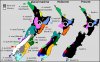
Now, a groundbreaking DNA study of more than 200 birds suggests there are more species than the recognised five types and 16, or 17, distinct genetic forebears.
Research published in the the Proceedings of the National Academy of the Sciences by the University of Toronto on kiwi DNA says the modern birds - genetically speaking - evolved more recently than previously thought.
A team led by University of Toronto Scarborough professor of biological sciences Jason Weir discovered that instead of the five known species, there are 11 types of birds alive now, with six species extinct.
Read more: DNA study says there may be 11 kiwi species, ancestors driven apart by glaciers | Stuff.co.nz
Abstract of the journal article: Explosive ice age diversification of kiwi
Kiwi are weird.
The bumbling flightless birds have long snouts with nostrils at the tip, they're nocturnal, and they smell a bit like mushrooms.
Now, a groundbreaking DNA study of more than 200 birds suggests there are more species than the recognised five types and 16, or 17, distinct genetic forebears.
Research published in the the Proceedings of the National Academy of the Sciences by the University of Toronto on kiwi DNA says the modern birds - genetically speaking - evolved more recently than previously thought.
A team led by University of Toronto Scarborough professor of biological sciences Jason Weir discovered that instead of the five known species, there are 11 types of birds alive now, with six species extinct.
Read more: DNA study says there may be 11 kiwi species, ancestors driven apart by glaciers | Stuff.co.nz
Abstract of the journal article: Explosive ice age diversification of kiwi