Turtle Back Zoo Turtle Back Zoo Review and Species List - May 2024

Astrotom3000

Well-Known Member
10+ year member
Hello ZooChat! I am finally back with another zoo review and species list. I had fallen further behind on my reviews for a variety of reasons, and I have a lot of catching up to do. I had a particularly productive year in terms of zoo visits, especially over the summer. Case in point, this is a review for a zoo I visited on Memorial Day weekend.

For this review, I'll be focusing on the Turtle Back Zoo in West Orange, NJ. I visited both this and the Elmwood Park Zoo (which I had previously posted a species list for) back on Memorial Day weekend earlier this year. I know this review is kind of late, but it appears there have been no major developments since my visit per the news thread other than the Sea Turtle Recovery building being struck by lightning. Thankfully, it appears all is well now and the exhibit is now reopen.

full


Turtle Back Zoo is a mid-sized zoo situated with Essex County's South Mountain Reservation, a 2000+ acre park operated by the County. The Zoo itself occupies about 20 acres. Originally focusing on native wildlife, the zoo now features over 100 species of animals from every continent except Antarctica. Other features of the zoo include a reptile house, a miniature railroad ride, and a new Animal Wellness Center, which was still under construction during my visit. The zoo also notably has free parking, and features 2 parking decks right outside the entrance.

Overall, Turtle Back is a solid mid-tier zoo with a decent mix of species representing a variety of continents and ecosystems. While its collection isn't the biggest (I only counted about ~112 species on display), there were some decent surprises and firsts for me here and there. The zoo also tends to somewhat vary wildly in quality from one part of the zoo to another. Some parts feel very modern, such as the Africa exhibits, the Marine Life exhibits, and the newer parts of Asia. Other areas, on the other hand, feel outdated, such as the indoor Gibbon habitat and the adjacent bird exhibits, the bison exhibit, and the big cat exhibits (sans the lions). As a result, Turtle Back Zoo can induce some quality whiplash as you traverse the zoo since it feels like some areas receive more attention than others.

Nonetheless, I enjoyed my day at Turtle Back Zoo. The collection gave me plenty of firsts (including my first ever observation of Hyenas in person) and surprises that I wouldn't have expected from this not-so-large county zoo (for example, they have all species of big cats minus tigers). The zoo's hillside setting lends to some good scenery, and the zoo is very well landscaped throughout. Lastly, I have to give a shoutout to their Savannah Cafe, which I found to be on the best restaurants I've been to in a traditional zoo; it's got a good selection, great service, and plentiful seating, including a 2nd floor outdoor deck with a bar.

This review and species list is based on my visit from 05/26/2024. As usual, I also compiled a list on iNaturalist for this zoo which you can find here -> [VISIT] Turtle Back Zoo Species List - 2024/05/26. Please note that common names used for some taxon may differ from what is displayed at the zoo.

The next post will go over the first batch of exhibits. Turtle Back Zoo isn't a particularly big zoo, so I don't expect more than 2 posts to cover all the exhibits.

To be Continued...

full
 
I'm looking forward to this review of Turtle Back Zoo mainly because I've never visited the place. I honestly think that I enjoy reading more about zoos I've not been to in comparison to ones I already know really well.
 
Part 1 - Africa and Asia
This first part will focus on the following exhibits;
  • African Adventure
  • Amazing Asia
  • Wonders of Water
African Adventure
This exhibit, located in its own corner of the zoo, focuses on African wildlife and is mainly comprised of 3 main exhibits; the plains habitat, the predator habitats, and the Penguin House.

full


The plains habitat is a large enclosure home to several species of hoofstock and ground-dwelling birds. There is a section of the enclosure that is inaccessible to the Giraffes, but accessible to the other animals. The predator habitats consist of 2 large side-by-side exhibits for lions and hyenas (these might be are rotated, but I am not 100% sure). The Penguin House is an indoor exhibit home to penguins, pelicans, and also bushbabies (for some reason).

full


While this is not the first exhibit you will encounter inside the zoo, it's the first one I visited, mainly because I really wanted to see the Hyenas (I have never seen a Hyena in person prior to that day, and I also needed it for the 2024 North American ZooChat Challenge).

This is one of the better areas of the zoo. The plains exhibit is very spacious and lush, and provides areas to allow the Bongos and ground birds to escape from the Giraffes if needed. It also might have one of the best-looking Giraffe barns I have ever seen. The Lion/Hyena exhibits are also very nice, but I thought they could have used more plantings. The Penguin House was a bit of a mixed bag; the Penguin exhibit itself was solid, with good depth and plenty of different viewing. The penguins were accompanied by a single pelican on my visit.

The biggest flaw with this area was the Bushbaby exhibit; it's placed inside the Penguin House (which is noisy by virtue of the animals held in there) and right next to a door that opens to the outside, so this NOCTURNAL animal exhibit is bathed in sunlight every time someone opens the door. And people here had strollers and wagons, so you can bet that people are going to take their sweet time going through that door.

full


Predator Exhibits
  • Lion (Panthera leo)
  • Spotted Hyena (Crocuta crocuta)
Penguin House
  • African Penguin (Spheniscus demersus)
  • Pink-backed Pelican (Pelecanus rufescens)
  • Northern Lesser Galago (Galago senegalensis) (Might be gone now? Per a post by @Smaggledagle in the News thread)
Plains
  • Abyssinian Ground Hornbill (Bucorvus abyssinicus)
  • Bongo (Tragelaphus eurycerus)
  • Common Ostrich (Struthio camelus)
  • Maasai Giraffe (Giraffa tippelskirchi tippelskirchi)
  • White-faced Whistling-Duck (Dendrocygna viduata) (Not seen)
Amazing Asia
This exhibit area is home to Asian wildlife and is features a few exhibits, including indoor and outdoor ares for Gibbons, a pair of big cat exhibits, and a themed exhibit building with exhibits for Pandas and Clouded Leopards.

full

full


This area of the zoo is probably the most inconsistent when it comes to quality and it really feels like walking through different time periods.

On the one hand, the Red Panda/Clouded Leopard complex is furnished in Asian-style architecture and looks rather nice. The exhibits aren't the most spacious, but they are tall and give the animals good climbing opportunities. There is an unsigned turtle exhibit in a window next to the Red Pandas and it looked like a slider species. Likewise, the outdoor Gibbon exhibit is pretty spacious and tall, providing lots of space for gibbons to flex their climbing skills. It's not exactly naturalistic, but it does the job well.

On the other hand, the indoor Gibbon exhibit felt very subpar and grim, and the adjacent bird cages for Peafowl and Owls felt cramped. It really looked like something out of a roadside zoo almost, and contrasts starkly with the newer habitats.
  • Indian Peafowl (Pavo cristatus)
  • Snowy Owl (Bubo scandiacus)
  • Northern White-cheeked Gibbon (Nomascus leucogenys)
  • Red Panda (Ailurus fulgens)
  • Mainland Clouded Leopard (Neofelis nebulosa)
  • Haitian Slider (Trachemys decorata) (Not sure about this one)
  • Amur Leopard (Panthera pardus orientalis)
  • Snow Leopard (Panthera uncia)
  • Satyr Tragopan (Tragopan satyra) (Not seen)
World of Water
This exhibit zone focuses on animals associated with water. Here, we have what looks like the zoo taking a page or two from Philadelphia and putting a whole bunch of otherwise unrelated animals in a single area and slapping a water-based theme over it and calling it a day. At least here, most of the animals are actually either at least semi-aquatic or live on islands.

full


The first area of this zone focuses mainly on either semi-aquatic animals or animals found on Islands. The Alligator and Otter exhibits are outdoors, the Komodo Dragons have both indoor and outdoor areas, and the False Gharial and Giant Tortoise exhibits are in separate indoor areas.

This section is easily the weakest area of the zone. The otter exhibit was nice, with good space, landscaping, and viewing even if it's far from the most interesting otter exhibit. But the rest of the area wasn't that good. The alligator exhibit was serviceable, but otherwise underwhelming. The Island Giants exhibit, which was supposedly new, is rather lackluster and light on space. But the worst aspect is the fact that there are no shade structures for the viewing windows, which results in horrendous glare when trying to view the Tomistomas, Tortoises, or Dragons.

full


The 2nd area focuses on marine wildlife, and consists of a Sea Lion exhibit, an indoor Touch Tank room, and a Sea Turtle rescue center. The Sea Lion exhibit is viewed through mesh as well as an underwater window.

This part is definitely a lot better. I actually enjoyed the architecture and landscaping in this section. The Sea Lion exhibit was nice, but like the otter exhibit, it's definitely far from the best. The Touch Tank and Sea Turtle Recovery buildings are a nice addition to the zoo and help spice up the collection.

full

full


The Last section consists of an exhibit for Flamingos and an aviary for Andean Condors. The Flamingo exhibit was interesting as they had two species on display, something that I find to be fairly uncommon. The Andean Condor exhibit was pretty big and spacious, definitely the zoo's best bird exhibit by a long shot.

full


World of Water
  • American Alligator (Alligator mississippiensis)
  • Largemouth Bass (Micropterus nigricans)
  • Unspecified Crappie Species (Pomoxis)
  • False Gharial (Tomistoma schlegelii)
  • Giant Asian Pond Turtle (Heosemys grandis) (Unsigned; ID'd by zookeeper)
  • Aldabra Giant Tortoise (Aldabrachelys gigantea)
  • Komodo Dragon (Varanus komodoensis)
  • Himalayan Monal (Lophophorus impejanus)
  • North American River Otter (Lontra canadensis)
  • California Sea Lion (Zalophus californianus)
Touch Tank Building
  • Atlantic Stingray (Hypanus sabinus)
  • Cownose Ray (Rhinoptera bonasus)
  • Epaulette Shark (Hemiscyllium ocellatum)
  • Haller's Round Ray (Urobatis halleri)
  • Blue-green Chromis (Chromis viridis)
  • Javanese Damselfish (Neoglyphidodon oxyodon)
  • Longnose Hawkfish (Oxycirrhites typus)
  • Mimic Surgeonfish (Acanthurus pyroferus)
  • Ocellaris Anemonefish (Amphiprion ocellaris)
  • Palette Tang (Paracanthurus hepatus)
  • Yellow Tang (Zebrasoma flavescens)
  • American Lobster (Homarus americanus)
Sea Turtle Recovery
  • Green Sea Turtle (Chelonia mydas)
Bird Exhibits
  • American Flamingo (Phoenicopterus ruber)
  • Chilean Flamingo (Phoenicopterus chilensis)
  • Andean Condor (Vultur gryphus)
To Be Continued...

full
 
Part 2 - Reptiles, Butterflies, and Bears
Traveling down from Africa, through Asia, and past aquatic creatures, we now come to our next batch of exhibits, which are as follows.
  • Reptile House
  • Butterfly Garden
  • Great Plains
  • Bear Country
Reptile House
The zoo's Reptile House is located near the main entrance and is home to a variety of reptiles and amphibians, along with a pair of mammal species and a small section for invertebrates. The building consists of a single large room lined with exhibits. A model of a Pterosaur hangs overhead at the center of the room. A small Koi pond can be found just outside one of the doors to the exhibit.

full


I will be honest; I was not too particularly impressed with this reptile house. While the building itself is aesthetically pleasing, the collection was rather small and there were few standout species. The exhibitry was alright, but nothing to write home about. The best enclosures were undoubtedly the ones housing mammals, oddly enough (the Caiman Lizard/Porcupine/Tortoise and the Crested Porcupine/Weaver exhibits). I believe the Crested Porcupine/Weaver exhibit might have originally housed Komodo Dragons? Otherwise, there just isn't a whole lot going on in here, and most of the exhibits are pretty bog standard. Also, there were some signage issues; for example, the slider exhibit was unsigned.

full

  • Yunnan Newt (Tylototriton shanjing)
  • Dwarf Crocodile (Osteolaemus tetraspis)
  • Titicaca Water Frog (Telmatobius culeus)
  • Dyeing Poison Dart Frog (Dendrobates tinctorius)
  • Northern Caiman Lizard (Dracaena guianensis)
  • Prehensile-tailed Porcupine (Coendou prehensilis)
  • Red-footed Tortoise (Chelonoidis carbonarius)
  • Gila Monster (Heloderma suspectum)
  • Southern Green Python (Morelia viridis)
  • Haitian Slider (Trachemys decorata) (Unsigned)
  • Emerald Tree Skink (Lamprolepis smaragdina)
  • Goldfish (Carassius auratus)
  • Roti Island Snake-necked Turtle (Chelodina mccordi)
  • Hellbender (Cryptobranchus alleganiensis)
  • Black-breasted Hill Turtle (Geoemyda spengleri)
  • Giant Leaf-tailed Gecko (Uroplatus fimbriatus)
  • Amazon Milk Frog (Trachycephalus resinifictrix)
  • Crested Porcupine (Hystrix cristata)
  • Taveta Golden-Weaver (Ploceus castaneiceps)
  • New Guinea Spiny Stick Insect (Eurycantha calcarata)
  • Madagascar Hissing Cockroach (Gromphadorhina portentosa)
  • Giant African Millipede (Archispirostreptus gigas)
  • Southern Banded Knob-tailed Gecko (Nephrurus wheeleri)
  • Mexican Redknee Tarantula (Brachypelma smithi)
  • Amur Carp (Cyprinus rubrofuscus) (Outdoor Pond)
Butterfly Garden
This is a small walkthrough butterfly aviary located on a pathway near the Bison and Maned Wolf exhibits. This is an upcharge exhibit.

full


This is a fairly small butterfly aviary, and definitely on the lower end of butterfly exhibits I have experienced. It's very similar to the butterfly aviaries found at the Virginia Living Museum and the North Carolina Zoo, in which it's just a flight cage no more than 10 feet tall. It's also fairly narrow, so it can get crowded easily and is thus operated at low capacity. It's placement in the zoo is also awkward; it's built onto an existing path, and given that it's an upcharge attraction, you would need to take some detours if you wish to get around it without going through it.
  • Black Swallowtail (Papilio polyxenes)
  • Common Buckeye (Junonia coenia)
  • Eastern Giant Swallowtail (Heraclides cresphontes)
  • Eastern Tiger Swallowtail (Papilio glaucus)
  • European Comma (Polygonia c-album)
  • Monarch (Danaus plexippus)
  • Mourning Cloak (Nymphalis antiopa)
  • North American Luna Moth (Actias luna)
  • Painted Lady (Vanessa cardui)
  • Pipevine Swallowtail (Battus philenor)
  • Question Mark (Polygonia interrogationis)
  • Red Admiral (Vanessa atalanta)
  • Red-spotted Purple (Limenitis arthemis astyanax)
  • Small White (Pieris rapae)
Great Plains
This area of the zoo focuses on animals native to the open plains, with Bison and Prairie Dogs from the namesake grasslands being the main attraction here. Despite the name, a few non-North American animals can be found here as well. The aforementioned butterfly aviary is technically located within this zone. For the bison exhibit, there are windows that allow you to see into the Bison barn.

full


The exhibits here are some of the better ones in the zoo, but otherwise this zone is really nothing to write home about. The Bison exhibit doesn't seem too big, but at least it is more spacious than the one at the Smithsonian (which I've heard no longer even houses Bison anyway). The Prairie Dog exhibit is fairly interesting as there a large tunnel that cuts under the middle of exhibit and allows eye-level viewing all the way around it.
  • Maned Wolf (Chrysocyon brachyurus)
  • Great Blue Turaco (Corythaeola cristata)
  • American Bison (Bison bison)
  • Black-tailed Prairie Dog (Cynomys ludovicianus)
  • Cheetah (Acinonyx jubatus)
Bear Country
This last exhibit consists of a single enclosure for Black Bears. The exhibit features an indoor viewing area with interpretative graphics as well as other viewing along the exhibit outdoors.

full


This is definitely one of the better exhibits at the zoo. The bear habitat is densely planted and wooded, and the bear was fairly active and taking full advantage of it, giving himself a nice back scratch against a tree. The indoor viewing area is fairly nice and provides some informative graphics detailing the black bears of New Jersey.
  • American Black Bear (Ursus americanus)
There will be one more part that will cover the remaining exhibits before I wrap this review up.

To Be Continued...

full
 
Part 3 - From Australia to America
This last section will focus on the two exhibit zones located in the upper part of the zoo. This includes;
  • Wild America (Birds of Prey and Big Cat Country)
  • Australian Outback (Includes the Aviary)
  • Essex Farm
Australian Outback
This exhibit zone focuses on Australian wildlife, and is home to a handful of species. The centerpiece of this area is the walkthrough Budgerigar aviary, which features a large number of the colorful parrots. Visitors may optionally purchase feeding sticks that they can use to feed the parrots. Two separate flight cages can be found inside the aviary, home to two iconic species of Australian birds. Just outside the aviary's entrance is an exhibit for Australian macropods. Unfortunately, this exhibit was empty, robbing me of a credit for the 2024 Global Zoochat Challenge.

full


The aviary is fairly bog standard; it's not the most spacious from either an exhibitry or a visitor traffic point of view. In fact, it was fairly congested when I visited. That said, there is a decent amount of planting in the exhibit, so the parrots do have places to hide if needed. The Kangaroo/Wallaby exhibit was pretty forgettable; while it was lush, it was also fairly barren and devoid of any furnishings; in fact, it doesn't even look like an exhibit at first glance.

Aviary
  • Budgerigar (Melopsittacus undulatus) (Free-flying)
  • Tawny Frogmouth (Podargus strigoides)
  • Laughing Kookaburra (Dacelo novaeguineae)
Outdoor Habitat
  • Eastern Grey Kangaroo (Macropus giganteus) (Not seen)
  • Red-necked Wallaby (Notamacropus rufogriseus) (Not seen)
Wild America
Located at the highest point of the zoo (the zoo is build on a hillside), this exhibit zone consists of two distinct sections focusing mostly on predators from the Americas.

The Birds of Prey exhibit features a loop that contains several exhibits for birds of prey, as well as ravens.

full


Big Cat Country consists of two side-by-side exhibits for the 2 largest cat species in the Americas; Pumas and Jaguars, whose setup is every similar to that of the Amur and Snow Leopards back at Amazing Asia. Visitors pass through a cave that contains viewing windows into both exhibits.

full


This area is just fairly average. For Birds of Prey, the Bald Eagle exhibit is quite nice; like the Condor exhibit, it's tall and fairly spacious, but the birds themselves were not visible. The Owl and Vulture exhibit felt kind of short in terms of height, like it was designed for a different animal. The Hawk exhibits are just standard cages. This is another area of the zoo where the quality jumps drastically from one enclosure to another.

Like the Asian cat exhibits, Big Cat Country isn't anything special. The exhibits are essentially just large grottoes that could use more flourish. They're far from the worst big cat exhibits I have seen, but they are pretty low. Even Philadelphia's Big Cat Falls was far better as that exhibit offered more space and verticality for their big cats.

Birds of Prey
  • Bald Eagle (Haliaeetus leucocephalus)
  • Common Raven (Corvus corax)
  • Great Horned Owl (Bubo virginianus)
  • Turkey Vulture (Cathartes aura)
  • Cooper's Hawk (Accipiter cooperii)
  • Harris's Hawk (Parabuteo unicinctus)
Big Cat Country
  • Mountain Lion (Puma concolor)
  • Jaguar (Panthera onca)
Essex Farm
The last exhibit for this review is the Essex Farm, a farmyard exhibit located near the Wild America zone. This zone offers visitors a chance to feed the domestic animals and features a large barn. Pony Rides can also be found here.

full


Pretty standard stuff as far as farmyard exhibits go, although it's not every day that I see zoos offer pony rides.
  • Alpaca (Vicugna pacos)
  • Domestic Cattle (Bos taurus)
    • Minature Zebu
  • Domestic Chicken (Gallus gallus domesticus)
  • Domestic Goat (Capra hircus hircus)
    • American Lamancha Goat
    • Anglo-Nubian Goat
    • Nigerian Dwarf Goat
    • Saanen Goat
    • Toggenburg Goat
  • Domestic Pig (Sus scrofa domesticus)
    • Kunekune Pig
  • Domestic Sheep (Ovis aries aries)
    • Jacob Sheep
  • Donkey (Equus asinus)
  • Domestic Horse (Equus caballus)
And that concludes our review for the Turtle Back Zoo, and the next post will provide the usual wrap-up and conclusion.

To Be Concluded...

full


Conclusion and Closing Remarks
In all honesty, I kind of had trouble coming up with things to say about this zoo. The Turtle Back Zoo may be one of most average, nondescript zoos I have visited. Everything was about as bog standard as you could get; nothing in particular stood out compared to other zoos I have visited. And it's also a very inconsistent zoo as well, with exhibit quality varying wildly, sometimes even within the same zone.

That's not to say that Turtle Back Zoo is a bad zoo, and it most certainly isn't. With over 100 species, it's actually got a fairly large collection for a zoo of its size. And while there may be very little in the way of rarities, this zoo still gave me some firsts, such as my first ever observation of Hyenas. But mind you, some of those standout qualities are only because I have about 55 zoos and aquariums under my belt as of this writing, and all but 3 of those are east of the Mississippi River. Maybe what I'm seeing is regional variances in the rarity of individual species. But regardless, Turtle Back Zoo's collection is certainly nothing to write home about, but I still found some enjoyable qualities within this county zoo.

Now for the Species Breakdown.

Total Species - 113
  • Carnivorans (Order Carnivora) - 13
  • Even-toed Ungulates and Cetaceans (Order Artiodactyla) - 8
  • Rodents (Order Rodentia) - 3
  • Kangaroos, Possums, Wombats, and Allies (Order Diprotodontia) - 2
  • Odd-toed Ungulates (Order Perissodactyla) - 2
  • Primates (Order Primates) - 2
  • Landfowl (Order Galliformes) - 4
  • Hawks, Eagles, Kites, and Allies (Order Accipitriformes) - 3
  • Flamingos (Order Phoenicopteriformes) - 2
  • New World Vultures (Order Cathartiformes) - 2
  • Owls (Order Strigiformes) - 2
  • Perching Birds (Order Passeriformes) - 2
  • Frogmouths (Order Podargiformes) - 1
  • Hornbills and Hoopoes (Order Bucerotiformes) - 1
  • Kingfishers, Bee-eaters, Rollers and Allies (Order Coraciiformes) - 1
  • Ostriches (Order Struthioniformes) - 1
  • Parrots (Order Psittaciformes) - 1
  • Pelicans, Herons, Ibises, and Allies (Order Pelecaniformes) - 1
  • Penguins (Order Sphenisciformes) - 1
  • Turacos (Order Musophagiformes) - 1
  • Waterfowl (Order Anseriformes) - 1
  • Turtles and Tortoises (Order Testudines) - 7
  • Lizards (Suborder Sauria) - 6
  • Crocodilians (Order Crocodylia) - 3
  • Snakes (Suborder Serpentes) - 1
  • Butterflies and Moths (Order Lepidoptera) - 15
  • Cockroaches and Termites (Order Blattodea) - 1
  • Stick Insects (Order Phasmida) - 1
  • Freshwater Sunfishes, Grunters, and Allies (Order Centrarchiformes) - 5
  • Blennies, Damselfishes and Allies (Order Blenniiformes) - 3
  • Butterflyfishes, Angelfishes, and Allies (Order Acanthuriformes) - 3
  • Minnows, Suckers, Carps, and Loaches (Order Cypriniformes) - 2
  • Stingrays (Order Myliobatiformes) - 3
  • Carpet Sharks (Order Orectolobiformes) - 1
  • Decapods (Order Decapoda) - 1
  • Order Spirostreptida - 1

A species count of 113 is actually kind of big for a zoo the size of Turtle Back. And while no particular taxon really dominates the zoo's collection, we do have a decent spread of species from terrestrial mammals, to insects, to marine invertebrates and rays. There is a little something for everyone.

Mammals come up on top, but at just 30 species, with Carnivorans making up over a third of that. The zoo does actually have a decent collection of Carnivorans, including all but one species of big cat. Birds come in at 2nd place at just 24 species, and there is a good spread of different taxon with no order being represented by more than 4 species.

Reptiles come in 3rd at 17 species, and this is where I found the most surprising thing about Turtle Back's collection; there is just ONE species of snake. I didn't even realize this until I compiled this post. Yep, the sole slithering specimen at our lovely zoo is a Southern Green Python. And I thought Philly was crazy for not having venomous snakes... And mind you, the Reptile House isn't exactly a species-rich exhibit to begin with.

Insects also make up 17 species, with all but two of those being Butterflies and a Moth. There are 13 species of Fish, thanks to the Touch Tank building having a touch tank and an aquarium. Elasmobranchs (Sharks and Rays), a Millipede, and a Malacostracan comprise the remainder of the collection.

And that will conclude my review and species list for the Turtle Back Zoo. Hopefully you enjoyed reading this review and found it informative and helpful. I will admit, I kind of struggled with this review as Turtle Back Zoo doesn't really stand out at all in any area in particular. It is a pretty nice zoo, but it's otherwise fairly average and middle-of-the-road. Even other mid-tier zoos I've visited like ZooTampa and Riverbanks had something that stood out far more than anything Turtle Back had on offer. But it's far from a bad zoo; I enjoyed my visit there and spent the entire day there, as I usually do.

Two weeks to the day after this visit, I embarked on what might be my most adventurous zoo trip yet, where I visited 5 zoos and 2 aquariums in the span of a week. I will be doing review threads for all but one of these facilities (it's one of the aquariums, and I will explain later). But before I get into the meat of the Big Apple, I am going to tackle another New Jersey zoo first. So stay tuned.

Until then, thank you for reading my review. Peace!

Coming soon...

full
 
I enjoyed your review of Turtleback Zoo. In the late 1990s this zoo was almost closed because it was apparently quite bad, and the government had a funding crisis. What they have been able to pull together is quite impressive, going from a small regional petting zoo essentially into a modern zoo with an interesting collection.
 
I own the book Turtle Back Zoo (Spencer & Sharp, 2014), co-written by the general curator (Spencer) and it's a fascinating publication that is part of the long-running Images of America series that has around 20 zoo books in total.

There's around 200 black-and-white photos in the book and it's great to be able to see what the enclosures looked like when the zoo opened in 1963. It was certainly different times, as over the years there are images of kids riding on Aldabra Tortoises, petting South American Tapirs, another child hand-feeding Squirrel Monkeys, and animals on leashes such as a Ringtail, a Galago, a Wolf, a North American River Otter and even a Jaguar! In 1998 the zoo had two Asian Elephants giving rides and it is estimated that 1,000 people had rides on a single Saturday that September.

There are photos of many hoofstock species such as Saiga (!!), Sitatunga, Nilgai, Himalayan Tahr, Mouflon, Bactrian Camel, Guanaco, Llama, Yak, Elk, White-tailed Deer, Plains Zebra, etc.

There was a Bat Cave in the 1970s with 15 Lesser Spear-nosed Bats, and even a Seabird Exhibit with 5 species of Cormorant. (Great, Double-crested, Pelagic, Guanay and Olivaceous)
 
  • Alpaca (Vicugna pacos)
  • Domestic Cattle (Bos taurus)
    • Minature Zebu
  • Domestic Chicken (Gallus gallus domesticus)
  • Domestic Goat (Capra hircus hircus)
    • American Lamancha Goat
    • Anglo-Nubian Goat
    • Nigerian Dwarf Goat
    • Saanen Goat
    • Toggenburg Goat
  • Domestic Pig (Sus scrofa domesticus)
    • Kunekune Pig
  • Domestic Sheep (Ovis aries aries)
    • Jacob Sheep
  • Donkey (Equus asinus)
  • Domestic Horse (Equus caballus)
And that concludes our review for the Turtle Back Zoo, and the next post will provide the usual wrap-up and conclusion.
They no longer have Anglo-Nubian goat. The entire goat herd is quite old now and many goats have unfortunately died over the years. There have always just been one of each of the large goats except the Nigerian dwarfs. Out of the original herd of eight Nigerian dwarf goats, we’re now down to four. In total, currently we are down to 7(3.4) goats total.

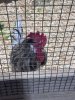
Same with the chickens, a lot have also died and we are down to 3(1.2). The two remaining hens are Polish chickens and idk what the rooster is, do you know what breed of chicken he is? Picture below.
 

Attachments

  • IMG_5982.jpeg
    IMG_5982.jpeg
    140 KB · Views: 1
Back
Top