
Part 1
When I booked a tour of the Western Cape last year, I asked in this Forum whether I should try to visit this Aquarium in Cape Town: the responses were positive, so I spent 2 busy days there and I am very glad that I did so. I took an awful lot of photos, but I now wish I had taken more.
I must apologise for taking so long to sort out and post my photos in the Gallery, I will use a few to illustrate this report. This first section is an introduction and a description the 3 large exhibits. Then I plan to write about some of the special fishes I saw and the final part will describe the tour behind the scenes and the education and conservation work at the Aquarium.
The Aquarium is on the Victoria and Alfred Waterfront, beside the marina and the platform where the Cape fur seals that live in the harbour can haul-out to rest. But I went straight inside to the ticket office, then past the restaurant and gift shop, into the Aquarium.
The Aquarium’s name comes from the position of Cape Town, where the cold waters of the Benguela current in the Atlantic, flowing north up the west coast, meet the warmer waters of the Agulhas current flowing south down the east coast in the Indian Ocean. So the Aquarium holds native marine species from both oceans, plus several local endemics and just a few freshwater species.
The Aquarium will celebrate its 30th Anniversary in November, but it has been modernised and extended since. Its exhibits are very varied in shape and size, so you don’t know what’s coming next. I prefer plain, flat-fronted tanks which make photography much easier – but I can understand that visitors like the plastic cylinders and shark tunnels.
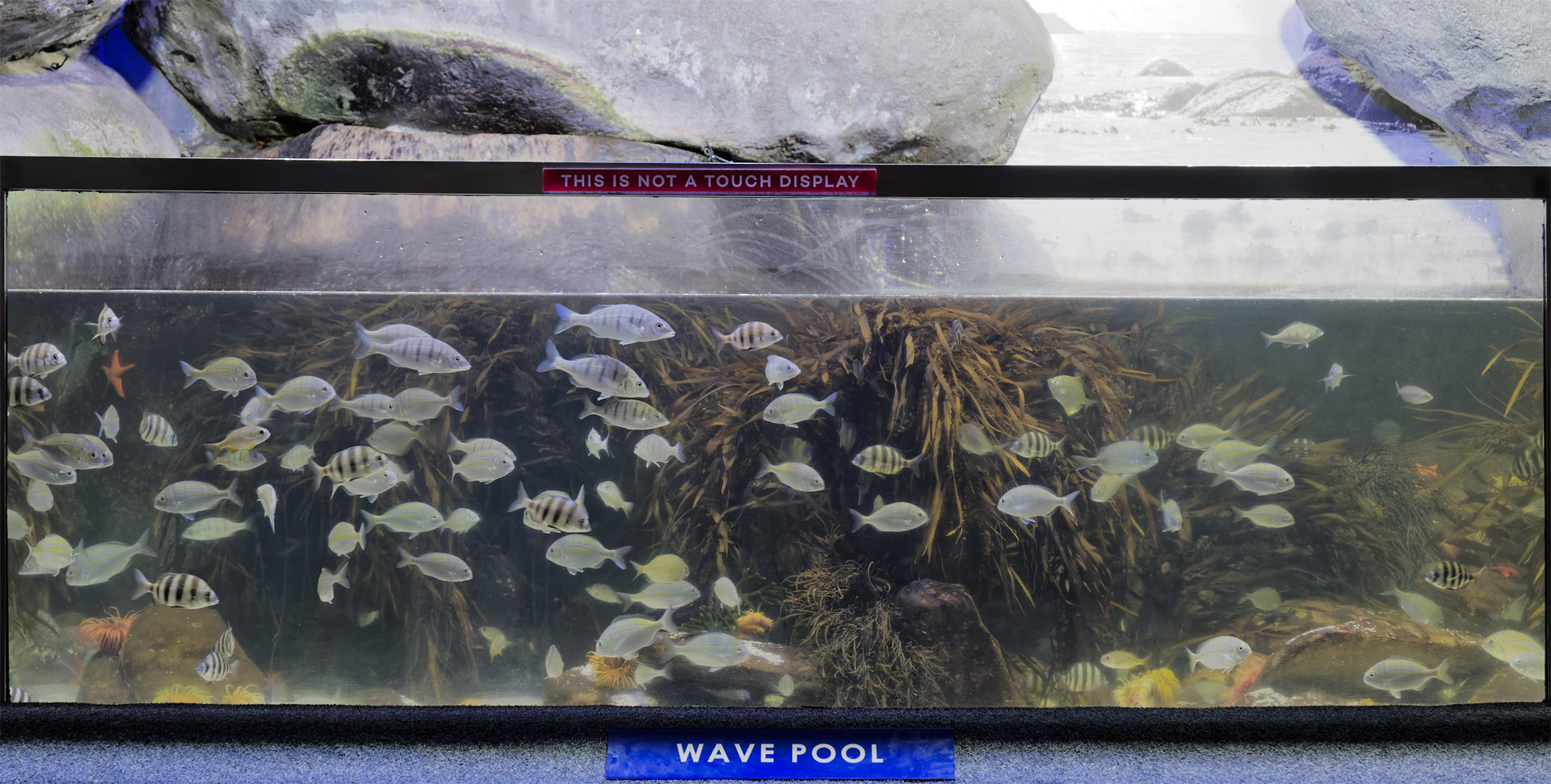
The first section holds Indian Ocean fishes, many of which may be familiar to aquarists and visitors from Europe. There is a big cylinder with a variety of coral fishes and a smaller one with a large shoal of common clowns (to please all the young fans of Nemo). There are photos of these tanks by @wstefan in our Gallery. I will describe some of the stranger species in the other tanks next time. Behind this area is a larger shallow wave tank, holding small specimens from colder waters, larger specimens are on show in the Kelp Forest exhibit.
 Then there are tanks with some coastal species, my favourites were the Knysna seahorses and the evileye puffers. My photo of the puffer tank illustrates the labelling and decoration of the tanks – the live plants are nice, although I’m not sure how long they can survive in some of the tanks.
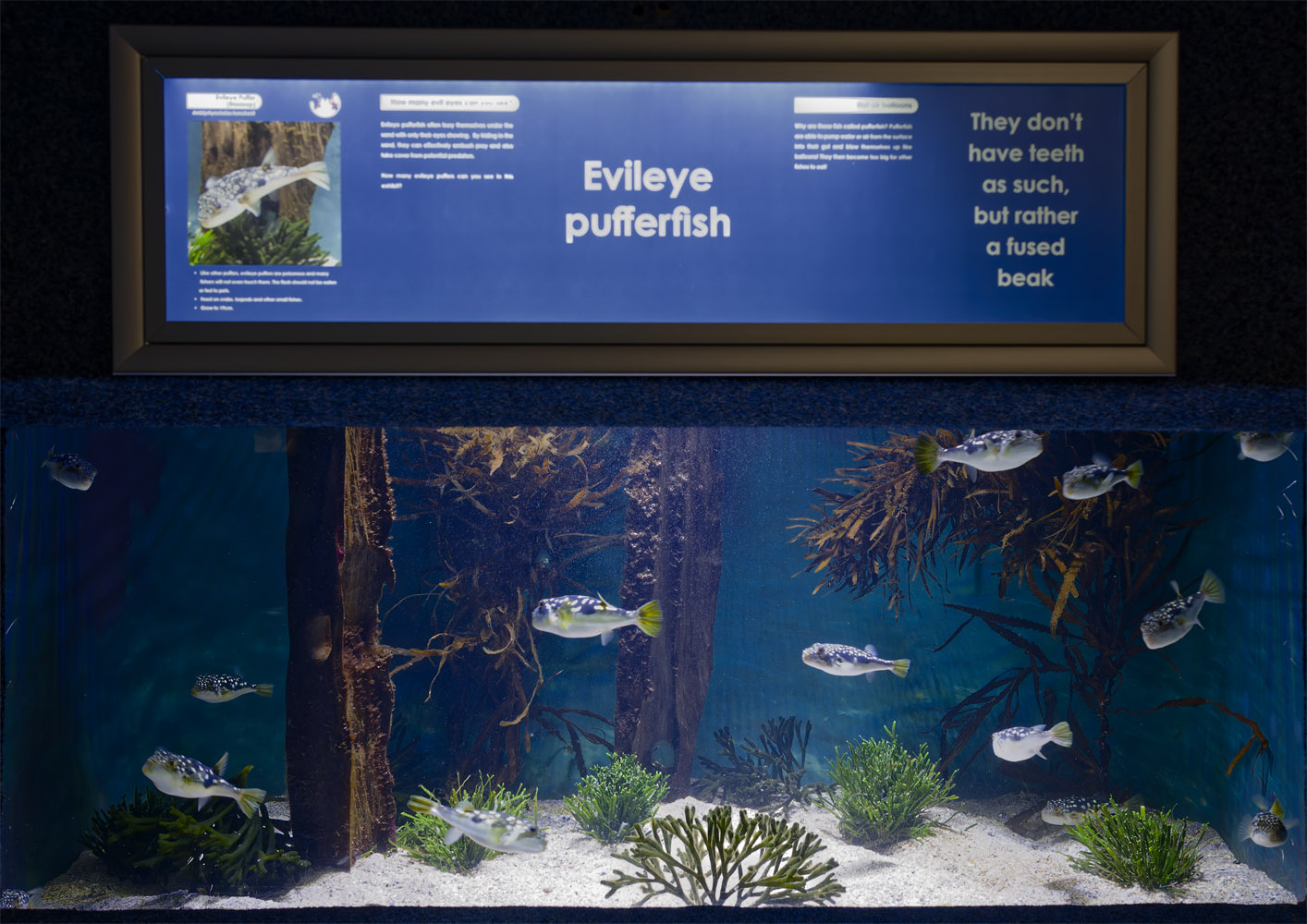 {GALLERY=media, 786794]Evileye pufferfish by gentle lemur posted 4 Mar 2025 at 10:32 AM[/GALLERY]
There is a special section for jellyfishes and some comb jellies: it has rather dim blue lighting and mirrored walls with circular flow Kreisel tanks and more plastic cylinders. These are not my favourite creatures and I found the area rather disconcerting* -so I was glad to arrive in the large room in front of the Ocean Exhibit. There is a coffee bar in the corner and seats where you can watch the fishes. The front window of this tank measures 9 x 4 m, and it can also be viewed from a tunnel along the right hand edge.
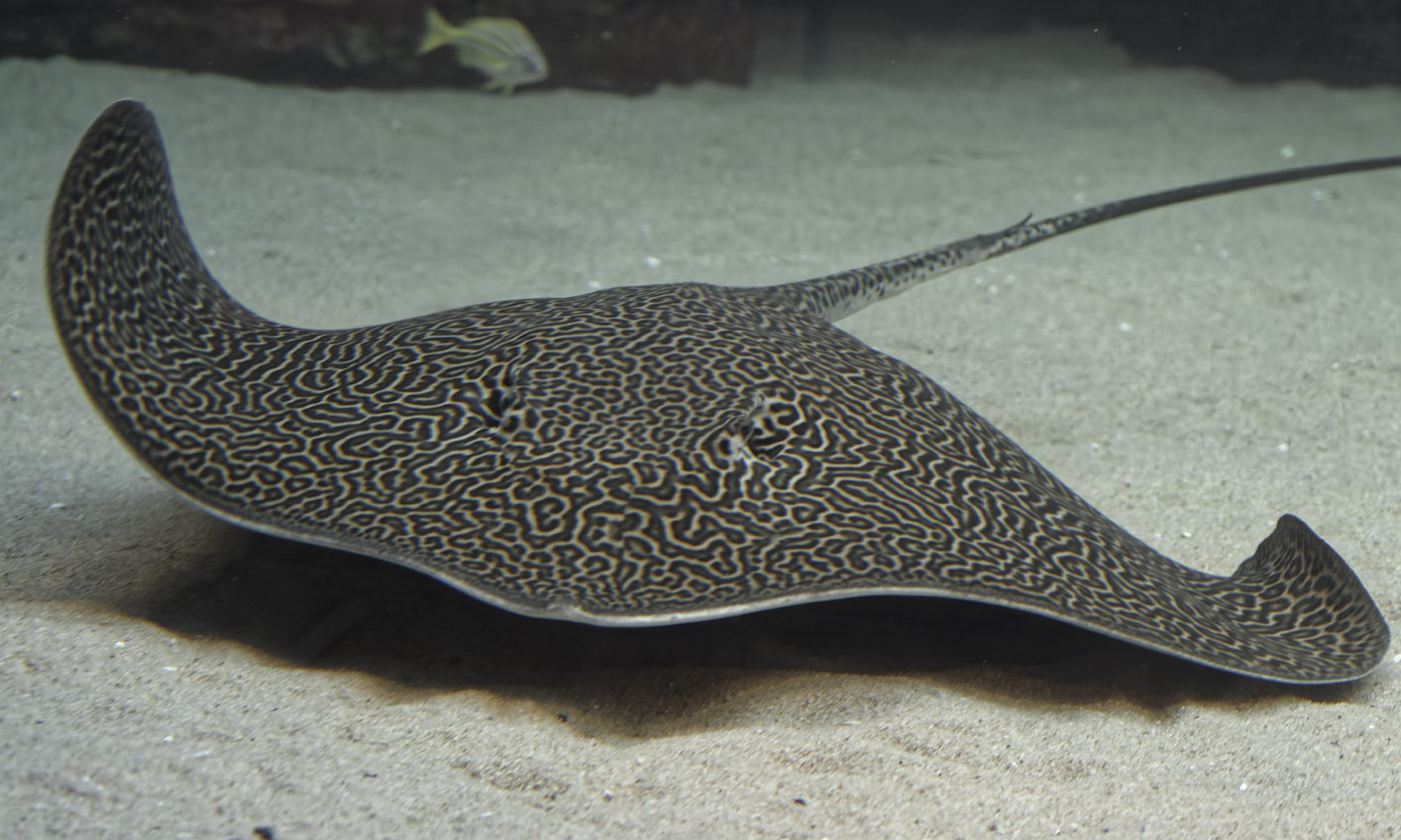
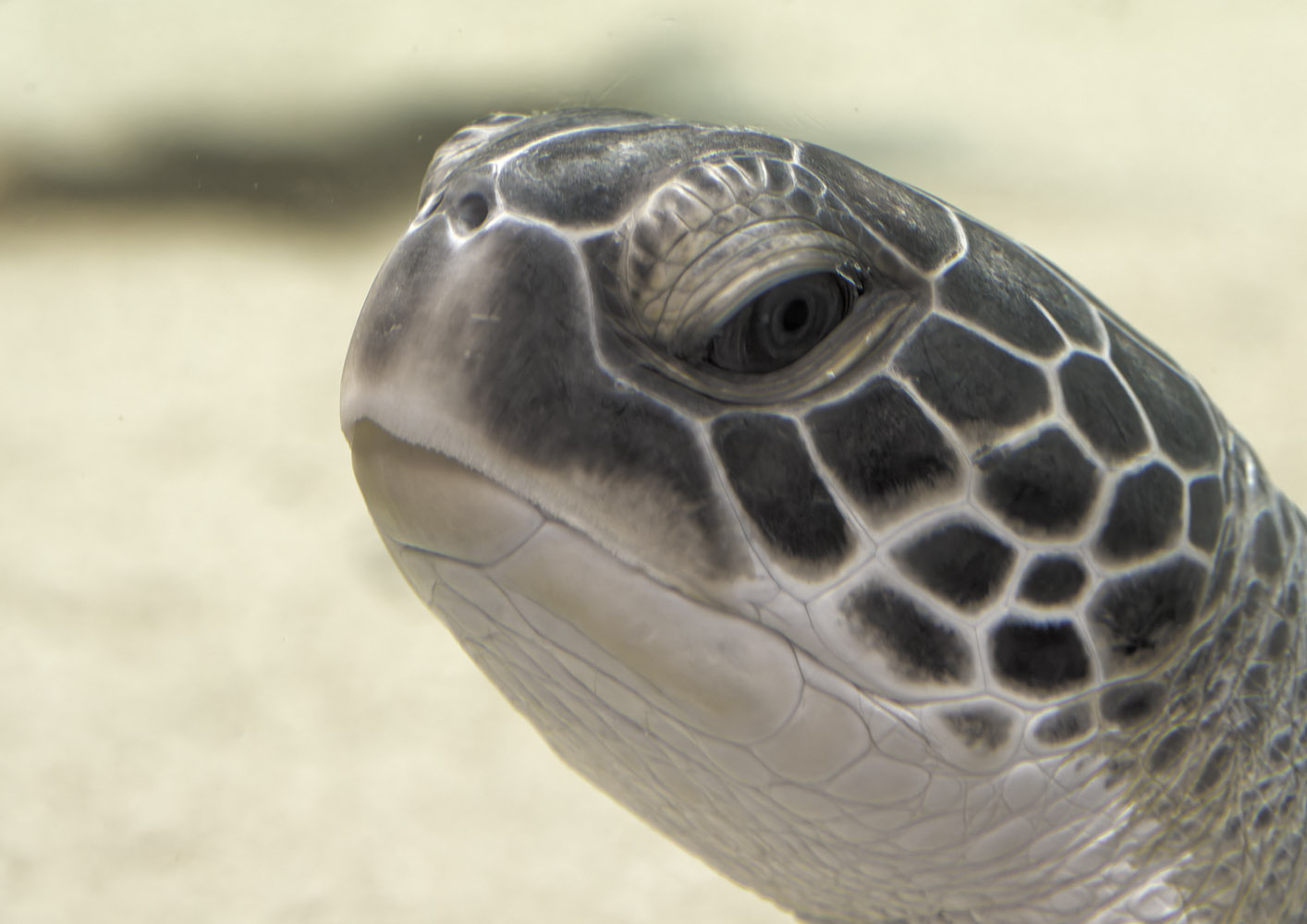
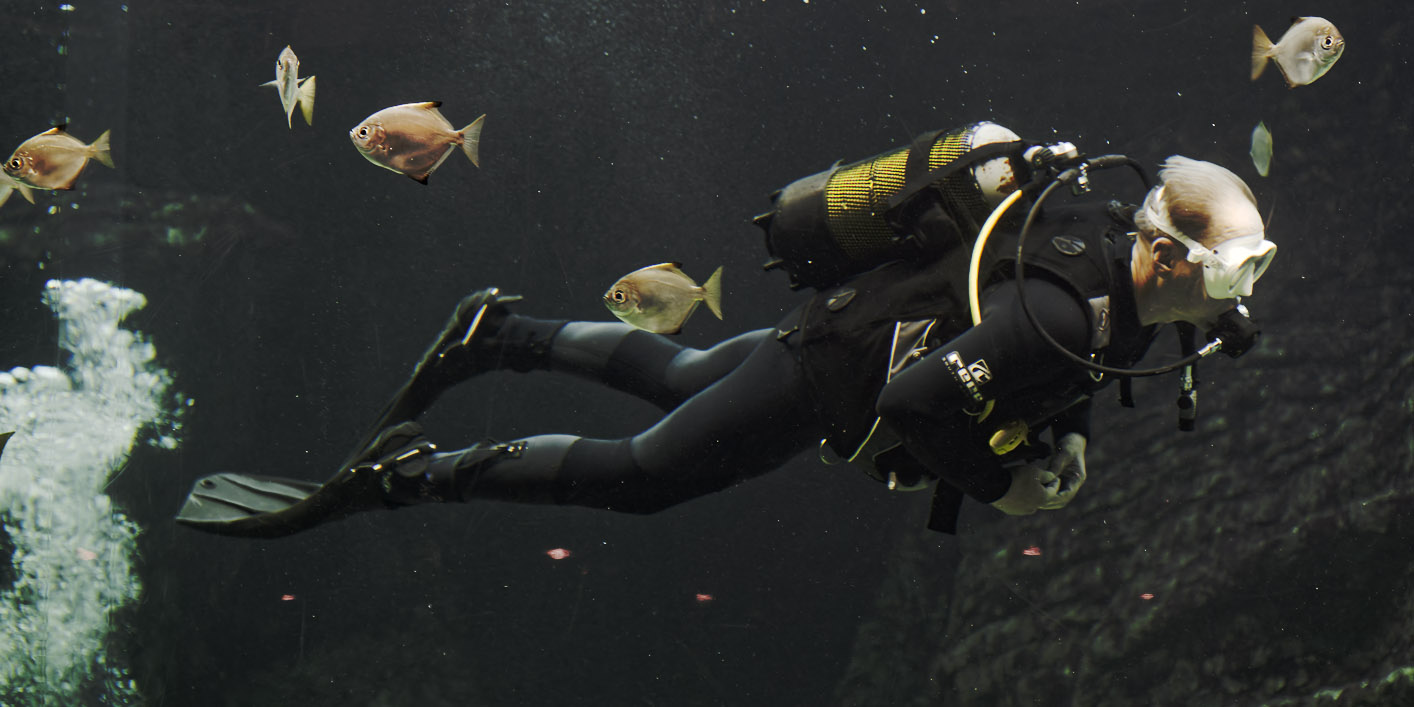
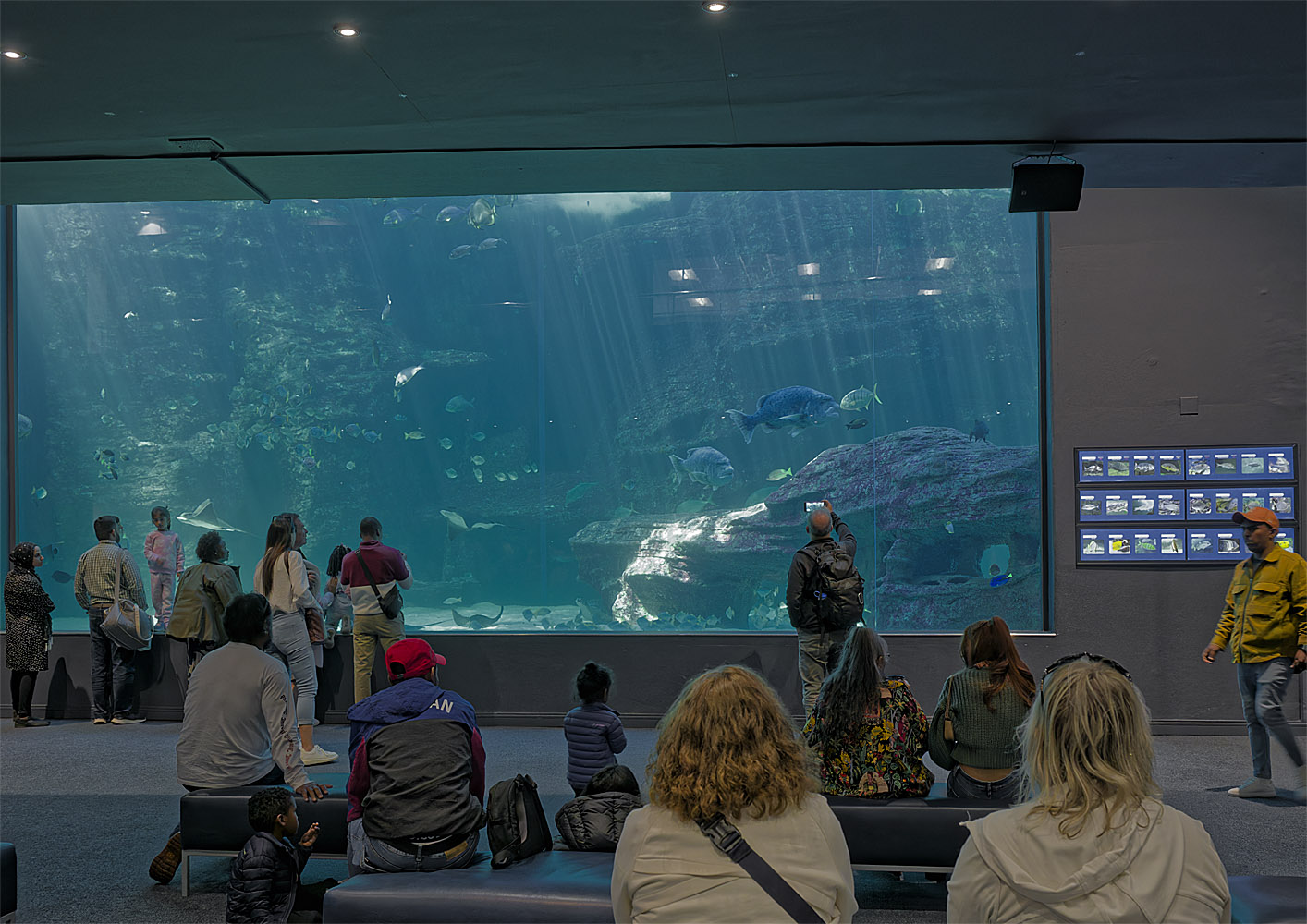 The most conspicuous fish are the big black musselcrackers, which are quite remarkable; I will write more about them later The labels a show the range of the other species which include a large honeycomb stingray and a rehabilitated green turtle, plus visiting divers from the dive school who appreciate the 6 m depth of warm water.
 Passing through the tunnel, visitors find a range of tanks which hold some of the strangest fishes from cooler waters, including hagfish, bellowsfish and kingclip. Then, past an interactive area with microscopes and touch tanks, there is ramp to the upper floor. At the top is planted area with exhibits for local toads, clawed frogs and a few freshwater fishes. The main feature is the colony of African penguins, which were all bred at Two Oceans. A smaller display holds some rescued rockhoppers, which are allowed morning swims in the Kelp Forest next door.
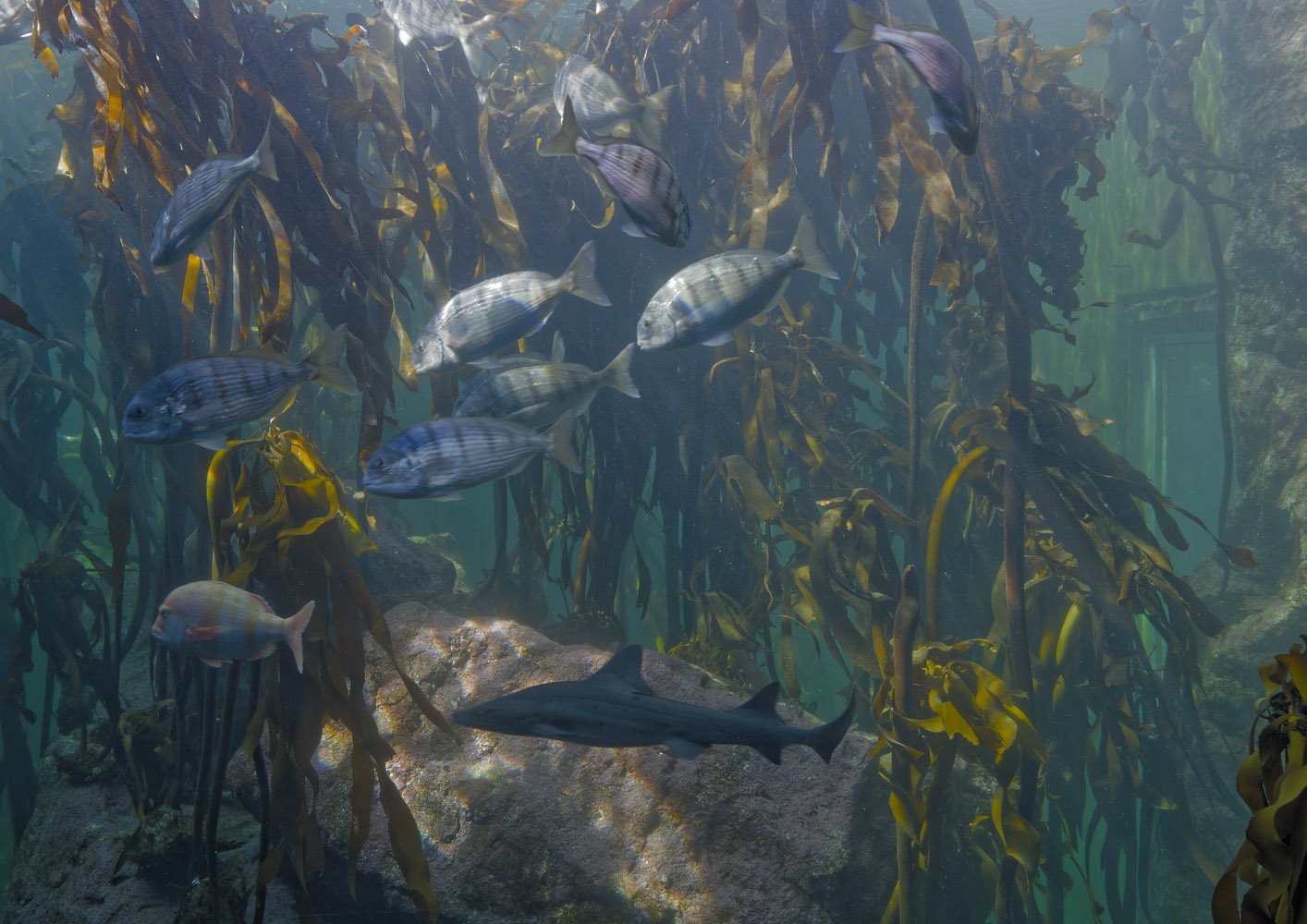
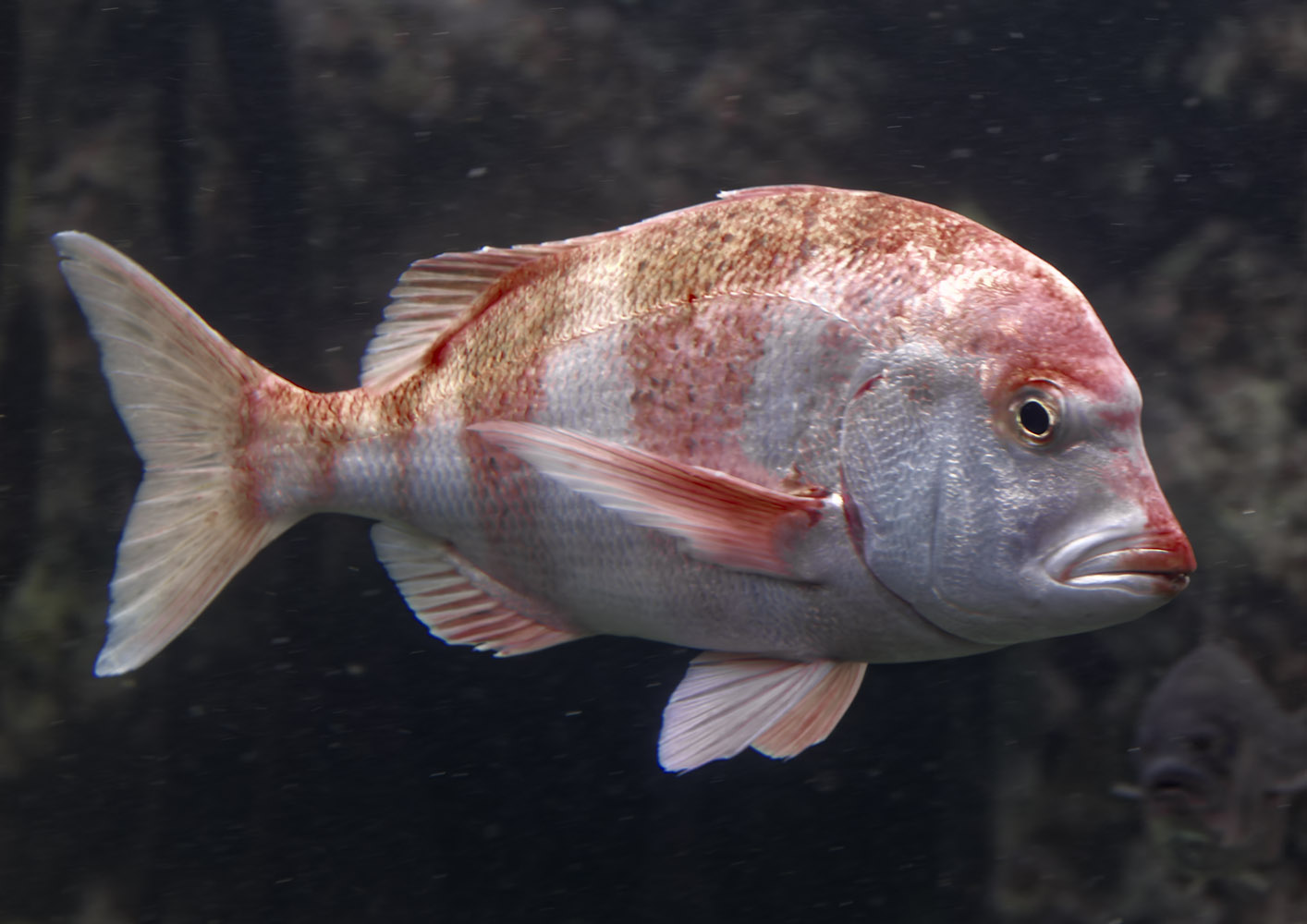
The Kelp Forest is interesting. The rapid growth of the kelp plants helps to purify the water; indeed it grows so thickly that it is hard to see all the fishes: I think I missed some completely. My favourite was the red stumpnose seabream, an endangered species.
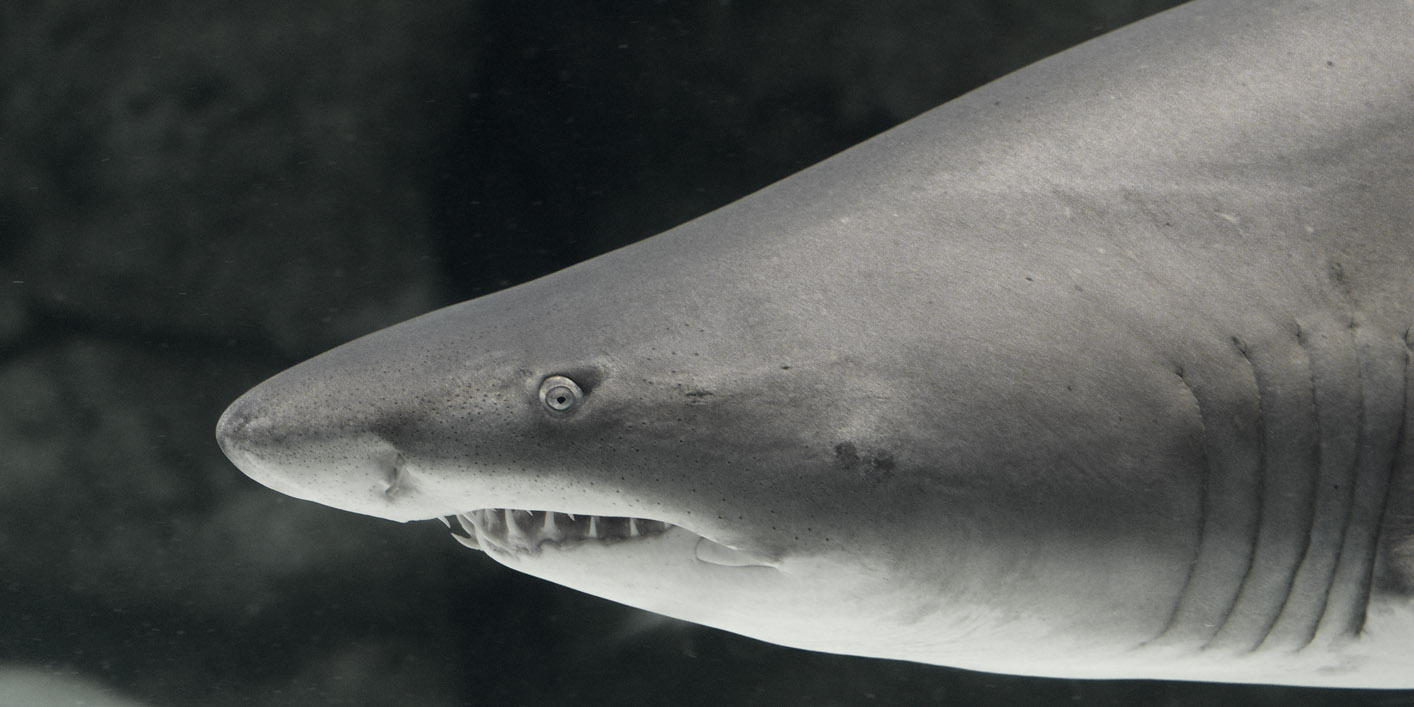
 The most spectacular fishes are in the final tank - the Shark exhibit. You see it first from a balcony, then through windows as you walk down the ramp around its perimeter and through the plastic tunnel to view the tank to the lower level of the main window.
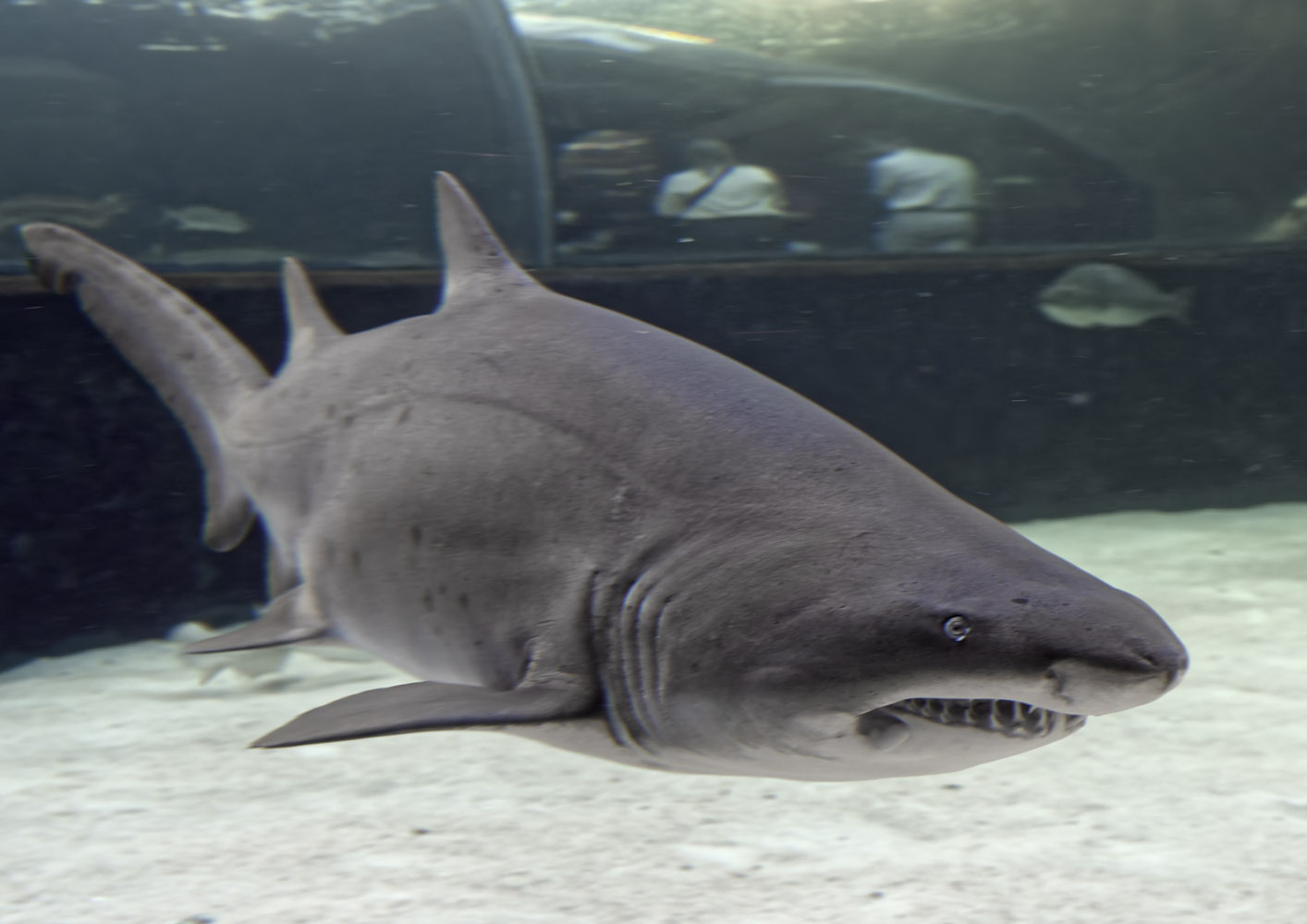 This gives excellent views of the sand tiger sharks as they glide past.
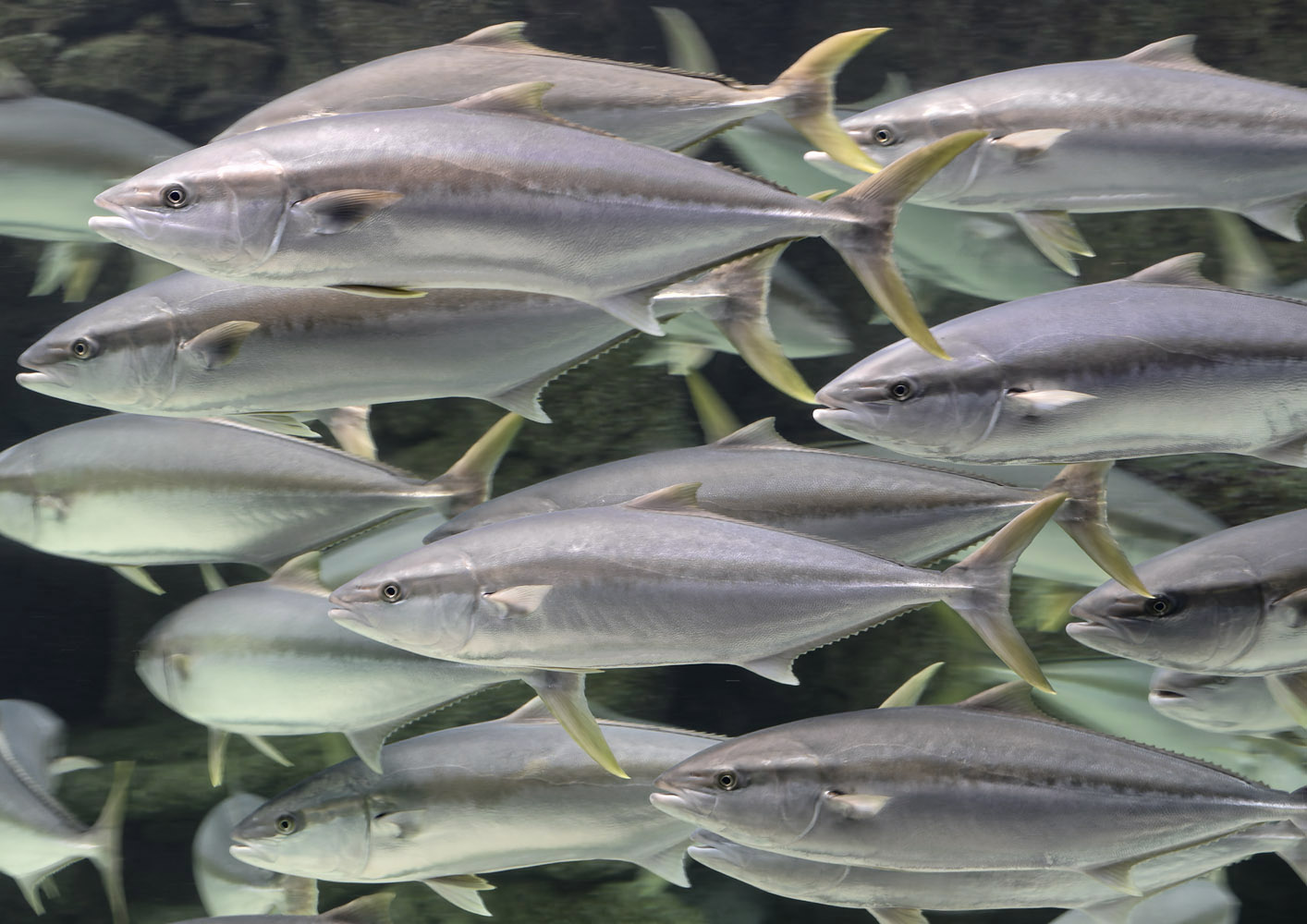
 There is a shoal of mullet and some larger fishes like Japanese meagre and the smallspotted grunter But my attention went to the fast-swimming ocean species, the striped bonito and the impressive shoal of yellowtail amberjack.
 * Perhaps I felt uneasy because of subconscious memories of 60s sci-fi films like ‘Barbarella’.
When I booked a tour of the Western Cape last year, I asked in this Forum whether I should try to visit this Aquarium in Cape Town: the responses were positive, so I spent 2 busy days there and I am very glad that I did so. I took an awful lot of photos, but I now wish I had taken more.
I must apologise for taking so long to sort out and post my photos in the Gallery, I will use a few to illustrate this report. This first section is an introduction and a description the 3 large exhibits. Then I plan to write about some of the special fishes I saw and the final part will describe the tour behind the scenes and the education and conservation work at the Aquarium.
The Aquarium is on the Victoria and Alfred Waterfront, beside the marina and the platform where the Cape fur seals that live in the harbour can haul-out to rest. But I went straight inside to the ticket office, then past the restaurant and gift shop, into the Aquarium.
The Aquarium’s name comes from the position of Cape Town, where the cold waters of the Benguela current in the Atlantic, flowing north up the west coast, meet the warmer waters of the Agulhas current flowing south down the east coast in the Indian Ocean. So the Aquarium holds native marine species from both oceans, plus several local endemics and just a few freshwater species.
The Aquarium will celebrate its 30th Anniversary in November, but it has been modernised and extended since. Its exhibits are very varied in shape and size, so you don’t know what’s coming next. I prefer plain, flat-fronted tanks which make photography much easier – but I can understand that visitors like the plastic cylinders and shark tunnels.
The first section holds Indian Ocean fishes, many of which may be familiar to aquarists and visitors from Europe. There is a big cylinder with a variety of coral fishes and a smaller one with a large shoal of common clowns (to please all the young fans of Nemo). There are photos of these tanks by @wstefan in our Gallery. I will describe some of the stranger species in the other tanks next time. Behind this area is a larger shallow wave tank, holding small specimens from colder waters, larger specimens are on show in the Kelp Forest exhibit.
There is a special section for jellyfishes and some comb jellies: it has rather dim blue lighting and mirrored walls with circular flow Kreisel tanks and more plastic cylinders. These are not my favourite creatures and I found the area rather disconcerting* -so I was glad to arrive in the large room in front of the Ocean Exhibit. There is a coffee bar in the corner and seats where you can watch the fishes. The front window of this tank measures 9 x 4 m, and it can also be viewed from a tunnel along the right hand edge.
The Kelp Forest is interesting. The rapid growth of the kelp plants helps to purify the water; indeed it grows so thickly that it is hard to see all the fishes: I think I missed some completely. My favourite was the red stumpnose seabream, an endangered species.