
On October 28th, I visited Wolf Hollow (also known as The North American Wolf Foundation) in Ipswich Massachusetts for the very first time. This is not a traditional zoo, but rather a non-profit gray wolf sanctuary that gives guided tours to destigmatize wolves and educate the general public. They also advocate for certain conservation projects and wolf-reintroduction efforts, but do not actually do any field conservation work. My visit lasted an hour and a half.
The Tour
There are multiple tour options at Wolf Hollow, but I was told all these options are pretty similar. Mine began with a half-hour talk, while the audience sat on shaded bleachers facing the largest wolf enclosure which contained a pack of 5 animals. I was told the enclosure was around 2+ acres, and it had 100% natural substrates, with lots of foliage and shade and also a pond. The only main downside of the enclosure (and of every exhibit at Wolf Hollow) is the use of mesh fencing, as the lack of glass barriers and moats was bad for sightlines and photos. As we sat on the bleachers, a keeper entered the enclosure and the wolves approached him and he spoke to us while interacting with the animals for half an hour. His talk consisted of many topics such as: social structure and dominance hierarchies, communal raising and adoption, feeding habits and regurgitation, and human-wolf conflict. Overall the talk was very informative, and we got to watch the wolves being very active as he spoke. The pack in this enclosure contained zero wolf-dog hybrids, but I was still surprised by how many behaviors I saw that reminded me of my pet dog back at home.

The largest enclosure held a pack of 5 wolves
After the main part of the talk ended, another keeper came in carrying two pumpkins stuffed with beef liver, and some bones. They placed them down for the wolves to grab, and it was wonderful seeing pack interactions around these novel enriching food items. During the feeding session, visitors were also given the chance to ask questions for another half hour.

A wolf grabs a pumpkin enrichment item
Once the Q&A ended, the speaker closed out the tour by inviting the wolves to howl. The wolves do not always choose to participate in this exercise, and unfortunately on the day of my visit they did not choose to howl, but I imagine seeing the pack of wolves howling would be a wonderful grand finale for the tour.
Afterwards visitors were allowed to leave, or to stop by the 2 other smaller enclosures that were adjacent to the main enclosure. One of these enclosures held a geriatric solitary wolf, who was the last surviving individual of their pack. The other enclosure held two wolves, one of which was a rescued wolf-dog hybrid (they don’t support breeding hybrids). There were more workers and volunteers stationed at these two enclosures, and I spent a half hour at these exhibits watching the wolves and speaking with the staff. They told me some interesting stories about the animals, including an amazing one about how the wolves once managed to catch and eat a wild Red Tailed Hawk. I then made my way to the gift shop, bought two magnets, and left.
Overall Thoughts
Overall, I would recommend Wolf Hollow. They have no rare species and they do zero field-conservation work, but the highly informative staff and engaging demonstrations are really what made this place stand out. It is common to go to a more traditional zoo and stop by the wolf enclosure and for the wolves to be no-shows. But at Wolf Hollow the wolves will almost never be no-shows, and you have a particularly high chance of seeing them interact with each other and with exciting enrichment items (like pumpkins in October). If you are lucky, then your tour also has a good chance of ending by seeing the wolves howl! Watching such active animals, and seeing such interesting social interactions amongst the pack, was what made my visit to Wolf Hollow a memorable experience.
In the Neighborhood
If you decide to go to Wolf Hollow, I would recommend coming in the fall or winter, as I was told that the wolves are more active in cold weather. The wolves’ winter coats are apparently much more beautiful than their summer coats, and winter weather also makes them more likely to show certain behaviors, like howling. There are also several other animal and nature related activities to do in the area. In terms of zoo-related places, the Explore the World Oceanarium, Seacoast Science Center, Maine Center for Wildlife, and York’s Wild Kingdom are all within an hour drive up the coast through New Hampshire and Maine (although some of those attractions are only open in the Summer). If you want to try something that is not a zoo, you could also stop at Crane Beach (which is where I went), and it is one of the world’s most important nesting sites for Piping Plovers and also the location of the largest Pitch Pine Forest in the North Shore of MA. In terms of other wolf-themed facilities, a volunteer told me about Wolves of Maine, which is another wolf sanctuary in New England that I hadn't heard of before—but that place is much larger and much further away, and at the moment they do not seem to be open to the public.
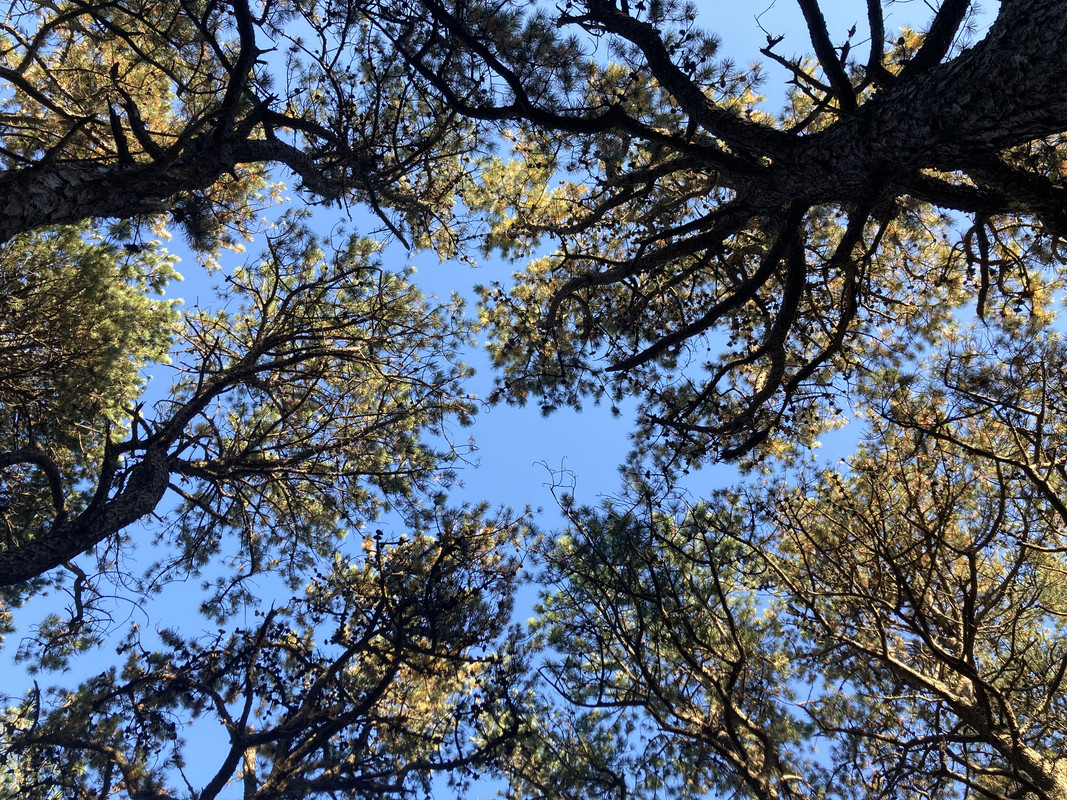
The trees at Crane Beach
The Tour
There are multiple tour options at Wolf Hollow, but I was told all these options are pretty similar. Mine began with a half-hour talk, while the audience sat on shaded bleachers facing the largest wolf enclosure which contained a pack of 5 animals. I was told the enclosure was around 2+ acres, and it had 100% natural substrates, with lots of foliage and shade and also a pond. The only main downside of the enclosure (and of every exhibit at Wolf Hollow) is the use of mesh fencing, as the lack of glass barriers and moats was bad for sightlines and photos. As we sat on the bleachers, a keeper entered the enclosure and the wolves approached him and he spoke to us while interacting with the animals for half an hour. His talk consisted of many topics such as: social structure and dominance hierarchies, communal raising and adoption, feeding habits and regurgitation, and human-wolf conflict. Overall the talk was very informative, and we got to watch the wolves being very active as he spoke. The pack in this enclosure contained zero wolf-dog hybrids, but I was still surprised by how many behaviors I saw that reminded me of my pet dog back at home.
The largest enclosure held a pack of 5 wolves
After the main part of the talk ended, another keeper came in carrying two pumpkins stuffed with beef liver, and some bones. They placed them down for the wolves to grab, and it was wonderful seeing pack interactions around these novel enriching food items. During the feeding session, visitors were also given the chance to ask questions for another half hour.
A wolf grabs a pumpkin enrichment item
Once the Q&A ended, the speaker closed out the tour by inviting the wolves to howl. The wolves do not always choose to participate in this exercise, and unfortunately on the day of my visit they did not choose to howl, but I imagine seeing the pack of wolves howling would be a wonderful grand finale for the tour.
Afterwards visitors were allowed to leave, or to stop by the 2 other smaller enclosures that were adjacent to the main enclosure. One of these enclosures held a geriatric solitary wolf, who was the last surviving individual of their pack. The other enclosure held two wolves, one of which was a rescued wolf-dog hybrid (they don’t support breeding hybrids). There were more workers and volunteers stationed at these two enclosures, and I spent a half hour at these exhibits watching the wolves and speaking with the staff. They told me some interesting stories about the animals, including an amazing one about how the wolves once managed to catch and eat a wild Red Tailed Hawk. I then made my way to the gift shop, bought two magnets, and left.
Overall Thoughts
Overall, I would recommend Wolf Hollow. They have no rare species and they do zero field-conservation work, but the highly informative staff and engaging demonstrations are really what made this place stand out. It is common to go to a more traditional zoo and stop by the wolf enclosure and for the wolves to be no-shows. But at Wolf Hollow the wolves will almost never be no-shows, and you have a particularly high chance of seeing them interact with each other and with exciting enrichment items (like pumpkins in October). If you are lucky, then your tour also has a good chance of ending by seeing the wolves howl! Watching such active animals, and seeing such interesting social interactions amongst the pack, was what made my visit to Wolf Hollow a memorable experience.
In the Neighborhood
If you decide to go to Wolf Hollow, I would recommend coming in the fall or winter, as I was told that the wolves are more active in cold weather. The wolves’ winter coats are apparently much more beautiful than their summer coats, and winter weather also makes them more likely to show certain behaviors, like howling. There are also several other animal and nature related activities to do in the area. In terms of zoo-related places, the Explore the World Oceanarium, Seacoast Science Center, Maine Center for Wildlife, and York’s Wild Kingdom are all within an hour drive up the coast through New Hampshire and Maine (although some of those attractions are only open in the Summer). If you want to try something that is not a zoo, you could also stop at Crane Beach (which is where I went), and it is one of the world’s most important nesting sites for Piping Plovers and also the location of the largest Pitch Pine Forest in the North Shore of MA. In terms of other wolf-themed facilities, a volunteer told me about Wolves of Maine, which is another wolf sanctuary in New England that I hadn't heard of before—but that place is much larger and much further away, and at the moment they do not seem to be open to the public.
The trees at Crane Beach


