Nogeyama Zoo Zoo Nogeyama - Yokohama

vogelcommando

Well-Known Member
10+ year member
At Nogeyama Zoo the oldest known zoo-camel died at an age of 38 years. It was a female named Zugaru.
 
According to the press release of the city of Yokohama, the twins were born to Sumatran tigers Guntur and Deru of Zoorasia.
 
The southwestern corner of the Nogeyama is closed off for renovation. This means that Nakayoshi Square, housing guinea pigs and mice is closed off (they can be seen near the fish house I believe). Unfortunately, this also means humboldt penguins, swamp wallabies and the only kagus in Japan cannot be seen.
 
The southwestern corner of the Nogeyama is closed off for renovation. This means that Nakayoshi Square, housing guinea pigs and mice is closed off (they can be seen near the fish house I believe). Unfortunately, this also means humboldt penguins, swamp wallabies and the only kagus in Japan cannot be seen.
I see a 1/4 portion cordonned off as grey space. They provisionally - I suspect - have rehoused red panda to near the lions in the NE corner of Nogeyama Zoo.

SOURCE:
https://www.hama-midorinokyokai.or.jp/zoo/nogeyama/map.php
 
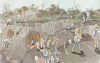
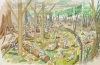
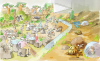
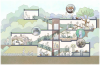
This is news from last year but the zoo has plans to build a barrier-free exhibit area featuring red pandas, kagus, pallas’s cats, and tortoises. The plan is to finish the project before 2028.

concept art taken from an article from February 5:

upload_2025-1-5_0-58-41.png
upload_2025-1-5_0-58-57.png

concept art taken from an article from February 19:

upload_2025-1-5_0-59-24.png
upload_2025-1-5_0-59-50.png
upload_2025-1-5_1-0-23.png

Sounds like a neat concept but I think combining play elements with sensitive species sounds pretty hazardous especially when the play areas and viewing areas seem to be indoors.
 

Attachments

  • upload_2025-1-5_0-58-41.png
    upload_2025-1-5_0-58-41.png
    1 MB · Views: 116
  • upload_2025-1-5_0-58-57.png
    upload_2025-1-5_0-58-57.png
    1.2 MB · Views: 117
  • upload_2025-1-5_0-59-24.png
    upload_2025-1-5_0-59-24.png
    1.1 MB · Views: 110
  • upload_2025-1-5_0-59-50.png
    upload_2025-1-5_0-59-50.png
    1.3 MB · Views: 120
  • upload_2025-1-5_1-0-23.png
    upload_2025-1-5_1-0-23.png
    1.2 MB · Views: 127
That looks ambitious and exciting, but as you mentioned, the play elements in particular seem a bit concerning. Still, I really wish it could be open for my visit next year. I will never tire of red pandas or Pallas's cats.
 
I’d like to see some of the kagus be distributed to other zoos, but that could mean that there would be no reason to visit Nogeyama aside from gharial and rare testudine. It’s the designated rare animal of the zoo after all.
Yes, that is true...
Ueno Zoo used to have a Kagu born in Nogeyama in the past, but currently the only animals on regular exhibit in Japan are the two males in Nogeyama.
 
Hi

I visited Nogeyama Zoo on March 8th, so I will be posting the latest species list here.
The names are following the format from Zootierliste.

<Mammals>
Black-capped capuchin (Guianan brown capuchin) (no subspecies-status) (Sapajus apella) (Syn.: Cebus apella)
Chinese red panda (Ailurus styani (Syn.: Ailurus fulgens styani) (Syn.: Ailurus fulgens refulgens))
Domestic mouse (Fancy mouse) (Mus musculus f. domestica)
Giraffe (no subspecies-status) (Giraffa camelopardalis)
Grevy's zebra (Equus grevyi)
Japanese Black Bear (Ursus thibetanus japonica)
Japanese marten (No Subspecific status) (Martes melampus)
Mantled Colobus (Mantled Guereza) (Magistrate black Colobus) (no subspecies-status) (Colobus guereza (Syn.: Colobus abyssinicus))
Red ruffed lemur (Varecia rubra) (Syn.: Varecia variegata rubra)
Southern tamandua (No Subspecific status) (Tamandua tetradactyla)
Western common chimpanzee (True chimpanzee) (Pan troglodytes verus (Syn.: Pan verus))

<Birds>

American flamingo (Caribbean flamingo) (Red flamingo) (Phoenicopterus ruber ruber)
Andean condor (Vultur gryphus)
Black-faced spoonbill (Platalea minor)
Chilean flamingo (Phoenicopterus chilensis)
Common mallard (Northern mallard duck) (Anas platyrhynchos platyrhynchos)
Common ostrich (No Subspecific status) (Struthio camelus)
Common shelduck (Tadorna tadorna)
Eastern peregrine falcon (Siberian peregrine falcon) (Falco peregrinus japonensis)
Fischer's lovebird (Agapornis fischeri)
Glossy ibis (Plegadis falcinellus)
Green pheasant (No Subspecific status) (Phasianus versicolor)
Japanese buzzard (Eastern buzzard) (Buteo japonicus) (Syn.: Buteo buteo japonicus)
Japanese night heron (Gorsachius goisagi)
Indian peafowl (Blue peafowl) (Indien Peacock) (Pavo cristatus)
Kagu (Rhynochetos jubatus)
Northern bald ibis (Waldrapp) (Geronticus eremita)
Tawny frogmouth (Freckled frogmouth) (Podargus strigoides)
White ibis (American white ibis) (Eudocimus albus)
White peafowl (Pavo cristatus mut. albi)

<Reptiles>
Alligator snapping turtle (Macrochelys temminckii (Syn.: Macroclemys temminckii) (Syn.: Macrochelys apalachicolae))
Angulated tortoise (Ploughshare tortoise) (Astrochelys yniphora (Syn.: Geochelone yniphora))
Brown tortoise (no subspecific status) (Manouria emys)
Dwarf crocodile (No Subspecific status) (Osteolaemus tetraspis)
Chinese alligator (Alligator sinensis)
Chinese water dragon (Green water dragon) (Asian water dragon) (Physignathus cocincinus)
Common green iguana (No Subspecific status) (Iguana iguana)
Common spider tortoise (Pyxis arachnoides arachnoides)
Eastern box turtle (Nominate subspecies) (Terrapene carolina carolina)
Egyptian tortoise (Testudo kleinmanni (Syn.: Pseudotestudo kleinmanni))
Indian roofed turtle (Pangshura tecta) (Syn.: Kachuga tecta)
Gharial (Indian gharial) (Gavialis gangeticus)
Guinea pig (Domestic guinea pig) (No Breeds-status) (Cavia aperea f. porcellus)
Indian Star tortoise (Geochelone elegans (Syn.: Testudo elegans))
Japanese raccoon dog (Nyctereutes procyonoides viverrinus) (Syn.: Nyctereutes viverrinus viverrinus)
Miyako grass lizard (Takydromus toyamai)
Radiated tortoise (Astrochelys radiata (Syn.: Geochelone radiata))
Royal python (Ball python) (Python regius)
Ryukyu Black-breasted leaf turtle (Okinawa Black-breasted leaf turtle) (Geoemyda japonica (Syn.: Geoemyda spengleri japonica))
Southern river terrapin (Batagur affinis)
Spotted pond turtle (Black pond turtle) (Geoclemys hamiltonii)

<Fishes>
Echigonia loach (Japanese loach) (Lefua echigonia)
Japanese rice fish (Oryzias latipes)
Tokyo bitterling (Pseudorhodeus tanago) (Syn.: Tanakia tanago)

These are the species that were on exhibit as of March 8th, and all had signs.
Kagu and rare reptiles are styill on exhibit.

The zoo is undergoing a major renovation now, and some species shown on the zoo website or other places online are off exhibit due to construction issues. Also, the giraffe and zebras take turns to come out to the outdoor exhibit due to the same issue, so either species will be in the indoor backyard, making them extremely difficult to see.

Feel free to leave any coments / questions!
 
Last edited:
Sorry! I missed out two species from my memo!

Red ruffed lemur (Varecia rubra) (Syn.: Varecia variegata rubra)
Fischer's lovebird (Agapornis fischeri)

I added in these species to the list.

Thanks for the comments!
 
I think all missed this piece of news from the note on the number of kagu at Nogeyama Zoo!

Singapore Zoo and Nogeyama did an exchange deal over a pair of kagu for a pair of (elderly) Asiatic lions! On March 23rd, 2024, the zoo received the elderly Asiatic lion pair, male Vera (aged 11) and female Barra/Bahra (aged 13).

Nogeyama Zoo had in the previous year 2023 (November 7th) transferred a pair of kagu to Singapore Zoo from the Yokohama Breeding Center.

LINK/SOURCE: https://www.hama-midorinokyokai.or..../e6e3ca89fa329d5e7888f31a8ddefda02a60e4fa.pdf
 
Back
Top