I was in Nicaragua for the past three weeks, but I'm back to finish up this thread. Just two smaller parks to go!
DAY 8. 21-04-2024.
MUSEUM FUR NATURKUNDE, KARLSRUHE
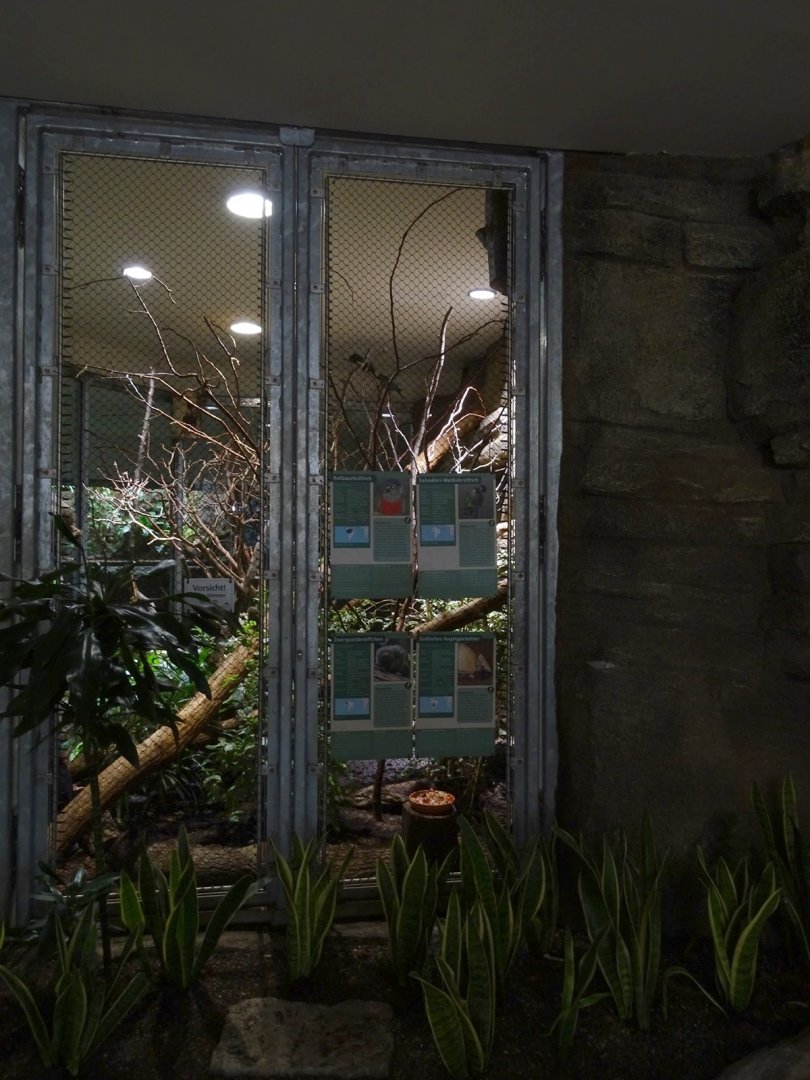
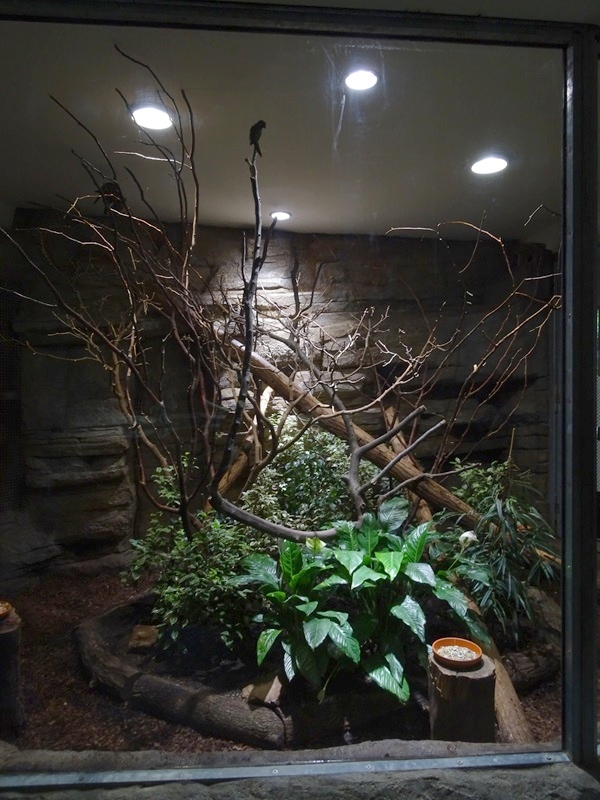
NOTE: Something worth mentioning right now is the signage in this museum; it seems to be almost completely up to date regarding reptile, amphibian and fish species that are kept in the various tanks and enclosures. Even despite some large species-rich mixed aquaria I was only able to find two species that were not signed in the entire building! There were a few species signed that I did not see, but they could have simply been hiding from sight. Since I took a lot of photo’s of the signage this time, this report can be expected to be at least 95% accurate when it comes to the vertabrate animal collection! (Most of the crustaceans, starfishes and other invertebrates were signed as well. The exception here are some of the lower invertabrates like corals, which were not always signed)
When a species name is followed by * , it means the species was signed, but I did not see it.
After a very short tram ride (just 2 stops from the zoo) and a short walk, I arrived at the Museum for Naturkunde a little before 4, allowing me two hours for a visit.
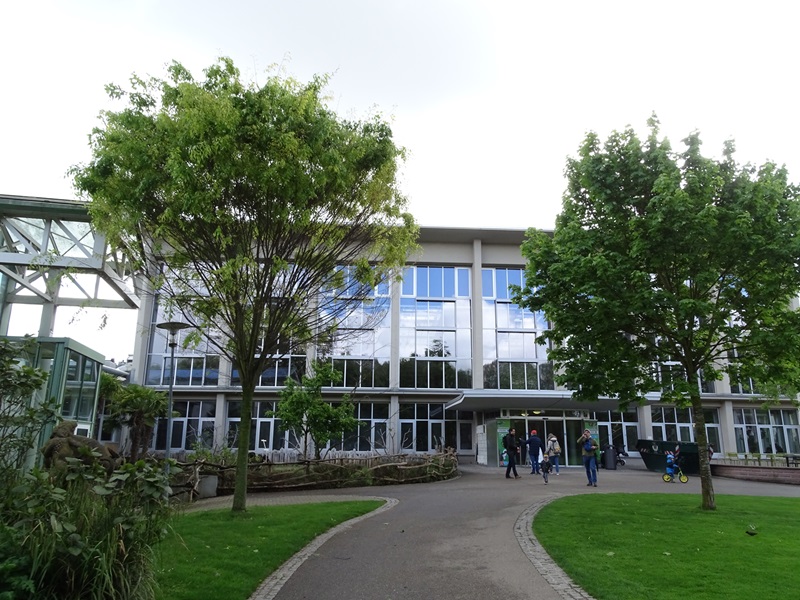
The museum is located in a classical building and is a stand-alone attraction. The entrance fee is just 5 euro’s, which is only a third of what my local natural museum in the Netherlands charges, which doesn’t even have any living animals. A bargain!
After the entrance, my attention was drawn to a small hallway with some diorama’s, very similar to those in the museum of Salzburg. Here too are some European species on ‘display’, from moose and wild boar to wildcat and golden eagle.
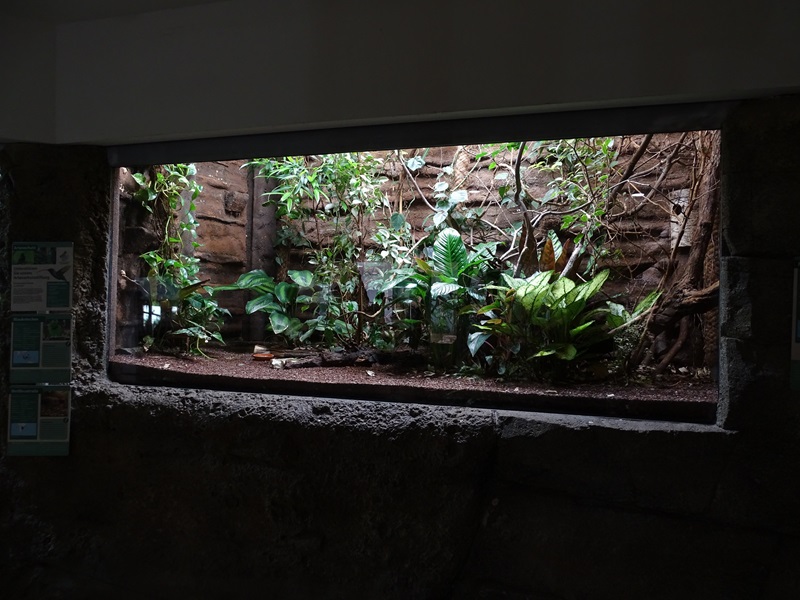
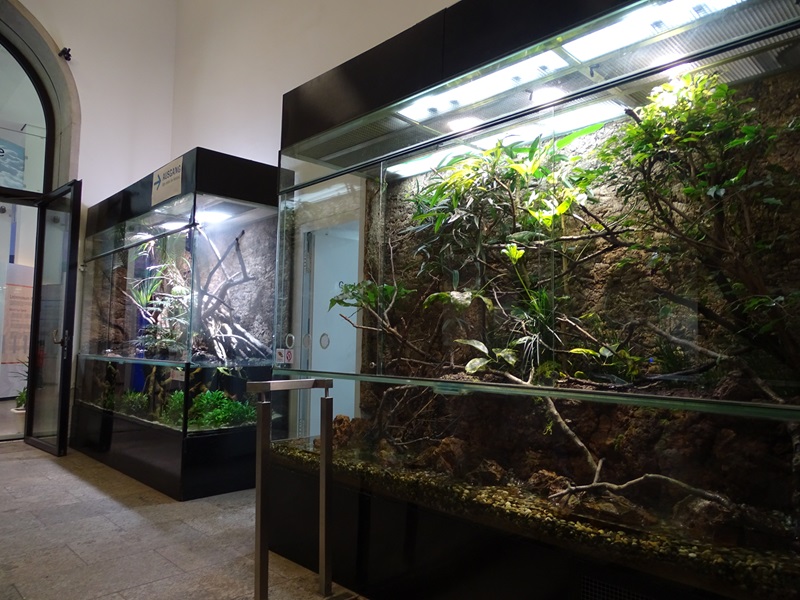
But I did come here to see live animals, so I took a right turn after the entrance and immediately found the first two terraria; one for a pair of Jackson’s chameleons and semi-aquatic one for Chinese crocodile lizards and white cloud mountain minnows. I did really like both of these enclosures. (and of course seeing a non-panther, non-veiled chameleon species is always a treat!)
Between both these terraria is the entrance to the gallery, where I left some of my stuff I wasn’t going to need. Across from that is one of many stairs to the second floor. However, I didn’t go upstairs as the next room on the ground floor was were I needed to go as there were more enclosures here.
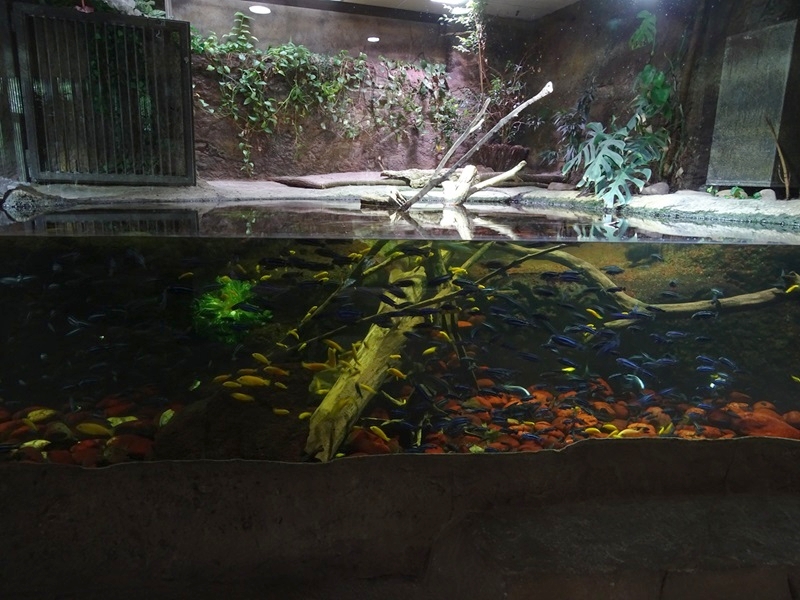
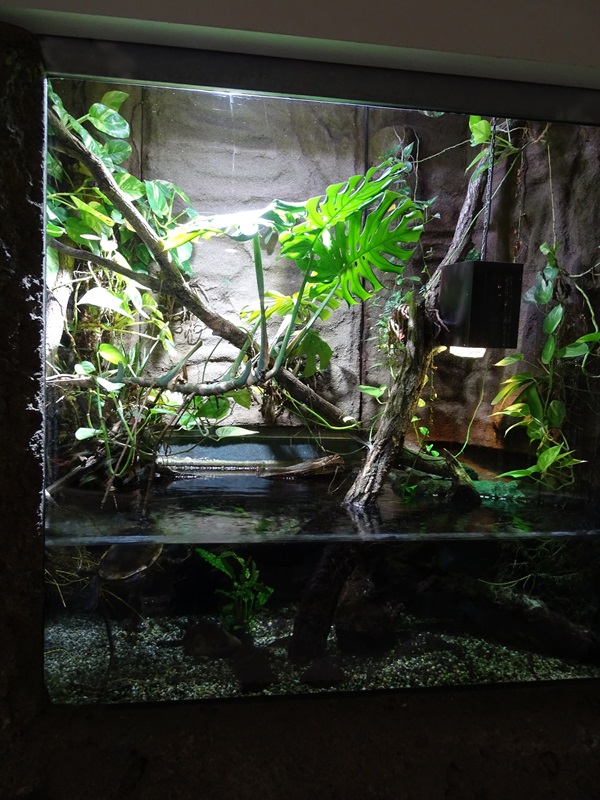
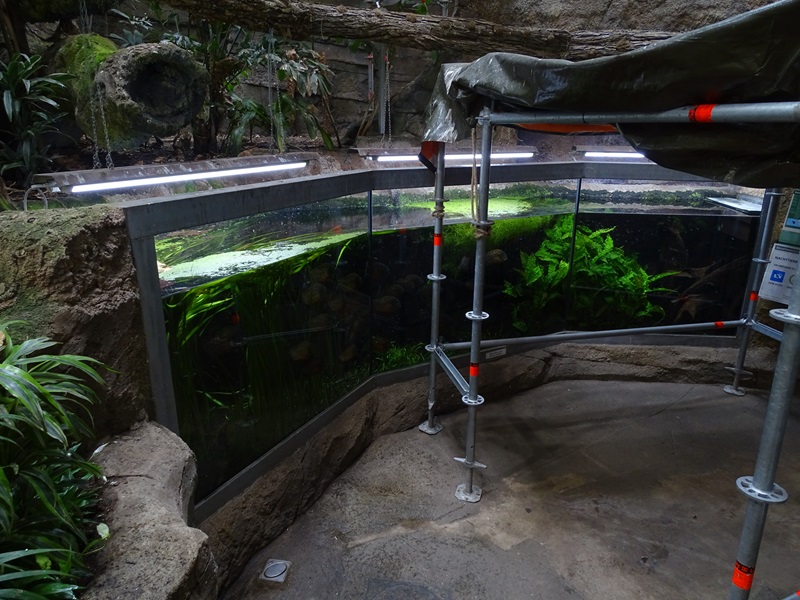
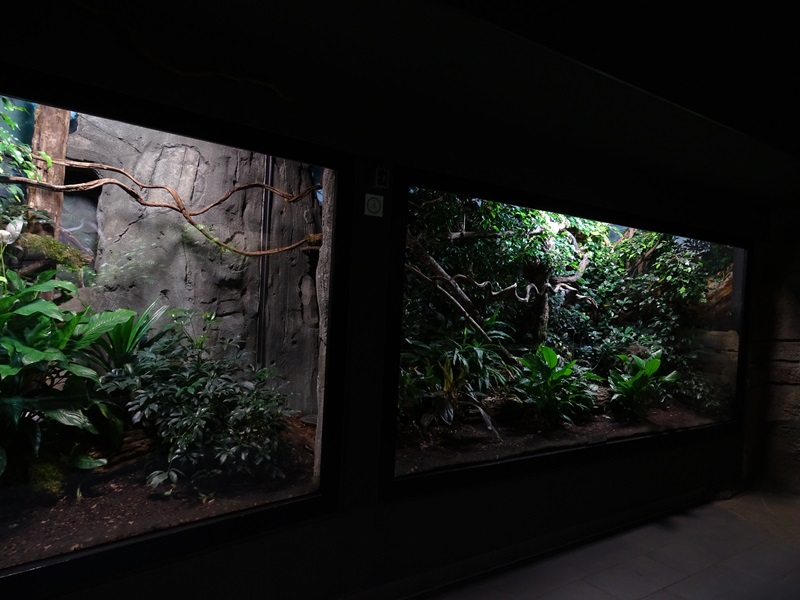
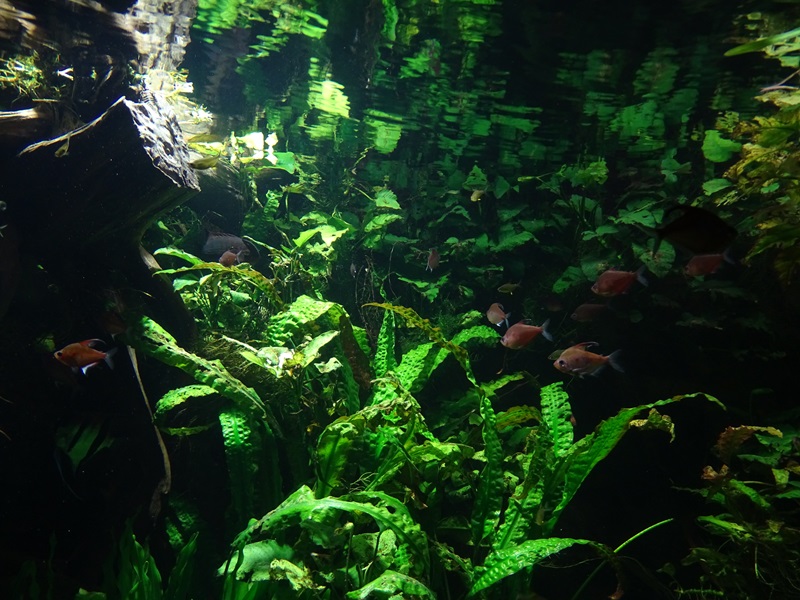
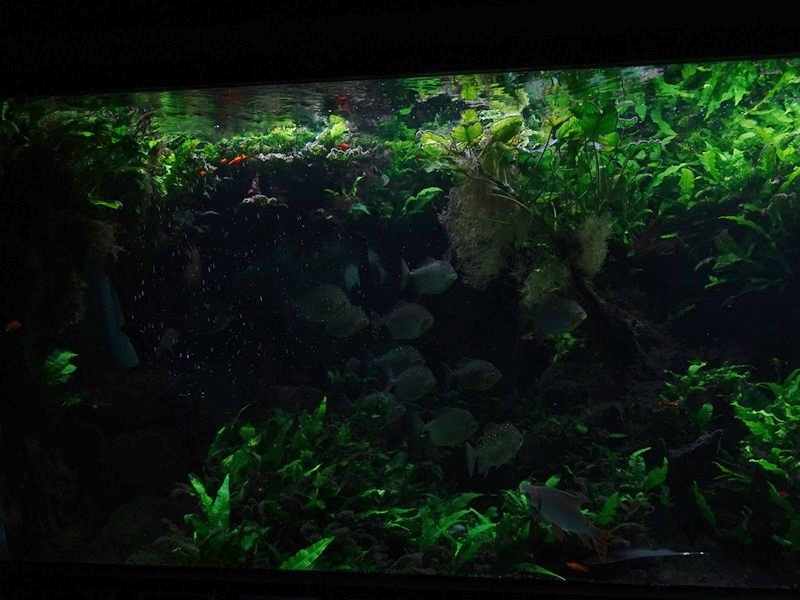
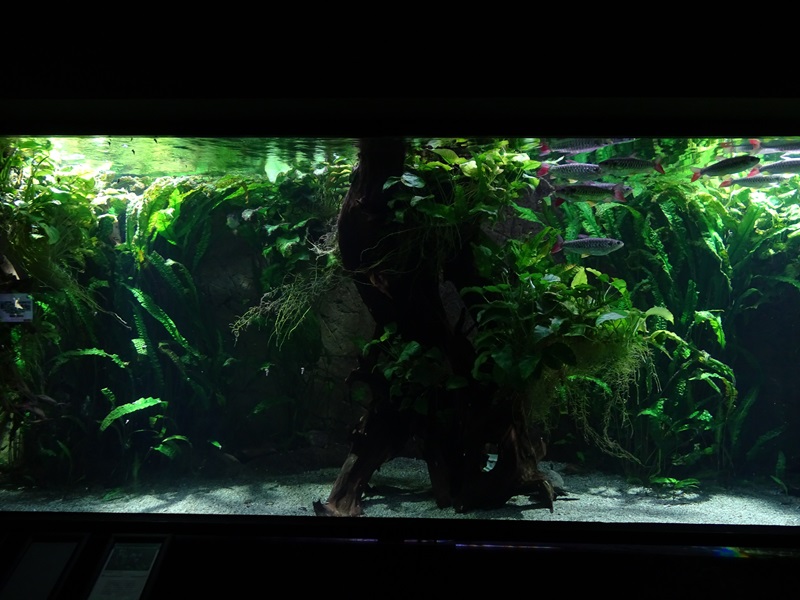
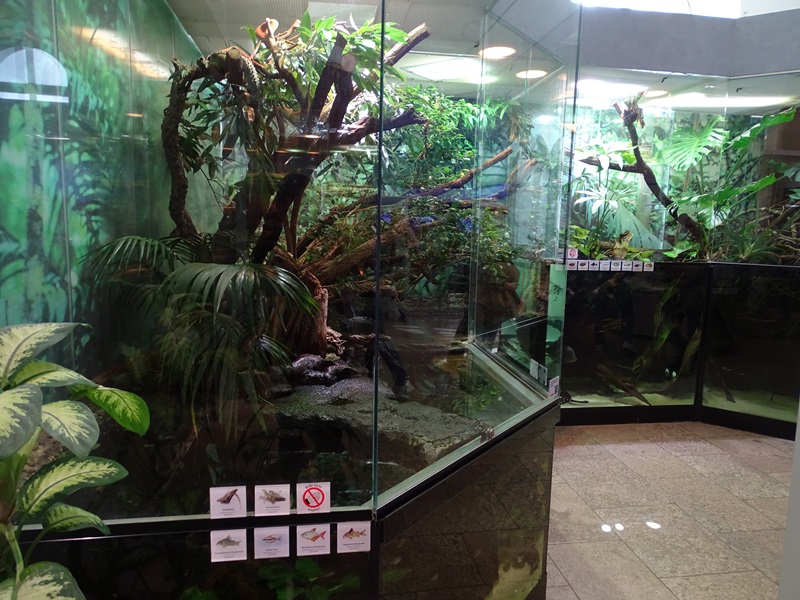
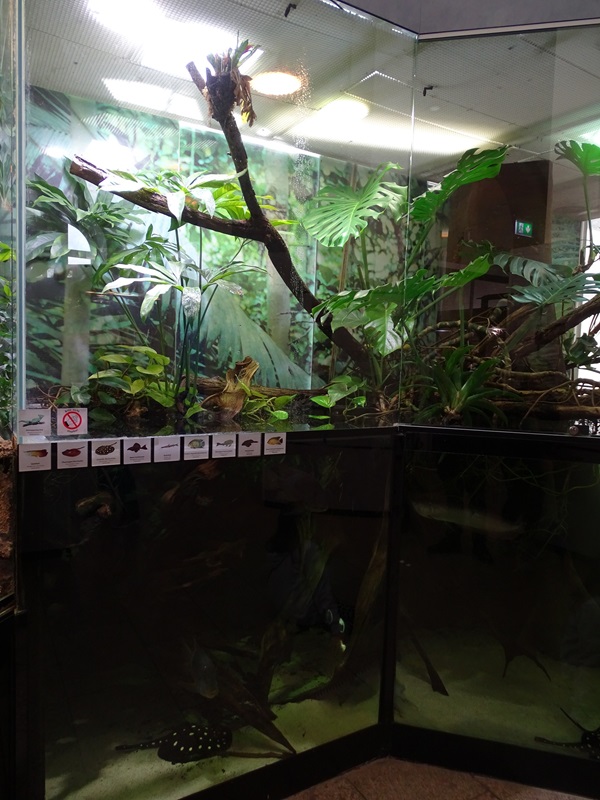
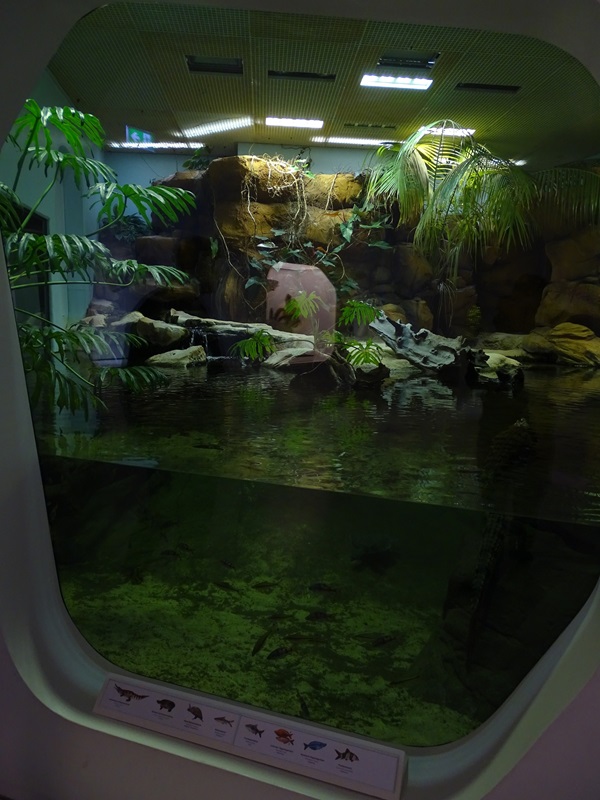
The large room I was in now had a tanks in all four of its corners, all with a certain geographical theme. The first corner consists of two slightly L-shaped palludaria for South-American lizards and fishes. The first one of these is home to caiman lizard, brown basilisk, emperor tetra, Blue-red Columbian tetra, Sterba’s corydoras and blue-spotted corydoras. The other has plumed basilisk, silver arowana, Ocellate river stingray, White-blotched river stingray, duckbill catfish, spotted sailfin suckermouth catfish, royal panaque, Colombian blue-eyed panaque, pearl cichlid and common severum. I liked both of these terraria and enjoyed the varied line-up of species in them.
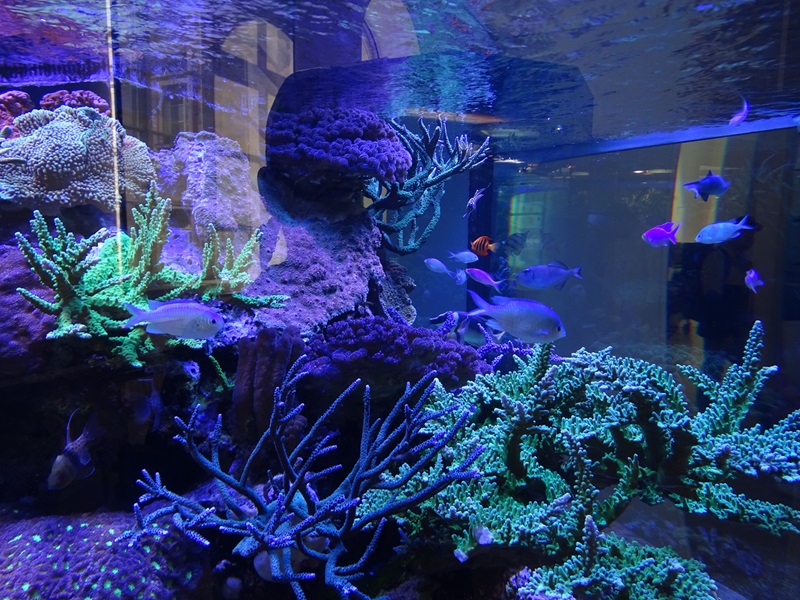
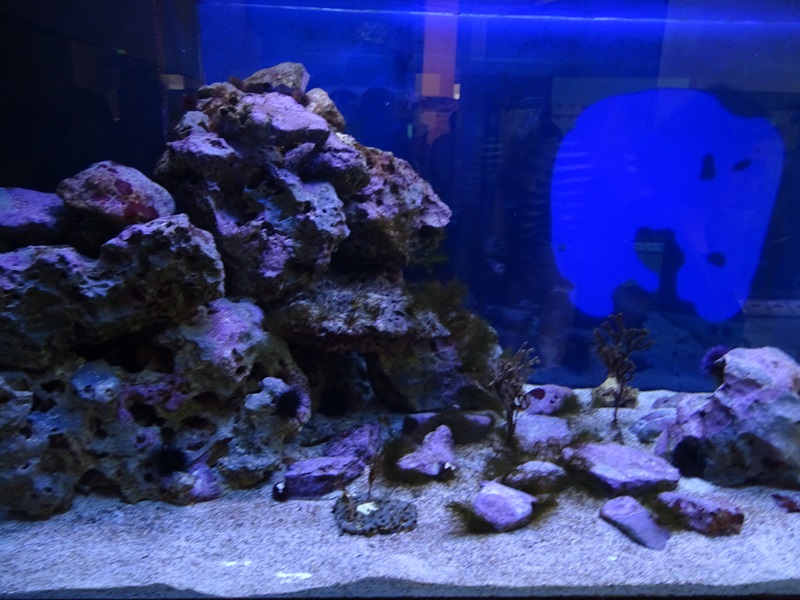
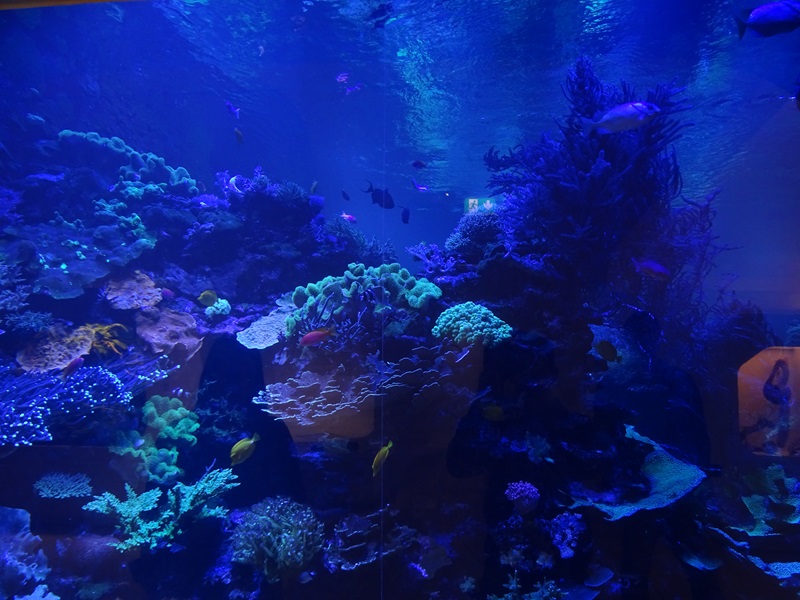
The second corner is themed around coral reefs, with an octagon-shaped tank in between two medium-sized squared tanks who together make an L-shape. All three tanks were were decorated nicely and well-lit, and had a lot of different species in them. Species in the octagon tank are Banggai cardinalfish, pyjama cardinalfish, purple queen anthias, vermiculate wrasse, yellowtail tang, elegant unicornfish, magnificent foxface, blue-green damsel, copperband butterflyfish, flame angelfish, blackfin dartfish, Picturesque dragonet, yellow devilfish*, pink-spotted watchman goby, gilded triggerfish and blood shrimp*. One of the other tanks has seven species; long-spine porcupinefish, radial firefish, broadbarred firefish, azure demoiselle, razorfish, red-knob starfish and cleaner shrimp. The final coral reef tank again has a large collection of fishes; zebra moray, stocky anthias, sunrise dottyback*, longsnout hawkfish, twospined angelfish, bluegirdled angelfish, regal angelfish, queen angelfish, clown anemonefish, foxface, powderblue tang, prickly leatherjacket, bristle-tail filefish*, Valentini sharpnose puffer and longhorn boxfish. Overall, a great set of tanks with some really nice species in them.
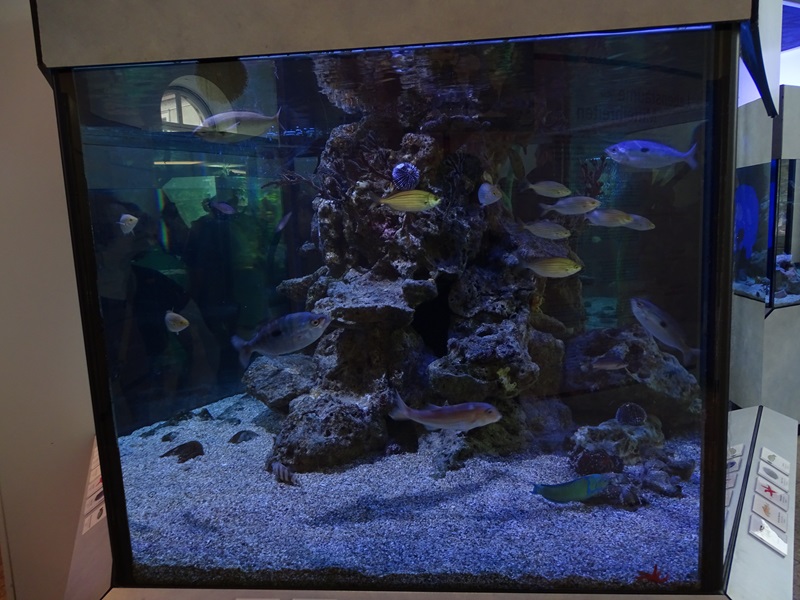
The third corner has an Atlantic theme, and again consists of two tanks that make an L-shape, with a hexagon-shaped tank in between them. It basically mirrors the coral reef corner in lay-out. The hexagon tank has violet sea urchins and red starfishes, as well as 9 fish species; small red scorpionfish, brown comber, striped red mullet, ornate wrasse, blacktail wrasse, tompot blenny* blotched picarel, goldline and wide-eyed flounder.
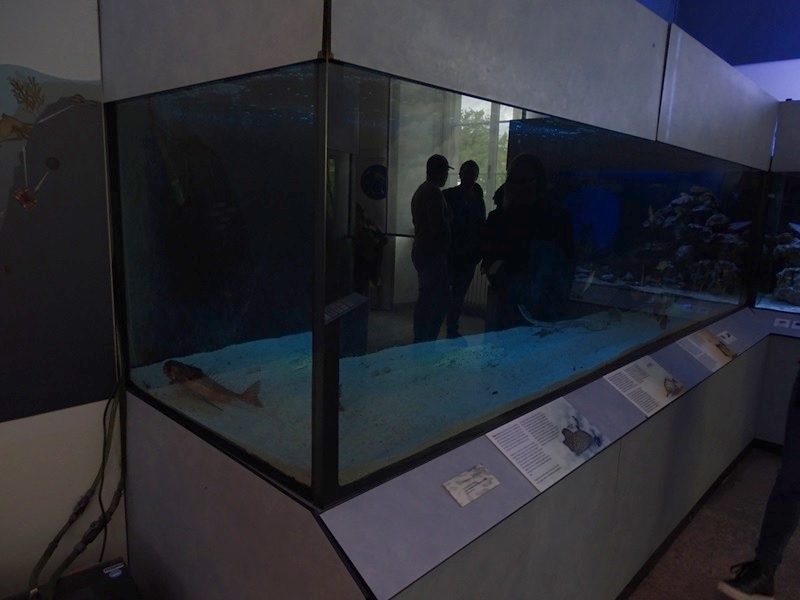
The first of the two square tanks consisted of just a sandy floor with a few small rocks in it, which makes sense as some of its inhabitants are spotted ray and flying gurnard. This tank is also home to red comb star, boarfish and longspine snipefish. This tank is darker than most others, which again makes sense considering the latter two species. The final tank in the Atlantic corner is home to a single, yet fascinating species; the common cuttlefish.
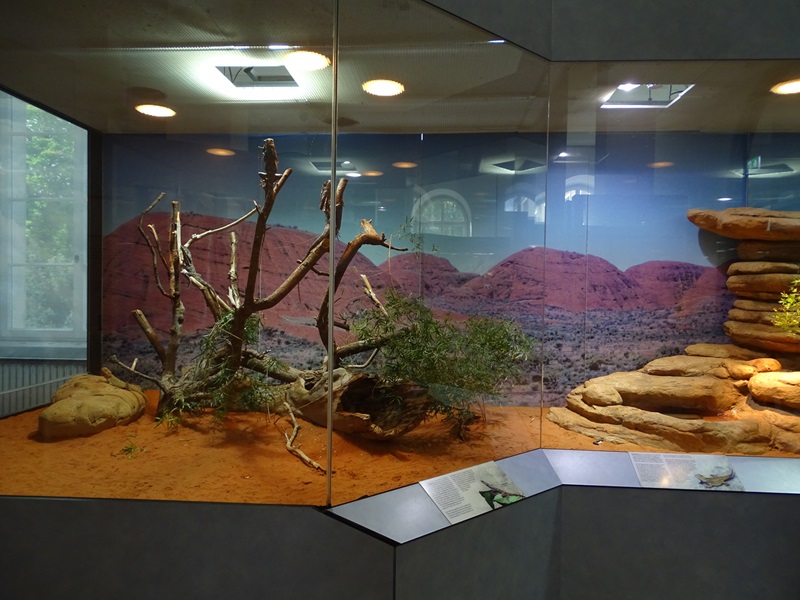
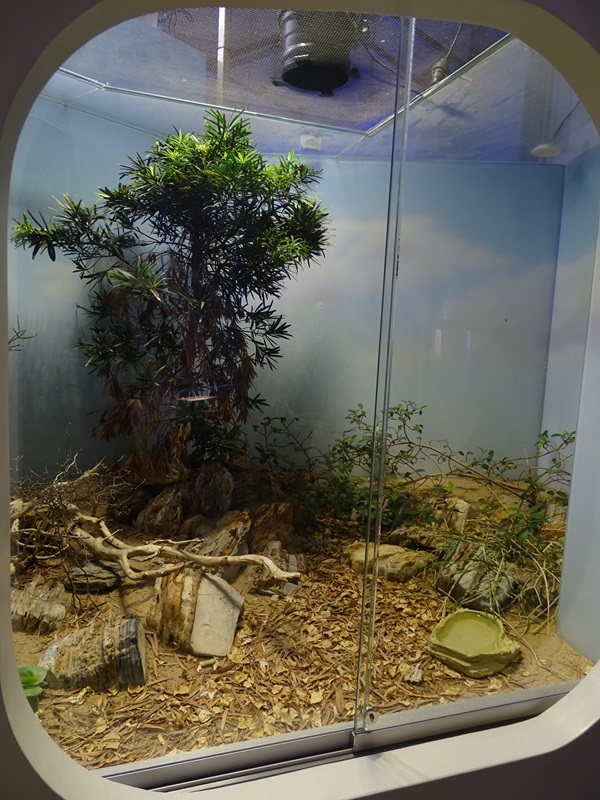
The final corner of this room is themed around the Australian desert, and consists of two terraria. One of them is a mixed enclosure for bearded dragons and frilled lizards (and Kimberly Rock monitors, although those were currently off display) and the other to a black-headed python.
Overall I really loved this part of the museum. I really like how different each corner was (tropical South-America, coral reefs, the Atlantic and the outback) and most tanks were really well done. I felt like this was already worth the entrance fee, but there is still lots more to see in the following room.
This room (which I believe was at some point added as an expansion) is large, and dominated by white walls, flooring and ceiling, and has multiple displays, tanks and terraria that really stand out because of how minimalistic the room itself is. The first thing I came across here was a large jellyfish tank (with spotted jellyfishes).
The next tank I looked at was the one with golden coral shrimps and shame-faced crabs (my first time seeing this species as I was unable to find one in the museum in Salzburg).
I continued walking around and encountered a lot more aquaria and terraria of different shapes and sizes, which I will list here;
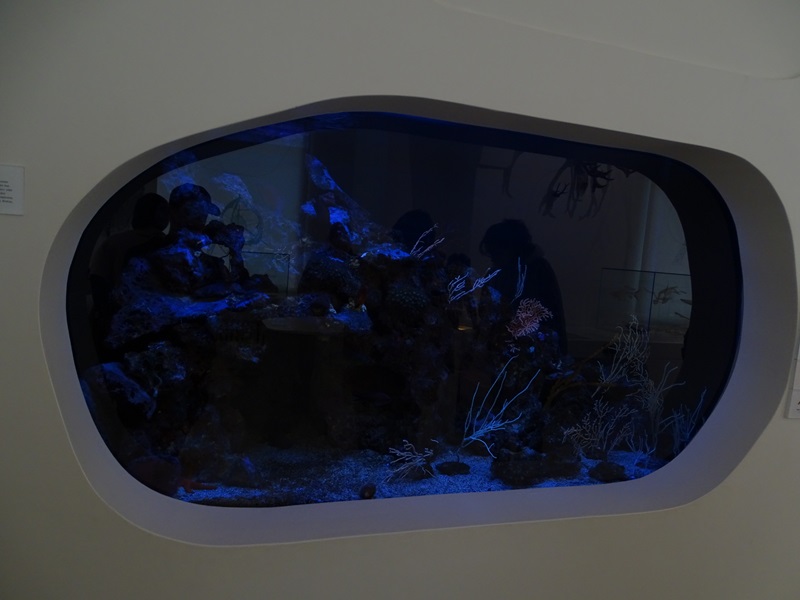
- A dark tropical reef tank for laced moray, which also houses yellow boxfish, clown triggerfish (surprisingly unsigned) lyretail anthias, blue chromis, orange-tipped bristletooth, japan surgeonfish, copperband butterflyfish, midas blenny, royal gramma and blackcap basslet*.
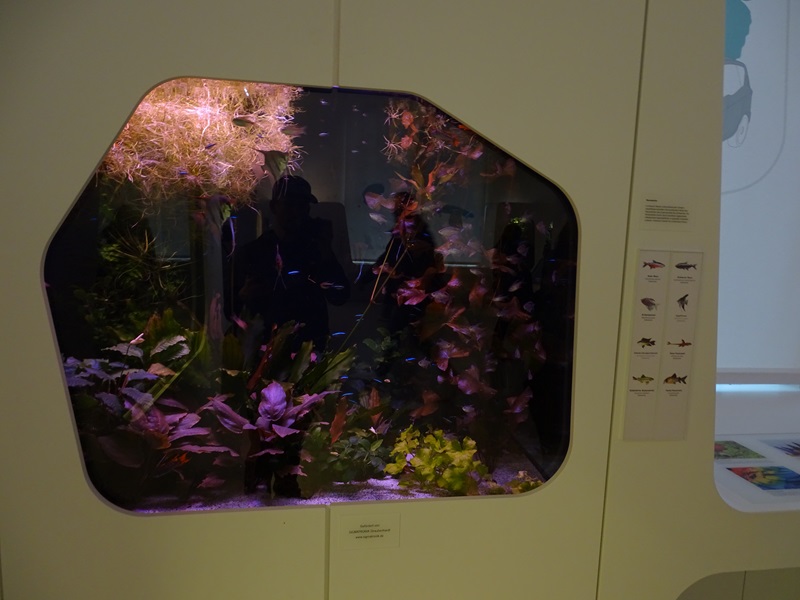
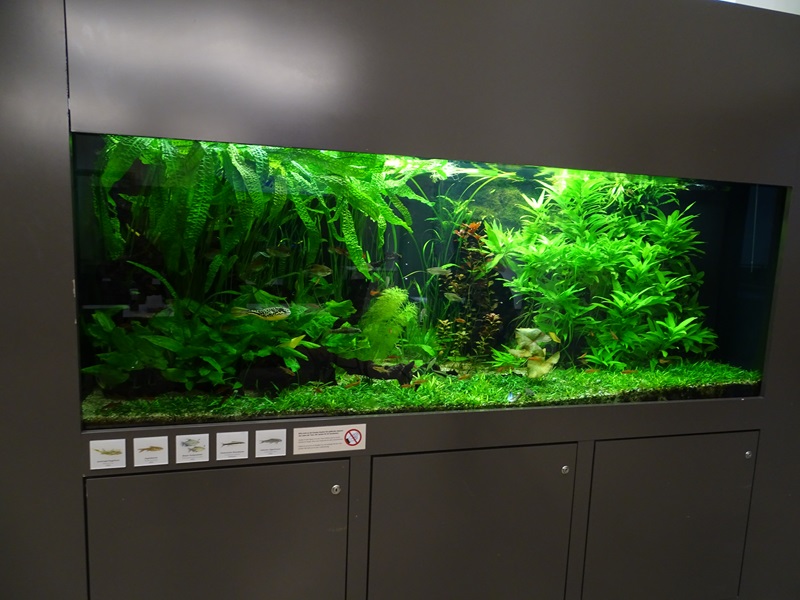
- A small tank for red neon blue-eye, celebes rainbow, golden otocinclus, tylomelania snails, Amano shrimp and bamboo shrimp.
- A terrarium for banded-legged golden orb-web spiders (Nephila senegalensis).
- A desert terrarium for a giant girdled lizard.
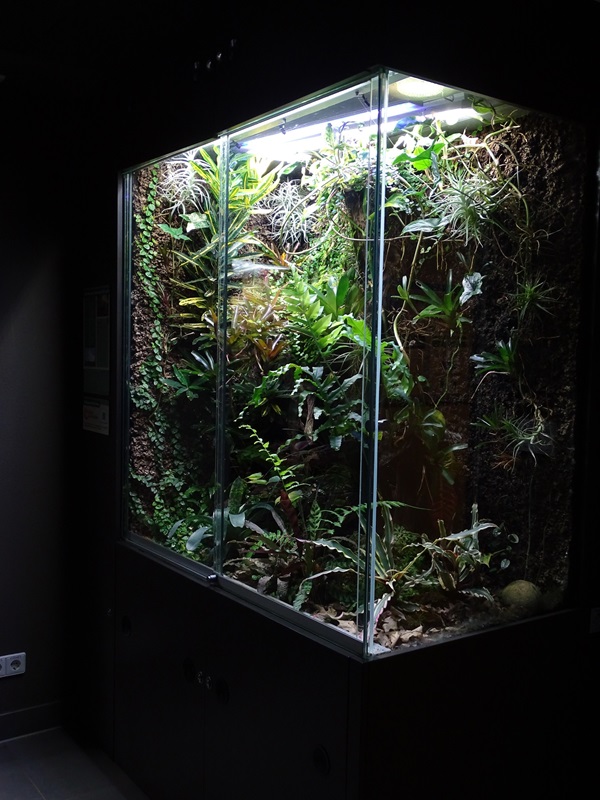
- A tropical terrarium for eye-lash vipers
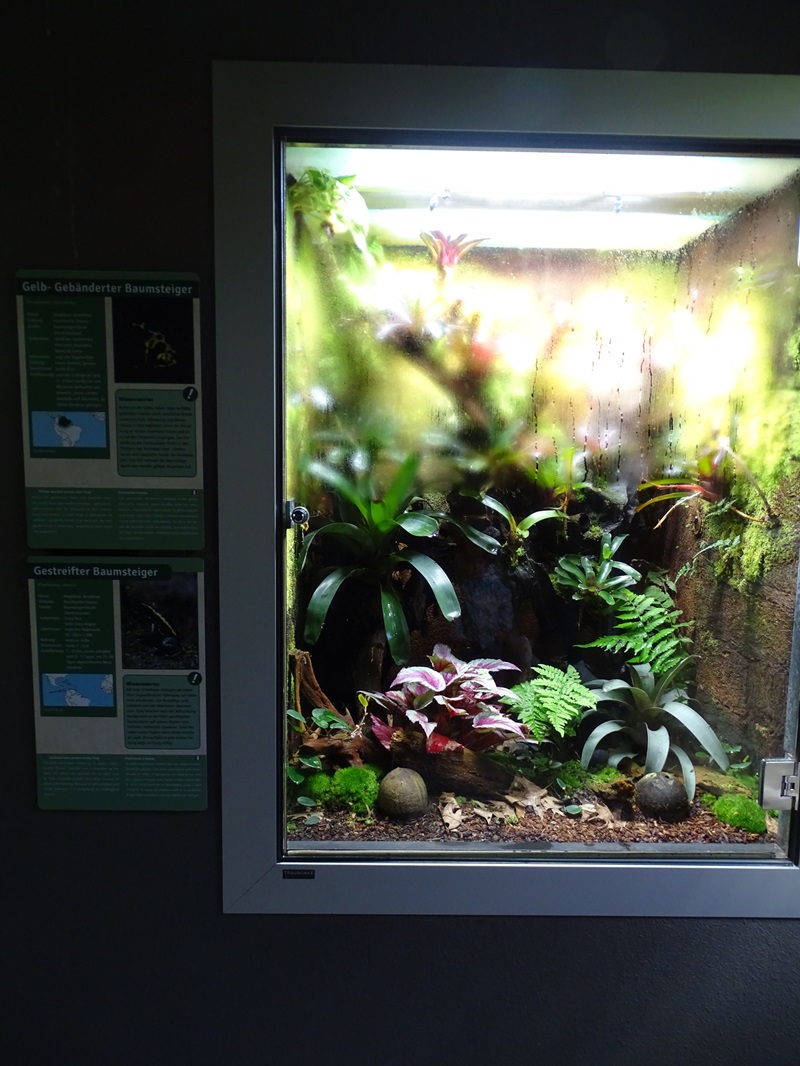
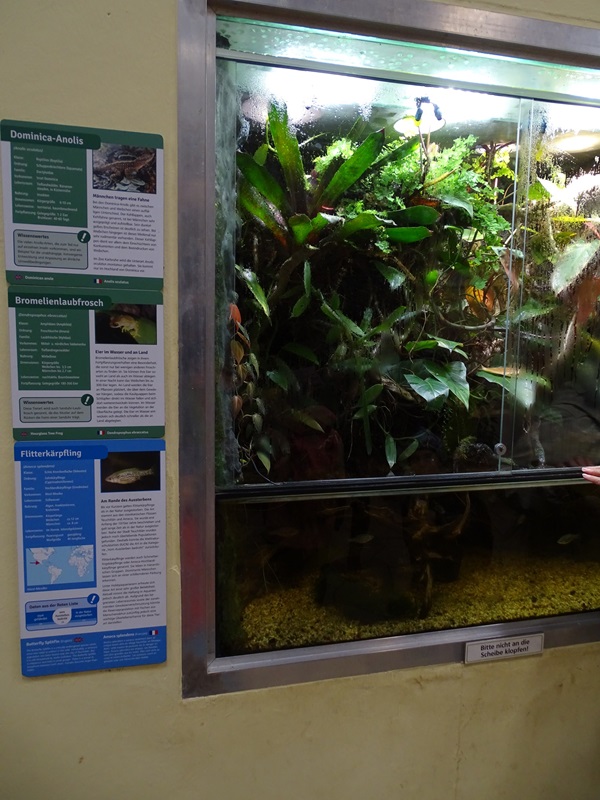
- A mixed species terrarium for Hispanolian green anole, splashback poison frog, three-striped poison frog*, terrible poison frog and Maranon poison frog.
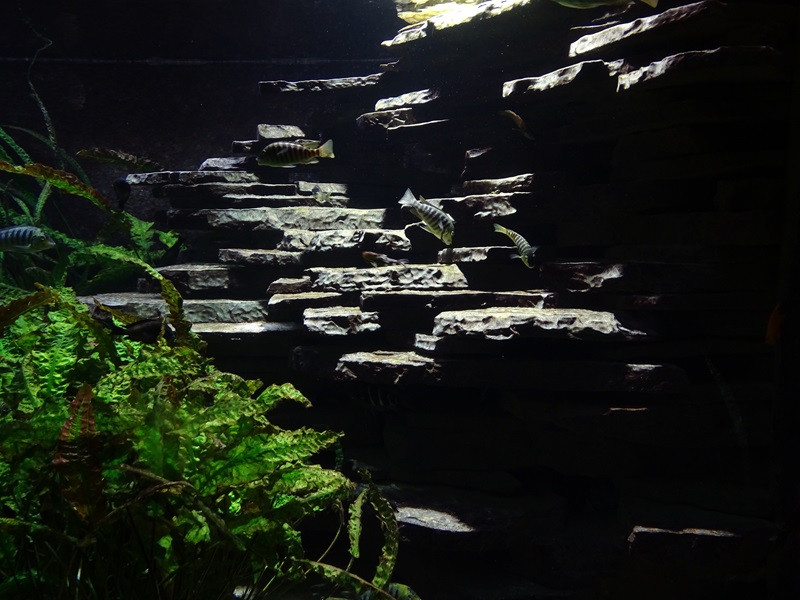
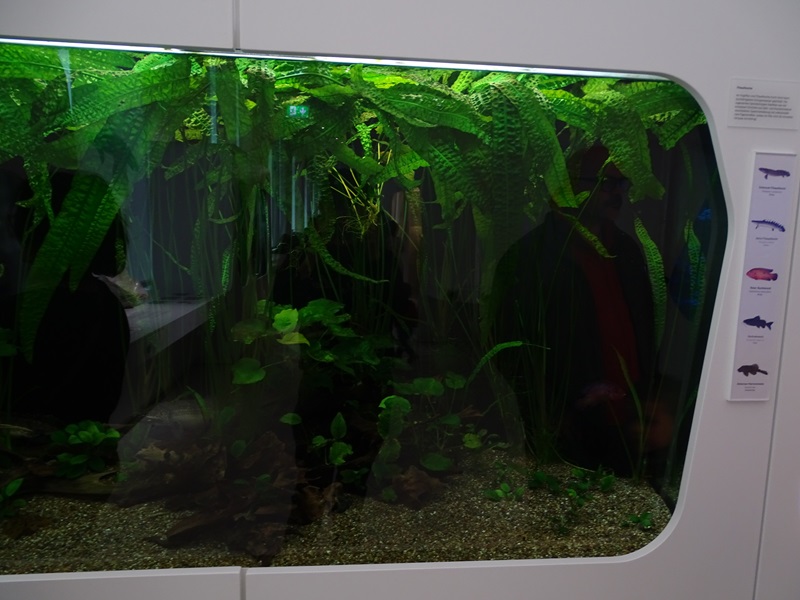
- An African-themed aquarium for armoured bichir, ornate bichir, jewel cichlid and angel squeaker.
- A terrarium for William’s electric blue geckos (which is huge considering the size of those animals)
- A terrarium for giant leaf frogs
- A mixed terrarium for greater Madagascar day gecko and panther chameleon
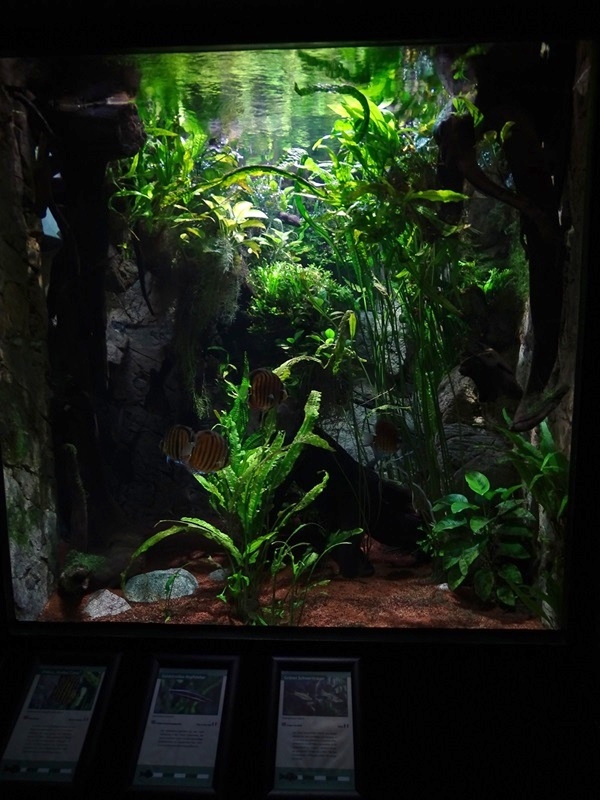
- A South-American themed tank with freshwater angelfish, cardinal tetra, black tetra, diamond tetra, cockatoo cichlid, darter characin*, red lizard catfish and panda corydoras
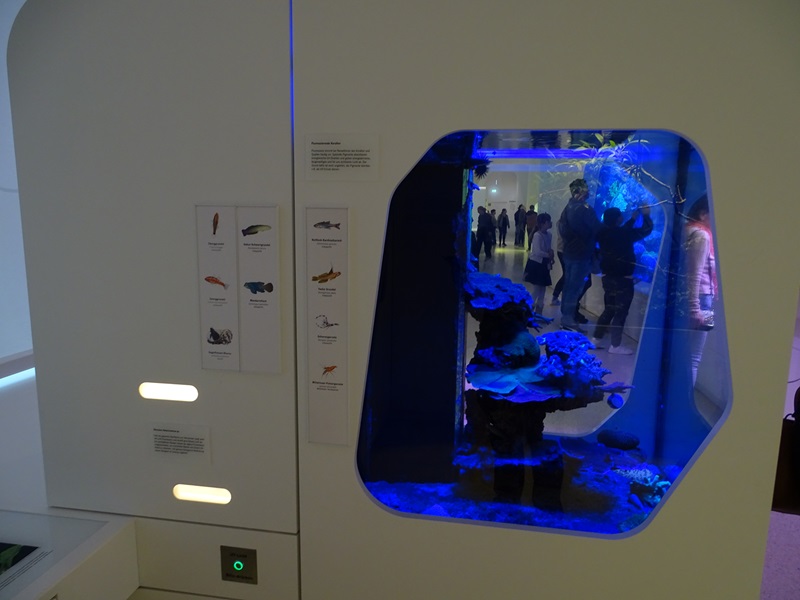
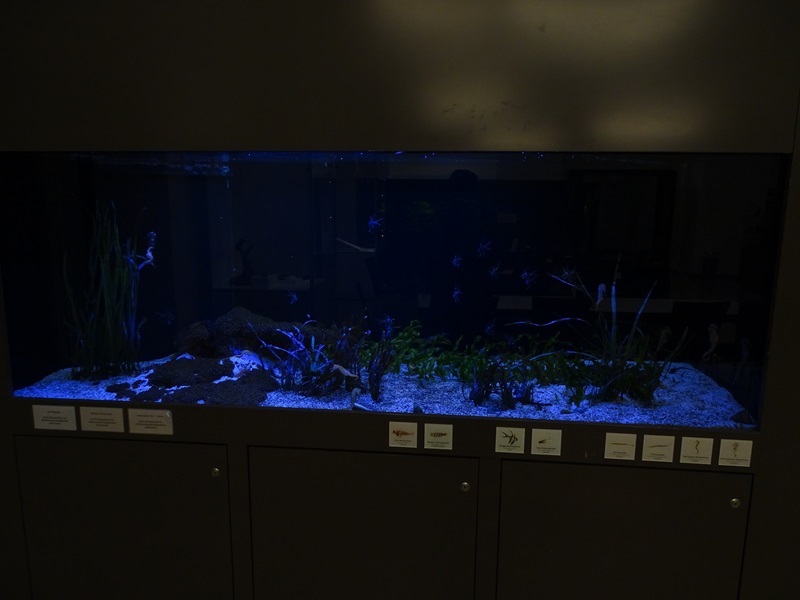
- A small tank with very blue lighting for a bunch of small species; Blue-striped cave goby, red-spotted dwarfgoby*, Orange-striped shrimpgoby, sailfin blenny, mandarinfish, elegant firefish, red-spot cardinalfish*, banded coral shrimp and Lysmata seticaudata shrimp*. Also this was were I saw the second of only two unsigned fish species; bluestripe pipefish.
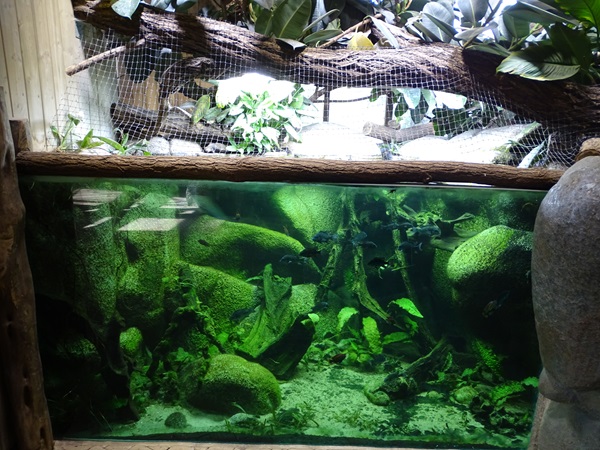
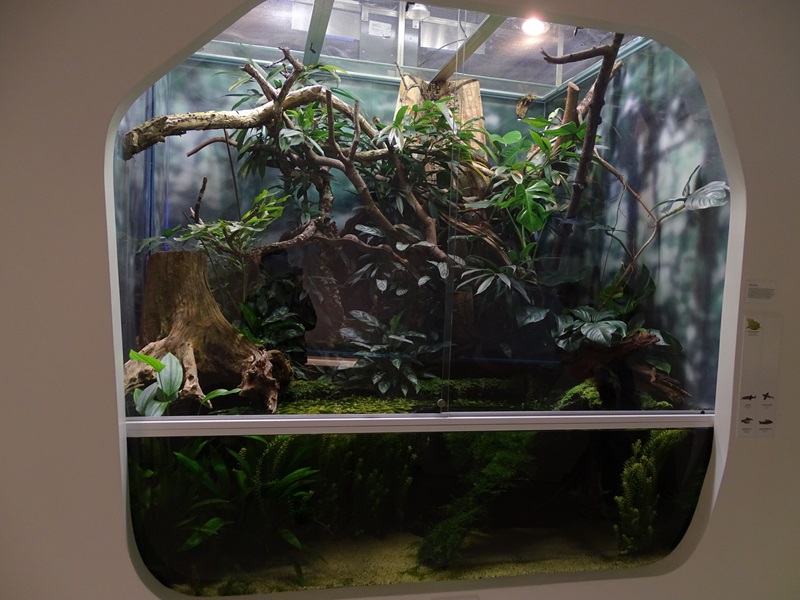
- A southeast Asian paludarium for blue-spotted tree monitor, burmese archerfish, Lake Kutubu rainbowfish, almorha loach* and panda garra.
- A gorgeous terrarium for a species of snake I had never seen before: banded rock rattlesnake.
- A paludarium with a geographically random selection of species (which is rare for this mueum); Green tree python and pearl gourami from Asia, gold laser corydoras from South America and elephant fish and freshwater butterflyfish from Africa.
- A dark tank for axolotls
- Another aquarium with very blue lighting is home to leaf scorpionfish, comet, peacock mantis shrimp, frogfish*, Xenia umbellata (soft coral) and Cerianthus (tube anenome)
- An Asian-themed paludarium with 2 snake and 3 fish species; rhinoceros rat snake, red-tailed rat snake, Indian sailfin barb, orangefin coppery barb, and the (obviously non-Asian) African knifefish.
- A Mediterranean -themed tank for a common octopus, as well as saddled seabream, cardinalfish, long-snouted wrasse and Mediterranean red seastar
- Another Mediterranean-themed aquarium swallowtail seaperch, cardinalfish, common damselfish, axillary wrasse*, ocellated wrasse*, golden goby*, red sea squirt, Prideaux’ hermit crab, smooth brittle star, smooth sea star, black sea urchin, rough star shell, Protula tubularia (tubeworm) and Mediterranean fanworm.
- A terrarium for goliath bird-eating spider
- A very dark aquarium for eyelight fishes, located in a dark room behind some curtains to block out any lights.
(due to the 20 photo limit I was not able to include photographs of everything, but you can find the rest in de gallery)
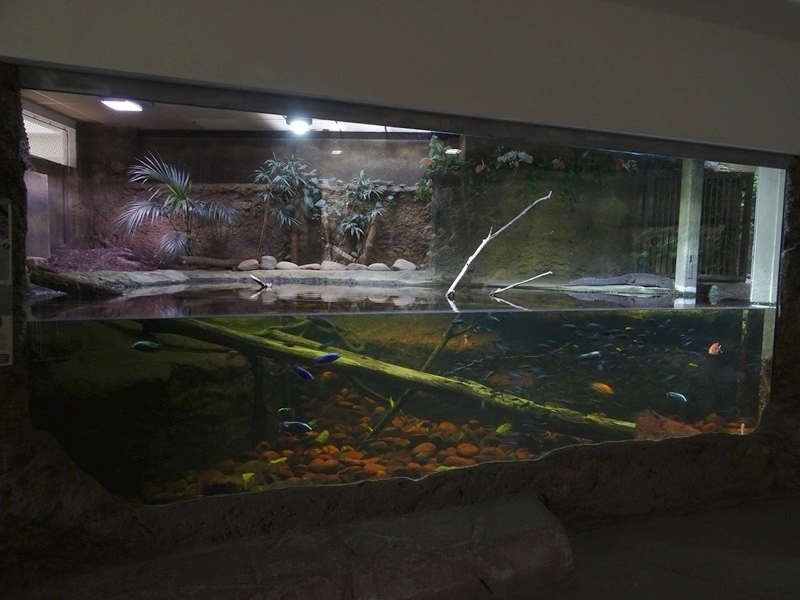
There are two enclosures I have not mentioned yet. In the back of this hall is a large and beautiful paludarium for Australian freshwater crocodiles. The enclosure has no less than 4 viewing windows, giving the opportunity to see the crocodiles from any angle wether they are on land or in the water. Besides the crocs, this enclosure is also home to pig-nosed turtle, red-bellied short-necked turtle, red line torpedo barb, Lake Kutubu rainbowfish, red rainbowfish, arulius barb and clown loach.
In the middle of the room is the largest tank of the museum, a beautiful coral reef tank. This tank has a viewing window on all four sides, but its impossible to see the tank in its entirety from any of these. This means the fishes will appear and disappear into and from sight, making it quite a fun challenge to try and spot as many as possible. The species line-up of this tank is impressive; blacktip reef shark, bluespotted ribbontail ray, pinecone soldierfish, two-spot basslet, square-spot fairy basslet, orchid dottyback*, dark-banded fusilier, bicolor goatfish, copperband butterflyfish, regal angelfish, whitetail damselfish, Allens damsel, blackbar chromis, orange anemonefish, bluestreak cleaner wrasse, tail-spot wrasse*, moon wrasse, Klunzinger’s wrasse, canary wrasse, canarytop wrasse, checkerboard wrasse, sixline wrasse, yellowtail coris, green birdmouth wrasse, yellow tang, Desjardin’s sailfin tang, palette surgeonfish, orangespot surgeonfish, white-freckled surgeonfish, doubleband surgeonfish, elegant unicornfish, bignose unicornfish, barred spinefoot, orange-spotted spinefoot, magnificent foxface, red-toothed triggerfish, Indian triggerfish* and pink-tailed triggerfish.
By now, I had seen most of it’s animal collection. However, I had previously been informed there are two additional tanks in the Africa room on the second floor, so I made my way up there. Here I encountered a really nice tank for sea horses, which was themed as a sea grass bed. Besides two species of sea horses, Barbour’s and tiger-tailed, this tank was also home to two species of pipefishes (banded and yellow-banded), Banggai cardinalfish, fire goby*, starry dragonet and gorgeous prawn-goby. On the other side of the room is an equally nice freshwater tank with mostly African species; giant freshwater pufferfish, African banded barb, congo tetra, stone roller and gray flying fox.
Next to the Africa room is the invertabrates room, which has a variety of insects and other bugs. I did however not have time left to visit this, as closing time was nearing fast. I took a quick look at the tank for great diving beetle, but skipped the rest.
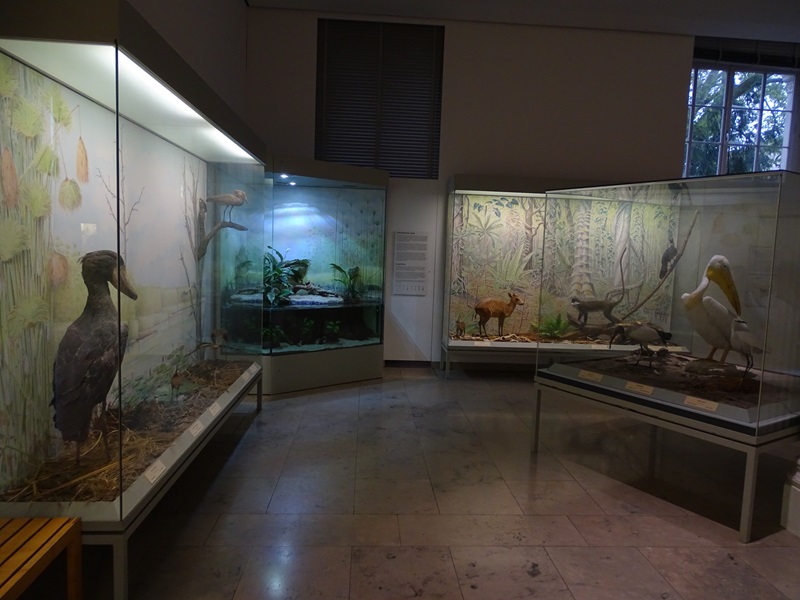
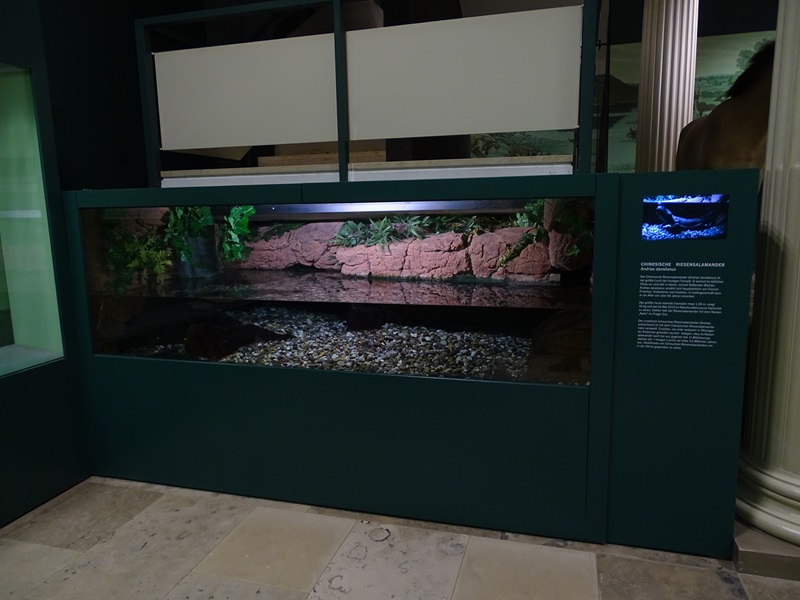
There was yet to more see; I knew the museum is home to Chinese giant salamander. I knew this tank was somewhat hidden underneath a staircase, but since this museum has lots of those, I asked directions from a staff member. On my way to the right staircase, I passed an expansion of the Africa room, with some taxidermied animals (ranging from striped hyena and duiker to shoebill and great blue turaco) as well as living ones; in this room are a tank for African lungfish (which I did not find) and a terrarium for Egyptian spiny-tailed lizard. Back on the ground floor, I found the really nice giant salamander tank, but was disappointed to discover the animal was a no-show. From here I walked through a room with some displays (fossils, sculptures) about prehistoric life before finding myself back at the entrance/exit.
This museum defenitely exceeded my expectations. There is a lot to see and I kinda wish I left the zoo a bit earlier so I would have been able to see the rest. The animal collection is really interesting and varied; the aquarium/terrarium section of the zoo would make for an excellent attraction seperate from the museum. Species wise, it is home to both the crowd pleasers (sharks, crocodiles, sea horses, octopus, ‘nemo’) and rarities (saw quite a few new species here). The terraria, paludaria and aquaria were mostly really well done; some of them were basic but decent, while others were beautifully landschaped. None were bad. I loved how the signage was nearly completely up-to-date, a rarity in aquaria! And all that for an entrance fee of 5 euros! I would recommend anyone visiting Karlsruhe to pay a visit to this museum, especially as it’s very easily combined with the Zoo!
Next up: Tierpark Oberwald