
What about wolves? I know the UK holds several species but I've never heard of there being many in the UK. especially maned wolves! Could someone disclose this info for me thanks?!

Suggest you check zootierliste. Although Maned Wolf aren't as common as they were a few years ago (Edinburgh, rscc, Port Lympne & others no longer having them Colchester & a few others longer ago), 10 UK holders are still listed.What about wolves? I know the UK holds several species but I've never heard of there being many in the UK. especially maned wolves! Could someone disclose this info for me thanks?!
Thank you Pip!Suggest you check zootierliste. Although Maned Wolf aren't as common as they were a few years ago (Edinburgh, rscc, Port Lympne & others no longer having them Colchester & a few others longer ago), 10 UK holders are still listed.
Sadly gone from Edinburgh a few years ago, along with many other carnivores that disappeared from there between my first visit in 2009 and 2nd in 2015.Pretty confident I've seen maned wolves recently at Exmoor, Paignton, Hamerton and Banham. Edinburghs were the first maned wolves I'd ever seen... I remember it well.

Sadly gone from Edinburgh a few years ago, along with many other carnivores that disappeared from there between my first visit in 2009 and 2nd in 2015.
I think all 4 you list had them in 2007, Port Lympne lost there's soon after.They had gone from Colchester, Chester, London and Dudley by then, all since 2000. Shepreth got theirs around 2010.Yes I know - I was just saying they were the first I'd seen - and I think that was in about 2007. I don't know how many other collections held them at the time.

 the only canid species which is liable to suffer this fate in the coming years is the Black-backed Jackal; the population is extremely elderly and effectively off-display at both collections holding the species - although if one is lucky it is possible to spot the remaining individuals in their enclosure at Hamerton - and I think the odds of any other collections going into the species are low.
 DSC_0646 by Daysleeper40, on Flickr
A species that TLD missed from his list of ones that might disappear soon is the St Vincent amazon. I went to Hayle this week with the principal aim of photographing this old male: I think he's the last one in the UK. He's also one of the largest and, in my opinion, the most beautiful parrots in the country.
Inca is still alive, last I heard - but is extremely geriatric. Can't be long now, surely......
Due to the closure of RSCC, we are now once again down to a single Echidna in the UK - the old fellow at Paignton is still chugging along and when I last saw him in December 2016 seemed as active as ever
Not too long after I posted this, Chester Zoo went into the Northern Luzon species, which eventually went on-display in autumn 2016.
Taking into consideration the ages of the individuals concerned, breeding successes and other changes in the collections holding the species I listed, and being a little *less* pessimistic than I was previously, I would guess that the likeliest species of those mentioned above to be lost from the UK in the coming year would be the following:
Mona Monkey - only a single geriatric individual held at the Welsh Ape/Monkey Sanctuary, and by all accounts too infirm to display. May already be deceased.
Bolivian Night Monkey - as noted above, Tropical World holds only a single geriatric individual.
Southern Aardwolf - the last individual in Europe is getting pretty old; I believe he was born in 1999 and as such is approaching the lifespan record for the species - I think the only two individuals to have reached a higher age were his mother, and the last geriatric male at Twycross.
Ethiopian Eagle Owl - the last individual in Europe - held at Rodbaston since the closure of the WOT - is now off-display, extremely old and increasingly infirm.
Mitred Surili - a small handful of individuals are still held at Howletts; however, given the age of the individuals and the tendency of the collection to shed oddities lately, I think they are reasonably likely to disappear from the UK and thus Europe.


The Ethiopian eagle owl, as I understand it from a member of staff in the Owl Talk the Owl trust was in talks with the Ethiopian government about bringing over a female for breeding purposes and the talks were in an advanced stage.
The Ethiopian eagle owl, as I understand it from a member of staff in the Owl Talk the Owl trust was in talks with the Ethiopian government about bringing over a female for breeding purposes and the talks were in an advanced stage.


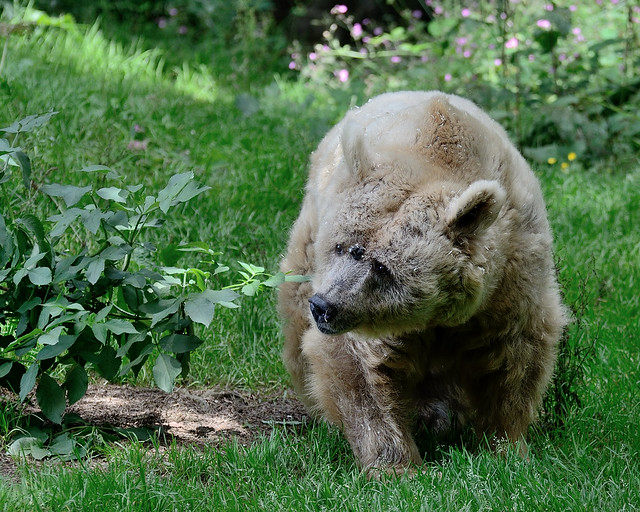
Syrian Brown Bear? Old Fudge was looking very rickety when we visited Dartmoor last year...


Axe Valley have gone into them fairly recently@Panthera1981: I'm no expert on British zoos but if we follow Zootierliste, 6 collections (including Hamerton) keep jaguarundis

