Walk through or immersion enclosures

Carl Jones

Well-Known Member
10+ year member
Can the zoo history buffs give me some background on the development of walk through enclosures. They are common today although when I was a boy they were very much a novelty. When were the first ones in UK and globally? Also when was the first walk through aviary, first walk through lemur enclosure etc.?
 
I think the earliest walk-through enclosures would be pens for pinioned waterfowl, like the ones at Slimbridge and the other WWT centres visitors, which must be older than the earliest zoo: according to Wikipedia there have been pelicans in St James's Park since 1664. I would imagine that another of the early types of zoo walk-through would be the 'Pets Corner' type of exhibit, based on a farmyard.
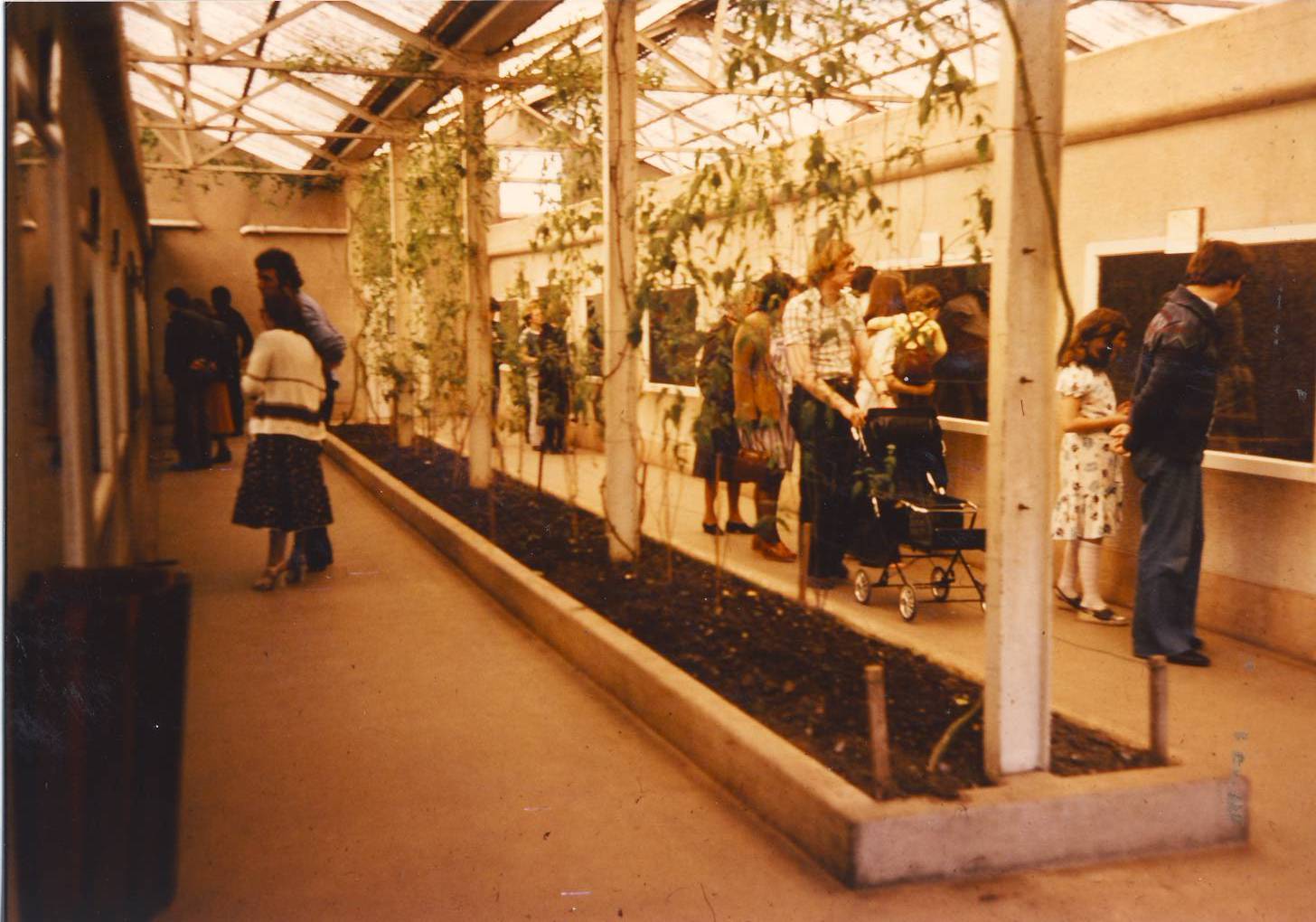
However in terms of a proper modern zoo exhibit, the Tropical House at Chester (now called the Tropical Realm) was the first walk-through with free-flying birds that I saw. In answer to a question about the opening of the Tropical House at Chester in another thread, bongorob provided the date:-
13th June 1964, which was the 30th Anniversary of the founding of the North of England Zoological society.
I'm not sure when the Tropical House at Slimbridge was built, but that may have be of similar age. However I think that the principle was established previously in the free-flight hall of the Bird House in Frankfurt in 1962, and there may be earlier examples in Europe or the USA.
The oldest walk-through outdoor aviary in the UK is said to be the Snowdon Aviary at Regent's Park, which was opened in 1965.
The first British walk-through mammal enclosure that I remember is the Lemur Wood at Blackpool which was opened in 1999, but I suspect that there may be older examples in the UK and there certainly are in Europe. I remember walking, rather nervously, through the colony of Tonkean macaques at Thoiry near Paris in 1972.
 
The first British walk-through mammal enclosure that I remember is the Lemur Wood at Blackpool which was opened in 1999, but I suspect that there may be older examples in the UK and there certainly are in Europe. I remember walking, rather nervously, through the colony of Tonkean macaques at Thoiry near Paris in 1972.

Interesting, the founder of Apenheul mentioned he was influenced by some place in the UK with free-ranging woolly monkeys, which must have been in the 1960ies. He himself established Apenheul in 1971 with free-ranging monkeys, which was quite a novelty at least in the Netherlands. In initial plans the gorilla enclosure would also be a walk-through one...
 
Interesting, the founder of Apenheul mentioned he was influenced by some place in the UK with free-ranging woolly monkeys, which must have been in the 1960ies. He himself established Apenheul in 1971 with free-ranging monkeys, which was quite a novelty at least in the Netherlands. In initial plans the gorilla enclosure would also be a walk-through one...

That would be Looe Woolly Monkey Sanctuary.
 
However I think that the principle was established previously in the free-flight hall of the Bird House in Frankfurt in 1962, and there may be earlier examples in Europe or the USA.

The Humming Bird House at London Zoo was converted into a walk through exhibit in 1960 with no barriers between the visitors and birds; although on a much smaller scale, this certainly predated the Tropical House at Chester and the free-flight hall in Frankfurt.

(The building was much older; originally being built as a Tortoise House in 1897.)
 
In the book Reared in Chester Zoo - The story of June Mottershead by Janice Madden, the map of the zoo dated 1931 shows a walk through aviary. This stood just to the north of the current Roman Garden.
 
Interesting, the founder of Apenheul mentioned he was influenced by some place in the UK with free-ranging woolly monkeys, which must have been in the 1960ies. He himself established Apenheul in 1971 with free-ranging monkeys, which was quite a novelty at least in the Netherlands. In initial plans the gorilla enclosure would also be a walk-through one...

That would be Looe Woolly Monkey Sanctuary.

Yes, I should have thought of that one. I never visited, but I read several of Len Williams' books. He founded the sanctuary, as well being a guitarist although not as well-known as his son John Williams. He called one of his woollies 'Django' after his favourite guitarist.

The Humming Bird House at London Zoo was converted into a walk through exhibit in 1960 with no barriers between the visitors and birds; although on a much smaller scale, this certainly predated the Tropical House at Chester and the free-flight hall in Frankfurt.
(The building was much older; originally being built as a Tortoise House in 1897.)

I hadn't realised that the old building was converted for hummingbirds etc at such an early date. Which reminds me that when the Small Mammal House was opened at Chester, also in 1960 (relying on bongorob for the date again), I remember free-flying hummingbirds in there - which seems quite amazing now. See this thread Chester Zoo - Chester Zoo Small Mammal House and the photo below.

Also in the early '60s Len Hill's original Birdland at Bourton-on-the-Water had at least one walk-through tropical house. My guidebook from my first visit in 1970 or 71 shows 3 tropical houses, but I think only the largest was a walk-through: I remember a Jamaican streamer tail hummingbird trying to pull a wispy hair from my father's head, presumably to add to its nest.

In the book Reared in Chester Zoo - The story of June Mottershead by Janice Madden, the map of the zoo dated 1931 shows a walk through aviary. This stood just to the north of the current Roman Garden.

I can't remember that one!
 
I hadn't realised that the old building was converted for hummingbirds etc at such an early date.

London Zoo's old Tortoise House was converted for hummingbirds back in the 1930s but wasn't turned into a walk through exhibit, with no barriers separating birds and visitors, until 1960.
 
I think that the first bat walkthrough in UK must have been at Chester?

It is interesting how walk through enclosures have developed. I assume the trend will continue and it is worth considering how far it can be developed. Of course walk through enclosures are different to keeping animals at liberty and perhaps that could be a separate thread.

The development of walk through exhibits is worthy of an article in a zoo history journal but we need to dig down and get more details.
 
Of course walk through enclosures are different to keeping animals at liberty and perhaps that could be a separate thread.

it could be argued that free-ranging animals in zoos (at Whipsnade, for example) are a kind of walk through exhibit with the exhibit occupying the whole zoo.

Whipsnade has had free-ranging Chinese water deer, Reeves' muntjac and Bennett's wallabies since it opened in 1931 (although the muntjac are now greatly reduced in numbers).

Whipsnades's free-ranging mara are a somewhat later addition although they have now been there for many decades
 
We must not forget the walk-through in reverse, Edinburgh's Penguin Parade when the birds walk through the people :)
 
I think walk-through exhibits are older than zoos and never stopped, as nobility maintained deer and other animals in its parks for centuries.

Somebody on this forum referred to a book on history of zoological gardens, which should answer it. There is apparently a very good and very hard to get zoo book.
 
I think walk-through exhibits are older than zoos and never stopped, as nobility maintained deer and other animals in its parks for centuries.

Somebody on this forum referred to a book on history of zoological gardens, which should answer it. There is apparently a very good and very hard to get zoo book.

Yes, for example by 1845 there were birds flying freely in the Chatsworth Great Stove (conservatory)
The Great Stove, Chatsworth
 
Back
Top