Welt der Gifte Greifswald (Closed) Welt der Gifte Greifswald - News and Discussion (2017-2019)

Status
Not open for further replies.
Somebody gets it.
Yeah, Kakapo. Almost 800 species of cone snails have been reported so far, which hunt a variety of prey, may it be fish, other snails, annelids etc. So some are easier to feed than others. However, even though I'm well aware of some public aquaria and institutions that keep or have kept cone snails, I'm not aware of any cone snail species that has established itself so well in the aquatic trade and husbandry that I can obtain and maintain it easily within my financial limits. Therefore, my visitors have to do with touching the shells and listening to my explaination. Strangely enough, they appear to be fine with that...
 
Why are they expensive to feed? I've seen them being fed quite easily on pieces of squid.

And personally I'd be a lot more interested in watching live cone shells and seeing how they feed, than looking at just a bunch of empty sea-shells.

Oh, really? That surprises me a lot. I didn't knew that squid-feeding cones exist.
Of course a "normal" (as opposed to "zoo-nerd") visitor, also would like more to watch a live cone feeding than an empty shell (even despite the duller colours), but for see the snail feeding usually that means standing in front of it during hours or days until it find a prey...
 
which hunt a variety of prey, may it be fish, other snails, annelids etc.

Ah yes, I've forgot about the annelid-feeding species. Expensive to feed too (marine annelids can be purchased at bait shops, but a constant supply is not cheap).

There are, tough, some few species that can feed BOTH on fish, molluscs and annelids. These should be much easier to keep than most species, and maybe these are the ones that Chlidonias saw being fed on squid.
 
I made a short menu for various selected cones (based on my own species factsheets that I publish daily with my photos). Probably I was wrong thinking that there are urchin feeders somewhere - the four species groups are snail-eaters, fish-eaters, worm-eaters and generalists.

Conus amadis > Snails (maybe clams too?)
Conus arenatus > Polychetes (very occasionally fishes and hemichordates)
Conus aulicus > Snails
Conus bandanus > Snails
Conus californicus > Generalist feeder able to prey on fishes, worms and mollusks, and even carrion
Conus circumcisus > Fishes
Conus dusaveli > Snails
Conus ebraeus > Eunicid polychetes or nereidid polychetes depending of populations
Conus eburneus > Mainly polychetes, but can feed on fishes
Conus granum > Polychetes
Conus guanche > Polychetes
Conus hirasei > Polychetes
Conus leopardus > Polychetes
Conus litteratus > Polychetes
Conus marmoreus > Fishes
Conus neptunus > Polychetes
Conus obscurus > Fishes
Conus omaria > Snails
Conus pulcher > Generalist feeder able to prey on fishes, worms and mollusks
Conus purpurascens > Fishes
Conus spurius > Generalist feeder able to prey on fishes, worms and mollusks
Conus stercusmuscarum > Fishes
Conus striatus > Fishes (this is one of the three most venomous cones of the world with C. geographus and C. tulipa, that maybe is an interesting fact for Welt der Gifte)
Conus sulcocastaneus > Polychetes
Conus tessulatus > Polychetes
Conus textile > Snails
Conus vexillum > Eunicid polychetes
Conus viola > Polychetes
 
Before this thread is completely turned into a discussion about cone snail husbandry, I'd like to add a little update on WdG: just the other week, I was offered an exciting opportunity to move the exhibition to a larger, more accommodating location that would also allow for the aforementioned extension, including a poison garden, outdoor terraria for relevant native species and maybe a few more aquaria.
Let's see whether this will work out.
 
Before this thread is completely turned into a discussion about cone snail husbandry, I'd like to add a little update on WdG: just the other week, I was offered an exciting opportunity to move the exhibition to a larger, more accommodating location that would also allow for the aforementioned extension, including a poison garden, outdoor terraria for relevant native species and maybe a few more aquaria.
Let's see whether this will work out.
That sounds great. Land seems always desirable when building a zoo. I wish you good luck :3

Also can you tell me any poisonous plants other then hemlock?
 
Update: WdG is doing well; I bought a new marine tank to exhibit relevant toxic creatures of the sea and am currently organizing a public screeing of "Minutes to Die" at the University of Greifswald
However, looking for a decent suitable new venue for the planned extension is rather taxing. Too small, too old, too expensive, too remote; lacking necessary licences, parking lots, toilets, stairs etc etc...it's kinda surprising what kind of prices are demanded for even obvious dumps up here.

The "highlight" so far was the soon-to-be erstwhile renter of a possible location (a historical cellar in the old town of Stralsund). Right from the start, he appeared to take offence that the landlord had invited me in to take a look, and, boy, did he show it. I really tried to be polite and just bit my tongue. But then he asked me what I intended to do with the place. So I told him, and he let me know that he knew everything there is to know about keeping venomous reptiles. After all, he had kept a bearded dragon as a pet. Once. For a few months (poor critter). Don't get me wrong - bearded dragons can make wonderful pets if kept properly, and they are actually a tad bit venomous. But given all the attitude and nonsense the guy broadcasted, I couldn't keep up a straight face and had to smile. When he asked what I was smiling about, I told him that I now know how a pro Formula One driver must feel when a Yugo driver hands out advice on racing to him. I left soon afterwards; the cellar was too narrow, anyway. ^^
 
Cone snails that feed on molluscs are very easy to keep. My friend keeps one as a pet and it literally lives in the sump of his reef tank. Every few weeks he goes done to the rock pools to collect various snail species than he drops them in the sump for the cone snail to hunt and eat. It also gets along well with a breeding pair of dottybacks that were retired to his sump due to their aggression.
 
Today we celebrated our first anniversary of the "Welt der Gifte". The ladies baked delicious cakes and created luminiscent-green jelly-o while I warmed up frozen mice (to feed the snakes), fed the crickets (to feed them to the insectivorous critters) and prepared the tombola. I somehow failed at the latter, since most items were quickly won; maybe I should add more blanks next time. ^^
The visitors seemed to have a good time. Maybe mainly due to the free cakes and drinks...
 
My apologies for not posting here for a while. This year's very hot summer has been quite a challenge in regard to adequate temperature control. Despite that, attendance has been a lot higher than at the same time in 2017. The rate of tourists among the visitors in particular has increased considerably. Our customer survey revealed that said tourists highlighted the exhibition as a lovely diversion from the usual local touristic attractions. And they confirmed my previous suspicions that especially in the summer, evening openings are attractive for tourists who have had enough sun & beach time and are looking for something else.

35 five-star ratings on Facebook, 20 on Google and moving up from position #22 to #7 on the local Tripadvisor touristic attraction list for Greifswald is a motivating indicator for me that we're on the right track.

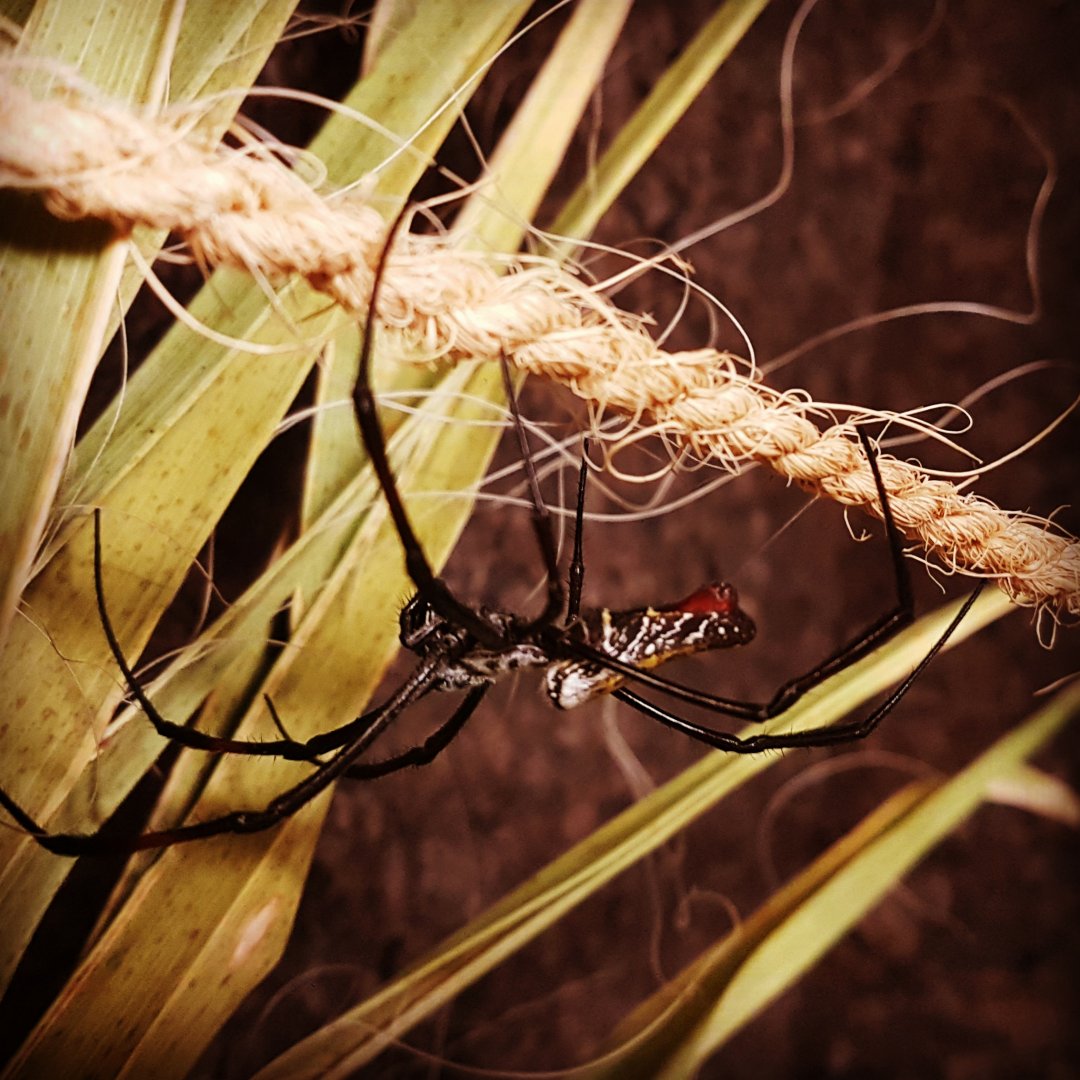
The Terraristika at Hamm is up in two weeks, and I'm tempted to go there to add some new exciting live additions to the exhibition. I've been offered a very nice adult female Nephila spider (which I consider to co-exhibit in the upper part of the gaboon viper exhibit) and I might be tempted to get roughskin newts (Taricha granulosa), even though it surprises me how expensive they have become.
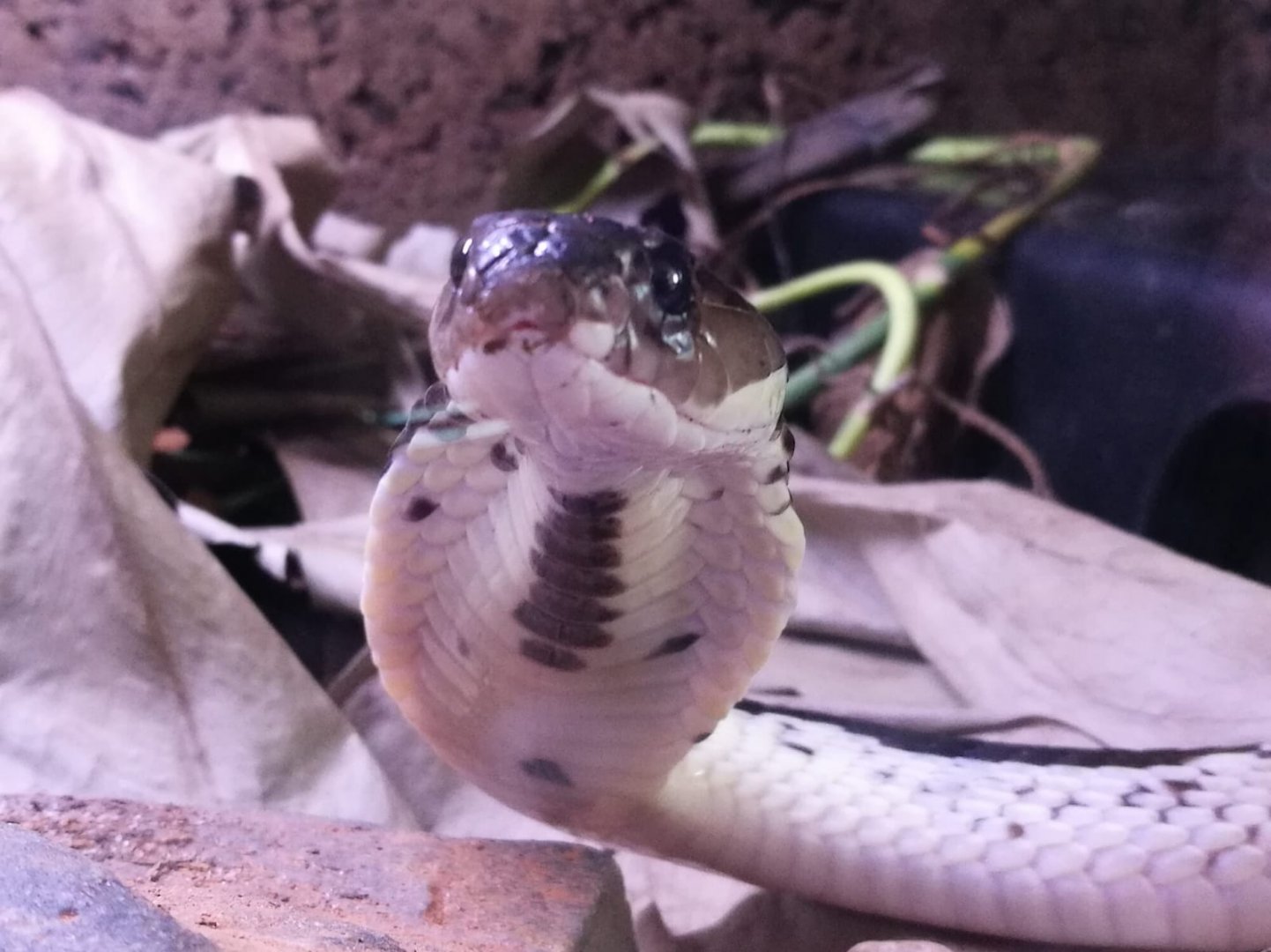
A confiscated lovely Indochinese spitting cobra (Naja siamensis) might also find its way to us from a private reptile shelter soon. The owner of the best local Thai massage parlour is contemplating to become the official sponsor of this snake once it arrives. Maybe we can develop a special massage offer for that occasion. ^^

The police commissariat of Rostock announced a special visit of the exhibition this september (planned to be filmed by the NDR), and the local zoo association is planning to send several zoo keeper trainees to me for a short security course.
All this underlines the necessity to find a larger venue for WdG - which is easily said, but not so easily put into practice. Thanks to the support of my family and friends and despite a troublesome work schedule, I intend to continue and extend the business operations of WdG in 2019.
 
A question I have been pondering for some time, and without getting into financial specifics, is when do you expect to become profitable? I'm quite interested in the start up costs of small businesses and that side of things.
 
The initial cost for obtaining the equipment, the exhibits, the animals etc. have been spread over years, if not decades, before establishing WdG. As for the running costs, I'm rather proud to say that in its current state, as a subsidiary occupation, I've been able to break even and in most months actually even make a profit. Whether this will also be the case in the planned future expansion has yet to be seen.
 
Today's participation of WdG in this year's "Greifswalder Kulturnacht" (= Greifswald's Annual Night of Culture) was a complete success. Originally planned to consist of three short special talks on (in)human poisoners, we had to add more tours to live up to the crowds. In the end, we had to kick out the visitors (in the most charming and polite way, of course) so that I can have at least some short rest before leaving tomorrow morning for Hamm. Where I'm going to pick up some fascinating newcomers.
 
Updated list of kept species:

Snakes
Agkistrodon contortix and A. taylori
Aspidelaps lubricus lubricus
Bitis gabonica
Cerastes cerastes
Crotalus basilicus
Crotalus cerberus
Crotalus ornatus
Crotalus pyrrhus
Crotalus vegrandis
Euprepiophis mandarinus
Heterodon nasicus
Lampropeltis hondurensis
Lampropeltis mexicana
Lampropeltis ruthveni
Lampropeltis mexicana x ruthveni
Lampropeltis splendida
Naja nivea
Naja siamensis
Oxyuranus microlepidotus
Pantherophis "lindheimeri"
Vipera ammodytes ammodytes
Vipera berus berus

Lizards
Heloderma suspectum

Amphibians
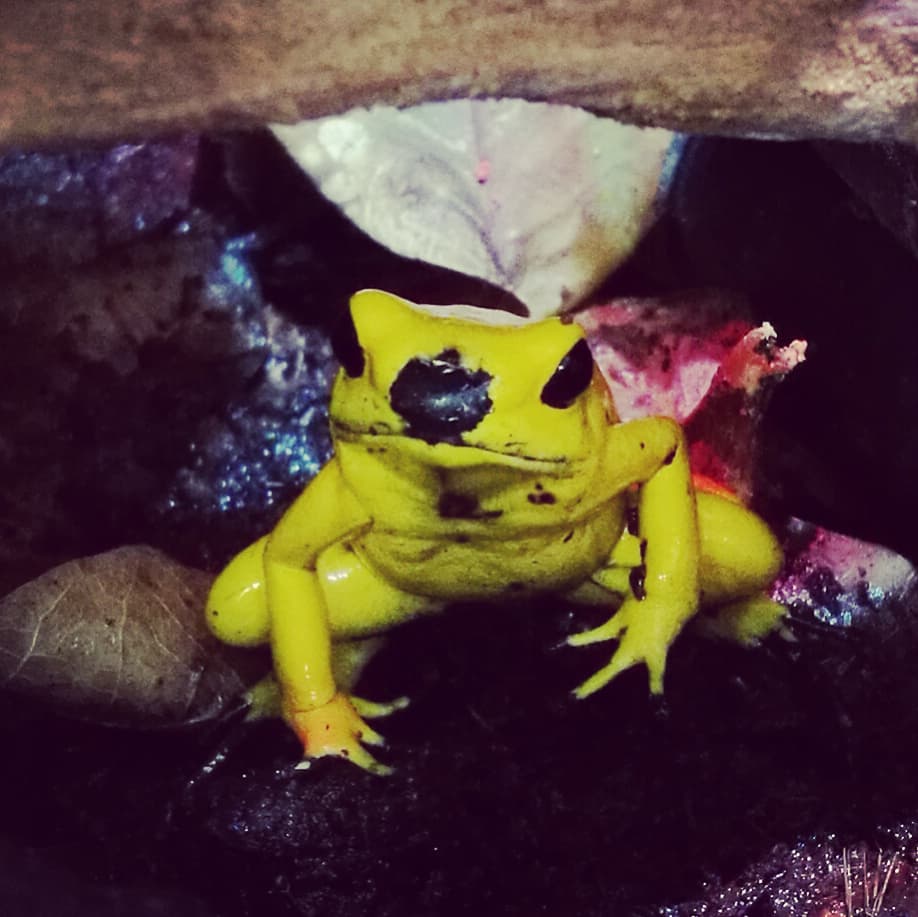
Dendrobates leucomelas
Incilius alvarius
Phyllobates terribilis
Pleurodeles nebulosus
Rhinella marina

Fish
Corydoras sterbai

Spiders
Latrodectus hasselti
Lasiodora parahybana
Loxosceles rufescens and laeta
Nephila inaurata madagascariensis
Psalmopoeus iriminia
Pterinochilus murinus
Sicarius terrosus

Scorpions
Androctonus australis
Hadrurus arizonensis
Hadogenes bicolor
Hadogenes troglodytes
Leiurus quinquestriatus
Parabuthus villosus

Insects
Platymeris biguttatus
 
Scorpions
Androctonus australis
Hadrurus arizonensis
Hadogenes bicolor
Hadogenes troglodytes
Leiurus quinquestriatus
Parabuthus villosus

Nice list of scorpions! At least in the Netherlands, very few collection go further than Pandinus imperator. Are there species in the list that are particularly challenging to keep? (I have no experience keeping scorpions beside said P. imperator)
 
Thank you. P. imperator is actually more and more replaced by Heterometrus sp. scorpions due to the first being a CITES species now and thus more expensive to acquire. Androctonus australis is really fast and Parabuthus villosus can shoot its venom, too; otherwise, lovely critters.
 
Status
Not open for further replies.
Back
Top