Squirrels in captivity

Only the body shot of J. de Greef will be taken in these collections, the others are from a member here who most certainly hasn't visited those collections..

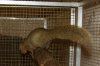
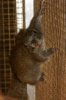
Indeed I haven't, but I have visited Plzen in 2010 which had Dremomys pernyi at the time. Many of their squirrels were off exhibit and not really labeled. It's possible I made a mistake, cause they also had Pere David's rock squirrel. By all means I want to get to the bottom of correct identification. I'll upload photos from two different species.
 

Attachments

  • IMG_0283.JPG
    IMG_0283.JPG
    90.3 KB · Views: 12
  • IMG_0981.JPG
    IMG_0981.JPG
    90.6 KB · Views: 11
I can only tell you which ones I've seen:
bangkanus: LA Zoo, PPZ, and Smithsonian National Zoo
humei: Bronx Zoo (c.2011)
rafflesi: Bronx Zoo, St. Augustine

I know @TeaLovingDave knows how to ID them morphologically.

~Thylo

Were the two ssp at Bronx kept in different parts of the zoo? Mouse House and Jungle World?
 
Were the two ssp at Bronx kept in different parts of the zoo? Mouse House and Jungle World?

No they were held at different times. I've only ever seen the squirrel in JungleWorld. I know the one that was around in 2011 (and earlier, likely a bit later) was a humei and now they have a rattlesi.

~Thylo
 
Prevost's squirrel is one of those few zoo species that I have a hard time seeing the point of keeping. Their coloring is neat, but they are not threatened and are not particularly large or unusual for a squirrel. I would think to visitors that they look pretty much like a differently colored version of the squirrels 30 feet away snatching food out of trash cans.

Now giant squirrels or flying squirrels I can see more of a point in maintaining. Even better: giant flying squirrels, the best of both rodents!
 
So I'm curious, are squirrels common in Australian zoos? Cause plenty of Australians who come to the US think that our squirrels are just the best thing ever.
 
Prevost's squirrel is one of those few zoo species that I have a hard time seeing the point of keeping. Their coloring is neat, but they are not threatened and are not particularly large or unusual for a squirrel. I would think to visitors that they look pretty much like a differently colored version of the squirrels 30 feet away snatching food out of trash cans.

Now giant squirrels or flying squirrels I can see more of a point in maintaining. Even better: giant flying squirrels, the best of both rodents!
Well there's a fairly easy set of answers for your question that you partially answered yourself. 1.) They're colourful, which attracts visitor attention. 2.) Compared to many other species, they are fairly easy to acquire. 3.) They make excellent display animals. Between their large size, distinct color, and the fact they are usually active all day, they are some of the best display squirrels I can think of. In comparison, a giant flying squirrel would just hide all day, or require a nocturnal house setup to be reliably seen. The giant squirrels are most certainly unique and would likely make for excellent display animals as well, however they do not seem to be imported with any regularity whatsoever.
 
So I'm curious, are squirrels common in Australian zoos? Cause plenty of Australians who come to the US think that our squirrels are just the best thing ever.
Lots of people visiting Australia from the US think our brushtail possums are the best thing ever, too. There is only one squirrel species in Australia, the northern palm squirrel, and occasionally one zoo or another will exhibit them. However as the feral populations seem to mostly have been exterminated, it seems unlikely they will be in zoos for much longer either. And yes, I enjoy your squirrels on my visits to the US too.
 
Callosciurus finlaysonii ferrugineus -- the photo of an all-red squirrel looks fine, but the black-and-red looks exactly like the undescribed central Laos type decribed and illustrated in e.g. Francis, 2008 (A Guide to the Mammals of Southeast Asia). I've not visited any of the zoos listed for C. f. ferrugineus. However, I have seen several photos of captive claimed to be of this subspecies from Europe, both originating from private keepers and zoos (incl. two in the Ponderosa Rural Therapeutic Centre zoochat gallery), and they quite consistently look like the undescribed central Laos form. Not C. f. ferrugineus.

The black and red squirrel comes from @devilfish , so he will be able to tell from where it came ;).

Thanks.
Unfortunately we don't know exactly where the black and red squirrels came from; all we know is that they were thought to be Prevost's initially. Thanks for pointing out the Laotian subspecies @temp - it's a much better fit but I'm told that they do not typically have such deep black pelage, so we're wondering whether it's a variant from further south. I'm hoping to access some skins for comparison at some point.
 
I'll upload photos from two different species.

1. (profile photo) Pere David's rock squirrel.
2. (head-on photo) Same angle problem as described in post #19, but this is either a Perny's long-nosed or a Pallas's. Due to seemingly relatively small ears and "normal" squirrel nose, I'm leaning towards Pallas's, which is a problem species that has a long history of being confused with others. However, neither of the features can really be judged with absolute confidence from this angle and it could still be a Perny's.

Thanks for pointing out the Laotian subspecies @temp - it's a much better fit but I'm told that they do not typically have such deep black pelage, so we're wondering whether it's a variant from further south. I'm hoping to access some skins for comparison at some point.

Who says they're not usually this black? According to the guide to Southeast Asian mammals, they are, as both described (quote: "glossy black") and shown. Francis certainly known as much about mammals of this region as anyone. I'm only aware of one museum specimen in existence, at AMNH I believe. If there are others, the best bet would likely be MNHN. There is no described squirrel taxon (Asia or elsewhere) that looks anything like it; the orange-red and black pattern is unique. I do know of one other possibly undescribed subspecies of Finlayson's, but it is very different and completely lacks large black sections. Whether there are other undescribed taxa within this group is anyone's guess, of course.
 
1. (profile photo) Pere David's rock squirrel.
2. (head-on photo) Same angle problem as described in post #19, but this is either a Perny's long-nosed or a Pallas's. Due to seemingly relatively small ears and "normal" squirrel nose, I'm leaning towards Pallas's, which is a problem species that has a long history of being confused with others. However, neither of the features can really be judged with absolute confidence from this angle and it could still be a Perny's.
[/QUOTE

Here are only other photos I have showing more of the Perny's/Pallas's squirrel in question. Let me know if this helps:
 

Attachments

  • IMG_0973.JPG
    IMG_0973.JPG
    90.5 KB · Views: 10
  • IMG_0978.JPG
    IMG_0978.JPG
    68.7 KB · Views: 10
AWP, do you have a photo in profile? Most of main features for Dremomys pernyi are unfortunately not easily judged from the head-on angle:

1. Whitish to buff underparts (I guess it looks fine on your photo, but unforunately a bit difficult to judge from this angle and not diagnostic on its own).
2. Quite long, fairly pointed snout for a squirrel, as also indicated by its English name (virtually impossible to judge from a head-on photo).
3. Fairly large ears with a orangish spot behind them (ears look fairly small on your photo but difficult to judge from this angel. Impossible to check for spot behind ears from this angle).
4. Complete eye-ring, not clearly split (I don't see any eye-ring on your photo, but it might simply be light+angle).
5. No dark "shadow" on cheek (fine on your photo, but unforunately not diagnostic on its own).

So, we really need a profile shot. Here are some photos of Dremomys pernyi allowing people to see the things I described above. The species is very common in parts of its range and easy to see in the wild.

Mainland type (includes several subspecies, but they are all reasonably similar):

1. https://cdn.mercierzengphotography.com/image/huangshan/birds/squirrel-1.jpg
2. https://cdn.mercierzengphotography.com/image/huangshan/birds/squirrel-4.jpg
3. https://cdn.mercierzengphotography.com/image/huangshan/birds/squirrel-3.jpg
4. http://1.bp.blogspot.com/_5JU5ZFn0jtI/TVCV85u95pI/AAAAAAAACEM/LVTKlSgUvP8/s1600/Huangshan+082+Perny%27s+long-nosed+squirrel+Dremomys+pernyi.JPG
5. http://www.cokesmithphototravel.com/image/51400913.jpg
6. https://b2-q.mafengwo.net/s10/M00/AC/F1/wKgBZ1k6Tw-AZp2_AA7trmb78QA51.jpeg?imageView2/2/w/680/q/90|imageMogr2/strip/quality/90

Taiwan subspecies, which is somewhat darker and more deeply colored with less distinct spot behind ear (definitely not the one on your photo, but included for completeness and because most online photos are this subspecies):

1. http://4.bp.blogspot.com/-Wj644pHkE...uirrel+(Dremomys+pernyi+owstoni)+DSC_7993.jpg
2. http://2.bp.blogspot.com/-qY0Yu2MOy...uirrel+(Dremomys+pernyi+owstoni)+DSC_8052.jpg
3. http://biodiversityfocused.co.za/wp...Pallass-Squirrel-Dremomys-pernyi-owstoni-.jpg
4. http://eoldata.taibif.tw/files/eold...ect_image/images/39/20120225050811_380606.jpg

(a fast search revealed that there also are quite a number of misidentified photos on the net, mostly Pallas's squirrel.)

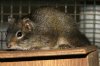
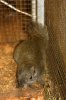
By checking my photos taken end of April this year, I found some of what they called Perney squirrels. Hope they are usefull to unreviel the right species-status of the animal on the picture.
Uploaded them in the "De Evenaar, Etten-Leur" gallery ( the Netherlands )

20180427_142226 Perny squirrel.jpg 20180427_142248_002 Perny squirrel.jpg
 
Back
Top