Hipporex's Guide to Interesting and Unique Prehistoric Fauna

Hipporex

Well-Known Member
5+ year member
I like prehistoric animals. Correction: I love prehistoric animals. The goal of this thread to introduce people to amazing extinct species they've never heard of or to teach people more about species they may of heard of but know little about. Don't expect to species like Tyrannosaurus rex and the woolly mammoth (Mammuthus primigenius) to show up on here.
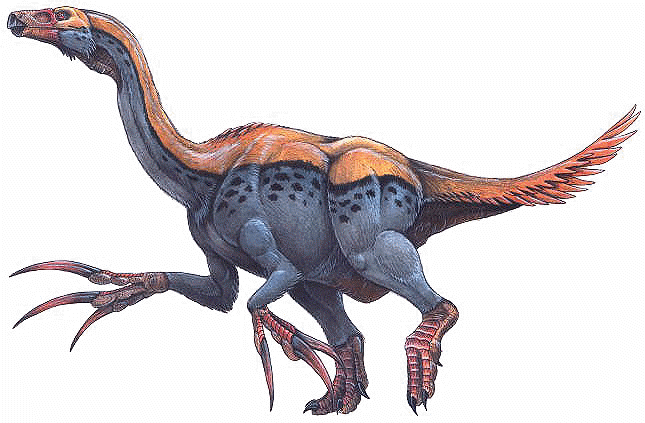
 
NUMBER ONE: If Edward Scissorhands was a dinosaur...

therizinosaurus_cheloniformis.gif

  • Species: Therizinosaurus cheloniformis
  • Pronunciation: Ther-i-zeen-oh-sore-us chey-lon-e-form-is
  • Name Meaning: Therizinosaurus means "scythe lizard" and cheloniformis means "turtle-formed"
  • Species Authority: Evgeny Maleev, 1954
  • Classification: Life, Eukaryota, Animalia, Chordata, Vertebrata, Gnathostomata, Osteichthyes, Sarcopterygii, Tetrapodomorpha, Tetrapoda, Reptiliomorpha, Amniota, Sauropsida, Eureptilia, Sauria, Archosauromorpha, Archosauriformes, Archosauria,‭ ‬Dinosauria,‭ ‬Saurischia,‭ ‬Theropoda,‭ Therizinosauria, ‬Therizinosauridae
  • When: ~ 70,000,000 B.C.E. (early Maastrichtian stage of the Late Cretaceous epoch)
  • Where: Asia (Mongolia)
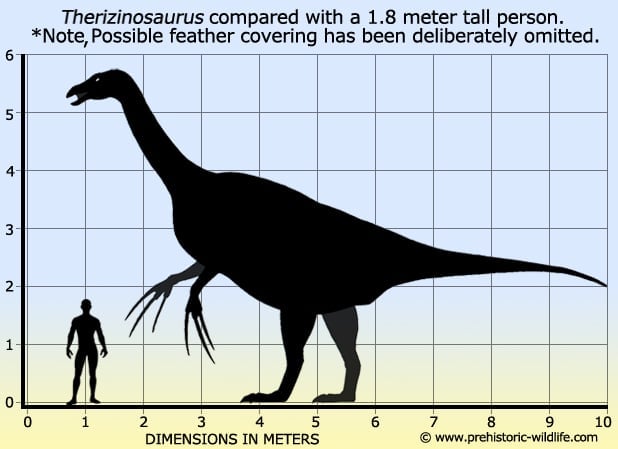
  • Size: 33 feet long (10.06 meters)
  • Diet: Herbivore
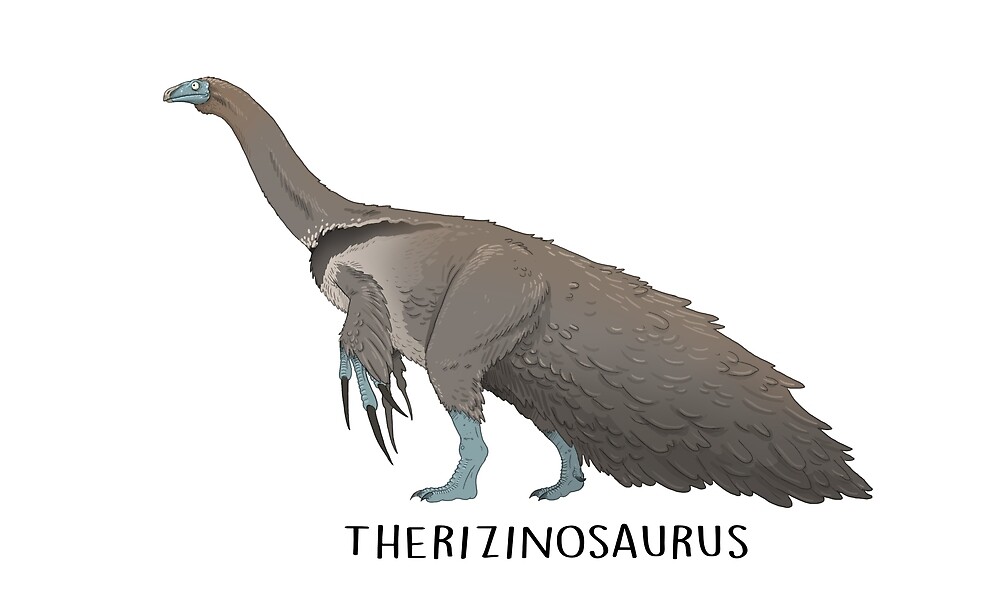
Therizinosaurus was one of the last and largest representatives of its unique group, Therizinosauria. Therizinosauria was a group of theropod dinosaurs that decided to say screw you to a carnivorous lifestyle and instead evolved into essentially the dinosaur version of a ground sloth: massive, slow plant-eating beasts with enormous claws. And enormous the claws truly were. Therizinosaurus possessed the longest claws of any animal ever: they measured up to 3.3 feet (1.01 meters) in length. It likely used its long claw to pull high up vegetation closer to its mouth and of course for self defense. Interestingly, when the claws were first discovered it was thought they belonged to a massive turtle-like animal that used the claws to harvest seaweed. This was of course later proven incorrect. This species was almost certainly covered in feathers as skin impressions from a related species, Beipiaosaurus, indicate that therizinosaurs were covered with a coat of primitive, down-like feathers, as well as longer, simpler, quill-like feathers that may have been used in display.

d4t197l-cf9e4337-f100-4327-aed3-0384efe9041a.jpg

1024px-Therizinosaurus.png

therizinosaurus-size.jpg

She's%2Bnot%2Binterested%2B2015%2BWitton%2Blow%2Bres.jpg

flat,1000x1000,075,f.jpg


Information and Picture Sources:
 
Last edited:
@aardvark250 I'm assuming you want me to make an animal profile for Yi qi the dinosaur, and not @Yi Qi the Zoochat member

NUMBER TWO:
It's a bird, it's a bat, it's a...really weird looking non-avain dinosaur

yi-qi.jpeg

  • Species: Yi qi
  • Pronunciation: Yee chee
  • Name Meaning: Yi means "wing" and qi means "strange"
  • Species Authority: Xu Xing et al., 2015
  • Classification: Life, Eukaryota, Animalia, Chordata, Vertebrata, Gnathostomata, Osteichthyes, Sarcopterygii, Tetrapodomorpha, Tetrapoda, Reptiliomorpha, Amniota, Sauropsida, Eureptilia, Sauria, Archosauromorpha, Archosauriformes, Archosauria,‭ ‬Dinosauria,‭ ‬Saurischia,‭ ‬Theropoda,‭ Paraves, Scansoriopterygidae
  • When: ~ 160,000,000 B.C.E. (Oxfordian stage of the Late Jurassic epoch)
  • Where: Asia (China)
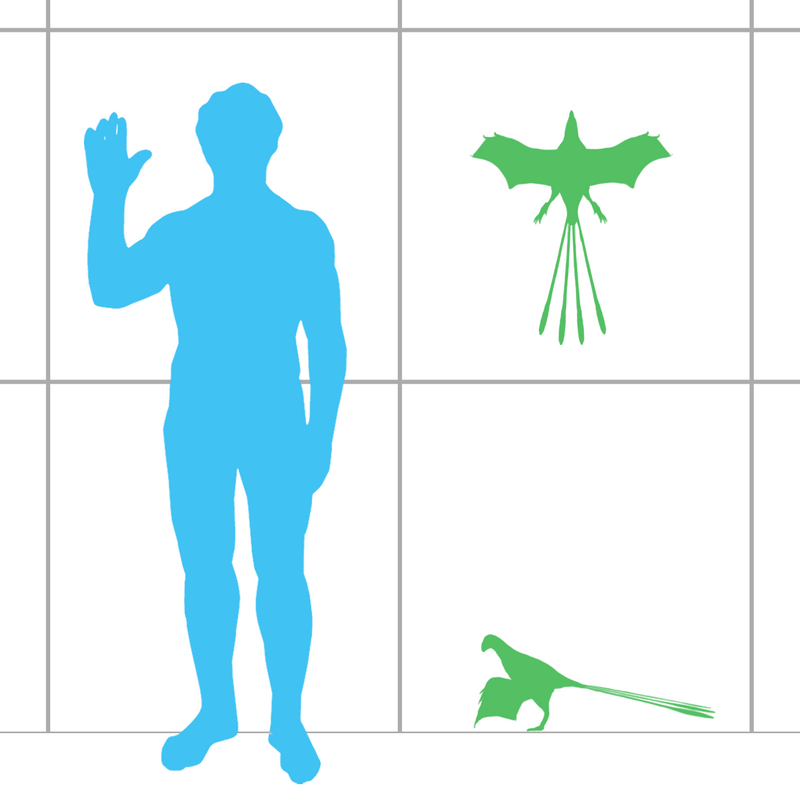
  • Size: "Pigeon-sized"
  • Diet: Unknown but probably insectivore
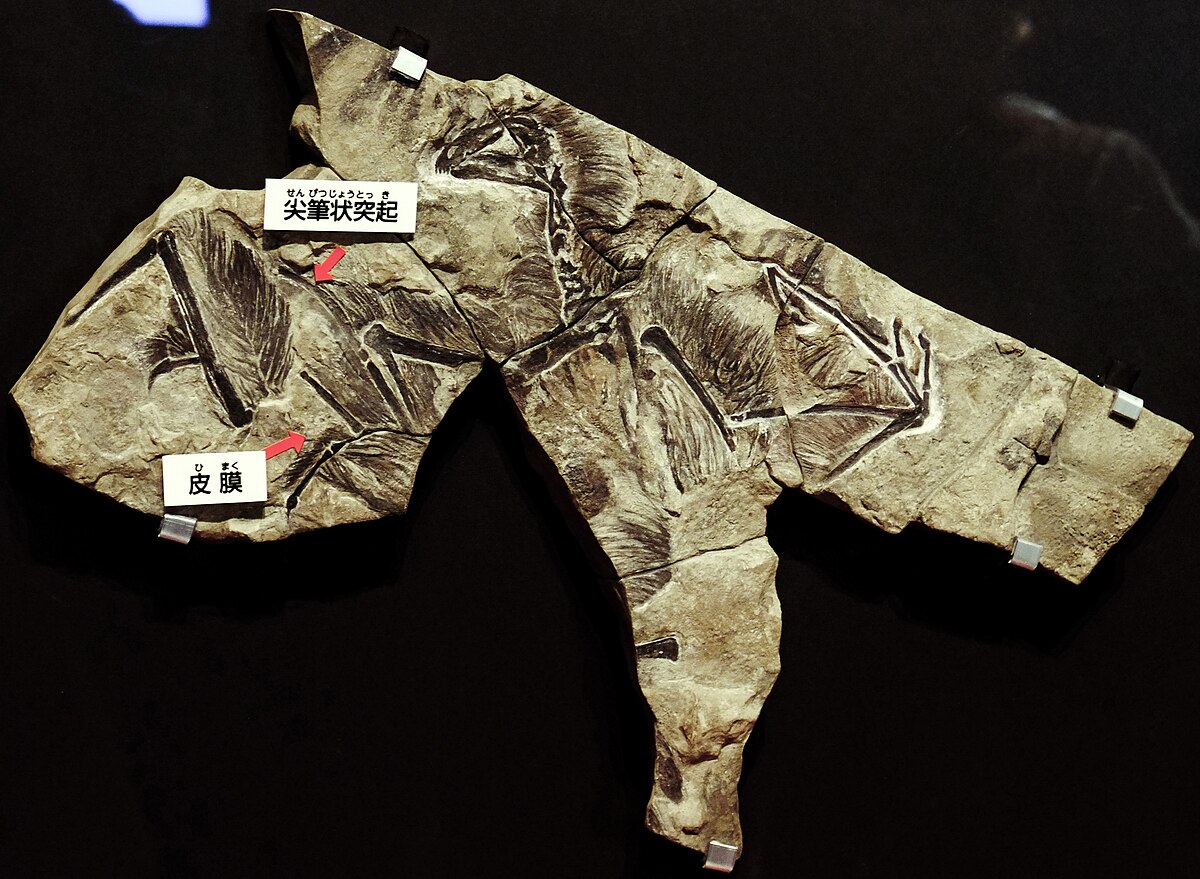
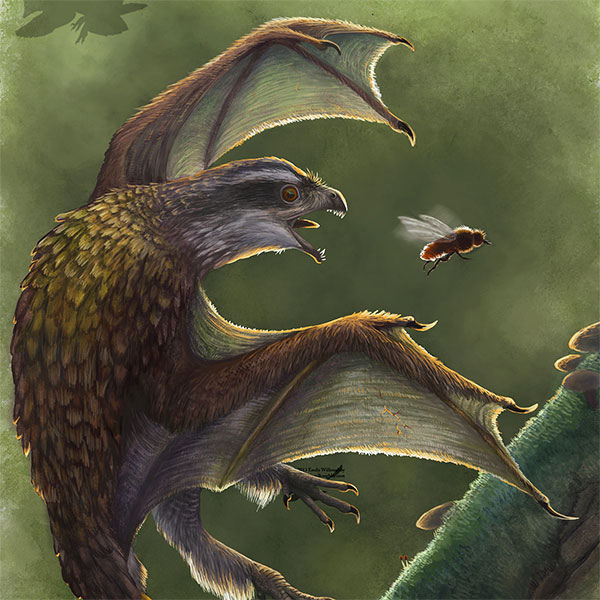
Yi qi is known from only one specimen, but said specimen was preserved extremely well. Like other scansoriopterygid dinosaurs, the head was short and blunt-snouted, with a down-turned lower jaw. Teeth were present only in the tips of the jaws, with the four upper front teeth per side being the largest and slightly forward-pointing, and the front lower teeth being angled even more strongly forward. Unlike other paravians, Yi and kin seem to have replaced bird-like feathers with membranous wings, in what may have been one of many independent evolutionary experiments with flight close to the origin of birds. There wings looked an awful lot like bat wings. However, unlike a bat, it is thought Yi was not a capable flier but rather a efficient glider. It likely lived similar to modern flying squirrels.

1200px-Yi_qi_fossil.jpg

yiqi-small.jpg

yi-qi-is-a-genus-of-scansoriopterygid-dinosaurs-from-the-late-jurassic-JC8A1X.jpg

yi-qi.png

800px-Yi_scale.png

rushelle-kucala-yiqi.jpg


Information and Picture Sources:
 
You've started off with one of the big mysterious Giant Arm dinosaurs, so personally I think you should have done the other one - Deinocheirus mirificus - before you did the spooky bat-bird :P
 
You've started off with one of the big mysterious Giant Arm dinosaurs, so personally I think you should have done the other one - Deinocheirus mirificus - before you did the spooky bat-bird :p
Deinocheirus is indeed arguably more interesting but Therizinosaurus is my favorite extinct animal so I had to start there.
 
Deinocheirus is indeed arguably more interesting but Therizinosaurus is my favorite extinct animal so I had to start there.

I was saying you should have done Deinocheirus before Yi :P keep the arm theme going, and all.

How about the fluffy tyrannosaurid next?

You'll have to be more specific on that one now :P though I think we only have phylogenetic bracketing to suggest there were fluffy tyrannosaurids; all the species with fossil integument were tyrannosauroids.
 
You'll have to be more specific on that one now :p though I think we only have phylogenetic bracketing to suggest there were fluffy tyrannosaurids; all the species with fossil integument were tyrannosauroids.
I think it is probable even tyrannosaurids had feathers although it was, for most of the species, similar to how modern elephants have only a little hair. The only tyrannosaurid that probably would have a decent amount of feathering would of been Nanuqsaurus, the polar tyrant. Also @aardvark250 perhaps I'll do Yutyrannus in time (the genus I'm assuming you where referring to), but I was thinking of doing some non-dinosaur species first.
 
I think it is probable even tyrannosaurids had feathers although it was, for most of the species, similar to how modern elephants have only a little hair.

Oh, indeed - I was merely saying that we only know this through phylogenetic bracketing.

If you're doing non-dinosaurs next, I suggest the Sardinian Cave-Goat :P nothing more unusual and unique than a cold-blooded goat the size of a dog, with forward-facing eyes.
 
Go with one of the weird laramidian ceratopsians like Medusaceratops or Nasutoceratops.
 
I think it is probable even tyrannosaurids had feathers although it was, for most of the species, similar to how modern elephants have only a little hair. The only tyrannosaurid that probably would have a decent amount of feathering would of been Nanuqsaurus, the polar tyrant. Also @aardvark250 perhaps I'll do Yutyrannus in time (the genus I'm assuming you where referring to), but I was thinking of doing some non-dinosaur species first.

Well now my interest is peaked and you shouldn't be a tease ;)

~Thylo
 
*hey, if you'd do saichania, that'd be great :P*

You do take suggestions, right? :P
 
NUMBER THREE: @birdsandbats has requested a giant, and I present to you... the closest nature has ever gotten to Big Chungus

Nuralagus_NTy.jpg

  • Species: Minorcan giant rabbit (Nuralagus rex)
  • Name Meaning: Nuralagus rex means "Minorcan king of the rabbits"
  • Species Authority: Quintana et al., 2011
  • Classification: Life, Eukaryota, Animalia, Chordata, Vertebrata, Gnathostomata, Osteichthyes, Sarcopterygii, Tetrapodomorpha, Tetrapoda, Reptiliomorpha, Amniota, Synapsida, Therapsida, Mammalia, Placentilia, Boreoeutheria Lagomorpha, Leporidae
  • When: ~ 5,500,000 to 3,000,000 B.C.E. (Miocene and Pliocene epochs)
  • Where: Europe (Spanish island of Minorca)
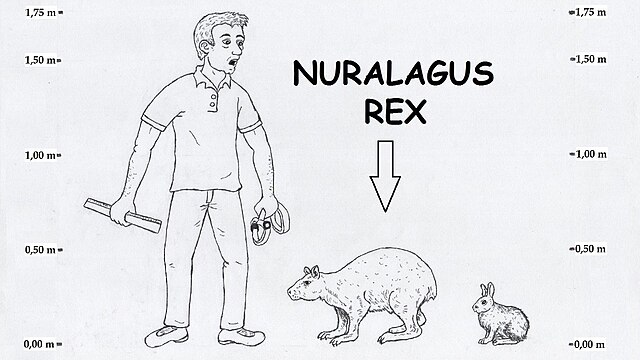
  • Size: Up to 26.4 pounds (11.2 kilograms)
  • Diet: Herbivore
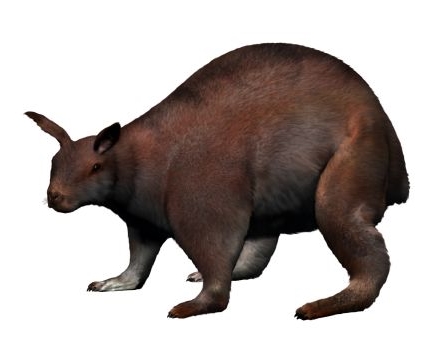
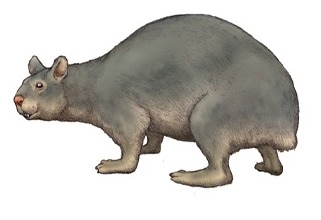
At six times the size of the living European rabbit (Oryctolagus cuniculus), the Minorcan giant rabbit was the largest lagomorph ever. This over-sized hare is a classic example of insular gigantism. (I'm assuming most of you know what that is but for those of you that don't it is when a small animal gets bigger due to living on an island. This usually happens thanks to a lack of preadators, which is what happened in this case.) This bunny was so big, it couldn't hop. The long springy spine of mainland rabbits was lost in N. rex, replaced by a short, stiff spine that would make jumping difficult. According to Quintana, “I think that N. rex would be a rather clumsy rabbit walking. Imagine a beaver out of water."

640px-Nuralagus_Rex.jpg

Nuralagus-rex-2016-738x591.jpg

nuralagusrex.jpg

tumblr_mpb30iydKn1spmwbxo1_400.jpg


Information and Picture Sources:
 
Last edited:
Actually, I don't think i'm as tall as the guy in the image (i'm around 5'7 for your information).
 
Back
Top