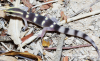
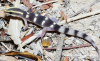
- Discription of 15 new species of leaf-litter trips from Australia :
Leaf-litter thrips of the genus Psalidothrips (Thysanoptera, Phlaeothripidae) from Australia, with fifteen new species | WANG | Zootaxa
- Abstract of the discription of a new species of deep-water snake eel from India :
Description of a new species of deep-water snake eel, Ophichthus mccoskeri (Ophichthidae: Ophichthinae) from Andaman Sea, India | SUMOD | Zootaxa
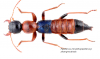
- Abstract of the discription of a new species of Rove beetle from China :
Description of a new species of deep-water snake eel, Ophichthus mccoskeri (Ophichthidae: Ophichthinae) from Andaman Sea, India | SUMOD | Zootaxa

- New species of pit viper from Bolivia ( notes from Facebook ) :
A NEW SPECIES OF MONTANE PIT VIPER FORM SOUTHERN AMERICA.
During the last decade, the Andean Mountain Range in South America has been the theatre of many newly discovered species of pit vipers. This phenomenon is due to the wide array of different altitudinal habitats that characterized the area as well as the lack of exploration of this region. In this poorly known area of South America, on the Bolivian side of the Andes, where a photographer took a pic of an unknown Bothrops species.
The clade Bothrops (sensu latu) is a group of pit vipers divided into 51 species which are distributed all over Southern America. All Bothropoids are characterized by a venom which is considered highly toxic and of medical importance for human beings.
Phylogenetic analysis has been done in order to classify the undescribed species of Bothrops found, using samples from ten specimens successively found in Bolivia and Peru. From the results the new species was found to be related to both “B. neuwiedi” and “B. jararaca” species groups, even if this was supported by medium-low values. The new species was named Bothrops monsignifer (Timms et al. 2019) after the volcanic area where the first Bolivian specimen was found. It seems to be restricted to high montane forests of the eastern slope of the Andean Mountain Range, where it is likely to be found in areas with large trees exposed to sunlight. B. monsignifer can probably reach over 150 cm in length and due to its size, this species is probably able to inject a high quantity of venom. For this reason, B. monsignifer should be considered potentially lethal to human even if its distribution and habitat choices make accidentally encounters probably unlikely.
In the picture morphological differences between Bothrops monsignifer (A), Bothrops sanctaecrucis (B), Bothrops atrox
(C), Bothrops mattogrossensis (D), Bothrocophias andianus (E), Bothrocophias microphthalmus (F), and Bothrops brazili (G). (Timms et al. 2019)
Link to the paper:
http://dx.doi.org/10.11646/zootaxa.4656.1.4
Vertaling bekijken