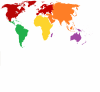
ZooChat Cup Group B2: Berlin Zoo vs Chester

Asia: Berlin Zoo vs Chester


  • Total voters
    31
  • Poll closed .
Regardless, YOU included babirusa on your mammal list for Berlin and also never took them off.

Actually, they did...

Chester
Asian small-clawed otter
Asiatic lion
Balabac chevrotain
Bornean orangutan
Greater One-horned rhino
Javan banteng
Lar gibbon
Lion-tailed macaque
Malayan tapir
Moloch gibbon
Myanmar thamin
Negros warty pig
Nepalese red panda
Northern Luzon giant cloud rat
Northern treeshrew
Onager
Palawan binturong
South-east Asian elephant
Sumatran orangutan
Sumatran prevost's squirrel
Sumatran tiger
Sun bear
Swinhoe's striped squirrel
Turkish spiny mouse
Visayan spotted deer

(25 species)
 
In order to avoid future confusion on countable species in the upcoming matches--and apologies if this was already discussed elsewhere--I would like to suggest that maybe instead of using the Wallace Line to separate Asia and Australia we use the Weber Line. @Vision and I were discussing the current split up in private earlier tonight and, while by no means perfect, we both agreed that the Weber Line does a much better job of separating what people generally treat as Asian wildlife from Australasian. This split would place all of the primates, deer, pigs, bovids, etc. firmly in the Asian category, while keeping the "main" marsupials and monotremes, etc. in the Australasian category. This line also follows along what, in my experience, most people consider the separation between Southeast Asia and the "New Guinea island groups" to be anyway. Most importantly, this line also aligns with how general zoogeography splits apart Asia and New Guinea. I honestly feel as though following the Weber Line will decrease confusion significantly because it will be much more obvious what species count for where.

Thoughts?

~Thylo
 
In order to avoid future confusion on countable species in the upcoming matches--and apologies if this was already discussed elsewhere--I would like to suggest that maybe instead of using the Wallace Line to separate Asia and Australia we use the Weber Line. @Vision and I were discussing the current split up in private earlier tonight and, while by no means perfect, we both agreed that the Weber Line does a much better job of separating what people generally treat as Asian wildlife from Australasian. This split would place all of the primates, deer, pigs, bovids, etc. firmly in the Asian category, while keeping the "main" marsupials and monotremes, etc. in the Australasian category. This line also follows along what, in my experience, most people consider the separation between Southeast Asia and the "New Guinea island groups" to be anyway. Most importantly, this line also aligns with how general zoogeography splits apart Asia and New Guinea. I honestly feel as though following the Weber Line will decrease confusion significantly because it will be much more obvious what species count for where.

Thoughts?

~Thylo

I'm happy to make this change if it is the prevailing mood among voters. I readily admit to not being an expert on such matters.

Does anybody want to make a rebutting argument?
 
I agree with this as well, although it wouldn't leave much of an area for Islands. :)

The only way around this, as far as I can see, would be to make the Greater and Lesser Sundas (and possibly the Philippines too) a more loosely-fitting zone akin to the general consensus we seem to be reaching around Mexico, with those taxa which are representatives of mainland taxa falling under Asia and those which are endemic to these groups falling under Islands.

Possibly we could consider a similar "fudging" of the line between Central/South America and Islands to allow endemic species of the Caribbean and Galapagos to count under the latter grouping?

( @CGSwans - would you like me to copy or move some of the discussions around these points in this thread and the Bronx/Beauval one into the central Cup thread, so that they are all centralised? )
 
The only way around this, as far as I can see, would be to make the Greater and Lesser Sundas (and possibly the Philippines too) a more loosely-fitting zone akin to the general consensus we seem to be reaching around Mexico, with those taxa which are representatives of mainland taxa falling under Asia and those which are endemic to these groups falling under Islands.

Possibly we could consider a similar "fudging" of the line between Central/South America and Islands to allow endemic species of the Caribbean and Galapagos to count under the latter grouping?
I don't think it matters for Indonesia. The "Islands" category includes Australia so it's not like it is restricted to a few insular endemics.

I would assume the Galapagos would come under "islands" anyway, given that they are oceanic islands, not continental.

The Caribbean one is a little blurry for me - but how many endemic (as opposed to general Neotropical) groups are there which are also found in the competing zoos - not many, if any.
 
The Caribbean one is a little blurry for me - but how many endemic (as opposed to general Neotropical) groups are there which are also found in the competing zoos - not many, if any.

Although generally Neotropical, most Anolis species are island endemics for a start.
 
Although generally Neotropical, most Anolis species are island endemics for a start.
In that specific case, my response would be that because it is a genus spread across most of the Americas it would count under South America. The opposite would be an specifically Caribbean endemic group like solenodons or hutias. In practice I don't think it really matters because there would be so few examples. (Although I'd prefer to see hutias under "islands" rather than "South America" personally).
 
In that specific case, my response would be that because it is a genus spread across most of the Americas it would count under South America. The opposite would be an specifically Caribbean endemic group like solenodons or hutias. In practice I don't think it really matters because there would be so few examples. (Although I'd prefer to see hutias under "islands" rather than "South America" personally).
I realised after I posted this that I shouldn't have been using genera as a criteria (I automatically went with that because of TLD's Anolis example). Iguanidae* is clearly Neotropical rather than Caribbean, so the island species would still be under South America. Hutias would be under Islands because the family is endemic to the Caribbean islands. That's how I would look at it, but it doesn't change my previous point because I think hutias are probably the only relevant example.


*I can't bothered looking up how many families Iguanidae has been split into, but it doesn't matter for the example.
 
I really think we're picking at very small nits here, but I'm sticking with keeping the Caribbean species with South & Central America. As Chlidonias states very few zoo species are endemic there and I think it undercuts the 'geographic' concept to be treating animals from the exact same geographic range differently.

The Galapagos are oceanic and with a highly unique fauna, and so they fit into the concept 'Australia & Islands' category.

Let's try to get beyond jurisdictional issues and try to debate the substance. :)
 
Back
Top