Which large, endangered bird would you prefer the AZA to create a captive population & SSP for?

Which large, endangered bird would you prefer the AZA to create a captive population & SSP for?

  • North African Ostrich (Struthio camelus camelus)

    Votes: 0 0.0%
  • Humblot's Heron (Ardea humbloti)

    Votes: 0 0.0%
  • Madagascar Pond Heron (Ardeola idae)

    Votes: 0 0.0%

  • Total voters
    32
  • Poll closed .
I know from my own research Weltvogepark Walsrode holds Malagasy Sacred Ibis.

They do indeed, kept in a few aviaries when I visited :) They keep Madagascar Pond-Heron, too, and I believe all other zoos keeping both species received them from Walsrode.

~Thylo
 
If it would be Madagascar sacred ibis, as Sacred ibis itself are on the list.

The "banning entire genus" stuff is new to me and I seriously doubt whether it is true, it is for one not mentioned in the relevant EU legislation itself (on which any new German law would be based). Such a rule could never be enforced, with hardly any gains, no clear scientific evidence and lots of pain in the ass, and especially for plants it would be a complete nightmare.

Well as TLD states it seems it's just an optional thing each country can decide to do if they so choose as opposed to an actual regulation. I think it's a massive shame the UK is deciding to attempt a push for this but I'm happy to hear that countries such as Germany and the Czech Republic are a bit more sensible in this regard.

~Thylo
 
Several species from the list are already kept ( and several of them even bred ) in captivity outside the USA and it should be also possible to obtain founder-animals of these species for example :
- North African ostrich - kept and bred in Europe ( 11 collections keeping it )
- Northern cassowary - 2 subspecies kept at the moment in Europe ( Golden-necked - 1 - and Red-necked - 2 males at 2 collections ). Have been bred in the past
- White-bellied heron - kept and bred at at least one Asian collection
- Madagascar pond heron - kept at 2 European collection and at one of them ( Walsrode ) bred very succesfully
- Black-faced spoonbill - kept and bred at x Asian collections and in Europe 1 single animal is left.

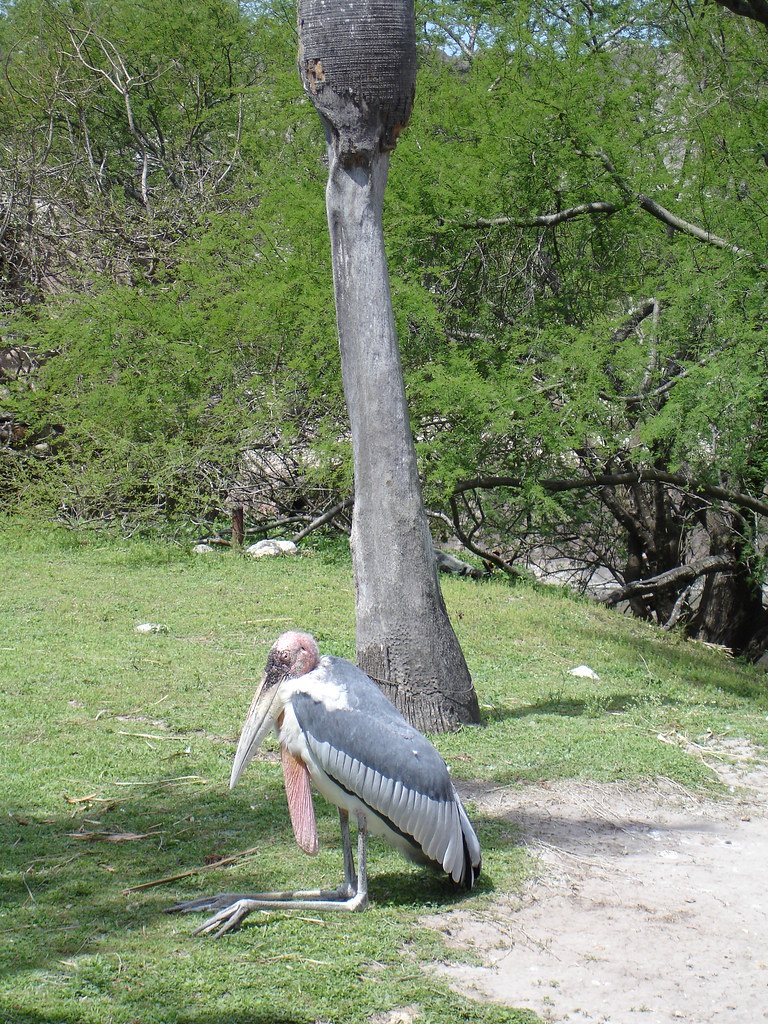
All these species deserve a place in our modern arc of Noah but I guess the species which is most in need of it is the Greater Adjutant stork. As the largest member of its genus, I guess it will attract the attention of the general public, kept under the right conditions it must be possible to breed and really rare and threatened in the wild a coordinated breeding-program can be a real help for the species ( but as said, all other species of this list also deserve a lot more attention and coordinated breeding-programs ! )
 
Since Greater Adjutants are more closely related to Marabou, wouldn't that make Marabou the easiest to keep/breed, then Greater Adjutants and finally Lessers? Where do all of Bronx's chicks go when their storks breed? I don't think Racine's Lessers have ever bred even with that nice aviary that they live in. I have yet to visit both Bronx and Racine Zoo.

Sorry, I keep noticing replies to me individually :p That might be the case then, I didn't know the Greater Adjutant was more closely related to Marabous tbh. Does anyone know anything about the old US population of Greater Adjutant and if they ever bred? Were there multiple individuals or just the one Gladys Porter animal? As for Lesser Adjutants, I don't really know what Bronx does with all their chicks. They don't breed them yearly or anything so I don't think the produce many, but I know they've sent them to European zoos in the past.

~Thylo
 
Sorry, I keep noticing replies to me individually :p That might be the case then, I didn't know the Greater Adjutant was more closely related to Marabous tbh. Does anyone know anything about the old US population of Greater Adjutant and if they ever bred? Were there multiple individuals or just the one Gladys Porter animal? As for Lesser Adjutants, I don't really know what Bronx does with all their chicks. They don't breed them yearly or anything so I don't think the produce many, but I know they've sent them to European zoos in the past.

~Thylo
Franklin Park Zoo in June 1932:
Storks at Franklin Park Zoo
content


Smithsonian's National Zoo in 1910:
Record Marabou Stork | Collections Search Center, Smithsonian Institution

Smithsonian's National Museum of Natural History (NMNH) lists having 5 specimens in their collection coming from captivity:


-USNM 225988 (captive female) was collected from the zoo on August 13th 1917. Prepped as a skeleton.
-USNM 237239 (captive/sex unknown) was collected from the zoo at an unknown date. Prepped as a partial skin.
-USNM 319788 (captive male) was collected from the zoo at an unknown date. Prepped as a whole skin with partial skeleton.
-USNM 325785 (captive male) was collected from the zoo on April 13th, 1931. Prepped as a whole skin.
-USNM 429220 (captive female) was collected from the zoo at an unknown date. Prepped as a whole skeleton.

Gladys Porter Zoo individual on March 22nd 2008:
https://live.staticflickr.com/2082/2359937968_945fa3d996_b.jpg
2359937968_945fa3d996_b.jpg

Anyone know the history on this individual and if it ended up as a specimen somewhere? Perhaps at the Houston Museum of Natural Science? Can't find any database for their collections.

Perhaps Philadelphia, Cincinnati, and Brookfield formerly held this species. They're certainly old enough. I don't know any other info regarding the history of Greater Adjutants in America. I know that sculptor Paul Manship sculpted a variety of large wading birds including a Greater Adjutant. His life-sized bronzes of the Greater Flamingo & Black-Necked Stork are on display in the Luce Center at the Smithsonian American Art Museum, but the life-sized Greater Adjutant isn't on public display.
 
Last edited:
Several species from the list are already kept ( and several of them even bred ) in captivity outside the USA and it should be also possible to obtain founder-animals of these species for example :
- North African ostrich - kept and bred in Europe ( 11 collections keeping it )
- Northern cassowary - 2 subspecies kept at the moment in Europe ( Golden-necked - 1 - and Red-necked - 2 males at 2 collections ). Have been bred in the past
- White-bellied heron - kept and bred at at least one Asian collection
- Madagascar pond heron - kept at 2 European collection and at one of them ( Walsrode ) bred very succesfully
- Black-faced spoonbill - kept and bred at x Asian collections and in Europe 1 single animal is left.

All these species deserve a place in our modern arc of Noah but I guess the species which is most in need of it is the Greater Adjutant stork. As the largest member of its genus, I guess it will attract the attention of the general public, kept under the right conditions it must be possible to breed and really rare and threatened in the wild a coordinated breeding-program can be a real help for the species ( but as said, all other species of this list also deserve a lot more attention and coordinated breeding-programs ! )
Last time I was at Zoo Miami (November 2016), someone who worked in Wings of Asia said that they brought in Javan Pond Herons and they started breeding like crazy. They were up to over 150+ birds and they weren't able to control them because of the large size of the aviary. A captive situation like that would do wonders for the Malagasy Pond Heron!
 
Well as TLD states it seems it's just an optional thing each country can decide to do if they so choose as opposed to an actual regulation. I think it's a massive shame the UK is deciding to attempt a push for this but I'm happy to hear that countries such as Germany and the Czech Republic are a bit more sensible in this regard.

~Thylo

I missed TLD's post, but it is just plain stupid. I also do not think it would survive a court case as it is an unnecessarily wide interpretation of EU law. The species on the list have gone through a whole risk assessment, not the genus. It sounds more as some individuals who don't have a clue what they are doing.

Edit: I cannot even find any reference to it in the UK implementation of the law or on the DEFRA website, so it seems like some officials have gone rogue, by not knowing legislation themselves, nor the rationale for this legislation.
 
Last edited:
Hard to say...
North African Ostrich (Struthio camelus camelus) - easy, but kept in several European zoos, cannot really see a conservation value.
Northern Cassowary (Casuarius unappendiculatus) - attractive, easy to obtain and keep, but few zoos keep cassowaries. Will be competition to Doble-wattled Cassowary, this is why died out in Europe.
White-Bellied Heron (Ardea insignis) - could be readily bread, will be always rare in the wild so an insurance population makes sense, but hard to obtain from Bhutan.
Humblot's Heron (Ardea humbloti) - could be readily bread, but not so rsare in Madagascar.
Madagascar Pond Heron (Ardeola idae)
- attractive, already bred in Europe, perhaps most realistic to get a population large enough to persist.
Greater Adjutant Stork (Leptoptilos dubius)- attractive, endangered, could be obrtained from Assam and replace the common African marabou, but needs lots of space.
Giant Ibis (Thaumatibis gigantea)- hard to obtain, on the other hand well conserved recently in nature.
Dwarf Olive Ibis (Bostrychia bocagei)- not kept in zoos, but will be always rare and threatened in the wild as confined to a tiny island. Small enough to perhaps have a survivable zoo population.
Black-Faced Spoonbill (Platalea minor)- protected in East Asia. Died out in Europe apparently because of no interest
Bengal Florican (Houbaropsis bengalensis)- will be always rare in India, but bustards are difficult in zoos, and little expertise exists. And not kept in zoos.
 
It's easy to obtain wild caught Northern Cassowaries from New Guinea??? Also would Greater Adjutants need to be kept in large flight aviaries or in large grassy field mixed hoofstock enclosures like Marabou to breed successfully? @Jurek7
 
It's easy to obtain wild caught Northern Cassowaries from New Guinea??? Also would Greater Adjutants need to be kept in large flight aviaries or in large grassy field mixed hoofstock enclosures like Marabou to breed successfully? @Jurek7
I'm pretty sure all storks do better flighted in aviaries than flight restricted in an open paddock setting, where they are at the mercy of playful or aggressive hoofstock. White Storks are probably the only species that will attempt to breed in a mixed paddock, and I've known them killed by hoofstock.
 
Wild-caught cassowary chicks are rather commonly traded between locals. Unless there are now export restrictions from Indonesia, they could be sourced.

Re: marabus and adjutants - IMO should be only kept in aviaries. They should never be kept with hoofstock - killing by co-habiting hoofstock is a major source of mortality in marabus. Marabus and other storks breed at best very rarely when pinioned, so establishing a population this way is next to impossible.
 
Back
Top