Hipporex's Guide to Interesting and Unique Prehistoric Fauna

NUMBER NINETY-THREE: You know you mean business when you were named after a Greek god that tried to eat his own kids.
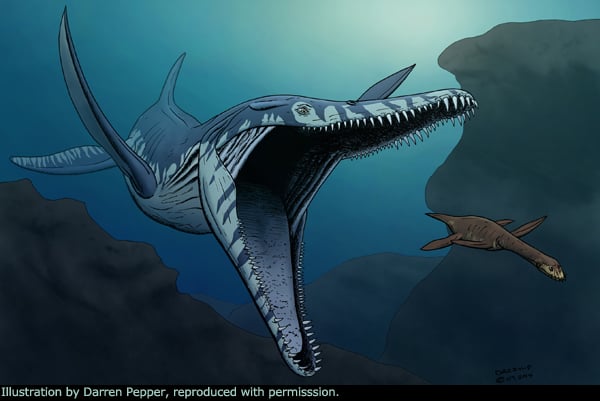
pliosaurus.jpg

  • Animal: Kronosaurus queenslandicus
  • Name Pronunciation: Crow-no-sore-us queens-land-i-kus
  • Name Meaning: "Kronos lizard from Queensland"
  • Named By: Albert Heber Longman - 1924
  • Classification: Life, Eukaryota, Animalia, Chordata, Vertebrata, Gnathostomata, Osteichthyes, Tetrapodomorpha, Tetrapoda, Reptiliomorpha, Amniota, Sauropsida, Eureptilia, Diapsida, Sauria, Archosauromorpha, Pantestudines, Sauropterygia, Plesiosauria,‭ ‬Pliosauroidea,‭ ‬Pliosauridae, Brachaucheninae
  • When: ~ 105,300,000 B.C.E. to 99,700,000 B.C.E. (Albian stage of the Early Cretaceous epoch)
  • Where: Oceania - Australia - Queensland - Toolebuc and Wallumbilla Formations
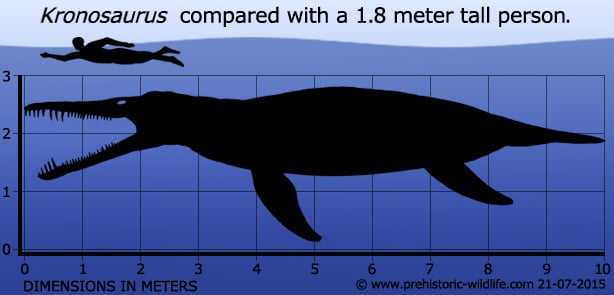
  • Size: 29.5 to 32.8 feet (9 to 10 m) long
  • Diet: Carnivore
Oceania is probably the only continent whose most famous Mesozoic species is not a dinosaur. No, instead the owner of this title is a pliosaur. Most of you probably know what pliosaurs were but for the uninitiated: Pliosauroidea was a clade of short-necked, four-limbed marine carnivores with relatively large heads and massive toothed jaws. The group became known to the wider public when a massively-oversized Liopleurodon, an English pliosaur, made an appearance in the 1999 BBC series Walking With Dinosaurs. Kronosaurus was the largest predator in its Australian ecosystem. Kronosaur jaws measured 7.3 to 9.4 feet (2.2 to 2.85 m) long and were lined with conical teeth up to 1 foot (30.48 cm) long. Simulations suggest a bite-force of 30,000 newtons, or approximately twice as powerful as a large saltwater crocodile. Additionally, simulations also suggest that although this animal may of fed like a crocodilian, it was incapable of doing the death roll. Fossil stomach contents from Northern Queensland show that Kronosaurus preyed on turtles and plesiosaurs. Fossil remains of giant squid have been found in the same area as Kronosaurus; it may have fed on them, but no direct evidence for this exists. Furthermore, large, round bite-marks have been found on the skull of an Australian elasmosaurid (Eromangasaurus) that could be from a Kronosaurus attack. A second species of Kronosaurus, K. boyacensis, lived in Boyacá, Columbia.

kronosaurus-size.jpg

diving_with_sachicasaurus_by_hodarinundu_dczvdxa-pre.jpg

draw_dinovember_2016_day_27_kronosaurus_by_daitengu_daqwywr-fullview.jpg

800px-Kronosaurus_bojacens1DB.jpg

crikey__by_primevalraptor_da65nse-fullview.jpg

kronosaurus_by_paleoguy_db2pbzs-pre.jpg

800px-Kronosaurus_hunt1DB.jpg

An extremely-oversized Liopleurodon attacking a Eustreptospondylus in Walking With Dinosaurs:
Additionally, pliosaurs made there Hollywood debut in Aquaman (2018). One can be seen very briefly at 1:00. (the exact species is never stated):

Picture and Information Resources:
 
Last edited:
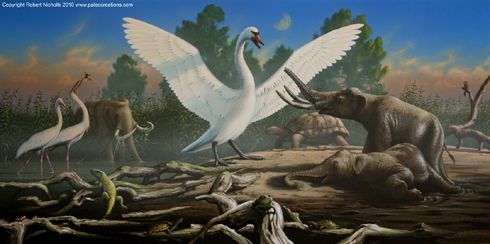
NUMBER NINETY-FOUR: Swanzilla: King of the Anseriformes, coming soon to a theater near you

c802daa15732a632114e3565789d6158.jpg

  • Animal: Giant swan (Cygnus falconeri)
  • Name Meaning: Named after Hugh Falconer, 1800s Scottish palaeontologist
  • Named By: William Kitchen Parker - 1865
  • Classification: Life, Eukaryota, Animalia, Chordata, Vertebrata, Gnathostomata, Osteichthyes, Tetrapodomorpha, Tetrapoda, Reptiliomorpha, Amniota, Sauropsida, Eureptilia, Diapsida, Sauria, Archosauromorpha, Archosauriformes, Archosauria, Dinosauria,‭ ‬Saurischia,‭ ‬Theropoda,‭ Paraves, Avialae, Aves, Neognathae, Anseriformes, Anatidae
  • When: Pleistocene epoch of the Quaternary Period
  • Where: Malta and Sicily (Southern Europe)
  • Size: *see below*
  • Diet: Omnivore
Holy crow! There was a swan bigger than an elephant?! Well...yes and no. During the Middle Pleistocene, on the Southern European islands of Malta and Sicily, were two species at the opposite sides of the size scale relative to other members of their taxonomic groups: the Mediterranean dwarf elephant (Palaeoloxodon falconeri) and the giant swan. At 2.6 to 3.2 feet (0.79 to 0.98 m) tall and 370 to 670 pounds (167.83 to 303.91 kg), the Mediterranean dwarf elephant was the smallest elephantid ever. Its ancestors were likely "normal-sized" and reached the islands by crossing land bridges that appeared when the seas had been lowered by ice caps (or they simply swam). The giant swan on the other hand appears to have been one of the largest anatids ever (but not the absolute largest, that title goes to Garganornis, another insular giant). It had a bill-to-tail length of about 6.23 to 6.89 feet (1.9 to 2.1 m). Considering modern swans are all a-holes, its likely the giant swan bullied its shorter neighbor, as it is often depicted doing in paleoart, like the one above. Due to its size, C. falconeri may have been flightless (but we don't know this for sure). Like modern Cygnus swans, the giant swan likely mated for life and was mainly herbivorous. It became extinct before the increase in human activity in the region, so its disappearance is thought to have resulted from extreme climate changes or the arrival of superior non-human predators and/or competitors.

xT16O-580rixN1E_6KnVl-z3noiQfB4eSEoI7gmR60E.png

cygnus-falconeri-c3cfc002-e3bc-42c9-8b43-e759690dc36-resize-750.jpeg

486924627d73d5a5c6add0cbedc4305acf7227c8.png

the_smallest_elephant_by_eurwentala_d9mkeb7-fullview.jpg


Picture and Information Resources:
 
NUMBER NINETY-FIVE: Earth lizard, Wind, and Fire

image_5295_1e-Ieldraan-melkshamensis.jpg

  • Animal: Geosaurus giganteus
  • Name Pronunciation: Jee-oh-sore-us jie-gan-tee-us
  • Name Meaning: "Giant Earth lizard"
  • Named By: Samuel Thomas von Sömmerring - 1816
  • Classification: Classification: Life, Eukaryota, Animalia, Chordata, Vertebrata, Gnathostomata, Osteichthyes, Sarcopterygii, Tetrapodomorpha, Tetrapoda, Reptiliomorpha, Amniota, Sauropsida, Archosauromorpha, Archosauriformes, Archosauria, Pseudosuchia, Paracrocodylomorpha, Loricata, Crocodylomorpha, Crocodyliformes, Mesoeucrocodylia, Metasuchia, Notosuchia, Thalattosuchia, Metriorhynchoidea, Metriorhynchidae, Geosaurinae, Geosaurini, Geosaurina
  • When: ~ 150,000,000 B.C.E. (Tithonian stage of Late Jurassic epoch)
  • Where: Mörnsheim Formation (Bavaria, Germany)
  • Size: 9.8 feet (3 m) long
  • Diet: Carnivore
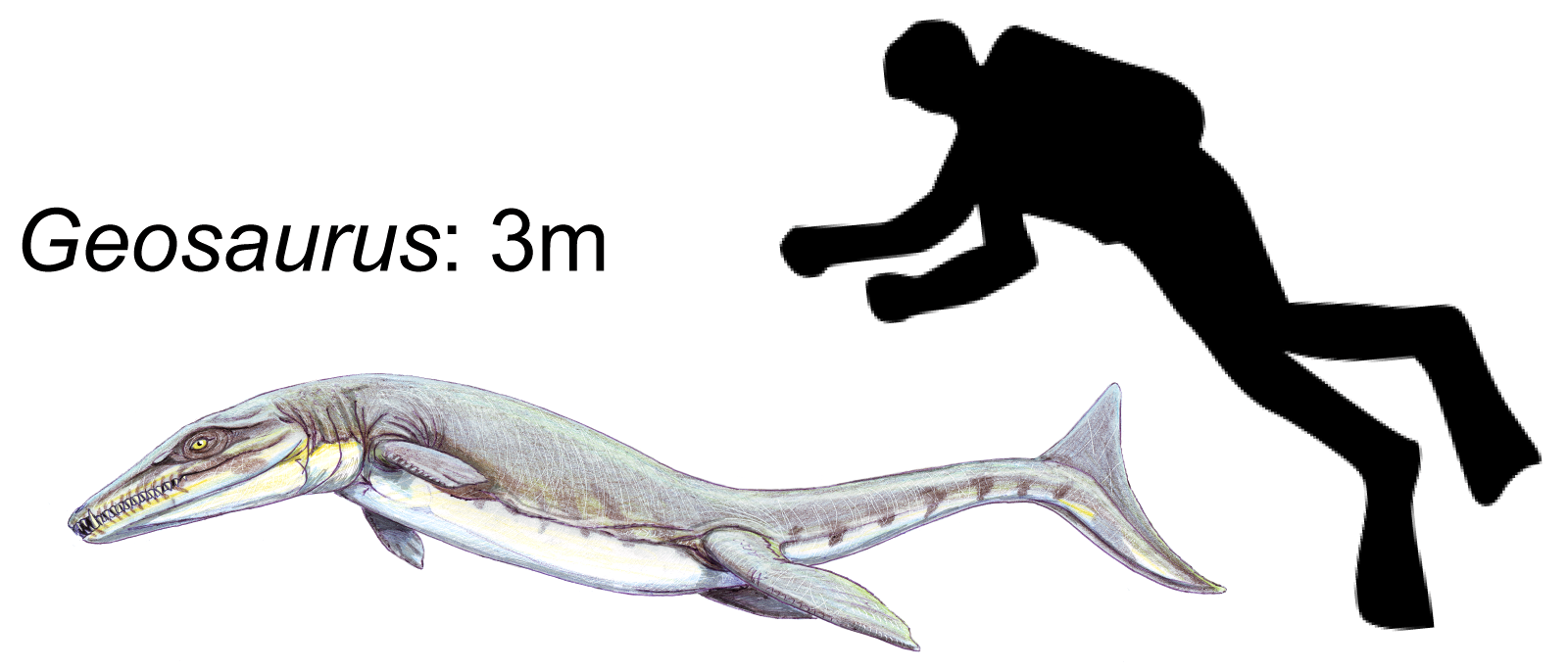
Geosaurus was a short-snouted marine crocodyliform with large serrated teeth. No eggs, unborn embryos, or nests have been discovered, so little is known of this reptile's lifecycle. Several species of metriorhynchids are known from the Mörnsheim Formation: Geosaurus giganteus, Dakosaurus, Cricosaurus, and Rhacheosaurus. It has been hypothesized that niche partitioning enabled these several species of crocodyliforms to co-exist. The top predators of this Formation appear to be Geosaurus and Dakosaurus, which were large, short-snouted species with serrated teeth. The long-snouted Cricosaurus and Rhacheosaurus would have fed mostly on fishes, with the more lightly built Rhacheosaurus specializing towards feeding on the smallest prey. The nature of their sclerotic ring suggests that species of Geosaurus may have even occasionally ventured on deep dive. Geosaurus giganteus (the type species of Geosaurus) was originally named Lacerta gigantea. The name Geosaurus was established by the French naturalist Georges Cuvier in 1824. The genus includes two additional species: G. grandis, who lived alongside G. giganteus, and G. lapparenti, who lived ~ 136 mya in France.

Geosaurus_giganteus.png

geosaurus_giganteus_by_dibgd_d4dlb2f-fullview.jpg

Dr-QtUJWkAE6cTh.jpg


Picture and Information Resources:
 
Happy American Thanksgiving from the extinct Californian turkey (Meleagris californica). It lived during Pleistocene and early Holocene of California. It is a very common fossil in the La Brea tar pits and there is some evidence that the Asiatic human invasion of the New World contributed to the extinction of this species.

Dso12YwU4AAEJrA.jpg


Sources:
 
No longer considered in a different genus???? (Parapavo)
According to various sources, yes

NUMBER NINETY-SIX: Dwayne Johnson has nothing on this rock

latest

  • Animal: Meiolania
  • Name Pronunciation: My-oh-lan-e-ah
  • Name Meaning: "Small roamer"
  • Named By: Richard Owen‭ ‬- 1886
  • Classification: Life, Eukaryota, Animalia, Chordata, Vertebrata, Gnathostomata, Osteichthyes, Sarcopterygii, Tetrapodomorpha, Tetrapoda, Reptiliomorpha, Amniota, Sauropsida, Archosauromorpha, Archosauriformes, Pantestudines, ‬Testudines,‭ Meiolaniformes,‭ ‬Meiolaniidae
  • When: ~ 15,970,000 B.C.E. to 12,000 B.C.E. (Middle Miocene to Late Pleistocene)
  • Where: Australia, New Caledonia, Lord Howe Island, and possibly Viti Levu
  • Size: Up to 8 feet (2.4 m) long
  • Diet: Herbivore
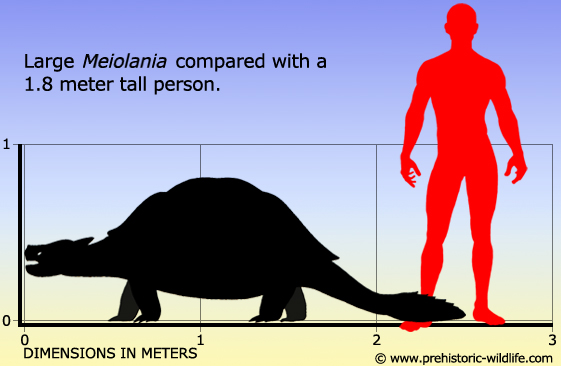
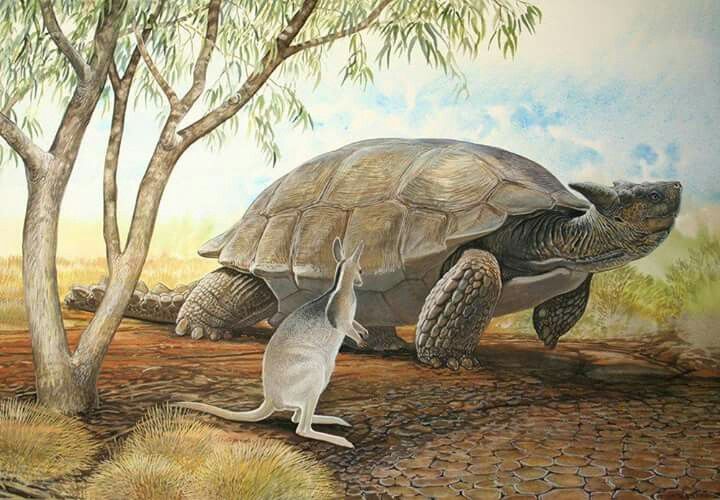
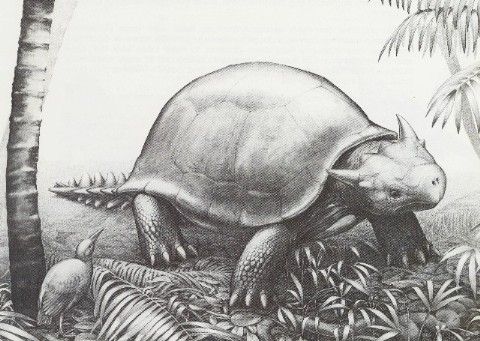
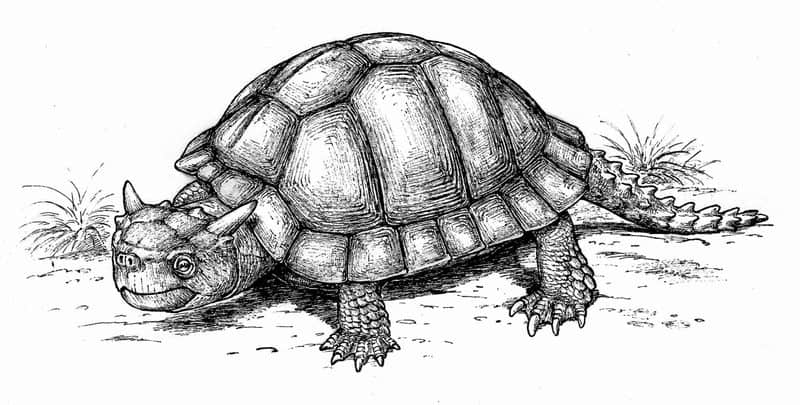
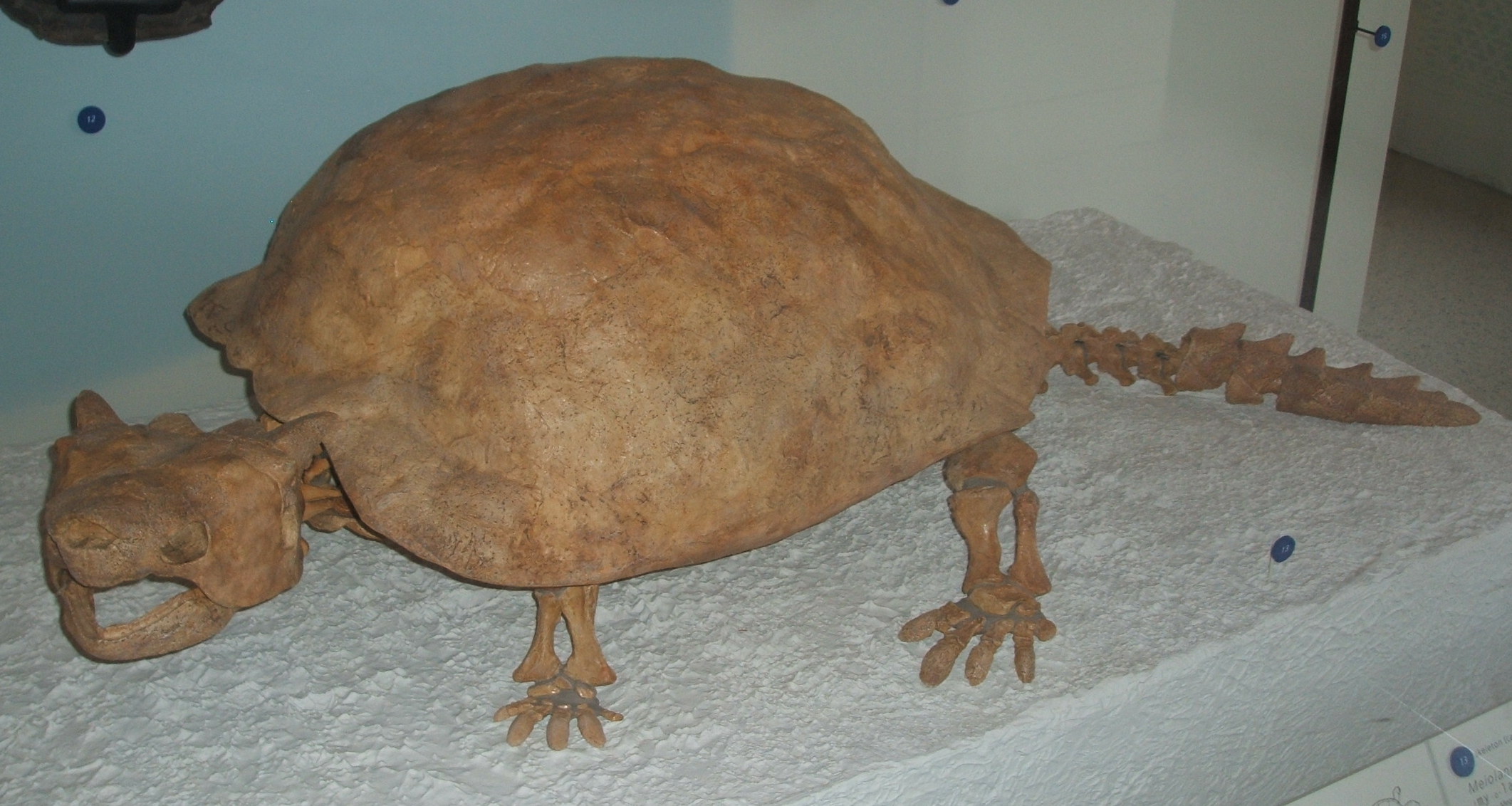
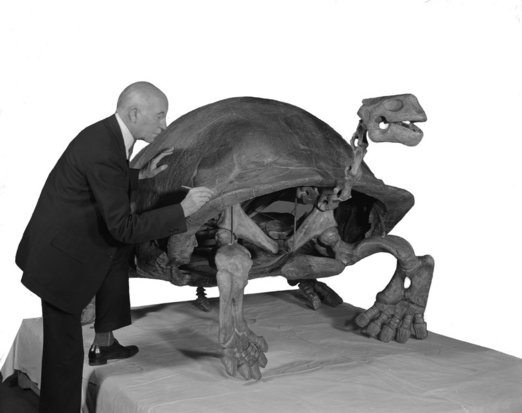
Scientists have identified 4 or 5 species of Meiolania: M. brevicollis and an unnamed species from the Australian mainland, M. mackayi (the type species) from New Caledonia, M. platyceps from Lord Howe Island, and a fifth species of meiolaniid from Viti Levu, Fiji which may or may not belong to genus Meiolania. At up to 8 feet long, the unnamed species of Australian Meiolania, is the second largest terrestrial turtle ever, surpassed only by Megalochelys atlas from Asia. The smallest Meiolania species, M. mackayi, had a carapace length of 2.3 feet (70 cm). When this species was first discovered, it was thought to be a lizard, hence the name Meiolania, which is meant to reflect a relation to the massive Australian varanid megalania (meaning "great roamer") (Varanus priscus). Meiolania had an unusually shaped skull that sported many knob-like and horn-like protrusions. Two large horns faced sideways, and would have prevented the animal fully withdrawing its head into its shell. The tail was protected by armored "rings," and sported thorn-like spikes at the end. The body form of Meiolania appeared to have convergently evolved to look like dinosaurian ankylosaurians and xenarthran glyptodonts. It is thought that M. platyceps went extinct on the Lord Howe Island before human occupation as a result of postglacial sea level rise. Mainland species however were likely killed changing climate, humans, or both. Also can we take time to appreciate the scientists that named a Meiolania relative, Ninjemys oweni (meaning "Owen's ninja turtle"), who was named after the Ninja turtles?

meiolania-size.jpg

35c4967891d57f0473b7e4a122cc0e3a.jpg

340

47431ec9be3644970499a8a760e755df.jpg

1475_meiolania_alexey_katz.jpg

Meiolania.jpg

Below: Megalochelys atlas
Brown1931.jpg


Below: Ninjemys oweni
da1e29w-e6c3d2e6-bb4f-43a1-8730-6e6b1ffcdbab.png


Picture and Information Resources:
 
NUMBER NINETY-SEVEN: Ophidiophobia anyone?

latest


  • Animal: Laophis crotaloides
  • Named By: Richard Owen - 1857
  • Classification: Life, Eukaryota, Animalia, Chordata, Vertebrata, Gnathostomata, Osteichthyes, Sarcopterygii, Tetrapodomorpha, Tetrapoda, Reptiliomorpha, Amniota, Sauropsida, Eureptilia, Sauria, Lepidosauromorpha, Lepidosauria, Squamata, Toxicofera, Ophidia, Serpentes, Viperidae
  • When: ~ 4,000,000 B.C.E. (Zanclean stage of the Pliocene epoch)
  • Where: Greece
  • Size: 10 and 13 feet (3 and 4 m) long and perhaps 57 pounds (26 kg)
  • Diet: Carnivore
Laophis was both the largest viper and perhaps the heaviest venomous snake of all time.
The tale of the enormous viper begins in 1857, when paleontologist Sir Richard Owen described 13 fossilized snake vertebrae found near Thessaloniki, Greece. Owen named the specimen Laophis crotaloides and reported it as the largest viper ever in the Quarterly Journal of The Geological Society. But the original 13 vertebrae have been lost, and no one had ever found any additional fossils to back up Owen's claim. That is, until 2014, when a single vertebra, barely an inch long, found near Thessaloniki, confirmed the existence of Owen's enormous viper. Snakes are notorious for their ill-preserved remains, but even so scientists can say that Laophis slithered alongside large mammals such as deer and horses, and likely ate small mammals. It seemed to have inhabited grasslands.

latest


Picture and Information Resources:
 
NUMBER NINETY-EIGHT: Hi

800px-Henodus_chelyops_life_restoration.jpg

  • Animal: Henodus chelyops
  • Name Pronunciation: Hen-oh-dus
  • Name Meaning: "Single tooth with a turtle face"
  • Named By: Friedrich von Huene‭ ‬-‭ ‬1936
  • Classification: Classification: Life, Eukaryota, Animalia, Chordata, Vertebrata, Gnathostomata, Osteichthyes, Sarcopterygii, Tetrapodomorpha, Tetrapoda, Reptiliomorpha, Amniota, Sauropsida, Archosauromorpha, Pantestudines, Sauropterygia, Placodontia,‭ ‬Henondontidae
  • When: ~ 228,000,000 B.C.E. to 220,000,000 B.C.E. (Late Triassic epoch)
  • Where: Tübingen, Germany
  • Size: 3.3 feet (1 m) long
  • Diet: Shellfishes
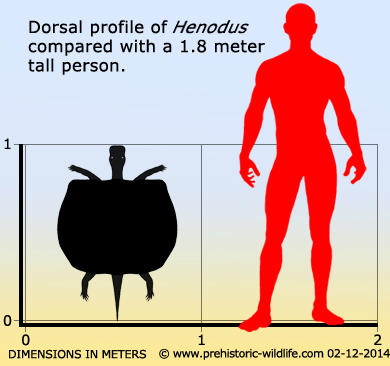
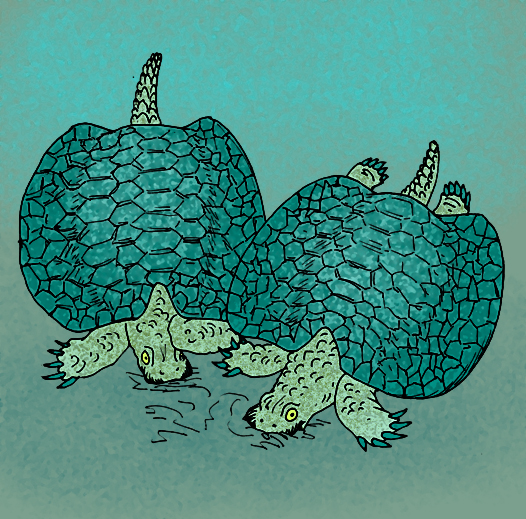
Henodus, like many other placodonts, had a superficial resemblance to a turtle.‬ Henodus had one of the most well developed shells of all placodonts made up by a fusion of a large number of scutes with a covering ‬of‭ ‬horn,‭ ‬and is almost as wide as it is long.‭ ‬Aside from being very tough this made the shell was large enough that most marine predators of the Triassic couldn’t get the shell of a full grown adult between their jaws.‭ ‬This shell however would have been a great hindrance when Henodus was on land and it may be that as a result Henodus spent most of its life in the water except for‭ ‬laying eggs‭ (‬assuming that placodonts laid eggs‭)‬.‭ ‬This is especially the case when you consider that Henodus had a plastron‭ (‬lower shell‭) ‬like a turtle,‭ ‬while the carapace‭ (‬upper shell‭) ‬was actually fused to the spine. Henodus differed from most other placodonts in that the mouth was broad and squared off instead of pointed.‭ ‬Henodus probably used this mouth to shovel through sediment to find shellfish that were buried just below the surface,‭ ‬while other placodonts with pointed mouths were better able to get shell fish wedged between rocks.‭ ‬Such feeding behavior would also make Henodus a niche specialist that allowed it to share ecosystems with other placodonts without competition with them.

henodus-size.jpg

palaeozoology-triassic-period-reptiles-henodus-art-work-by-james-robins-F02MAC.jpg

Henodus_chelyops.jpg

800px-Henodus_chelyops_1.JPG


Picture and Information Resources:
 
Randall the red-nosed Ugrunaaluk wishes everyone a happy holidays! Ugrunaaluk kuukpikensis is a dubious species of saurolophine hadrosaurid which lived in Alaska 69 million years ago (nice). Described in 2015, in 2017 it was dubbed a nomen dubium, indistinguishable from Edmontosaurus.

340


Sources:
How is it possible to know the color of the dinosaur's nose.
 
We don't, it's a speculative reconstruction. That being said, given good preservation conditions, we can learn the colors of an extinct species.

I think it's only happened once or twice in Dinosaurs? One of those species like be a good contender for this thread ;)

~Thylo
 
NUMBER NINETY-NINE: You'll go batty over this next species
39-desmodusdraculae.png

  • Animal: Giant vampire bat (Desmodus draculae)
  • Name Meaning: draculae honors the infamous Count Dracula
  • Named By: G.S. Morgan - 1988
  • Classification: Classification: Life, Eukaryota, Animalia, Chordata, Vertebrata, Gnathostomata, Osteichthyes, Sarcopterygii, Tetrapodomorpha, Tetrapoda, Reptiliomorpha, Amniota, Synapsida, Therapsida, Mammalia, Placentilia, Boreoeutheria, Chiroptera, Phyllostomidae
  • When: ~ 2,500,000 B.C.E. to recent Holocene epoch
  • Where: Argentina, Mexico, Ecuador, Brazil, Venezuela, Belize, and Bolivia
  • Size: *see below*
  • Diet: Mammal blood
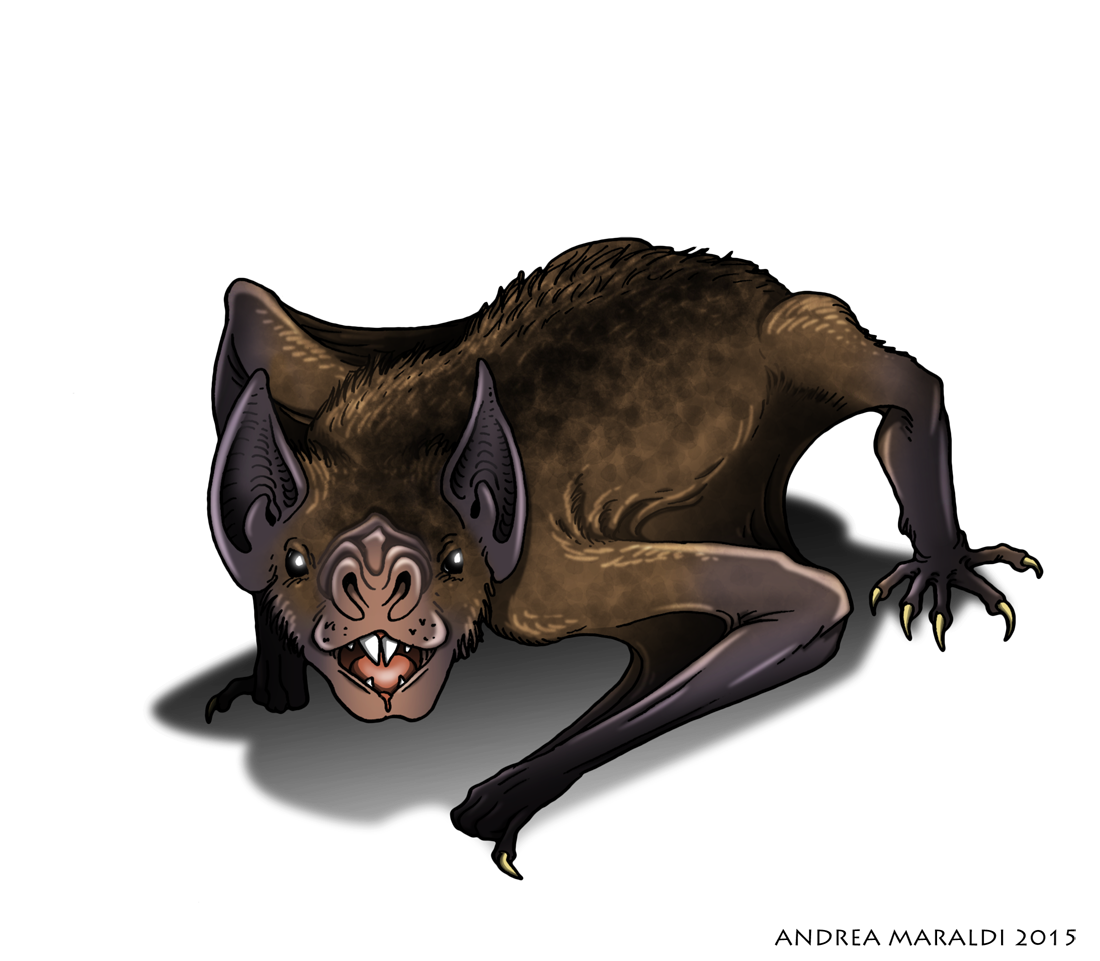
The giant vampire bat was the largest vampire bat ever. Fossils suggest it was 25 to 30 percent larger than the extant common vampire bat. The length of its skull is 1.23 inches (31.2 mm), and its humerus length was approximately 2 inches (51 mm), as compared to the extant common vampire bat at 1.28 to 1.67 inches (32.4 to 42.4 mm). Its skull was long and narrow, and its face had an upturned snout. Based on its skull dimensions, it may have had a wingspan of approximately 20 inches (50 cm) and a body mass of 2.1 ounces (60 g). The proportions are equivalent the a smaller megabat or larger microbat. Some researchers believe that giant vampire bat would have preyed on megafauna, while others believe that they would have preyed on Caviomorpha. Other potential prey items that would have been available to D. draculae include plains viscacha, deer, and camelids. It has been speculated that D. draculae was part of the inspiration for the Mayan bat-god Camazotz. D. draculae could have also inspired legends of the Mura people, an indigenous people in Brazil, about the Caoera, a blood-eating bat the size of a vulture. The date and reason for its extinction are currently unknown. One hypothesis for its extinction states that it was that it was highly specialized on megafaunal mammals as prey, which became extinct in the Quaternary extinction event, and D. draculae was unable to switch to smaller prey. Anecdotal reports of "large bats attacking cattle and horses" in Brazil are likely first-hand exaggerations of bat species whose behavior is recorded as interacting with these animals.

73VBaW8wybCLhCAhwMQVJ7yEokxtgi7o_l_nm78yia8.png


Picture and Information Resources:
 
Actually 7. ;) (non-avian species)
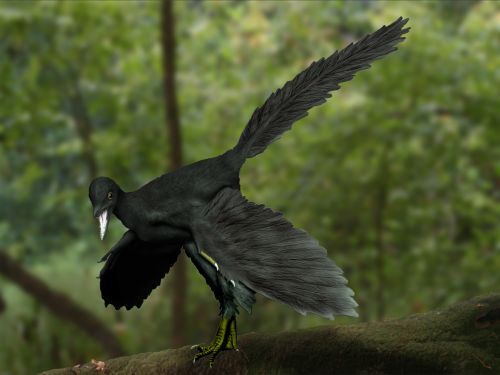
  1. Anchiornis huxleyi
    image_5485e-Anchiornis.jpg
  2. Archaeopteryx lithographica
    Archaeopteryx_NT.jpg
  3. Borealopelta markmitchelli
    image_5097_1e-Borealopelta-markmitchelli.jpg
  4. Caihong juji
    image_5637e-Caihong-juji.jpg
  5. Microraptor gui
    microraptor-gui_julio-lacerda.jpg
  6. Psittacosaurus sp.
    800px-Psittacosaurus_model.jpg
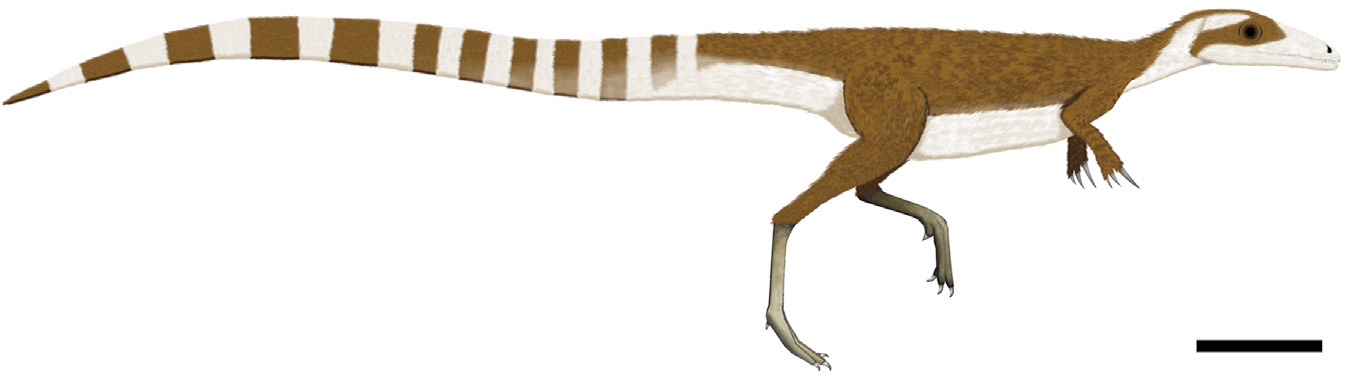
  7. Sinosauropteryx prima
    Sinosauropteryx_color.jpg
From Wikipedia
The North American species had a drab spotted patterning
upload_2019-12-26_23-38-44.png
The Asian species had a stripe patterning like an Eland.
upload_2019-12-26_23-39-36.png
 

Attachments

  • upload_2019-12-26_23-38-44.png
    upload_2019-12-26_23-38-44.png
    378 KB · Views: 34
  • upload_2019-12-26_23-39-36.png
    upload_2019-12-26_23-39-36.png
    248.5 KB · Views: 34
Back
Top