You are using an out of date browser. It may not display this or other websites correctly.
You should upgrade or use an alternative browser.
You should upgrade or use an alternative browser.
ZooChat Cup Group B2: Chester vs Vienna
- Thread starter CGSwans
- Start date

Hmm this ones a bit difficult simply because Chester is preparing to convert it's current African exhibit into a brand new African exhibit. However, the current quality of the still existing enclosures is not to be dismissed. The hoofstock all have very large and naturalistic enclosures as do the carnivores, and there are multiple very large and lush aviaries for African birds. The zoo also has an outstanding Black Rhino breeding program which covers multiple acres split between multiple houses and yards.
Mammals
Red Forest Duiker
Kirk's Dik-Dik
African Forest Buffalo
Eastern Bongo
Western Sitatunga
Nubian (Rothschild's) Giraffe
Okapi
Common Warthog
Red River Hog
African Wild Dog
Sudan Cheetah
Dwarf Mongoose
Meerkat
Cape Rock Hyrax
Karoo Short-Eared Sengi
Grevy's Zebra
Eastern Black Rhinoceros
Mandrill
Western Chimpanzee
South African Pygmy Mouse
Aardvark
I'll try to get to birds, reptiles, etc. tomorrow if I have time. If not, someone else who's actually familiar with the collection feel free!
~Thylo
Mammals
Red Forest Duiker
Kirk's Dik-Dik
African Forest Buffalo
Eastern Bongo
Western Sitatunga
Nubian (Rothschild's) Giraffe
Okapi
Common Warthog
Red River Hog
African Wild Dog
Sudan Cheetah
Dwarf Mongoose
Meerkat
Cape Rock Hyrax
Karoo Short-Eared Sengi
Grevy's Zebra
Eastern Black Rhinoceros
Mandrill
Western Chimpanzee
South African Pygmy Mouse
Aardvark
I'll try to get to birds, reptiles, etc. tomorrow if I have time. If not, someone else who's actually familiar with the collection feel free!
~Thylo

Not *quite* as much of a shoo-in for Chester as it would have been had it drawn South America  but still a pretty solid win for them in my opinion; I'll naturally do a proper post with photographs anon, but between the best Black Rhinoceros exhibit complex I have ever seen, the best African Hunting Dog complex I have ever seen, the best Cheetah complex I have ever seen, an extremely good (and regularly-breeding) exhibit complex for Rothschild's Giraffe and Okapi, and the excellent Tsavo and Wetland aviaries...... I reckon I feel safe voting 3-0 for Chester.
but still a pretty solid win for them in my opinion; I'll naturally do a proper post with photographs anon, but between the best Black Rhinoceros exhibit complex I have ever seen, the best African Hunting Dog complex I have ever seen, the best Cheetah complex I have ever seen, an extremely good (and regularly-breeding) exhibit complex for Rothschild's Giraffe and Okapi, and the excellent Tsavo and Wetland aviaries...... I reckon I feel safe voting 3-0 for Chester.
Vienna has to offer one of the best African bird walkthroughs, the best integration of old and new zoo architecture, with the Cheetah enclosure, Giraffe house and the African savannah, and easily the best Elephant shrew enclosure in Europe. So I could never vote 3-0 either way.

Vienna species list:
Chester: 21 species
Vienna, in mammals, wins 26-21 in species.
Vienna also has a fantastic giraffe house, having transformed the old one into a modern and innovative house whilst still retaining the structure and form of the old one. Whilst many of the antelopes and the elephants may not have much space, they live in enclosures packed with history and symbolism.
The dwarf mongoose live in a joint enclosure with Southern ground hornbills and/or red-billed hornbills, in a fantastic exhibit which I really like. Meanwhile, the rat house holds the pouched rats, mole rats and many more in large, glass fronted and nocturnal enclosures inside a building that used to be for hippos but has now been renovated to entirely house rats.
The lions live in a large exhibit with some nice viewing opportunities. Next to the exhibit is a typical lion cage from the zoo from the 1800s for comparison with today's enclosure. The hippo exhibit is nice but the indoor exhibit is not very clean and the water is brown, rendering the underwater viewing useless.
The cheetah exhibit is nice as well, consisting of a pair of paddocks coming off he Cat House, which was recently renovated to house their cats in a more modern fashion. It is a very nice house and the enclosures bordering it are even nicer.
The colobus live in the old monkey house, where they have quite a large indoor area allowing for the whole troop to live there. The old Monkey house was recently revamped for viewing on two levels, with all of the stunning carving and craftsmanship preserved to recreate a few very beautiful enclosures for smaller monkeys.
Their Round-eared elephant shrew enclosure is second to none in Europe and probably in North America.
The Egyptian fruit bats are housed in the Nocturnal section of the Rainforest House. This building is fantastic, with many different areas representing different sub-biomes inside the rainforest.
And lastly, the jewel in Vienna's crown (in my opinion). The Bird houses at the top of the zoo are the most wonderful walkthrough aviaries certainly I have ever seen. They combine history with modernisation and the birds' wellbeing with visitor viewing to create a fantastic exhibit. As well as being aesthetically beautiful, it holds a great diversity of birds from Africa and showcases them in what I think may well be the oldest bird house in the world.
The most special thing about Vienna is that it combines history with modern practise to create exhibits which are not only pleasant to view but also great for the animals.
I am finding it hard to decide whether to vote 2-1 Vienna or 2-1 Chester but for now I'm going for Vienna.
I don't doubt that Vienna would have more birds as well.
- Addra gazelle
- African savanna elephant
- Banded mongoose
- Barbary lion
- Barbary macaque
- Barbary sheep
- Burchell's zebra
- Common eland
- East African dwarf mongoose
- Egypt hedgehog
- Egyptian fruit bat
- Greater Egyptian jerboa
- Hippopotamus
- King colobus
- Kirk's dik-dik
- Meerkat
- Naked mole rat
- Northeast African spiny mouse
- Northern giant pouched rat
- Nyala
- Reticulated giraffe
- Rothschild's giraffe
- Round-eared elephant shrew
- South African cheetah
- Sub-Saharan pygmy mouse
Chester: 21 species
Vienna, in mammals, wins 26-21 in species.
Vienna also has a fantastic giraffe house, having transformed the old one into a modern and innovative house whilst still retaining the structure and form of the old one. Whilst many of the antelopes and the elephants may not have much space, they live in enclosures packed with history and symbolism.
The dwarf mongoose live in a joint enclosure with Southern ground hornbills and/or red-billed hornbills, in a fantastic exhibit which I really like. Meanwhile, the rat house holds the pouched rats, mole rats and many more in large, glass fronted and nocturnal enclosures inside a building that used to be for hippos but has now been renovated to entirely house rats.
The lions live in a large exhibit with some nice viewing opportunities. Next to the exhibit is a typical lion cage from the zoo from the 1800s for comparison with today's enclosure. The hippo exhibit is nice but the indoor exhibit is not very clean and the water is brown, rendering the underwater viewing useless.
The cheetah exhibit is nice as well, consisting of a pair of paddocks coming off he Cat House, which was recently renovated to house their cats in a more modern fashion. It is a very nice house and the enclosures bordering it are even nicer.
The colobus live in the old monkey house, where they have quite a large indoor area allowing for the whole troop to live there. The old Monkey house was recently revamped for viewing on two levels, with all of the stunning carving and craftsmanship preserved to recreate a few very beautiful enclosures for smaller monkeys.
Their Round-eared elephant shrew enclosure is second to none in Europe and probably in North America.
The Egyptian fruit bats are housed in the Nocturnal section of the Rainforest House. This building is fantastic, with many different areas representing different sub-biomes inside the rainforest.
And lastly, the jewel in Vienna's crown (in my opinion). The Bird houses at the top of the zoo are the most wonderful walkthrough aviaries certainly I have ever seen. They combine history with modernisation and the birds' wellbeing with visitor viewing to create a fantastic exhibit. As well as being aesthetically beautiful, it holds a great diversity of birds from Africa and showcases them in what I think may well be the oldest bird house in the world.
The most special thing about Vienna is that it combines history with modern practise to create exhibits which are not only pleasant to view but also great for the animals.
I am finding it hard to decide whether to vote 2-1 Vienna or 2-1 Chester but for now I'm going for Vienna.
I don't doubt that Vienna would have more birds as well.

I feel like you mixed up a bunch of things...
Mole rats are in Desert house, not in Rat house. Rat house holds Cloud rats, Pouched rats and Brown rats.
Egyptian fruit bats are in Hippo house (not like I've seen them though
 )
)
the rat house holds the pouched rats, mole rats and many more
Mole rats are in Desert house, not in Rat house. Rat house holds Cloud rats, Pouched rats and Brown rats.
The Egyptian fruit bats are housed in the Nocturnal section of the Rainforest House.
Egyptian fruit bats are in Hippo house (not like I've seen them though
)
For me it's a tie pretty much when it comes to the animals. Until I factor in my favorite species; rhinoceroses. Which Chester happens to have a good amount of that breed well, as well as having a great exhibit. Both zoos have very good exhibits from what I could tell based on pictures scattered around the internet.
Chester also does a lot for the black rhino conservation wise. So that's what for me decided to go 2-1 in favor of Chester Zoo.
Chester also does a lot for the black rhino conservation wise. So that's what for me decided to go 2-1 in favor of Chester Zoo.
Right...... this will naturally involve (in part) cannibalising some of the previous pro-Chester photo posts I have made for the Zoochat Cup, so bear with me 
African Wild Dog
This is the largest and best exhibit I have seen for this species, comprising two large paddocks - each larger than most African Wild Dog exhibits which one can see elsewhere in Europe - along with both onshow dens within a central viewing area and offshow dens on the outer perimeter of the exhibit complex, and (I believe) further hidden dens within the exhibit itself.


Meerkat
Surprisingly not many photographs of this exhibit in the gallery! It's a decent exhibit, but nothing special - good-sized indoor exhibit, and a good-sized outdoor exhibit. It's actually been a few years since I've bothered to look at it so I am not sure if they are still mixed with South African Porcupine.

Dwarf Mongoose
One of the more "prosaic" carnivore exhibits at the collection, this is nonetheless a pretty good enclosure and perhaps on the larger-than-average side for the species held within. Again, not too many photographs in the gallery of this one.


Sudan Cheetah
This exhibit complex comprises one of the largest I have ever seen for the species - the massive complex of both on-and-offshow exhibits at Hamerton is larger, but otherwise I am hard pushed to think of any bigger ones - and moreover the best without a doubt. Viewing of the multiple enclosures within the complex can be achieved via a covered yurt structure at the foot of one enclosure, with a footpath snaking alongside this exhibit and a neighbouring one, going up a ramp onto an elevated walkway from which these exhibits can be viewed. The exhibits contain large areas of space for the inhabitants, covered shelters and patches of thick vegetation, and (despite the degree to which the public can view the complex) plenty of scope for the inhabitants to escape view. There are also, I believe, a number of offshow holding areas.


African Wild Dog
This is the largest and best exhibit I have seen for this species, comprising two large paddocks - each larger than most African Wild Dog exhibits which one can see elsewhere in Europe - along with both onshow dens within a central viewing area and offshow dens on the outer perimeter of the exhibit complex, and (I believe) further hidden dens within the exhibit itself.
Meerkat
Surprisingly not many photographs of this exhibit in the gallery! It's a decent exhibit, but nothing special - good-sized indoor exhibit, and a good-sized outdoor exhibit. It's actually been a few years since I've bothered to look at it
so I am not sure if they are still mixed with South African Porcupine.Dwarf Mongoose
One of the more "prosaic" carnivore exhibits at the collection, this is nonetheless a pretty good enclosure and perhaps on the larger-than-average side for the species held within. Again, not too many photographs in the gallery of this one.
Sudan Cheetah
This exhibit complex comprises one of the largest I have ever seen for the species - the massive complex of both on-and-offshow exhibits at Hamerton is larger, but otherwise I am hard pushed to think of any bigger ones - and moreover the best without a doubt. Viewing of the multiple enclosures within the complex can be achieved via a covered yurt structure at the foot of one enclosure, with a footpath snaking alongside this exhibit and a neighbouring one, going up a ramp onto an elevated walkway from which these exhibits can be viewed. The exhibits contain large areas of space for the inhabitants, covered shelters and patches of thick vegetation, and (despite the degree to which the public can view the complex) plenty of scope for the inhabitants to escape view. There are also, I believe, a number of offshow holding areas.
Last edited:
Dwarf Mongoose
One of the more "prosaic" carnivore exhibits at the collection, this is nonetheless a pretty good enclosure and perhaps on the larger-than-average side for the species held within. Again, not too many photographs in the gallery of this one.
It is worth mentioning, in update to the above remarks, that I heard only this morning that some of the Dwarf Mongoose group has now been moved into the Cape Hyrax exhibit (photographs of which anon) so the zoo effectively has two exhibits for this species now
Building up photo posts for this thread is proving slightly harder than expected, thanks to the fact the gallery search function seems to have gone offline
Eastern Black Rhinoceros
The complex for this species at Chester is (as I have already noted) the best for the species in Europe in my opinion, with multiple large and high-quality enclosures and houses both off-display and on-display, and regular breeding taking place at the collection. Moreover, the zoo is deeply involved in both the captive breeding programme for the species (the CEO of the zoo being the studbook holder for the species) and the in-situ conservation efforts taking place in Africa itself - in recent months they spearheaded the reintroduction of five individuals from the European captive programme into Rwanda.
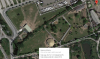
There are, I believe, a total of seven paddocks for the Eastern Black Rhinoceros - three are entirely off-display, but can be seen from the roundabout leading into the car park of the Zoo. These are the outside enclosures for a large offshow house.
A further two large paddocks are served by the "new" onshow roundhouse, and are partially connected by underpasses etc. A third large paddock in this area is unconnected, and is served by an offshow house located behind the Bembe restaurant.
A final paddock is served by the "old" onshow house, which is now off-display, and which also serves as indoor housing for the Warthog enclosure visible in the entrance plaza.
The Black Rhinoceros at Chester Zoo are swapped around from paddock to paddock as required, variously for reasons of group harmony, breeding purposes, new arrivals, departures and so forth.
A satellite view of the complex from Google Maps:


The complex for this species at Chester is (as I have already noted) the best for the species in Europe in my opinion, with multiple large and high-quality enclosures and houses both off-display and on-display, and regular breeding taking place at the collection. Moreover, the zoo is deeply involved in both the captive breeding programme for the species (the CEO of the zoo being the studbook holder for the species) and the in-situ conservation efforts taking place in Africa itself - in recent months they spearheaded the reintroduction of five individuals from the European captive programme into Rwanda.
There are, I believe, a total of seven paddocks for the Eastern Black Rhinoceros - three are entirely off-display, but can be seen from the roundabout leading into the car park of the Zoo. These are the outside enclosures for a large offshow house.
A further two large paddocks are served by the "new" onshow roundhouse, and are partially connected by underpasses etc. A third large paddock in this area is unconnected, and is served by an offshow house located behind the Bembe restaurant.
A final paddock is served by the "old" onshow house, which is now off-display, and which also serves as indoor housing for the Warthog enclosure visible in the entrance plaza.
The Black Rhinoceros at Chester Zoo are swapped around from paddock to paddock as required, variously for reasons of group harmony, breeding purposes, new arrivals, departures and so forth.
A satellite view of the complex from Google Maps:
Attachments
Last edited:
This is the largest and best exhibit I have seen for this species, comprising two large paddocks - each larger than most African Wild Dog exhibits which one can see elsewhere in Europe - along with both onshow dens within a central viewing area and offshow dens on the outer perimeter of the exhibit complex, and (I believe) further hidden dens within the exhibit itself.
This exhibit complex comprises one of the largest I have ever seen for the species - the massive complex of both on-and-offshow exhibits at Hamerton is larger, but otherwise I am hard pushed to think of any bigger ones - and moreover the best without a doubt.
Both are smaller than the exhibits at Montpellier zoo I think, which is the first zoo that came to mind that housed both species
Warthog
This exhibit - as already noted - is located between the main entrance complex (from which it is viewed) and the Black Rhinoceros complex, and the indoor housing for the warthogs is located within the "old" rhinoceros house. Note that the Banded Mongooses in one of these photographs are no longer in the collection.


Cape Rock Hyrax
This exhibit (located within the larger African Hunting Dog complex) comprises a pair of connected enclosures containing a large amount of rockwork, sheer cliff faces and other climbing opportunities - as noted, I believe this exhibit now also contains Dwarf Mongoose. The first photograph was taken during the construction process for this exhibit, the second shows a closeup of the interior of one of the enclosures, and the final two show the frontage of each enclosure.


Aardvark
This exhibit (located within the larger African Hunting Dog complex) comprises an indoor enclosure and a large and recently-renovated outdoor enclosure; the latter contains a deep sandy substrate allowing the inhabitants to exhibit natural digging behaviour, and smaller rock shelters.


This exhibit - as already noted - is located between the main entrance complex (from which it is viewed) and the Black Rhinoceros complex, and the indoor housing for the warthogs is located within the "old" rhinoceros house. Note that the Banded Mongooses in one of these photographs are no longer in the collection.
Cape Rock Hyrax
This exhibit (located within the larger African Hunting Dog complex) comprises a pair of connected enclosures containing a large amount of rockwork, sheer cliff faces and other climbing opportunities - as noted, I believe this exhibit now also contains Dwarf Mongoose. The first photograph was taken during the construction process for this exhibit, the second shows a closeup of the interior of one of the enclosures, and the final two show the frontage of each enclosure.
Aardvark
This exhibit (located within the larger African Hunting Dog complex) comprises an indoor enclosure and a large and recently-renovated outdoor enclosure; the latter contains a deep sandy substrate allowing the inhabitants to exhibit natural digging behaviour, and smaller rock shelters.
Last edited:
African Hoofstock Paddocks
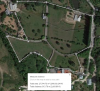
There are several large hoofstock paddocks surrounding the African Hunting Dog complex, all of which are high quality and well-suited to their inhabitants:

Clockwise these comprise:
Upper right - large set of paddocks for Grevy's Zebra
Upper right corner - one of two exhibits for Kirk's Dik-dik
Lower right - Mountain Bongo
Lower left - Western Sitatunga
Mid-left - Roan Antelope
Upper left - currently vacant
Grevy's Zebra


Kirk's Dik-dik
This photograph shows the exhibit next to Grevy's Zebra, and was taken shortly after the exhibit opened - it is now rather more well vegetated. There is another exhibit for the species elsewhere in the zoo, mixed with Grey Crowned Cranes - hopefully I will be able to locate better shots of this enclosure, and shots of the mixed exhibit, if the search function comes back online anon. It is worth noting that the species breeds semi-regularly at the collection.

Mountain Bongo

Western Sitatunga

Roan Antelope
Note that the species regularly breeds in this exhibit.


There are several large hoofstock paddocks surrounding the African Hunting Dog complex, all of which are high quality and well-suited to their inhabitants:
Clockwise these comprise:
Upper right - large set of paddocks for Grevy's Zebra
Upper right corner - one of two exhibits for Kirk's Dik-dik
Lower right - Mountain Bongo
Lower left - Western Sitatunga
Mid-left - Roan Antelope
Upper left - currently vacant
Grevy's Zebra
Kirk's Dik-dik
This photograph shows the exhibit next to Grevy's Zebra, and was taken shortly after the exhibit opened - it is now rather more well vegetated. There is another exhibit for the species elsewhere in the zoo, mixed with Grey Crowned Cranes - hopefully I will be able to locate better shots of this enclosure, and shots of the mixed exhibit, if the search function comes back online anon. It is worth noting that the species breeds semi-regularly at the collection.
Mountain Bongo
Western Sitatunga
Roan Antelope
Note that the species regularly breeds in this exhibit.
Attachments
Last edited:
Giraffe and Okapi Houses
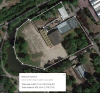
This large complex comprises a large and spacious outdoor exhibit for a sizeable and regularly-breeding group of pure Rothschild's Giraffe, an indoor house for same, an indoor house for Okapi (also regularly breeding), Red Natal Duiker and various small mammals, reptiles and fish, two connected outdoor paddocks for Okapi and the Duiker (the two species being mixed), and a number of offshow houses and semi-offshow paddocks for further Okapi.

Top - Offshow Okapi housing and paddocks
Left - Rothschild Giraffe
Right - Okapi and Duiker
Centre - Indoor housing for above.
Rothschild's Giraffe
Hopefully photographs showing the larger portion of this exhibit will be available anon - this is the best I can do using Google:


Okapi and Red Natal Duiker


Interior of Okapi House
The interior of the Okapi house contains viewing into the onshow indoors for the Okapi and Red Natal Duiker, along with exhibits for:
Acacia Rat
South African Pygmy Mouse
Two exhibits for Round-eared Sengi
(fish taxa, someone who pays more attention can fill this in )
Western Gaboon Viper


Semi-offshow paddocks behind Okapi House

This large complex comprises a large and spacious outdoor exhibit for a sizeable and regularly-breeding group of pure Rothschild's Giraffe, an indoor house for same, an indoor house for Okapi (also regularly breeding), Red Natal Duiker and various small mammals, reptiles and fish, two connected outdoor paddocks for Okapi and the Duiker (the two species being mixed), and a number of offshow houses and semi-offshow paddocks for further Okapi.
Top - Offshow Okapi housing and paddocks
Left - Rothschild Giraffe
Right - Okapi and Duiker
Centre - Indoor housing for above.
Rothschild's Giraffe
Hopefully photographs showing the larger portion of this exhibit will be available anon - this is the best I can do using Google:
Okapi and Red Natal Duiker
Interior of Okapi House
The interior of the Okapi house contains viewing into the onshow indoors for the Okapi and Red Natal Duiker, along with exhibits for:
Acacia Rat
South African Pygmy Mouse
Two exhibits for Round-eared Sengi
(fish taxa, someone who pays more attention can fill this in
)Western Gaboon Viper
Semi-offshow paddocks behind Okapi House
Attachments
Last edited:
Congo Buffalo
A pretty large, spacious and wooded outdoor paddock containing a wallow for the inhabitants, along with an outdoor hardstanding and indoor stalls; this is located opposite the giraffe/okapi complex.


Western Chimpanzee
Although I've never been particularly fond of Chimpanzees, even I have to admit that Chester has a large and very pleasant exhibit for the species - and, most notably, after several years of methodically testing their group for purity and swapping individuals to-and-from other collections, they have now built a pure group of Western Chimpanzees and have resumed breeding the species after a deliberate hiatus whilst the testing took place. Again, I've used Google Maps to supplement the difficulty in finding photographs from the gallery today, and to give a picture of the exhibit size.
The indoor onshow exhibit is a little small and shabby, but provides a lot of climbing opportunities - and, I believe, the inhabitants also have offshow housing.


Red River Hog
This exhibit is located between the Western Chimpanzee exhibit and the entrance to the Tropical Realm, and once comprised the outdoor exhibit for the gorillas once held at the zoo in the 1980s.


Monkey House
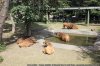
Among other species, this house contains two species pertinent to this round - Lion-tailed Macaque and Mandrill - and houses them in rather excellent indoor exhibits, along with some of the best outdoor exhibits for their species I have ever seen, both of which provide the inhabitants with a ridiculously high level of climbing opportunities and (in the case of the outdoor exhibits) a lot of well-vegetated locations in which to hide from view if they so desire:


Google isn't throwing up many photos from the gallery for the indoor exhibits, only these two:


A pretty large, spacious and wooded outdoor paddock containing a wallow for the inhabitants, along with an outdoor hardstanding and indoor stalls; this is located opposite the giraffe/okapi complex.
Western Chimpanzee
Although I've never been particularly fond of Chimpanzees, even I have to admit that Chester has a large and very pleasant exhibit for the species - and, most notably, after several years of methodically testing their group for purity and swapping individuals to-and-from other collections, they have now built a pure group of Western Chimpanzees and have resumed breeding the species after a deliberate hiatus whilst the testing took place. Again, I've used Google Maps to supplement the difficulty in finding photographs from the gallery today, and to give a picture of the exhibit size.
The indoor onshow exhibit is a little small and shabby, but provides a lot of climbing opportunities - and, I believe, the inhabitants also have offshow housing.
Red River Hog
This exhibit is located between the Western Chimpanzee exhibit and the entrance to the Tropical Realm, and once comprised the outdoor exhibit for the gorillas once held at the zoo in the 1980s.
Monkey House
Among other species, this house contains two species pertinent to this round - Lion-tailed Macaque and Mandrill - and houses them in rather excellent indoor exhibits, along with some of the best outdoor exhibits for their species I have ever seen, both of which provide the inhabitants with a ridiculously high level of climbing opportunities and (in the case of the outdoor exhibits) a lot of well-vegetated locations in which to hide from view if they so desire:
Google isn't throwing up many photos from the gallery for the indoor exhibits, only these two:
Attachments
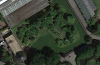
Last edited:
I am finding it hard to decide whether to vote 2-1 Vienna or 2-1 Chester but for now I'm going for Vienna.
I don't doubt that Vienna would have more birds as well.
Before I start posting those photographs I can root up for the bird collection, I thought I'd run through the species at Chester relevant for this challenge:
Old World comb duck (Sarkidiornis melanotos)
African white-backed duck (Thalassornis leuconotus leuconotus)
Black stork (Ciconia nigra)
Black-necked weaver (Ploceus nigricollis nigricollis)
Blacksmith lapwing (Vanellus armatus)
Blue-naped mousebird (Urocolius macrourus)
Cape teal (Anas capensis)
Common waxbill (Estrilda astrild)
Congo peafowl (Afropavo congensis)
Kenya crested guineafowl (Guttera pucherani)
Eastern grey-crowned crane (Balearica regulorum gibbericeps)
Emerald starling (Lamprotornis iris)
Ferruginous duck (Aythya nyroca)
Garganey (Spatula querquedula)
Golden-breasted starling (Lamprotornis regius)
Hamerkop (Scopus umbretta)
Hottentot Teal (Spatula hottentota)
Kilimanjaro White-eye (Zosterops poliogastrus eurycricotus)
Lavender Waxbill (Estrilda caerulescens)
Lilac-breasted roller (Coracias caudatus caudatus)
Marbled teal (Marmaronetta angustirostris)
Northern bald ibis (Geronticus eremita)
Northern white-faced scops-owl (Ptilopsis leucotis)
Orange-cheeked waxbill (Estrilda melpoda)
Purple glossy-starling (Lamprotornis purpureus)
Red-billed hornbill (Tockus erythrorhynchus)
Red-billed teal (Anas erythrorhyncha)
Red-crested pochard (Netta rufina)
Red-crested turaco (Tauraco erythrolophus)
Red-winged starling (Onychognathus morio)
Rock pigeon (Columba livia)
Ruddy shelduck (Tadorna ferruginea)
Schalow's turaco (Tauraco schalowi
Snowy-crowned robin-chat (Cossypha niveicapilla)
South African firefinch (Lagonosticta rubricata rubricata)
Superb starling (Lamprotornis superbus)
Tufted duck (Aythya fuligula)
Violet turaco (Musophaga violacea)
Wattled crane (Bugeranus carunculatus)
West Mediterranean Purple Swamphen (Porphyrio porphyrio porphyrio)
Western black-crowned crane (Balearica pavonina pavonina)
Western village weaver (Ploceus cucullatus cucullatus)
White-crested turaco (Tauraco leucolophus)
White-faced whistling-duck (Dendrocygna viduata)
White-headed duck (Oxyura leucocephala)
Yellow-crowned bishop (Euplectes afer)
Zebra waxbill (Amandava subflava)
This comes to a total of 47 taxa
Conversely, Vienna keeps a total of 33 bird taxa which occur in Africa (under the spoiler cut for space)
Wien (Tiergarten Schönbrunn) Abyssinian ground hornbill (Bucorvus abyssinicus)
Wien (Tiergarten Schönbrunn) African jacana (Greater African jacana) (Actophilornis africanus)
Wien (Tiergarten Schönbrunn) Bearded Vulture (Lammergeier) (Gypaetus barbatus barbatus (Syn.: Gypaetus barbatus aureus))
Wien (Tiergarten Schönbrunn) Blue-naped mousebird (Blue-naped coly) (Urocolius macrourus)
Wien (Tiergarten Schönbrunn) Cape canary (Serinus canicollis)
Wien (Tiergarten Schönbrunn) Common hoopoe (no subspecific status) (Upupa epops)
Wien (Tiergarten Schönbrunn) Common Little bittern (Little bittern) (Ixobrychus minutus)
Wien (Tiergarten Schönbrunn) Common redshank (Tringa totanus)
Wien (Tiergarten Schönbrunn) Congo grey parrot (Psittacus erithacus erithacus)
Wien (Tiergarten Schönbrunn) Eastern paradise-whydah (Vidua paradisaea (Syn.: Steganura paradisea))
Wien (Tiergarten Schönbrunn) Eurasian teal (Eurasian green-winged teal) (Anas crecca crecca)
Wien (Tiergarten Schönbrunn) European bee-eater (Merops apiaster)
Wien (Tiergarten Schönbrunn) European thick-knee (Burhinus oedicnemus oedicnemus)
Wien (Tiergarten Schönbrunn) European white stork (Ciconia ciconia ciconia)
Greater flamingo (Phoenicopterus roseus (Syn.: Phoenicopterus ruber roseus) (Syn.: Phoenicopterus antiquorum))
Wien (Tiergarten Schönbrunn) Grey-crowned crane (Royal crane) (No Subspecific status) (Balearica regulorum)
Wien (Tiergarten Schönbrunn) Grey-headed oliveback (White-cheeked oliveback) (Nesocharis capistrata)
Wien (Tiergarten Schönbrunn) Hamerkop (Hammerhead) (Scopus umbretta)
Kenya variable sunbird (Buff-breasted sunbird) (Cinnyris venustus falkensteini (Syn.: Nectarinia venusta falkensteini))
Wien (Tiergarten Schönbrunn) Kilimanjaro White-eye (Zosterops poliogastrus eurycricotus (Syn.: Zosterops eurycricotus))
Wien (Tiergarten Schönbrunn) Malachite sunbird (No Subspecific status)* (Nectarinia famosa*)
Wien (Tiergarten Schönbrunn) Northern bald ibis (Waldrapp) (Geronticus eremita)
Wien (Tiergarten Schönbrunn) Red-cheeked cordon-bleu (Uraeginthus bengalus)
Wien (Tiergarten Schönbrunn) South African ostrich (Struthio camelus australis)
Wien (Tiergarten Schönbrunn) Southern ground hornbill (Bucorvus leadbeateri (Syn.: Bucorvus cafer))
Wien (Tiergarten Schönbrunn) Southern red bishop (no subspecific status) (Euplectes orix)
Wien (Tiergarten Schönbrunn) Speckled mousebird (Speckled coly) (No Subspecific status) (Colius striatus)
Wien (Tiergarten Schönbrunn) Von der Decken's hornbill (Tockus deckeni (Syn.: Tockus deckeni deckeni))
Wien (Tiergarten Schönbrunn) Western Egyptian vulture (Neophron percnopterus percnopterus)
Wien (Tiergarten Schönbrunn) White-faced whistling-duck (White- faced tree duck) (Dendrocygna viduata)
Wien (Tiergarten Schönbrunn) White-fronted bee-eater (Merops bullockoides (Syn.: Melittophagus bullockoides))
Wien (Tiergarten Schönbrunn) Yellow-billed amazon (Jamaican yellow-billed amazon) (Amazona collaria)
Wien (Tiergarten Schönbrunn) Yellow-collared lovebird (Masked lovebird) (Agapornis personatus)
Wien (Tiergarten Schönbrunn) African jacana (Greater African jacana) (Actophilornis africanus)
Wien (Tiergarten Schönbrunn) Bearded Vulture (Lammergeier) (Gypaetus barbatus barbatus (Syn.: Gypaetus barbatus aureus))
Wien (Tiergarten Schönbrunn) Blue-naped mousebird (Blue-naped coly) (Urocolius macrourus)
Wien (Tiergarten Schönbrunn) Cape canary (Serinus canicollis)
Wien (Tiergarten Schönbrunn) Common hoopoe (no subspecific status) (Upupa epops)
Wien (Tiergarten Schönbrunn) Common Little bittern (Little bittern) (Ixobrychus minutus)
Wien (Tiergarten Schönbrunn) Common redshank (Tringa totanus)
Wien (Tiergarten Schönbrunn) Congo grey parrot (Psittacus erithacus erithacus)
Wien (Tiergarten Schönbrunn) Eastern paradise-whydah (Vidua paradisaea (Syn.: Steganura paradisea))
Wien (Tiergarten Schönbrunn) Eurasian teal (Eurasian green-winged teal) (Anas crecca crecca)
Wien (Tiergarten Schönbrunn) European bee-eater (Merops apiaster)
Wien (Tiergarten Schönbrunn) European thick-knee (Burhinus oedicnemus oedicnemus)
Wien (Tiergarten Schönbrunn) European white stork (Ciconia ciconia ciconia)
Greater flamingo (Phoenicopterus roseus (Syn.: Phoenicopterus ruber roseus) (Syn.: Phoenicopterus antiquorum))
Wien (Tiergarten Schönbrunn) Grey-crowned crane (Royal crane) (No Subspecific status) (Balearica regulorum)
Wien (Tiergarten Schönbrunn) Grey-headed oliveback (White-cheeked oliveback) (Nesocharis capistrata)
Wien (Tiergarten Schönbrunn) Hamerkop (Hammerhead) (Scopus umbretta)
Kenya variable sunbird (Buff-breasted sunbird) (Cinnyris venustus falkensteini (Syn.: Nectarinia venusta falkensteini))
Wien (Tiergarten Schönbrunn) Kilimanjaro White-eye (Zosterops poliogastrus eurycricotus (Syn.: Zosterops eurycricotus))
Wien (Tiergarten Schönbrunn) Malachite sunbird (No Subspecific status)* (Nectarinia famosa*)
Wien (Tiergarten Schönbrunn) Northern bald ibis (Waldrapp) (Geronticus eremita)
Wien (Tiergarten Schönbrunn) Red-cheeked cordon-bleu (Uraeginthus bengalus)
Wien (Tiergarten Schönbrunn) South African ostrich (Struthio camelus australis)
Wien (Tiergarten Schönbrunn) Southern ground hornbill (Bucorvus leadbeateri (Syn.: Bucorvus cafer))
Wien (Tiergarten Schönbrunn) Southern red bishop (no subspecific status) (Euplectes orix)
Wien (Tiergarten Schönbrunn) Speckled mousebird (Speckled coly) (No Subspecific status) (Colius striatus)
Wien (Tiergarten Schönbrunn) Von der Decken's hornbill (Tockus deckeni (Syn.: Tockus deckeni deckeni))
Wien (Tiergarten Schönbrunn) Western Egyptian vulture (Neophron percnopterus percnopterus)
Wien (Tiergarten Schönbrunn) White-faced whistling-duck (White- faced tree duck) (Dendrocygna viduata)
Wien (Tiergarten Schönbrunn) White-fronted bee-eater (Merops bullockoides (Syn.: Melittophagus bullockoides))
Wien (Tiergarten Schönbrunn) Yellow-billed amazon (Jamaican yellow-billed amazon) (Amazona collaria)
Wien (Tiergarten Schönbrunn) Yellow-collared lovebird (Masked lovebird) (Agapornis personatus)
As such, @amur leopard was incorrect in his supposition - in pure species-by-species count, Chester "wins" as far as birds go.
Tsavo Aviary
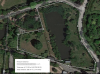
This large and spacious walkthrough aviary - more or less located between the Black Rhinoceros complex and the African hoofstock paddocks - contains a large number of native African birds; from memory, the stocklist is as follows:
Red-billed Hornbill
Hamerkop
Kenya Crested Guineafowl
Red-winged Starling
Schalow's Turaco
Blacksmith Plover
Golden-breasted Starling
Snowy-crowned Robin Chat
Hottentot Teal
Lilac-breasted Roller
Superb Starling
Village Weaver
African White-backed Duck


Wetlands Aviary
This significantly-larger, more lushly vegetated aviary containing a waterfowl lake is located next to and around the Tsavo aviary, and contains a very high number of African wetland bird species as follows:
Old World comb duck (Sarkidiornis melanotos)
African white-backed duck (Thalassornis leuconotus leuconotus)
Black stork (Ciconia nigra)
Cape teal (Anas capensis)
Ferruginous duck (Aythya nyroca)
Garganey (Spatula querquedula)
Hamerkop (Scopus umbretta)
Hottentot Teal (Spatula hottentota)
Marbled teal (Marmaronetta angustirostris)
Red-billed teal (Anas erythrorhyncha)
Red-crested pochard (Netta rufina)
Red-crested turaco (Tauraco erythrolophus)
Ruddy shelduck (Tadorna ferruginea)
Schalow's turaco (Tauraco schalowi
Tufted duck (Aythya fuligula)
West Mediterranean Purple Swamphen (Porphyrio porphyrio porphyrio)
Western black-crowned crane (Balearica pavonina pavonina)
White-faced whistling-duck (Dendrocygna viduata)
White-headed duck (Oxyura leucocephala)
Viewing is possible through a large dedicated bird hide, along with various points on the surrounding footpath,


Wattled Crane

Eastern Crowned Crane and Kirk's Dik-dik

(better photos to hopefully follow)
Waldrapp Ibis et al
This aviary, which formerly held Andean Condor, has relatively-recently been renovated to hold several of the species once held in the late "Europe on the Edge" aviary, of which the following are relevant for the purposes of this tie:
Ferruginous duck (Aythya nyroca)
Garganey (Spatula querquedula)
Marbled teal (Marmaronetta angustirostris)
Northern bald ibis (Geronticus eremita)
Rock pigeon (Columba livia)
The latter of the following two photographs was taken when the aviary was being re-netted and re-planted before the new inhabitants moved in, and is presented to better show the rear of the aviary.


This large and spacious walkthrough aviary - more or less located between the Black Rhinoceros complex and the African hoofstock paddocks - contains a large number of native African birds; from memory, the stocklist is as follows:
Red-billed Hornbill
Hamerkop
Kenya Crested Guineafowl
Red-winged Starling
Schalow's Turaco
Blacksmith Plover
Golden-breasted Starling
Snowy-crowned Robin Chat
Hottentot Teal
Lilac-breasted Roller
Superb Starling
Village Weaver
African White-backed Duck
Wetlands Aviary
This significantly-larger, more lushly vegetated aviary containing a waterfowl lake is located next to and around the Tsavo aviary, and contains a very high number of African wetland bird species as follows:
Old World comb duck (Sarkidiornis melanotos)
African white-backed duck (Thalassornis leuconotus leuconotus)
Black stork (Ciconia nigra)
Cape teal (Anas capensis)
Ferruginous duck (Aythya nyroca)
Garganey (Spatula querquedula)
Hamerkop (Scopus umbretta)
Hottentot Teal (Spatula hottentota)
Marbled teal (Marmaronetta angustirostris)
Red-billed teal (Anas erythrorhyncha)
Red-crested pochard (Netta rufina)
Red-crested turaco (Tauraco erythrolophus)
Ruddy shelduck (Tadorna ferruginea)
Schalow's turaco (Tauraco schalowi
Tufted duck (Aythya fuligula)
West Mediterranean Purple Swamphen (Porphyrio porphyrio porphyrio)
Western black-crowned crane (Balearica pavonina pavonina)
White-faced whistling-duck (Dendrocygna viduata)
White-headed duck (Oxyura leucocephala)
Viewing is possible through a large dedicated bird hide, along with various points on the surrounding footpath,
Wattled Crane
Eastern Crowned Crane and Kirk's Dik-dik
(better photos to hopefully follow)
Waldrapp Ibis et al
This aviary, which formerly held Andean Condor, has relatively-recently been renovated to hold several of the species once held in the late "Europe on the Edge" aviary, of which the following are relevant for the purposes of this tie:
Ferruginous duck (Aythya nyroca)
Garganey (Spatula querquedula)
Marbled teal (Marmaronetta angustirostris)
Northern bald ibis (Geronticus eremita)
Rock pigeon (Columba livia)
The latter of the following two photographs was taken when the aviary was being re-netted and re-planted before the new inhabitants moved in, and is presented to better show the rear of the aviary.
Attachments
Last edited:
Tropical Realm
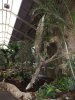
The bulk of this building is, as is well-known, a very large and thickly vegetated walkthrough area containing roughly thirty bird species, of which several fall under the remit of this category. Although now rather old and coming to the end of its lifespan - being close to 60 years old - it is still one of the very best tropical houses I have visited in this regard; in some ways the age of the house is a benefit, as it has allowed the natural growth of the aforementioned vegetation.
Free-flying species relevant to this challenge are as follows:
Black-necked weaver (Ploceus nigricollis nigricollis)
Emerald starling (Lamprotornis iris)
Golden-breasted starling (Lamprotornis regius)
Kilimanjaro White-eye (Zosterops poliogastrus eurycricotus)
Purple glossy-starling (Lamprotornis purpureus)
Violet turaco (Musophaga violacea)


Species present in aviaries, vivariums or other exhibits within the main hall are as follows:
Blue-naped mousebird (Urocolius macrourus)
Congo peafowl (Afropavo congensis)
Snowy-crowned robin-chat (Cossypha niveicapilla)

Cameroon two-horned mountain chameleo (Trioceros montium)
(exhibit photo hopefully to follow)
The bulk of this building is, as is well-known, a very large and thickly vegetated walkthrough area containing roughly thirty bird species, of which several fall under the remit of this category. Although now rather old and coming to the end of its lifespan - being close to 60 years old - it is still one of the very best tropical houses I have visited in this regard; in some ways the age of the house is a benefit, as it has allowed the natural growth of the aforementioned vegetation.
Free-flying species relevant to this challenge are as follows:
Black-necked weaver (Ploceus nigricollis nigricollis)
Emerald starling (Lamprotornis iris)
Golden-breasted starling (Lamprotornis regius)
Kilimanjaro White-eye (Zosterops poliogastrus eurycricotus)
Purple glossy-starling (Lamprotornis purpureus)
Violet turaco (Musophaga violacea)
Species present in aviaries, vivariums or other exhibits within the main hall are as follows:
Blue-naped mousebird (Urocolius macrourus)
Congo peafowl (Afropavo congensis)
Snowy-crowned robin-chat (Cossypha niveicapilla)
Cameroon two-horned mountain chameleo (Trioceros montium)
(exhibit photo hopefully to follow)
Attachments
Per a post elsewhere on the forum by Sim, the search database for the forum has now been reset and both site search and gallery search is back online so I will now go back and add anything possible to preceding posts.
so I will now go back and add anything possible to preceding posts.
Both are smaller than the exhibits at Montpellier zoo I think, which is the first zoo that came to mind that housed both species
As a minor digression, just checked this claim using Google Maps:
African Hunting Dog
Chester - c. 4,000 m²
Montpellier - c. 2,200 m²
Cheetah
Chester - c. 6,000 m²
Montpellier - c. 9,100 m²
So you were well off on one, but correct for the other - however, looking through the gallery and elsewhere online, the individual cheetah exhibits at Chester are larger and better-quality by far.