ZooChat Cup Group B2: Chester vs Vienna

Chester vs Vienna: Africa


  • Total voters
    29
  • Poll closed .
Tsavo Aviary

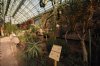
This large and spacious walkthrough aviary - more or less located between the Black Rhinoceros complex and the African hoofstock paddocks - contains a large number of native African birds; from memory, the stocklist is as follows:

Red-billed Hornbill
Hamerkop
Kenya Crested Guineafowl
Red-winged Starling
Schalow's Turaco
Blacksmith Plover
Golden-breasted Starling
Snowy-crowned Robin Chat
Hottentot Teal
Lilac-breasted Roller
Superb Starling
Village Weaver
African White-backed Duck

full


full


full


full


full


full


full


Wetlands Aviary

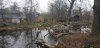
This significantly-larger, more lushly vegetated aviary containing a waterfowl lake is located next to and around the Tsavo aviary, and contains a very high number of African wetland bird species as follows:

Old World comb duck (Sarkidiornis melanotos)
African white-backed duck (Thalassornis leuconotus leuconotus)
Black stork (Ciconia nigra)
Cape teal (Anas capensis)
Ferruginous duck (Aythya nyroca)
Garganey (Spatula querquedula)
Hamerkop (Scopus umbretta)
Hottentot Teal (Spatula hottentota)
Marbled teal (Marmaronetta angustirostris)
Red-billed teal (Anas erythrorhyncha)
Red-crested pochard (Netta rufina)
Red-crested turaco (Tauraco erythrolophus)
Ruddy shelduck (Tadorna ferruginea)
Schalow's turaco (Tauraco schalowi
Tufted duck (Aythya fuligula)
West Mediterranean Purple Swamphen (Porphyrio porphyrio porphyrio)
Western black-crowned crane (Balearica pavonina pavonina)
White-faced whistling-duck (Dendrocygna viduata)
White-headed duck (Oxyura leucocephala)

Viewing is possible through a large dedicated bird hide, along with various points on the surrounding footpath,

View attachment 424338

full


Wattled Crane

full


Eastern Crowned Crane and Kirk's Dik-dik

full


(better photos to hopefully follow)


Waldrapp Ibis et al

This aviary, which formerly held Andean Condor, has relatively-recently been renovated to hold several of the species once held in the late "Europe on the Edge" aviary, of which the following are relevant for the purposes of this tie:

Ferruginous duck (Aythya nyroca)
Garganey (Spatula querquedula)
Marbled teal (Marmaronetta angustirostris)
Northern bald ibis (Geronticus eremita)
Rock pigeon (Columba livia)

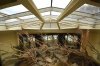
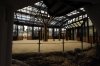
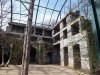
The latter of the following two photographs was taken when the aviary was being re-netted and re-planted before the new inhabitants moved in, and is presented to better show the rear of the aviary.

full


full

These are all nice aviaries but in my opinion it is hard to compete with Vienna's aviaries.

Before I start posting those photographs I can root up for the bird collection, I thought I'd run through the species at Chester relevant for this challenge:

Old World comb duck (Sarkidiornis melanotos)
African white-backed duck (Thalassornis leuconotus leuconotus)
Black stork (Ciconia nigra)
Black-necked weaver (Ploceus nigricollis nigricollis)
Blacksmith lapwing (Vanellus armatus)
Blue-naped mousebird (Urocolius macrourus)
Cape teal (Anas capensis)
Common waxbill (Estrilda astrild)
Congo peafowl (Afropavo congensis)
Kenya crested guineafowl (Guttera pucherani)
Eastern grey-crowned crane (Balearica regulorum gibbericeps)
Emerald starling (Lamprotornis iris)
Ferruginous duck (Aythya nyroca)
Garganey (Spatula querquedula)
Golden-breasted starling (Lamprotornis regius)
Hamerkop (Scopus umbretta)
Hottentot Teal (Spatula hottentota)
Kilimanjaro White-eye (Zosterops poliogastrus eurycricotus)
Lavender Waxbill (Estrilda caerulescens)
Lilac-breasted roller (Coracias caudatus caudatus)
Marbled teal (Marmaronetta angustirostris)
Northern bald ibis (Geronticus eremita)
Northern white-faced scops-owl (Ptilopsis leucotis)
Orange-cheeked waxbill (Estrilda melpoda)
Purple glossy-starling (Lamprotornis purpureus)
Red-billed hornbill (Tockus erythrorhynchus)
Red-billed teal (Anas erythrorhyncha)
Red-crested pochard (Netta rufina)
Red-crested turaco (Tauraco erythrolophus)
Red-winged starling (Onychognathus morio)
Rock pigeon (Columba livia)
Ruddy shelduck (Tadorna ferruginea)
Schalow's turaco (Tauraco schalowi
Snowy-crowned robin-chat (Cossypha niveicapilla)
South African firefinch (Lagonosticta rubricata rubricata)
Superb starling (Lamprotornis superbus)
Tufted duck (Aythya fuligula)
Violet turaco (Musophaga violacea)
Wattled crane (Bugeranus carunculatus)
West Mediterranean Purple Swamphen (Porphyrio porphyrio porphyrio)
Western black-crowned crane (Balearica pavonina pavonina)
Western village weaver (Ploceus cucullatus cucullatus)
White-crested turaco (Tauraco leucolophus)
White-faced whistling-duck (Dendrocygna viduata)
White-headed duck (Oxyura leucocephala)
Yellow-crowned bishop (Euplectes afer)
Zebra waxbill (Amandava subflava)

This comes to a total of 47 taxa :)

Conversely, Vienna keeps a total of 33 bird taxa which occur in Africa (under the spoiler cut for space)

Wien (Tiergarten Schönbrunn) Abyssinian ground hornbill (Bucorvus abyssinicus)
Wien (Tiergarten Schönbrunn) African jacana (Greater African jacana) (Actophilornis africanus)
Wien (Tiergarten Schönbrunn) Bearded Vulture (Lammergeier) (Gypaetus barbatus barbatus (Syn.: Gypaetus barbatus aureus))
Wien (Tiergarten Schönbrunn) Blue-naped mousebird (Blue-naped coly) (Urocolius macrourus)
Wien (Tiergarten Schönbrunn) Cape canary (Serinus canicollis)
Wien (Tiergarten Schönbrunn) Common hoopoe (no subspecific status) (Upupa epops)
Wien (Tiergarten Schönbrunn) Common Little bittern (Little bittern) (Ixobrychus minutus)
Wien (Tiergarten Schönbrunn) Common redshank (Tringa totanus)
Wien (Tiergarten Schönbrunn) Congo grey parrot (Psittacus erithacus erithacus)
Wien (Tiergarten Schönbrunn) Eastern paradise-whydah (Vidua paradisaea (Syn.: Steganura paradisea))
Wien (Tiergarten Schönbrunn) Eurasian teal (Eurasian green-winged teal) (Anas crecca crecca)
Wien (Tiergarten Schönbrunn) European bee-eater (Merops apiaster)
Wien (Tiergarten Schönbrunn) European thick-knee (Burhinus oedicnemus oedicnemus)
Wien (Tiergarten Schönbrunn) European white stork (Ciconia ciconia ciconia)
Greater flamingo (Phoenicopterus roseus (Syn.: Phoenicopterus ruber roseus) (Syn.: Phoenicopterus antiquorum))
Wien (Tiergarten Schönbrunn) Grey-crowned crane (Royal crane) (No Subspecific status) (Balearica regulorum)
Wien (Tiergarten Schönbrunn) Grey-headed oliveback (White-cheeked oliveback) (Nesocharis capistrata)
Wien (Tiergarten Schönbrunn) Hamerkop (Hammerhead) (Scopus umbretta)
Kenya variable sunbird (Buff-breasted sunbird) (Cinnyris venustus falkensteini (Syn.: Nectarinia venusta falkensteini))
Wien (Tiergarten Schönbrunn) Kilimanjaro White-eye (Zosterops poliogastrus eurycricotus (Syn.: Zosterops eurycricotus))
Wien (Tiergarten Schönbrunn) Malachite sunbird (No Subspecific status)* (Nectarinia famosa*)
Wien (Tiergarten Schönbrunn) Northern bald ibis (Waldrapp) (Geronticus eremita)
Wien (Tiergarten Schönbrunn) Red-cheeked cordon-bleu (Uraeginthus bengalus)
Wien (Tiergarten Schönbrunn) South African ostrich (Struthio camelus australis)
Wien (Tiergarten Schönbrunn) Southern ground hornbill (Bucorvus leadbeateri (Syn.: Bucorvus cafer))
Wien (Tiergarten Schönbrunn) Southern red bishop (no subspecific status) (Euplectes orix)
Wien (Tiergarten Schönbrunn) Speckled mousebird (Speckled coly) (No Subspecific status) (Colius striatus)
Wien (Tiergarten Schönbrunn) Von der Decken's hornbill (Tockus deckeni (Syn.: Tockus deckeni deckeni))
Wien (Tiergarten Schönbrunn) Western Egyptian vulture (Neophron percnopterus percnopterus)
Wien (Tiergarten Schönbrunn) White-faced whistling-duck (White- faced tree duck) (Dendrocygna viduata)
Wien (Tiergarten Schönbrunn) White-fronted bee-eater (Merops bullockoides (Syn.: Melittophagus bullockoides))
Wien (Tiergarten Schönbrunn) Yellow-billed amazon (Jamaican yellow-billed amazon) (Amazona collaria)
Wien (Tiergarten Schönbrunn) Yellow-collared lovebird (Masked lovebird) (Agapornis personatus)

As such, @amur leopard was incorrect in his supposition - in pure species-by-species count, Chester "wins" as far as birds go.

You missed Dalmatian pelicans.

Anyway, here is what Vienna has to offer :)

Thanks ton @lintworm, @twilighter and a few others for the photos - much appreciated.

Now, as you enter the zoo and turn right, you are immediately faced with the Giraffe House, and behind it the main giraffe enclosure. I believe they are mixed with Southern ground hornbills. The Giraffe house was originally built in 1828 when the zoo started collecting animals. The giraffes were one of the first animals to arrive. The building was recently renovated to better house the giraffes. It allows viewing on two levels, one very high up next to the giraffes' heads. The house is around 400m2 in area. A glass roof allows light in which is especially useful in Austrian cold winters when they cannot go outside. It can also be sealed from the cold to preserve heat in the building.

(Photo below taken from lower viewing area)

vienna giraffe house.jpg

(Photo below taken from upper viewing area)

vienna giraffe.jpg
Next are the antelope enclosures. These are perhaps the most inadequate enclosures in the zoo due to their relatively small size, but otherwise they have large lakes and the nicest architecture around any ungulate enclosure in any zoo there is for sure.

vienna zebra.jpg
vienna enclosure.jpg
Next is the Monkey Houe. The only two African species here are Angolan colobuses and Meerkats. They are housed in the same mixed species exhibit with both an indoor and outdoor enclosure. Here is the indoor enclosure. It can also be viewing from an upper or lower deck.


vienna colobus whole.jpg
vienna colobus.jpg

Next is the Rathaus. A twist on the German word for Town Hall (which is also Rathaus since raten means to advise in German), it used to house hippopotamuses and recently got turned into a large abode for rats. Here is a photo of the kind of exhibit that is in there. The only African species in the building are Gambian pouched rats.

vienna gambian pouched rat.jpg
Lastly, near the rats is a small house with a large indoor enclosure for Vor der Decken's hornbills and Dwarf mongoose. They share a exhibit which is meant to resemble an arid savanna area.
The first photo shows a section and the second shows the whole exhibit.

vienna hornbill.jpg
vienna hornbill 2.jpg
More in the next one.
 

Attachments

  • vienna colobus whole.jpg
    vienna colobus whole.jpg
    144.4 KB · Views: 21
  • vienna colobus.jpg
    vienna colobus.jpg
    153.9 KB · Views: 24
  • vienna enclosure.jpg
    vienna enclosure.jpg
    231.3 KB · Views: 24
  • vienna gambian pouched rat.jpg
    vienna gambian pouched rat.jpg
    66.8 KB · Views: 25
  • vienna giraffe house.jpg
    vienna giraffe house.jpg
    130.9 KB · Views: 24
  • vienna giraffe.jpg
    vienna giraffe.jpg
    146.1 KB · Views: 24
  • vienna hornbill 2.jpg
    vienna hornbill 2.jpg
    130.2 KB · Views: 24
  • vienna hornbill.jpg
    vienna hornbill.jpg
    141.6 KB · Views: 22
  • vienna monkey house.jpg
    vienna monkey house.jpg
    131.6 KB · Views: 1
  • vienna zebra.jpg
    vienna zebra.jpg
    164.8 KB · Views: 23
Then, at the top of the zoo, there is perhaps the nicest bird house I will ever see. It has high ceiling so as to allow lots of space for the birds to fly up and away from the visitors. The rooms are designed perfectly for the environment that they represent, with only the walls of the house looking out of place. The birds housed are all small apart from Northern bald ibises, so for example the African aviary might house manakins and sicklebills. In the middle of the two aviaries is a small room adorned with branches and foliage for sloths. The rooms can also be climatized in the winter when an outdoor aviary would potentially kill many of the birds due to the extremely low temperatures reached in Austrian winters.

vienna african birds.jpg
vienna birds.jpg
vienna sloth.jpg
vienna ibis.jpg
vienna ibis 2.jpg
And then the visitors can observe Dalmatian pelicans on a large lake.

vienna pelican.jpg
In the final exhibit in the main zoo near the rhinoceroses, the visitors can observe Barbary sheep and Barbary macaques in a mountainous exhibit meant to resemble the Atlas mountains in which they live.

vienna barbary.jpg

And lastly, as the visitors exit the zoo, they spot the Desert House tucked in to the left of the path out of the zoo. In here, the best exhibit for elephant shrews in Europe and perhaps the world can be found. They are mixed with birds.

vienna elephant shrew.jpg

Thanks to @LaughingDove, @lintworm, @twilighter and others.
 

Attachments

  • vienna african birds.jpg
    vienna african birds.jpg
    221.8 KB · Views: 24
  • vienna barbary.jpg
    vienna barbary.jpg
    177.9 KB · Views: 24
  • vienna birds.jpg
    vienna birds.jpg
    175.2 KB · Views: 23
  • vienna elephant shrew.jpg
    vienna elephant shrew.jpg
    198.7 KB · Views: 23
  • vienna ibis 2.jpg
    vienna ibis 2.jpg
    259.2 KB · Views: 23
  • vienna ibis.jpg
    vienna ibis.jpg
    155.8 KB · Views: 25
  • vienna pelican.jpg
    vienna pelican.jpg
    165 KB · Views: 23
  • vienna sloth.jpg
    vienna sloth.jpg
    154.3 KB · Views: 24
A couple points of disagreement with amur leopard:

I do not think the "antelope" enclosures (African paddocks is a better word as these also house zebras, crowned cranes, marabous and flamingos) are certainly appropriate enough. They're not huge, but they also don't house huge amounts of animals. There's also Egyptian fruit bats (can confirm, spotted them) in the hippo house.

The bird house is amazing, and I think you understate this a little bit. They are among the best walkthrough bird enclosures I've been in (although they are small) and the species line-up is great with eastern paradise whydah, green-winged pytilia (which is the species the whydahs parasitize on in nature), blue-naped mousebirds, broad-winged white-eye, southern red bishop, white-fronted bee-eater and African jacana (among others). In the sloth room there's also a terrarium for an African bullfrog.

In the desert house, there are also enclosures for Omani mastigure, armadillo girdled lizard, Egypt hedgehog and Carter's rock gecko. The elephant shrews are combined with angulate tortoises as well, which is a rather rare species in zoos.
 
(African paddocks is a better word as these also house zebras, crowned cranes, marabous and flamingos)

They also house elands, addra gazelles and nyalas, so they could also be called antelope enclosures.

There's also Egyptian fruit bats (can confirm, spotted them) in the hippo house.

Really? I can't really remember much from that room but I didn't think there was an exhibit behind me in the hippo house.

Otherwise I agree with the majority of your points.
 
They also house elands, addra gazelles and nyalas, so they could also be called antelope enclosures.


Really? I can't really remember much from that room but I didn't think there was an exhibit behind me in the hippo house.

Otherwise I agree with the majority of your points.
They house Mhorr dama gazelle!
 
I am a rebel and would vote for an undecided 2-2! Hence been forced upon making a choice that not adequately reflects my opinions on each.

This option is not available .... Plus I do feel some Wiener Zoo parts go largely underreported and appreciated!
 
I haven't seen herps mentioned, but I would expect that Chester would struggle there (given Madagascar doesn't count)?
 
You missed Dalmatian pelicans

Nope, I didn't - the pelicans have been gone for years :) either way, Chester has significantly more birds.

the nicest architecture around any ungulate enclosure in any zoo there is for sure.

I can think of a few others - Prague, Berlin, Lisbon for a start.

In the middle of the two aviaries is a small room adorned with branches and foliage for sloths

The well-known African sloth? :P
 
I haven't seen herps mentioned, but I would expect that Chester would struggle there (given Madagascar doesn't count)?

Does Madagascar not count for this category? Since it is part of the African continent?
 
Does Madagascar not count for this category? Since it is part of the African continent?

Indeed not; it is covered under the "Islands" category for the purposes of the Zoochat Cup.
 
Nope, I didn't - the pelicans have been gone for years :) either way, Chester has significantly more birds.


I can think of a few others - Prague, Berlin, Lisbon for a start.


The well-known African sloth? :p
Birds in number of species and diversity, really? Can we have an exact count on that?

As for Aquarium and Herps I am afraid I would rate Schoenbrunn very much the better half!
 
I haven't seen herps mentioned, but I would expect that Chester would struggle there (given Madagascar doesn't count)?

I mentioned them a few times - both Chester and Vienna have low numbers of African taxa, with Vienna holding marginally more:

Chester

Cameroon two-horned mountain chameleon (Trioceros montium)
Fernand's skink (Lepidothyris fernandi)
Gorongosa girdled lizard (Smaug mossambicus)
Pancake tortoise (Malacochersus tornieri)
Pygmy leaf chameleon (Rieppeleon brevicaudatus)
Sahara mastigure (Uromastyx geyri)
Western gaboon viper (Bitis rhinoceros)

Vienna

Armadillo lizard (Ouroborus cataphractus)
Augrabies flat lizard (Platysaurus broadleyi)
Egyptian spiny-tailed lizard (Uromastyx aegyptia)
Egyptian tortoise (Testudo kleinmanni)
Greek tortoise (Testudo graeca)
Ocellated skink (Chalcides ocellatus)
Pancake tortoise (Malacochersus tornieri)
Ringed wall gecko (Tarentola annularis)
Angulate tortoise (Chersina angulata)

In the desert house, there are also enclosures for Omani mastigure, armadillo girdled lizard, Egypt hedgehog and Carter's rock gecko. The elephant shrews are combined with angulate tortoises as well, which is a rather rare species in zoos.

Of which only the Girdled Lizard and Angulate Tortoise are African - Oman Mastigure and Carter's Rock Gecko are Asian for the purposes of the Zoochat Cup, as the Arabian Peninsula has been treated as such so far.
 
Birds in number of species and diversity, really? Can we have an exact count on that?

I already gave an exact count for both collections upthread, but I will repost it for your convenience:

Chester: 47 taxa

Old World comb duck (Sarkidiornis melanotos)
African white-backed duck (Thalassornis leuconotus leuconotus)
Black stork (Ciconia nigra)
Black-necked weaver (Ploceus nigricollis nigricollis)
Blacksmith lapwing (Vanellus armatus)
Blue-naped mousebird (Urocolius macrourus)
Cape teal (Anas capensis)
Common waxbill (Estrilda astrild)
Congo peafowl (Afropavo congensis)
Kenya crested guineafowl (Guttera pucherani)
Eastern grey-crowned crane (Balearica regulorum gibbericeps)
Emerald starling (Lamprotornis iris)
Ferruginous duck (Aythya nyroca)
Garganey (Spatula querquedula)
Golden-breasted starling (Lamprotornis regius)
Hamerkop (Scopus umbretta)
Hottentot Teal (Spatula hottentota)
Kilimanjaro White-eye (Zosterops poliogastrus eurycricotus)
Lavender Waxbill (Estrilda caerulescens)
Lilac-breasted roller (Coracias caudatus caudatus)
Marbled teal (Marmaronetta angustirostris)
Northern bald ibis (Geronticus eremita)
Northern white-faced scops-owl (Ptilopsis leucotis)
Orange-cheeked waxbill (Estrilda melpoda)
Purple glossy-starling (Lamprotornis purpureus)
Red-billed hornbill (Tockus erythrorhynchus)
Red-billed teal (Anas erythrorhyncha)
Red-crested pochard (Netta rufina)
Red-crested turaco (Tauraco erythrolophus)
Red-winged starling (Onychognathus morio)
Rock pigeon (Columba livia)
Ruddy shelduck (Tadorna ferruginea)
Schalow's turaco (Tauraco schalowi
Snowy-crowned robin-chat (Cossypha niveicapilla)
South African firefinch (Lagonosticta rubricata rubricata)
Superb starling (Lamprotornis superbus)
Tufted duck (Aythya fuligula)
Violet turaco (Musophaga violacea)
Wattled crane (Bugeranus carunculatus)
West Mediterranean Purple Swamphen (Porphyrio porphyrio porphyrio)
Western black-crowned crane (Balearica pavonina pavonina)
Western village weaver (Ploceus cucullatus cucullatus)
White-crested turaco (Tauraco leucolophus)
White-faced whistling-duck (Dendrocygna viduata)
White-headed duck (Oxyura leucocephala)
Yellow-crowned bishop (Euplectes afer)
Zebra waxbill (Amandava subflava)

Vienna: 32 taxa

Abyssinian ground hornbill (Bucorvus abyssinicus)
African jacana (Actophilornis africanus)
Bearded Vulture (Gypaetus barbatus barbatus)
Blue-naped mousebird (Urocolius macrourus)
Cape canary (Serinus canicollis)
Common hoopoe (Upupa epops)
Common Little bittern (Ixobrychus minutus)
Common redshank (Tringa totanus)
Congo grey parrot (Psittacus erithacus erithacus)
Eastern paradise-whydah (Vidua paradisaea (Syn.: Steganura paradisea))
Eurasian teal (Anas crecca crecca)
European bee-eater (Merops apiaster)
European thick-knee (Burhinus oedicnemus oedicnemus)
European white stork (Ciconia ciconia ciconia)
Greater flamingo (Phoenicopterus roseus)
Grey-crowned crane (Balearica regulorum)
Grey-headed oliveback (Nesocharis capistrata)
Hamerkop (Scopus umbretta)
Kenya variable sunbird (Cinnyris venustus falkensteini)
Kilimanjaro White-eye (Zosterops poliogastrus eurycricotus)
Malachite sunbird (Nectarinia famosa)
Northern bald ibis (Geronticus eremita)
Red-cheeked cordon-bleu (Uraeginthus bengalus)
South African ostrich (Struthio camelus australis)
Southern ground hornbill (Bucorvus leadbeateri)
Southern red bishop (Euplectes orix)
Speckled mousebird (Colius striatus)
Von der Decken's hornbill (Tockus deckeni)
Western Egyptian vulture (Neophron percnopterus percnopterus)
White-faced whistling-duck (White- faced tree duck) (Dendrocygna viduata)
White-fronted bee-eater (Merops bullockoides)
Yellow-collared lovebird (Agapornis personatus)
 
As for Aquarium and Herps I am afraid I would rate Schoenbrunn very much the better half!

I'm not terribly good with fish, but flicking through the respective ZTL lists it appears that although Vienna does have a larger fish collection overall, Chester has a larger African fish collection - the vast majority of Vienna's collection is oceanic-tropical and freshwater Austrian. If no one else comes up with a precise list I'll see what I can do.

As noted upthread, Vienna only has two more African reptile species than does Chester, so the margin isn't massive.

Maybe it lives in the canopy alongside the African Lion-tailed Macaque :p

Bugger - I completely forgot those weren't an African species! :o

For the sake of accuracy, then, I will note that the photographs of the indoor exhibit for the Macaques is the same design as is used for the indoor Mandrill exhibit, and (as shown by the aerial photograph of the exterior of the Monkey House) the same is true of the exterior exhibits photographed :)
 
Back
Top