ZooChat Big Year 2020

He saw it, so I assume he knows what it is...

Where is the "South African Shelduck" coming from? The two species do not look similar enough for there to be any confusion.
Someone uploaded three photos of it on the Australian Bird Identification Facebook group wanting to know whether it was a paradise shelduck or a South African shelduck.

Everybody there is still discussing which species it is but the general consensus is a female paradise shelduck.
 
Someone uploaded three photos of it on the Australian Bird Identification Facebook group wanting to know whether it was a paradise shelduck or a South African shelduck. Everybody there is still discussing which species it is but the general consensus is a female paradise shelduck.
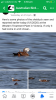
That is the private group? Unless the photos were taken from a great distance I can't see why there should be any confusion.
 
That is the private group? Unless the photos were taken from a great distance I can't see why there should be any confusion.
Honestly I’m not sure. The poster says the photos were taken from a great distance but the photos look fine.

I have no opinion on the species of the bird I was just passing on the information so that people know about it and can go and see it.

Here are the photos in question:
 

Attachments

  • 676ADFF3-5C3F-40F5-8282-42566392E2D4.png
    676ADFF3-5C3F-40F5-8282-42566392E2D4.png
    315.2 KB · Views: 10
Honestly I’m not sure. The poster says the photos were taken from a great distance but the photos look fine.

I have no opinion on the species of the bird I was just passing on the information so that people know about it and can go and see it.

Here are the photos in question:
Myself, after looking at about a dozen photos of both species, would have said South African female.
 
Well I stand corrected - I can indeed see why there would be confusion. However I'm sticking with Paradise Duck. Juvenile females don't have full white heads. Hopefully some better photos make an appearance. I'm assuming that's the rear half of an Australian Shelduck in the right-hand photo?
 
I’ve just seen another photo and changed my opinion!
 
@Dannelboyz did you determine it was a paradise shelduck from your own observations or did you go with it because that’s what the majority or people were saying? If anyone has a positive ID it’s you considering your the only one who has actually seen it.

@Chlidonias yes that is an Australian Shelduck I believe.

@MRJ can you please post the photo? It would be interesting to see the bird photographed from a different angle.
 
Can’t seem to load the photo but they are on the Victorian Birders Facebook page.
 
Can’t seem to load the photo but they are on the Victorian Birders Facebook page.
That's a private group?

I found the main photo from animal_expert's post on the Birdline Victoria Facebook page, and it can be opened to a larger size there. It's definitely a juvenile female Paradise Duck.

Andrew Allen
 
2/1/2019
43. White-plumed honeyeater
44. Little friarbird
45. Australian ringneck
 
Not a big list keeper usually, but after a surprisingly bird filled walk along the river to Tesco today I thought I'd give it a go:

Birds
1. Mute Swan, Cygnus olor
2. Black-Headed Gull, Chroicocephalus ridibundus
3. Mallard, Anas platyrhynchos
4. Common Buzzard, Buteo buteo
5. Blue Tit, Cyanistes caeruleus
6. Great Tit, Parus major
7. Robin, Erithacus rubecula
8. Cormorant, Phalacrocorax carbo
9. Moorhen, Gallinula chloropus
10. Wood Pigeon, Columba palumbus
11. Feral Pigeon, Columba livia domestica
12. Egyptian Goose, Alopochen aegyptiaca
13. Canada Goose, Branta canadensis
14. Starling, Sturnus vulgaris
15. Grey Heron, Ardea cinerea

Missed from yesterday's list:

16. Carrion Crow, Corvus corone
 
Yes a private group. The photo has a .jpeg extension which seems not to be acceptable here.
 
Having seen it in the flesh, I am personally pretty confident it's a Paradise Shelduck. I'd be more concerned that it's an escapee (which is extremely unlikely) than I would be of thinking the ID is wrong. Too many plumage features rule out mutant Australian Shelduck and in the field it looks totally different: rufous with a noticeable white head that stands out from a long distance away. It's in such heavy moult that everything unusual about its plumage matching a Paradise Shelduck can easily be explained. It doesn't look wrong for a Cape Shelduck but the white is more extensive than in most Capes and I can't see it being a species that isn't in captivity in the country and has no history of vagrancy over such a distance. I agree with suggestions that it is a one-year female Paradise Shelduck in heavy moult. This species has previously turned up as a vagrant on both Lord Howe Island and eastern Australia. That said, I'm following the discussion and if I need to remove it from my list or change the ID, I will. :)
 
Well, this year is already starting in a pretty bizarre way! After almost 10 years without any rare thrush in Belgium, one finally popped up on the very first day of 2020. What an absolute beauty of a species! Ticking off crested tit and red crossbill this early is good as well, since I only encounter those a few times a year (and almost missed both completely last year).

BIRDS:

71) Eurasian wren, Troglodytes troglodytes
72) Eurasian siskin, Spinus spinus
73) Dusky thrush, Turdus eunomus
74) Crested tit, Lophophanes cristatus
75) Goldcrest, Regulus regulus
76) Red crossbill, Loxia curvirostra
77) Lesser black-backed gull, Larus fuscus
78) Rock pigeon, Columba livia
 
Last edited:
from todays dog walk
14 mute swan Cygnus olor
15 greater spotted woodpecker Dendrocopos major
16 fieldfare Turdus pilaris
17 common redpoll Acanthis flammea
18 eurasian bullfinch Pyrrhula pyrrhula
 
New Year's Birding:

Birds
1. European Starling Sturnus vulgaris
2. Black-capped Chickadee Poecile atricapillus
3. Mourning Dove Zenaida macroura
4. White-breasted Nuthatch Sitta carolinensis
5. Hairy Woodpecker Leuconotopicus villosus
6. House Finch Haemorhous mexicanus
7. American Goldfinch Spinus tristis
8. Dark-eyed Junco Junco hyemalis
9. Downy Woodpecker Dryobates pubescens
10. Tufted Titmouse Baeolophus bicolor
11. Common Goldeneye Bucephala clangula
12. Canada Goose Branta canadensis
13. Trumpeter Swan Cygnus buccinator
14. Mallard Anas platyrhynchos
15. Redhead Aythya americana
16. Bald Eagle Haliaeetus leucocephalus
17. House Sparrow Passer domesticus
18. American Crow Corvus brachyrhynchos
19. Rock Pigeon (Feral) Columba livia
20. Common Merganser Mergus merganser
21. Herring Gull Larus argentatus
22. American Black Duck Anas rubripes
23. Pileated Woodpecker Dryocopus pileatus

Every year I try to see what the most interesting bird I can see before a Mallard is. I think Trumpeter Swan takes the cake over the previous record holder, the Cooper's Hawk.

Mammals
1. Eastern Gray Squirrel Sciurus carolinensis
Birds
24. Peregrine Falcon Falco peregrinus
 
I did manage a second walk in the afternoon, where I added another five birds to my list:

29. Eurasian great cormorant Phalacrocorax carbo
30. Goldcrest Regulus regulus
31. Common kestrel Falco tinnunculus
32. Eurasian sparrowhawk Accipiter nisus
33. Stock dove Columba oenas

Just realised I forgot to include a bird yesterday. It was originally bird 31, bringing my actual total for the 1st January to 34.

31. Dunnock Prunella modularis

I then went out for another walk today, where I added another three species:
35. Song thrush Turdus philomelos
36. Eurasian jay Garrulus glandarius
37. Coal tit Periparus ater
 
Back
Top