
SEA LIFE Sydney is one of three sea life aquariums in Australia. Well-known for housing dugong, the aquarium is located along the popular Darling Harbour and is situated right next to WILD LIFE Sydney Zoo. The aquarium was particularly busy during my visit and I was only there for around two hours, so there might have been some additional species I may have missed. Like my visit to WILD LIFE Sydney Zoo and Taronga Zoo, this was my first-time visiting SEA LIFE Sydney. Consequently, I have now visited all three Sea Life aquariums in Australia.
A further note: I will not post a species list after this review as it wouldn’t be fully accurate nor definitive (in particular invertebrates and the smaller fish species). I will still mention the species I saw in each tank or that were signed, in bold.
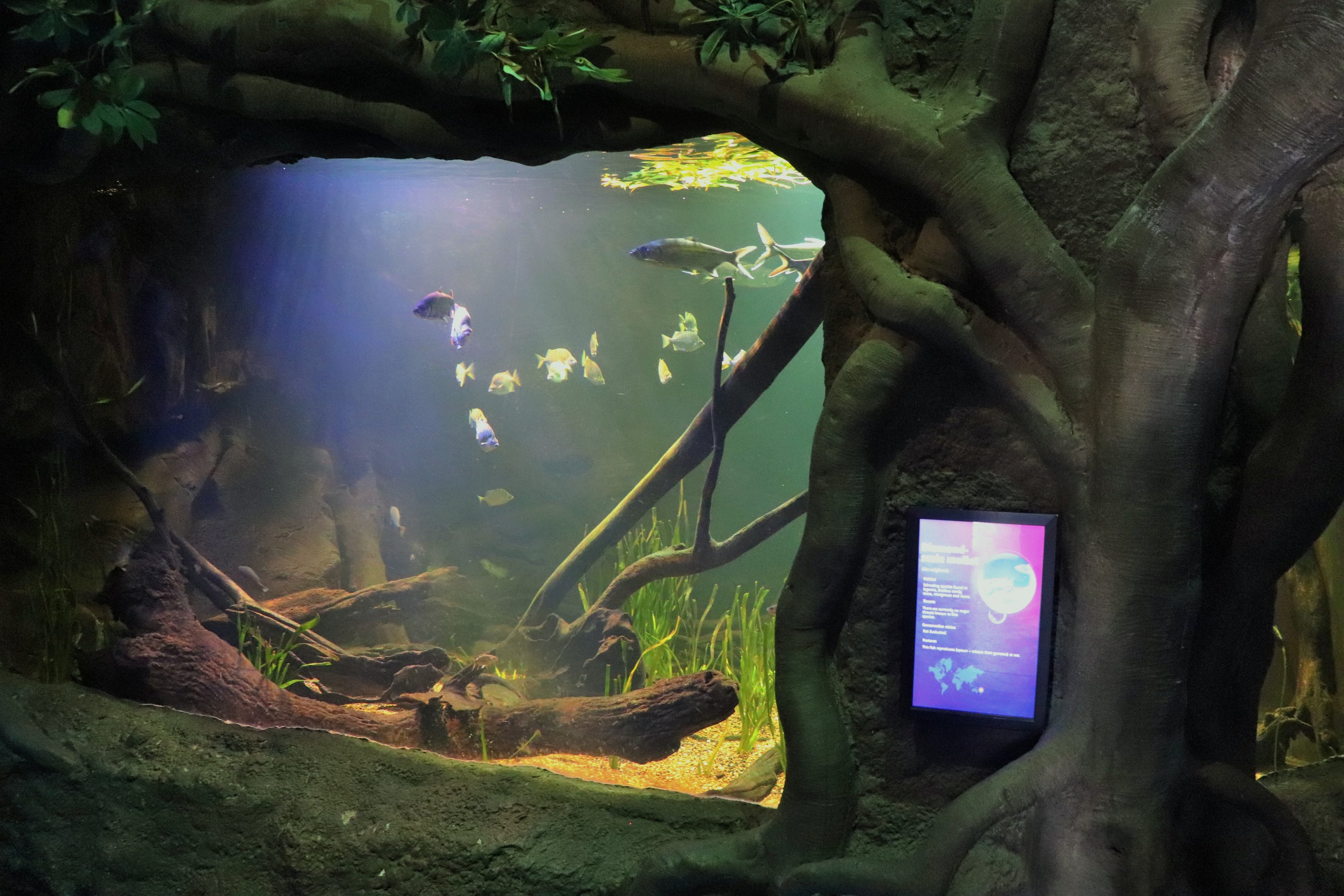
Surprisingly, the first animals were not seen in a touch pool nor a stingray pool. The first tank held an assortment of native fish including Ox-eye Herring, Striped Scat, Spotted Scat, Snakehead Gudgeon, Diamond-scale Mullet and Spangled Perch. There was also an unsigned fish which looked like a Giant Glassfish. A refreshingly different way to begin a Sea Life aquarium. A quick note - the signage at SEA LIFE Sydney is all electronic and the majority of the signs change every five seconds or so. It took me a while to ensure I noted down all the species.
The first main section is called South Coast Shipwreck which was heavily-themed with wood accents, crates and rope. This area began with an attractive beachy enclosure for their small group of Little Penguins. The penguins also shared their enclosure with the following fish species; Moonlighter, Yellow-fin Bream, Pork Jackson Shark, Sand Whiting and two unidentified fish species (one was a species of goatfish).
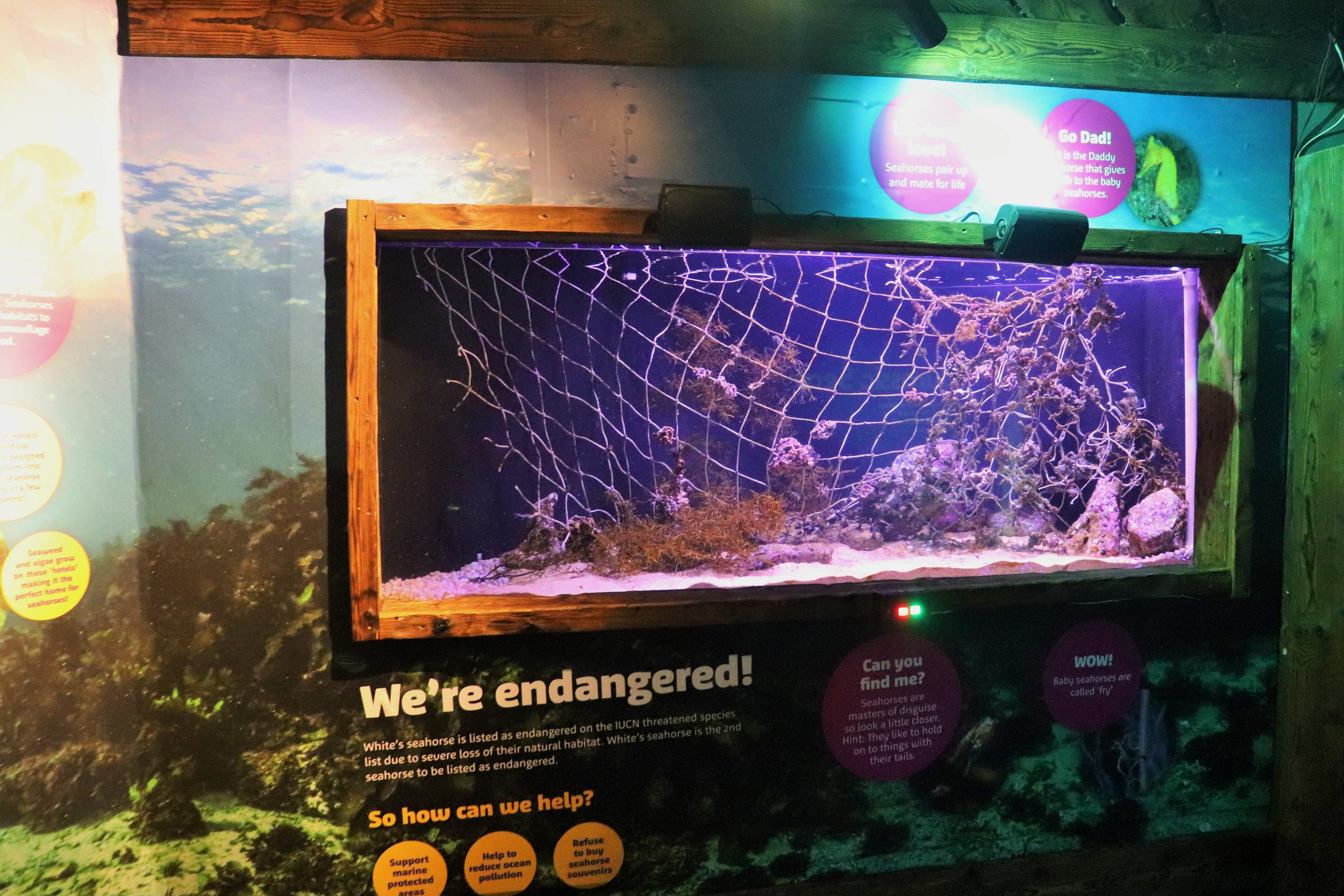
Up next were three vertical tanks. These were themed in accordance with the sea life ‘shipwreck’ theme with rope, glass bottles and terracotta pots (in the particular the first two tanks). The signage in this area was particularly poor and some enclosures shared signs so it was difficult to determine what was in which tank. The following species were signed; Pyjama Cardinalfish, Grooved Razorfish, Coral Banded Pipefish (not seen unfortunately), Flat-headed Mullet, Yellowfin Bream, Mado, Southern Pygmy Leatherjacket, Granular Sea Star, Cushion Star and Crown of Thorns Starfish. I also saw Diamondfish (Mono) in the second enclosure and Snapper in the third, as well as additional species of unidentified fish. There was also a rocky tank for Sieve-patterned Moray Eel along this row of tanks. The final exhibit is this area was for the endangered White’s Seahorse. Their tank featured a large fish net that ran across their tank.
The oddly-themed Jurassic Seas section was next. This area represented the few freshwater species the aquarium holds and many of tanks were presented with a series of dinosaur skulls and bones. Just plain odd. The first few exhibits were comprised of a small tank which had a Sea Anemone, followed by a cylindrical tank for Striped Scat, Spotted Scat and a juvenile Freshwater Crocodile. This tank had a large range of logs and rockwork. Next to the crocodile tank was a large fish exhibit which featured what looked like a vertebrae and rib cage.
There was no signage for this tank but the species seen included Brown-banded Bamboo Shark, Moorish Idol, Pacific Blue Tang, Lined Surgeonfish, Harlequin Tuskfish, Orange-spined Unicornfish (Naso Tang), Yellowfin Surgeonfish, Bird-nose Wrasse, Scissortail Sergeant, Fijian Damsel and Scribbled Angelfish. There were around another two fish species (a damselfish and a unicornfish) which remain unidentified.
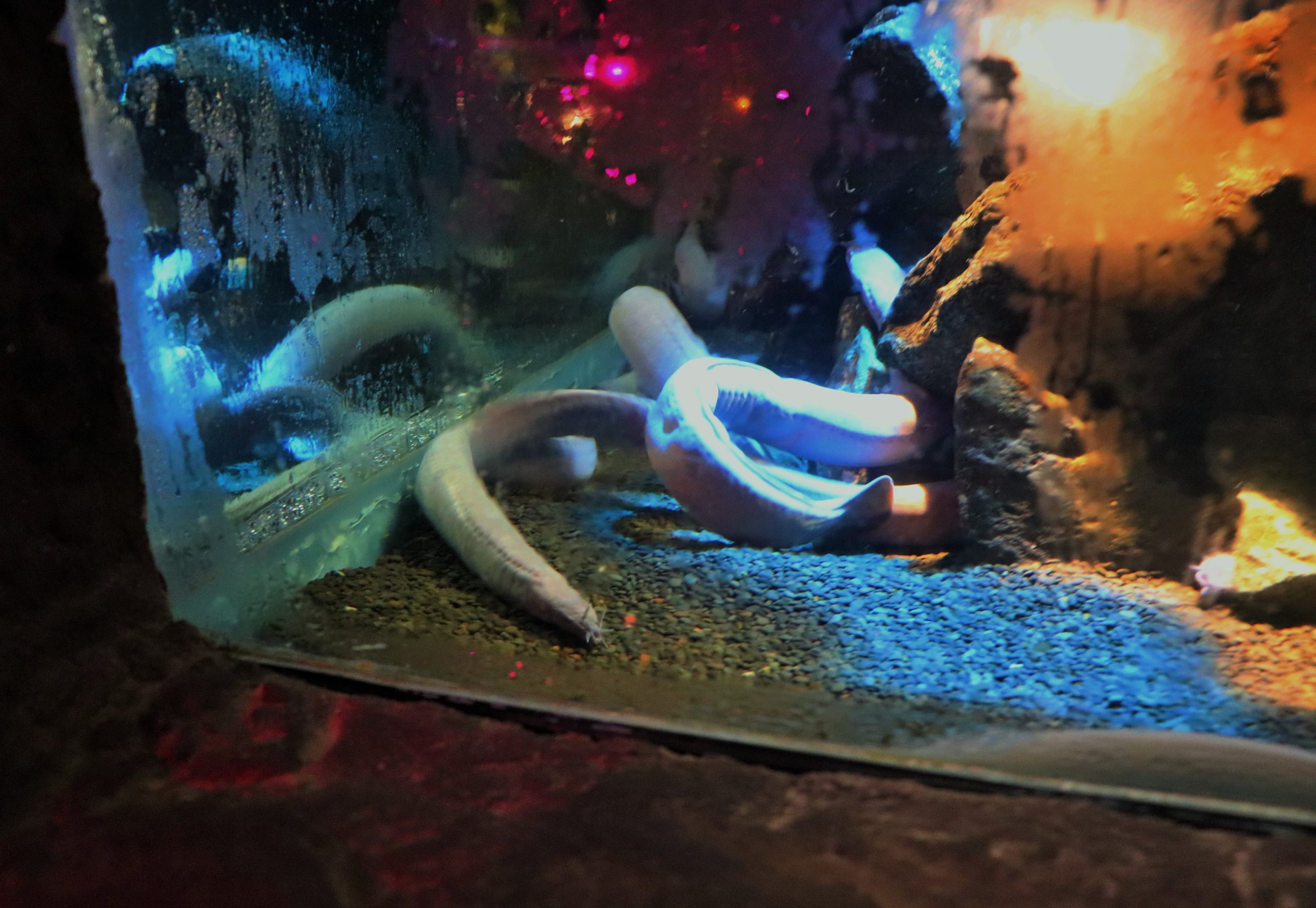
Nearby was a brightly-lit sandy tank with some live plants for Mudskipper (frustratingly the aquarium didn’t specify the species when I contacted them). I always love watching them. Nearby was another fascinating species - Broad-gilled Hagfish. There were around three to four hagfish, it was hard to tell with their entwining bodies. Their tank was surprisingly lighted and I managed to get a few ordinary photos.
The main feature of Jurassic Seas was a circular tank with a dinosaur skull placed on a mock rock pile in the centre. Personally, I wasn’t a fan of it at all. I saw Queensland Lungfish and Seven-spot Archerfish, and what looked like a Long-nosed Gar and Freshwater Longtom. The final three tanks set in mock rock held Firetail Gudgeon, an Axolotl, and an assortment of sea stars. Just before the next area was the Marine Nursery, which had viewing windows featuring tanks for seahorse fry.
Continuing on was a tank which aimed to demonstrate the problems of pollution. This tank was oddly designed to have half of it polluted with rubbish and the other half with live corals and anemones. The signage for this tank was pretty good and I saw the following species; Bridled Triggerfish, Eastern Hulafish, Blotched Hawkfish, Southern Pygmy Leatherjacket, Dwarf Lionfish and Slipper Lobster. Southern Velvetfish and Decorator Crab were also signed but not seen.
The next section was Sydney Harbour which aimed to showcase local marine species (even though some of the species housed here were not from the Sydney area). Sydney Harbour began with three large tanks framed with mock rock. These were all nicely-furnished. The first tank housed reef fish; Ocellaris Clownfish and unseen Bicolour Angelfish, Blue-green Chromis and Bluestreak Cleaner Wrasse. The next tank housed a group of Yellow-tailed Scad, and the final tank had a mix of Eastern Pomfred, Old Wife, Stripey, Southern Crayfish, Eastern Crayfish and an unspecified species of bullseye fish.
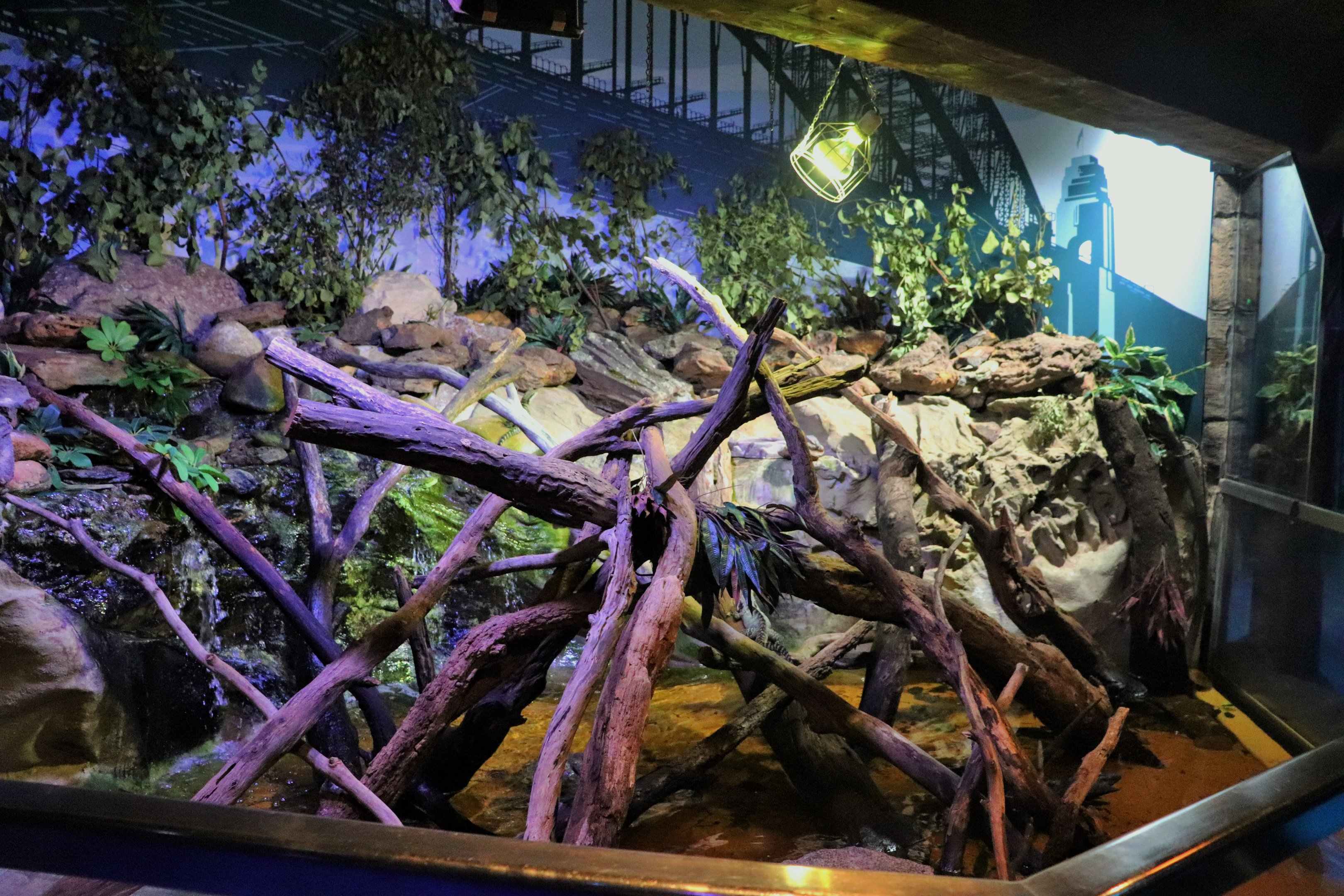
There was also a glass-fronted enclosure for Eastern Water Dragon. This was quite large for its occupants and had a series of large logs, branches and a sizeable body of water. Nearby there were three small darkly-lit tanks with particularly poor signage. The species signed included Eastern Fortesque, Eastern Hulafish, Estuary Glassfish, Southern Pygmy Leatherjacket, Sydney Cardinalfish and Decorator Crab. I only saw the cardinalfish species and several unsigned fish species (at least one was a goby species). The final tank in this area, had bubble-shaped viewing windows. This exhibit contained Red Lionfish and unspecified species of Porcupinefish.
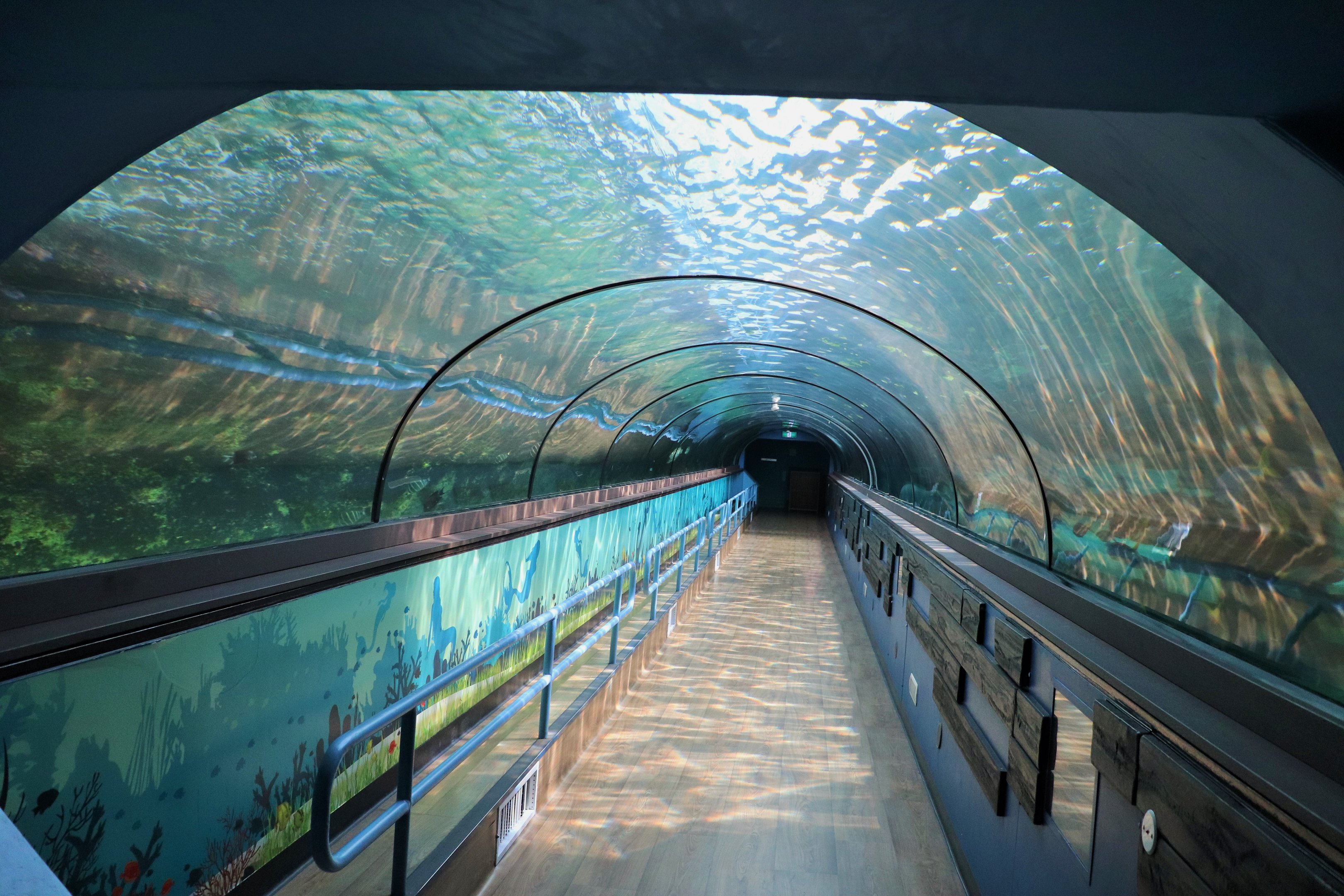
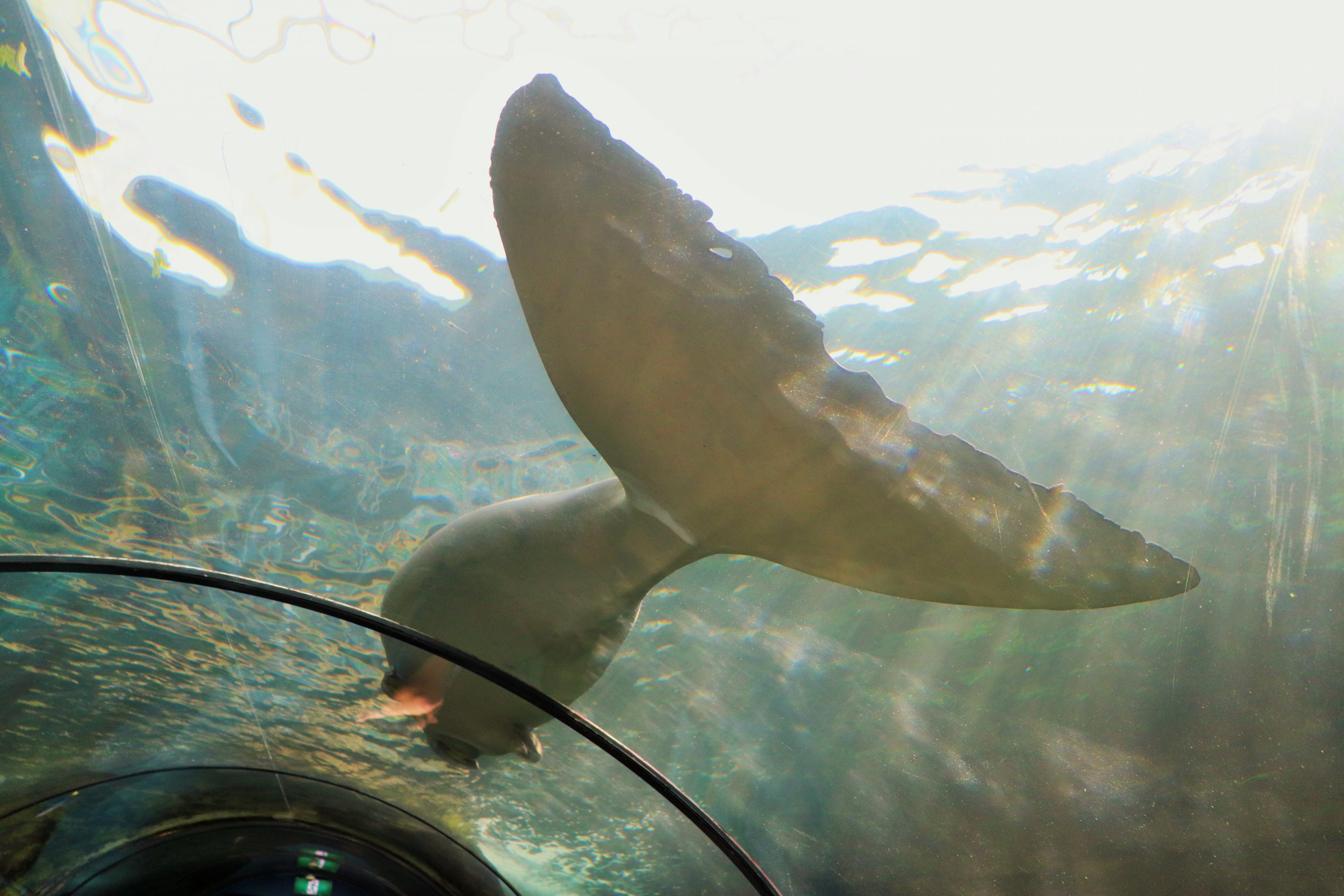
Down a winding ramp was Dugong Island. Featuring the aquarium’s star attraction – Pig the Dugong, this large area contained two ocean tunnels and an above viewing area enabling visitors to see the dugong feeding and briefly surfacing. The ocean tunnels themselves were well-lighted and quite roomy. It was a joy to have Pig (who was very active) swim over my head on several occasions. Mixed with the dugong, fish were well-represented with the following species seen; White-spotted Eagle Ray, Epaulette Shark, Yellow-tailed Fusilier, Foxface, Double-bar Rabbitfish, Masked Rabbitfish, Pacific Blue Tang, Sailfin Tang, Yellow Tang, Yellow-fin Tang, Chocolate Surgeonfish, Orange-spined Unicornfish (Naso Tang), Bignose Unicornfish, Double-sided Butterflyfish, Threadfin Butterflyfish, Yellow Longnose Butterflyfish, Copperband Butterflyfish, Longfin Bannerfish, Moorish Idol, Bicolour Chromis, Scissortail Sergeant, Whitetail Humbug, Cinnamon Anemonefish, Pink Anemonefish, Yellow-banded Sweetlips, Harlequin Tuskfish, Slingjaw Wrasse, Emperor Angelfish, Humpback Red Snapper, Blue-stripe Snapper, Red Emperor, Barramundi, Round Batfish, Stripey and Redtooth Triggerfish. As usual with most large ocean tunnels, there were undoubtedly additional species of fish.
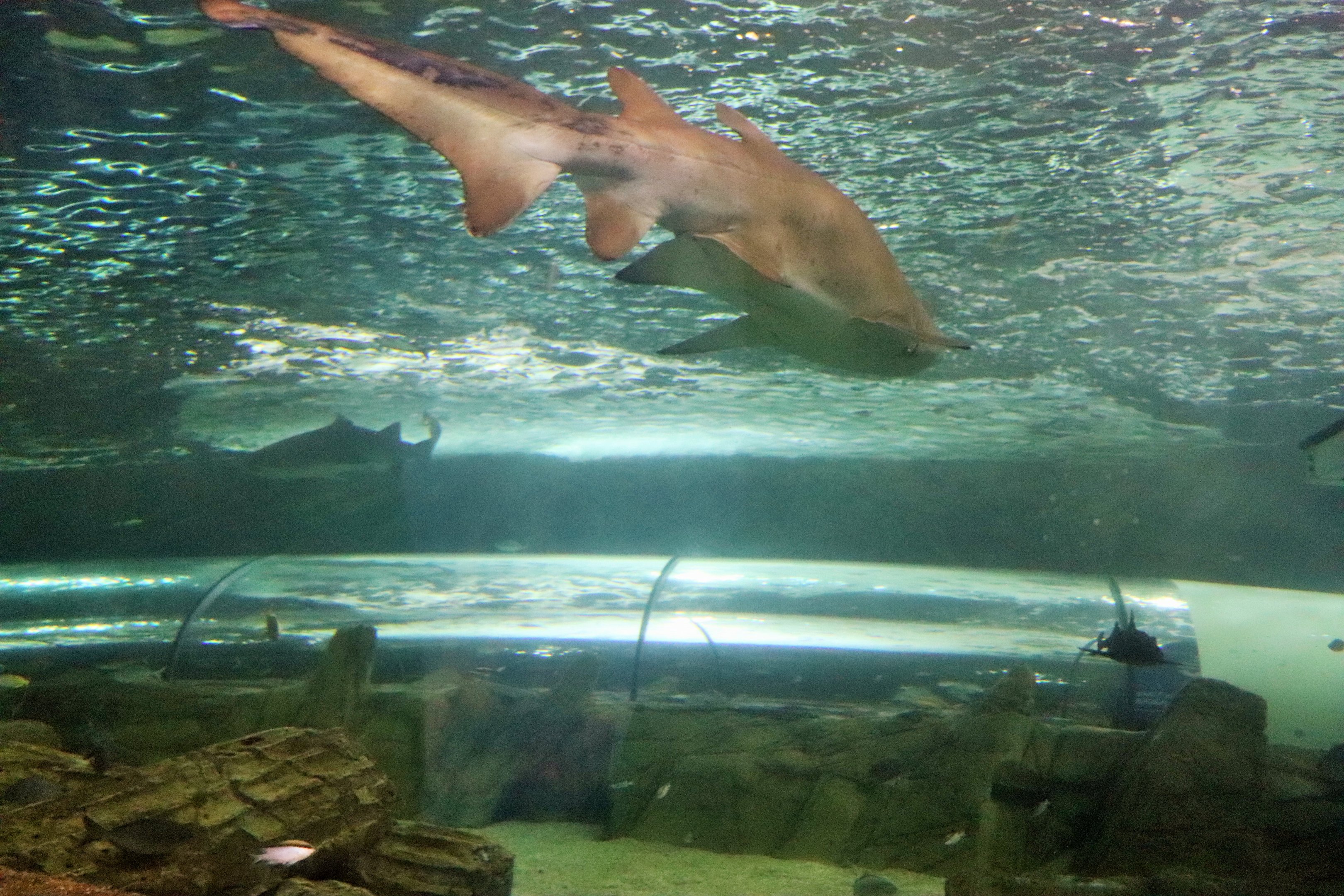
After seeing the above viewing area and feeding platform for the dugong, the next section was Shark Valley. This area also had two ocean tunnels and was significantly darker than Dugong Island. The species seen here included Grey Nurse Shark, Port Jackson Shark, Spotted Wobbegong, Eastern Fiddler Ray, Yellow-fin Bream, Snapper, Crested Morwong, Red Morwong, Blue-striped Goatfish, Bluestreak Cleaner Wrasse, Old Wife, Mado, Diamondfish (Mono), Mulloway and several more species of pelagic fish.
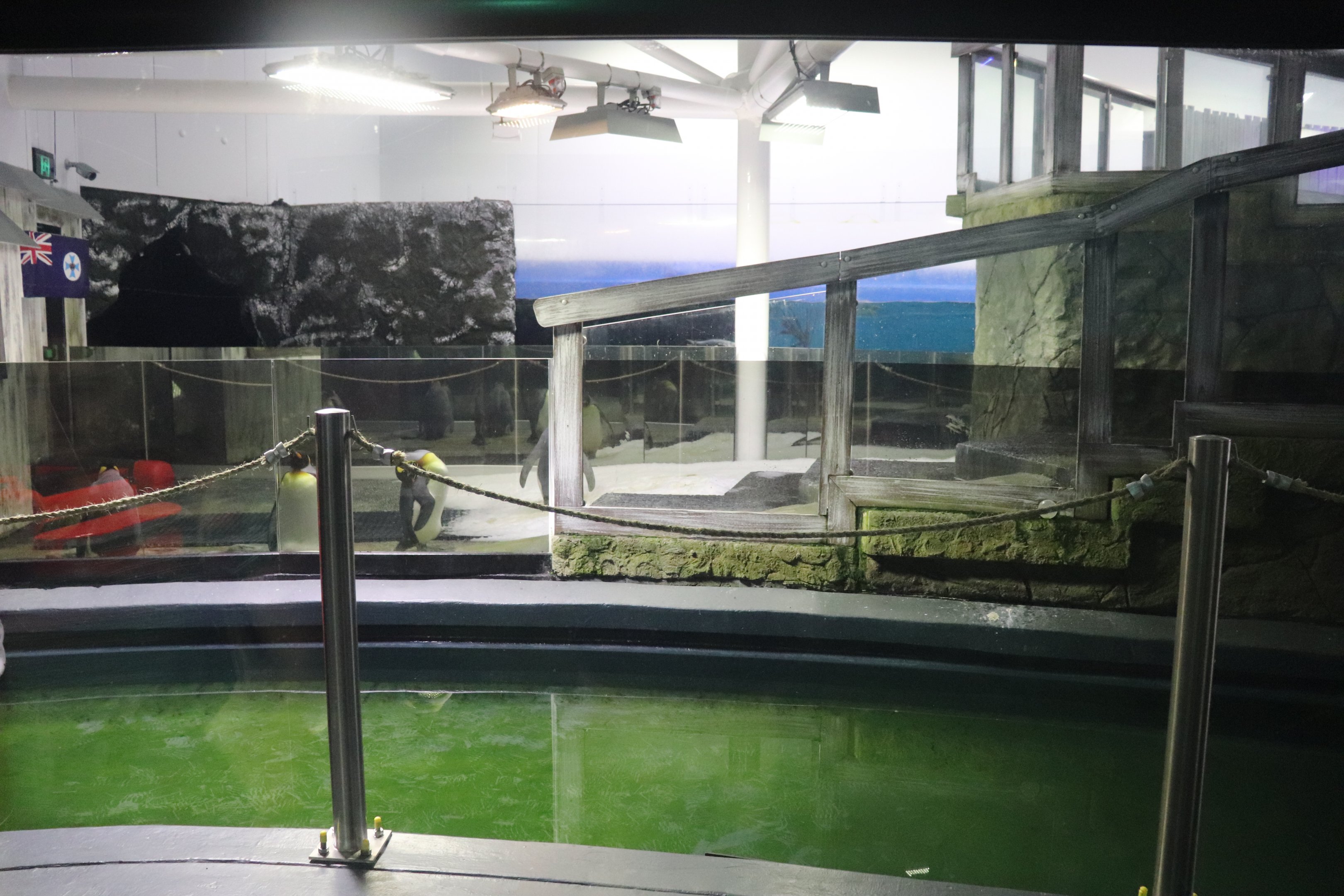
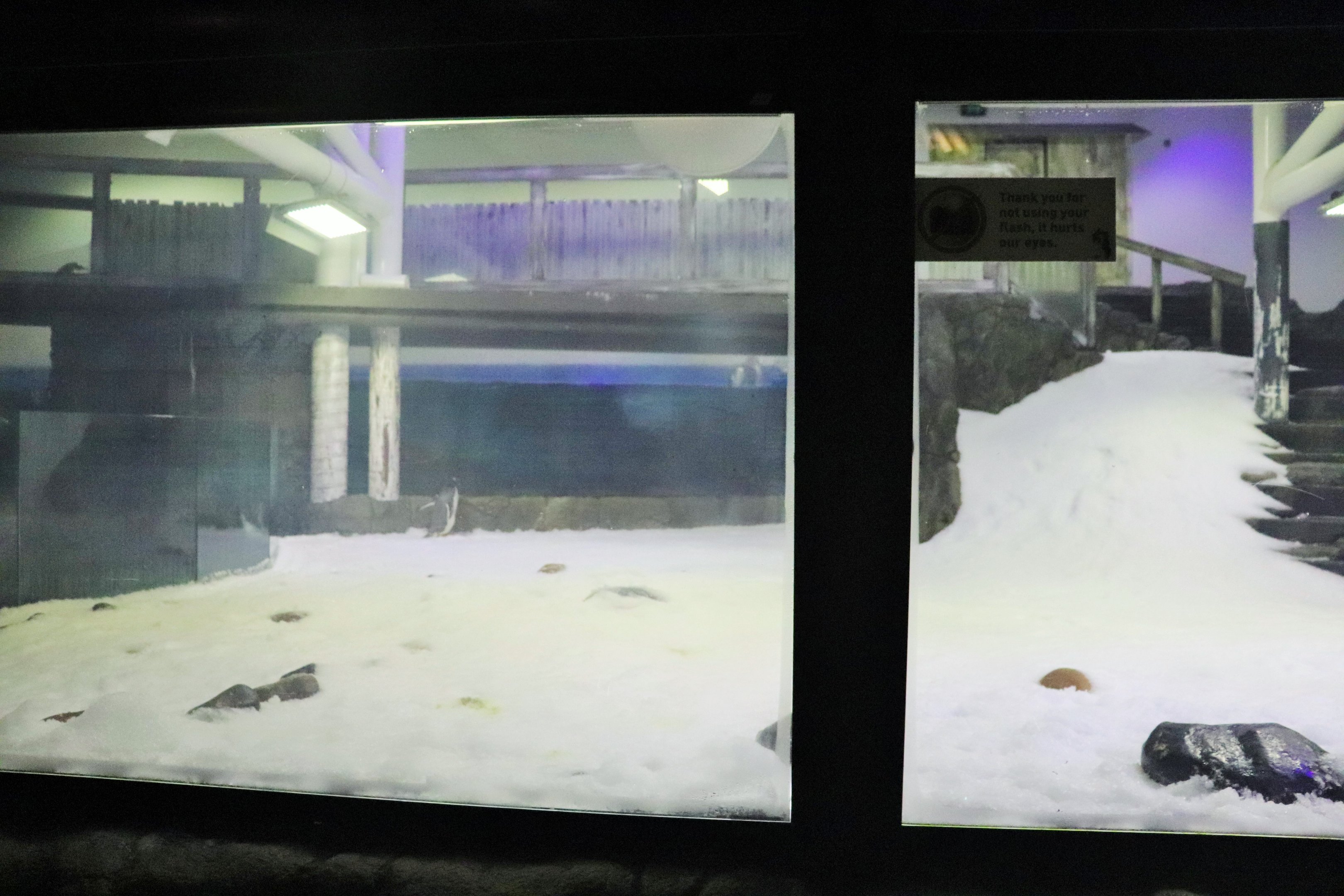
Up next was the heavily-themed exhibit for Gentoo Penguin and King Penguin. This area was particularly odd and attempted to replicate a Macquarie Island research station according to signage. Inside the actual penguin enclosure, visitors are able to take a boat ride around the penguins (who are separated from the boat with glass). I felt like this took up much-needed land space for the penguins. The enclosure itself had a staircase and a second level for the penguins. There were three viewing windows for visitors and a small underwater viewing area with those annoying bubble windows. The body of water wasn’t very large either. It was just a really weird design.
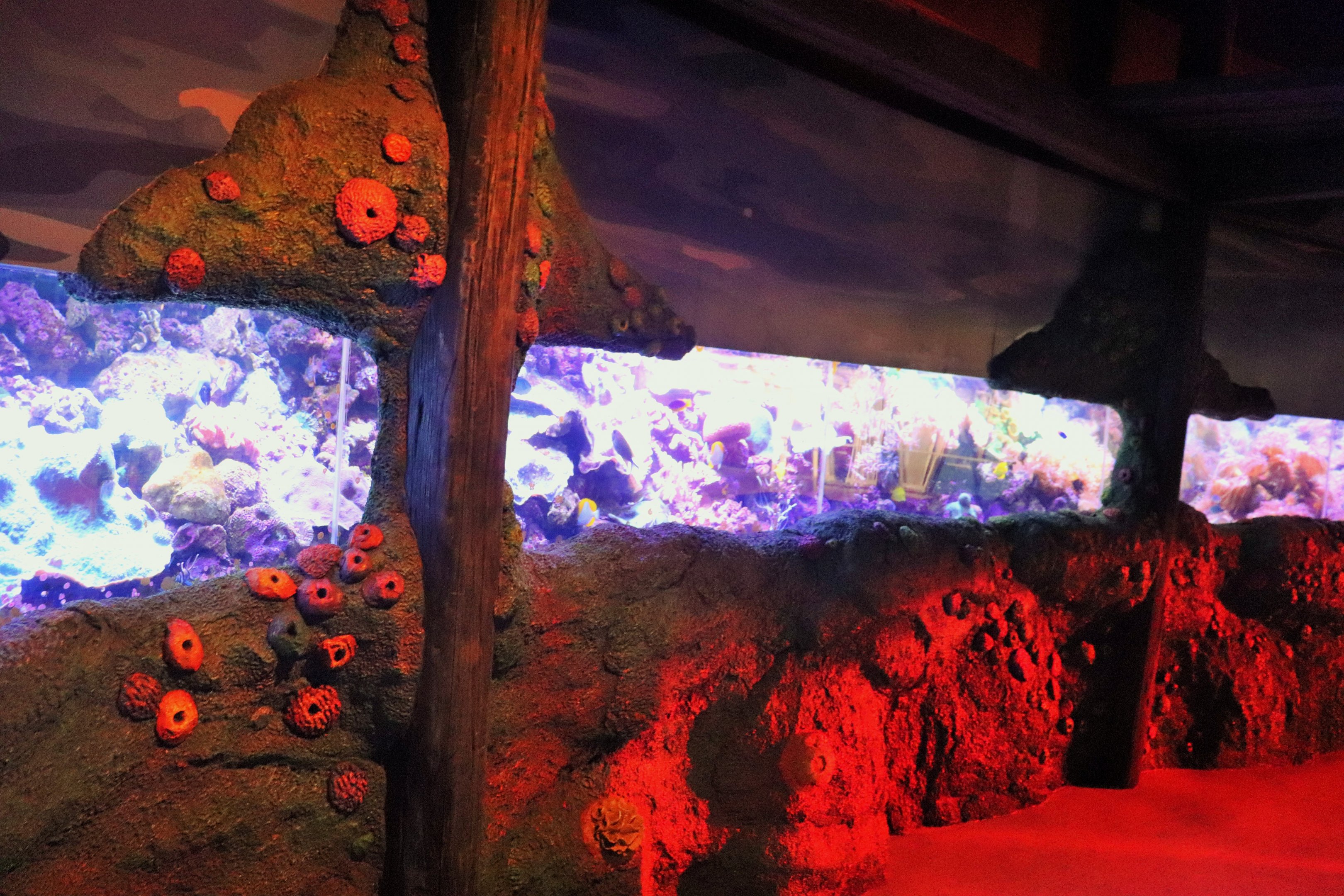
Continuing on, there was a standard touch pool with an assortment of sea stars, shells and shark eggs. Through to a darker area was Coral Cove - a long tank featuring live corals and anemones with a good assortment of fish. Signage was non-existent in this area however the following species were seen and successfully-identified; Bellus Angelfish, Swallowtail Angelfish, Banggai Cardinalfish, Pyjama Cardinalfish, Blue-Green Chromis, Bicolour Chromis, Yellow-tailed Demosielle, Yellowtail Damsel, Fijian Damsel, Goldbelly Damsel, Lemon Damsel, Ocellaris Clownfish, Pink Anemonefish, White-cheeked Surgeonfish, Powder Blue Tang, Yellow Tang, Pyramid Butterflyfish, Copperband Butterflyfish and Blue Pacific Sea Star. Some beautiful species which I hadn’t seen before in fish stores nor in public aquariums. Right next to Coral Cove were cylindrical tanks for Blue Blubber Jellyfish and Moon Jellyfish.
The final section of the aquarium was called the Day and Night on the Reef which is exactly what it sounds likes. This area was divided into periods of time (e.g. 22:00 - Glowing Beach, 12:00 – Rainbow Reef, 15:00 – Fragile Reef). Before the main tank, there was also small dark tank for Copperband Butterflyfish and Bridled Monocle Bream.
The main tank was lighted in accordance to different times of day (night, sunrise, midday etc.) at different viewing areas. Was it fluorescently-coloured with mock rock and odd statues? Yes. Did it have sweeping cinematic music blasting in the background? Of course, but I liked the imagination and thought that went into this area. The species seen in the main tank included Loggerhead Turtle, Green Turtle, Blacktip Reef Shark, Whitetip Reef Shark, Leopard Shark, Tawny Nurse Shark, Bowmouth Guitarfish, Humphead Maori Wrasse, Sawfish, Eastern Shovelnose Ray, Red Emperor, Blue-striped Snapper, Golden Trevally, Snub-nosed Dart, Bicolour Cleaner Wrasse and Bluestreak Cleaner Wrasse. Of course, there were many more species of fish that I couldn’t identify.
Being mainly restricted to the monotony of SEA LIFE aquariums in my region, I justify visiting aquariums by seeing new and unusual species and SEA LIFE Sydney certainly didn’t disappoint in that respect (notably hagfish and dugong). In terms of exhibit-quality there was nothing that really stood out for me. There was a lot of mock rock, a lot of bubble tanks, a lot multi-coloured and over-the-top theming and a lack of signage - the usual SEA LIFE experience!
Comparing all three SEA LIFE aquariums in Australia, they all have the obvious similarities that the SEA LIFE brand brings with it. However, they all possess their own individual faults and strengths. SEA LIFE Sunshine Coast is an aging facility and is the only SEA LIFE aquarium in the country with seals. They also have a good collection of exotic freshwater fish, notably pirapatinga, exotic catfish and gars (I have a suspicion with the arrival of the little penguins that their freshwater fish collection has diminished significantly). SEA LIFE Melbourne on the other hand is quite a modern facility and probably has the smallest collection out of all three. In saying this, I did like their freshwater area and they do have some unusual species like Spotted Handfish and now Flatback Turtle.
SEA LIFE Sydney probably sits somewhere in between the previous two aquariums in terms of age and space. Their main point of difference is of course their dugong. Looking through the photo gallery for the aquarium, it looks like SEA LIFE Sydney has changed significantly over the years. If we throw SeaWorld Gold Coast into the mix, I would still rank their expansive marine exhibit Shark Bay, above anything the three SEA LIFE aquariums can offer.
All in all, SEA LIFE Sydney made for a pleasant experience with highlights like the dugong and hagfish. I encourage others to visit and offer their own thoughts and opinions.
For more photos of the animals and the exhibits see here: Sydney Aquarium - ZooChat
A further note: I will not post a species list after this review as it wouldn’t be fully accurate nor definitive (in particular invertebrates and the smaller fish species). I will still mention the species I saw in each tank or that were signed, in bold.
Surprisingly, the first animals were not seen in a touch pool nor a stingray pool. The first tank held an assortment of native fish including Ox-eye Herring, Striped Scat, Spotted Scat, Snakehead Gudgeon, Diamond-scale Mullet and Spangled Perch. There was also an unsigned fish which looked like a Giant Glassfish. A refreshingly different way to begin a Sea Life aquarium. A quick note - the signage at SEA LIFE Sydney is all electronic and the majority of the signs change every five seconds or so. It took me a while to ensure I noted down all the species.
The first main section is called South Coast Shipwreck which was heavily-themed with wood accents, crates and rope. This area began with an attractive beachy enclosure for their small group of Little Penguins. The penguins also shared their enclosure with the following fish species; Moonlighter, Yellow-fin Bream, Pork Jackson Shark, Sand Whiting and two unidentified fish species (one was a species of goatfish).
Up next were three vertical tanks. These were themed in accordance with the sea life ‘shipwreck’ theme with rope, glass bottles and terracotta pots (in the particular the first two tanks). The signage in this area was particularly poor and some enclosures shared signs so it was difficult to determine what was in which tank. The following species were signed; Pyjama Cardinalfish, Grooved Razorfish, Coral Banded Pipefish (not seen unfortunately), Flat-headed Mullet, Yellowfin Bream, Mado, Southern Pygmy Leatherjacket, Granular Sea Star, Cushion Star and Crown of Thorns Starfish. I also saw Diamondfish (Mono) in the second enclosure and Snapper in the third, as well as additional species of unidentified fish. There was also a rocky tank for Sieve-patterned Moray Eel along this row of tanks. The final exhibit is this area was for the endangered White’s Seahorse. Their tank featured a large fish net that ran across their tank.
The oddly-themed Jurassic Seas section was next. This area represented the few freshwater species the aquarium holds and many of tanks were presented with a series of dinosaur skulls and bones. Just plain odd. The first few exhibits were comprised of a small tank which had a Sea Anemone, followed by a cylindrical tank for Striped Scat, Spotted Scat and a juvenile Freshwater Crocodile. This tank had a large range of logs and rockwork. Next to the crocodile tank was a large fish exhibit which featured what looked like a vertebrae and rib cage.
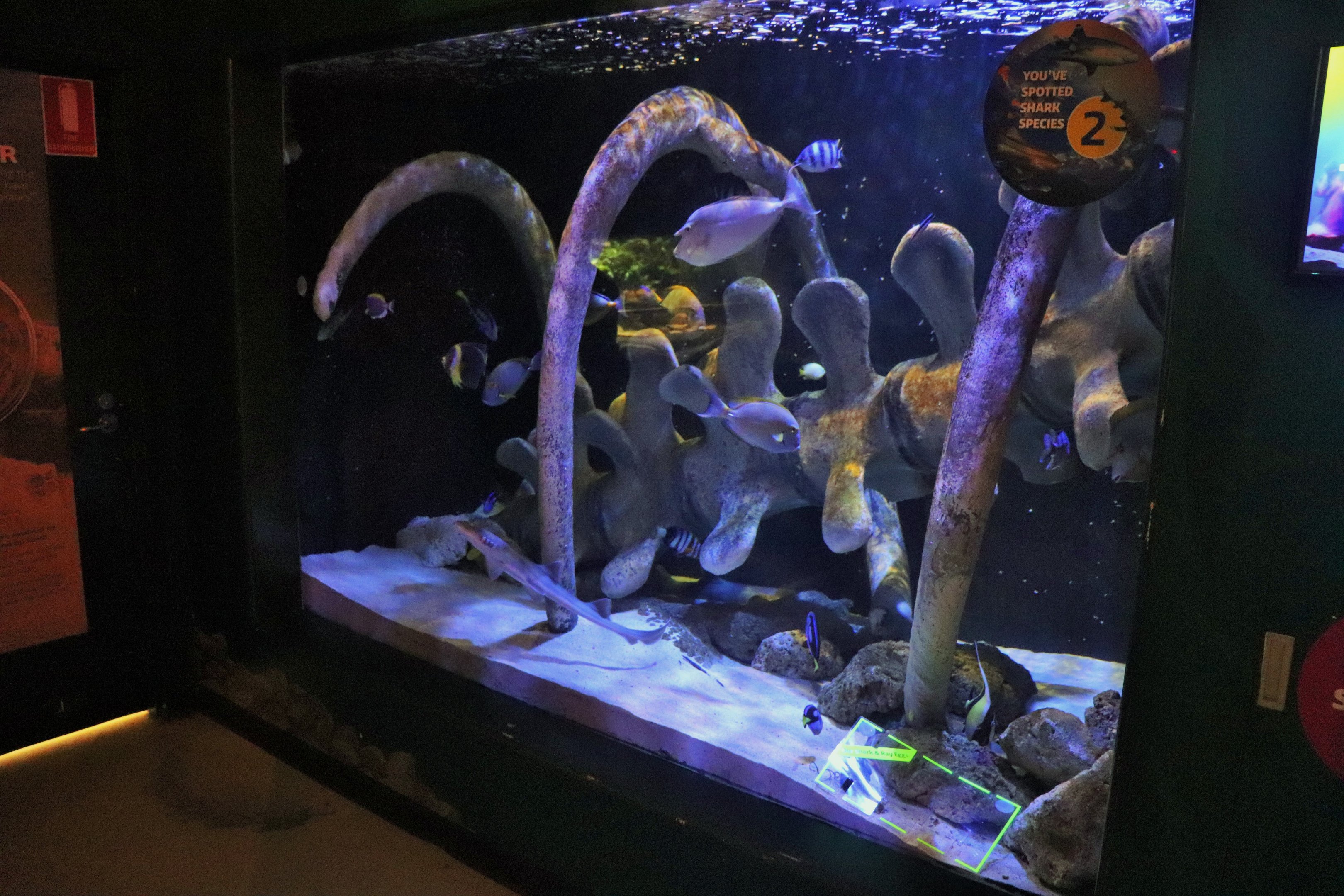
There was no signage for this tank but the species seen included Brown-banded Bamboo Shark, Moorish Idol, Pacific Blue Tang, Lined Surgeonfish, Harlequin Tuskfish, Orange-spined Unicornfish (Naso Tang), Yellowfin Surgeonfish, Bird-nose Wrasse, Scissortail Sergeant, Fijian Damsel and Scribbled Angelfish. There were around another two fish species (a damselfish and a unicornfish) which remain unidentified.
Nearby was a brightly-lit sandy tank with some live plants for Mudskipper (frustratingly the aquarium didn’t specify the species when I contacted them). I always love watching them. Nearby was another fascinating species - Broad-gilled Hagfish. There were around three to four hagfish, it was hard to tell with their entwining bodies. Their tank was surprisingly lighted and I managed to get a few ordinary photos.
The main feature of Jurassic Seas was a circular tank with a dinosaur skull placed on a mock rock pile in the centre. Personally, I wasn’t a fan of it at all. I saw Queensland Lungfish and Seven-spot Archerfish, and what looked like a Long-nosed Gar and Freshwater Longtom. The final three tanks set in mock rock held Firetail Gudgeon, an Axolotl, and an assortment of sea stars. Just before the next area was the Marine Nursery, which had viewing windows featuring tanks for seahorse fry.
Continuing on was a tank which aimed to demonstrate the problems of pollution. This tank was oddly designed to have half of it polluted with rubbish and the other half with live corals and anemones. The signage for this tank was pretty good and I saw the following species; Bridled Triggerfish, Eastern Hulafish, Blotched Hawkfish, Southern Pygmy Leatherjacket, Dwarf Lionfish and Slipper Lobster. Southern Velvetfish and Decorator Crab were also signed but not seen.
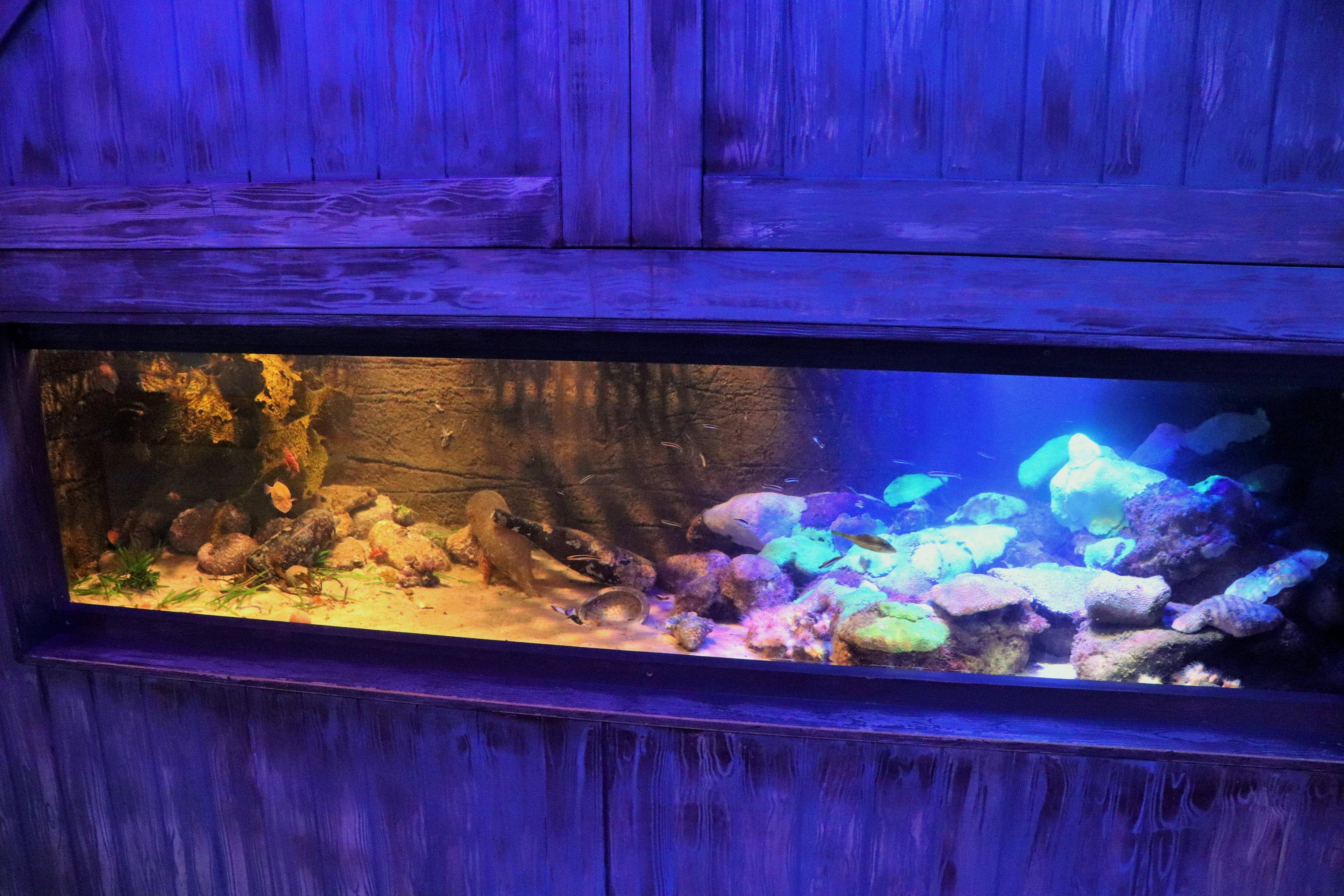
The next section was Sydney Harbour which aimed to showcase local marine species (even though some of the species housed here were not from the Sydney area). Sydney Harbour began with three large tanks framed with mock rock. These were all nicely-furnished. The first tank housed reef fish; Ocellaris Clownfish and unseen Bicolour Angelfish, Blue-green Chromis and Bluestreak Cleaner Wrasse. The next tank housed a group of Yellow-tailed Scad, and the final tank had a mix of Eastern Pomfred, Old Wife, Stripey, Southern Crayfish, Eastern Crayfish and an unspecified species of bullseye fish.
There was also a glass-fronted enclosure for Eastern Water Dragon. This was quite large for its occupants and had a series of large logs, branches and a sizeable body of water. Nearby there were three small darkly-lit tanks with particularly poor signage. The species signed included Eastern Fortesque, Eastern Hulafish, Estuary Glassfish, Southern Pygmy Leatherjacket, Sydney Cardinalfish and Decorator Crab. I only saw the cardinalfish species and several unsigned fish species (at least one was a goby species). The final tank in this area, had bubble-shaped viewing windows. This exhibit contained Red Lionfish and unspecified species of Porcupinefish.
Down a winding ramp was Dugong Island. Featuring the aquarium’s star attraction – Pig the Dugong, this large area contained two ocean tunnels and an above viewing area enabling visitors to see the dugong feeding and briefly surfacing. The ocean tunnels themselves were well-lighted and quite roomy. It was a joy to have Pig (who was very active) swim over my head on several occasions. Mixed with the dugong, fish were well-represented with the following species seen; White-spotted Eagle Ray, Epaulette Shark, Yellow-tailed Fusilier, Foxface, Double-bar Rabbitfish, Masked Rabbitfish, Pacific Blue Tang, Sailfin Tang, Yellow Tang, Yellow-fin Tang, Chocolate Surgeonfish, Orange-spined Unicornfish (Naso Tang), Bignose Unicornfish, Double-sided Butterflyfish, Threadfin Butterflyfish, Yellow Longnose Butterflyfish, Copperband Butterflyfish, Longfin Bannerfish, Moorish Idol, Bicolour Chromis, Scissortail Sergeant, Whitetail Humbug, Cinnamon Anemonefish, Pink Anemonefish, Yellow-banded Sweetlips, Harlequin Tuskfish, Slingjaw Wrasse, Emperor Angelfish, Humpback Red Snapper, Blue-stripe Snapper, Red Emperor, Barramundi, Round Batfish, Stripey and Redtooth Triggerfish. As usual with most large ocean tunnels, there were undoubtedly additional species of fish.
After seeing the above viewing area and feeding platform for the dugong, the next section was Shark Valley. This area also had two ocean tunnels and was significantly darker than Dugong Island. The species seen here included Grey Nurse Shark, Port Jackson Shark, Spotted Wobbegong, Eastern Fiddler Ray, Yellow-fin Bream, Snapper, Crested Morwong, Red Morwong, Blue-striped Goatfish, Bluestreak Cleaner Wrasse, Old Wife, Mado, Diamondfish (Mono), Mulloway and several more species of pelagic fish.
Up next was the heavily-themed exhibit for Gentoo Penguin and King Penguin. This area was particularly odd and attempted to replicate a Macquarie Island research station according to signage. Inside the actual penguin enclosure, visitors are able to take a boat ride around the penguins (who are separated from the boat with glass). I felt like this took up much-needed land space for the penguins. The enclosure itself had a staircase and a second level for the penguins. There were three viewing windows for visitors and a small underwater viewing area with those annoying bubble windows. The body of water wasn’t very large either. It was just a really weird design.
Continuing on, there was a standard touch pool with an assortment of sea stars, shells and shark eggs. Through to a darker area was Coral Cove - a long tank featuring live corals and anemones with a good assortment of fish. Signage was non-existent in this area however the following species were seen and successfully-identified; Bellus Angelfish, Swallowtail Angelfish, Banggai Cardinalfish, Pyjama Cardinalfish, Blue-Green Chromis, Bicolour Chromis, Yellow-tailed Demosielle, Yellowtail Damsel, Fijian Damsel, Goldbelly Damsel, Lemon Damsel, Ocellaris Clownfish, Pink Anemonefish, White-cheeked Surgeonfish, Powder Blue Tang, Yellow Tang, Pyramid Butterflyfish, Copperband Butterflyfish and Blue Pacific Sea Star. Some beautiful species which I hadn’t seen before in fish stores nor in public aquariums. Right next to Coral Cove were cylindrical tanks for Blue Blubber Jellyfish and Moon Jellyfish.
The final section of the aquarium was called the Day and Night on the Reef which is exactly what it sounds likes. This area was divided into periods of time (e.g. 22:00 - Glowing Beach, 12:00 – Rainbow Reef, 15:00 – Fragile Reef). Before the main tank, there was also small dark tank for Copperband Butterflyfish and Bridled Monocle Bream.
The main tank was lighted in accordance to different times of day (night, sunrise, midday etc.) at different viewing areas. Was it fluorescently-coloured with mock rock and odd statues? Yes. Did it have sweeping cinematic music blasting in the background? Of course, but I liked the imagination and thought that went into this area. The species seen in the main tank included Loggerhead Turtle, Green Turtle, Blacktip Reef Shark, Whitetip Reef Shark, Leopard Shark, Tawny Nurse Shark, Bowmouth Guitarfish, Humphead Maori Wrasse, Sawfish, Eastern Shovelnose Ray, Red Emperor, Blue-striped Snapper, Golden Trevally, Snub-nosed Dart, Bicolour Cleaner Wrasse and Bluestreak Cleaner Wrasse. Of course, there were many more species of fish that I couldn’t identify.
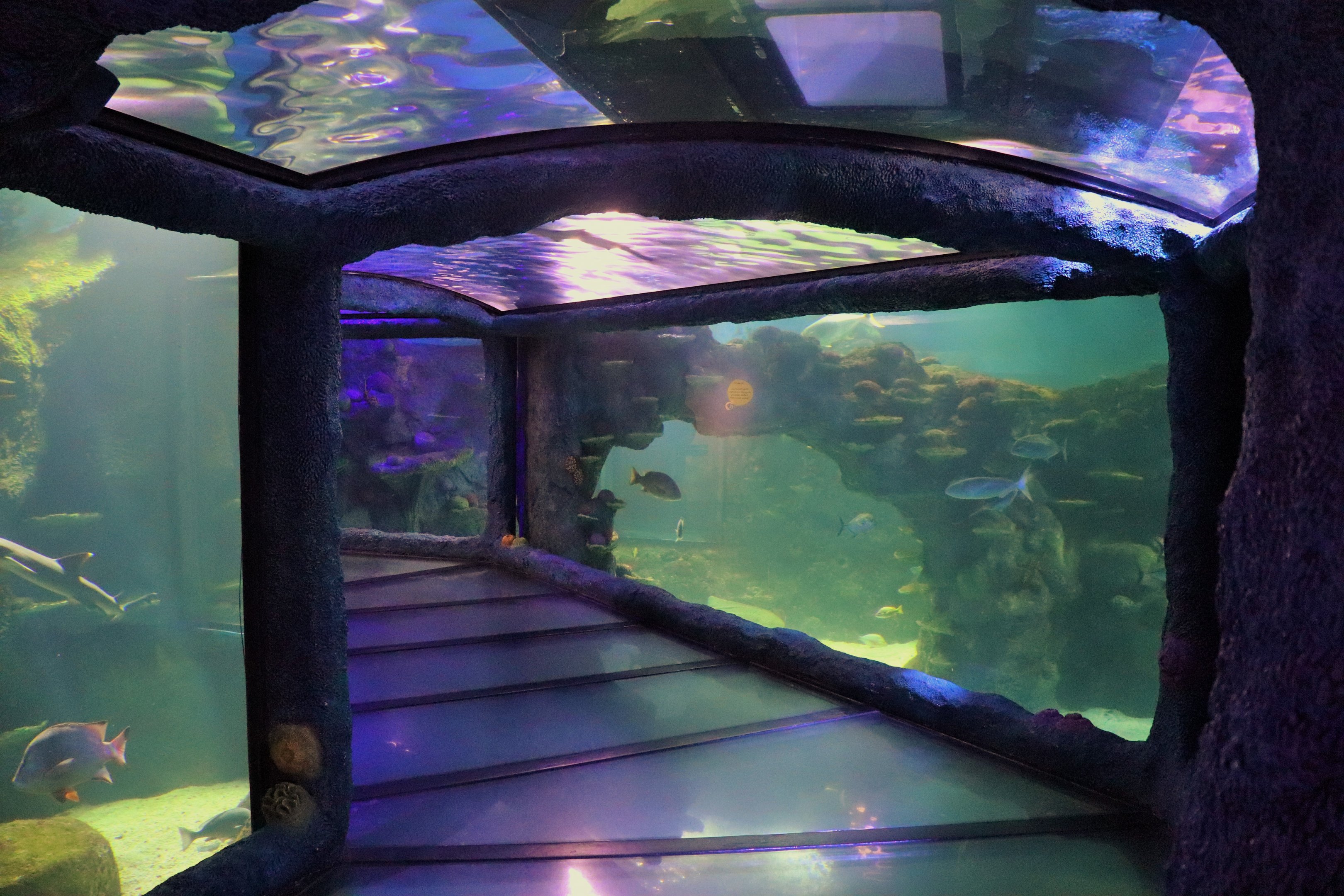
Being mainly restricted to the monotony of SEA LIFE aquariums in my region, I justify visiting aquariums by seeing new and unusual species and SEA LIFE Sydney certainly didn’t disappoint in that respect (notably hagfish and dugong). In terms of exhibit-quality there was nothing that really stood out for me. There was a lot of mock rock, a lot of bubble tanks, a lot multi-coloured and over-the-top theming and a lack of signage - the usual SEA LIFE experience!
Comparing all three SEA LIFE aquariums in Australia, they all have the obvious similarities that the SEA LIFE brand brings with it. However, they all possess their own individual faults and strengths. SEA LIFE Sunshine Coast is an aging facility and is the only SEA LIFE aquarium in the country with seals. They also have a good collection of exotic freshwater fish, notably pirapatinga, exotic catfish and gars (I have a suspicion with the arrival of the little penguins that their freshwater fish collection has diminished significantly). SEA LIFE Melbourne on the other hand is quite a modern facility and probably has the smallest collection out of all three. In saying this, I did like their freshwater area and they do have some unusual species like Spotted Handfish and now Flatback Turtle.
SEA LIFE Sydney probably sits somewhere in between the previous two aquariums in terms of age and space. Their main point of difference is of course their dugong. Looking through the photo gallery for the aquarium, it looks like SEA LIFE Sydney has changed significantly over the years. If we throw SeaWorld Gold Coast into the mix, I would still rank their expansive marine exhibit Shark Bay, above anything the three SEA LIFE aquariums can offer.
All in all, SEA LIFE Sydney made for a pleasant experience with highlights like the dugong and hagfish. I encourage others to visit and offer their own thoughts and opinions.
For more photos of the animals and the exhibits see here: Sydney Aquarium - ZooChat
Last edited:


