NUMBER ONE HUNDRED: It took 97 profiles for this request to finally be used, but here it is...
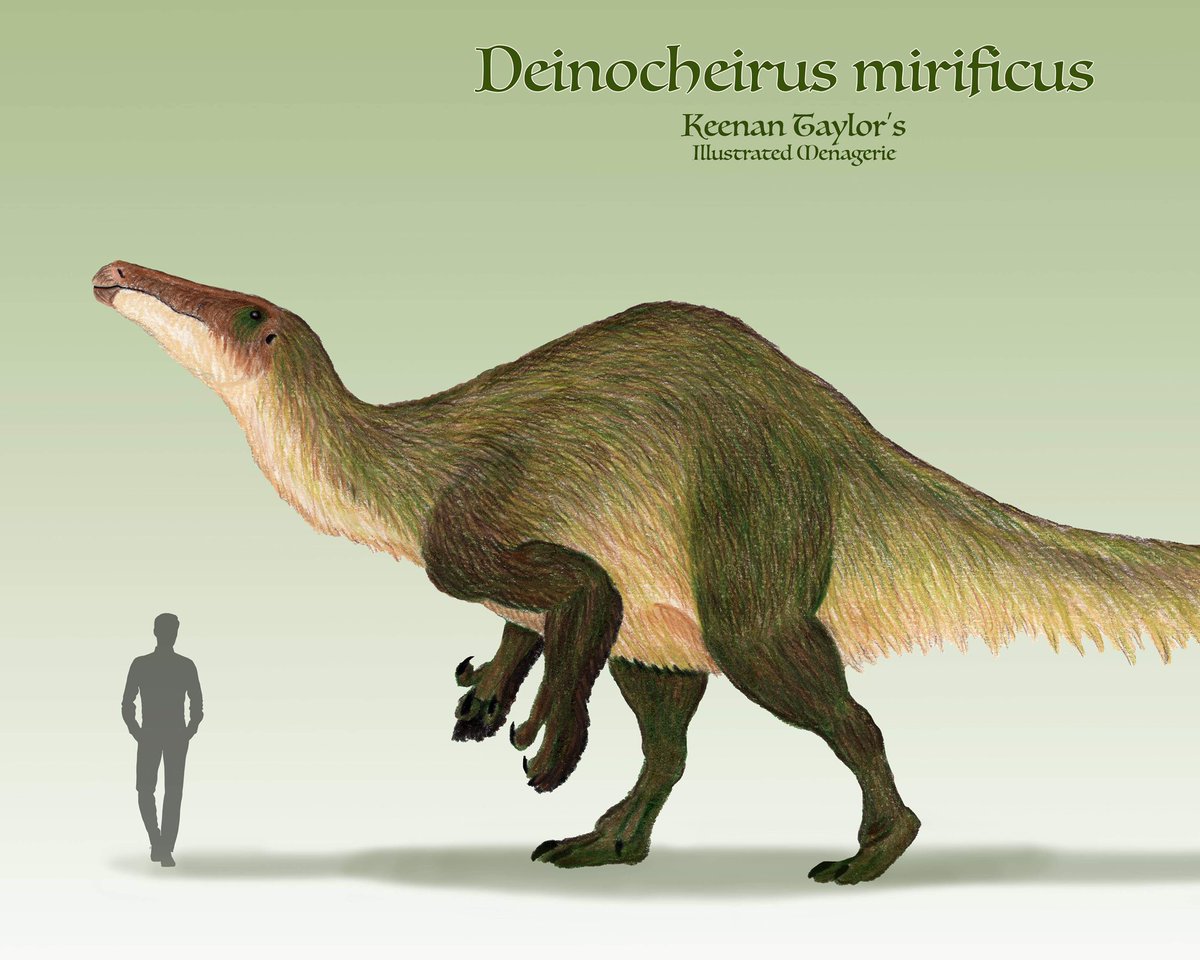
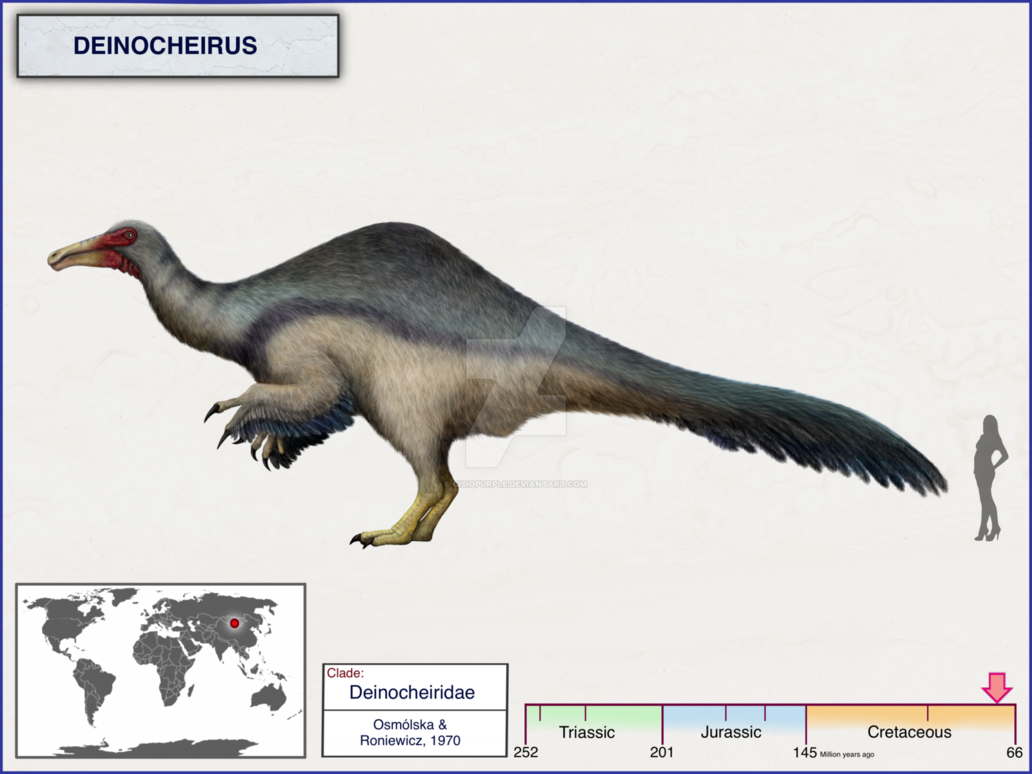
- Species: Deinocheirus mirificus
- Pronunciation: Die-noe-ky-rus mear-if-i-kus
- Name Meaning: "Magnificent terrible hands"
- Species Authority: Halszka Osmólska & Ewa Roniewicz, 1970
- Classification: Life, Eukaryota, Animalia, Chordata, Vertebrata, Gnathostomata, Osteichthyes, Sarcopterygii, Tetrapodomorpha, Tetrapoda, Reptiliomorpha, Amniota, Sauropsida, Eureptilia, Sauria, Archosauromorpha, Archosauriformes, Archosauria, Dinosauria, Saurischia, Theropoda, Maniraptoriformes, Ornithomimosauria, Deinocheiridae,
- When: ~ 70,000,000 B.C.E. (Maastrichtian stage of the Late Cretaceous epoch)
- Where: Nemegt Formation (Mongolia, Asia)
- Size: 36 feet long (10.97 meters) long
- Diet: Omnivore
In 1965, Poland and Mongolia mounted a joint paleontological expedition to the Gobi Desert. This was the third such major paleontological expedition to the country, following similar expeditions by American scientists in the 1920s and Soviet-Mongolian scientists in the 1950s. Each expedition revealed amazing new specimens of dinosaurs and mammals from the Late Cretaceous. The American finds from the 1920s include the first fossils of
Velociraptor, as well as the first ever non-avian dinosaur eggshell fossils. The Soviet-Mongolian discoveries from the 1950s included the first fossils of the therizinosaur
Therizinosaurus and the tyrannosaur
Tarbosaurus. The Polish-Mongolian team, not to be outdone, also found some extraordinary dinosaur fossils including a pair of giant arms from a theropod. In 1970, these arms would become the type specimen of
Deinocheirus mirificus. Early depictions of
Deinocheirus imagined an enormous long-armed carnivore as large as
Tyrannosaurus.
Deinocheirus remained an enigma until 2013 when two new headless specimens were announced. And in 2014 a skull which had made its way into the black market was recovered and described. We now know
Deinocheirus was a massive ornithomimosaur, the same group the famous
Gallimimus belonged to. Although, for an ornithomimosaur, this species was massive, measuring 36 to 39 feet long.
Deinocheirus had a growth rising up from its backs which may have formed either a heavily built sail or a fatty hump. The two most common theories: thermoregulation and fat storage for surviving droughts and times of little food availability, or display for interspecies recognition and even signalling members to the opposite sex with a well formed hump indicating a healthy and well fed individual. What is known is that at the time of this discovery,
Deinocheirus was the only ornithomimosaur known to have had a growth on its back, something that still stands at the time of writing. With the recovery of the stolen skull, we know that
Deinocheirus had a "spoonbill," upper and lower jaws that widened out to form a rounded spoon-shape. This begs the question, was
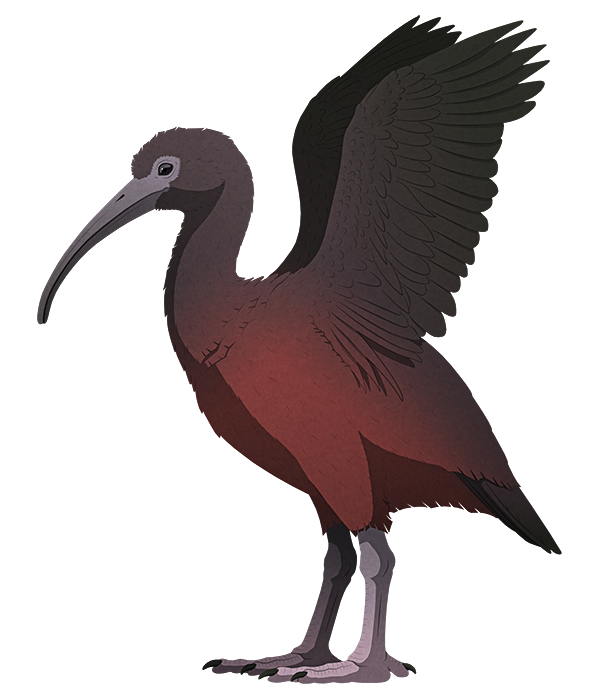
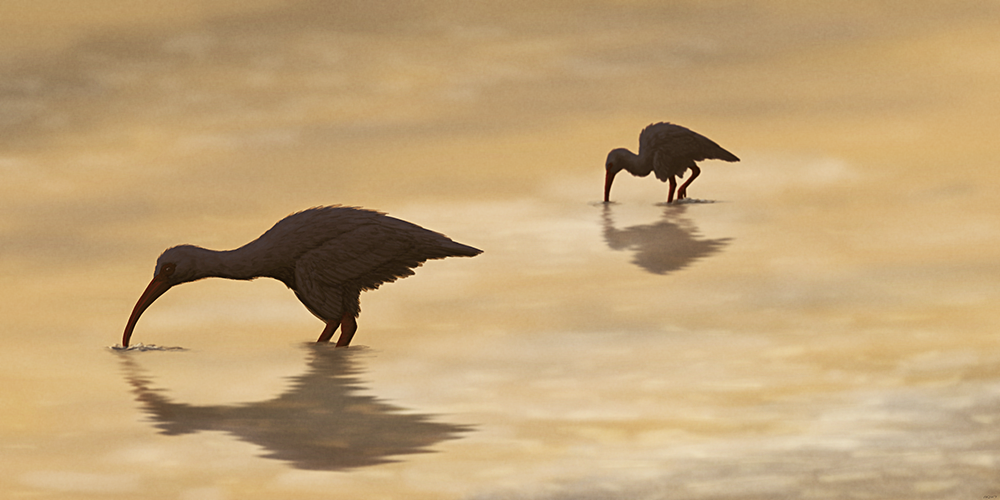
Deinocheirus similar to modern spoonbill birds that are known to snatch out invertebrates and small fish from water systems. Here the widened bill increases the catch area making it easy to snatch prey from the water. A comparison to the spinosaurs could also be in order. Some genera of spinosaur such as
Ichthyovenator and of course
Spinosaurus itself are known to have had growths on their backs as well as well-developed and long arms and claws, both features that can now be seen in
Deinocheirus. In addition, the possible gastroliths of
Deinocheirus could have just as easily have been used to strip off the scales from fish making them easier to digest. It may be that
Deinocheirus waited for seasonal rains to swell rivers and water systems which then brought in a greater amount and variety of fish, which they then gorged themselves upon in times of plenty to build up there fat reserves stored in a hump, which they then relied upon to see them through the remainder of the year in leaner times. If true then
Deinocheirus may have been in a comparative evolutionary niche as the spinosaurs that were common in earlier in the Cretaceous. Finally one should consider that as a saurischian theropod,
Deinocheirus as an ornithomimosaur would have been descended from predatory ancestors and even some earlier ornithomimids such as
Pelecanimimus are perceived to have been more predatory in their dietary needs. This is only speculation however, it remains to be seen to just what other surprises
Deinocheirus may have in for us.
Below: The original specimen of Deinocheirus with Zofia Kielan-Jaworowska, the leader of the Polish-Mongolian team.
Picture and Information Resources:












 where I took the following photographs which I subsequently uploaded to the gallery: