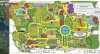
I decided to revise this plan a little bit. A few things seemed a little too ambitious and few things feel like wasted potential. I went back and adjusted things where I saw fit and now, I feel 100% confident in my ideas at this point (although I do have one other exhibit concept I may post later on). So...Alright, my turn. Let me forewarn you this is a very long and in depth "mock master plan" and is incredibly ambitious. I may have went a little too far in some places but that's half the fun of stuff like this. This plan would affect every exhibit in the zoo in one way or another and would likely cost and astronomical amount of money and work in real life. Some of it draws inspiration from the original master plan and some of this overlaps with what some other members have posted above. I went in with the goal to maintain as much of the existing collection as possible and overall I feel it went pretty well. The only major species that would have to be removed would the sloth bears, harbor seals and tapirs (though even the latter two could still be implemented if space is there). I also wanted to add some rarities, but I tried (key word being tried) to keep it realistic. I also altered many of the non animals areas such as entrances, restaurants and plazas.
The end goal here was to make the Brookfield zoo on par with San Diego, Omaha, Bronx and the other top zoos in America. This is why at least 80% of the existing zoo will be dramatically altered and I am very happy with the results of what I came up with. Considering the zoos current financial state, the idea of pulling something like this off seems like merely a pipe dream, which it is. However, if the money were there, this would undoubtably elevate Brookfield to one of the best in the nation status. So sorry for the lengthy exposition, here is my rather ambitious vision for Brookfield.
Tropic World: Outdoor Exhibits
Tropic World: Indoor Exhibits
- I would separate the expansion and renovation of tropic world into two phases. Phase one would add on outdoor exhibits so species normally indoors can go outside and be on public view while phase two is under construction. Phase two would include renovating the existing indoor exhibits.
- The first outdoor section is the originally planned Gorilla Rescue from the master plan above with some modifications. This would take up the west half of the west mall and includes two exhibits. First an outdoor exhibits for the namesake gorillas. It would be viewed immediately after exiting Tropic World and is a long heavily shaded habitat. There are multiple glass viewing shelters for great views of the gorillas. The second habitat would be an island for all of the primates in Tropic World: Africa. In this plan that would include red-capped mangabeys, Allen's swamp monkey, colobus monkeys, and mandrills. There would be a gazebo viewing shelter like depicted in the plan. If overcrowding becomes an issue, the mandrills could receive their own outdoor habitat.
- The next outdoor section would be Orangutan Forest. This would be the outdoor exhibits for the asian species. I wasn't completely sure where to put this originally, so I decided on using the former bird show area to create an island for the primate species in Asia. It would be connected to Tropic World. It would be for the gibbons and orangutans.
- The final Outdoor segment is - you guessed it - Tropical America. This is a single exhibit for all of the species in the main South American habitat. It would be on the open plot of land in the Hamill Family Nature Plaza closest to the building. It would be a tall exhibit but also feature enough ground space and a pool for the land mammals.
Habitat Africa: The Savannah!
- For the indoor exhibits, a lot of work needs to be done. All three areas need to have the following. A) Repaint the fake trees to a brownish color and try to make them look more realistic B) Replace the fake logs and plants with real ones. C) Cover at least 80% of the forest floor with mulch and plants to give the animals natural substrate. D) Add new species to fill the exhibits that feel more and more empty as time goes on, including...
- New Species for South America - Add red-faced spider monkeys, capuchins, and capybara to the main exhibit. Make new exhibits for small herbs and fish along the wall of the exhibit, as well exhibits for caimans and anacondas.
- New species for Asia - none in the main exhibit. Gibbons can be territorial and won't easily get along with more primates. Add exhibits for tree shrews and burmese pythons.
- New species for Africa - mandrills and red-capped mangabeys for the main exhibit. I definitely agree with putting a hornbill inside of the old gorilla retirement home, it would allow for plants to grow and make for a really pretty exhibit. Also include exhibits for togo slippery frogs and rock pythons.
- Add a few more free flight birds to each room as well.
- Now for the most ambitious part of this plan. There's no reason why the orangutans need their own exhibit. They get along perfectly well with the gibbons (which have managed to find ways onto the island in the past) and have been mixed with otters at many other zoos. So my proposal is to destroy the entire island and level it with the current gibbon area. Essentially replace the island with an extension of what the gibbons have and give both the orangutans and gibbons full access to the entire area. Is it expensive? Yes. Is it practical? No. Would it be cool? Absolutely!
Habitat Africa! The Forest
- Keep the existing giraffe, painted dog and kopje exhibits the same (maybe adding some sand to the klipspringer exhibit(s) would be a good idea though).
- Tear down the Australia house, pachyderm house and the row of hoofstock yards to make way for new African exhibits. I contemplated keeping the pachyderm building around for historic value - and perhaps it still could with some extensive renovations, but it feels like too much of an eyesore to be maintained. Additionally, expand into the empty field behind the hoofstock yards.
- New exhibits to be built would be for elephants, rhinos, lions, two mixed species hoostock yards, two African bird exhibits and a renovated plaza.
- A Pair of exhibits for black rhinos essentially be an extension of the existing pachyderm building and would extend into the existing kangaroo and emu exhibit. They would add up to about an acre in size. The pachyderm building can be converted into a rhino breeding center and a new indoor exhibit could be built with the same idea of this now scrapped plans for an indoor elephant exhibit in the pachyderm building.
- Speaking of elephants, add four large yards that would be interconnected through a series of bridges that go over the heads of guests like the master plan exemplifies. These would be naturalistic grassy yards that would create a panorama with the existing giraffe exhibit. Ideally, a family heard would be housed here and these yards would take up the existing nyala yard, gerenuk yard, Australia House, empty field by the old aardvark house and newly developed land. A new elephant barn would also be built on undeveloped land and be one of the most ambitious of its kind. A large day room with real plants as decor, soft substrates, an indoor pool with underwater views ala Zurich/Leipzig with daily baths and natural lighting from the roof. It would be sort of like an expanded apon version of the Zurich elephant house.
- Two new ungulate yards with large herds of gerenuk, nyala, giant eland and marabou storks in one, the other holding sables and zebras. The former would be between the elephant yards and have their barn connected to the elephant barn.
- Lions would get a new exhibit on undeveloped land. It would be reminiscent of the SDZSP’s Lion Camp and feature multiple viewing points. The goal would be to maintain a breeding group.
- Two new exhibits for african birds can be built. An island for shoebill storks and small duck species can be built where the existing west rhino yard is and the rhino barn will act as the holding/off exhibit area. Another bird exhibit would be built across the giraffe viewing hut on a forested area. This exhibit is based on a wetlands marsh.
- New outdoor klipspinger exhibit that modeled after the kopje. It would feature big boulders and be located on undeveloped land.
- Renovated viewing plaza for elephants, giraffes and painted dogs. Pave over the existing viewing plaza and provide a full panoramic view of all three habitats. Plus, add “Snacks on the Savannah” (a small snack and refreshment area) and a small gift hut.
Australian Trek
- Combine the existing okapi and yellow-backed duiker exhibits (the ones you see when you first enter the exhibit into one large mixed species exhibits. The second okapi yard can also be accessed by the duiker as well.
- Bring back forest buffalo to the collection in the yard they were in previously.
- New exhibit for pygmy hippos with underwater viewing. Can be built on usused forest across from the outdoor red-flanked duiker exhibit.
- Aviary featuring congo peafowl and small birds across from the first okapi/duiker yard.
Siberian Escape
- Replacing the existing camel yard and a portion of the North lot and undeveloped land.
- Outdoor exhibits for kangaroos and emus, wallabies and pademelons, wombats, echidnas, kookaburras and koalas.
- Continue the current houses theme of light and day with a daylight portion and nocturnal portion.
- Daylight portion will feature several herpes exhibits, two fish tanks, a bird aviary and an indoor koala exhibit.
- Nocturnal room would feature indoor exhibits for wombats and echidnas, plus another fish tank and an expanded bat walkthrough.
- Educational play area for kids and rest area for adults.
Amazon Research Center
- Replacing the outdated cat grottos and some of the land across from it.
- New Exhibits for tigers, amur leopards, snow leopards, bactrian camels and przewalski's wild horses.
- The cat exhibits would be similar to how depicted in the original master plan. A rotation element could exist, but each yard would be tailored to a certain species. They would all be netted over and feature viewing through glass and netting.
- The first exhibit would be for tigers. The first viewing shelter would have an underwater viewing shelter similar to what's depicted here. The habitat would slope up from here as would the visitor pathway. Viewing would be through netting for the rest of the exhibit
- The second exhibit would be suited for amur leopard. It would be filled with climbing structures. It would similarly slope upwards like the tiger exhibit.
- The snow leopard exhibit would be the most unique of the three. It would be a slope in the opposite direction of the other two and would include a dynamic view from a boardwalk. The wall where the existing glass viewing cave is would be turned into an alpine hillside and emulate the leopards native terrain and showcase their climbing skills. The glass viewing from this exhibit would also be from an elevated point of view.
- Across from the cat yards would be a single yard mimicking an Asian steppe style area. It would be a mixed species yard for the camels and wild horses and stretch all the way through the exhibit similar to how the yard(s) are depicted on the original master plan. It's admittedly a bit of a tight squeeze, but luckily both species are pretty cold hardy and don’t need a massive holding area.
- An education center would be built in between the two leopard exhibits that would have views into the two leopard exhibits and the hoofstock yard.
The Living Coast
- Replacing Feathers and Scales and a portion of the formal pool.
- Exhibit species here that are spread around the zoo in areas where they shouldn't be, and wouldn't fit into Tropic World. This includes ocelots, coatis, tamanduas, macaws, orinoco crocodiles, andean condors (renovated exhibit) smaller herp species and a tropical avary (existing).
- The building would be expanded out from the existing Feather and Scales building, essentially doubled in size expanding out to where a portion of the formal pool is now. A boardwalk would lead you to the entrance and would also be viewing for the nearby flamingo exhibit.
- Instead of the gallery style exhibitry the building has, it would be set up as a single pathway exhibit in the same vein as Clouded Leopard Rainforest and Deserts Edge.
- Keep the tropical aviary the same as is (although removing those ugly rock formations in the back would be ideal, and filling in the open air viewing with glass would be necessary for the rest of the exhibit to work). Add a rest area so guests can sit and watch the birds.
- Ocelots would have and indoor and outdoor exhibit on the North end of the building that would be filled with plants and climbing structures. It would be viewed through glass.
- The coati exhibit would essentially be a tropical version of their current exhibit at Deserts Edge. An exhibit with plenty of vertical height where a large group could be held.
- Orinoco crocodiles would have an exhibit with a large underwater viewing window.
- Herps include amazon tree boas, poison dart frogs, glass frogs and other species scattered around the zoo.
- If possible, bringing in giant armadillos would make for an excellent exhibit showcasing how their burrows benefit many animals in the environment. If not, a smaller armadillo species would work just as well, maybe even mixing them with prehensile-tailed porcupines.
- Renovate the condor flight cage to include glass viewing windows and large boulders and more trees to emulate the high altitude regions of the Ades.
- This exhibit should definitely have its original theme restored instead of just being a generic aquarium. This is an exhibit based on the coastline of Peru, so replace the great lakes tank, cave exhibits across from the penguins, and other miscellaneous tanks with species you would find in the oceans and coastlines of peru.
- Give the penguins access to large tank before the coastal birds exhibit like they used to.
- Reopen the vampire bat cave, it had no reason to be removed in the first place.
- Add a yard for galapagos tortoises across from the existing condor flight cage. They may not be peruvian animals, but considering the relatively close proximity to the galapagos islands it would make the most sense to put them here.
Flamingos and Animal Ambassador Amphitheater
- Replacing the existing formal pool and the old reptile house, a new flamingo pond and an outdoor amphitheater for animal ambassador shows.
- Chilean flamingos and Andean flamingos would have a semi tropical pond that's smaller and more condensed than the existing formal pool to encourage breeding.
- The Animal amphitheater will essentially be a replacement for the existing nature stage - a small little stage by the existing rhino yard that never gets used - and will have presentations twice a day. It would fit nicely next to the hamil family nature plaza.
- The existing animal ambassadors such as tamanduas, porcupines, snakes, hawks, macaws and servals could be used, and the program can be expanded to include additional species such as pangolins, penguins, echidnas, reindeer and other interactive animals.
- The original master plan depicts a similar plan, so you could probably get an idea of what I'm referring to.
Seven Seas & Pinniped Point
- Combine these two exhibits into a single exhibit that’s based off of the oceans and beaches of the world.
- Improve the land areas of the pinniped exhibits by adding sandy shores instead of pure concrete (agreeing with @Wyman almost entirely here when it comes to the renovation of this area).
- Replace the harbor seals with walruses. They were once an iconic species for the zoo and should be brought back.
- Condense the furthest two pinniped pools at the end into one larger exhibit.
- Make all three exhibits rotational (although the sea lions and seals can coexist).
- In the Seven Seas, add additional aquariums to compliment the dolphin tank for smaller fish and coral.
- Expand the dolphin pool by combining the existing space with the space taken up by the off exhibit pools in the back. This would effectvely double the current space they have. Then build new off exhibit pools behind that.
- Add a few permanent enrichment devices to the dolphin pool (food drop devices would be neat) or something else to engage the dolphins more.
- Make the stadium less cheesy and add some real plants to help depict a more tropical coastline.
- Expand the seating of the stadium to account for the larger dolphin pool.
Great Bear Wilderness
- These renovations wouldn't happen for quite a while as the exhibit is still very modern and new, but there are a few things that would elevate this exhibit to a higher level.
- Add a red-tailed hawk aviary to complement the bald eagle one. This could be built in between the wolf exhibit and the eagle aviary.
- Add pronghorn to the bison yard.
- Fill in the moats of the bear exhibits and replace them with glass viewing windows. It give the bears a bit more space and can get them closer to the guests.
Deserts Edge
- Restore the original theme of a North African desert.
- Add improved lighting as is currently planned.
- Bring back the caracal and rock hyrax in their previous exhibits.
- Add outdoor exhibits for the caracal and meerkats. Caracals where the current amur leopard exhibit is, and meerkats by the empty field next in between the entrance to Deserts Edge and the Discovery Center.
- Add a few small reptile exhibits throughout the building.
- Add aardwolves to the african crested porcupine exhibit.
Clouded Leopard Rainforest
- Add natural substrate and plants to the clouded leopard and fishing cat exhibits.
- Improve the lighting in this exhibit as well. I get it's supposed to be a nocturnal rainforest, but it would be nice if it were just a bit brighter.
- Redo most of the herp exhibits, and get more species that are found in Borneo.
The Swamp
- Divide this exhibit into a “Swamps of the World” style exhibit. The entrance up until the alligators would be a Florida Everglades. The terrariums from there would be a South American Marsh, than followed by the existing Illinois section.
- Bring back American alligators where they once were.
- Build an outdoor otter exhibit in the front of the building near the wildlife trading post gift shop.
Hamill Family Exhibits
Panda Wilds
- After a certain amount of time, make these exhibits free. I don't agree with the idea that children's zoo should be an extra charge, let alone two.
- Make the play zoo essentialy the home for the zoos animal ambassadors that don’t already have an exhibit elsehwere in the zoo.
- Renovate the lemur exhibit by making the outdoor yard larger and addding natural subtstrate both indoors and out.
- Make a pathway that connects these two exhibits together. Also build a new pathway to access these exhibits easier so families won't have to go through the inevitable panda viewing crowd. Speaking of...
North Entrance Renovation
- Renovation and replacement of the old Bear Grottos into a pair of exhibits for giant pandas.
- Two exhibits for giant panda that are viewed from the path by Wild Encounters. The furthest east yard will have a glass viewing window though the exhibits will mainly be viewed like a standard grotto, but with a small slope instead of a moat. They will be grassy, heavily planted and filled with climbing structures.
- Keep the rock walls of the old bear grottos as a backdrop to keep some historic value.
- Turn the Beer Garden and old dall sheep exhibit into a panda house with four indoor exhibits. Natural substrates and plants would fill out indoor exhibits viewed through glass.
- Decorate the area with bamboo stalks and other Chinese themed elements and feature daily panda presentations.
Chicago Zoological Society History Museum
- Fix up the back end of the North lot. It's shabby, crumbling and underutilized. Make it the same quality as the front half and make a new bus lot.
- Change the tent like ticketing section into a more modern and professional station.
- Change the shabby gift shop in between the historic bathrooms into a new guest services center.
- Renovate the existing gift shop.
- Build a new fountain across from the entrance to the Discovery Center
- Move the butterfly walkthrough next to the Discovery Center and make it a free exhibit.
- New cafe and seating area replacing the existing one.
- On the site of the current butterfly exhibit and tram ticketing, build new open air travel station featuring a small gift shop, tram station on the first level (and instead of four stops make the tram one single 40 minute loop around the zoo) and add a second level with a sky tram.
Odds & Sods (Minor Changes Around The Zoo)
- Replacing the old Perching Birds building, a museum dedicated to the zoo's history and evolution inside of one of its oldest and most historic buildings.
- Inside would be historic photos of when the zoo was being built, first opened in 1934, as well as any major events that occurred throughout the years.
- Statues and memorials of iconic animals such as Binti Jua the gorilla, Cookie the cockatoo, Ziggy the asian elephant, Magic the dolphin, Olga the walrus and whatever other animals being Chicago icons through the years.
- There would be a small gift shop in the current aviary in the building that sells old school zoo merchandize, history books, old school posters as well as some generic zoo shop gear.
- Add some classic moldarama machines to this area as a throwback to zoos old school area.
I'm sure that was a lot to take in. I would love to hear some thoughts on what I presented.
- Redo every cracked pathway and crumbling sidewalk in the zoo.
- Restore and renovate the south entrance and the small cafe nearby.
- Renovate Cafe De Soul, the gift shop, and other minor touch ups to the plaza by The Living Coast to create a South American market place esque area.
- Plant more trees and plants around the grounds to “beautify” the park. Perhaps even add some green roofs and use more natural energy.
- Improve food options around the park.
Asian Escape: Instead of my previous plan which would only take up the cat grottos, I deduced to have this plan extend all the way to the abandon bear grottos as well. Pandas are cool (no matter what zoo nerds say) but realistically won't be happening for numerous reasons. Not to mention with such an elaborate African zone planned in the form of the Habitat Africa Expansion, It would seem strange to have such an insignificant Asian zone. So instead...
- The complex begins with two forested habitats for tigers. They would both be modeled after San Diegos Tiger River exhibit back when it was first opened with streams, dense plantings and unobstructed views. There would be a small interpretive center in between them with glass viewing into both yards.
- This would be followed by a long, grassy yard for the wild horses, tufted deer and bactrian camels similar to what I had originally planned. This would extend all the way from the exhibit entrance (the same as where the big cat entrance is now) all the way to the old grottos where the hooftsock barn would be. This barn would also connect to next yard.
- Also on the site of the old grottos, a mountain exhibit for golden takin and Chinese gorals similar to Omaha's recent exhibit.
- Continuing back up away from the existing old bear grottos, the next exhibit would be a small yard for sarus cranes. Additionally, a small play area based on the nesting area of these cranes would be a pleased addition.
- Next up would be another smaller yard for muntjacs and some wading birds.
- Across from that yard would be a small hut for venomous asian snakes. Four sizable lushly plated terrariums for pit vipers, cobras etc. There would be a plenty of graphics to educate the public.
- The last two exhibits would be for leopards. Amur leopards in a smaller, forest edge exhibit with glass fronted windows that would be roughly three times the size of a current habitat. Snow leopards would be the closer with an impressive overview of a mountainous landscape viewed from a glass viewing shelter that would be raised above the rest of the exhibits.
- First up, a new herpetarium to fill Reptiles and Birds. Two new outdoor exhibits would be added that connect to the existing building. The first being a glass-fronted exhibit for Komodo dragons taking up the west side of the building. The other being a yard for large tortoises on the east end.
- The gallery portion of the herpetarium would be divided into temperate rainforests, tropical rainforests and deserts and would exhibit species that fit that biome.
- I would love to see the conversion of the old aviary into an indoor home for Komodo dragons. It would include natural sunlight and would serve as the centerpiece of the herpetarium. Title it something like "The Dragons Den" and add some more live plants.
- Now for the avian center. Not too much would need to happen here.
- Replace the center reptile exhibits with an educational area about the birds present in the facility.
- Where there is currently a memorial for George B. Rabb (which could and should be moved to the Discovery Center by the North Gate) add a tropical exhibit for the zoos ambassador macaws. This is the only new exhibit I could see being added to this area.
- Minor touchups to the two smaller tropical aviaries on the side of the entrance to the building.
- I would specifically love to see capuchin birds added to the large tropical aviary.
Habitat Africa: I would mostly keep the plan I had for this complex originally the same. The only things I would change would be to have just three elephant yards - that again would be connected via bridges - and it turns out the lion exhibit can be built on already developed land - over the existing zebra yards. However there is one big change I do want to make.
- Nile hippos may be significantly more common that their pygmy cousins, but a large breeding heard of these guys would be an absolutely brilliant sight to see. Make an exhibit on the open plot of land northeast of the giraffe yard with underwater viewing and a proper grazing area.
- A large Hippo house would be a necessary addition that would be able to act as the cut off from the nearby Salt Creak Nature Trail to better separate these areas. It would be adjacent to the outdoor yard and similar to it feature above and underwater viewing. Picture a smaller version of the Berlin hippo house but with an actual land area.
- Adding in a nearby sitatunga exhibit would also be a welcome addition. Brookfield has a history with these antelope, so it would be great to have them back in the collection. Create a marsh exhibit on the site of the current addax exhibit and barn.
- Name the outdoor exhibits as one single area named "Tropic Trails."
- Make the old bird show area into the outdoor exhibit for the smaller African primates. Have it be a meshed exhibit that can only be viewed after immediately leaving tropic world through a glass viewing shelter.
- Make the outdoor gorilla exhibit only partially enclosed by glass. Make the glass view be what you see after exiting the building, but make the other end an open view.
- Continuing down, a proper outdoor exhibit for the orangutans and gibbons on the east end of the west mall. Make it an enclosed exhibit that allows the primates to climb high enough to the point where they can be seen from almost anywhere in the zoo.
- Add a small gift shop and plaza between the outdoor ape enclosures.


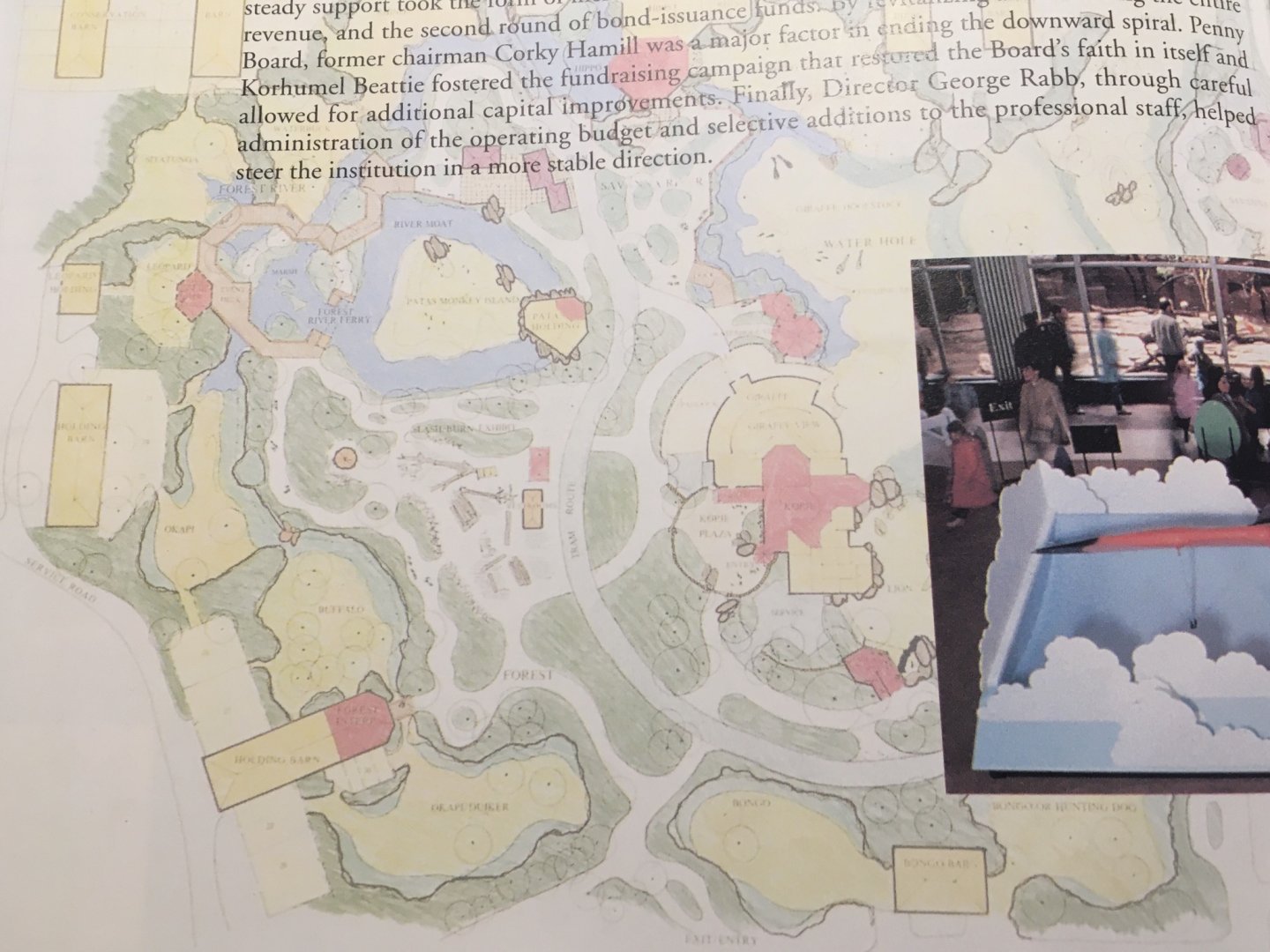
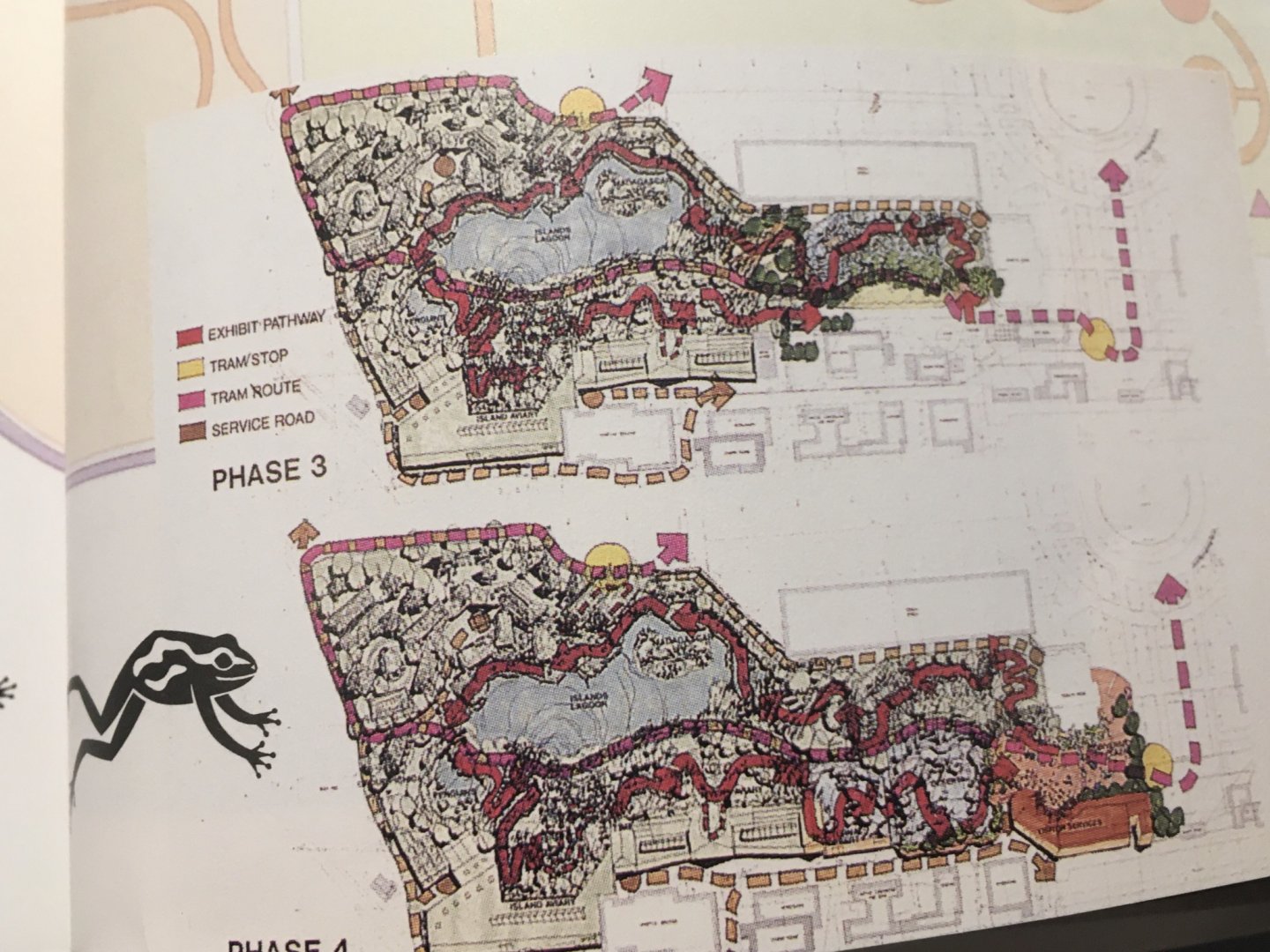
 . Here is what I'm thinking.