Hipporex's Guide to Interesting and Unique Prehistoric Fauna

NUMBER ONE HUNDRED SIX: I like turtles.
maxresdefault.jpg

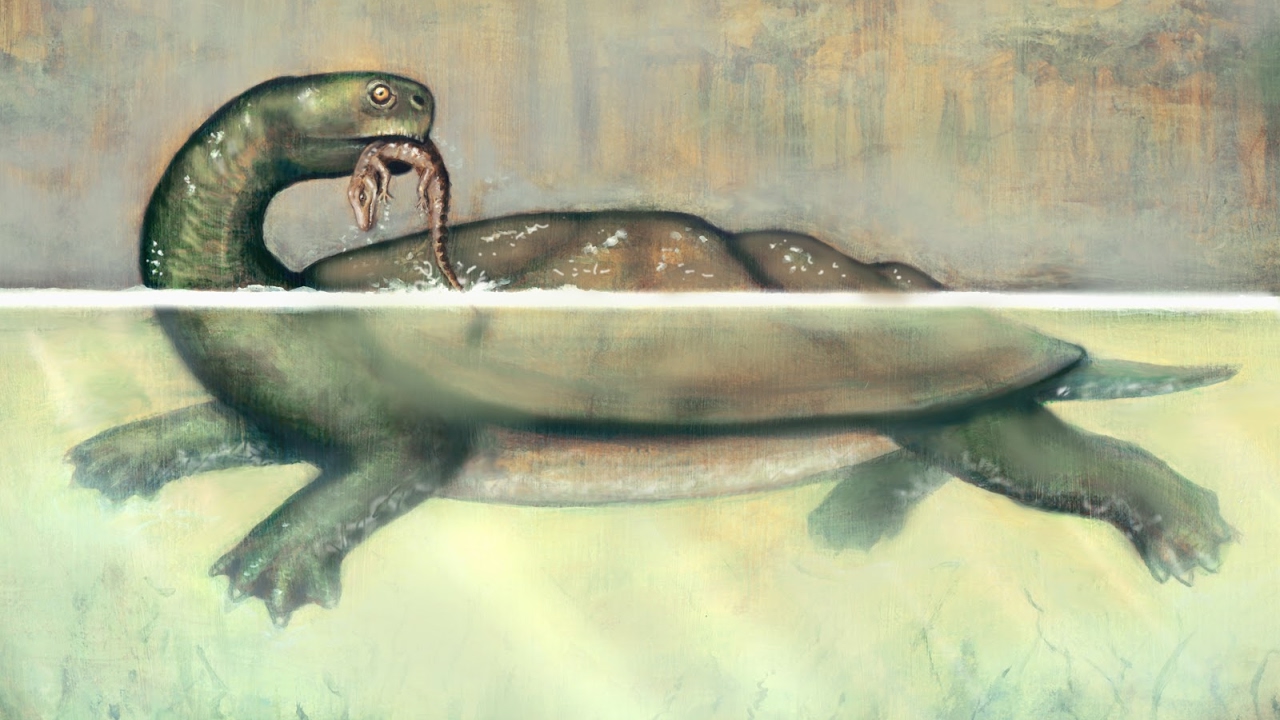
  • Animal: Stupendemys
  • Name Pronunciation: Stu-pen-dem-iss
  • Name Meaning: "Astonishing turtle"
  • Species: S.‭ ‬geographicus‭ (‬type‭)‬ and ‬S.‭ ‬souzai
  • Named By: R.‭ ‬C.‭ ‬Wood‭ ‬-‭ ‬1976
  • Classification: Life, Eukaryota, Animalia, Chordata, Vertebrata, Gnathostomata, Osteichthyes, Tetrapodomorpha, Tetrapoda, Reptiliomorpha, Amniota, Sauropsida, Eureptilia, Sauria, Archosauromorpha, Archosauriformes, Testudines, Pleurodira,‭ ‬Pelomedusoidea, Podocnemididae
  • When: ~ 9,000,000 to 5,000,000 B.C.E. (Tortonian of the Miocene to Zanclean of the Pliocene)
  • Where: Brazil (Solimões Formation), Colombia (Villavieja Formation), and Venezuela (Urumaco Formation)
  • Size: Big
  • Diet: Herbivore
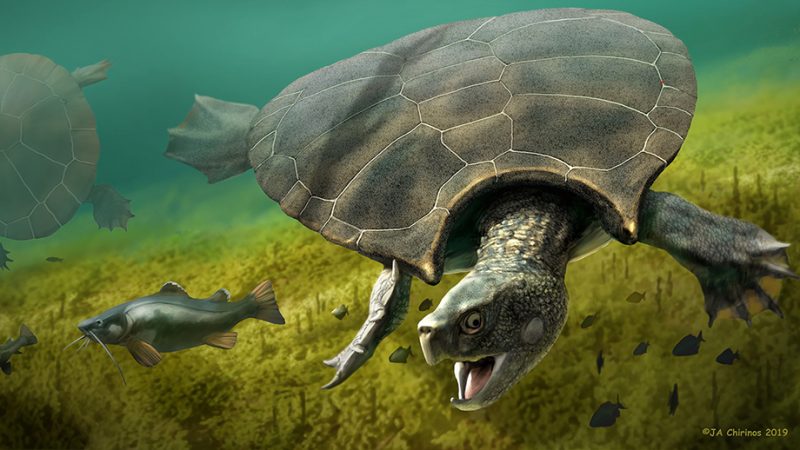
A nearly complete fossil of Stupendemys's carapace measured over 7.7 feet (2.35 m) in length and was also very wide. Based on this specimen, a larger but less complete fossil carapace would have had an estimated total carapace length of more than 11 feet (3.3 m), making it the largest known turtle that ever existed, rivaling even Archelon. The largest freshwater turtle living in the Neotropics today is the Arrau turtle (Podocnemis expansa), a pleurodire closely related to Stupendemys, but the Arrau turtle measures only 30 inches (75 cm). Males of S. geographicus had a pair of horns present on either side of the carapace around the neck opening. These horns were deeply grooved, suggesting that they were the covered by a keratinous sheath. These were presumably used for combat between individuals, as similar behavior is known in extant species. S. geographicus inhabited what is known as the Pebas system, a large wetland system that dominated northern South America during the Miocene. The wetlands seemed to have favored gigantism in other aquatic animals too, like the crocodilian Purussaurus and rodent Phoberomys.

ohyo0st9djp01.jpg

prehistoric-turtle-illustration-e1581715454193.jpg


Picture and Information Resources:
 
@Hipporex , I am really loving this thread. Thank you for your work here. If I could make a suggestion for an addition to each of these taxon profiles, I would add the holotype specimen with institutional acrynom and correlating specimen number. That is if you are interested and can find that information.
 
Do you like Velociraptor mongoliensis? Do you have approximately 1 hour of free time? Do you like hearing people point out the inaccuracies of the Jurassic Park franchise? Then watch this absolutely amazing video which is far superior to anything you'll ever see on this thread:
.
 
NUMBER ONE HUNDRED SEVEN: Happy Easter to those that celebrate.

340


  • Animal: Doedicurus
  • Name Pronunciation: Doe-dick-or-us
  • Name Meaning: "Pestle tail"
  • Species: D. clavicaudatus
  • Named By: Hermann Burmeister‭ ‬-‭ ‬1874
  • Classification: Life, Eukaryota, Animalia, Chordata, Vertebrata, Gnathostomata, Osteichthyes, Tetrapodomorpha, Tetrapoda, Reptiliomorpha, Amniota, Synapsida, Therapsida, Mammalia, Placentilia, Xenarthra, Cingulata,‭ Chlamyphoridae, ‬Glyptodontinae
  • When: ~ 2,000,000 B.C.E. to 11,000 years ago (Gelasian stage of the Pleistocene epoch to Meghalayan stage of the Holocene epoch)
  • Where: Argentina, Brazil, and Uruguay
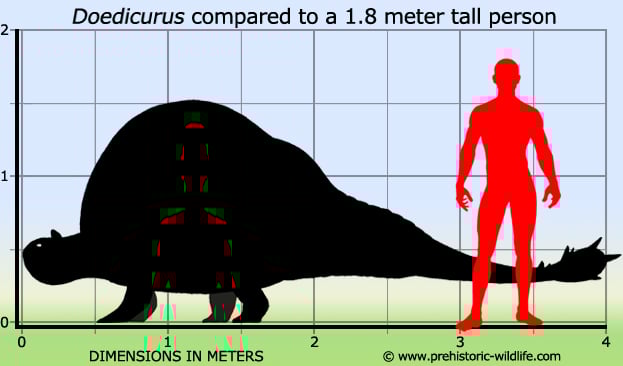
  • Size: Height: 4.9 feet (1.5 m) / Length: 13 feet (4 m) / Weight: ~ 1.91 to 2.37 U.S. tons (1.73 to 2.15 metric tons)
  • Diet: Herbivore
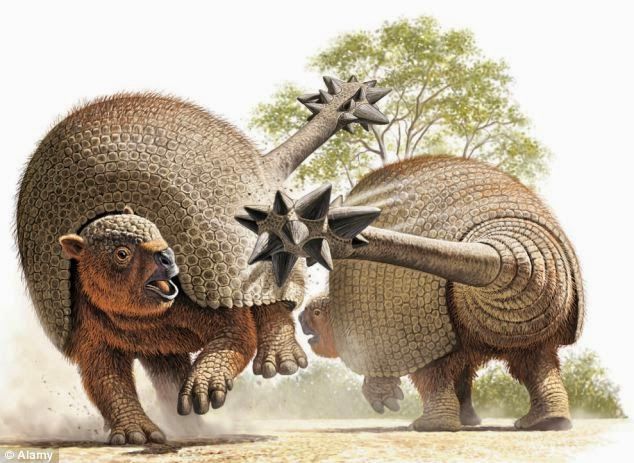
Doedicurus belonged to a group of large, heavily armored ankylosaurian-like mammals called the glyptodonts. Like other glyptodonts,‭ ‬Doedicurus had an armored shell made from tightly fitted scutes that grew to surround its body. This shell was most strongly fixed around the pelvis,‭ ‬with the shoulders retaining a degree of independent mobility while still being covered by the shell.‭‭ ‬While Doedicurus could not withdraw its head into this shell,‭ ‬the head still had bony armor growths that afforded it additional protection from predators. The tail of Doedicurus also had an additional covering of bone that was more flexible than the main shell.‭ ‬The really special adaptation of the tail however was the spiked club on the end,‭ ‬with the flexible armor covering of the upper tail allowing Doedicurus to‭ ‬swing this club from side to side.‭ The tail club of Doedicurus seems to have been for intraspecific combat between two competing individuals,‭ ‬possibly males looking to attain mating rights over a female.‭ ‬Strong evidence for this behavior comes from damage on the body shells of some Doedicurus specimens that match the general size and structure of Doedicurus tail club spikes.‭ ‬The scenario would see two Doedicurus squaring off against each other in a side by side head to tail orientation,‭ ‬and then hitting each other in the sides of their bodies with their spiked clubs.‭ An additional theory for the tail club has been that of predator defense,‭ ‬although when examined in more detail it seems unlikely that a single Doedicurus could have effectively used this club against a predator.‭ ‬The main problem here is that because of the large body shell,‭ ‬Doedicurus could not see behind itself to target an attacking predator.‭ ‬An alternative could be if Doedicurus lived in groups and when attacked clustered facing together and all sweeping their tails in unison to create an intimidating living wall of armor and swinging clubs. A secondary hump is also present on top of Doedicurus's back,‭ ‬and this has been suggested by paleontologists as a fat reserve similar to a camels.‭ This species inhabited woodlands and grasslands.

doedicurus-size.jpg

Doedicurus-clavicaudatus-738x591.jpg

doedicurusWC-56a255a85f9b58b7d0c92168.jpg

4dd624c764776fb6a0e845224443f19c.jpg

doedicurus-clavicaudatus_lucas-lima.jpg


Picture and Information Resources:
@Hipporex , I am really loving this thread. Thank you for your work here. If I could make a suggestion for an addition to each of these taxon profiles, I would add the holotype specimen with institutional acrynom and correlating specimen number. That is if you are interested and can find that information.
Sorry UngulatedNerd, it's not that I don't want to include the holotype information, it's just that for some species it's very hard to find. In the future, I'll include this information when it more easily available.
 
Last edited:
NUMBER ONE HUNDRED SEVEN: Happy Easter to those that celebrate.

340


  • Animal: Doedicurus
  • Name Pronunciation: Doe-dick-or-us
  • Name Meaning: "Pestle tail"
  • Species: D. clavicaudatus
  • Named By: Hermann Burmeister‭ ‬-‭ ‬1874
  • Classification: Life, Eukaryota, Animalia, Chordata, Vertebrata, Gnathostomata, Osteichthyes, Tetrapodomorpha, Tetrapoda, Reptiliomorpha, Amniota, Synapsida, Therapsida, Mammalia, Placentilia, Xenarthra, Cingulata,‭ Chlamyphoridae, ‬Glyptodontinae
  • When: ~ 2,000,000 B.C.E. to 11,000 years ago (Gelasian stage of the Pleistocene epoch to Meghalayan stage of the Holocene epoch)
  • Where: Argentina, Brazil, and Uruguay
  • Size: Height: 4.9 feet (1.5 m) / Length: 13 feet (4 m) / Weight: ~ 1.91 to 2.37 U.S. tons (1.73 to 2.15 metric tons)
  • Diet: Herbivore
Doedicurus belonged to a group of large, heavily armored ankylosaurian-like mammals called the glyptodonts. Like other glyptodonts,‭ ‬Doedicurus had an armored shell made from tightly fitted scutes that grew to surround its body. This shell was most strongly fixed around the pelvis,‭ ‬with the shoulders retaining a degree of independent mobility while still being covered by the shell.‭‭ ‬While Doedicurus could not withdraw its head into this shell,‭ ‬the head still had bony armor growths that afforded it additional protection from predators. The tail of Doedicurus also had an additional covering of bone that was more flexible than the main shell.‭ ‬The really special adaptation of the tail however was the spiked club on the end,‭ ‬with the flexible armor covering of the upper tail allowing Doedicurus to‭ ‬swing this club from side to side.‭ The tail club of Doedicurus seems to have been for intraspecific combat between two competing individuals,‭ ‬possibly males looking to attain mating rights over a female.‭ ‬Strong evidence for this behavior comes from damage on the body shells of some Doedicurus specimens that match the general size and structure of Doedicurus tail club spikes.‭ ‬The scenario would see two Doedicurus squaring off against each other in a side by side head to tail orientation,‭ ‬and then hitting each other in the sides of their bodies with their spiked clubs.‭ An additional theory for the tail club has been that of predator defense,‭ ‬although when examined in more detail it seems unlikely that a single Doedicurus could have effectively used this club against a predator.‭ ‬The main problem here is that because of the large body shell,‭ ‬Doedicurus could not see behind itself to target an attacking predator.‭ ‬An alternative could be if Doedicurus lived in groups and when attacked clustered facing together and all sweeping their tails in unison to create an intimidating living wall of armor and swinging clubs. A secondary hump is also present on top of Doedicurus's back,‭ ‬and this has been suggested by paleontologists as a fat reserve similar to a camels.‭ This species inhabited woodlands and grasslands.

doedicurus-size.jpg

Doedicurus-clavicaudatus-738x591.jpg

doedicurusWC-56a255a85f9b58b7d0c92168.jpg

4dd624c764776fb6a0e845224443f19c.jpg

doedicurus-clavicaudatus_lucas-lima.jpg


Picture and Information Resources:
Sorry UngulatedNerd, it's not that I don't want to include the holotype information, it's just that for some species it's very hard to find. In the future, I'll include this information when it more easily available.
I'm glad my suggestion has been done. Thanks!
 
NUMBER ONE HUNDRED EIGHT: Two birds, one stone: this species comes from Panama and it's National Dolphin Day in the U.S.

image_3195_1-Isthminia-panamensis.jpg

  • Animal: Isthminia panamensis
  • Name Pronunciation: Ist-min-ee-a pan-ah-men-sis
  • Name Meaning: According to the study that described the species, "Isthm- reflects the type specimen’s provenance from the Isthmus of Panama and the crucial role that the formation of this isthmus played in Earth history and evolution of the biota of the Americas. Inia reflects its similarities to the living Amazon River dolphin (Inia geoffrensis) The species epithet recognizes the Republic of Panama, its people, and the many generations of scientists who have studied its geological and biological histories."
  • Named By: Nicholas Pyenson et al. - 2015
  • Classification: Life, Eukaryota, Animalia, Chordata, Vertebrata, Gnathostomata, Osteichthyes, Tetrapodomorpha, Tetrapoda, Reptiliomorpha, Amniota, Synapsida, Therapsida, Mammalia, Placentilia, Boreoeutheria, Ungulata, Artiodactyla, Whippomorpha, Cetacea, Odontoceti, Iniidae
  • When: ~ 6,100,000 B.C.E. to 5,800,000 B.C.E. (Messinian stage of the Miocene epoch)
  • Where: North America - Panama - Chagres Formation
  • Size: 9.35 feet (2.85 m) long
  • Diet: Carnivore
In contrast to the typical mode of ecological transition in the evolution of marine mammals, different lineages of toothed whales have repeatedly invaded freshwater ecosystems during the Cenozoic era. We now call these animals river dolphins. Isthminia was the oceanic ancestor to the Amazonian river dolphins (Inia). We know Isthminia was a marine species despite being a member of the family Iniidae because sedimentological and associated fauna from the Chagres Formation point to fully marine conditions with high planktonic productivity about 6.1 to 5.8 million years ago, pre-dating the final closure of the Isthmus of Panama. In fact, megalodon (Carcharocles megalodon) remains have even been retrieved from this formation.

image_3195_2-Isthminia-panamensis.jpg


Picture and Information Resources:
 
Last edited:
NUMBER ONE HUNDRED NINE: There's a new killer on the block

og_thanatotheristes.jpg


  • Animal: Thanatotheristes degrootorum
  • Name Pronunciation: Thuh-nat-oh-ther-iss-tes de-groot-oh-rum
  • Name Meaning: "De Groot's reaper of death"
  • Named By: Jared Voris et al. - 2020
  • Classification: Life, Eukaryota, Animalia, Chordata, Vertebrata, Gnathostomata, Osteichthyes, Tetrapodomorpha, Tetrapoda, Reptiliomorpha, Amniota, Sauropsida, Eureptilia, Sauria, Archosauromorpha, Archosauriformes, Archosauria,‭ ‬Dinosauria,‭ ‬Saurischia,‭ ‬Theropoda,‭ Tyrannosauroidea, Tyrannosauridae, Daspletosaurini
  • When: ~ 79,500,000 B.C.E. (Campanian stage of the Late Cretaceous epoch)
  • Where: North America - Canada - Alberta - Foremost Formation
  • Size: 26 feet (8 m) long
  • Diet: Carnivore
The year: 2010. The place: 120 miles (200 km) southeast of Calgary. The man: John De Groot. John De Groot, farmer and amateur paleontologist, and his wife Sandra are hiking along the Bow River shoreline near the town of Hays. They come across what appears to be the fossilized lower jaw bones of a large theropod dinosaur. They contact the Royal Tyrrell Museum, a hub for fossil research in the province that often oversees the excavation of significant finds. The museum’s experts excavate the lower jaw along with material from the upper jaw and the back of the skull. The specimen was put into storage at the museum and written off as the already-know Daspletosaurus. But, when Voris examined the bones during a trip to the Royal Tyrrell Museum's collection, he noticed that these bones weren’t just another Daspletosaurus specimen. Subtle details of the fossils, such as the shape of the cheek bone and vertical ridges along where the teeth socketed into the upper jaw, indicated that the bones represented an animal never seen before. Fast forward 10 years and he and his colleagues publish a paper describing a new species of tyrannosaur: Thanatotheristes degrootorum. Thanatotheristes lived approximately 79.5 million years ago, about 12 million years before T. rex, making it the oldest tyrannosaurid from northern North America. The formal description of T. degrootorum erected a new tribe within Tyrannosauridae, Daspletosaurini, a sister taxon to Tyrannosaurini. It includes T. degrootorum, Daspletosaurus torosus, D. horneri, and a tyrannosaurid from the Dinosaur Park Formation (FMNH PR308). The existence of Daspletosaurini shows that there is geographic segregation of clades within Tyrannosauridae. The holotype specimen of Thanatotheristes degrootorum (TMP 2010.5.7) is based on a right maxilla, right jugal, right postorbital, right surangular, right quadrate, right laterosphenoid, left frontal, and both dentaries. The length of the skull has been approximated to be 31 inches (800 mm). It was smaller than the Daspletosaurus, but the holotype individual was not mature at the time of death. The formation is very poorly understood in regards to dinosaur fauna; aside from teeth, only the medium-sized ceratopsian Xenoceratops and the small pachycephalosaurid Colepiocephale have been documented. Both were likely prey for Thanatotheristes.

thanatotheristes_degrootorum_by_teratophoneus_ddq42g5-fullview.jpg

thanatotheristes_by_cisiopurple_ddp2itc-pre.png

11TB-TYRANNOSAUR2-superJumbo.jpg

ddpi90f-6a406379-8888-47a6-accf-15dd9fd8cc1c.jpg

ddpwndr-1497f52a-046f-4d27-80ad-ca57456c86a7.jpg


Picture and Information Resources:
 
NUMBER ONE HUNDRED TEN: The name of this next creature totally should of been saved for a genus of dinosaur

Yoshi-738x591.jpg

  • Animal: Yoshi
  • Name Pronunciation: Yoy-she
  • Name Meaning: Named after the lead author's pet cat
  • Named By: Nikolai Spassov and Denis Geraads - 2014
  • Classification: Life, Eukaryota, Animalia, Chordata, Vertebrata, Gnathostomata, Osteichthyes, Tetrapodomorpha, Tetrapoda, Reptiliomorpha, Amniota, Synapsida, Therapsida, Mammalia, Placentilia, Boreoeutheria, Carnivoramorpha, Carnivoraformes, Carnivora, Felidae, Machairodontinae, Metailurini
  • When: Turolian age of the Late Miocene
  • Where: *see below*
  • Size: *see below*
  • Diet: Carnivore
Yoshi has been described as potentially being synonymous with Metailurus, though this is difficult to confirm at present. The type specimen is a skull that bears remarkable similarities with the modern cheetah.Yoshi was median in size, between a lynx and cougar, and based on several skeletons, may have had a similar lifestyle to the cheetah, being better built for speed and fast pursuit than most other machairodonts, which were more suited to ambush and hunting large, relatively slow moving animal. This cat had short canines that were somewhat transversely compressed but are not serrated.There were two species of Yoshi: Y. garevskii and Y. minor. Y. garevskii inhabited from North Macedonia and Y. minor called China home. Yoshi was a close cousin of the far more famous Dinofelis.

metailurus-yoshi-baja.jpg


Picture and Information Resources:
 
NUMBER ONE HUNDRED TEN: The name of this next creature totally should of been saved for a genus of dinosaur

Yoshi-738x591.jpg

  • Animal: Yoshi
  • Name Pronunciation: Yoy-she
  • Name Meaning: Named after the lead author's pet cat
  • Named By: Nikolai Spassov and Denis Geraads - 2014
  • Classification: Life, Eukaryota, Animalia, Chordata, Vertebrata, Gnathostomata, Osteichthyes, Tetrapodomorpha, Tetrapoda, Reptiliomorpha, Amniota, Synapsida, Therapsida, Mammalia, Placentilia, Boreoeutheria, Carnivoramorpha, Carnivoraformes, Carnivora, Felidae, Machairodontinae, Metailurini
  • When: Turolian age of the Late Miocene
  • Where: *see below*
  • Size: *see below*
  • Diet: Carnivore
Yoshi has been described as potentially being synonymous with Metailurus, though this is difficult to confirm at present. The type specimen is a skull that bears remarkable similarities with the modern cheetah.Yoshi was median in size, between a lynx and cougar, and based on several skeletons, may have had a similar lifestyle to the cheetah, being better built for speed and fast pursuit than most other machairodonts, which were more suited to ambush and hunting large, relatively slow moving animal. This cat had short canines that were somewhat transversely compressed but are not serrated.There were two species of Yoshi: Y. garevskii and Y. minor. Y. garevskii inhabited from North Macedonia and Y. minor called China home. Yoshi was a close cousin of the far more famous Dinofelis.

metailurus-yoshi-baja.jpg


Picture and Information Resources:
Yes, it is a shame that a Yoshi isn't a bipedal dinosaur with a long tongue. At least Balbasaurus keeps its Nintendo character right!
 
Classification: Life, Eukaryota, Animalia, Chordata, Vertebrata, Gnathostomata, Osteichthyes, Tetrapodomorpha, Tetrapoda, Reptiliomorpha, Amniota, Sauropsida, Eureptilia, Sauria, Archosauromorpha, Archosauriformes, Archosauria,‭ ‬Dinosauria,‭ ‬Saurischia,‭ ‬Theropoda,‭ Tyrannosauroidea, Tyrannosauridae, Daspletosaurini
We're do you get the 'classification' bit from? Is it something like Wikispecies or is your knowledge of phylogeny that good?
 
NUMBER ONE HUNDRED ELEVEN: The Komodo dragon of the Cretaceous

latest

  • Animal: Palaeosaniwa
  • Name Pronunciation: Pay-lee-oh-san-e-wa
  • Name Meaning: "Ancient Saniwa"
  • Named By: Charles Whitney Gilmore‭ ‬-‭ ‬1928
  • Classification: Life, Eukaryota, Animalia, Chordata, Vertebrata, Gnathostomata, Osteichthyes, Tetrapodomorpha, Tetrapoda, Reptiliomorpha, Amniota, Sauropsida, Eureptilia, Sauria, Lepidosauromorpha, Lepidosauria, Squamata, Toxicofera, Anguimorpha, Platynota
  • When: ~ 75,000,000 B.C.E. to 70,000,000 B.C.E. (Late Cretaceous epoch)
  • Where: Canada (Alberta) and the United States (Montana and Wyoming)
  • Size: *see below*
  • Diet: Carnivore
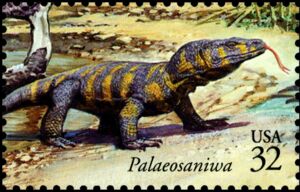
Palaeosaniwa was roughly comparable to a large monitor lizard in size. Measuring around 9.8 to 11.5 feet (3 to 3.5 m) in length, it is among the largest terrestrial lizards known from the Mesozoic era (though Asprosaurus may compete with it in size). It is similar to modern varanid lizards (particularly the Komodo dragon) in having blade-like teeth with minute serrations. These teeth would have been effective for seizing and cutting large prey items, and suggest that Palaeosaniwa fed on other vertebrates. Adult Palaeosaniwa would have been large enough to prey on any of the avialans or mammals known from the time, small non-avian dinosaurs, and the eggs and juveniles of large dinosaurs. Palaeosaniwa is a member of the Platynota, a group that includes the monitor lizards (Varanidae) and gila monsters (Helodermatidae). Originally, it was thought to be a member of the Varanidae, but has also been interpreted as a relative of the Helodermatidae. The most recent analysis places Palaeosaniwa outside of either Varanidae or Helodermatidae, as a stem member of the Varanoidea. Its precise affinities remain poorly understood, but it may be related to other Late Cretaceous, North American carnivorous lizards such as Parasaniwa, Paraderma, Labrodioctes, and Cemeterius. In terms of popculture, Palaeosaniwa has only made a small impact, appearing in the 2017 video game Saurian. There was a single species of Palaeosaniwa: P. canadensis.

latest

Palaeosaniwa%2B%2528wm%2529.jpg
eOALcWZav47s8xFtHEt_2hzJDEXrx32yBmp2xawE5tMygXzv6BmHiQXg9TrDPMbfpQLoCuUpE9L6KT8dFdO-hvj_Spi2raE_EicNC5KpMmzL4Yv5TO5MMDrdPlndJhWGyTxAq82drGqNNFyT0H4o25kgG4Gu-Ew1dq0HfRiSrV4fMg

Palaeosaniwa.jpg


Picture and Information Resources:
 
Last edited:
Isthminia panamensis

I had once a copy of the pre-published paper and this dolphin had a complete different name by then. I only forgot what it was...

Hipporex, your thread has awaken my dinosaur interest again and I wanna ask you if you could feature a prehistoric creature that lived in Panama,please.

Thanks to the new sections of the Canal, numerous fossils have been found in recent years due to all the digging. Rhinos, chalicotheres, camels, musk deers, bear dogs, flying squirrels, monkeys, dugongs... just a few examples.
 
I had once a copy of the pre-published paper and this dolphin had a complete different name by then. I only forgot what it was...

I looked it up, it was Caribinia shealyorum in the manuscript.
 
NUMBER ONE HUNDRED TWELVE: Happy Mother's Day to all of the animal kingdom's amazing (and not so amazing) moms!

6042139283b634412a1696cbc3e8a378.jpg


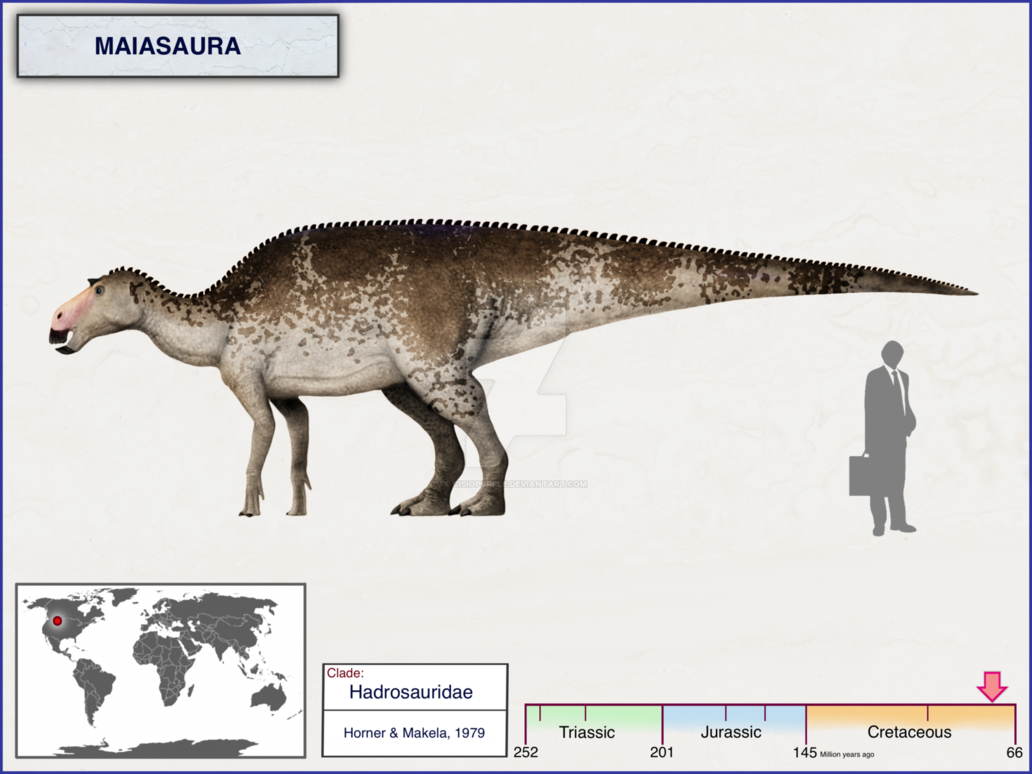
  • Animal: Maiasaura peeblesorum
  • Name Pronunciation: My-ah-sore-ah pee-bleh-so-rum
  • Name Meaning: "Peebles's Good mother lizard;" peeblesorum honors John and James Peebles, whose land the initial finds were made
  • Named By: Jack Horner‭ and ‬Robert Makela‭ ‬-‭ ‬1979
  • Classification: Life, Eukaryota, Animalia, Chordata, Vertebrata, Gnathostomata, Osteichthyes, Tetrapodomorpha, Tetrapoda, Reptiliomorpha, Amniota, Sauropsida, Eureptilia, Sauria, Archosauromorpha, Archosauriformes, Archosauria,‭ ‬Dinosauria,‭ Ornithischia, Ornithopoda, Hadrosauridae, Saurolophinae, Brachylophosaurini
  • When: ~ 76,700,000 B.C.E. (Campanian stage of the Late Cretaceous epoch)
  • Where: Egg Mountain, Montana, United States
  • Size: 30 feet (9 m) long
  • Diet: Herbivore
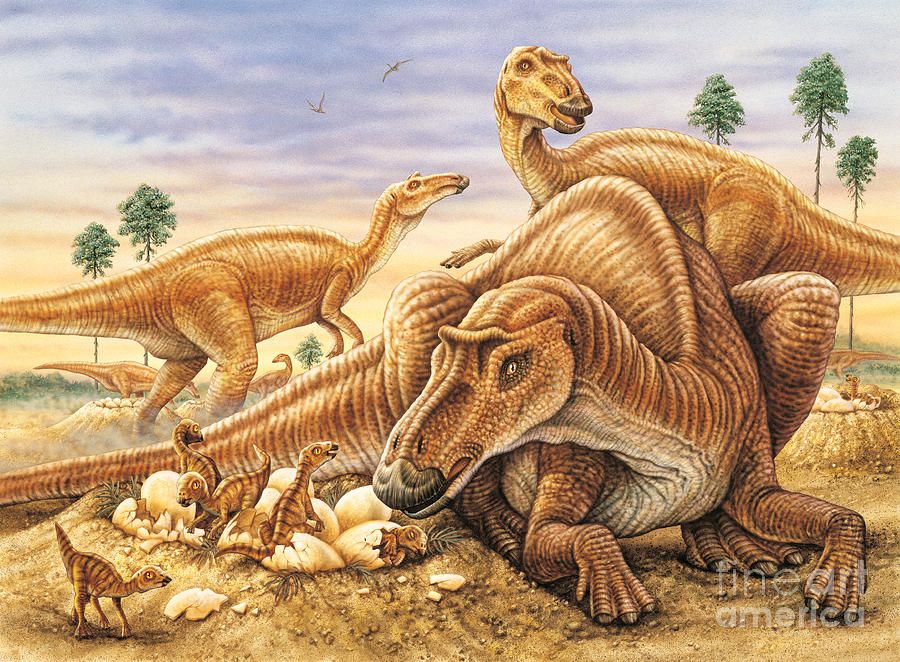
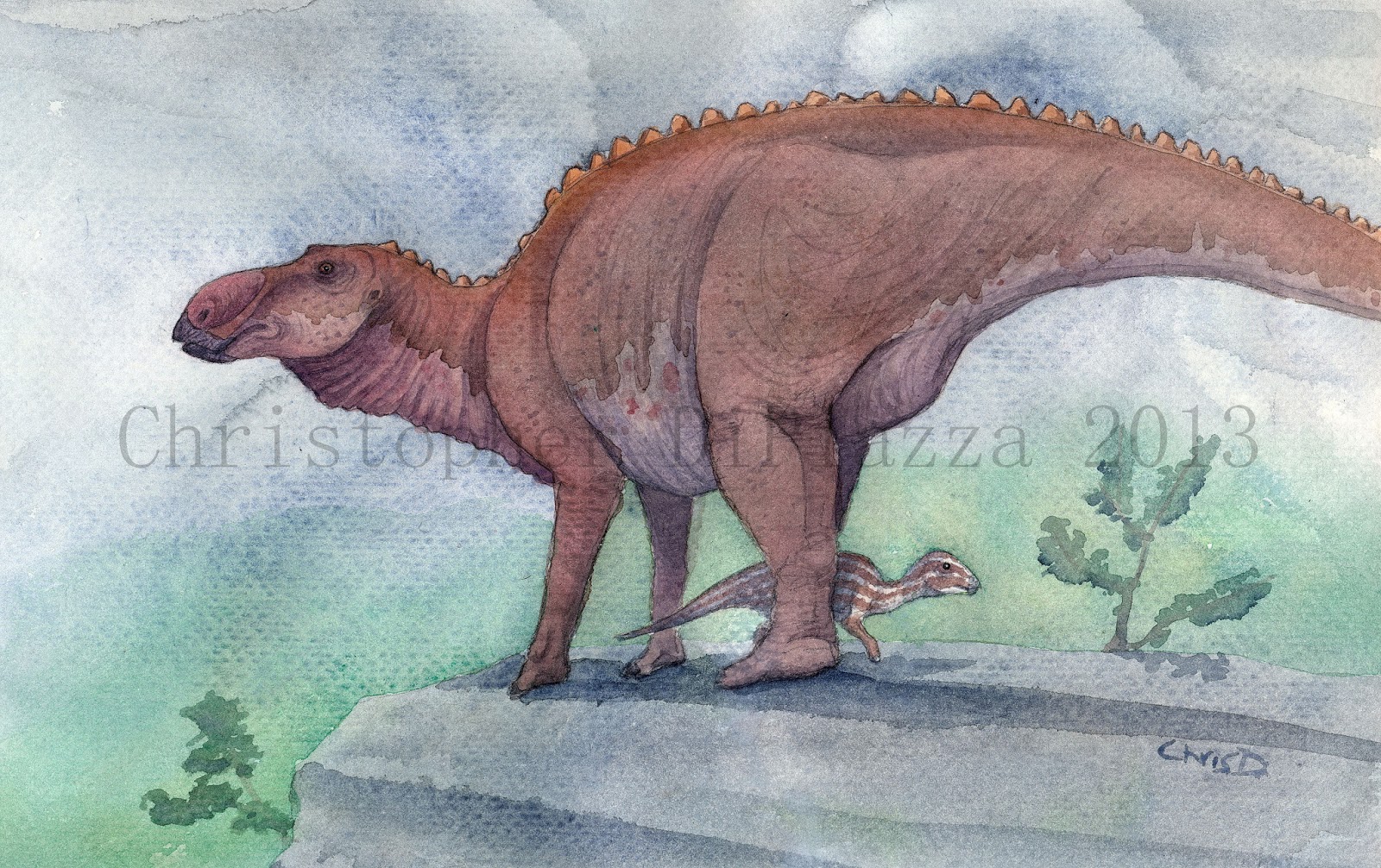
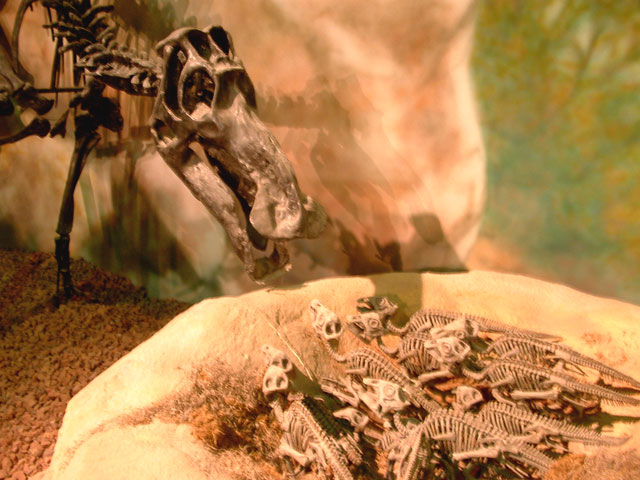
Maiasaura lived in herds and it raised its young in nesting colonies. The nests in the colonies were packed closely together, like those of modern seabirds, with the gap between the nests being around 23 feet (7 m); less than the length of the adult animal. The nests were made of earth and contained 30 to 40 eggs laid in a circular or spiral pattern. The eggs were about the size of ostrich eggs. The eggs were incubated by the heat resulting from rotting vegetation placed into the nest by the parents, rather than a parent sitting on the nest. Upon hatching, fossils of baby Maiasaura show that their legs were not fully developed and thus they were incapable of walking. Fossils also show that their teeth were partly worn, which means that the adults brought food to the nest. The hatchlings grew from a size of 16 to 58 inches (41 to 147 cm) long in the span of their first year. At this point, or perhaps after another year, the animal left the nest. This high rate of growth may be evidence of warm bloodedness. The hatchlings had different facial proportions from the adults, with larger eyes and a shorter snout. These features are associated with "cuteness," and commonly elicit care from parents in animals dependent on their parents for survival during the early stages of life. Studies led by Holly Woodward, Jack Horner, Freedman Fowler et al. have given insight into the life history of Maiasaura, resulting in what is perhaps the most detailed life history of any dinosaur known, and to which all others can be compared. From a sample of fifty individual Maiasaura tibiae, it was found that Maiasaura had a mortality rate of about 89.9% in their first year of life. If the animals survived their second year, their mortality rate would drop to 12.7%. The animals would spend their next six years maturing and growing. Sexual maturity was found to occur in their third year, while skeletal maturity was attained at eight years of age. In their eighth year and beyond, the mortality rate for Maiasaura would spike back to around 44.4%. The studies that followed also found that Maiasaura were primarily bipedal as juveniles, and switched to a more quadrupedal stance as they aged. It was also found that Maiasaura also included rotting wood in its diet, as well that its environment had a long, dry season prone to drought. The results of the study were published in the journal Palaeobiology on September 3, 2015. Maiasaura lived alongside the dubious troodontid Troodon and the hypsilophodont Orodromeus, as well as the dromaeosaurid Bambiraptor and the tyrannosaur Daspletosaurus. The holotype specimen is a skull dubbed PU 22405 (now in the collections of the Yale Peabody Museum of Natural History as YPM PU 22405 following the transfer of the Princeton University vertebrate paleontology collections).

e661efd305265c067e5026cd7e21d4f4.png

latest

Maiasaura+(wm).jpg

8E52D85478CB0ACD7103BDAA32A403F42D073F86

800px-ROM-MaiasaurHead-May14-05.png

Maiasaurusnest.jpg


Picture and Information Resources:
 
Back
Top