The Zoochat Photographic Guide to Colugos, Treeshrews and Lagomorphs

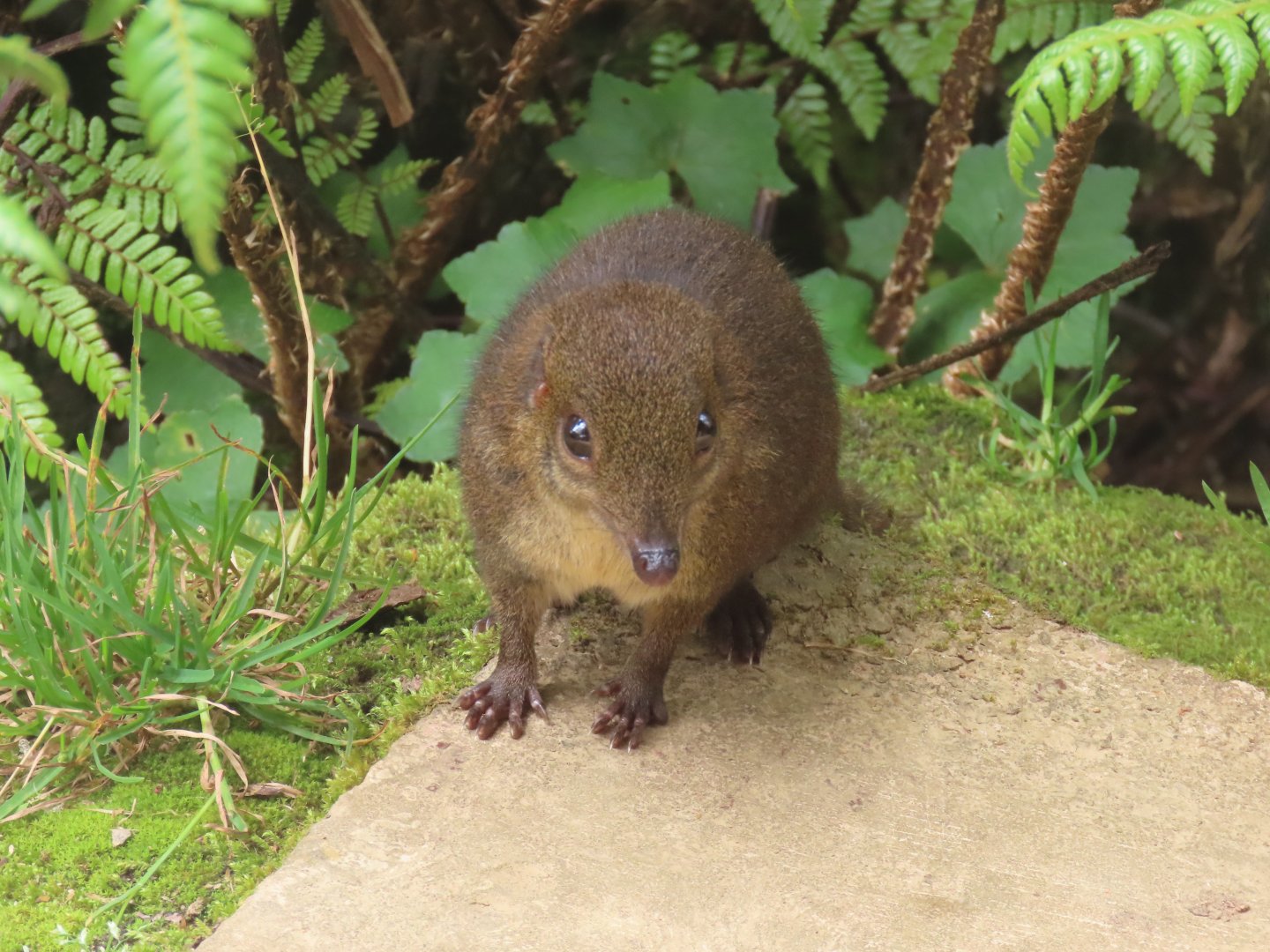
Tupaia


Northern Treeshrew
(Tupaia belangeri)

The range of this species extends from northeast India, Bhutan and eastern Nepal in the west to southeast China and Hainan in the east, and south throughout Indochina and the northern Malay Peninsula.

Two subspecies are recognised:

T. b. belangeri
- photo by @Maguari

full


T. b. chinensis
- photo by @Chlidonias

full


Lesser Treeshrew
(Tupaia minor)

The range of this species extends throughout Peninsular Malaysia, and into Borneo, Sumatra and associated islands of the Greater Sundas.

Four subspecies are recognised:

T. m. minor
T. m. humeralis
T. m. malaccana
T. m. sincipis


Photo by @gentle lemur

full


Common Treeshrew
(Tupaia glis)

The range of this species is restricted to Peninsular Malaysia and associated offshore islands.

Monotypic.

Photo by @arcticwolf

full


Nicobar Treeshrew
(Tupaia nicobarica)

Endemic to Great and Little Nicobar.

Monotypic; no photographs of this species are present in the Zoochat gallery.


Sumatran Treeshrew
(Tupaia ferruginea)

Endemic to Sumatra and associated offshore islands.

Monotypic; no photographs of this species are present in the Zoochat gallery.


Golden-bellied Treeshrew
(Tupaia chrysogaster)

Endemic to the Mentawai Islands, off the western coastline of Sumatra.

Monotypic; no photographs of this species are present in the Zoochat gallery.


Bangka Island Treeshrew
(Tupaia discolor)

Endemic to Bangka Island, off the southeast coastline of Sumatra.

Monotypic; no photographs of this species are present in the Zoochat gallery.


Horsfield's Treeshrew
(Tupaia javanica)

The range of this species extends throughout Sumatra and Java, and into Bali.

Monotypic; no photographs of this species are present in the Zoochat gallery.


Javan Treeshrew
(Tupaia hypochrysa)

The range of this species is restricted to a tiny portion of western Java.

Monotypic; no photographs of this species are present in the Zoochat gallery.


Large Treeshrew
(Tupaia tana)

The range of this species extends throughout Sumatra, Borneo and associated islands of the Greater Sundas.

Fifteen subspecies are recognised:

T. t. tana
T. t. banguei
T. t. besara
T. t. bunoae
T. t. cervicalis
T. t. chrysura
T. t. kelabit
T. t. kretami
T. t. lingae
T. t. masae
T. t. nitida
T. t. paitana
T. t. sirhassenensis
T. t. speciosa
T. t. utara


Photo by @gentle lemur

full


Long-footed Treeshrew
(Tupaia longipes)

The range of this species extends throughout the lowlands of northern Borneo.

Monotypic; no photographs of this species are present in the Zoochat gallery.


Slender Treeshrew
(Tupaia gracilis)

Endemic to Borneo and associated offshore islands; largely absent from the central highlands and the southeast.

Monotypic; no photographs of this species are present in the Zoochat gallery.


Mountain Treeshrew
(Tupaia montana)

Endemic to the highlands of central and northern Borneo.

Three subspecies are recognised:

T. m. montana
T. m. baluensis
T. m. stuebingi


Photograph by @carl the birder

full


Striped Treeshrew
(Tupaia dorsalis)

Endemic to Borneo; largely absent from the far north and much of the south.

Monotypic; no photographs of this species are present in the Zoochat gallery.


Painted Treeshrew
(Tupaia picta)

The range of this species comprises a pair of disjunct populations; in northwest Borneo; and in eastern Borneo.

Two subspecies are recognised:

T. p. picta
T. p. fuscior


No photographs of this species are present in the Zoochat gallery.


Kalimantan Treeshrew
(Tupaia salatana)

Endemic to southern Borneo.

Monotypic; no photographs of this species are present in the Zoochat gallery.


Splendid Treeshrew
(Tupaia splendidula)

Endemic to southern Borneo and associated offshore islands.

Five subspecies are recognised:

T. s. splendidula
T. s. carimatae
T. s. lucida
T. s. natunae
T. s. riabus


No photographs of this species are present in the Zoochat gallery.


Mindanao Treeshrew
(Tupaia everetti)

Endemic to Mindanao and associated offshore islands in the southern Philippines.

Monotypic.

Photo by @Giant Eland

full


Palawan Treeshrew
(Tupaia palawanensis)

Endemic to Palawan and associated islands of the southwest Philippines.

Two subspecies are recognised:

T. p. palawanensis
T. p. moellendorffi


No photographs of this species are present in the Zoochat gallery.
.
 
Last edited:
Mindanao Treeshrew (Tupaia everetti)

Palawan Treeshrew (Tupaia palawanensis)

It is worth noting that despite the fact there are photographs present in the Zoochat gallery which depict animals identified as the latter of these species at Avilon Zoo, taken by @Giant Eland and @alexkant , the photographs, colour plates and physical descriptions of Mindanao and Palawan Treeshrew in HMW make it very obvious that this is a misidentification, and that the animal/animals in question are in fact the former species.
 
CYNOCEPHALIDAE


This family comprises two species within two genera, as follows:

Cynocephalus - Philippine Colugo (monotypic)

Galeopterus - Sunda Colugo (monotypic)
.
 
Last edited:
Cynocephalus


Philippine Colugo
(Cynocephalus volans)

Endemic to the central and southern Philippines.

Currently classified as monotypic; however, preliminary genetic evidence suggests the presence of two distinct clades which each probably merit species status in the Visayan Islands and Mindanao Islands respectively, and which diverged around 2.5 million years ago.

No photographs of this species are present in the Zoochat gallery.
.
 
Galeopterus


Sunda Colugo
(Galeopterus variegatus)

The range of this species extends patchily and in a highly-fragmented distribution throughout eastern Indochina and the Malay Peninsula, and into Sumatra, Borneo, western Java and associated islands of the Greater Sundas.

Four subspecies are currently recognised; however, preliminary genetic analysis suggests not only that each of these merit species status in their own right, but moreoever that there are several cryptic taxa present throughout the range of this species.

G. v. variegatus
G. v. borneanus
- photo by @zooboy28

full


G. v. peninsulae -
photo by @Chlidonias

full


G. v. temminckii

.
 
And with that, another photographic guide is completed :) quite a few gaps, some of which are a little surprising, but also quite a few very nice species which are already represented within the gallery! I would be interested to learn how much we can potentially boost the representation level within the gallery as a whole.

Some figures to conclude, along with lists of those species yet to be represented:


TOTAL - 42/117 species represented (35.89% representation)

OCHOTONIDAE - 10/29 species represented (34.48% representation)

Tsing-ling Pika (Ochotona syrinx)
Nubra Pika (Ochotona nubrica)
Thomas' Pika (Ochotona thomasi)
Alpine Pika (Ochotona alpina)
Turuchan Pika (Ochotona turuchanensis)
Northern Pika (Ochotona hyperborea)
Manchurian Pika (Ochotona mantchurica)
Hoffmann's Pika (Ochotona hoffmanni)
Korean Pika (Ochotona coreana)
Kazakh Pika (Ochotona opaca)
Silver Pika (Ochotona argentata)
Steppe Pika (Ochotona pusilla)
Royle's Pika (Ochotona roylii)
Forrest's Pika (Ochotona forresti)
Ladakh Pika (Ochotona ladacensis)
Turkestan Red Pika (Ochotona rutila)
Kozlov's Pika (Ochotona koslowi)
Chinese Red Pika (Ochotona erythrotis)
Ili Pika (Ochotona iliensis)


LEPORIDAE - 26/63 species represented (41.26% representation)

Amami Rabbit (Pentalagus furnessi)
---
Jameson's Red Rock Hare (Pronolagus randensis)
Natal Red Rock Hare (Pronolagus crassicaudatus)
Smith's Red Rock Hare (Pronolagus rupestris)
---
Pygmy Rabbit (Brachylagus idahoensis)
---
Sumatran Striped Rabbit (Nesolagus netscheri)
Annamite Striped Rabbit (Nesolagus timminsi)
---
San Jose Brush Rabbit (Sylvilagus mansuetus)
New England Cottontail (Sylvilagus transitionalis)
Omilteme Cottontail (Sylvilagus insonus)
Common Tapeti (Sylvilagus brasiliensis)
Central American Tapeti (Sylvilagus gabbi)
Venezuelan Lowland Rabbit (Sylvilagus varynaensis)
Dice's Cottontail (Sylvilagus dicei)
Mexican Cottontail (Sylvilagus cunicularius)
Tres Marias Cottontail (Sylvilagus graysoni)
Appalachian Cottontail (Sylvilagus obscurus)
Robust Cottontail (Sylvilagus robustus)
Manzano Mountain Cottontail (Sylvilagus cognatus)
---
Hispid Hare (Caprolagus hispidus)
---
Bunyoro Rabbit (Poelagus marjorita)
---
Hainan Hare (Lepus hainanus)
Burmese Hare (Lepus peguensis)
Ethiopian Hare (Lepus fagani)
Yarkland Hare (Lepus yarkandensis)
Tolai Hare (Lepus tolai)
Desert Hare (Lepus tibetanus)
Yunnan Hare (Lepus comus)
Black Jackrabbit (Lepus insularis)
Tehuantepec Jackrabbit (Lepus flavigularis)
Iberian Hare (Lepus granatensis)
Broom Hare (Lepus castroviejoi)
Corsican Hare (Lepus corsicanus)
Arctic Hare (Lepus arcticus)
Alaskan Hare (Lepus othus)
Manchurian Hare (Lepus mandshuricus)
Korean Hare (Lepus coreanus)


PTILOCERCIDAE - 0/1 species represented (0.00% representation)

Pen-tailed Treeshrew (Ptilocercus lowii)


TUPAIIDAE - 7/22 species represented (31.81% representation)

Northern Smooth-tailed Treeshrew (Dendrogale murina)
Bornean Smooth-tailed Treeshrew (Dendrogale melanura)
---
Nicobar Treeshrew (Tupaia nicobarica)
Sumatran Treeshrew (Tupaia ferruginea)
Golden-bellied Treeshrew (Tupaia chrysogaster)
Bangka Island Treeshrew (Tupaia discolor)
Horsfield's Treeshrew (Tupaia javanica)
Javan Treeshrew (Tupaia hypochrysa)
Long-footed Treeshrew (Tupaia longipes)
Slender Treeshrew (Tupaia gracilis)
Striped Treeshrew (Tupaia dorsalis)
Painted Treeshrew (Tupaia picta)
Kalimantan Treeshrew (Tupaia salatana)
Splendid Treeshrew (Tupaia splendidula)
Palawan Treeshrew (Tupaia palawanensis)


CYNOCEPHALIDAE - 1/2 species represented (50.00% representation)

Philippine Colugo (Cynocephalus volans)

.
 
Last edited:
Photo of the Andean form of the Tapeti is now in the gallery.

Unfortunate that Queens keeps the New England Cottontails only off-show.
 
O. c. brachyotus

Picture below was taken in the Camargue - could very possibly be this ssp., but from what I've read online the Camargue ssp. is darker in colour and while this specimen did seem a bit different to other rabbits I've seen it wasn't noticeably darker at first glance, so would probably need more info on exactly what Camargue rabbits look like (I've looked at other sightings of rabbits in and around the Camargue on iNaturalist and they appear similar to the one below). So not sure if it can conclusively be labelled as one or the other without more info.

European rabbit - ZooChat
 
Pentalagus


Amami Rabbit
(Pentalagus furnessi)

Endemic to Amami Ōshima and Toku-no-Shima lin the Ryukyu Islands of southern Japan.

Monotypic; no photographs of this species are present in the Zoochat gallery.
.
I do not know if taxidermied specimens count for the guide but Veno has uploaded an image of a Taxidermy Amami rabbit.

Amami rabbit - ZooChat
 
Back
Top