Welcome to America, murder hornets

2020 really is just the year that keeps on giving...
They didn't arrive in 2020. The USA individuals in the article found were in the latter part of 2019. The nest on Vancouver Island which was mentioned without giving a date, was in August 2019.

Given that the locations are in western North America, the hornets will have initially arrived on ships from Japan (in freight such as vehicles and shipping containers). I'd say it's very likely they have already established in the northwest USA if a number of individuals were found in wide locations.
 
I've seen these twice in the UK now, back in 2014 or 2015 (forget exactly which year). They are big, and definitely intimidating when they fly at you. Thankfully have avoided too-close an encounter
 
The hornet mentioned in the article seems to be Vespa Mandarinia. The species lives in southeast asia and east asia. They are biggest hornet in east asia, famous for eating various insects such as mantis, killing other species bees and taking out their larvae and chrysalis by attacking hives.

Most of honeybees raised by Korean beekeepers are european honeybees, so they don't know how to defense about hornets of asia. Therefore, hornets attacks cause great damage to livestock honeybees. So beekeepers often use a method of luring hornets and drowning them by filling bottles with liquid made by imitating hornet's pheromones to prevent them.

And some people eat that hornet. Vespa Mandarinia builds hives in the ground, but in Korea, people who are determined to capture hornet dig out the ground and take out their hives. And they soak the hives and hornets to make it into alcohol, while larvae and chrysalis are roasted and eaten.
 
And some people eat that hornet. Vespa Mandarinia builds hives in the ground, but in Korea, people who are determined to capture hornet dig out the ground and take out their hives. And they soak the hives and hornets to make it into alcohol, while larvae and chrysalis are roasted and eaten.
Have you tried that? That honestly sounds kinda good...
 
Have you tried that? That honestly sounds kinda good...
No, I haven't tried hornet, but I've seen an empty alcohol bottle with a label that says "hornet soaked" in the garbage dumps in my apartment.

In South Korea, hornet eaters are mostly middle-aged men who are not confident in their physical strength, or firefighters eat wasp for their stamina after removing hornet's nest. that's not very popular food.
 
The hornet mentioned in the article seems to be Vespa Mandarinia. The species lives in southeast asia and east asia. They are biggest hornet in east asia, famous for eating various insects such as mantis, killing other species bees and taking out their larvae and chrysalis by attacking hives.

Most of honeybees raised by Korean beekeepers are european honeybees, so they don't know how to defense about hornets of asia. Therefore, hornets attacks cause great damage to livestock honeybees. So beekeepers often use a method of luring hornets and drowning them by filling bottles with liquid made by imitating hornet's pheromones to prevent them.

And some people eat that hornet. Vespa Mandarinia builds hives in the ground, but in Korea, people who are determined to capture hornet dig out the ground and take out their hives. And they soak the hives and hornets to make it into alcohol, while larvae and chrysalis are roasted and eaten.
Keeping European non native honeybees is a ecological catastrophe. The phenomenon you describe just highlights this!
 
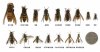
31b95843-9a6a-4ad5-ad11-7f9174b976ba.jpg Source of this image is this news.
The image above is a comparison of the size of 16 out of 30 species wasps and hornets living in Korea. The one at the top left is Vespa mandarinia, and the coin at the bottom right is a Korean 100-won coin, which is the same size as a 25-cent coin.

The adult insects of Vespa mandarinia usually eat tree sap. Killing insects and taking them to the hive is for feed their larvae. Like their larger size than other bees, they have very strong jaws, so they are cut off even if they get caught in a spider's web, and when attacking other bees, they prefer to bite and kill them.

Vespa mandarinia's sting is about 6mm long, and it is known to cause strong pain because it is the only hornet that have a neurotoxin called "mandaratoxin" and injects as many poison as their large size. I don't know how many Vespa mandarinia are in North America, but I hope you'll be careful if you come face to face as it is a dangerous insect.
 

Attachments

  • 31b95843-9a6a-4ad5-ad11-7f9174b976ba.jpg
    31b95843-9a6a-4ad5-ad11-7f9174b976ba.jpg
    68.7 KB · Views: 7
Keeping European non native honeybees is a ecological catastrophe. The phenomenon you describe just highlights this!
As far as I know, european honeybees(Apis mellifera) are used in beekeeping all over the world. Korea's native honeybee is the eastern honeybee(Apis cerana), which is sometimes used in beekeeping in Korea, but is known to be less bred than Western honeybees due to the small amount of honey produced.

In my personal opinion, I think native hornets like Vespa mandarinia prevent european honeybees from adapting to Korea's ecosystem. In fact, I've never heard of european honeybees adapted in wild of Korea.
 
As far as I know, european honeybees(Apis mellifera) are used in beekeeping all over the world. Korea's native honeybee is the eastern honeybee(Apis cerana), which is sometimes used in beekeeping in Korea, but is known to be less bred than Western honeybees due to the small amount of honey produced.

In my personal opinion, I think native hornets like Vespa mandarinia prevent european honeybees from adapting to Korea's ecosystem. In fact, I've never heard of european honeybees adapted in wild of Korea.
My feedback concerns the same green washing relative to European honeybees. These are not natural and native and damaging to the local insect and bee fauna's.

European honeybees carry a parasite that is decimating them too. All I am saying they are effectively not so great for European environment nor Will they be for the Asian environment.
 
Of course, while the Asian honeybees are best-known for cooking hornets it does also occur in European honeybees, which use the same behaviour in defending against the local European hornet. That does make me wonder if, with time, European honeybees will be able to adapt this defence to the Asian hornet.

Photos of honeybees in Germany using heat treatment on a European hornet can be found in this article below:
Photos from inside a tree reveal intimate lives of wild honeybees
 
Entomologists are unhappy that the media is sensationalizing Asian giant hornets as "murder hornets".

This article has much interesting natural history information about the species and a reasonable argument for why they should not be branded "murder hornets", although it may be far too late to change that.

About Those Asian Giant Hornets...
 
Entomologists are unhappy that the media is sensationalizing Asian giant hornets as "murder hornets".

This article has much interesting natural history information about the species and a reasonable argument for why they should not be branded "murder hornets", although it may be far too late to change that.

About Those Asian Giant Hornets...
The whole point of calling them "murder hornets" is because it sounds cool, not because they actually kill people. Names like "killer bee", "bullet ant", and "death's head cockroach" are often even used by entomologists.
 
The whole point of calling them "murder hornets" is because it sounds cool, not because they actually kill people. Names like "killer bee", "bullet ant", and "death's head cockroach" are often even used by entomologists.

Yes. I think that their point is that they don't want to see the hornets demonized like great white sharks became after Jaws, gorillas after King Kong, etc., but the name has already stuck.
 
Back
Top