You are using an out of date browser. It may not display this or other websites correctly.
You should upgrade or use an alternative browser.
You should upgrade or use an alternative browser.
The most comprehensive European zoo collections
- Thread starter lintworm
- Start date


What are the exact numbers (order, family) for Plzen?
63 families and 18 orders. This already includes recent arrivals and deaths/departures (like Balabac mousedeer). Until recently it were 19 orders, but currently no Quoll or Kowari are kept. Interestingly the easiest pick-up would be Sloths/Anteaters (other missing orders are Elephants, Manatees, Whales and Pangolins).

but currently no Quoll or Kowari are kept.
Kowaris in Plzen should be back from August/September 2019 unless they died out, but there was at least one still kept this March
Kowaris in Plzen should be back from August/September 2019 unless they died out, but there was at least one still kept this March
Interesting, must be a new one then, I don't think any were listed in the 2019 annual report.
edit: It seems I missed the listing in the annual report and 1 Kowari is still kept, so the number of families and orders kept goes up with 1.
Last edited:
Which zoos keeps the most and the rarest mammals?
To answer this question I have based myself solely on zootierliste. Before people start complaining, I am aware zootierliste is not always completely correct, but data quality is still much higher than people give it credit for and for the purposes of this exercise, it doesn't need to be 100% correct to still get results that are trustworthy and very close to the truth.
So what i have done is create a list of mammals that are kept in 10 European zoos or less. The geographic scope I used here excludes Turkey, Israel, the whole of Russia, but includes Cyprus, Ukraine, Belarus and the Canary Islands. Including European Russia would make a difference as Moscow Zoo would feature prominently. But given that is not the scope of the hinterlying project, it is also not listed here.
A rarity is a species that is kept in 10 zoos or less in the study area, this includes holdings in zoos that are not represented in my dataset (ones with <100.000 visitors). As an exception I put Hamerton in, as they undercount actual zoo visits (currently 80.000 visitors) and is of high interest to zoo nerds currently. A zoo gets 12 points if it is the only zoo keeping a species in the study area, 10 if it is one of two zoos keeping the species, 8 if one of 3, 7 if one of 4 etc. etc. so a zoo gets 1 point if it keeps a species kept in a total of 10 zoos in the study area. I could just have counted the number of rare species, but that somewhat underestimates presence of real rarities, but overall does not make a gigantic difference in the final results. These scores are done at the species level, so unique subspecies are not considered, as it is often unclear to what subspecies an individual belongs and whether subspecies are valid at all, the latter is a particular zootierliste problem....
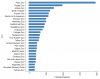
When looking at the top-26 zoos (Monkey World and Ostrava are tied) what stands out is just how many rarities Plzen zoo keeps. The top-3 is completely Czech, but accross the top list German zoos are also well represented, but overall Eastern European zoos are clearly overrepresented. Note also the complete lack of French zoos.

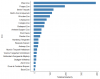
When looking at how many unique mammals each zoo keeps, it is surprising how few zoos keep more than 1 unique mammal (in total about 40 out of 300 zoos keep a unique mammal). On the other hand this is good news as such holdings are rarely stable with high turnover rates. Many of the same zoos are represented here, Kiev and Parc Animalier d'Auvergne hold some unique native bat species.

When zooming in on the top 20 + Plzen group, it is clear there is tremendous variation here, with some of Europe's great zoos keeping hardly any mammal rarities. Swiss zoos in general keep few mammal rarities (Kerzers excepted) and that shows here.

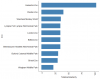
When zooming in on the UK, it is clear why Hamerton is currently a favourite of many zoochatters.

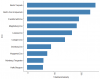
German zoos keep more mammalian rarities generally than their UK counterparts and this top-10 is hardly surprising.

Next time it is bird rarities that are on the program. Expect to see some familiar faces, but also many zoos not represented when it comes to mammals. I am confident nobody will be able to guess the top-10 for those correctly, let alone the order, even though the number 1 won't be a surprise.
To answer this question I have based myself solely on zootierliste. Before people start complaining, I am aware zootierliste is not always completely correct, but data quality is still much higher than people give it credit for and for the purposes of this exercise, it doesn't need to be 100% correct to still get results that are trustworthy and very close to the truth.
So what i have done is create a list of mammals that are kept in 10 European zoos or less. The geographic scope I used here excludes Turkey, Israel, the whole of Russia, but includes Cyprus, Ukraine, Belarus and the Canary Islands. Including European Russia would make a difference as Moscow Zoo would feature prominently. But given that is not the scope of the hinterlying project, it is also not listed here.
A rarity is a species that is kept in 10 zoos or less in the study area, this includes holdings in zoos that are not represented in my dataset (ones with <100.000 visitors). As an exception I put Hamerton in, as they undercount actual zoo visits (currently 80.000 visitors) and is of high interest to zoo nerds currently. A zoo gets 12 points if it is the only zoo keeping a species in the study area, 10 if it is one of two zoos keeping the species, 8 if one of 3, 7 if one of 4 etc. etc. so a zoo gets 1 point if it keeps a species kept in a total of 10 zoos in the study area. I could just have counted the number of rare species, but that somewhat underestimates presence of real rarities, but overall does not make a gigantic difference in the final results. These scores are done at the species level, so unique subspecies are not considered, as it is often unclear to what subspecies an individual belongs and whether subspecies are valid at all, the latter is a particular zootierliste problem....
When looking at the top-26 zoos (Monkey World and Ostrava are tied) what stands out is just how many rarities Plzen zoo keeps. The top-3 is completely Czech, but accross the top list German zoos are also well represented, but overall Eastern European zoos are clearly overrepresented. Note also the complete lack of French zoos.
When looking at how many unique mammals each zoo keeps, it is surprising how few zoos keep more than 1 unique mammal (in total about 40 out of 300 zoos keep a unique mammal). On the other hand this is good news as such holdings are rarely stable with high turnover rates. Many of the same zoos are represented here, Kiev and Parc Animalier d'Auvergne hold some unique native bat species.
When zooming in on the top 20 + Plzen group, it is clear there is tremendous variation here, with some of Europe's great zoos keeping hardly any mammal rarities. Swiss zoos in general keep few mammal rarities (Kerzers excepted) and that shows here.
When zooming in on the UK, it is clear why Hamerton is currently a favourite of many zoochatters.
German zoos keep more mammalian rarities generally than their UK counterparts and this top-10 is hardly surprising.
Next time it is bird rarities that are on the program. Expect to see some familiar faces, but also many zoos not represented when it comes to mammals. I am confident nobody will be able to guess the top-10 for those correctly, let alone the order, even though the number 1 won't be a surprise.
Attachments


Elephantelephant
Well-Known Member
It surprises me that Czech zoos are so involved. I think that more than half of Czech zoos got on the list. I thought Germany would have the upper hand, but that is not the case.The top-3 is completely Czech, but accross the top list German zoos are also well represented, but overall Eastern European zoos are clearly overrepresented. Note also the complete lack of French zoos.
It amazes me that Prague has many more mammalian rarities than Berlin. Plzen is a completely different world, is incredible.When zooming in on the top 20 + Plzen group, it is clear there is tremendous variation here, with some of Europe's great zoos keeping hardly any mammal rarities. Swiss zoos in general keep few mammal rarities (Kerzers excepted) and that shows here.
So what i have done is create a list of mammals that are kept in 10 European zoos or less.
So one could read this as a ranking of the least sustainable zoos with regards to maintaining captive bred ex situ animal populations(?).
So one could read this as a ranking of the least sustainable zoos with regards to maintaining captive bred ex situ animal populations(?).
Not necessarily, some of the species that fulfill the criteria are very broadly kept in the private sector, and zoos source their population from there. Few choice not-endangered species are also seeing wild-caught specimens added here and there.
Some species are also kept in a few zoos only but in big numbers.
So one could read this as a ranking of the least sustainable zoos with regards to maintaining captive bred ex situ animal populations(?).
To a certain extent that is true, but it ignores international cooperation ( With USA etc.) and cooperation with private breeders. There is also a larger number of species on this list where one zoo keeps a large population behind the scenes for breeding purposes. But up to a certain extent you are right and that is much more apparent when it comes to birds (but there arebig differences there, with some E European zoos having many tiny non-breeding groups, whereas other zoos have large breeding groups of rare species).
To look at non-stability of ex-situ populations one should look at turnover rates, which will be much higher for E European zoos compared to the German and most W European zoos.

So one could read this as a ranking of the least sustainable zoos with regards to maintaining captive bred ex situ animal populations(?).
As an example, the Matschie's tree kangaroo is only held in two European collections so both Koln and Beauval would receive 10 points even though there is quite a large population of them in the USA, where the AZA are focusing on them as opposed to the Goodfellow's tree kangaroo which is of course more widely distributed across Europe.
It surprises me that Czech zoos are so involved. I think that more than half of Czech zoos got on the list. I thought Germany would have the upper hand, but that is not the case.
It amazes me that Prague has many more mammalian rarities than Berlin. Plzen is a completely different world, is incredible.
It should be noted that especially in Czechia a large number of the rarities is kept behind the scenes, which is much less the case in Germany. Czech rarities are also much more dominated by small mammals, less by eye-catching species such as Pangolin or River Dolphin. This approach gives equal points to the gazzilionth species of Gerbil as it gives to an Eastern Lowland Gorilla. Would you correct for body mass, it might well look very different.

When zooming in on the top 20 + Plzen group, it is clear there is tremendous variation here, with some of Europe's great zoos keeping hardly any mammal rarities. Swiss zoos in general keep few mammal rarities (Kerzers excepted) and that shows here.

Given that the top zoos on this graph (Plzen, Praha, the Berlins, Wroclaw) are also at or near the top for holding the most total species, it makes sense that they would also have the most rarities (at least for mammals - not sure yet if that holds true for other groups). It would be interesting to see what collections hold the most rarities proportional to the size of their overall collection - a measure by which Hamerton would likely perform very well, along with perhaps Magdeburg and Usti. I think a list of the bottom zoos by the same measure would be equally valuable, as it would put numbers behind what the more ABC-focused zoos in Europe are.
Given that the top zoos on this graph (Plzen, Praha, the Berlins, Wroclaw) are also at or near the top for holding the most total species, it makes sense that they would also have the most rarities (at least for mammals - not sure yet if that holds true for other groups). It would be interesting to see what collections hold the most rarities proportional to the size of their overall collection - a measure by which Hamerton would likely perform very well, along with perhaps Magdeburg and Usti. I think a list of the bottom zoos by the same measure would be equally valuable, as it would put numbers behind what the more ABC-focused zoos in Europe are.
That is planned later on
 . Plzen and Praha score very highly on those lists as well, but get the company of some surprising, sometimes relatively unknown zoos.
ZTL gives the following data:What are the exact numbers (order, family) for Plzen?
1 MONOTREMES
Echidnas(1)
2 OPOSSUMS
Opossums(1)
3 DIPROTODONTIANS
Phalangerids, petaurids, feather-tailed possums, rat kangaroos, kangaroos(5)
4 AFOSORICIDS
Tenrecs(1)
5 SENGIS
Sengis(1)
6 AARDVARKS
Aardvarks (1)
7 HYRAXES
Hyraxes (1)
8 ARMADILLOS
Armadillos (1)
9 TREE SHREWS
Tupaiids(1)
10 PRIMATES
Mouse lemurs, lemurs, bushbabies, marmosets, night monkeys, sakis, Old World monkeys, gibbons, great apes (9)
11 LAGOMORPHS
Rabbits (1)
12 RODENTS
Kangaroo rats, jerboas, mouse-like hamsters, cricetids, nesomyids, bamboo rats, murids, springhares, gundis, African mole rats, Old World porcupines, New World porcupines, cavies, pacas, octodonts, hutias, coypus, squirrels, dormice(19)
13 HEDGEHOGS
Hedgehogs (1)
14 SORICOMORPHS
Shrews (1)
15 BATS
Fruit bats, New World leaf-nosed bats (2)
16 CARNIVORES
Cats, civets, mongooses, euplerids, dogs, bears, mustelids, raccoons, red pandas (9)
17 PERISSODACTYLS
Horses, rhinoceroses (2)
18 CETARTIODACTYLS
Pigs, peccaries, hippopotami, camels, deer, bovids (6)
That’s a total of 18 Orders and 45 Families
Were mention for Prague new gorilla house, but I do not know more (if, then probably asian, not african ones)Pangolin

Were mention for Prague new gorilla house, but I do not know more (if, then probably asian, not african ones)
Unless plans change in future, the new gorilla house in Prague should indeed have a special exhibit for pangolins. A pair of zoo-bred pangolins has been promised by mayor of Taipei as a gift.

That is absolutely fantastic. Chinese pangolins I assume?Unless plans change in future, the new gorilla house in Prague should indeed have a special exhibit for pangolins. A pair of zoo-bred pangolins has been promised by mayor of Taipei as a gift.
ZTL gives the following data:
1 MONOTREMES
Echidnas(1)
2 OPOSSUMS
Opossums(1)
3 DIPROTODONTIANS
Phalangerids, petaurids, feather-tailed possums, rat kangaroos, kangaroos(5)
4 AFOSORICIDS
Tenrecs(1)
5 SENGIS
Sengis(1)
6 AARDVARKS
Aardvarks (1)
7 HYRAXES
Hyraxes (1)
8 ARMADILLOS
Armadillos (1)
9 TREE SHREWS
Tupaiids(1)
10 PRIMATES
Mouse lemurs, lemurs, bushbabies, marmosets, night monkeys, sakis, Old World monkeys, gibbons, great apes (9)
11 LAGOMORPHS
Rabbits (1)
12 RODENTS
Kangaroo rats, jerboas, mouse-like hamsters, cricetids, nesomyids, bamboo rats, murids, springhares, gundis, African mole rats, Old World porcupines, New World porcupines, cavies, pacas, octodonts, hutias, coypus, squirrels, dormice(19)
13 HEDGEHOGS
Hedgehogs (1)
14 SORICOMORPHS
Shrews (1)
15 BATS
Fruit bats, New World leaf-nosed bats (2)
16 CARNIVORES
Cats, civets, mongooses, euplerids, dogs, bears, mustelids, raccoons, red pandas (9)
17 PERISSODACTYLS
Horses, rhinoceroses (2)
18 CETARTIODACTYLS
Pigs, peccaries, hippopotami, camels, deer, bovids (6)
That’s a total of 18 Orders and 45 Families
Your list is correct, but that makes a total of 63 families, I don't know how you come to 45. Plzen still keeps Kowari (ZTL is incorrect there), so + 1 family and +1 order.
That is absolutely fantastic. Chinese pangolins I assume?
I guess so, since Taipei holds the Chinese species
