Are any saiga on display and if not why? Is it some welfare issue or because they're hard to obtain?

Cologne's last animal died a few years back. There's been many others in captivity, and a lot of breeding. I think there are a few groups in Russia and Kazakhstan? But IIRC, its mainly because they tend to randomly have mass die offs...Are any saiga on display and if not why? Is it some welfare issue or because they're hard to obtain?
Do these mass die offs only happen in captivity? Does anyone know why it happens or is still a mystery?Cologne's last animal died a few years back. There's been many others in captivity, and a lot of breeding. I think there are a few groups in Russia and Kazakhstan? But IIRC, its mainly because they tend to randomly have mass die offs...

Considering that a good 200,000 died in a mass die-off in the wild, I'd say noDo these mass die offs only happen in captivity? Does anyone know why it happens or is still a mystery?
 . They're just sensitive I think, though not sure.
Don't they have like 500?There are hundreds of Saiga is captivity (semi-captivity?) at Askaniya Nova in Ukraine.
~Thylo
Considering that a good 200,000 died in a mass die-off in the wild, I'd say no
Don't they have like 500?


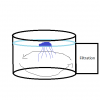
A sideways kreisel tank could work for the man o' war, something like this:Recreating the lifestyle as a ocean surface dweller would be rather difficult in the confined space of an aquarium. Hence, no Portuguese man o' war in captivity.
The reasons (flightiness, male territorial behavior, high accident rate, susceptibility to endoparasites etc.) why saigas are hardly kept in captivity these days have been discussed several times on ZC (=> Search). It has nothing to do with the in situ mass die-offs contributed to Pasteurella multocida or PPR.
Then ask yourself: why hasn't anyone implemented that scenario?A sideways kreisel tank could work for the man o' war
what do you mean by that?Then ask yourself: why hasn't anyone implemented that scenario?
Isn't it obvious? If the solution to keeping Portuguese man o' war was that simple, why hasn't anyone realized it? It's a fascinating species, even for the general audience, and unlike cetaceans or larger animals, the majority of the anti-captivity lobby would be hardly interested to raise a stink. So the non-existence of a husbandry indicates that it might not be as easy as you propose.what do you mean by that?
I never said that it would be that simple, I said that it could be possible in theory.Isn't it obvious? If the solution to keeping Portuguese man o' war was that simple, why hasn't anyone realized it? It's a fascinating species, even for the general audience, and unlike cetaceans or larger animals, the majority of the anti-captivity lobby would be hardly interested to raise a stink. So the non-existence of a husbandry indicates that it might not be as easy as you propose.

Yet the reality of non-existing husbandries indicates that it is apparently not possible.
The fact that none of the Japanese aquaria, Monterey Bay or Shedd have so far not displayed it makes me guess that my assumption is correct. ^^Or that no one cared enough to actually try it


Yet the reality of non-existing husbandries indicates that it is apparently not possible.
And I disagree with you.I disagree with this, there are thousands, millions even of species
In a world with a more and more uniform ex situ species "collection" in zoos and aquaria (certainly not millions), the fact that certain species are not kept there is a good indicator that there are certain factors at play that negatively impact their ex situ husbandry, modern husbandry techniques or not. However, there are still private keepers and scientific institutions (like universities) that need to be considered when it comes to peculiar husbandries, present or past (like river dolphins kept in the cellar of a Swiss mental health institution). But if even these, like in said case, do not show any results, then it's safe to assume it is (currently? ) not possible to keep Portuguese man o' wars successfully in captivity.
And I disagree with you.
We're still discovering new species, of course there will be an innumerable number of animals which could be kept, but aren't, especially in the era of downsizing biodiversity in zoos for the sake of more sustainable populations.